A Daily History of Holes, Dots, Lines, Science, History, Math, Physics, Art, the Unintentional Absurd, Architecture, Maps, Data Visualization, Blank and Missing Things, and so on. |1.6 million words, 7500 images, 4.9 million hits| Press & appearances in The Times, Le Figaro, Mensa, The Economist, The Guardian, Discovery News, Slate, Le Monde, Sci American Blogs, Le Pont, and many other places… 5000+ total posts since 2008.

  • New Map: Distribution of Slavery in North Carolina, 1860

    JF Ptak Science Books   Post 1099

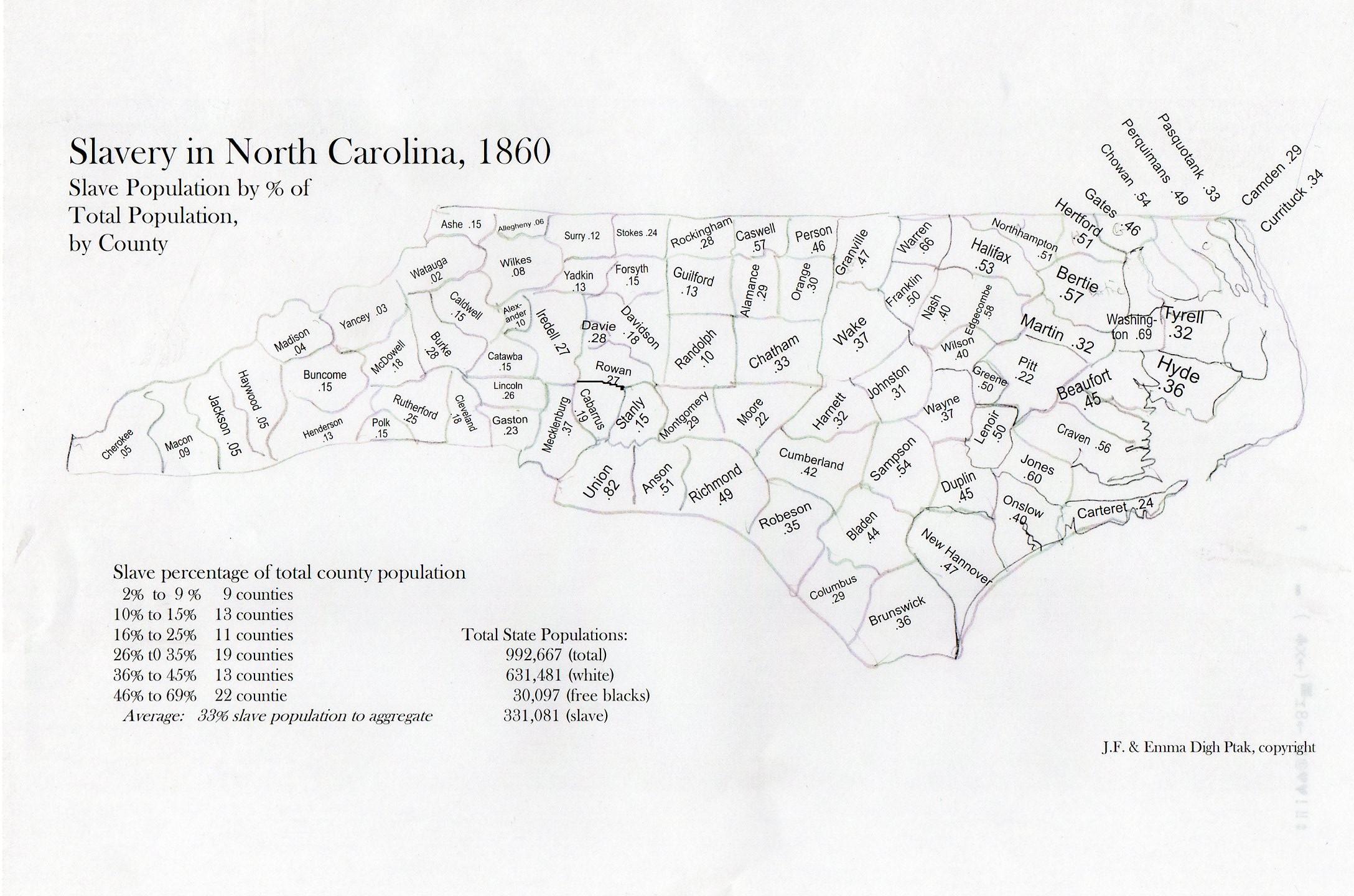
    My daughter Emma and I put this map together a few years ago for a project that just didn’t come about.  I found it this morning and thought to just post the thing and its tables.  It could certainly be dressed up some–or at all.  Color would be nice. So would a clickable interactive bit.  Caveats firmly in place, here it is–so far as I could tell there wasn’t such a descriptive tool like this available to quickly show the distribution of slave ownership (by county) in North Carolina. (Map is expandable.)

    Slavery nc237
    .  

    Data below in expanded reading section, slavery distribution arranged by heaviest concentrations to least.  

    Once you get into the mountain region of the state (the last third or so) where there are lots of hardscrabble/subsistence/poor farmers, slave ownership drops quickly. (I’m not sure how the Cherokee slave ownership factors into this.)  It would be nice to know how NC compares to the rest of the slave holding states, and I might do that yet–but for now I just wanted to share this relatively raw map before I lose it for good.

  • A History of Blank, Empty & Missing Things: Lost Astonishment of Astonishing Things, Part I–the Phonograph

    JF Ptak Science Books   Post 1100   [One in a series on the History of Blank and Missing Things]

    Most everything that was once revolutionary, or new, or innovative, comes to the point of being not so to most people, where the thing of marvel and wonder just becomes the thing of interest and then the thing and then, well, sort of no-thing.  The great object becomes a simple bridge to something else, whether it is to communicate massive amounts of information instantly or overcoming distance quickly or storing food for long periods of time or shaving nutmeg onto a dinner plate. 

    Astonishment phonograph248
    Astonishment wears quickly.  For example, the long line of vanished astonishment in communications shows how thin wonder becomes over the course of time, as communication is facilitated by a postal delivery system to a ground semaphore to an electric telegraph to the telephone to wireless radio to airmail to television to DARPAnet to email to texting to twitter.  The beginning of instantaneous, person-to-person communication is really only 134 years old (with Bell’s 1876 invention), and now we’re sitting in the middle of the possibility of the most fabulously instantaneous communication bog in the history of humanity, and its brilliant astonishment level has been worn to a dull copper tone. (I don’t necessarily mean “fabulous” in a good context, because all of this also presents the greatest assault on concentrated thought that has ever been known, but that’s another story.) Things just get taken for granted.  (This observation isn’t restricted to techno stuff–just ask any old person.)

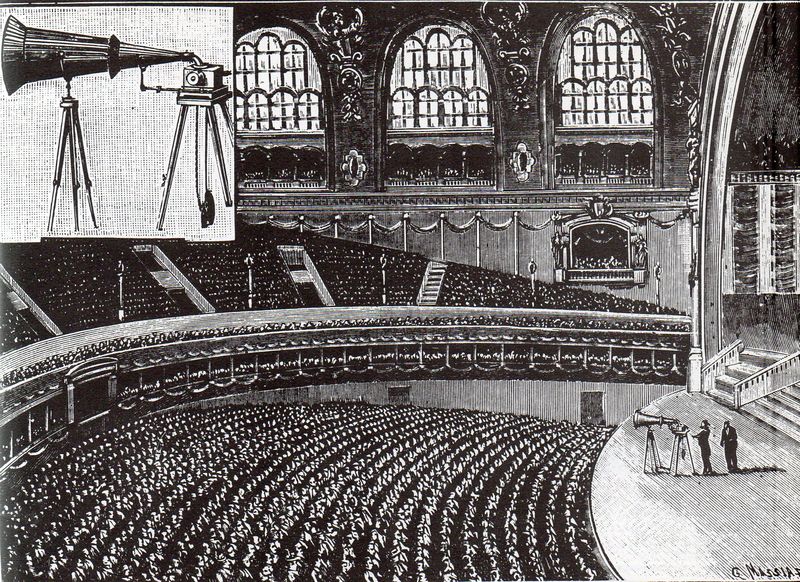
    This is an excellent image to remind us of the wonder and fascination of invention–especially for the things that we take for granted, the essentials of modern life.  This image from 1897 shows a very large audience gathered in the great Trocadero in Paris to listen to a demonstration of a phonograph.  Now the phonograph had already been reliably around since Edison’s introduction of his successful machine the year after the invention of the telephone in 1877 (though variations of the instrument had been around since the late 1850’s, though that is another story), so the general public was already well-familiar with the concept of captured sound replayed–then why such a big crowd in 1897? 

    I think the reason for the full house was partially for the fact that it was a home-town event for a national French figure–the machine was being demonstrated by Henri Jules Lioret, an inventor who for about two decades had been tinkering with improvement to the machine.  What the Trocadero crowd was listening to was the Lioretograph No. 3, a large, weight-driven phonograph with a big bellow–a machine powerful enough to be heard in a big hall, which was another point of fascination for the attraction of such a large crowd.  A  third possibility may have been with Lioret himself–perhaps the event was free, perhaps the inventor went out to fill the Trocadero via whatever means possible so that an engraving of the event would appear in newspapers and journals everywhere so that he could sell more machines.  

    The reason I mos enjoy and wish for though is that the people were simply fascinated with the bright new big machine, filling the famous musical hall with a big sound and doing it without an orchestra, or without one playing player for that matter. 

    It is also about the wonder of storing and replaying sound. 

    Loss of astonishment isn’t necessarily a complacency–perhaps it is just more of a forgetting, a loss of the stuff that has come before.  Maybe it is a function of time, or distance, between newness and necessity.

    If you can grow to feel the astonishment felt by this Trocadero audience for the phonograph, or for the astonishment in anything fantastic-if-old, then you get to see the components of today’s necessary stuff and see that it has a history and a full geology of an idea.  To me, being open to astonishment like this makes you susceptible to wonder, and from wonder comes curiosity, and from curiosity comes everything else worth thinking about. 

    Notes 1:

    Edison celebrates his phonograph in the North American Review
    (May 1878) and
    then lists what he saw as the readymade faits
    acomplis
    of the invention, the first of which was
    weirdly/spectacularly
    worded:  “1. The captivity of all manner
    of sound-waves heretofore designated as fugitive, and their permanent
    retention.”  Do you hear a soundtrack
    with that description?  I did.  He proceeded
    with less fanfare: “2. Their
    reproduction with all their original characteristics at will, without
    the
    presence or consent of the original source, and after the lapse of any
    period
    of time. 3. The transmission of such captive sounds through the ordinary
    channels of
    commercial intercourse and trade in material form, for purposes of
    communication
    or as merchantable goods. 4. Indefinite multiplication and preservation
    of
    such sounds, without regard to the existence or non-existence of the
    original source. 5. The
    captivation of sounds, with or without the knowledge or consent of the
    source
    of their origin.”

  • Asheville, North Carolina: Pack Square Development in Postcards

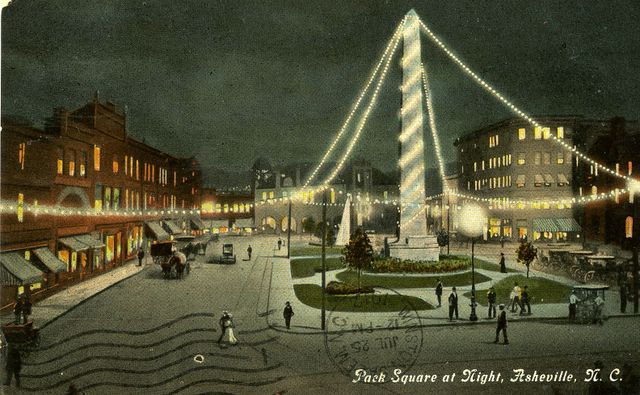
    I’ve collected several postcards showing the development of Pack Square from 1880-1950 or so. For six years my store was located about 200 feet north of the obelisk, so I felt some attachment to the place, and collected a number of different images showing its development.  Postcards are easier to find, less expensive (by leaps and bounds than original photos and such) to purchase, and actually add up to something in a short time.  So I post them here for my Asheville friends and readers–the images might actually be useful and interesting to an Ashevillean.

    ·Posted by :

    ·in:

  • “Her Work” Visualizing the100-Hour Work Week of the 1947 Housewife.

    JF Ptak Science Books  Post 1047           Part of our History of Women Series

    “Like most busy young housewives, however, she gives little thought to
    the future–to satisfactory ways of spending the important years after
    her children have grown up and left home.” [See below.]
      
    00 marjorie

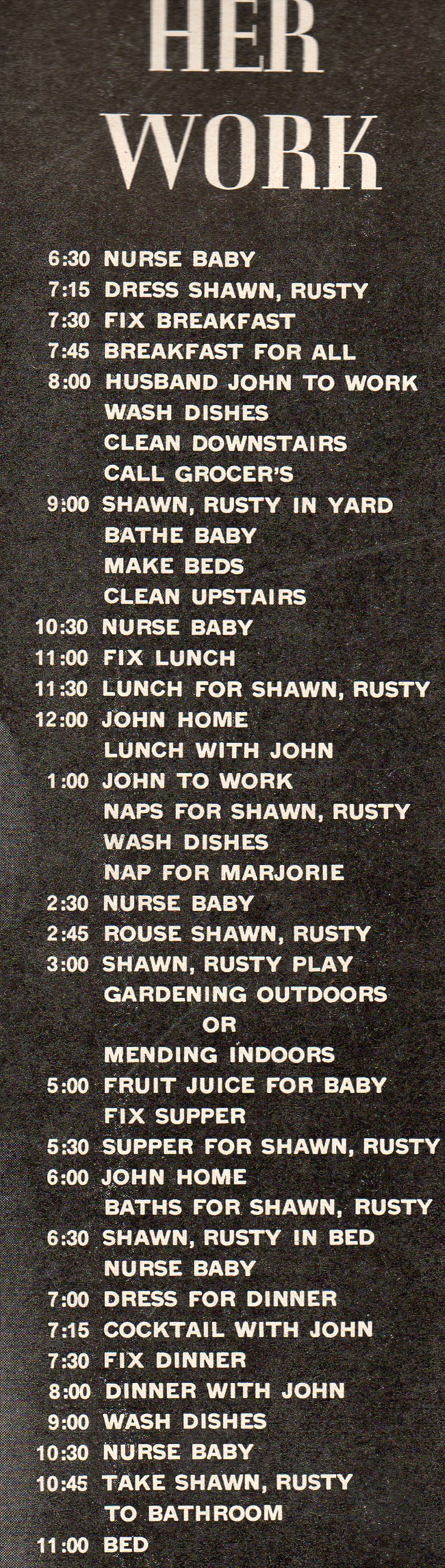
    0000 woman chores list024

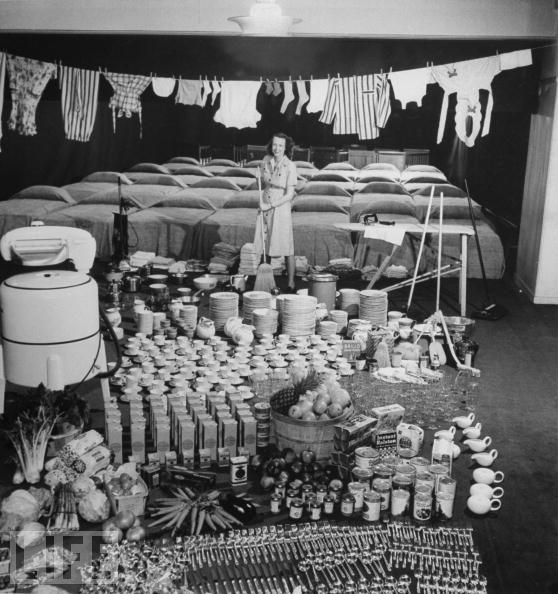
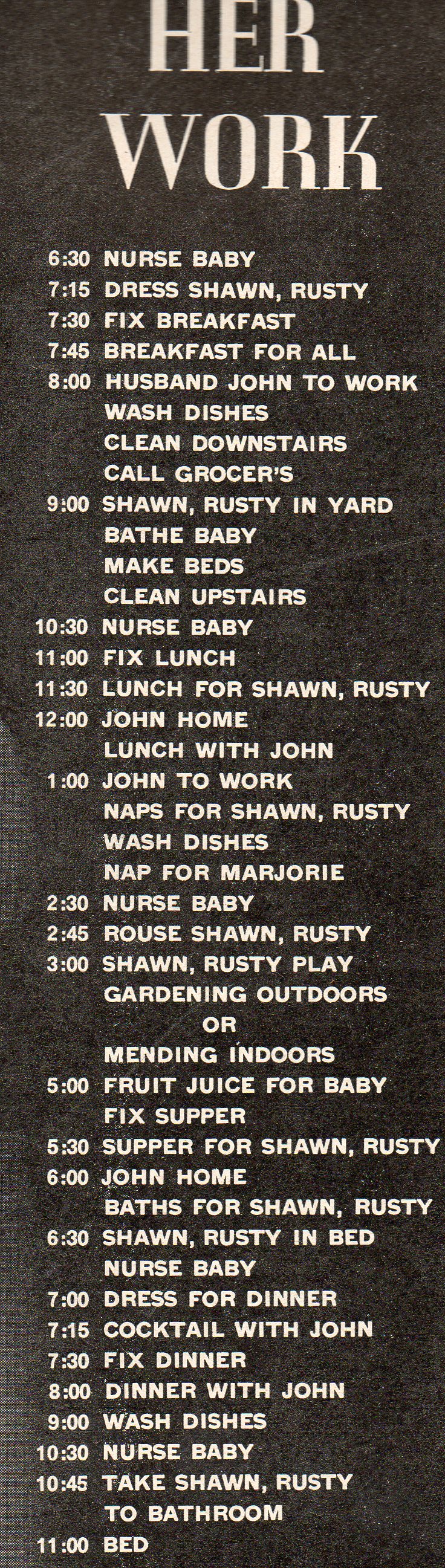
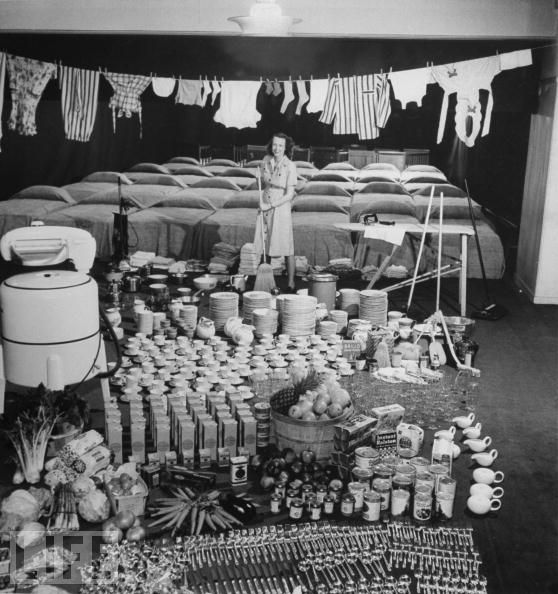
    This photo by Nina Leen [“Housewife Marjorie McWeeney amid symbolic display of her week’s housework” in “Woman’s Dilemma,” Life, June 16, 1947, p. 105] depicts part of the housewife-y stuff of attention in the course of her 100-long-week.  The remarkable part of the photo is that  all of this was displayed in a window display at Bloomingdales.

    Part of Ms. McWeeney’s average work week included “35 beds to be made, 750 items of glass & china, 400 pieces of silverware to wash, 174 lbs. of food to prepare, some of 250 pieces of laundry.on a line, & a ringer washing machine”–that plus paying attention to her children during  the 70+ hours a week in which they are awake.

    In the listing of Ms. McWeeney’s routine (“Her Work”) I see no evidence of Mr. McWeeney’s contribution to the daily chores. We see that he spends 15 minutes eating his breakfast before leaving for work at 8; returns home at 12 or a one-hour lunch before bolting at 1; and then returns at 6 for cocktails at 7:15 and then an hour long dinner at 8.  Perhaps he was helping bathe the kids before cocktails, perhaps not.  I can’t find evidence for Mrs. McWeeney’s present telephone number, so perhaps we’ll never know. But my sneaking suspicion is that Ms. McWeeney ran the house and kids solo, as was the general custom of the day, basically.

    Notes:

    From the LIFE magazine issue:

    “A nice husband, three fine children keep her busy 100 hours a week.

    “Mrs. John McWeeney of Rye, N.Y. has a big, good-looking husband who works in a nut and bolt company, and three children, Shawn, a grave little 4-year-old; John, called “Rusty,” almost 2, and baby Mark, 4 months old. She lives in a bright new seven-room house that has a safe backyard for Shawn and Rusty to play in and a number of modern machines to help her with her household chores. She uses a diaperservice and she can afford a cleaning woman once a week who does the heavy laundry.

    ” But even under these better than average circumstances Marjorie McWeeney’s hours are long and her work demanding. She must keep an eye on her children during their 70 waking hours a week and also watch over them when they are supposed to be in bed but may actually be popping down the stairs to ask for water or an extra goodnight kiss.

    “The picture [above] shows the household tasks that Marjorie must accomplish every week. She has a crib and four beds to make up each day, totaling 35 complete bed-makings a week. She has hundreds of knives, forks and utensils to wash, food to buy and prepare for a healthy family of five and a whole house to dust and sweep. . . .

    “Actually Marjorie’s chores are much lighter than they would have been a few generations ago. She cleans with machinery propelled by electricity, she uses food prepared in canneries, she buys clothes factory-made to fit every member of the family. But her jobs, though relieved of old-time drudgery, have none of the creative satisfactions of home baking, home preserving, home dressmaking. And, because her family unit is small with no aunts or cousins in the household, all the time she saves from housework must go into supervision of her children. Unless she makes special arrangements with a baby-sitter, she has no relief from child care.

    “Many women in Marjorie’s position feel that this is a life of drudgery, that it is not good for Marjorie, a graduate of a junior college, to stay with small children long, continuous hours. Marjorie herself has no desire to work outside. Because as an individual she likes the job that she does, she has no problem right now. Like most busy young housewives, however, she gives little thought to
    the future–to satisfactory ways of spending the important years after
    her children have grown up and left home.”
  • World Trade Center as Optical Canvas, 1973.

    JF Ptak Science Books  Post 1047

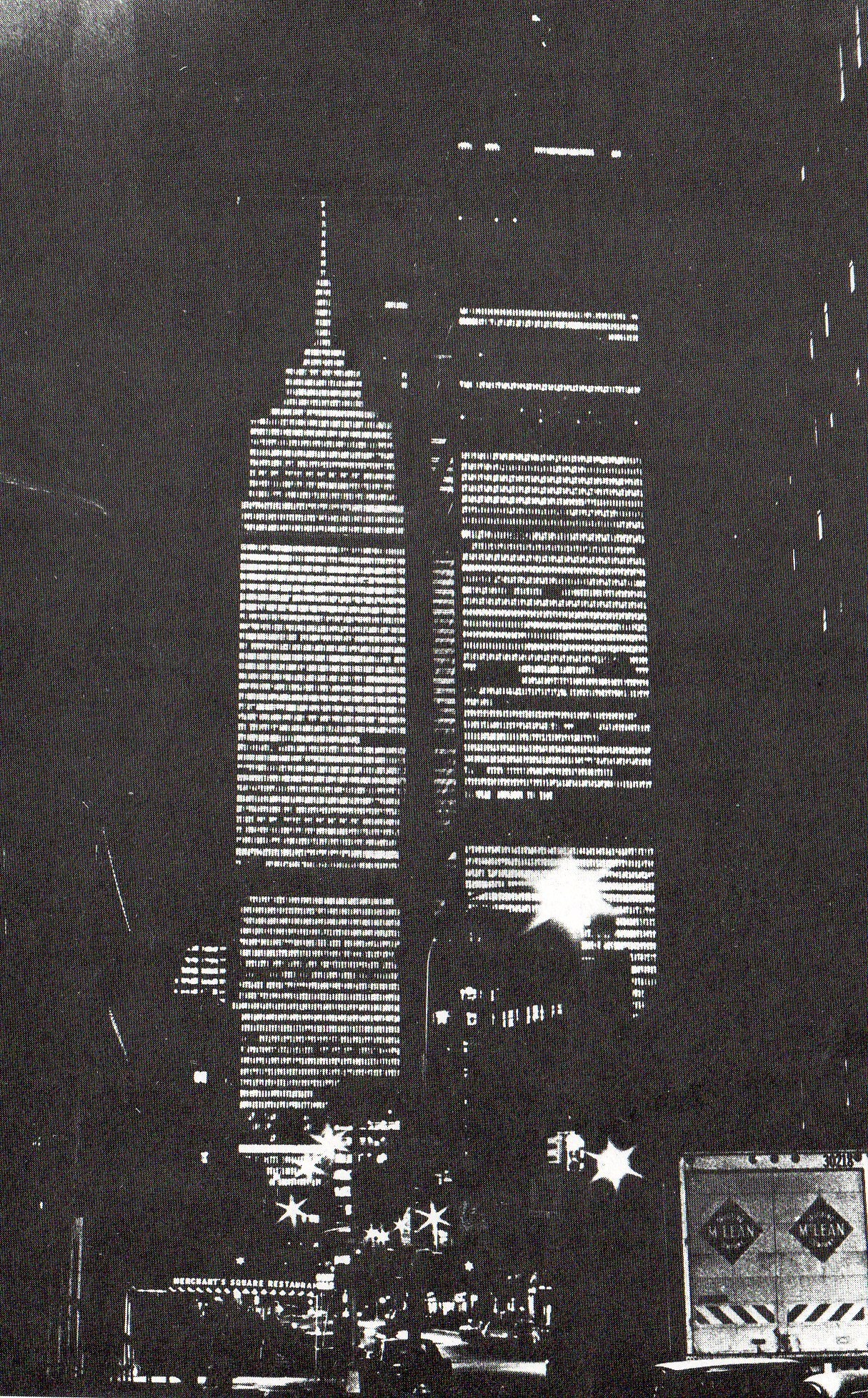
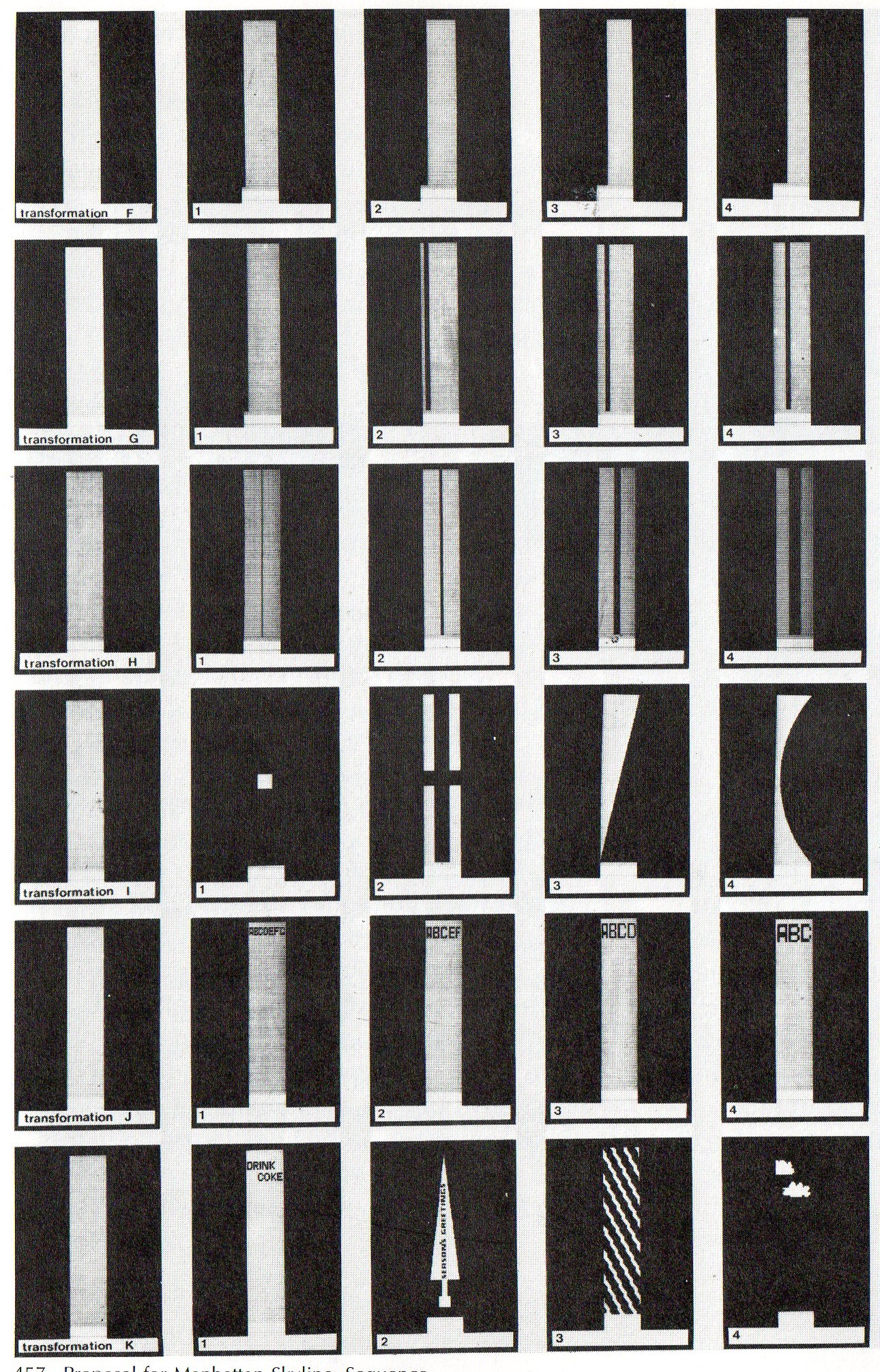
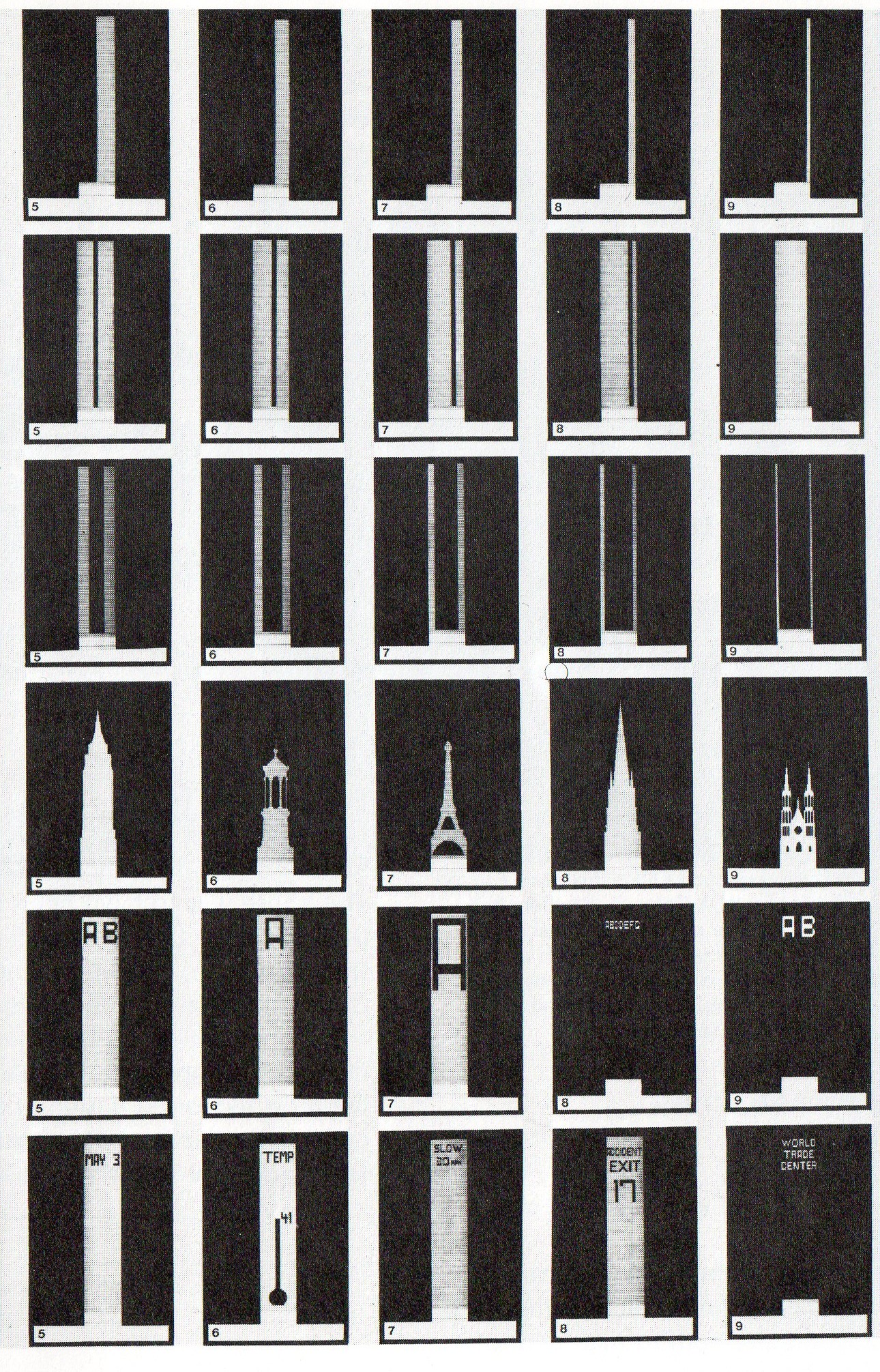
    Allan Wexler (b. 1949), a conceptual artist, came up with a splendid idea for using the newly-completed WTC as a canvas for optical art.  The buildings–which were far from being universally admired in its early life–would be used to illustrate the outlines of other famous nearby structures, the lighting being coordinated with the offices to leave slights on or off (whatever was appropriate) to construct the massive 100-story -tall displays. 

    00--WTC 3027

    [Source: Unbuilt America, McGraw Hill. 1976, edited by Alison Sky and Michele Stone.]

    Tall structures have certainly been used as billboards in the past–the Eiffel Tower, for example long displayed electrically-lighted ads for Citroen)–but using the interior sources of illumination in a building as part of an exterior artistic display is very uncommon. (Architect Richard Haas has created faux surfaces using images of buildings, and perhaps none more famous than his idea to paint the full-scale  shadows of the Chrysler Building and the Empire State Building right there on the facade of the WTC towers.)   It was a lovely idea, really, but the whole of it was struck down during the great gas crunch and economic crisis of that year.  It would’ve been a great cooperative effort to produce monumental works of art but conspiring elements of uncontrollable economic problems and controllable painterly ones kept the project from happening. 

    00--WTC 1025
    00--WTC 2026

  • Emma at the Podium, White House Press Briefing Room

    I just wanted to post this for the sake of posting it, and to make sure that I’ll never have these photos misplaced again. 

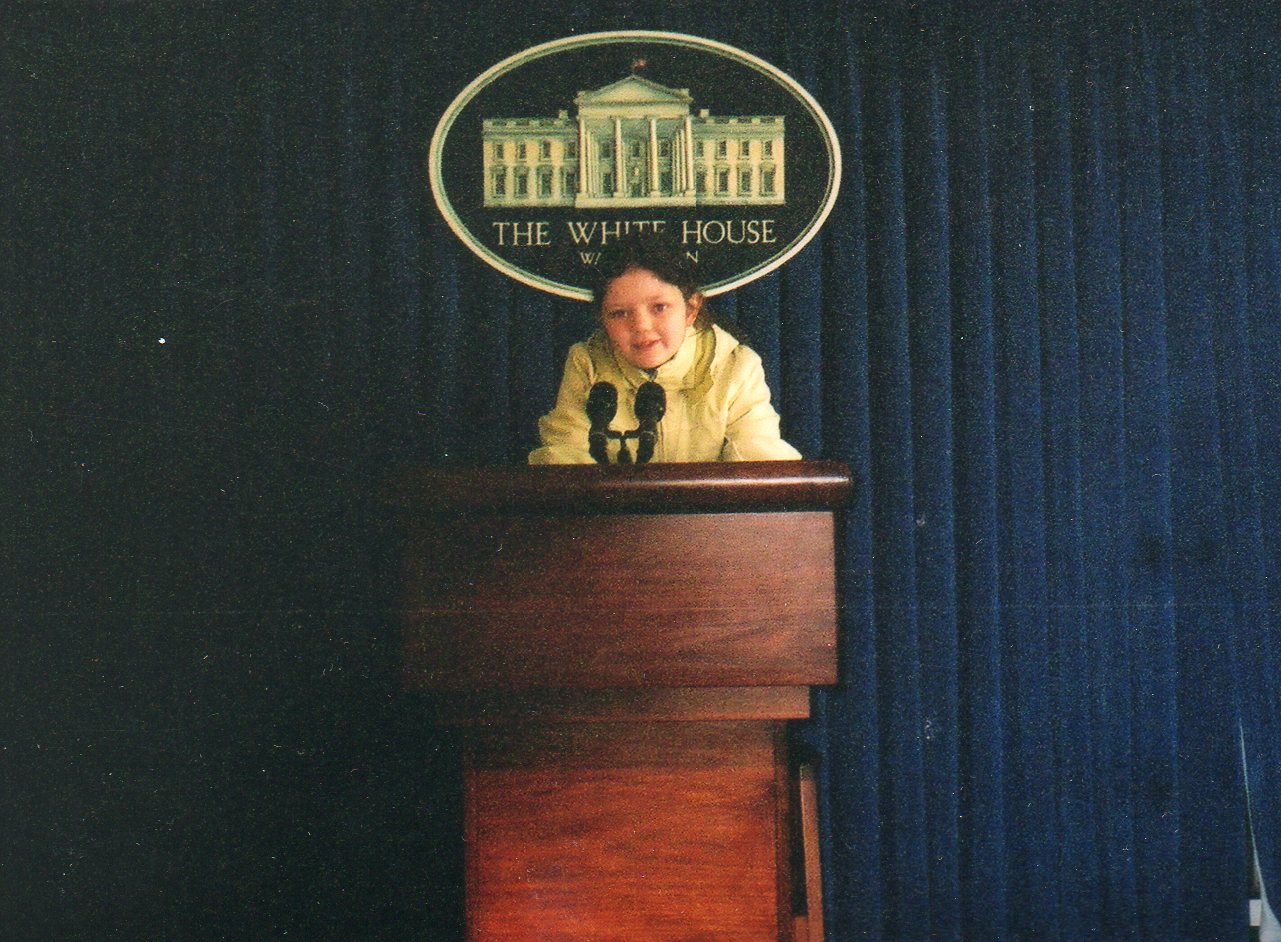
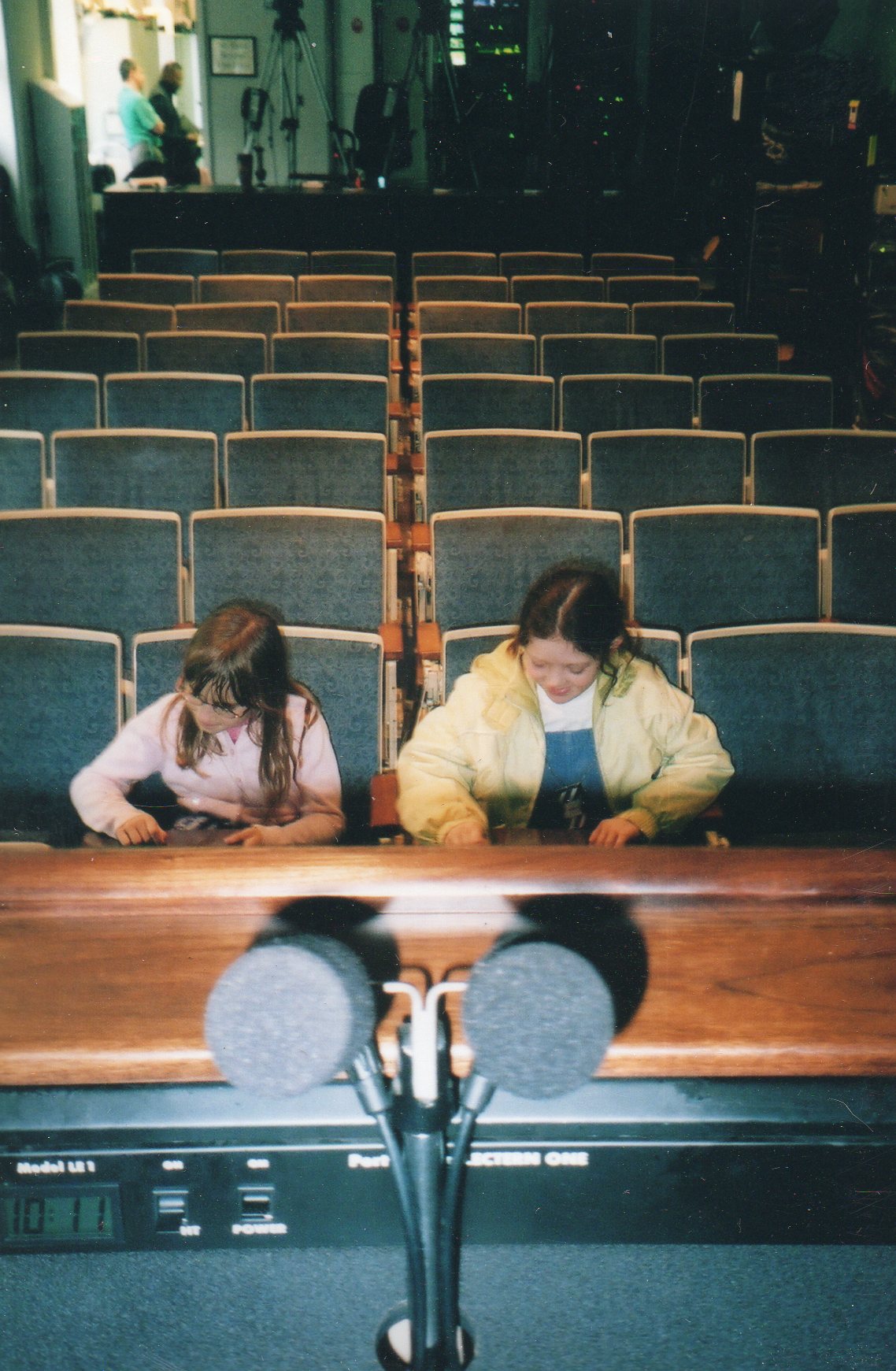
    These pictures were made in 2002 just before we left DC for Asheville and show our older daughter, Emma, then 10, romping around the WH and Press Corps Room with a friend.  We were there courtesy of a friend of our’s, and the kids were given a long leash to move around.  Emma at white house podium033

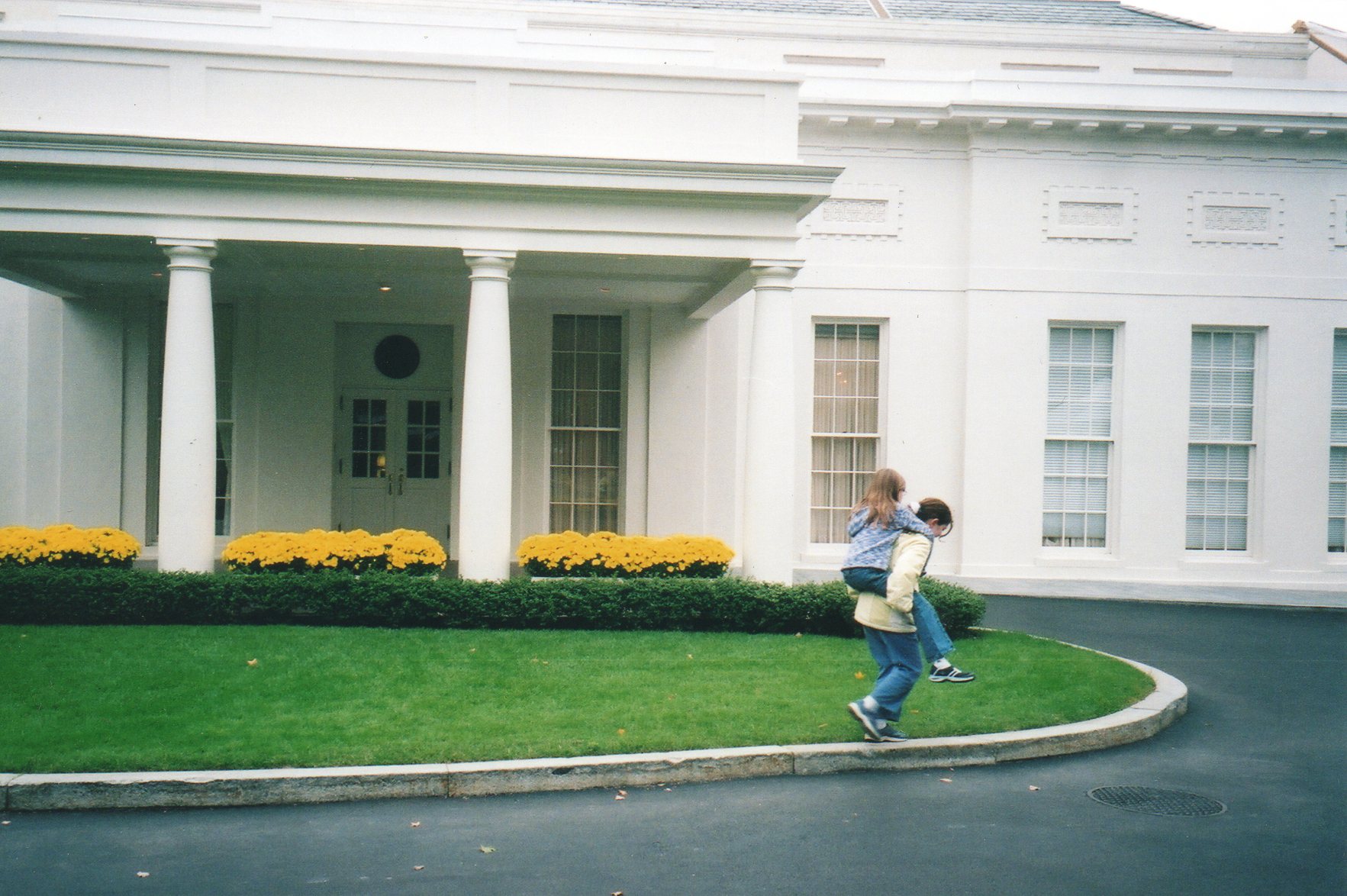
    After a bit of posing Emma and her friend started running/skipping, and soon were out of the side door of the press room and on their way to the Oval Office, which as it tuns out is not all that far away. The children found it by accident and very easily–almost instantly there was an enormous voice that yelled, “you there, HALT” (just the thing I guess you would not want to hear while skipping towards the Oval Office), and the children did a sort of turn-while-in-mid-air cartoon turnaround sorta thing and came running back down the hall, pretty well put out, a 
    memory made.

    Emma at white house seated034

    It was a fun time had by all.

    I’ll tell the story at another time of when Emma slapped Bill Clinton. True.

    (And yes this was the pre-renovation Briefing Room).

    Emma at white house outside035
    The West Wing.

    ·Posted by :

    ·in:

  • Boredom and the Re-Fencing of the American Frontier: Highway Billboards, 1930

    JF Ptak Science Books    Post 1049

    The West, the American West, had the foundations for effective an grid delivered by the late 1870’s, in the early-middle of what I guess people would consider the high Cowboy days of westward expansion.  But the exploration part had been mostly done by this point, as had the expansion bit, the exterior sections of the compartmentalization of the frontier taking place in ever-smaller concentric squares.  As I wrote earlier in this blog, it was the introduction of lines that really did the whole Wild West thing in–the introduction of the railroads, of course (followed by the refrigerated railroad car, which did in the great cattle drives and established needed-to-be-peopled rail heads all over the place), telegraph lines, and of course barbed wire.  Barbed wire meant barbed wire fences, fences that could be constructed for a small fraction of the cost of wooden fences and which replaced of course no fences at all, dividing the great open plains into more manageable units of owned and regulated land. (Barbed wire fences also needed far less maintenance than wooden fences, which means fewer cowboys riding fences for upkeep and so on.)

    By the time the eulogy on the American Frontier was famously delivered by Fred Jackson Taylor in 1893, the fate of the West had already been sealed for perhaps two decades, though the notion of its “closedness” was received with considerable shock. It was time for the truly great equalizer and innovative settler of the West to makes its appearance–boredom. 

    I think it might be that it was the Boring Frontier that nailed the coffin shut on the Western Frontier.  Once all of the lines had been delivered–barbed wire, telegraph, railroads, good maps–the greatest thing left to do was the settling.  And nothing quite spells settlement than boredom. Or comparative boredom.  Once the essentials of conquest had been delivered in terms of the civilizing lines, it became time to wait for the rest of it, surviving through cold Nebraska winters and hot Panhandle summers, waiting for the rest of America to come and settle.  It was the Boredom Frontier that spelled out the intent that the changes brought to that country were there to stay. 

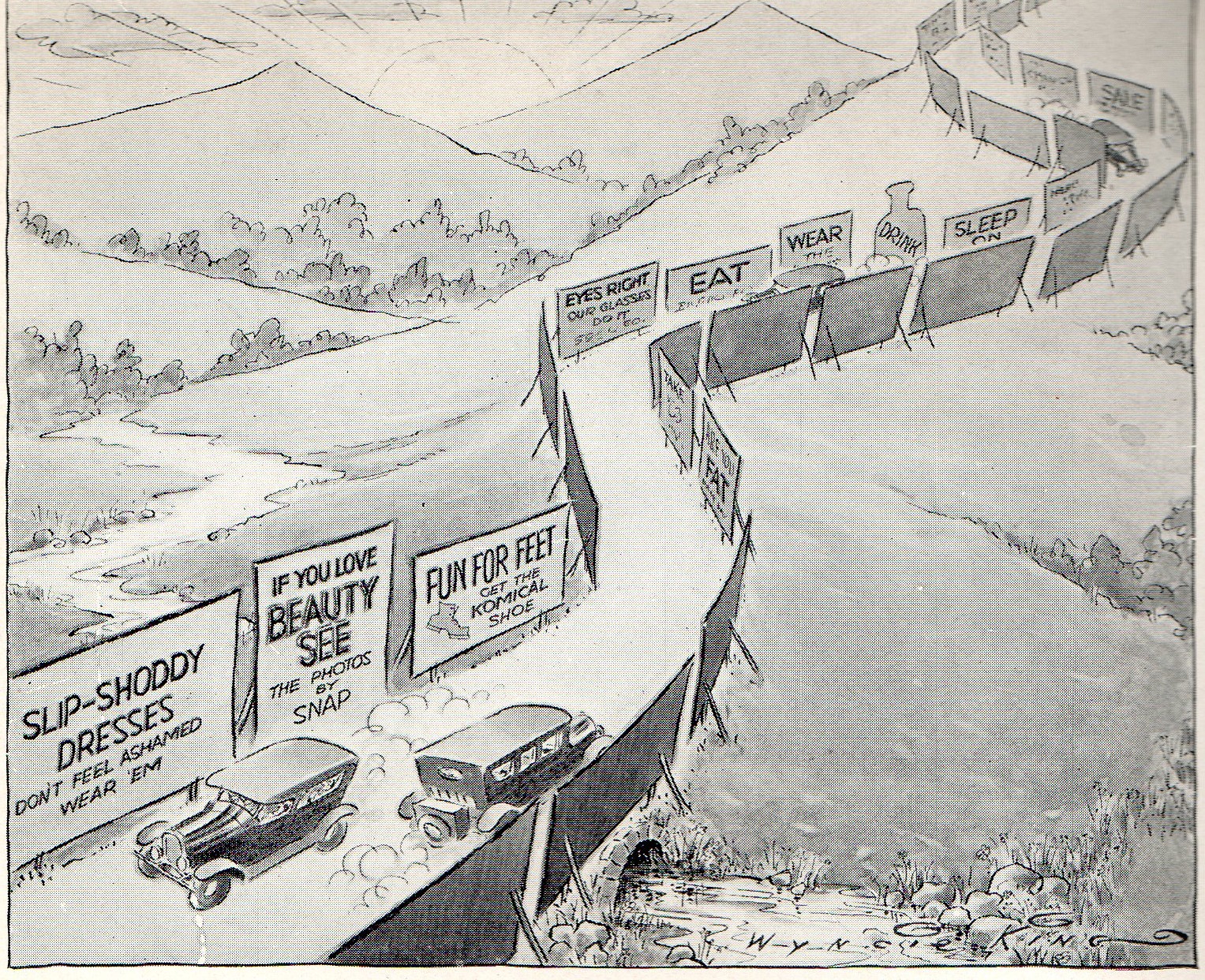
    And barely three decades after the announcement of the closing of the frontier, automobiles were making their way across the land on new roads., which snaked their way deeper into the last-reached parts of the country.  It was very soon after the car and the road that the roadside billboard appeared, and appeared in such great quantity that legislation prohibiting banner display like this was introduced into the legal system during the teens.

    Roads provided the last assault on the West, and brought with them their singular colonizing irony of billboards, which prohibited the view of the country through which their roads snaked and pulled.  And there’s something terribly wrong with that, as witnessed in this 1931 illustration tucked inside this almost-provocatively-named pamphlet, Billboards ad Aesthetic Legislation, New Applications of Police Power (published by the St. Louis Public Library).It is astonishing to think of the vast changes that took place in the remaining American frontier, taking place so quickly–two generations separated the last of the great cattle drives to billboard legislations along auto routes in the western states. 

    00--billboards036

    It seems to me that I’ve seen a similar illustration of the senseless explorer from the ‘teens, though I cannot find it now.  

  • The Coming Sameness of Beauty–Lessons from a Soda Bottle of 1947

    JF Ptak Science Books  Post 1050

    The great beauty of beauty is its great unidentifiable qualities–unidentified that is until they are identified, quantified, signified, geometized, libeling the concept of beauty until it is nothing but a soured criminal contempt.
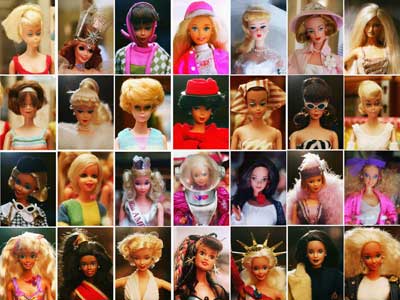
    Barbie-history-2
    In an antiquarian sense one way of establishing what “beauty” meant in a particular time is by looking at painting or sculpture, the idealized form representing gods and goddesses of strength and beauty and grace. For more recent times of less idolatry and more commercialization advertisements using images of women to sell whatever product the seller was trying to push on the viewer could also be used as a certain standard of attraction and beauty. (Assuming of course that we are talking about the recent past when images other than the product itself were being used to try and establish a desire and loyalty to the product. In the history of publishing, this is a relatively recent innovation that I think belongs to the 19th century and not before.)   In the case of using pretty women, the advertiser was trying to associate their product with a certain sense of beauty, or to at least attract the attention of a lazy reader to look at their coal tar soap because a pretty face was lined up next to it.

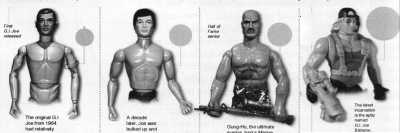
    Another interesting way of evaluating beauty could be found in the evolution of Barbie Dolls or GI Joes.  Or you could consult William Hogarth’s Analysis of Beauty.  And many other things of course, that deal with beauty in the human form (and more, or orders of magnitude more, that deal with beauty outside of ourselves, beauty in the forms of architecture or mathematics or the arrangement of sand or whatever). 
    00--beauty--gi joe
       
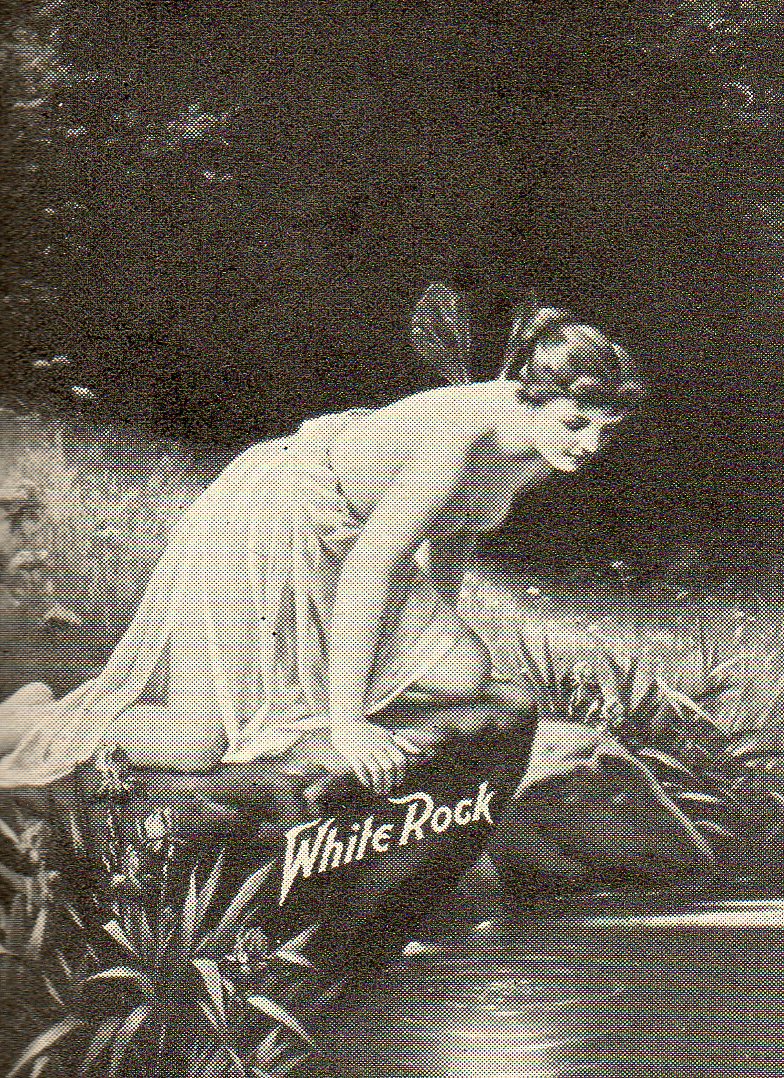
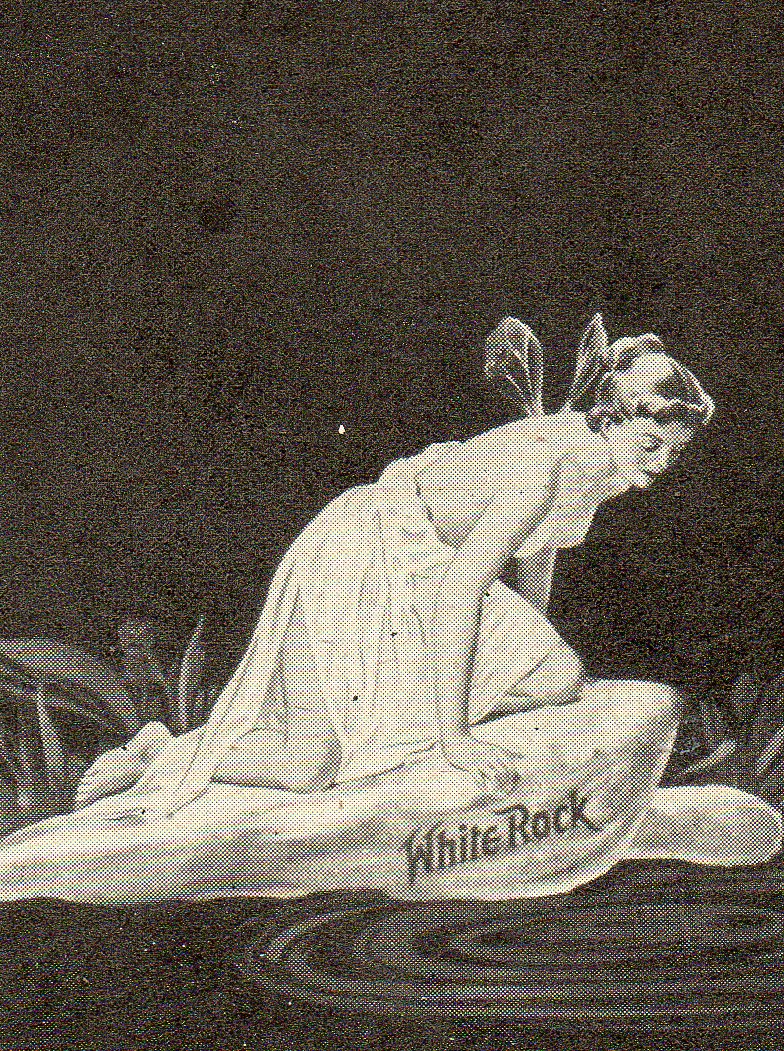
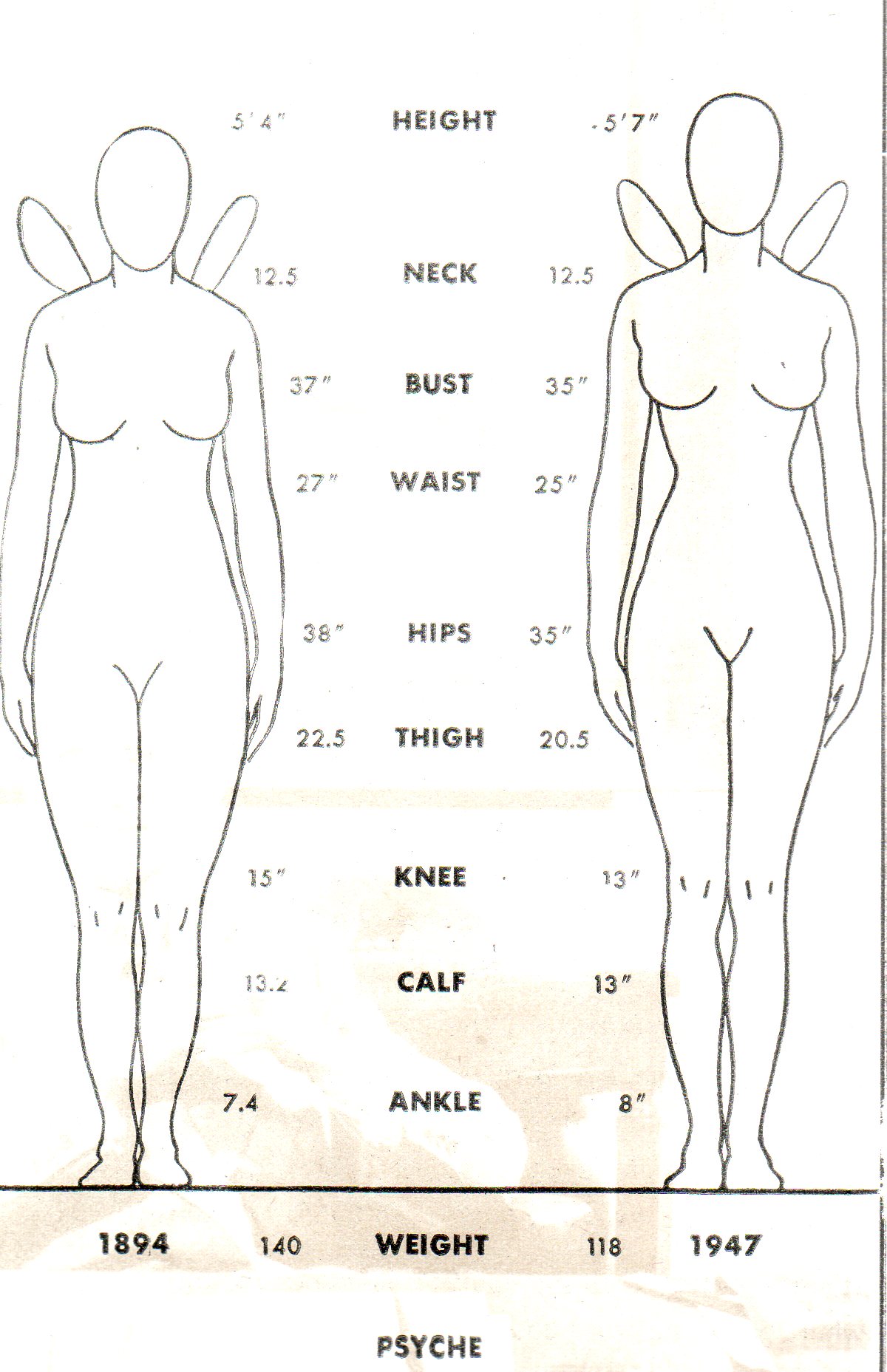
    I’m just going to give beauty 700 words here, or so, and so I’ll concentrate on just one picture of comparative beauty. (I guess that there have been 100 billion words written about beauty, though if you loosened up the definition of what ‘writing about beauty” mean, the number could probably be squeezed up to a trillion, which would mean 4 million books of 250k words each.  Probably the 10^10 is a better guess.)  As it turns out it is a picture from a story in Life magazine for 30 June 1947 of Psyche–the Greek goddess of the soul–used as the logo for White Rock soft drink company’s mineral water.  In general it’s a poor depiction of the goddess, and I’m not so sure that they even had the goddess in mind when the whole thing came into the bottler’s mind (she is after all described as a “sprite” in the LIFE magazine article).

    What is of interest is the change in the image of Psyche on the face of the bottle over the years (shown here for 1893, 1924 and 1947) which is graphically depicted with measurement appraisals.
    00--beauty psyche 1038
    Psyche simply buffed up a little, getting taller, slimming down and generally made to be a little more common.  She did loose her nipples in 1947, or at least they became obscured, trailing away from their depiction in 1893.  (I once attended a U.S. Supreme Court argument on a case dealing with nipples and pasties and strip clubs.  It was a little bizarre, and as my mind wandered I took an interest in the court’s decoration, and particularly the frescoes–which of course included a full-nippled woman, staring down at the court from her height.)   
    00--beauty psyche 3040
    But it struck me that Psyche was simply becoming a more-generic depiction of beauty, which reminded me of this odd bit of beauty sanitizing prevalent among the wealthy of today, or at least among those–actors and advertising types–whose image helps set the stage for the beauty standard.  Now it is possible to vastly augment your appearance via surgical procedures to the common standard of what has been established as “beautiful”.  And the end result of this is that there is merging a certain sameness among the people whose faces everyone seems to know, and whose appearances change the way people think of beauty.  I find it striking that someone (for example)  like the actor Sharon Stone would turn her face into a common mask of someone else entirely, closing the ranks of differentiation in what is presented to mass market audiences as “beauty”.  Everyone is starting to look like everyone else, or so at least among movie actors. 

    And so it is perhaps finally appropriate that I chose Psyche to discuss here, because if the actors tend towards these procedures more and more, they’ll all be wearing the same sort of frozen mask that their ancient Greek precursors used to wear when in performance.  

    00--beauty psyche comp041

  • The Emptiness of Gun Porn: Burlesque Dancers as Game, 1947

    JF Ptak Science Books   Post 1051

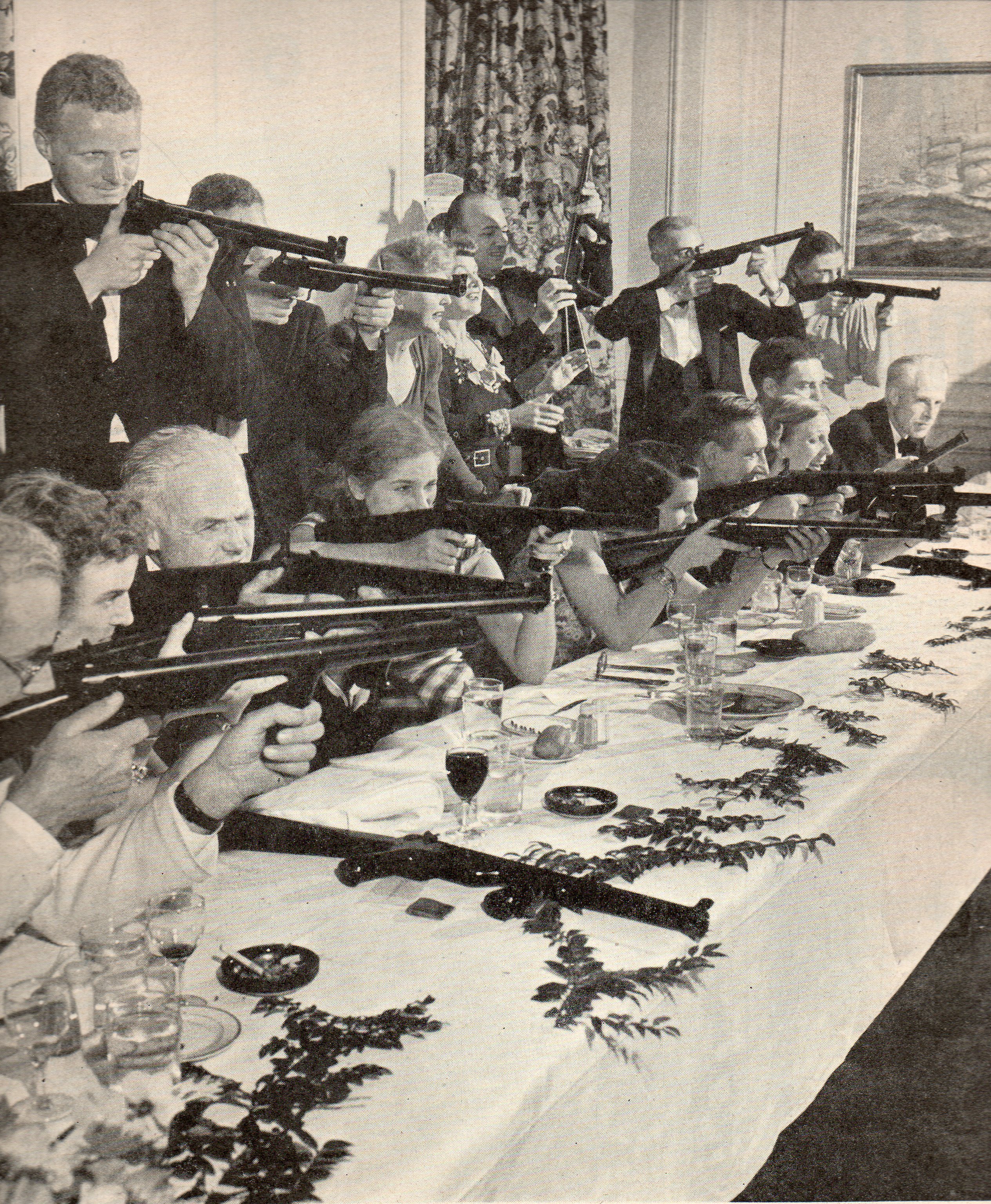
    It is unusual for me to find provocative photos that are more unusual in context rather than out.  But this is certainly the case here, with these photos of gun porn from Life magazine of 1947. This photo spread was meant to celebrate the launch of a “harmless” toy gun, the manufacturer demonstrating this point by having two dozen dinner quests shell dining room targets with imitation Tommy Gun-ish pellet guns. 
    00--shooting strip teas dinnere043

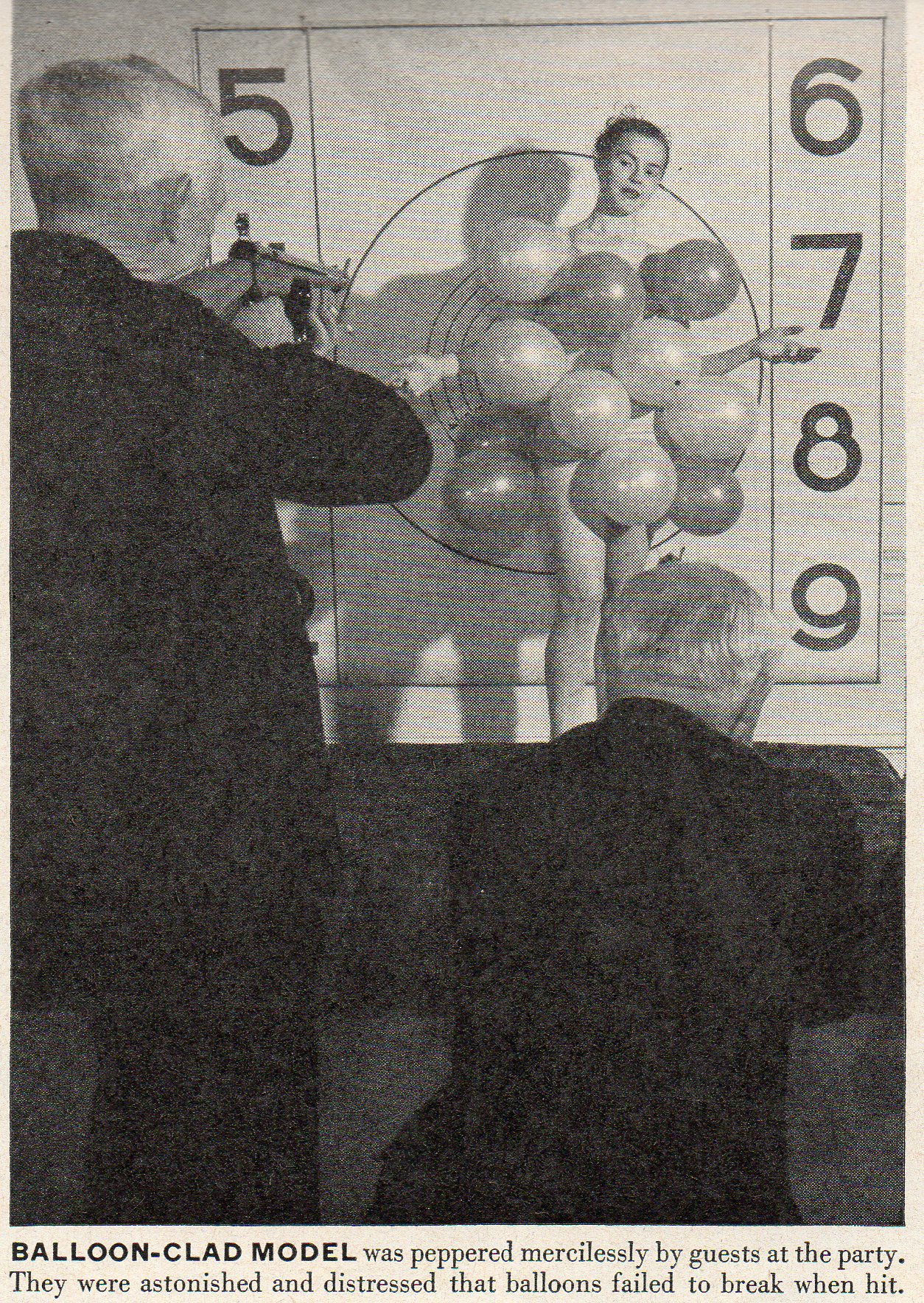
    Perhaps appropriate in more ways than one are these two older men shooting “ineffectually” at a model dressed in balloons–the point being to break the balloons to reveal her nakedness.  But the ejected pellets hit and dribble away, the rubber balloons remaining intact, with the foiled men left feeling “astonished and distressed”.  You can almost smell their impending failure in this picture (as well as the relief of the model).    
                                                   
    00--shooting strip tease042

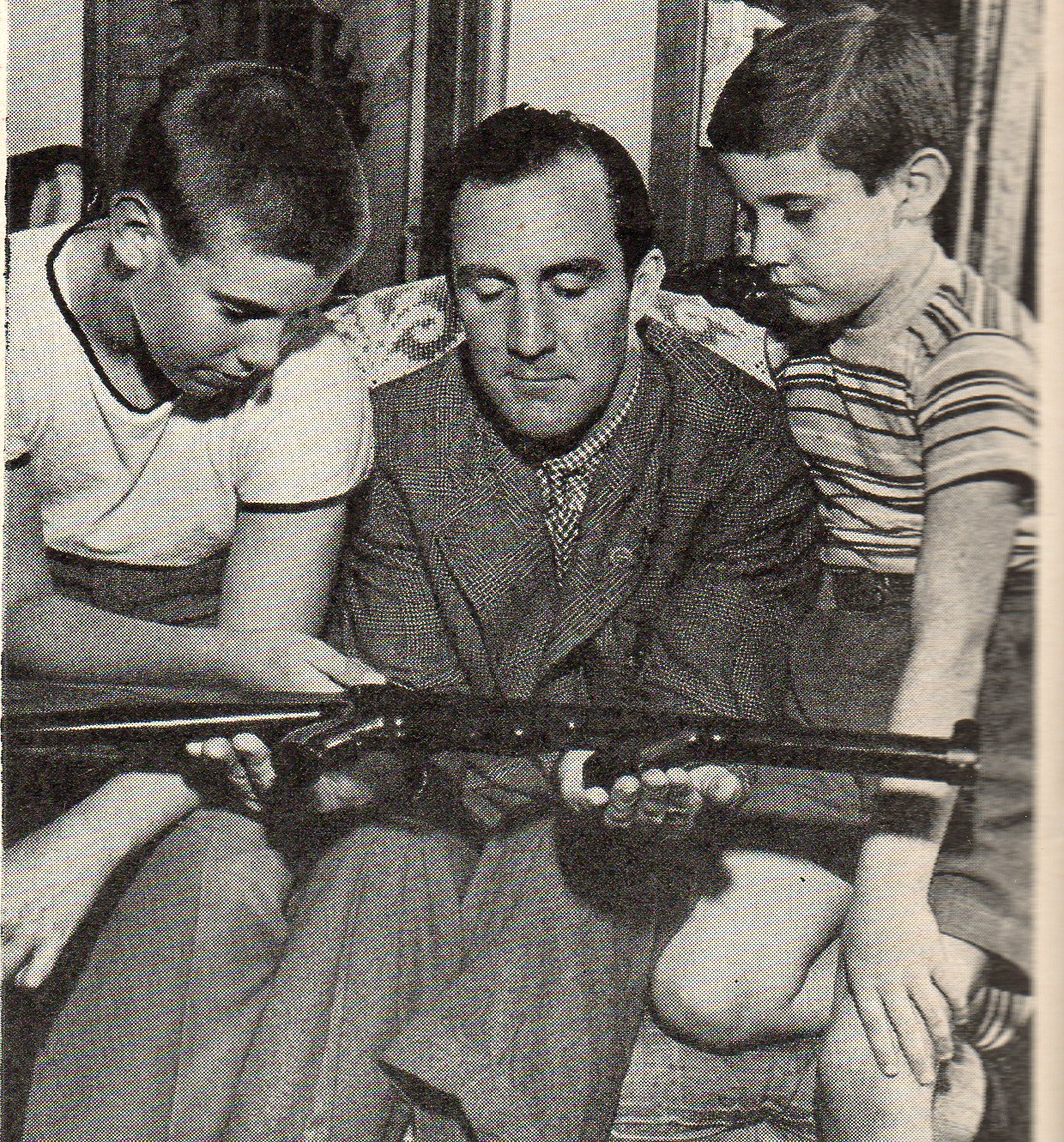
    Then there’s the Holiness of the Gun moment, a father holding the toy gun in flattened palms., making himself a portable altar for his respectful sons, a deep reverence for the object present in the man’s face.     
     

    00--shooting strip holy grail044

  • Endgame of the European War, 1944

    It is D-Day+24,090–it is that many days since the beginning o the Allied invasion of Europe, begun on this day in 1944.  It was almost four years to the day that Britain lost Europe, backed up to the channel on the pebbled beaches of Dunkerque, 300,000 British Expeditionary Forces (and 100,000 French) waiting to be rescued from a very bad situation, penned in by Nazi forces that never did make the final assault on their nearly-captured prey.  The BEF was severely compromised in the evacuation, and the possibility of an invasion of England was real.  Four years later, 66 years ago today, it was all over but the fighting, the Allies launching the greatest military assault in history, beginning the endgame of the defeat of Nazi Germany.

    00-uncle walt048

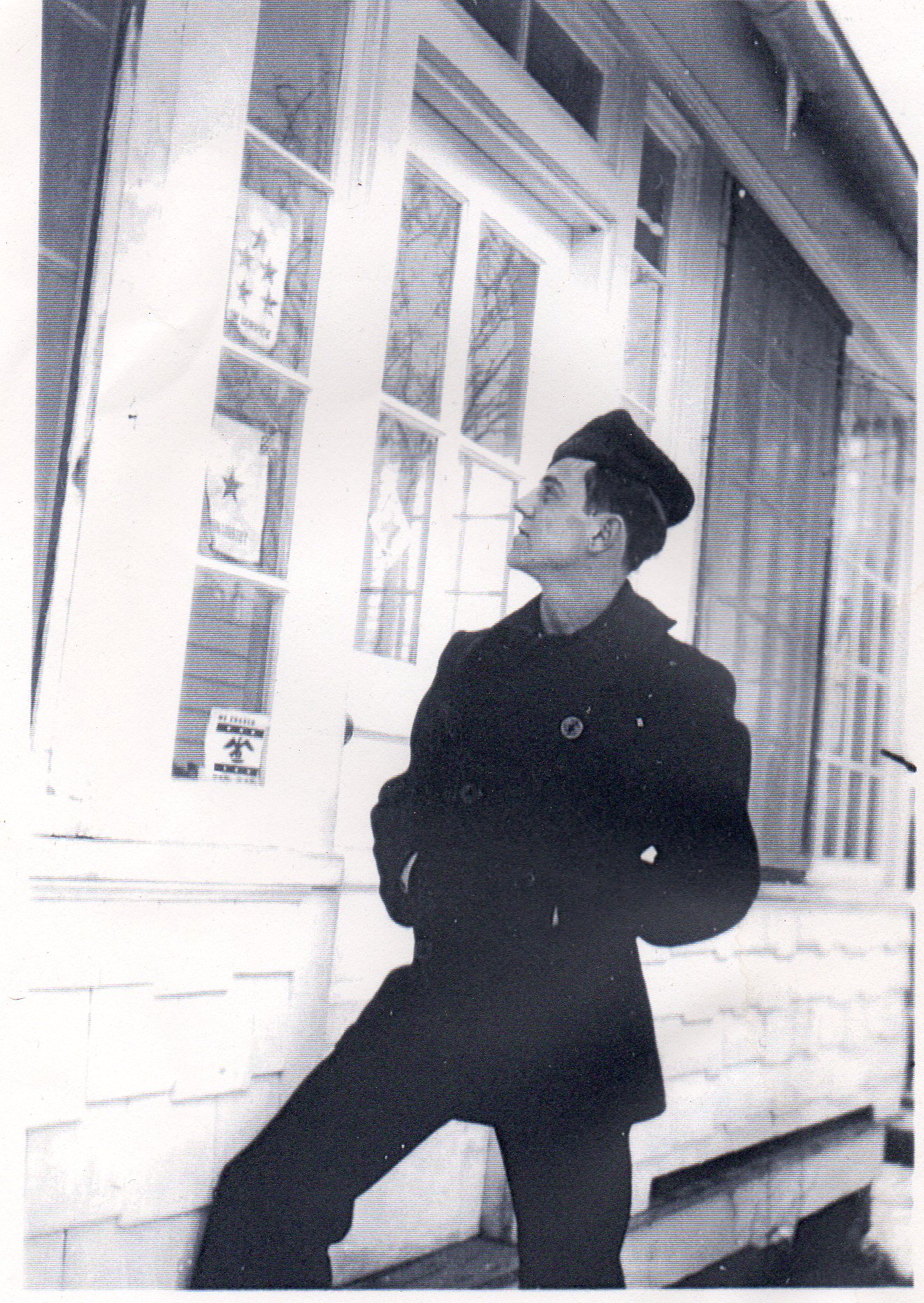
    This is a picture of my Uncle Walt (Dad’s side) who is posing alongside the six stars proudly displayed by my great grandparents in the front windows of their house in Housatonic, Massachusetts–that’s six stars signifying six members of the household (six bothers) who were fighting in the war. These were blue stars–thankfully, no gold star needed to be sewn over any of the blue ones, though this was tragically not the case with our relatives.

    ·Posted by :

    ·in:

  • Women in the Battle Between Martinis and Narcotics, 1902

    JF Ptak Science Books  Post 1052

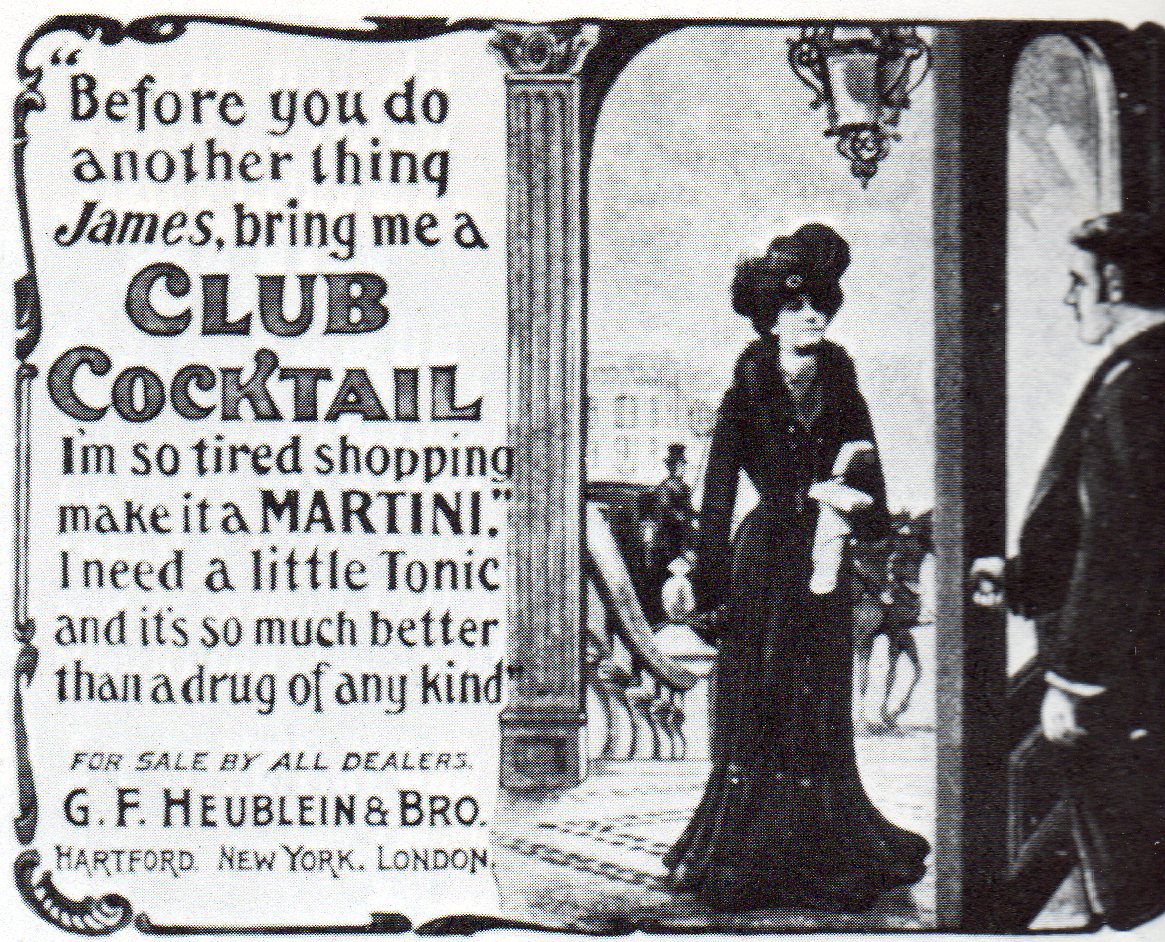
    Somehow I think that I’ve missed these ads of women pushing alcohol over narcotics and other drugs.  It certainly seems a more elegant solution to the “unwinding problem” of the more-or-less semi-idle privileged classes.

    Martini055
    At this point in the history of addiction in the United States all of the “any other drugs” that this woman is referring to were legal–very big drugs and very legal.  The opium trade was of course still very much alive and well, England and to a lesser degree France doing their brightest to bring the best (where “best” means “most”)  narcotics to the world inside and outside of the Golden Triangle, ruining as much as humanly possible while doing so.  Opium was the drug of choice, followed by morphine (which Dr. Alex Wood discovered in 1843 was better introduced into the body by injection) and then graduating to heroin.  (Heroin was synthesized first by C.R. Wright, who boiled out some morphine on a stove.  It was Heinrich Dreser who introduced diacetylmorphne in 1895 as the Bayer Company product called “Heroin”, which was marketed as a pleasant step-down to morphine addicts in 1898.)        

    So sparkling mixer with gin was the better part of valor for the Heublein company, even with legal heroin and morphine and opium to compete with.  It wasn’t until 1905 that a “ban” on opium came into effect in the U.S., though the first federal attempt to control narcotics did not appear until the Harrison Narcotics Act of 1914 (which required those dispensing narcotics to (a) register and (b) pay a tax). 

    But the sale and consumption of narcotics wasn’t made illegal until 1923, brought about through the U.S. Treasury Department’s Division of Narcotics.  This unfortunately came about 222 years after the Chinese Emperor Kia King ban all opium  products in China, subverted forty years later by the Brits. 

    The queer part of this story is that narcotics were banned in 1923, three years after the 18th Amendment to the U.S. prohibited the sale and use of alcohol.

Recent Posts

Archives

Categories