JF Ptak Science Books Post 1052
Somehow I think that I’ve missed these ads of women pushing alcohol over narcotics and other drugs. It certainly seems a more elegant solution to the “unwinding problem” of the more-or-less semi-idle privileged classes.
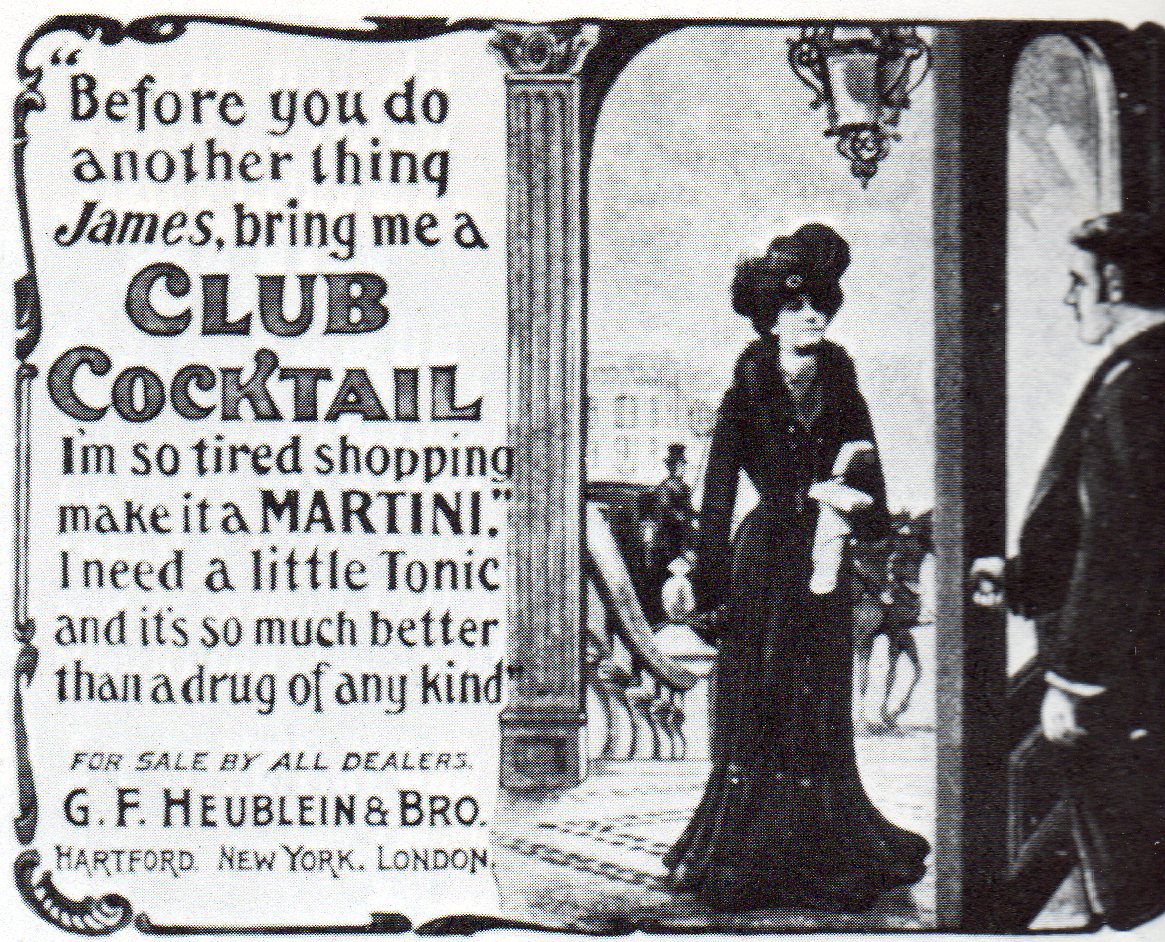
At this point in the history of addiction in the United States all of the “any other drugs” that this woman is referring to were legal–very big drugs and very legal. The opium trade was of course still very much alive and well, England and to a lesser degree France doing their brightest to bring the best (where “best” means “most”) narcotics to the world inside and outside of the Golden Triangle, ruining as much as humanly possible while doing so. Opium was the drug of choice, followed by morphine (which Dr. Alex Wood discovered in 1843 was better introduced into the body by injection) and then graduating to heroin. (Heroin was synthesized first by C.R. Wright, who boiled out some morphine on a stove. It was Heinrich Dreser who introduced diacetylmorphne in 1895 as the Bayer Company product called “Heroin”, which was marketed as a pleasant step-down to morphine addicts in 1898.)
So sparkling mixer with gin was the better part of valor for the Heublein company, even with legal heroin and morphine and opium to compete with. It wasn’t until 1905 that a “ban” on opium came into effect in the U.S., though the first federal attempt to control narcotics did not appear until the Harrison Narcotics Act of 1914 (which required those dispensing narcotics to (a) register and (b) pay a tax).
But the sale and consumption of narcotics wasn’t made illegal until 1923, brought about through the U.S. Treasury Department’s Division of Narcotics. This unfortunately came about 222 years after the Chinese Emperor Kia King ban all opium products in China, subverted forty years later by the Brits.
The queer part of this story is that narcotics were banned in 1923, three years after the 18th Amendment to the U.S. prohibited the sale and use of alcohol.