A Daily History of Holes, Dots, Lines, Science, History, Math, Physics, Art, the Unintentional Absurd, Architecture, Maps, Data Visualization, Blank and Missing Things, and so on. |1.6 million words, 7500 images, 4.9 million hits| Press & appearances in The Times, Le Figaro, Mensa, The Economist, The Guardian, Discovery News, Slate, Le Monde, Sci American Blogs, Le Pont, and many other places… 5000+ total posts since 2008.

  • Trying Hard Not to See the Jews: American Immigration Practices, WWII

    JF Ptak Science Books LLC  Post 1237

     This pamphlet holds an insight into a period, and also to one of he greatest stains of American foreign policy/humanitarianism of the last seventy years. And somehow this prolonged act is still a semi-secret, still I think not very widely known or acknowledged.
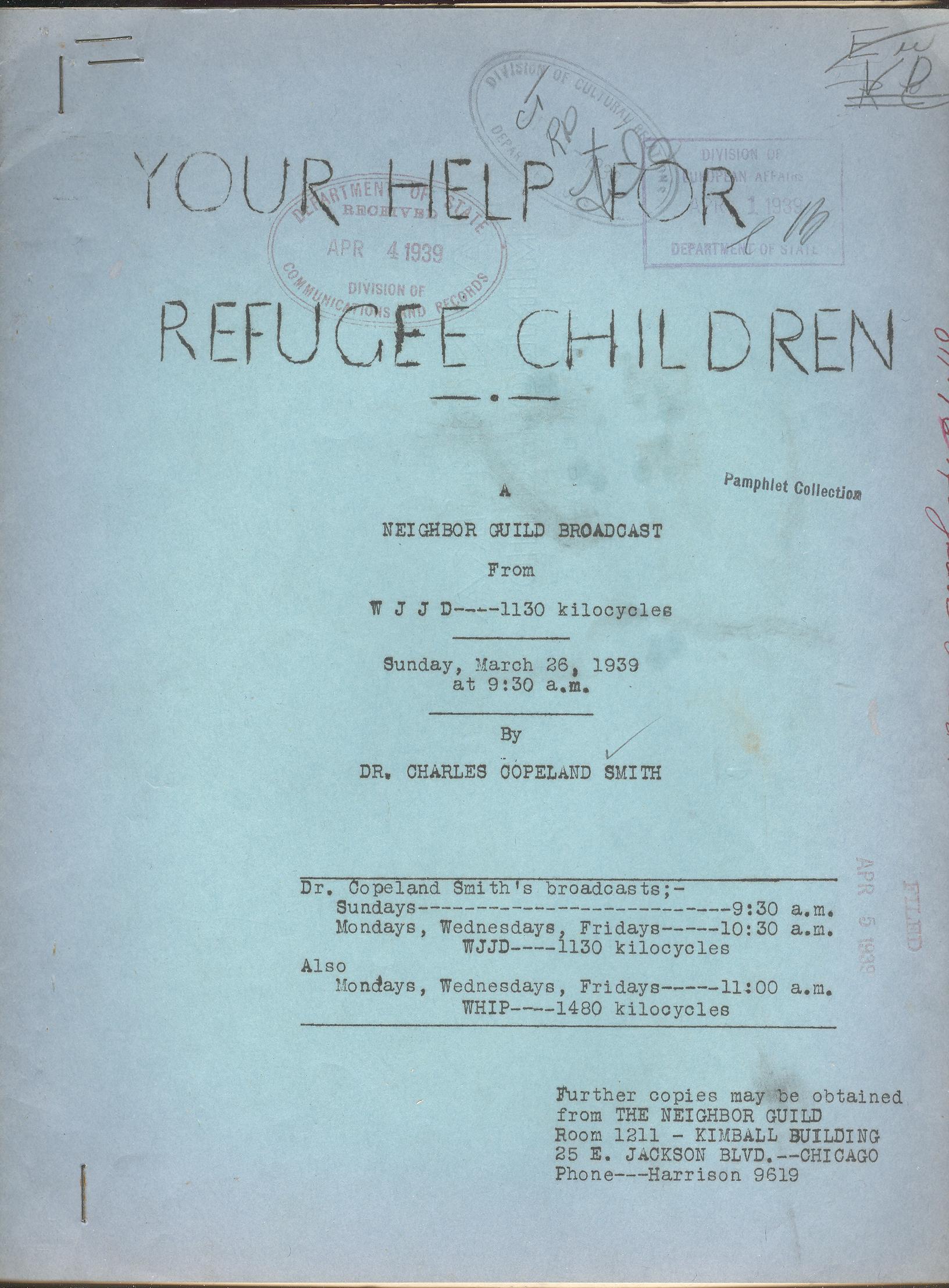
    April 17 jewishYour Help for Refugee Children (March 1939)  is the text for a radio broadcast by Chicago-based Dr. Charles Copeland Smith for his “The Neighborhood Guild” series.  (The document is also available from our blog bookstore.) Actually, Smith gave the broadcast over to his wife (for some reason) to make this appeal– I guess because the subject was children, and that it would best be made by a woman.  Mrs. Smith made the case for the relaxation or extension of American immigration policy to accommodate the newly-minted refugees of Hitler’s Nazi Germany. 

    The European war was just about started by the point–Czechoslovakia and Austria were already done, and Poland and the rest of the beginning of the war was just six months away.  By this point, however, the war was considered a foregone conclusion by most thinking people.  

    I have to give credit to the Smiths, as they did recognize the coming threat of Nazism, and did make the appeal for a more expansive inclusive of the relatively stingy American immigration policy.  They figured that the children of refugees would be their main concern, and that accommodation should be made to accept 10,000 of them per year.  

    That would be 10,000 “extra” children, I’m assuming, since the Smiths make the case that the current levels for allowable immigration was an at “inadequate” 27,000 per year.  In 1938 there were more than 300,000 applications for U.S. visa from German Jews alone, about 20,000 of which were accepted.  In 1939, a smaller number of Jews would find themselves allowed into the United States. From 1933 onwards, the case can be clearly made for the State Department, Congress and the Executive branch actively engaged in restricting immigration to the U.S. by many hundreds of thousands of European Jews.  Even after it became apparent that not only were Jews being sent to concentration camps by the millions, but they were also being exterminated , that the U.S. policy for acceptance of Jewish refugees barely changed.

    It is at the Jewish question that the Smiths got things wrong in their broadcast.  Mrs. Smith made “another attempt” to make the case for the refugee issue was not “predominately a Jewish problem”, the argument being that there were so many more Catholics than Jews in places like Czechoslovakia and Austria.  She went on: “I believe that Nazism is determined to stamp out liberalism.  The movement is political, not racial, not religious.”

    The undercurrent of their argument for saving (“not just”) Jewish children was based on a very selective use of out-of-context statistics, concentrating on numbers of refugees coming out of Austria and Czechoslovakia, and not, somehow, out of Germany.  I’m not sure how they could have gotten to their argument on refugee status for Europeans while ignoring the six years worth of anti-Jewish legal abominations perpetuated upon the German Jewish population.  

    The “Law for the Restoration of the Professional Civil Service” was passed in April 1933 (the first official banishment of the Jewish people as menials, second-class citizens,  banning them Jews from government jobs). The Jews had already been established by the Nazis as being the cause for the loss of WWI, the debacle at Versailles, the ruination of German culture and mortal enemy of the Aryan German. Many hundreds of laws like this would be instituted over the coming few years, establishing the legality of the supposed inferior nature of the Jewish people.  (Also in July 1933 came the underpinning legislation of some future nasty thinking, Ernst Rudin’s “Law for the Prevention of Hereditarily Diseased Offspring”, which established health courts and compulsory abortion and sterilization for a variety of physical and hereditary traits found to be unacceptable for the promulgation of a superior German race.) And this is all before the Nuremberg Laws of 1935/1936, (specifically the “Reich Citizenship Law” 1936)  which basically established the fate of the Jews, removing their citizenship and making them “subjects of the state”.Do I really need reiterate the case for the Nazi subjugation of the Jews, and their making the social and legal basis for the coming extermination policies which were codified at Wansee in 1942?  I think not–though it seems to me that for whatever reason the Smiths decided to not utilize this already well established (even by 1939) information.I think that at the very least they did not want to know.
                                        
    I’d like to focus on this self-deception, the welcoming of not knowing something, of not wanting to know, of stopping: of doing nothing in the face of something needing to be done.

    The destruction of the Jewish people during World War II is a history with many bearings, a complex of actions that seem to have been both elusively unstoppable and eminently addressable.  The psychology of why this occurred is forensically comprehensible; the ultimate question, after everything is said and done, is why the extermination was allowed to continue for years on end. There is a considerable catalog of demons of non-actions and deceits that I just can’t address now in a short post like this. Though I would like to know why was it so difficult/impossible for the British government (and in particular, Anthony Eden) to allow Palestine as a safe haven for desperate Jews, engaging in torturously long non-decisions and bureaucratic inscrutability to emergency situations?  Why did Franklin Roosevelt take so long to come acknowledge the documentation of the Holocaust and then cause almost nothing to be done about it?  Why did Sumner Welles act decidedly against any real action in presenting the full case of the Holocaust to American leaders?  Why would the War Department (represented by Assistant Secretary McCloy) respond in 1944 that  Auschwitz was both beyond the reach of tactical bombers and not be of sufficient military interest to divert Air Force resources away from other areas of interest?  The knowledge of vast extermination of Jews in Europe was known by early 1943, and yet, there was little action taken to do anything to stop it.  Not only that, the issue of emigration for Jews to the United States or any other country that would have them was caustic and slow; it was in short a history of the use of the word “no”.

    Henry Morgenthau (1891-1967), an old-line politician, was Secretary of the Treasury under Roosevelt and was also the only Jew in the cabinet.  It was he who in 1944 produced one of the most compelling, and damaging, documents questioning the American government’s culpability in doing nothing concerning the Holocaust, when “officials dodged their grim responsibility, procrastinated when concrete rescue schemes were placed before them, and even suppressed information about atrocities.”

    Its title left nothing to question:

    Report to the Secretary on the Acquiescence of this Government in the Murder of the Jews (1944).

     It starts so:

    “One of the greatest crimes in history, the slaughter of the Jewish people in Europe, is continuing unabated.

    “This Government has for a long time maintained that its policy is to work out programs to serve those Jews of Europe who could be saved.
  • Logic Trees, Magic Squares, Magic Circles and Magic Square of Squares

    JF Ptak Science Books LLC  Post 1238

    [Associated posts: The Mother of all Renaissance Logical Graphs, The Knight’s Tour, Porphyry and Boethius and Census Art and the Display of Quantitative Data, 1860.]

    Magic square and circles det sq881
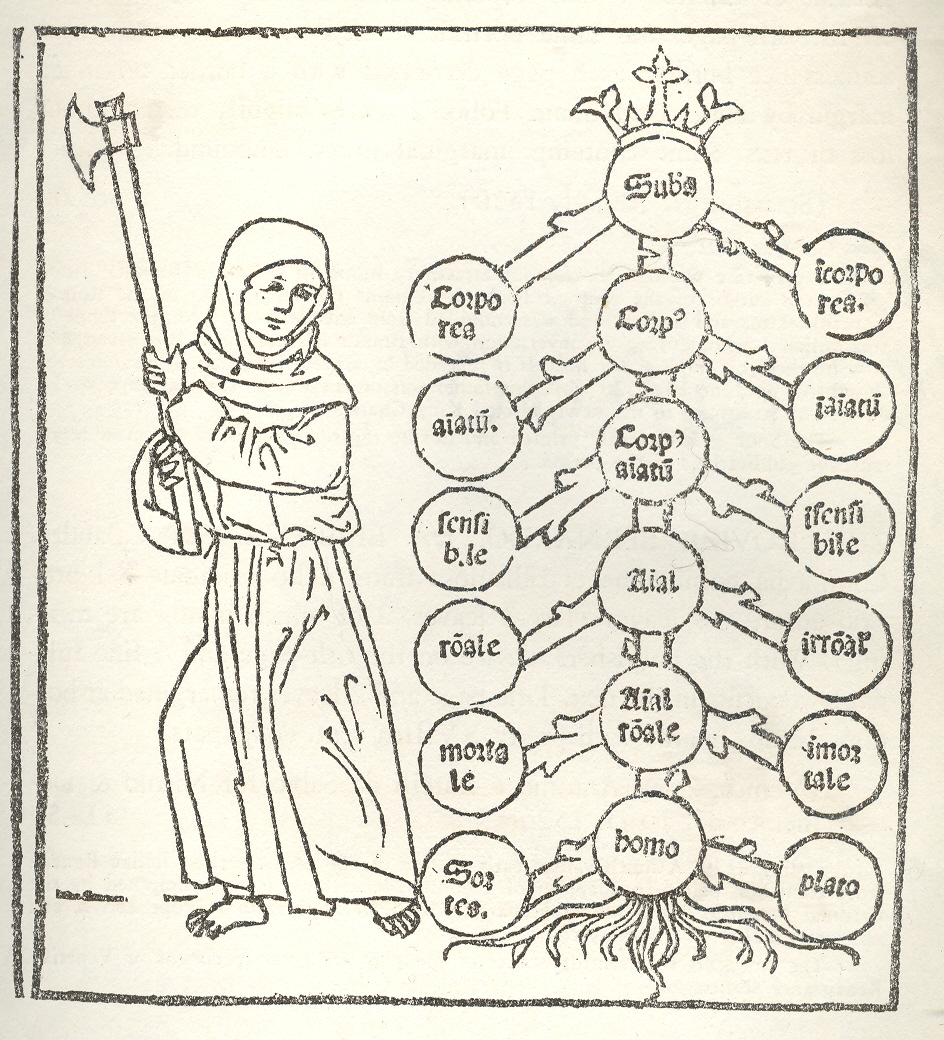
    Well now:  I don’t know what the provocation or inducement is here to hurtle this axe-swinging monk to attack Porphyry’s Tree1, though it would be interesting in a forensic sort of way to know what the tree’s section might reveal. The “tree” was a diagrammatic creation of a 3rd century Syrian mathematician/logician/philosopher named Porphyry who– much taken with Aristotle (and with the Categories in particular)– developed a systematic approach to the organization of thought in diagrammatic form.1--logic tree

    What’s inside a tree of logic and memory?  Is there a  xylem-y/phloem-y stuff besides a three-dimensional representation of the structure of organizational thinking?  Or is the 2-dimensional rip a fatal blow to other dimensions, and like Eddington’s Turtles, it’s a simple slice of Flatland all the way down?  

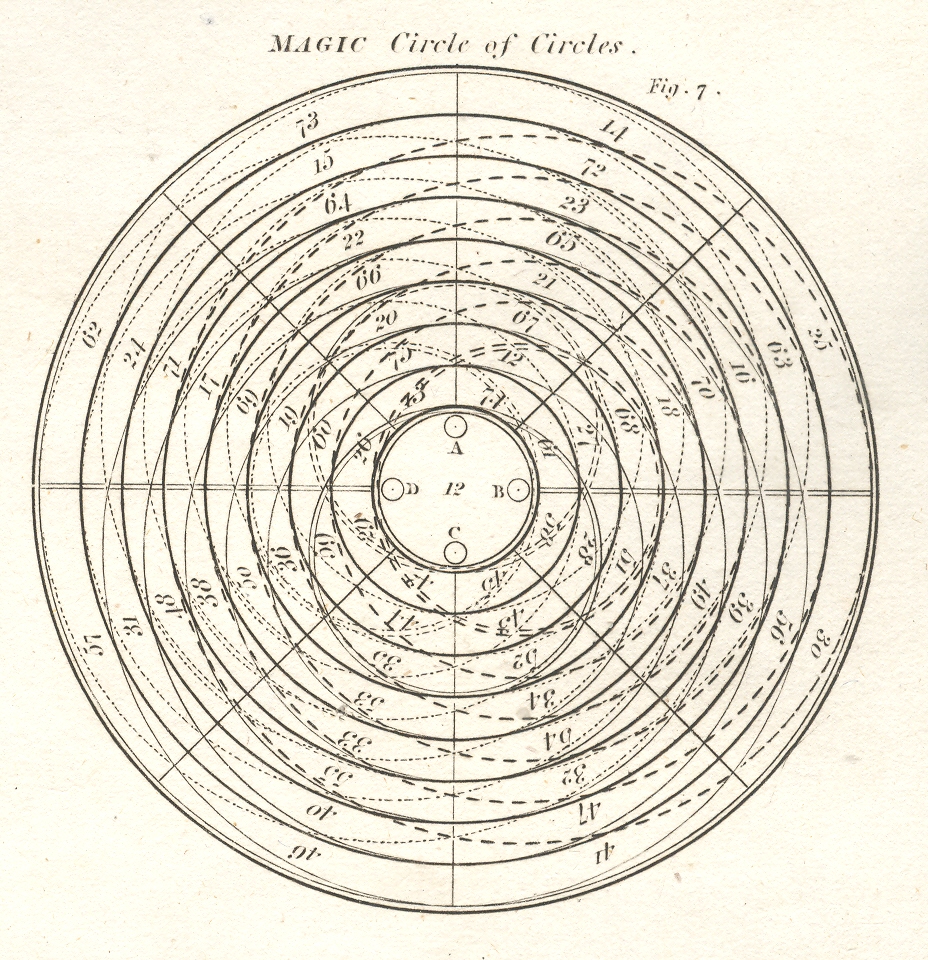
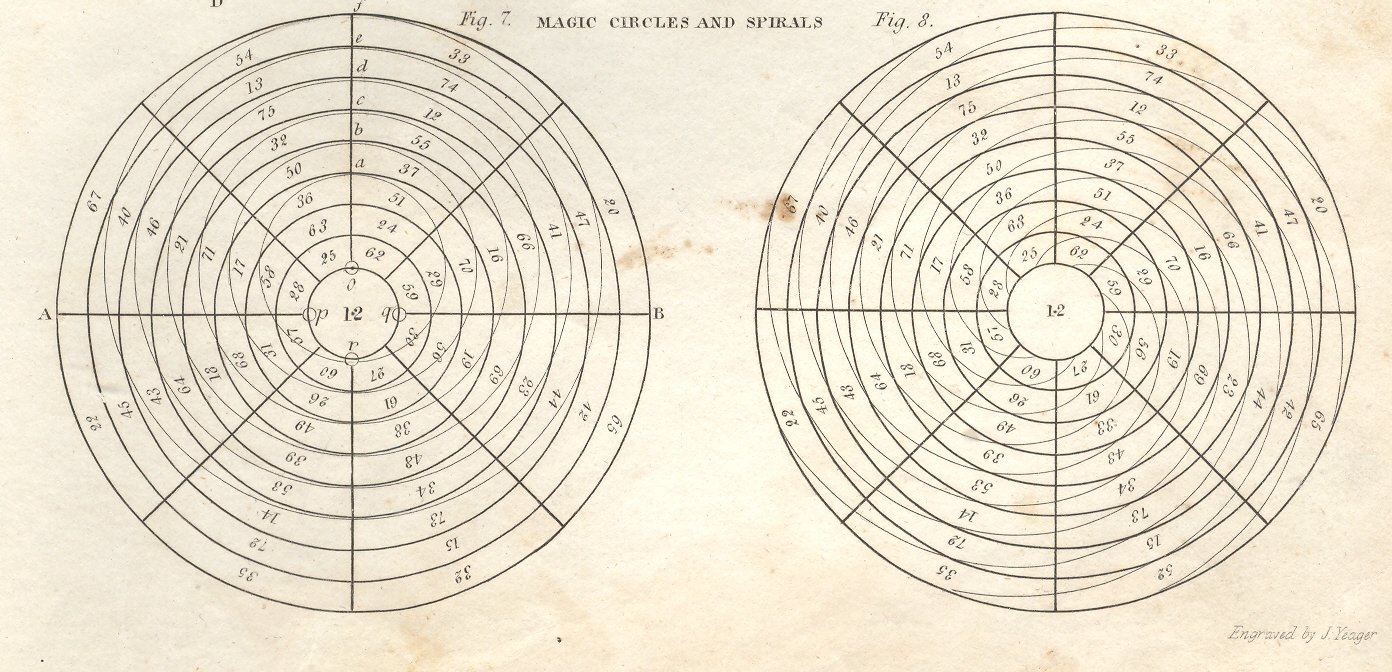
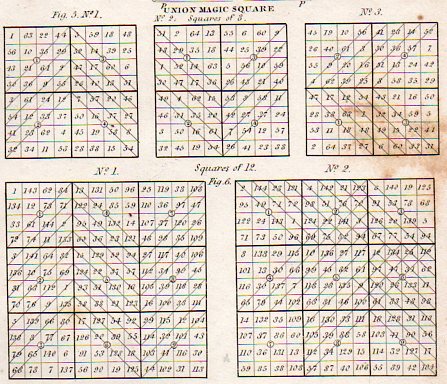
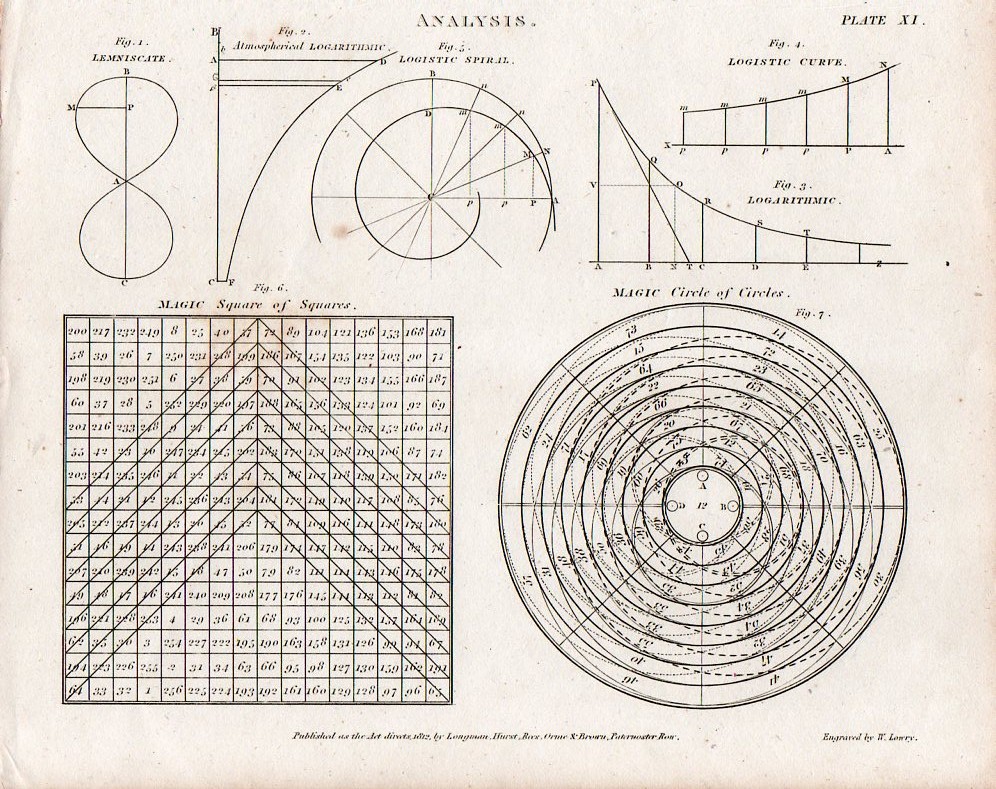
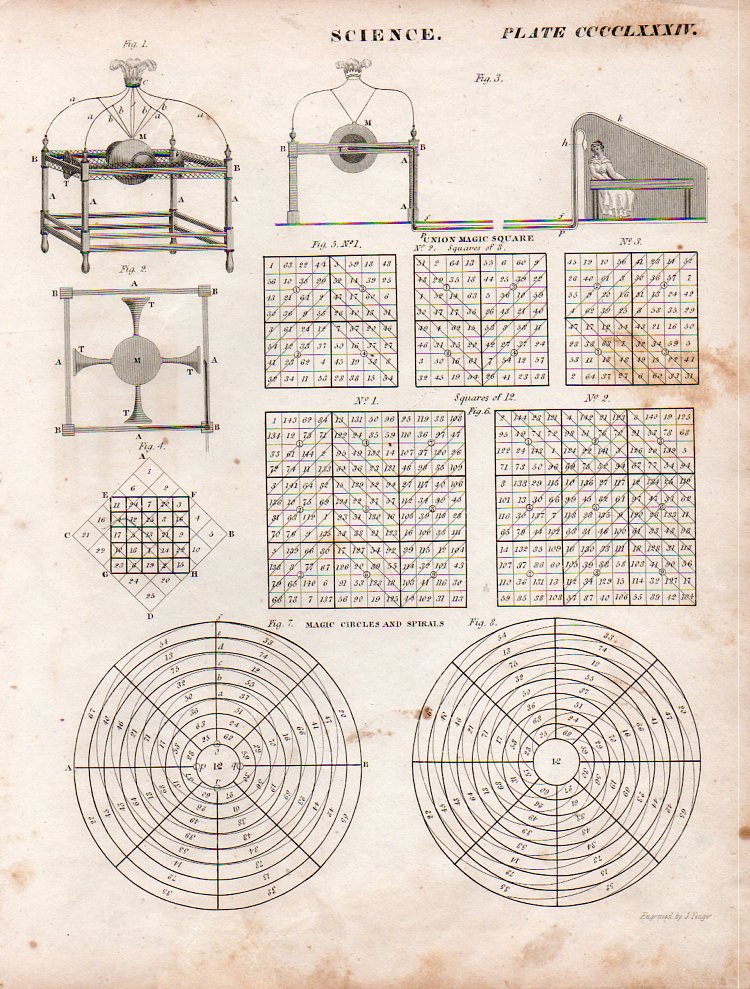
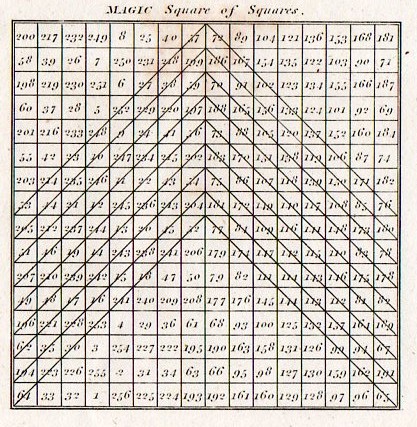
    Perhaps Porphyry’s tree rings would look like this, a magic circle or spiral, which would make some sense, and would bring to bear an associated use of turtles—or tortoises, I should say.  It turns out that perhaps the very first use of the magic circle, rolling back its origins through the Islamic world to India and to Persia and then to Japan,  and then finally to China where, in about 2000 BCE, the magic square appears in an image with the Emperor Yu,  inscribed on the back of a tortoise.

    1--logic tree magic circle 

    1--logic tree magic cricles

    [Magic circle source:  Abraham Rees Encyclopedic Dictionary , printed 1805-1815. The originals are available from our blog bookstore.]

    Magic squarezz and circles det883

    Magic square and circles880
    Magic squarezz and circles882

    Notes:

    1. This image appears in the rare Destructio sive eradicatio totius arboris Porphirii : magni philosophi ac sacrae theologiae doctoris eximii Augustini Anchonitani ordinis fratrum Heremitarum Sancti Augustini, cũ quadã decretali eiusde, published in 1503.

  • Mrs. Kennedy’s T.V. Show, 1960

    JF Ptak Science Books   Post 1239

    “Much of what we used for Caroline will serve for the new baby, too. Any new things I buy, I choose in neutral shades, being completely impartial as to whether it’s a boy or a girl”–.Jacqueline Kennedy, on how she will dress her coming baby, November, 1960.

    Kennedy 4.3

    The Kennedy presidential campaign of 1960 was certainly of a different era–it had its fair share of good and bad, but what it lacked was the noble predator of massive television coverage.  There’s was a minor major attempt at utilizing the new medium, and certainly from where we sit today, the effort looks quaint, naive.

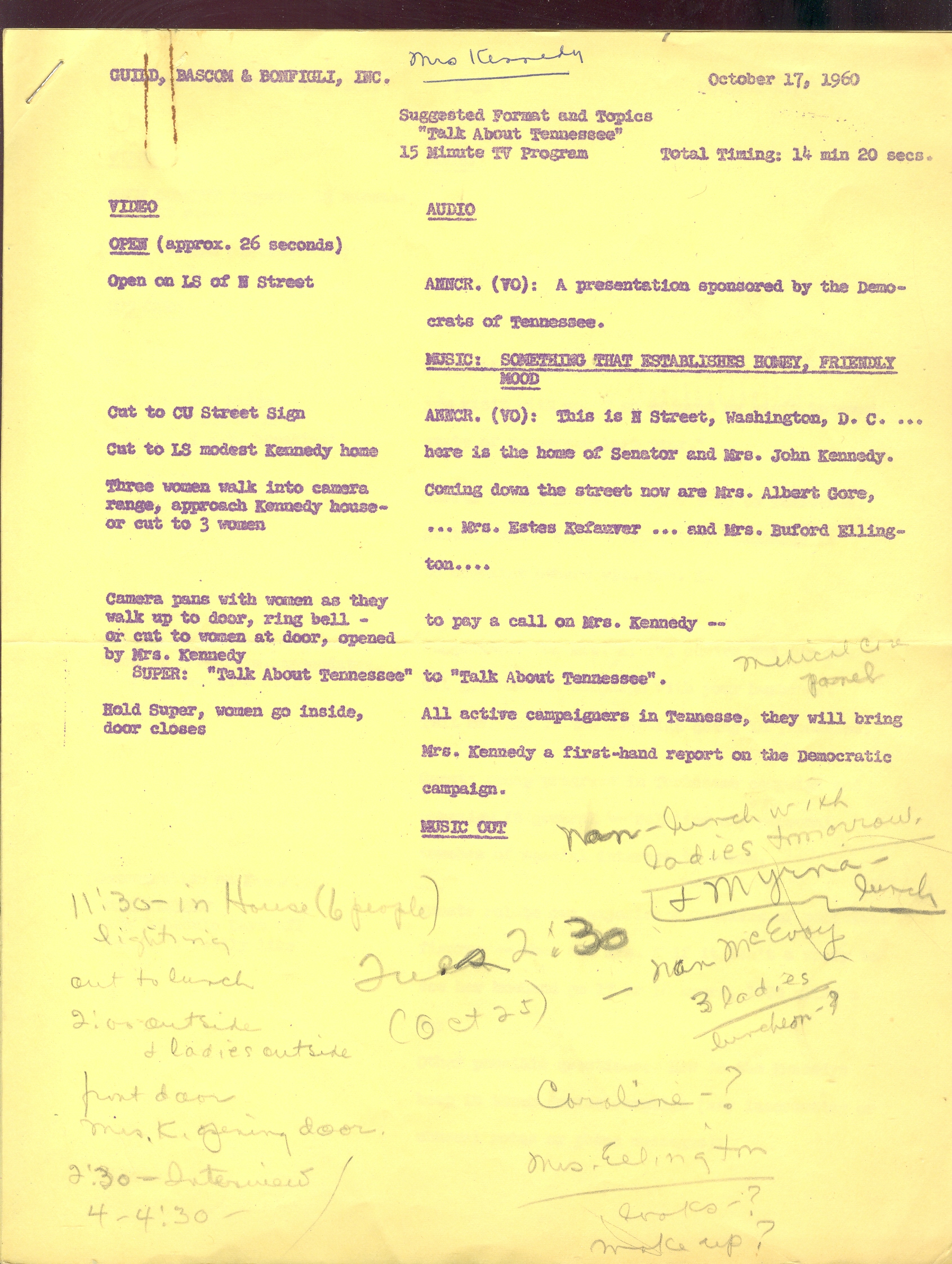
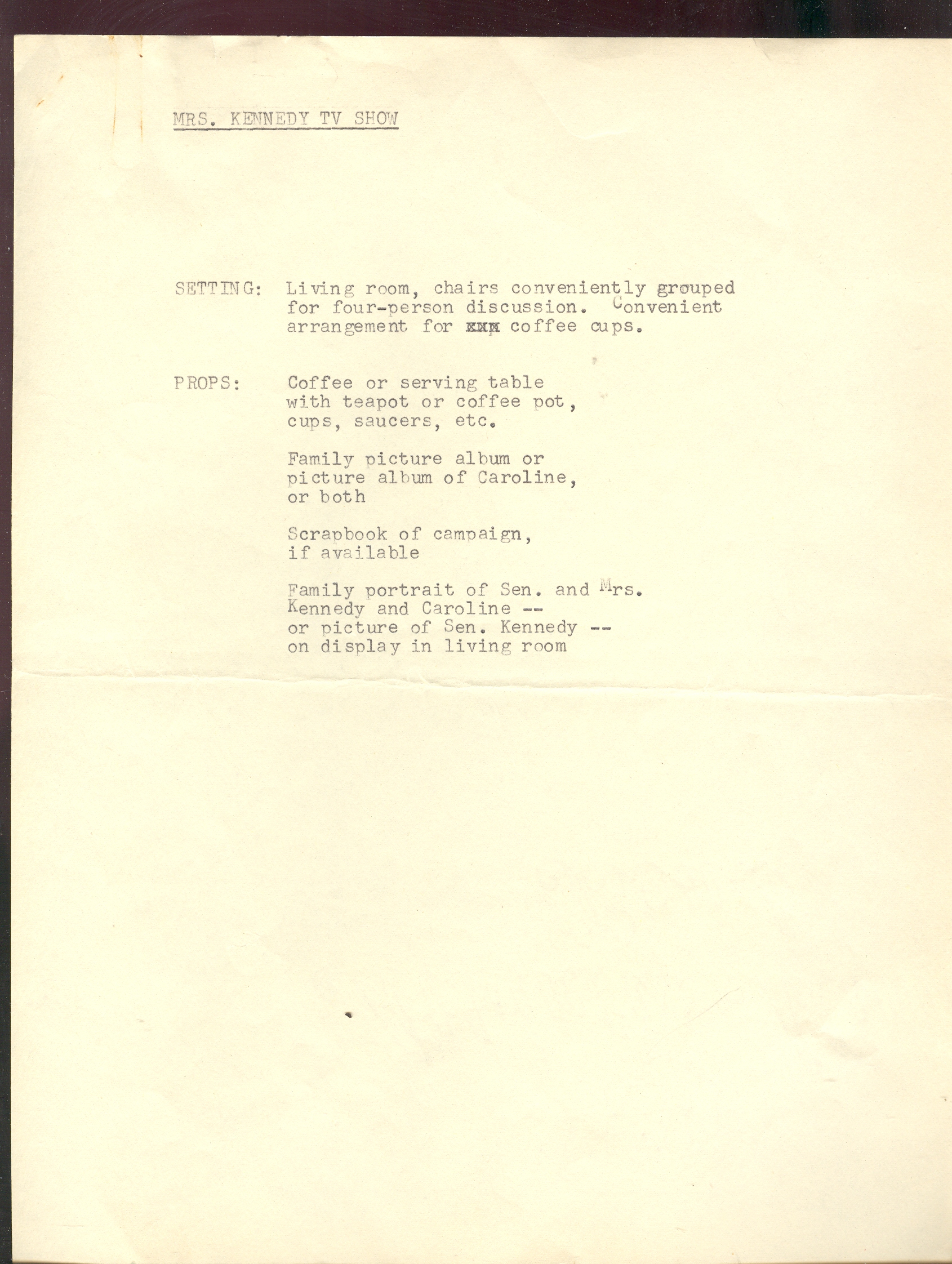
      What we have here is Jackie Kennedy’s copy of a script entitled “Talk About Tennessee”, (dated  Oct 17, 1960) for a 15-minute television endorsement for John Kennedy’s presidential campaign. Its a six-page insight into the workings of the campaign,  an x-ray of fifteen minutes of Jackie Kennedy talking with the leading ladies–featuring Mrs. Kennedy, Mrs. Albert Gore, Mrs. Estes Kefauver, and Mrs. Buford Ellington.of Tennessee–in a hearts-and-minds attempt for women’s votes. In fact, the scripts are titled “Mrs. Kennedy TV Show” in the hand of her acting social/press secretary, Gladys Uhl–it is in fact a full-fledged commercial spot, a long advertisement, though called something a little higher-minded than that.  But an ad is an ad, and this is definitely an ad. We see the enterprise from the director’s eye, who arranges the motion of the camera, the arrangement and style of music, and suggestions for conversation. [This document is available for purchase from our blog bookstore.]

    In the current era of micro-micro-management of micro-details, created nuance, utterly lost spontaneity, carefully crafted breathing and absolutely scripted off-the-cuff remarks, this effort seems extraordinary to the room that it left for instantaneous discussion.

    This material is from the estate of Mrs. Gladys Uhl, who served as the press liason and secretary for Mrs. Kennedy for a short time at the end of the election during the fall of 1960, though she did not follow Mrs. Kennedy into the White House. (Mrs. Uhl was the wife of Alexander Uhl, a very prominent and superb reporter who covered the Spanish Civil War in the front lines for several years, and who reported first hand on action during WWII, and covered many early civil rights movements for the Associated Press, the far-ish Left PM Newspaper, and many others. Her second husband, David Katcher, was the founding editor of Science Today magazine and who served a number of administrations in various high-level capacities.)

    The document, purple ink printed on yellow paper, and was evidently produced by Guild, Bascom and Bonfigli, Inc., and dated 17 October 1960, and is inscribed (in Uhl’s hand) “Mrs. Kennedy” in ink at top center of the document.  It details the look, feel and sound of the “TV show”, and also has suggestion about the content of the conversation. There are outlines for conversation *only* as there appears not to have been a definite script for each of the women. The entirety of the show does seem to be here, though, directing how the show should look to the viewer. The document is essentially divided into two sections, left and right, one side describing the video segment and the other describing the audio. A sample as follows:

    VIDEO (pg 1). “Open sequence on N street” (home of the Kennedys during this period was 3307 N in Georgetown, DC)

    AUDIO (pg 1). Music: “something that establishes homey, friendly mood”.

    VIDEO (pg 1): “camera pans with women as they walk up to door, opened by Mrs. Kennedy”.  [The conversation is mostly directed towards Jackie and the campaign.]

    AUDIO (pg 2): “guests relate own experiences as wives of political figures, then ask Mrs. K if it isn’t a worry to see her husband go 17 or 18 hours, 1700 miles a day”. 

    AUDIO (pg 2): “Other possible questions: how do the Kennedys keep in touch during campaign (any interesting or unusual notes or phone messages)?”.  Other questions put to Jackie: –what does Senator Kennedy do on his day off? –does he have a favorite meal? –how does Mrs K spend most of her time? –how does Caroline adjust to the activity around her? –has Mrs. K had time to fix up nursery, gather baby clothes? –where does she do her shopping? Then there is this nugget (on page 4) about a possible response for Mrs. Kennedy on her impending childbirth: “Much of what we used for Caroline will serve for the new baby, too. Any new things I buy, I choose in neutral shades, being completely impartial as to whether it’s a boy or a girl”.

    VIDEO (pg 5): “suggested to close program: if there is a family picture, or a picture of Senator Kennedy in the room, someone might draw attention to what a good picture it is. Mrs. K could either bring it in closer or rise and walk over to it. Women would then continue in conversation, silent footage, while the announcer concludes the show, voice over.”

    VIDEO (pg 6): “Drop super, camera cuts to picture of Sen. Kennedy, if possible within the Kennedy household”. VIDEO (pg 6.) “Super: Vote Kennedy-Johnson the Democratic Ticket. Ending.”


    Kennedy 4.1 

    Kennedy TV SHow, pg 2

    Kennedy 4.2

    Kennedy TV SHow page 3

    Kennedy 4.3

    Kennedy TV SHow 4

    Kennedy 4.4

    Kennedy TV SHow 5

    Kennedy 4.5


  • First Photograph of a Smell, Revisited

    JF Ptak Science Books

    It leaves me with such a cozy feeling to not find what I think is an obvious-but-odd phrase in Google.Dsc04716

     And that’s what happened with “the first photograph of a smell” (or “photograph of a smell” or odor, for that matter),  as shocking to the senses as it might be.

    There are long and interesting lists of firsts in photography: the first color photograph (Maxwell, 1867, but impermanent), the first photograph of a human face, the first photograph of the moon, the first photo of a planet, and so on, tirelessly, until we see how many derivations of “firsts” there are. (We can go from first photo of human to first photo of a human face to first photo of a human in motion to the first photo showing human hands to the old human recorded by photography tot eh first photo of a couple to the first photo of a human with a tool and on and on.) There is a shorter list of “first photographic non-photograph of a photograph” (?!) that I wrote about in an earlier (illustrated) post, but we won’t go there today.

    Here is a “first” though that I think hasn’t been dealt with too terribly much: the first photograph of an odor.

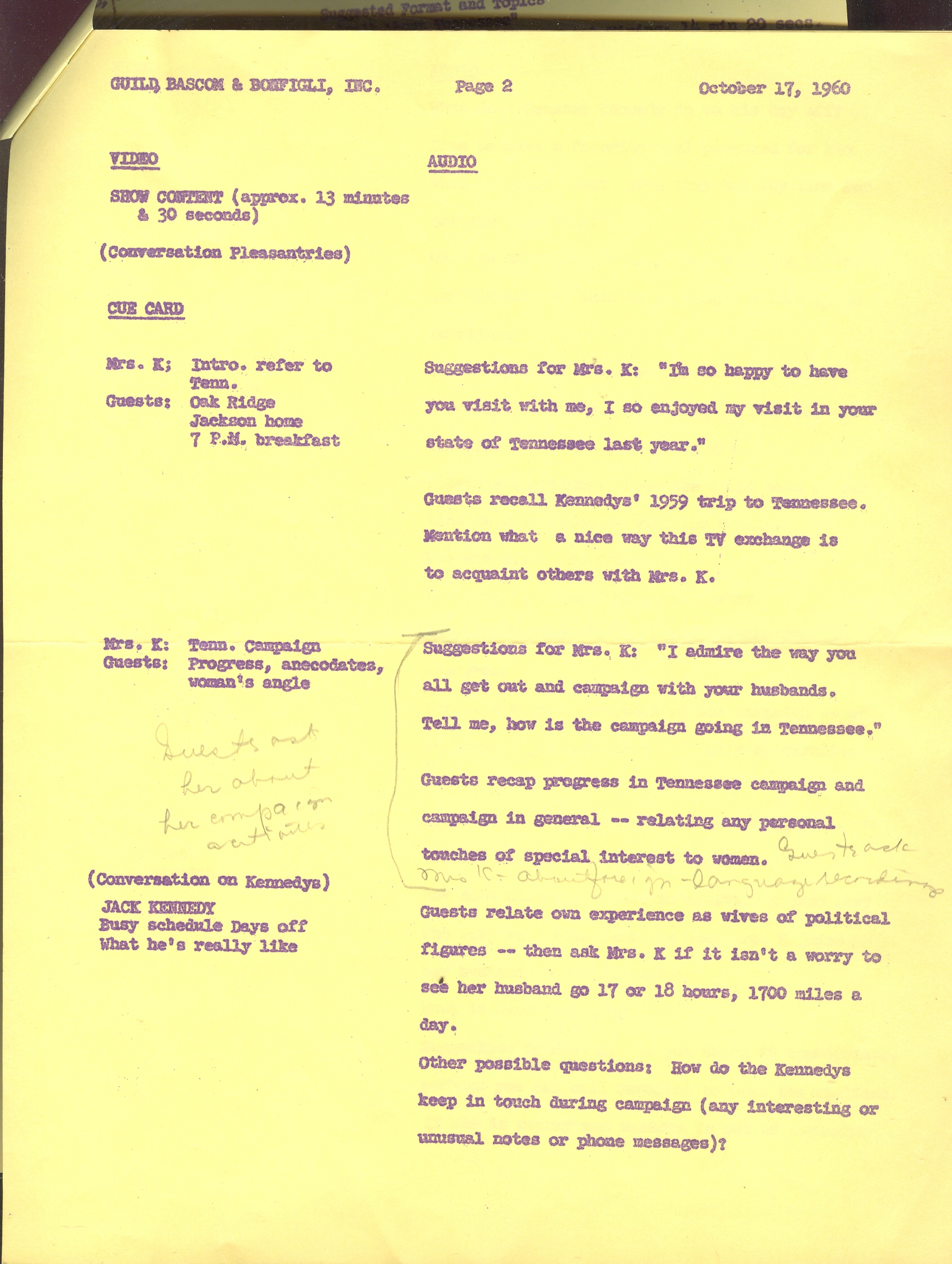
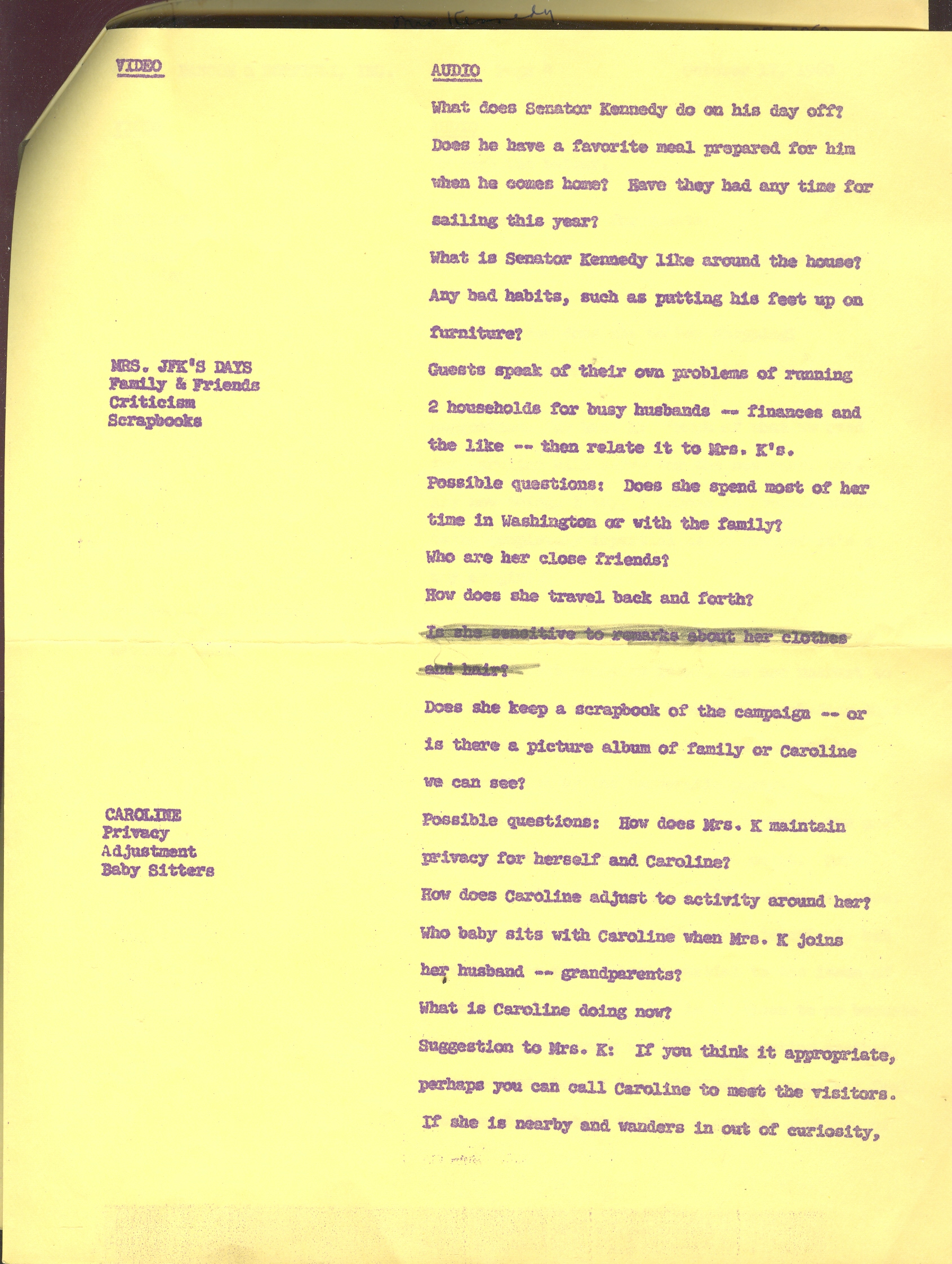
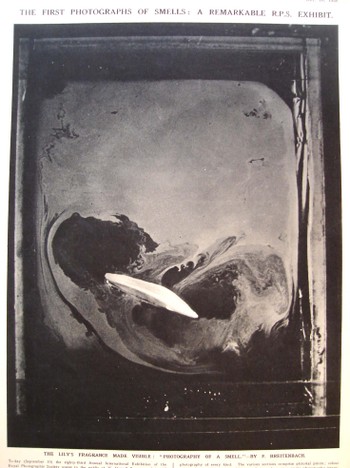
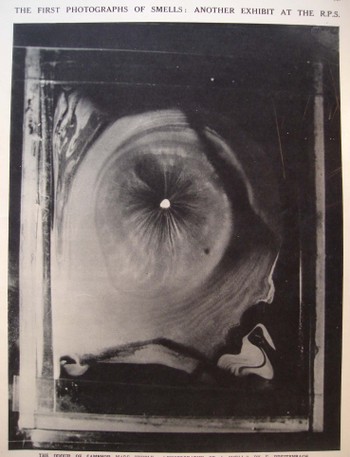
    These beautiful images appeared in the 10 September 1938 issue of The Illustrated London News and were exhibited at the 83rd Annual International Exhibition of the Royal Photographic Society, and were made by H. Devaux (who evidently, according to the snippet of an obituary that I can see from Science magazine, was a plant physiologist and “pioneer of surface physics“Dsc04717
    who died in 1956). The note accompanying the photographs read: “The emission of an odor involves volatillisation of material. If an odiferous material is enclosed in a cell a few millimeters above a clean mercury surface, it is possible to collect on the surface of the mercury a monomolecular layer of the volatillising or odoriferous substance. If the mercury surface initially is covered with talc powder, the gradual formation of the monomolecules layer may be observed as the talc is gradually pushed away from the point immediately below the specimen of material.”

    The photos are that of the odors of a lily and of camphor. I don’t know which is which, and a good story could be made up for either photo belonging to either item. Needless to say, these images are as gorgeous as they are unexpected, especially considering that they were made in 1938.

    {Both images are avaialble for purchase from our blog bookstore.]

    FOOTNOTE:

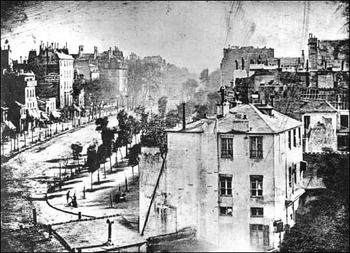
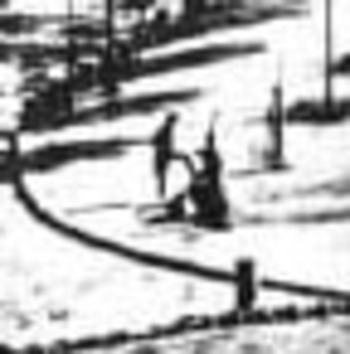
    I’d just like to add here the first photograph of a human being–well, actually, it is the first photograph that just happens to capture a human in the emulsion (discussed Blogoldest_human_photo_2 very nicely on the Doug’s Darkworld  blogsite.  Since the  exposure time was so terribly long for this image to be made, the moving people and horses and carriages on the street, all of the city-life bits, were necessarily spectral, invisible, to the photograph.  Only the stationary items were captured, and the only people captured here were two figures in the foreground, doing something or other that made them still for at least five minutes–long enough for their anonymous but famous photonic impressions to be captured.   Mr. Doug and others seem to think this is a man getting his boots shined–I agree.
    Blogoldest_human_photo_detail

  • Bombing Britain, 1940–a View from the German Side

    Dsc04742_2 JF Ptak Science Books  Post 1241

    It is essential to look at objects from alternative angles, especially in science, in order to determine the correctness, or fitness, of a finding, or opinion.  Even when consolidating data or evidence regarding the confirmation of an established bit,  you may very well find other strands of loose data that could help illuminate even a well established or iconic societal “given”.

    That the war was not going well for the Allies in September 1940 is an understatement—and the chief allies at this point excluded the United States, happily now recovering from the Depression, and still a full 14 months away from entering the war. 

    Dsc04739 What is very weird to me is that after having looked at every issue of LIFE magazine at least three times  from the start to the end of World War II, that there are more advertisements using war images than there are images of the war itself.  This actually continues into the spring of 1942, when LIFE got really busy, the war got really messy, and people started really dying.  And frankly even the coverage of Pearl Harbor in no way lived up to what I thought the coverage of a photo-magazine like LIFE would be. This is not a scientific study.  It just strikes me as odd, or propagandizing, that there should be such relatively scant, or undervalued, coverage of the fighting when sanitized images of that same fighting were being used to sell socks and shaving cream and cigarettes and such.  I understand the power of hearts-and-minds campaigns, but this seemed so amateurish, boorish even, that it just didn’t approach the level of a psychological ploy to pacify an American public that had virtually no interest in attending the European Theatre. 
    This was not the case with the British equivalent of LIFE—the Illustrated London News.  Actually, I should say that LIFE is a dumbed-down version of the ILN, which was the world’s first illustrated magazine, and which began almost 100 years before LIFE was born.  The ILN covered the war like it was a war being fought in their front yards—and it was.  Dsc04741

    This was also not true of one of the principle German equivalents of these two weekly photo-imags, the Illustriete Zeitung (Leipzig).  There was a  lot of war coverage, though much more sanitized than even the very sanitary (pre-1943) versions of reality issued by LIFE and the ILN.  The Germans by and large did not use war or military images to sell common-sue, every-day consumables; it rather concentrated on the glories of battle, real and imagined, as well as using a very grandly flatulent palette to paint the image of Adolf Hitler.

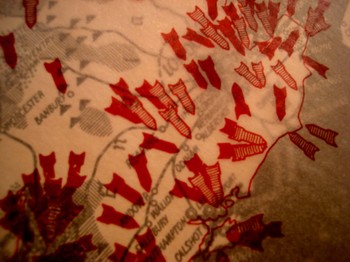
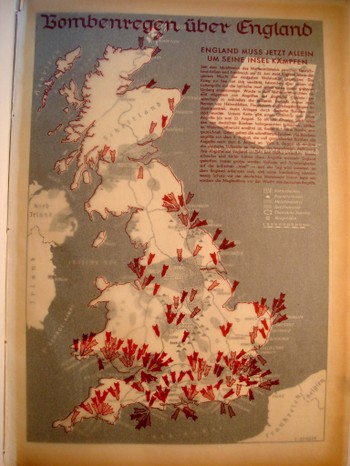
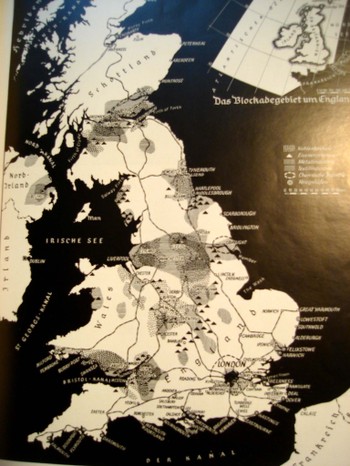
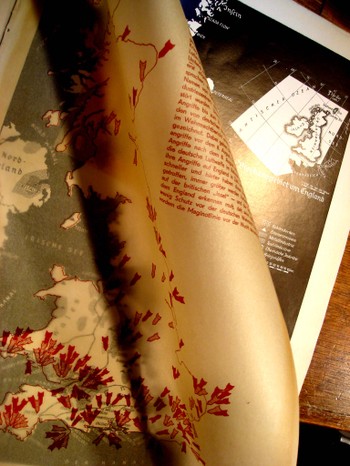
    What caught my eye was a map in the 5 September 1940 issue of the Zeitung.  (The cover woodcut illustration, by the way, is a sharpened point of the Roman standard bearer being used by the Fascist Mussolini government about to impale a running cat-thing that represented Somalia.  The Italians attrociously bombed innocent civilians in Somalia and Ethiopia with abandon and disdain.) On page 165 is a two part map, the upper part being a velum-like overlay, showing the German bombardment of England.  (“Bombenregen ueber England.  England muss jetzt allein um seine insel Kaempfen…” )  The template map is in stark black and white, showing locations of “war” industries, chemical plants, rubber works, textile plants, metal industries and gas works . The overlay shows the outline of the island with 150 or so bombs, imprinted with a color code to show what sort of industry it was intended for.  As you can see there was quite a cluster around London—I looked closely, and no one bomb was actually placed directly upon the outlined city of London. Suffice to say that no fool editor at the Zeitung was going to show their readers that German bombs were falling on a city. 

    Dsc04740 What this map shows me, outside of the propaganda aspect for its intended readers, is that the basic bits of the bombing campaign was actually true—that there was a whole crap-load of bombing going on, and going on quite well country-wide.  Certainly people in England knew this but knew it in chunks.  The Battle of England was being fought at this point, and the outcome was still undetermined—even though the Brits had the “ultra” and basically knew when the attacks were coming, and where.  But looking at this image of the bombing from a completely different, contemporary, and ENEMYsource hammered home the fact that England was being bombed, and bombed heavily, and that its future was in real doubt. 
    [This issue of the Illustriete Zeitung is is available for purchase from our blog bookstore.]

  • A New Class of Scientific Image? Francis Galton and Synesthesia, Revisited

    JF Ptak Science Books  

    A Quick Note on an Interesting Image: is this the First Published Illustration of the Mental Imaging of an Active Thought?

    Prestogalton_vis_closeup

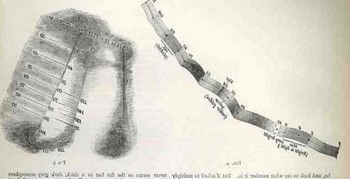
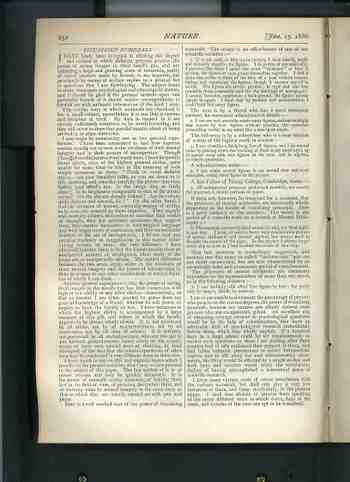
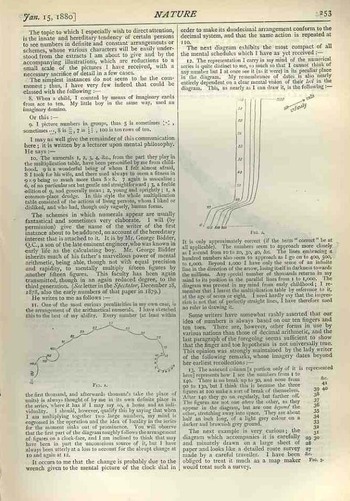
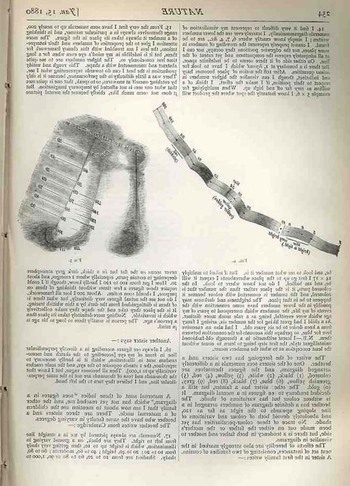
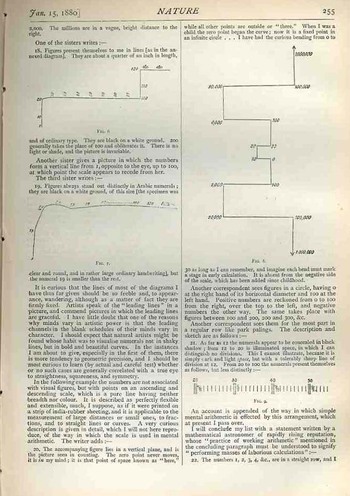
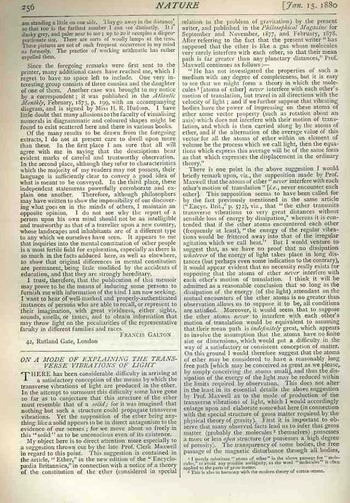
    I asked this question in the eigth post on this blog, back in February 2008, almost a million words ago,  and it seems to me that the answer to this is “yes”.1  Now that I’ve done a bit of reading here and there, this illustration may well be among the first that tries to describe how a thought “looks” in the head of  a person doing arithmetical calculation. That is to say, of how the thought-image of this process “looks” to people.  “Special” people, according to Galton, who was actually writing what was also probably sciences first paper on synesthesia. I’m returning to this post now because I’m offering the original of this paper for sale., here. Enjoy.

    I was stumbling through my collection of Nature (A Weekly Illustrated Journal of Science, London) magazine when I found a fantastic article by Francis Galton  (“Visualized Numerals”, Thursday, January 15, 1880) concerning (in one aspect)  the mental visualization of the act of doing mathematics. That is to say, what images people formed in their brains as they performed mathematical functions–this was even illustrated (!)

    Fascinating!  Scholars have pointed to this article as perhaps the earliest scientific effort on synesthesia , but what strikes me is how he tried to describe the intimate or logical function with the visualization of the act….I think that is what makes this effort so spectacular.

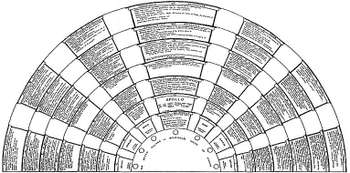
    I’m not associating memory devices (like the memory palaces of Matteo Ricci or Robert Fludd’s spectacular creations from his Ars Memoriae, or the beautiful schematic of Civlio Camillo’s memory theater,  for example which are more (basely speaking)
    visual aids for restructuring already-completed thought patterns) with this question; l I’m not so sure that it applies. These are more issues of phylogenic memory, and concerned with memetics and semitoics rather than the actual formation of an idea.

    Prestogalton_closeup_2

    People have certainly written on images in the mind before Galton–the question is if anyone has illustrated what they think this process looks like? I’m also not so sure if this directly relates to Aristotle’s elements/colors affirmation or Pythagoras’s numerals and colors or Scriabins music and color associations, or Cardano and his color/flavor and the planets associations….

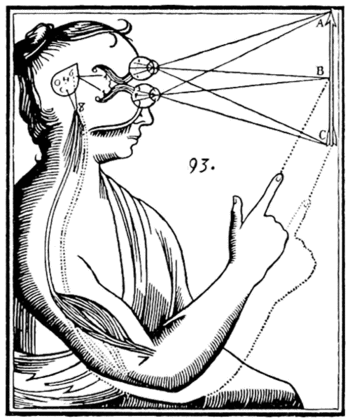
    I guess the question is—where does this image fall in the history of the illustration of abstract thought?  I’m not including famous examples of the physical aspects of sight as with Descartes etc; just the image of what people see in their heads as they are formulating thoughts and ideas.

    Galtoncamillo

    We’ll have more later.  I just wanted to put something up here as people have wanted to see the Galton article and Nature (1880) is not a terribly common thing to find. 
    Galtondescartes

    It would also be just plain wrong not to mention two things at this point—the works of Frances Yates , which is a gorgeous and insightful work on memory.  And secondly, I need to acknowledge the work of Barbara Stafford (University of Chicago) who for decades has produced the most beautiful and the most interesting works on what scientific images *are*. 

    Notes:

    1. See Scientific American, May 2003, page 53, which cites the Galton Nature paper as the first of its kind. Also see Scheuren, Fritz (08/01/2003). “History corner”. The American statistician (0003-1305), 57 (3), p. 189, which cites the SciAm article citing this.  Also Ramachandran, Vilayanur S (01/01/2006). “Hearing Colors, Tasting Shapes”. Scientific American (0036-8733), 16 (3), p. 76. And also Sacks, Oliver, (07/28/2003). “THE MIND’S EYE A NEUROLOGIST’S NOTEBOOK”. The New Yorker , 79 (20), p. 048. And lastly, Pinel, Philippe (06/01/2005). “Interactions between number and space in parietal cortex”. Nature reviews. Neuroscience (1471-003X), 6 (6), p. 435.There are many others who classify the Galton paper as the “first” in its field.

    For a good read in general on the basic papers in the history of synesthesia, see: Synaesthesia : classic and contemporary readings edited by Simon Baron-Cohen and John E. Harrison. Oxford, Blackwell: 1997, which includes the ground-breaking Galton paper.

    Here’s the entire article by Galton


    Presto018_4


    Presto019_2

    Presto020

    Presto021

    Presto022

  • Looking Inside Out–Ernst Mach’s pre-Escher Image

    JF Ptak Science Books   Post 1243

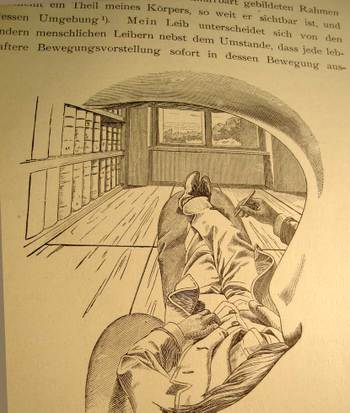
    MachbookI cannot think of another illustration by a scientist or philosopher who attempts to explain their own–literal, interior,physical–view of the world and then offer what this looks like to the reader from inside his own head, looking out through his own eye.  That’s exactly what Ernst Mach is doing right here on page 15 of his influential book Die Analyse der Empfindungen, the fourth German edition (“The Analysis of Sensations and the Relation of the Physical to the Psychical”)  (Jena, 1903)
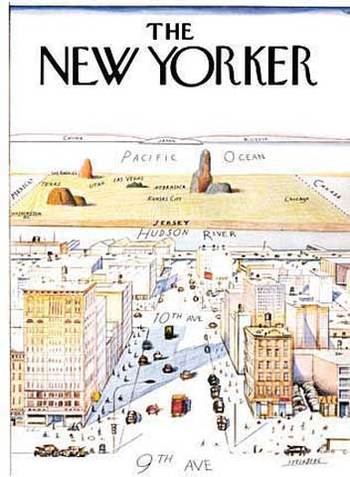
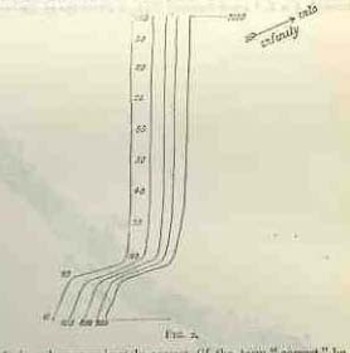
    There is nothing in this world for Mach that is not admissible to the human brain that is not empirically verifiable–that is, the world is nothing but awash in sensation and that sensation itself forms part of the experience of, well, experience. I’ve actually never been interested in the philosophy of science, and this is one of the reasons why.  Nevertheless I boldly break through my own prejudices to enjoy this phenomenally original image, drawn from the inside of Mach’s working mind, looking out through his eye socket, over his mustache, under his eyebrow, around his nose, out across his body and then leaping into the rest of the world.  I think he does make his point about the essentialSteinberg_352 nature of the observer. And much like the classic Steinberg New Yorker cartoon of the world view of the New Yorker (of course this includes only Manhattan), I know some number of people who have transposed their bodies much like Herr Mach into the Steinberg map–except that their worldview ends basically at the Hudson River (Mach’s feet) with the rest of the world being the sliver out there beyond the river (Mach’s window) until you go 359 degrees around the world to get back to the East River (and back inside Mach’s noggin).  It is an unusual world view to have, but someone has to have it so that we can at least identify it so. 
    I just like the picture.   

  • An ABC of Bombing, 1940

    JF Ptak Science Books    Post 1245

    I’ve written on this blog on some odd alphabets, and I’m certainly aware of some unusual alphabet books (like the alphabet of acronyms for some of FDR’s social creations and an alphabet book for socially conscience city planning in 1940), and there are endless alphabet books for young people learning how to read, but I don’t remember ever seeing an ABC book for bombing.  Actually, its ABCs for after the bombing: (I’ve also written dozens of posts on “bombing” in general–just enter teh term in the google search at left for a listing.)

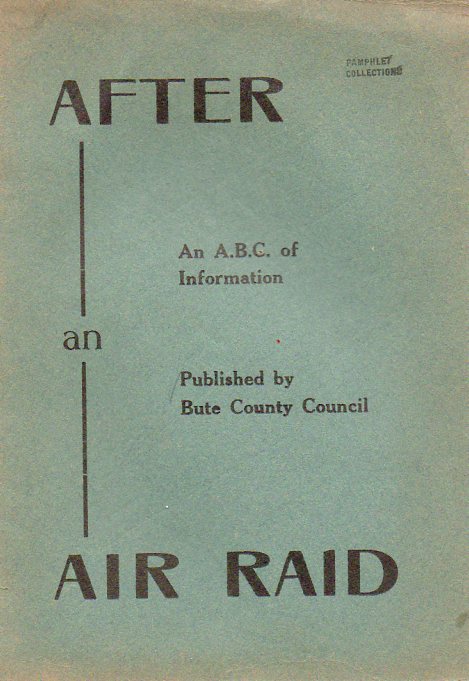
    Air raid884 After the Air Raid, an A,B,C, of Information,by the Bute County Council,  was published around 1940 (and which is available for purchase through our blog bookstore).This was printed in the town of Rothesay (by the “Rothesay Express”), which of course places publication in Scotland (though the Bute that I know is a county in North Carolina, 275 miles from where I sit–an old, 1760’s-founded county, up near the border of Virginia, closing in on the coat…its not-for-nothing that they call my part of the state “the Southern Highlands”, what with the huge influx of Scots/Irish coming into this area in the 18th 19th centuries).  It’s a curious publication, not the least of which is the unlikely place of its origin. 

    Another curious thing is that no other copy of this slight publication shows up in WorldCat/First Search–not only that, but there are precious few publications that are found in the 1940-1950 era with “after” and “air raid” in their titles. (The few I found are below.)

    The six-page pamphlet manages to cover 15 letters of the alphabet, plus a question mark at the end, for questions.

    The entries are very economical, tidy, and well written:

    “Money.
    If you are in need as a result of enemy action, you should explain your circumstances to the Assistance Board Officer who, if satisfied with your case, will help you.”

    “Orphans
    Notification should be sent to the Information Centre of any children who have become orphans as a result of air raids.”

    “Tools
    You may obtain a grant to replace tools which are essential to your work, apply to Employment Exchange for assistance.”   

    Very matter-of-fact.  I should think that if you needed to consult a work like this after having been bombed, that you’d want your information compact and direct.

    ·Posted by :

    ·in:

    — —
  • One-Page Letter Establishing the U.S. Poison Gas Position, 1917–addendum

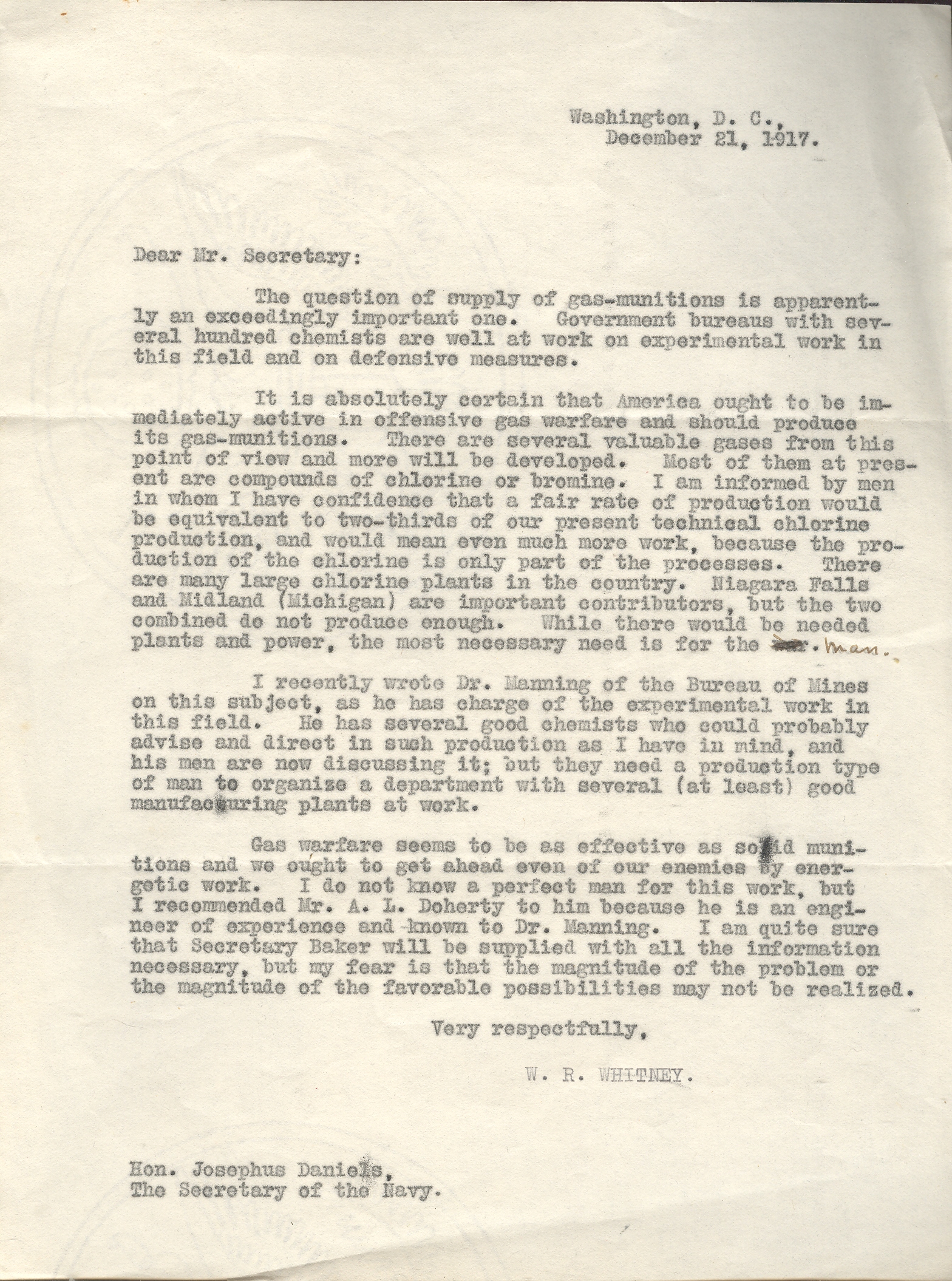
    I posted in March 2010 a short note on a one-page letter written in 1917 by Willis R. Whitney (founder of G.E. Laboritoriesand much more) to Secretary of the Navy Josephus Daniels outlining a position for the government on the production and use of poison gas in warfare.  I’ve added a little more biographical information to the original, and I’m also offering my original copy of the document for sale at the blog’s bookstore.  Enjoy.

    The full post is here.

    Mar 21 gas warfare


  • Empty Memory: Telephone Number 20080 (Warsaw); Nazis, Poland and the Holocaust, 1941–continued

    JF Ptak Science Books 

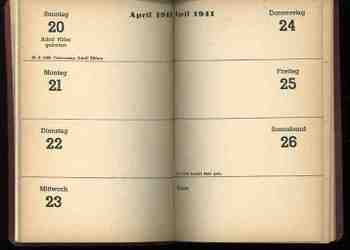
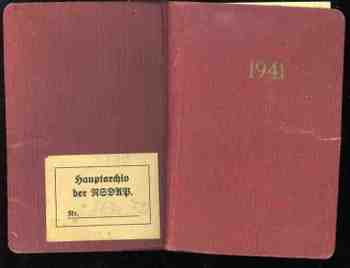
    I’ve made some additions to an earlier  post that I wrote  (“Empty Memory: Telephone Number 20080 (Warsaw, Nazi Occupied Poland and the Holocaust, 1941”) on this blog based on an unused soldier’s diary and telephone directory for Nazi-controlled Warsaw.

    1ebay_oct_3_1941_diary735

    It is a shocking to see this thing, such a simple bit of orderliness representing such gigantic cruelty. 

    1ebay_oct_3_1941_diary736

    Please follow this link to read the extended  post.

    ·Posted by :

    ·in:

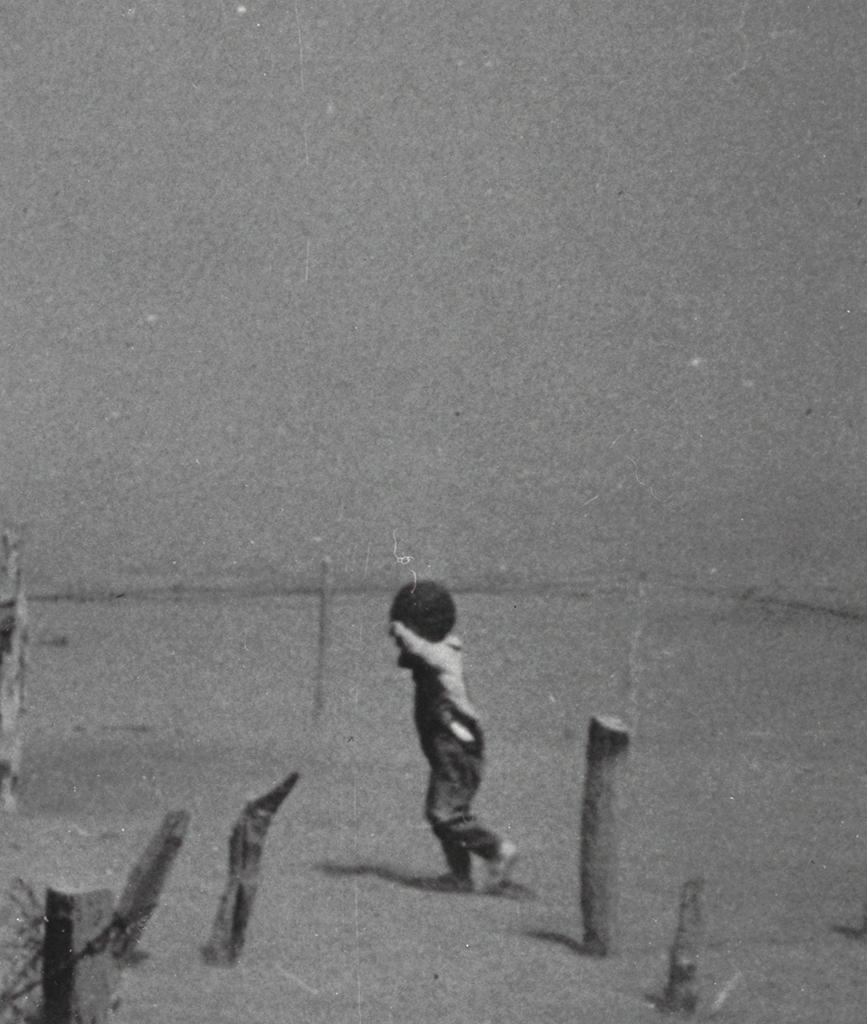
  • Manipulated Art–FSA Photography on 1830 Tissue Paper

    JF Ptak Science Books

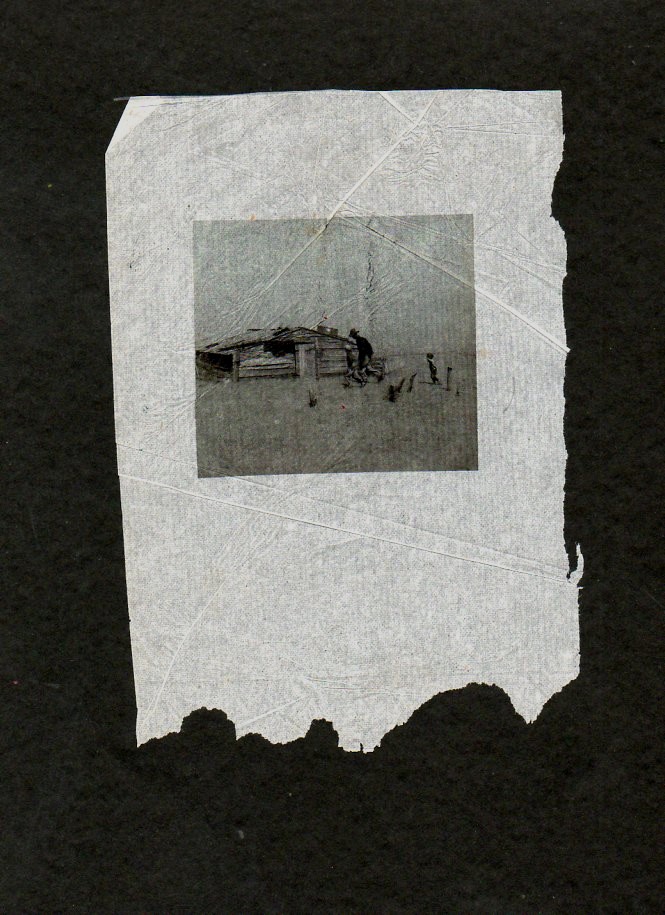
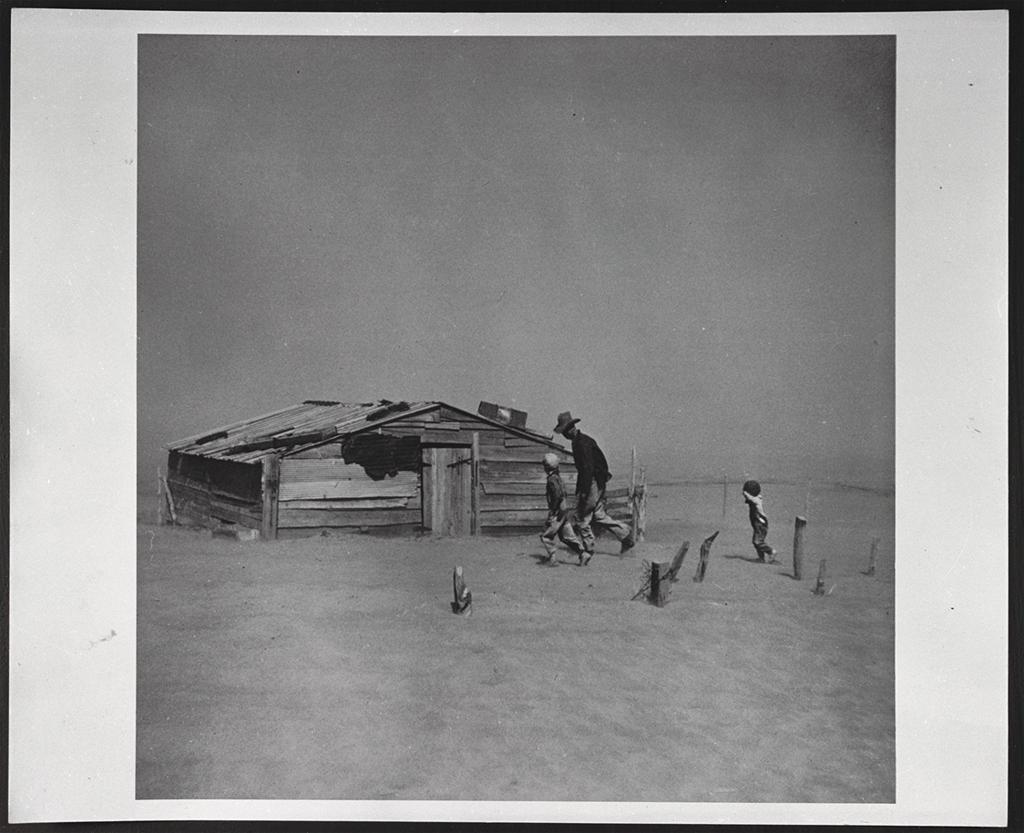
    I’ve experimented a little in presenting photographic images on a slightly different medium, and the results are interesting,  Take for example Arthur Rothstein’s classic 1936 “Father and Son” (actually, the “son” should be a plural, as there are two little kids rushing in the photo): I’ve used a 25 meg file and printed (lasered) rather small on a piece of antique tissue-guard paper–the paper, from 1830, is fantastically light, yet very strong for its remarkable thinness. The result of the modern, small Rothstein printed on the 170-year-old paper looks “believable” in its own odd way.

    My manipulated-printed effort:

    Rothstein--maniulated886
    [This image is available on my blog bookstore.]

    And the original:

    Rothstein full image

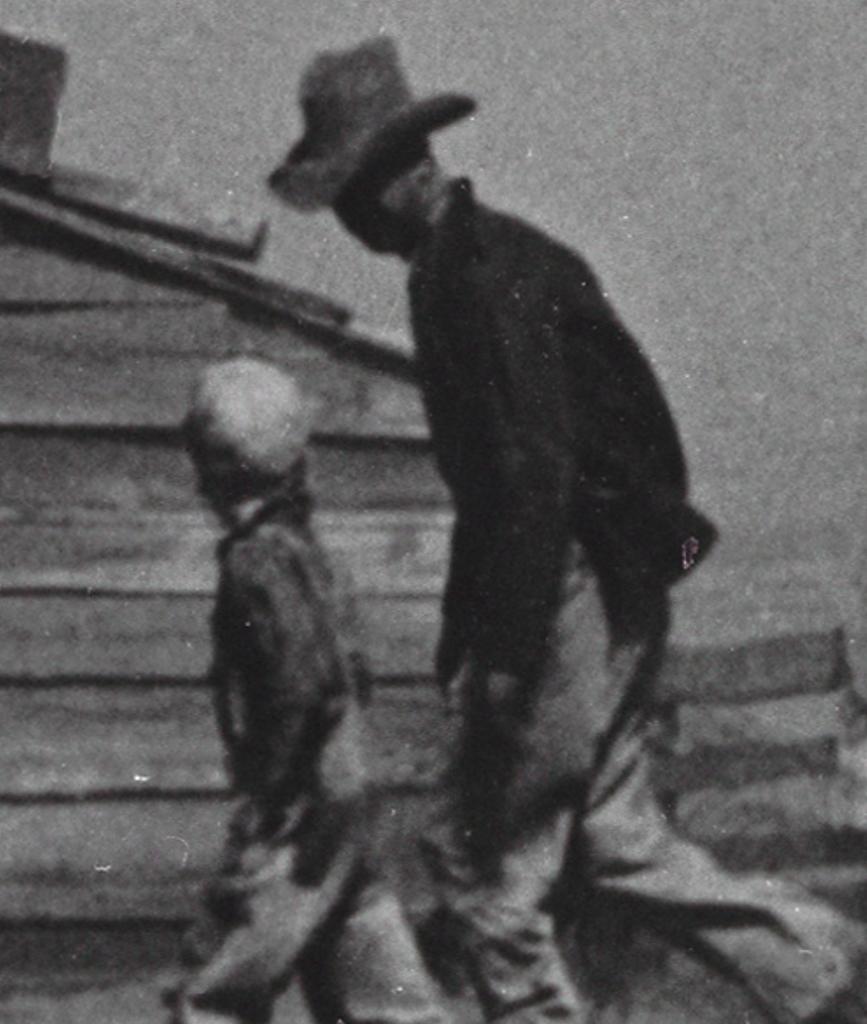
    And details in the original, small canvases in their own right:

    Rothstein father and son

    Rothstein lone kid


    ·Posted by :

    ·in:

Recent Posts

Archives

Categories