A Daily History of Holes, Dots, Lines, Science, History, Math, Physics, Art, the Unintentional Absurd, Architecture, Maps, Data Visualization, Blank and Missing Things, and so on. |1.6 million words, 7500 images, 4.9 million hits| Press & appearances in The Times, Le Figaro, Mensa, The Economist, The Guardian, Discovery News, Slate, Le Monde, Sci American Blogs, Le Pont, and many other places… 5000+ total posts since 2008.

  • Terrific Understatement Department; the Kaiser and the T.V.

    JF Ptak Science Books   Post 1273

    There are some combined image/narrative displays that are quietly spectacular, soaringly spectacular in very not-provocative, subtle ways. Here are two that popped up last night. 

    Out-of-place Department tv118
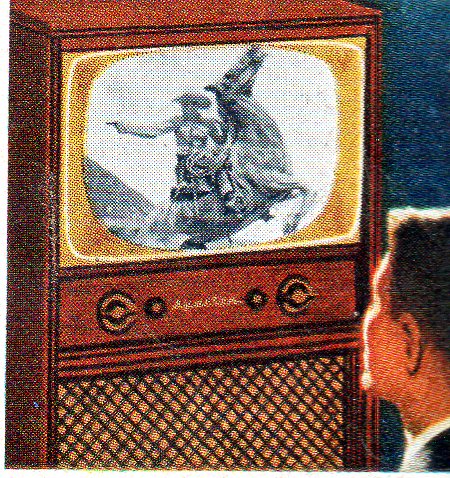
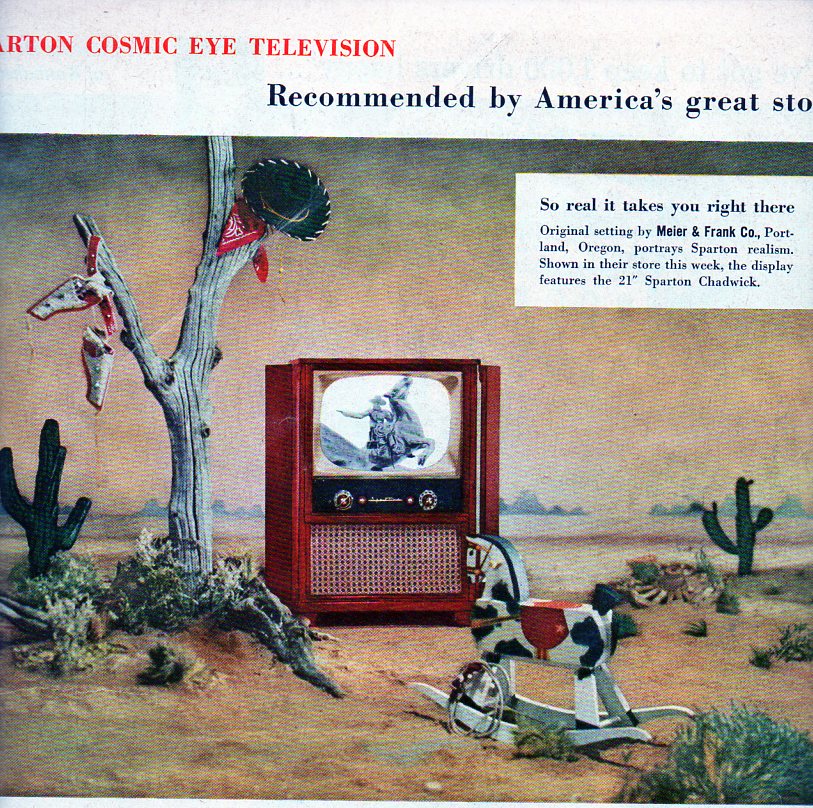
    Out-of-place Department tv b119 The Sparton TV ad (from LIFE 1954) dares us to believe that it will get us to the thing that we are watching–a tremendously invasive lie, a Big Lie, buffeted by placing the TV in the middle of a desert from the scene it was/is projecting, along with the toys of a child.  And in glorious black and white.  We can obviously see that the television can’t get us there, not really, not at all, not better than a book (an enormous creative implement compared to the television), by the tv-set’s absurd appearance in the desert.  Plus, well, the TV isn’t getting “you” to the place, it is getting itself there.
                           
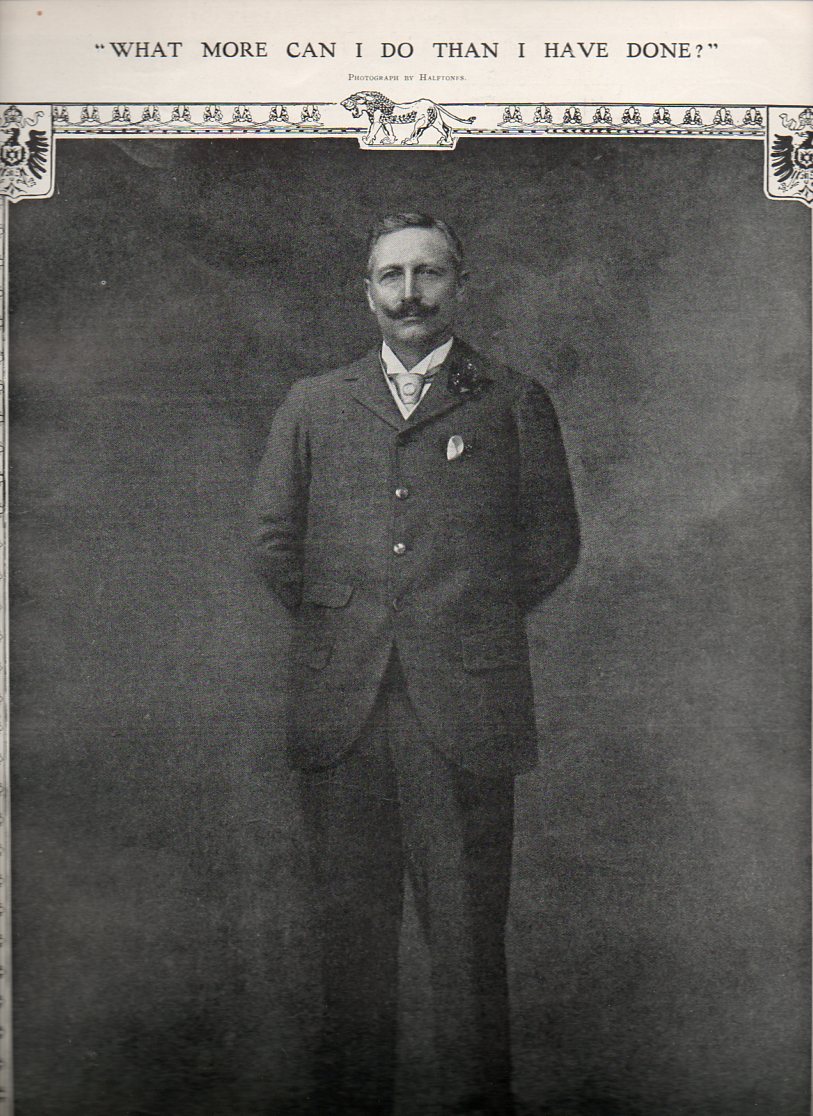
    Now,  Kaiser Wilhelm II–looking like quite the entry into the Anglosphere in this photo, which came easily for him since he was the grandson of Queen Victoria–was depicted in this image (appearing in the Illustrated London News for 7 November 1908 as a great peacemaker.  Or at least a man who had extended himself to find solidarity with Great Britain–so much of himself in fact that he could extend no further, that he could do no more, hence the question “what more can I do than I have not done?”
    Out-of-place Department Kaiser116
    IT has the quality of a post office “wanted” poster, which may actually be sort of true, what with what would happen in the next six years and all.

    By 1918 the Kaiser was hiding in the neutral Netherlands, caught unawares out-of-town in Belgium when things went to hell in Berlin for him.  And after the war with the signing of the Treaty of Versailles, Wilhelm II found himself in early 1919 facing Article 227 of that treaty, “for a supreme offence against international morality and the sanctity of treaties”.   But he wasn’t extradited by a friendly Queen Wilhelmina (hint) in spite of the international call to do so.  Well,  “International” except for the United States, where President Wilson sought to infringe on Lincoln’s post-bellum treatment of the Confederacy by letting Wilhelm go, not prosecuted for the larger hope of keeping alive a chance for peace.  Wilson should’ve looked a little harder for peace than in the Kaiser’s direction, as the Treaty really didn’t end the war as much as it started the next one. 

    The Kaiser last until 1951.

      Out-of-place Department Kaiserb117


  • Maps of Invasions of Great Britain and the United States

    JF Ptak Science Books  Post 1274–Real and Imagined

    America has almost never been invaded. I should clean that statement up a bit: the United States has almost never been invaded.  America–which included North/Central/South once upon a time long in the dim past–was constantly invaded until the invasions no longer counted themselves as such, which I guess means that the “invasion” forces became  “resupply”. (Perhaps an invasion is over once you surpass a certain ratio of houses : forts.)

    “Invasion” does not include “attacks”.  A few guys getting off a Nazi sub and wandering around until they got picked up (with some (all?) being executed) does not an invasion make.  9/11 was not an invasion, though the subsequent invention of impending and pervading fear was–that’s why we have “storm centers” rather than “weather reports” on broadcast news–but even that fear business was more home-grown than anything else.

    The Japanese Army were on two small islands in the Aleutian chain (which may have been closer to Tokyo than NYC) for a bit in WWII–also does not make for an invasion, even if they were there for a long time.  Or even if they were still there.  Nor does sending hundreds or thousands of paper incendiary balloons across the Pacific an invasion make. 

    UFOs don’t count, either.  (I still find it remarkable that such a large percentage of the hundreds of thousands of “sightings” has the UFO with landing or whatever lights on it. I figured out at one point that there has been a report on one of these critters every ____ minutes since Roswell. And in all of those hundreds of thousands or reports, if you took them all and stacked them one on top of the other, they would reach perhaps the height of a grain of sand.)  The Beatles don’t count, either.   

    What also doesn’t count (but probably should) but which is not military–not really, though it may have the impact of a military force at some time in the future–are Chinese-made imports of, well, everything.   At Thanksgiving I wondered how much of a dinner could be composed of foods that were shipped from China and to no great amazement an almost-complete table of food could be set, plus napkins, flatware, plates, candles, tablecloths, tables, chairs, paper turkey decorations, carpet, flooring, wallpaper, paint for the walls and ceiling, screws for the Chinese-made door hinges, lighbulbs, tubes for the McIntosh preamps, all of the clothing worn by the guests, and so on.  The electricity is still American-made. The fact that Mott’s Apple Juice is coming from Chinese apples is a bad sniff of the future. The country of origin is usually on juice bottle necks-check it out.)  

    Certainly something that does count is the invasion by Great Britain of the United States in the War of 1812–they invaded long and deep enough to burn the White House and cause general havoc.  We won that one.  But of course the Brits were otherwise involved on the Continent.

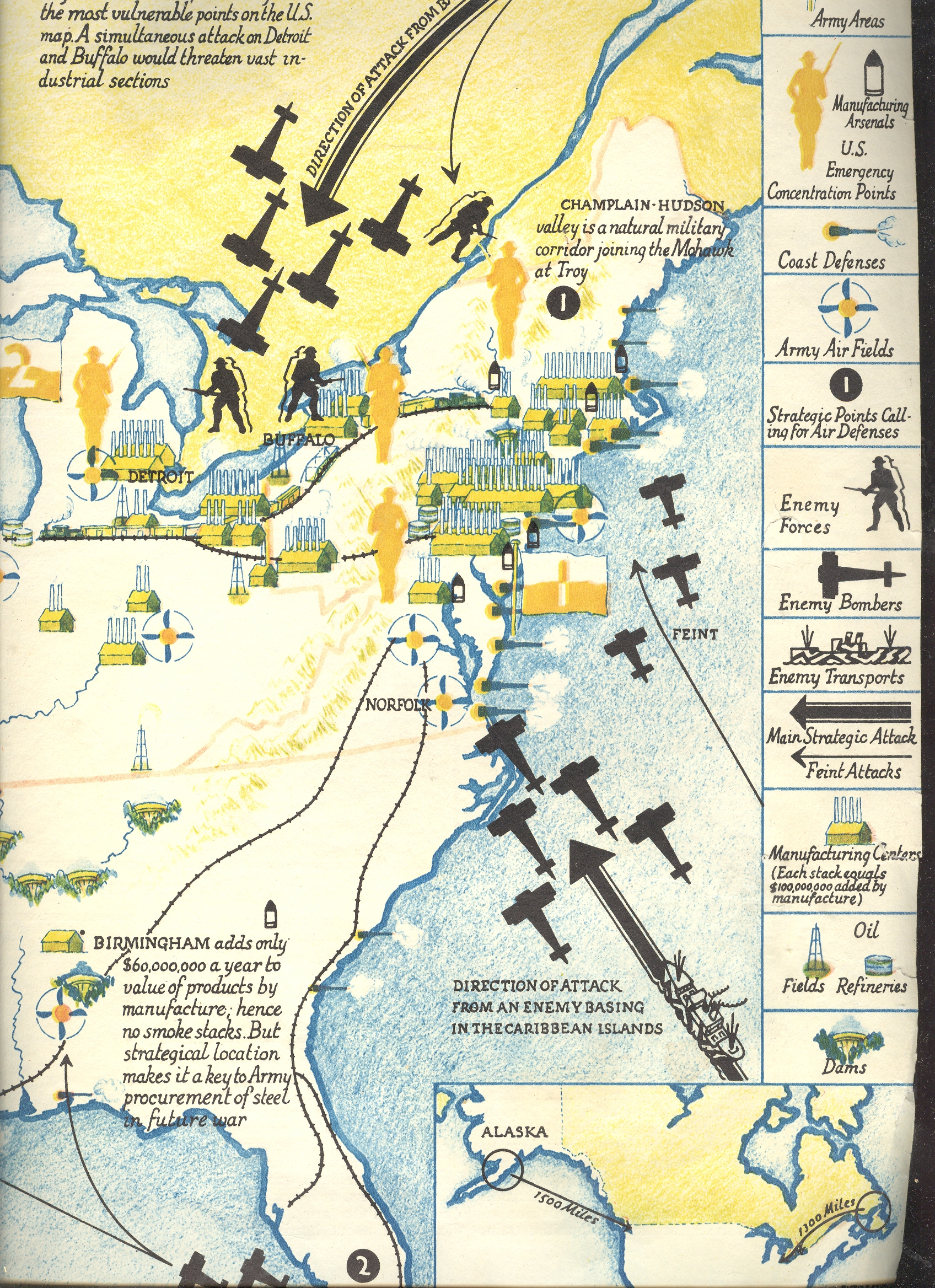
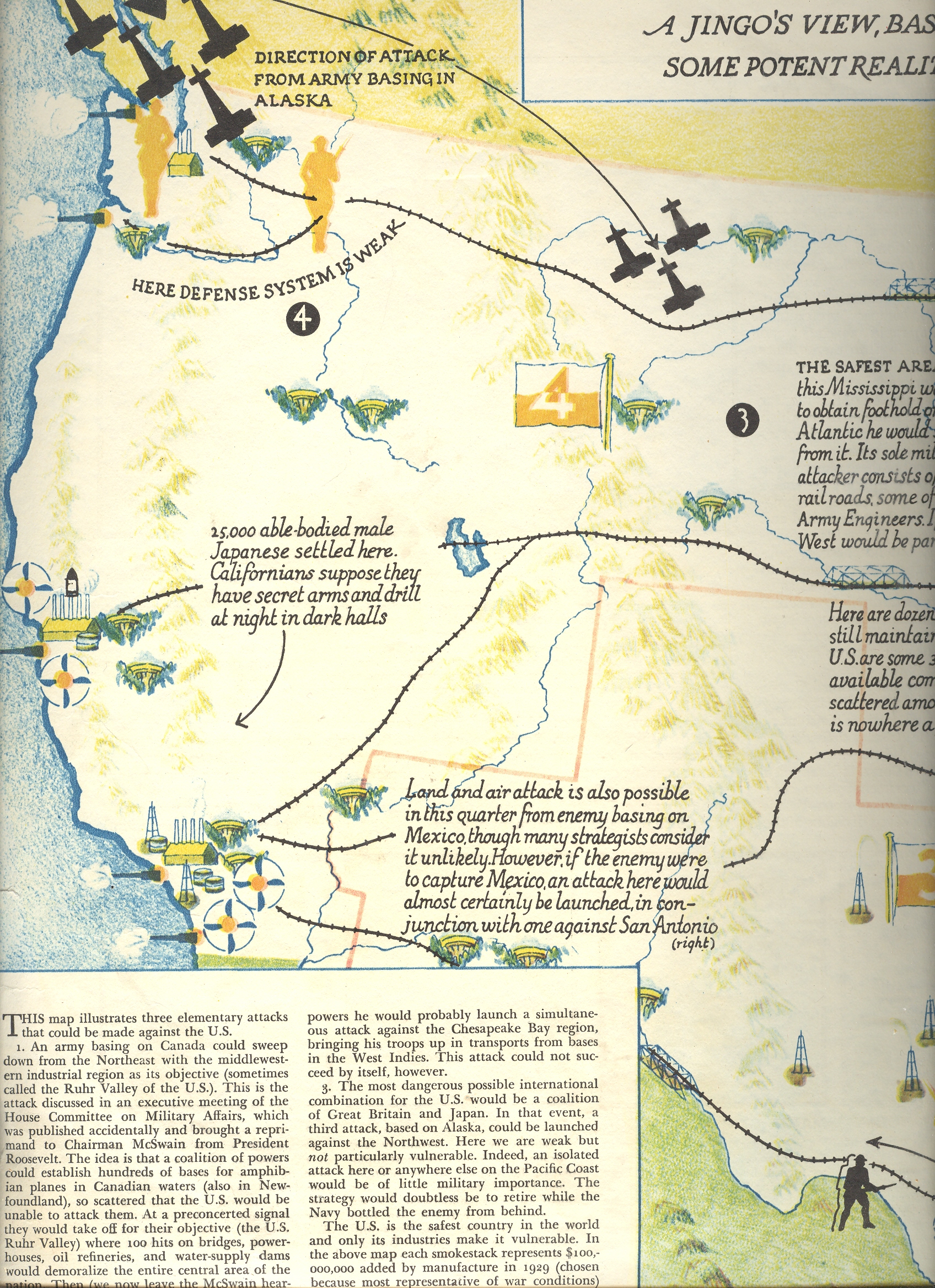
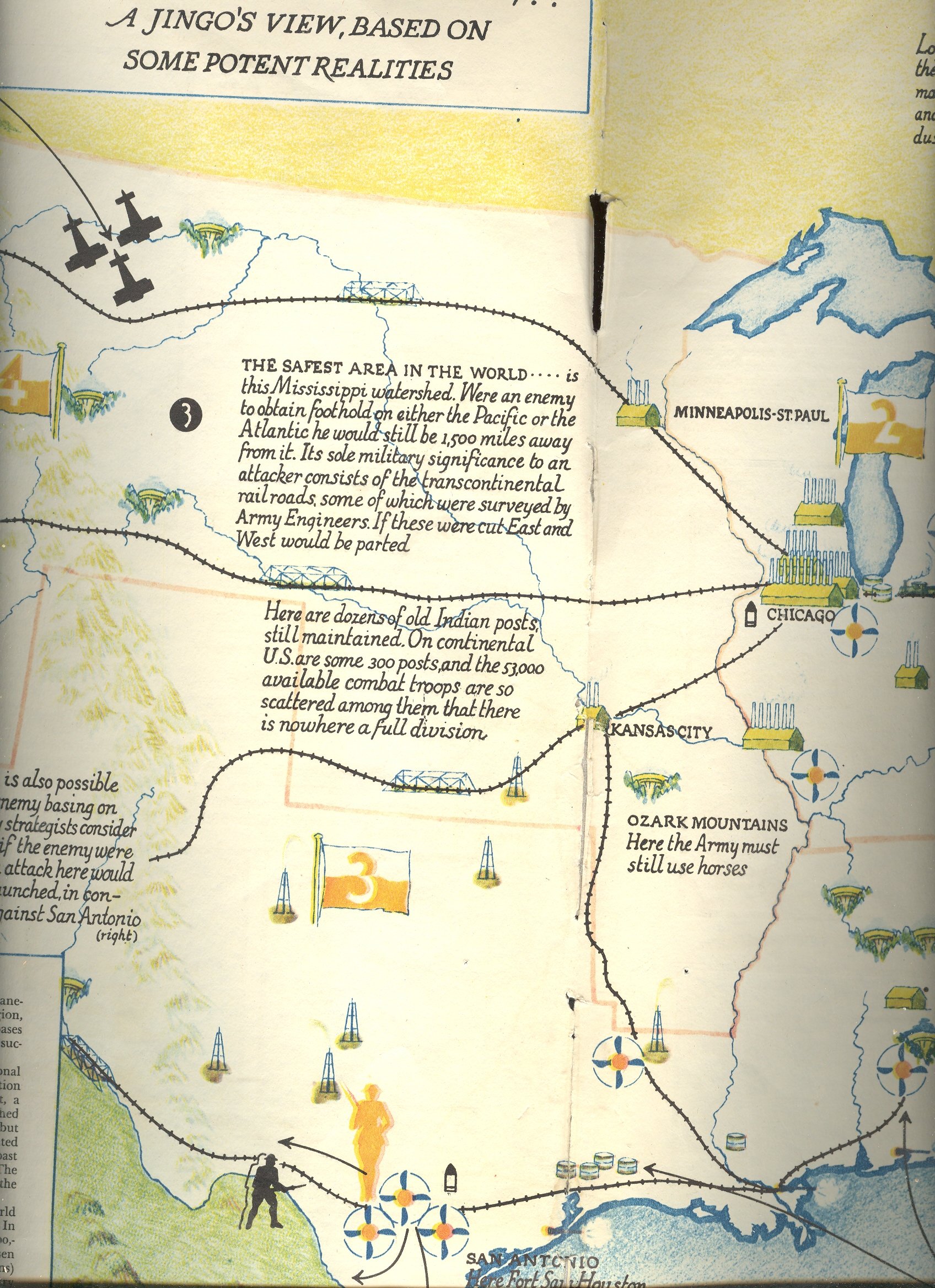
    Perhaps this non-invaded bit explains why the most-viewed post on this blog (with at last count was 400,000 views) was a LIFE magazine article from 1942 on the possible invasion routes to the U.S.  Maybe the volume was driven by war-gamers, though I suspect it was made up largely of the curious who weren’t used to seeing “Invasion of” and “America” together in a military sense.
    https://historyofideasblog.com/a/6a00d83542d51e69e20120a7a3225e970b-pi

    https://historyofideasblog.com/a/6a00d83542d51e69e2012876a5a4b4970c-pi

    https://historyofideasblog.com/a/6a00d83542d51e69e2012876a5a5e4970c-pi

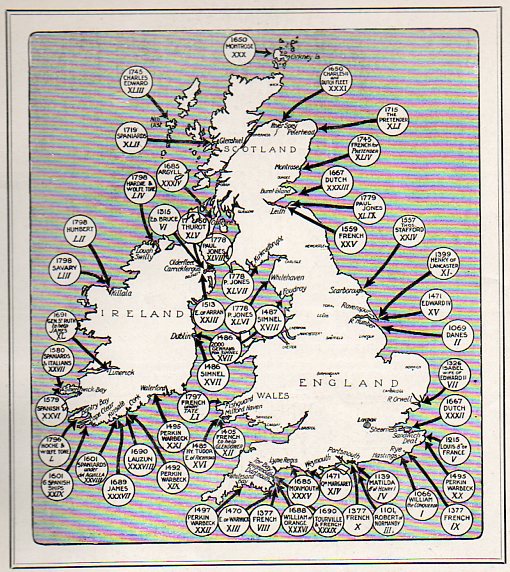
    But now for the  real stuff:  a map of the 54 invasions of Great Britain (and “the places at which foreign troops have landed on British soil since 1066 (and all that), seen in the Illustrated London News for 27 March 1909):

    Invasion--Us and England120

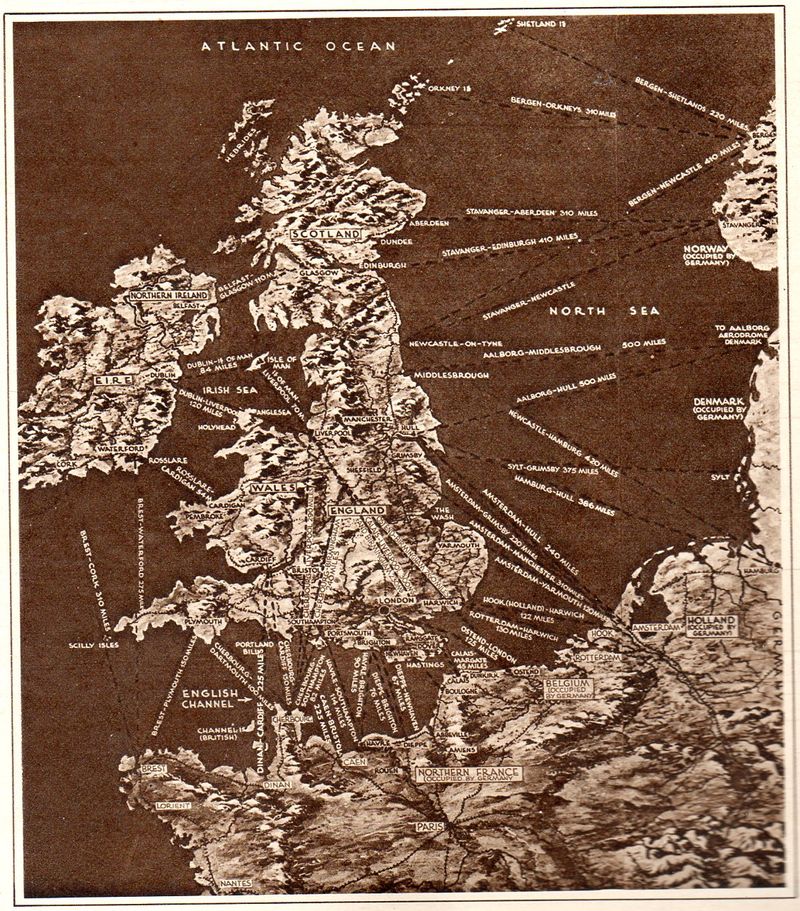
    And then this, where the WWII invasion routes were turned around: 
    Dunkerque124

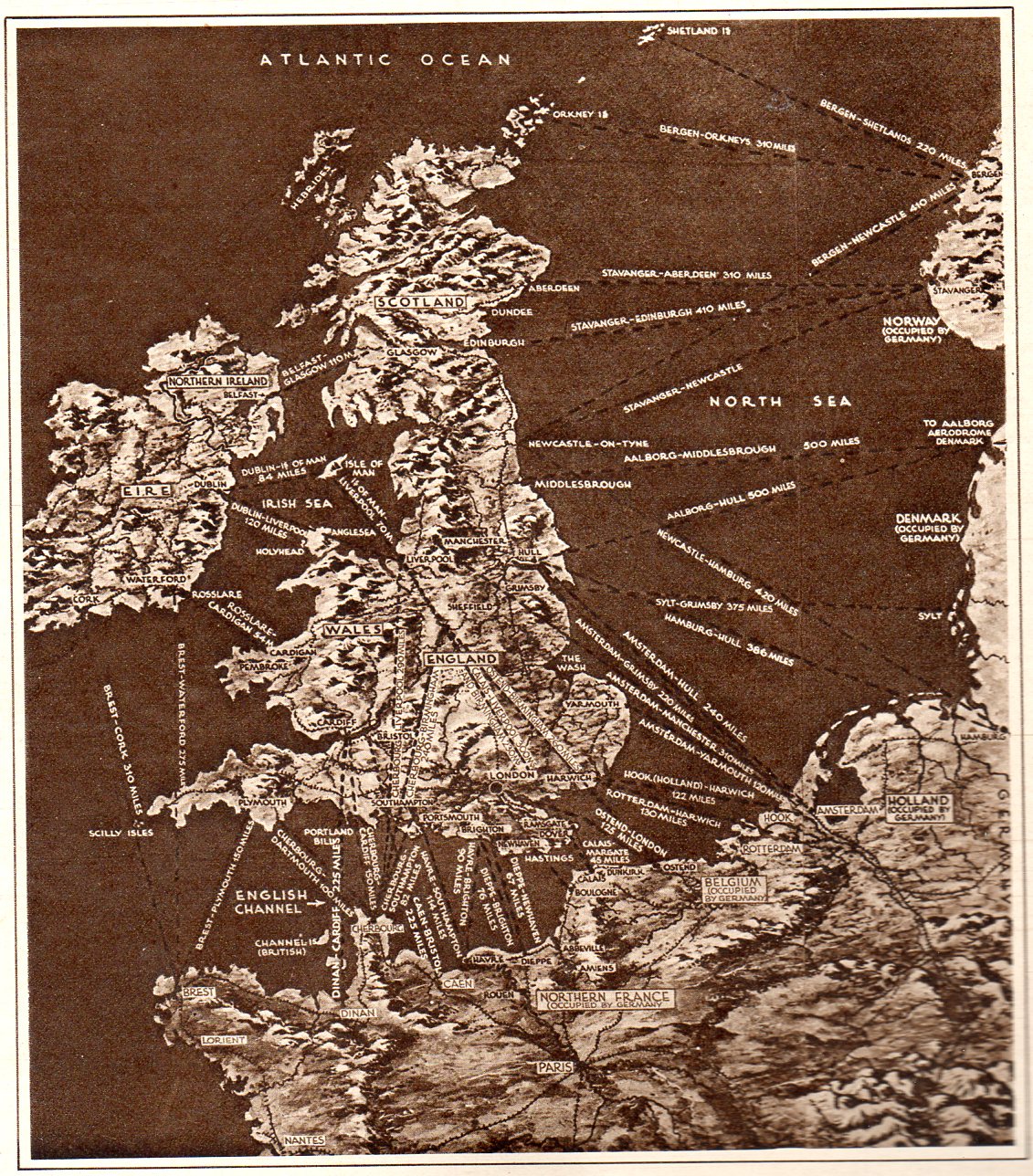
    This map pretty well tells the story of the perilous situation of Europe and England at the beginning of June, 1940.  It appeared in the Illustrated London News on the heals of Churchill’s “Blood, Soil, Sweat and Tears” speech, and was a very frank presentation of the wearing of the war.  By this point in the war Nazi Germany had successfully invaded Belgium, France, Luxembourg and the Netherlands, sweeping across Europe in a broad westward movement, backing up British and French troops all the way to the sea at Dunkerque, where a monumental rescue operation (“Operation Dynamo”) saved them.  (There was an enormous amount of materiel left there on the beach, a devastating loss for the British Expeditionary Force, nearly crippling it.) This was a bad time for the Allies, this part of the war coined by Winston Churchill in 18 June 1940 in the House of Commons by:  “The Battle of France is over. I expect the Battle of Britain is about to begin”. There was very little good that came of these few months for the U.K and the Allies, though four things do stand out: (1) as I just mentioned, the saving of 300,000+ troops at Dunkerque; (2) the resignation of Neville Chamberlain, (3) the coming of Winston Churchill  as Prime Minister of the U.K., and (4) the first deciphering of the Enigma at Bletchley.  Other than that, the situation was dim, and these invasion routes (published at t he very time that Germany was studying such a feat in its “Operation Sea Lion“, or “Unternehmen Seelöwe”). The endgame at Dunkerque took place almost four years to the day of the invasion of Europe, when the intent (though not placement) all of these arrows were turned around for the Allied operation at the Normandy beaches on 6 June 1944..

    And so, there it is–a presentation of several maps showing invasions, real and imagined 
  • Women Against Women Wanting the Vote, 1909

    JF Ptak Science Books   (Rapid) Post

    One in this blog’s  History of Women series

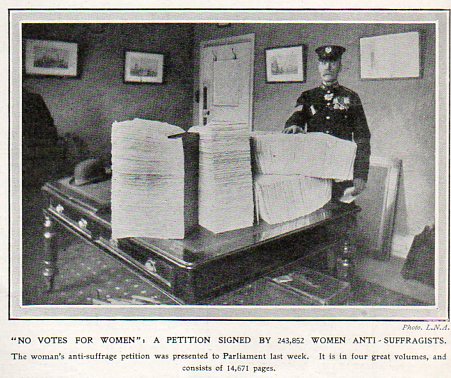
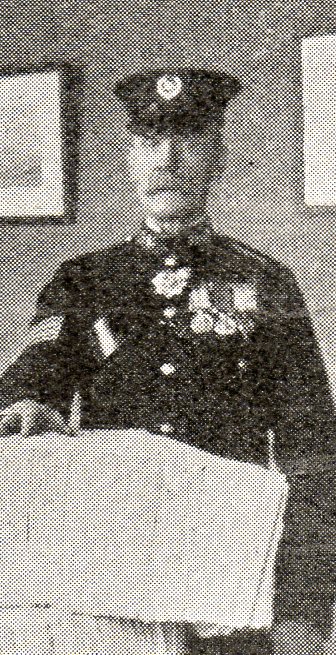
    WOmen--petition against vote121 By the time this photo of petitions against granting the voting to women in Great Britain appeared in The Illustrated London News in 1909, only six other places in the world had given women voting power:  Pitcairn Islands (1838), Isle of Man   (1881) , Cook Islands (1893), New Zealand (1893), Australia  (1902) and Finland  (1906). Admittedly, in the population of nations worldwide this was a very small percentage–smaller still if you considered the figure by population. The idea of universal suffrage was far from being popular, even only 101 years ago, within the lifetime of a few thousand people living today.

    There were no new additions between 1906 and 1913, but after that, from 1913 to 1920, 24 countries1 (including hundreds of millions of people this time) had granted the right,  not the least of which was Great Britain (1918) and the United States (1920).

    WOmen--petition against vote b122

    The complaints and arguments against women getting the vote have a recent ring to them:  the vote for many threatened the home, undermined the scope of the family, would destroy the foundations of marriage, would take women away from their domestic duties, and in general would weaken the nation.  It seems as though you could replace “votes for women” in this series of complaints with any number fof different issues today.

  • The Origin of the Term “Intellectual Capital”, 1842

    JF Ptak Science Books   Post 1275

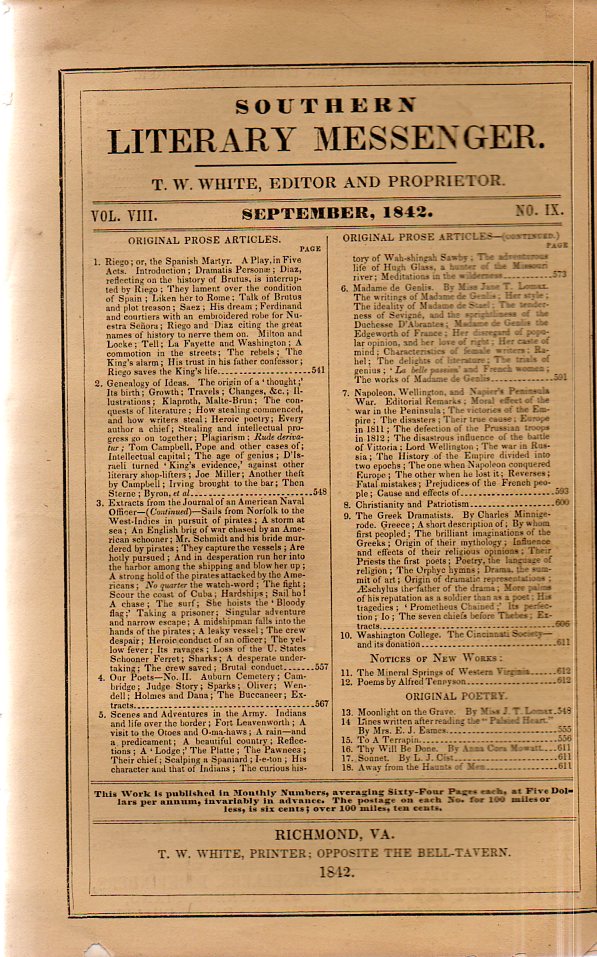
    Intel cap--cvr123   It seems that the first use of the term “intellectual capital” is seen to be with John Maynard Keynes in 1975; nice company of course, but the true first use seems to be much earlier.  It seems to appear in The Southern Literary Messenger (1834-1864) for September 1842, in an article “Geneaology of Ideas”, (pp 548-557) and written by “E.W.J.”, who turns out to be Edward William Johnston, writer/editor, born in Culpepper County in 1799 (or 1804), and brother of Confederate General Albert Sydney Johnston.  (It is also available from our blog bookstore.)

    Here it is:                   

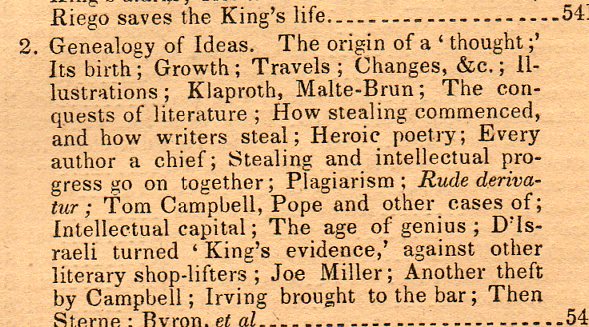
    To resume now our historical deduction of matter Intellectual capital appears to be as capable of being amassed among a nation as materia1 wealth but by no means to follow the same laws –page 552

    If that isn’t what Keynes (and then everyone else) was talking about, I don’t know what is.

    Intel cap--cvr 2124The article is interesting for its dipping into the history of plagairism and finding it comfortably nestled somewhat undisturbed, comfortably even, in the general history of ideas:

    He who writes therefore steals as well as he can and as beggars when they can filch from no richer wardrobe purloin each others tatters so mean authors rob one another and go undetected partly because their works pass unscanned and parity because they from whom they borrow are unread So that after all the essential difference between the genius and the scribbler is not as to the fact of stealing nor even as to the quantity stolen but entirely as to the value of what they steal  (page 551)   

    Long intellectual history of borrowing and building, collection of tropes wound through entirely original work, based on some common building blocks that have been used over and over agian across the centuries.  When looking at the geneaology of ideas, the business of utter stand-alones is slim.  Shakespeare built upon Plutarch in bits and starts, for example, but everyone who knew everything at that time would’ve recognized the Plutarch shining through, Shakespeare himself finding it unnecessary to say any more about it.  Albert Einstein had not one footnote in the SRT paper of 1905, yet owed some intellectual heritage to Lorentz and Poincare.   Anyway Johnston writes about the fluid nature of the history of ideas with many fine examples (though not the two listed above), all of which can be read here in the full text of the article. 

    (This subject of plagiarism and forgery, of originality and copying, of recognizing what has come before and not, gets to be very knotty very quickly.  What is “real”, what is “original”, we are reminded, gets complicated and complex.)

    Notes:
     
    1.  The Southern Literary Messenger: Vols. I-XXXVI (August 1834 – June 1864, when it was eaten up by the war).  Even though it was an interesting journal with a good solid and long run, I guess many people will remember it for being edited for a short time by Edgar A. Poe, who also made a number of literary, critical reviews and poetical contributions to the magazine, though not in this issue for any of those three.


  • Autopsies of a Famous Cookie and Mocha the Whale–Proust and Melville on the Table

    JF Ptak Science Books   Post 1276

    Following up on yesterday’s autopsy of a snowman comes two fictional autopsies: that of Mocha Dick (the spiritual and motivational father of Moby) and a cookie.  Moby first; the famous cookie, second.

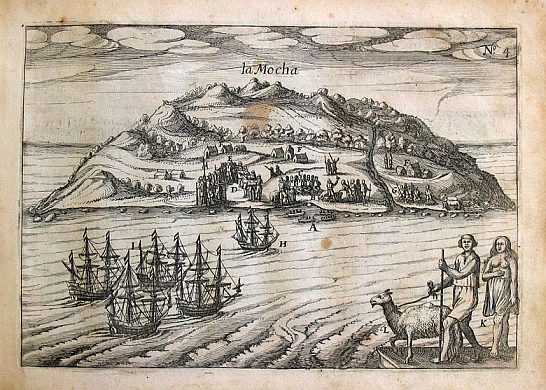
    Mocha Dick was a terrorizing self-defender of the Pacific, a giant the size of a whaler (something like 110 feet) who makes his first appearance in the year that Herman Melville was born, 1819.  He crushes and flips and bites and flukes ships and outboats for another forty years, nine past the publication of Moby Dick and in the same year (and nearly month) as the first edition of On the Origin of Species. 

    Mocha may have come into Melville’s consciousness in Jeremiah Reynold’s piece in the May 1839 issue of Knickerbocker Magazine (article here, just months before the first newspaper arrivd from Europe with the announcement of Daguerre’s process), and was certainly in the minds of two generations of whalers until he was caught twenty years later.

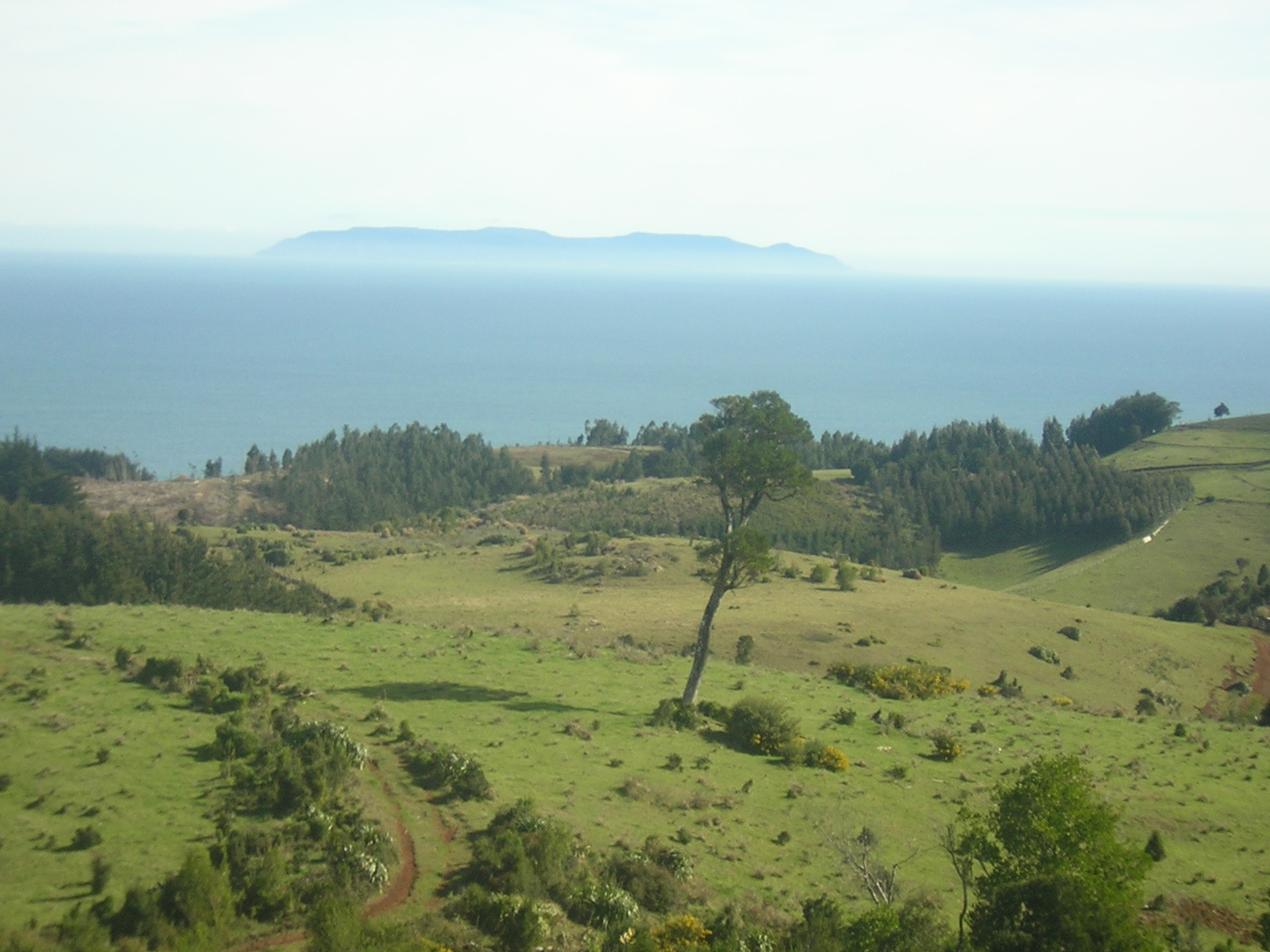
    (Just a note–Mocha took his name from a mountain on Mocha Island off Chile where Reynolds sited him.  Melville’s desk at Arrowhead in Pittsfield faces a window that faces a mountain that looks like the Great White Whale.  I’ve seen it from a seated position there, and the man could definitely see the mountain from where his desk stood.) File:Van spilberger in mocha 1616.jpgFile:Carahue sector costero lafquenche.JPG

    When caught Mocha was a half-blind, snub-toothed shadow of himself, with a battered head and missing eight teeth.  Or at least that’s how the story or legend of his lazy capture by a Swedish whaler goes.  After all of that, after the adventures that Mocha or other whales mistaken for him were on, he almost made it to the end of his life at the end of his life.  He was captured and killed just before he could die.

    It was perhaps Madeleine Paulmier from Commercy, France, who gave her name to the cookie that when eaten gave birth to one of the most famous personal memoirs (in eight volumes) in literature.  (The OED and various French resources differ on this–no matter.) Marcel Proust took a nip from the madeleine (at least in the novel, the cookie in real life was different, or so I have read) that brought on a flush of memory. 
    “And suddenly the memory appeared. That taste was the taste of the little piece of madeleine which on Sunday mornings at Combray […], my aunt Léonie would give me after dipping it in her infusion of tea or lime blossom.” (In Search of Lost Time, Swann’s Way: Proust page  47).

    The cookie that caused this fabulous composition had little to be composed of, itself.  Flour. Butter. Sugar. Eggs.  All in equal parts.  Then lemon rind.  Bake.  Voila.  Reverse engineering the cookie is simple.  Actually making it taste like what it is supposed to taste like, is, well, something else. 

    But the autopsies of a half-sighted, semi-toothless, shriveled and scar-worried whale and four common kitchen ingredients and a snap of lemon don’t lead to much, except for the spectacular imaginations that the autopsies missed.

  • Why Kindle is No Good for Kids

    JF Ptak Science Books  Post 1277

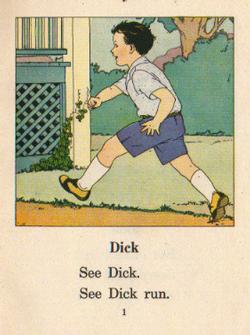
    Dick Words without Books–Kindle et al as a Dim Shadow in the History of Reading to Children The Kindle and its relatives may be a poor choice for reading to children–it’s a book and not a book, a collection of words without a wrapping, a constant reminder for what it isn’t, a cold remedy for warm memories.

    There have been a number of books “written” now that have no words.  Elbert Hubbard charmingly put one together in 1898 (called Essay on Silence).  More recently, there was The Nothing Book (1970), which was precisely that, and which found its way into the NYTimes book review section (“we have nothing to add”). Elsewhere in the arts John Cage produced a four and a half minute piece on nothing, while Samuel Beckett takes far less time to produce his ode to nothing in his play Breathing–all fine examples of nothing.

    There are more-lesser examples of nothing in literature, with books produced using nothing but the letter “I”, or commas, or periods/dots, or plus/minus signs.  They soberly add a little something to nothing and somehow come up with less than “something” and more than “nothing”, floating in a briney failed no-man’s-land of not-nothingness. Others have taken a different route around nothingness by simply dropping the use of a single letter in the formation of their novel–the lipogram isn’t even a stutter to nothingness, just a hollow something. 

    And that’s where the Kindle comes in, in the hollow somethingness. 

    Dick and Jane are something.  Or at least the physicality of reading them to children is something. The stories aren’t important, really–the handling of the book, the feel of the pages, the jumbling of position, the steadying of the text, the turning of the pages, trying to navigate the swirl of motions, the feel of the whole thing as a voice deciphers the tracks along the pages.  

    It’s the act of reading that might be the most mportant thing in getting children to appreciate the whole idea of reading. 

    Reading from a Kindle just won’t do, it can’t accommodate the range of differences, the cascade of varying stimuli, that comes from holding a book.  Books are always the same size inside a Kindle–I know t hat my own children love some books because of their shape, or they just like feeling something different in their own hands as they skip from title to title.  

    You also can’t give your kids the book that you had when you were little, seeing the way your name changes in your books as you grew older.  You won’t have a Kindle with your kid-scrawl on the flyleaf identifying the child-you in 1962.  The kindle has no personality of its own–which may be fine for people already reading, but not so for people just starting out.  

    You also can’t press a much-loved, hard-read copy of a favorite Kindle into your kid’s hands and expect some sort of response to it. There’s just too much missing from the reading experience with a not-a-book–you just don’t want to institute a sameness when what is needed is difference

  • An Alphabet of Giants, Part II–Under and Over the Volcano with Rabelais

    JF Ptak Science Books Post 1278
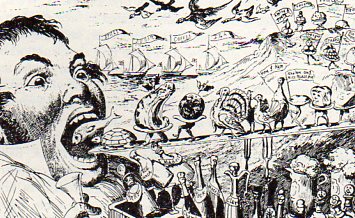
    Gluttony127
    Rabelais may be that man who lived under/in/over the volcano.

    Francois Rabelais (1490-1553, writing under the anagram Alcofribas Nasier)   was perhaps as gigantic a man in spirit, need, want and appetite as his greatest creations, Gargantua and Pantagreul, and may well be the greatest ex-monk of ex-monks, a bubbling Renaissance Humanist.  I’m not saying that Rabelais spent 11 months in the womb or smoothed his hair with a 900′ comb or drank the milk of 17,000 cows like his creation Gargantua,  but he did have a staggering appetite for life.  He ate life as Honore de Balzac ate food.  Rabelais seemed to know no boundaries, and neither did Balzac, who would typically eat a hundred oysters,  twelve lamb cutlets, a duckling, partridges, fish, fruits, assorted vegetables, coffee, liquor, liquer, wine and so on, at one sittng.  Every day. Nor did Rabelais  necessarily drink like Eugene O’Neill or F.Scott or Edgar Poe or Hart Crane or Jack London or Dylan Thomas, though he did drink beond the boundaries.Thomas, though he did drink beyond the boundaries.

    One of my favorite writers–George Orwell–didn’t have much use for Rabelais, repulsed by his abuses, but that was to be expected.  So it goes.

    File:Francois Rabelais - Portrait.jpg

    The beginning and end of Epitaph for Rabelais, by Peirre de Ronsard:

    If anything can sprout
    From  a dead man  rotted out,
    And  if further generation
    Arises  from stagnation,
    A  grapevine will  surely take birth
    From  the belly and  the girth
    Of  good Rabelais, who  contrived
    Always  to drink while  alive…

    All you who  pass his grave,
    Be  you nobleman  or knave,
    Hang  cups on  this, his shrine
    To  vessels and sparkling wine;
    Hang  sausages and ham:
    For  if he  still has sensation,
    His  soul prefers potation
    To  lilies as a gift,
    And wine  gives a better lift


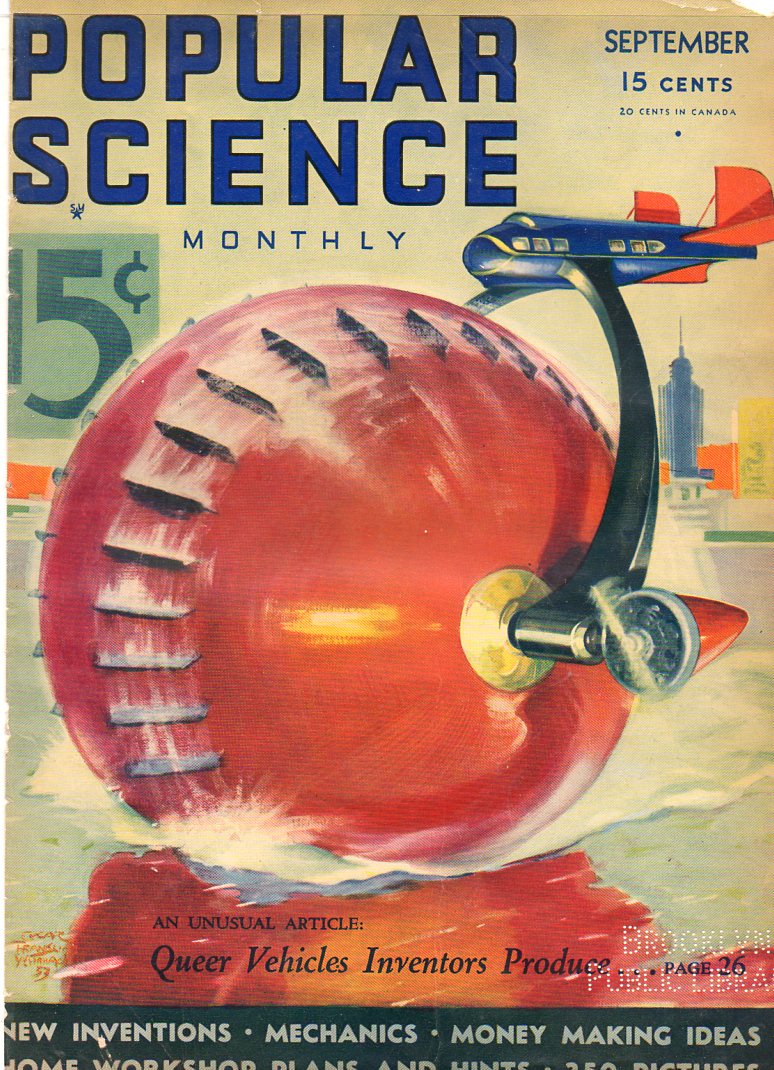
  • Future Steampunk in the Sea–1930’s Popular Science

    JF Ptak Science Books  Post 1278

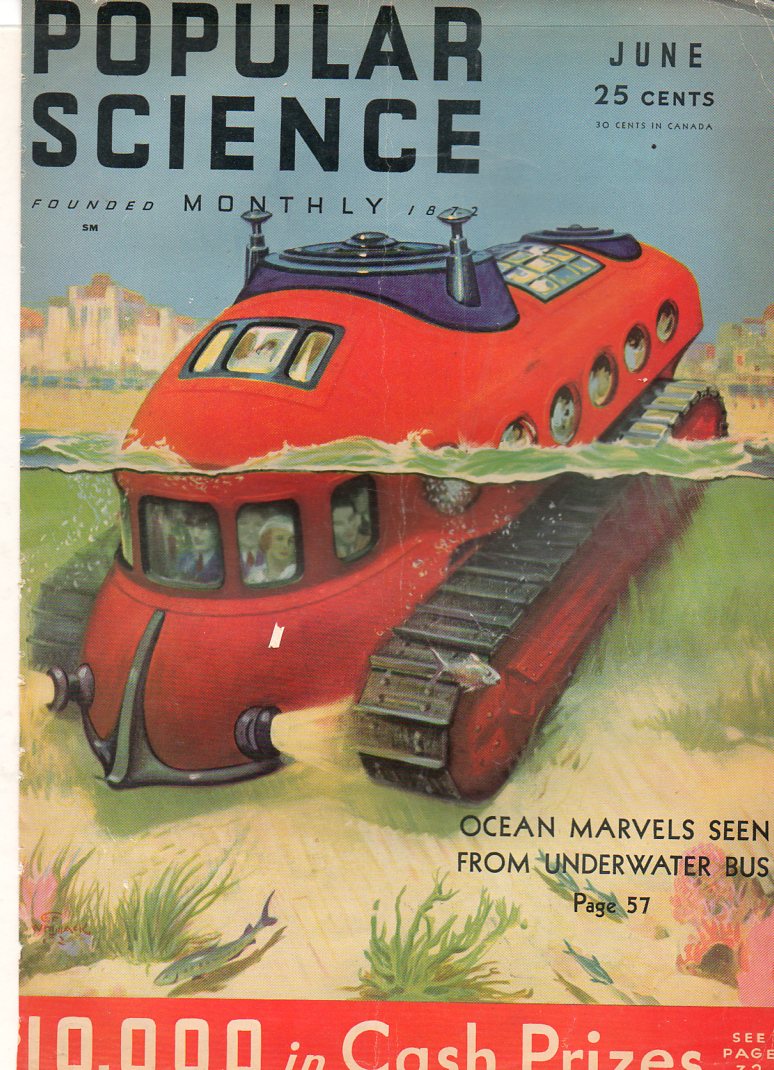
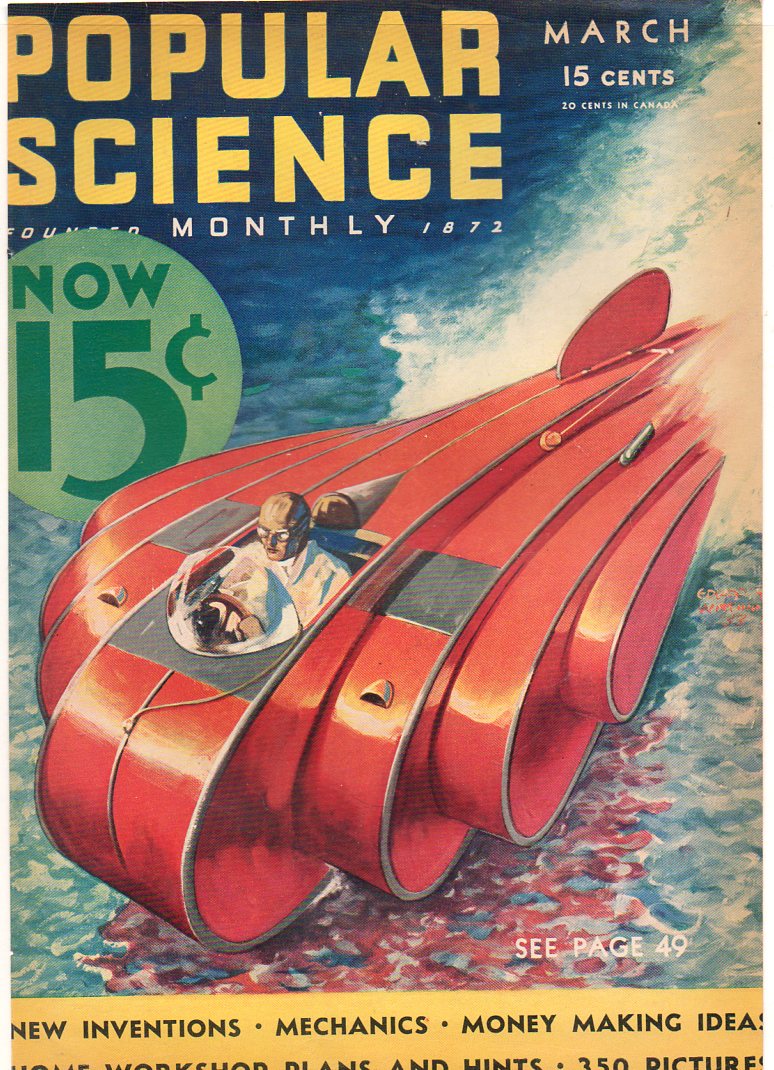
    In a continuing thread on Steampunk themes I’ve organized some of my 1930’s cover art into themes–first up, examples of waterborne-Steampunk, which will be followed by land- and then airborne-Steampunk.  (All of the examples coming up are available for purchase from my blog bookstore, here.)  Steampunk as a general idea is a class of technology that is large, clanging, oily, greasy, heavy, shiny, smoky, and usually driven by steam power, (though other power sources can be applied)  Some make sense today, some don’t–most of the machines addressed for a particular use have actually been implemented here in the not-too-distant future of the 1930’s, and usually much more elegantly than could’ve been imagined then (obviously).  But I must say that given the times and the tools, these people did a great job, if not for the reason of the invention but for pushing the idea-ball forward.  

    Steampunk--sea138
     Steampunk--sea137
    Steampunk--sea136

    More below:

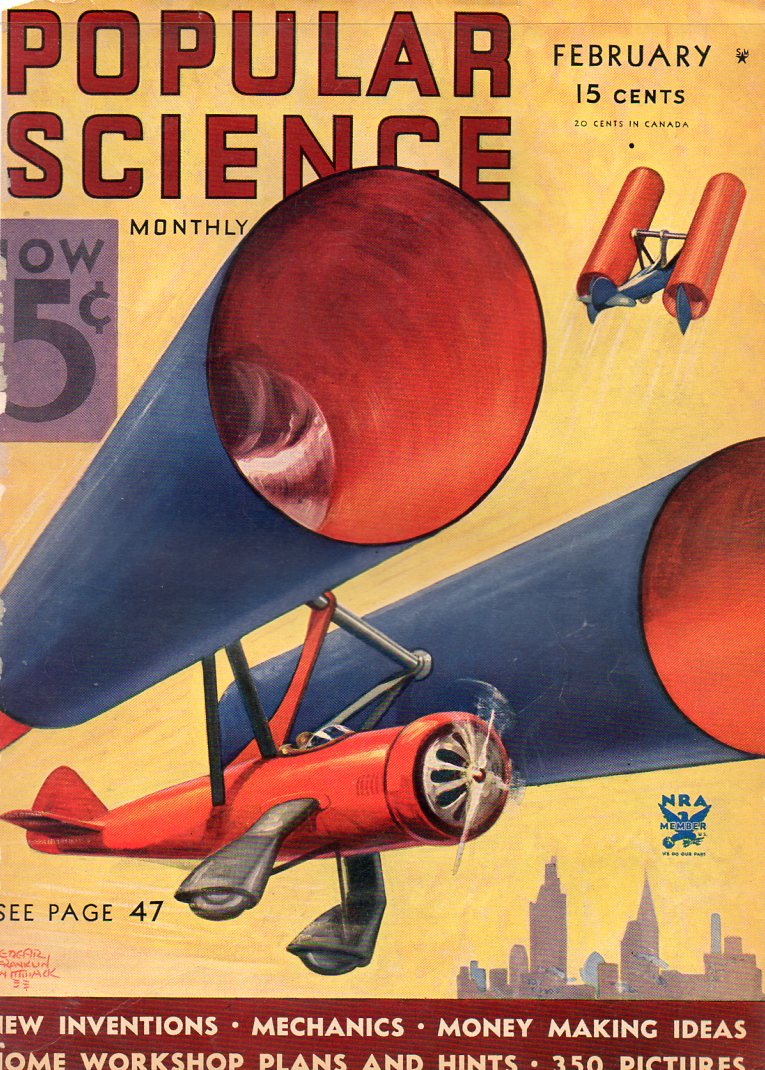
  • Future Steampunk in the Air-1930’s/1940’s Popular Science

     JF Ptak Science Books   Post 1279

    In a continuing thread on Steampunk themes I’ve organized some of my 1930’s cover art into themes–first up were examples of waterborne-Steampunk, which is now followed by an airborne-Steampunk, and then by Steampunk Land and Steampunk WTH(?)   (All of the examples coming up are available for purchase from my blog bookstore, here.)  Steampunk as a general idea is a class of technology that is large, clanging, oily, greasy, heavy, shiny, smoky, and usually driven by steam power, (though other power sources can be applied)  Some make sense today, some don’t–most of the machines addressed for a particular use have actually been implemented here in the not-too-distant future of the 1930’s, and usually much more elegantly than could’ve been imagined then (obviously).  But I must say that given the times and the tools, these people did a great job, if not for the reason of the invention but for pushing the idea-ball forward.  

    Steampunk--air139

    Steampunk--air149

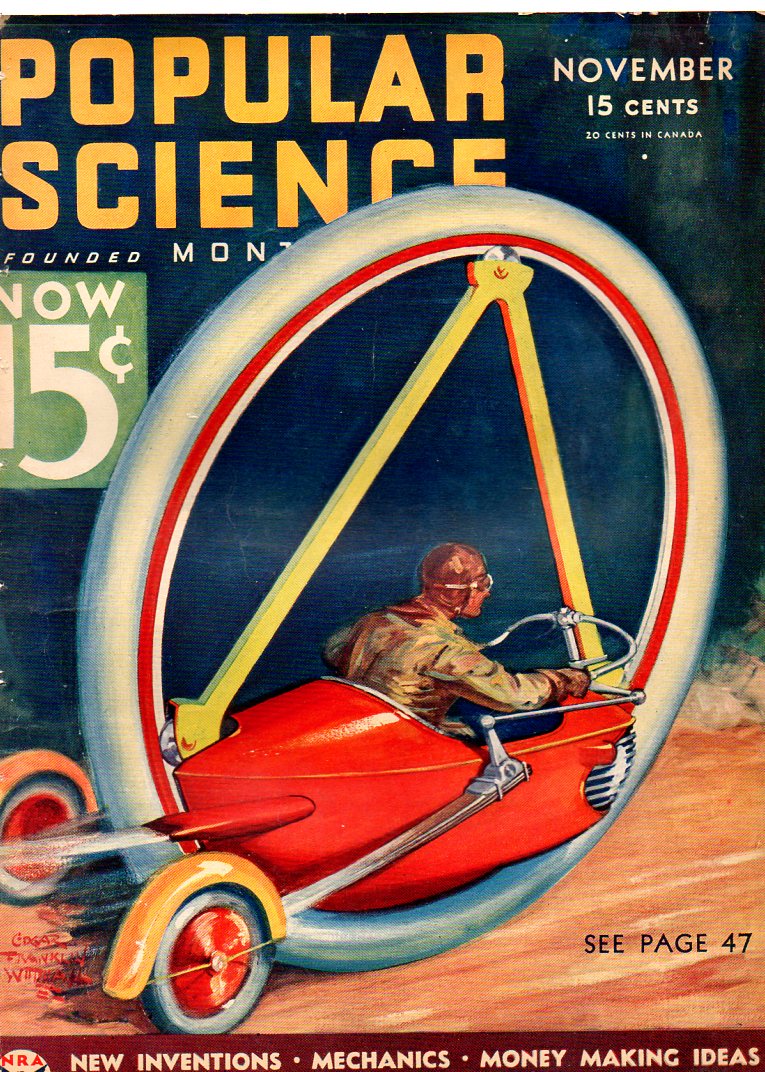
  • Future Steampunk on Land–1930’s/1940’s Popular Science

     JF Ptak Science Books   Post 1280

    In a continuing thread on Steampunk themes I’ve organized some of my 1930’s-1950’s cover art into themes–first up were examples of waterborne-Steampunk, which was followed by an airborne-Steampunk, and now by Steampunk Land and Steampunk WTH(?)   (All of the examples coming up are available for purchase from my blog bookstore, here.)  Steampunk as a general idea is a class of technology that is large, clanging, oily, greasy, heavy, shiny, smoky, and usually driven by steam power, (though other power sources can be applied)  Some make sense today, some don’t–most of the machines addressed for a particular use have actually been implemented here in the not-too-distant future of the 1930’s, and usually much more elegantly than could’ve been imagined then (obviously).  But I must say that given the times and the tools, these people did a great job, if not for the reason of the invention but for pushing the idea-ball forward

    Steampunk--land172

    Steampunk--land170

    Many more, below:

    ·Posted by :

    ·in:

  • Protection from Aircraft, Part 3: the 1930’s and Anti-Aircraft Philosophy

    JF Ptak Science Books   Post 1281

    Bloglondonballoon

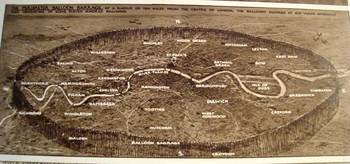
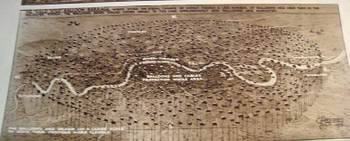
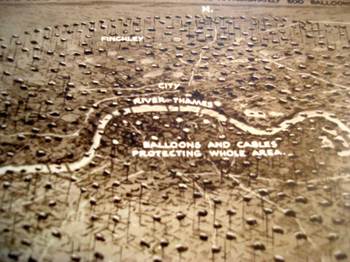
    This series of drawings, published in the Illustrated London News 16 July 1938,  by the incredibly prolific and detail-oriented G.H. Davies depicts one segment of the city defense program being formulated by the British government in the last year  or two leading up to the beginning of the European end of World War Two. (I own 150 or so of these images by Davies–he never fails to provide the detail where you need it.)   The overall plan for defending major British cities consisted of anti-aircraft guns, searchlights, R.A.F. fighter squadrons and interceptors, and the “Balloon Barrage”.  London and suburbs are featured here, all to be protected by a series of ten squadrons of fifty balloons each, handled by a crew of ten.  The thinking was that it would make low-level bombing by fighter aircraft (?!) impossible, and force any aircraft attempting such an approach to a higher altitude where they would be theoretically susceptible to the interceptor squadrons. 

    Bloglondonballoonbottom

    I’m not terribly sure why the thinking was against low altitude attack, but my best guess is that the planners were thinking about the He-111Bs and Ju52s or other such aircraft that the Nazis checked and tested out against the Spanish Republicans during the Civil War. Perhaps freshest of all memories of the German operation Feuerzauber (Magic Fire) was the Guernica raid, just a year or so before the publication of these images, where that militarily insignificant town was attacked from the air in twenty minute intervals over three hours, destroying it in a terror blitz.  If I was sitting around a big table at 10 Downing, I’d have that picture in my head.  .

    Bloglondonballoondetail

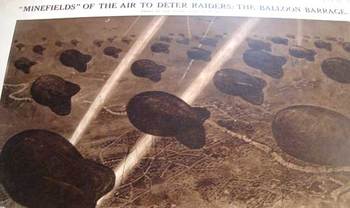
    Be that as it may, the “air mine field” looks terribly inefficient and vulnerable to me, sort of like an exposed Maginot Defense Line, but without the very deep misunderstandings that went along with the horrible French effort. 

    Explanation of the Images:

    a)    The first image shows the incredible perimeter defense network, which extended ten miles around St. Paul’s; the balloons were moored at 100 yard intervals, making for 1100 or so balloons to “fence” the perimeter.
    b) The second image shows  London center and immediate suburbs, with another 500 balloons in a smaller circle inscribed in the larger.
    c)  The third image Bloglondonballoonsbotto is a close-up of the balloons, looking down;  seems as though they were tethered at about 2000 feet or so
    d)  The last image is a close-up of London center.  .

Recent Posts

Archives

Categories