A Daily History of Holes, Dots, Lines, Science, History, Math, Physics, Art, the Unintentional Absurd, Architecture, Maps, Data Visualization, Blank and Missing Things, and so on. |1.6 million words, 7500 images, 4.9 million hits| Press & appearances in The Times, Le Figaro, Mensa, The Economist, The Guardian, Discovery News, Slate, Le Monde, Sci American Blogs, Le Pont, and many other places… 5000+ total posts since 2008.

  • The Ghetto as a “Threat to Tax Values”–On Missing People

    JF Ptak Science Books   Post 1252 (Rapid Post)

    Part of the series Blank, Empty and Missing Things

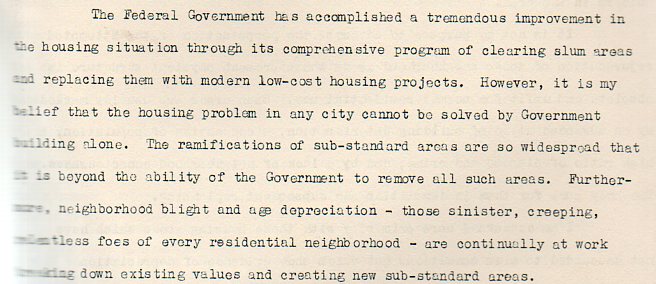
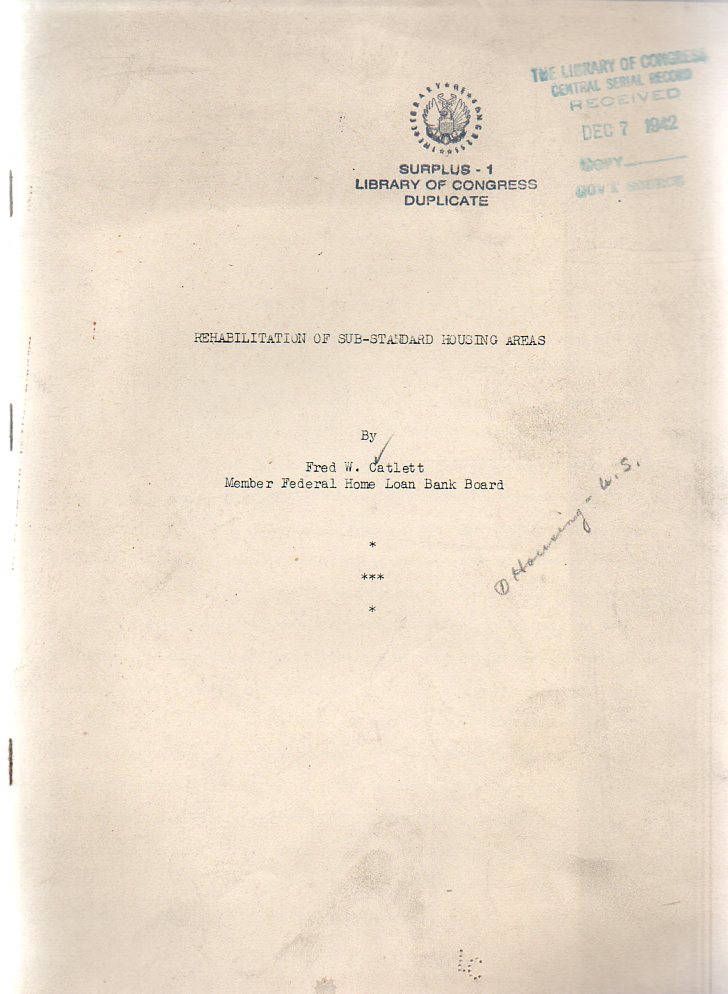
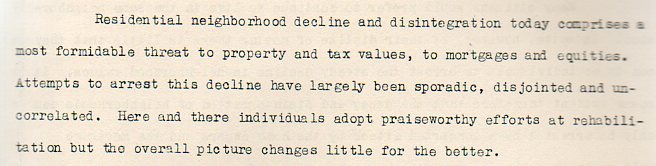
    Fred Catlett’s Rehabilitation of Sub-Standard Housing Areas (1942) isn’t so much about “rehabilitation” of the houses themselves but to their  neighborhoods and surrounding areas–the “inadequate” housing would be demolished, disappeared, replaced, to re-insure the valid tax basis of the larger area/neighborhood.  Nothing is said about where the original people would go while their old neighborhoods were being razed or whether or not they would return to the new housing. 

    Jghetto study b961 The vocabulary here isn’t so surprising in and of itself, but rather with teh overwhelming completeness of it.  I’d suspect that at some point Mr. Catlett  (“Member Federal Home Loan Bank Board”) would throw some sort of bone to the interests of the occupants of those substandard houses, some interest or emphasis to the people involved.  And even though the pamphlet is only 12 pages long, maybe 5000 words, it was certainly long enough to share some concern or kindness to the occupants of those houses.

    Jghetto study c962

    Jghetto study cover963 “Better housing projects break up slums but not until fine homes have decayed and been ruined and many thousands of dolalrs in loses have been suffered”writes the author.  I understand that the man was protecting the material bases of his institution, but ot have the entire document be absent of any consideration to the people being houses I find remarkable. (The original pamphlet is available from our blog bookstore.)


  • The Lady Archaeology of Smashnose B-Film Movie Posters.

    JF Ptak Science Books  Post 1254

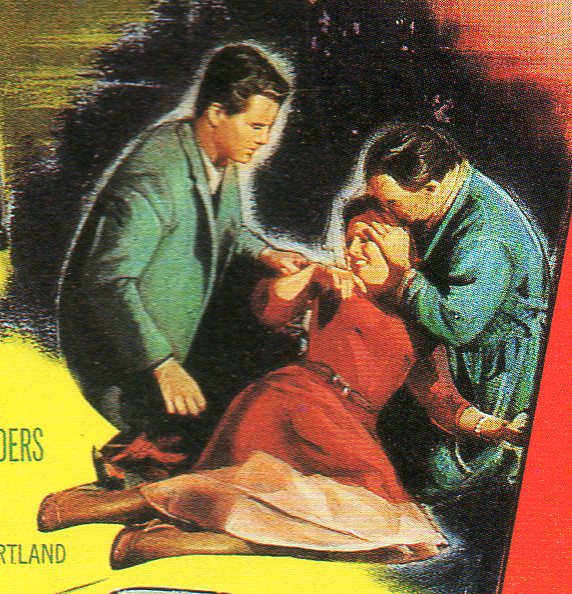
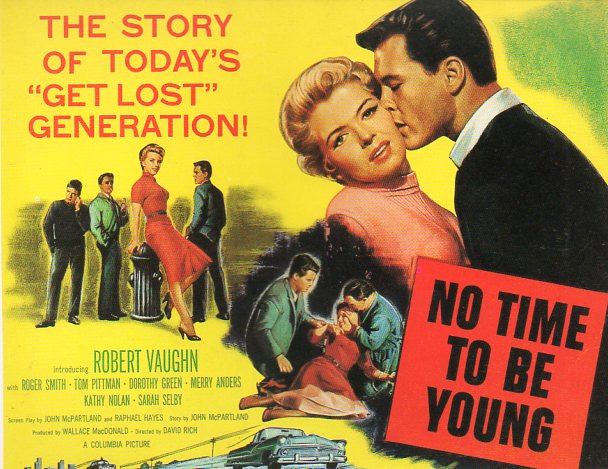
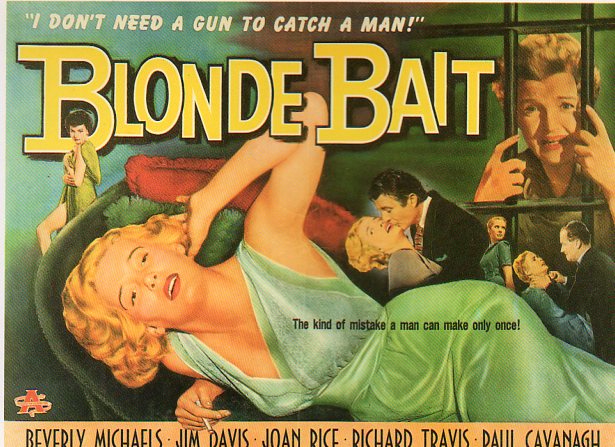
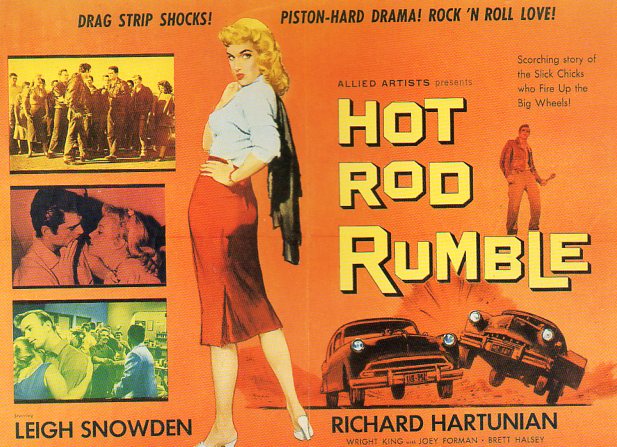
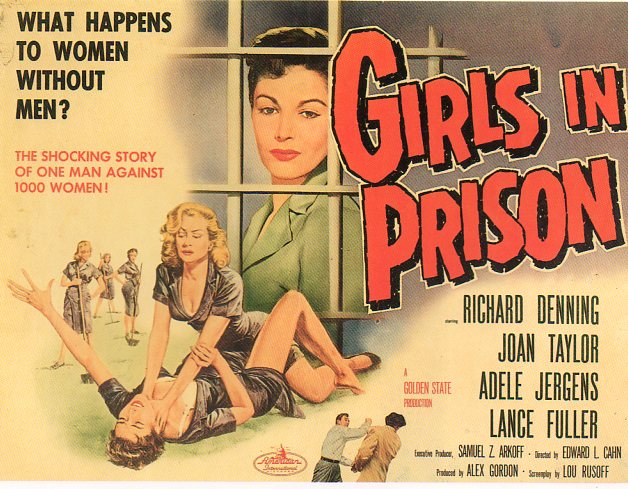
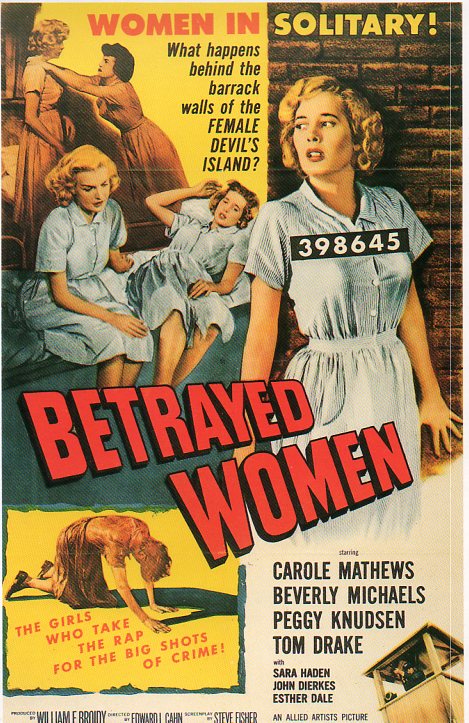
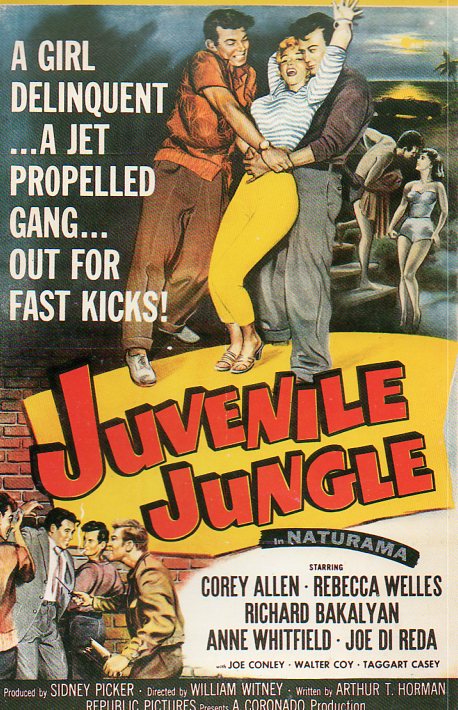
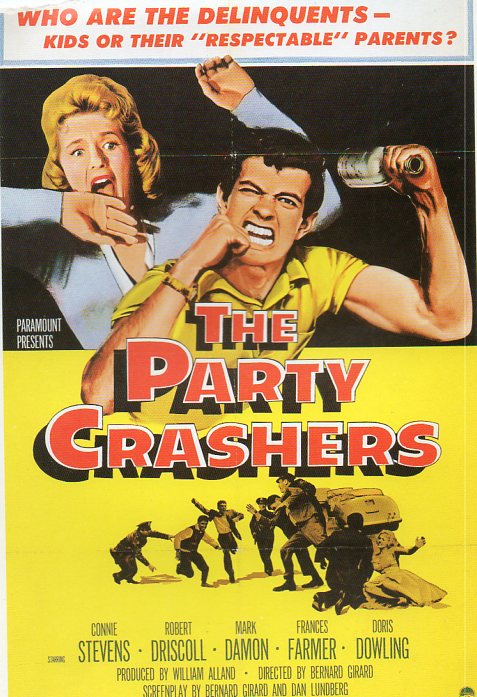
    Aberrant--party crashers SCream992 There was a certain something going on in the 1950’s with nova-express B-film ladys-in-trouble/bad girl/smashnose kissing  movies that were made for $5,600 in three days with two days of quality control.  The posters made for these beauties were a thing unto themselves, a self-contained and self-limiting genre, a found case of bizarro design and muted inelegancies.

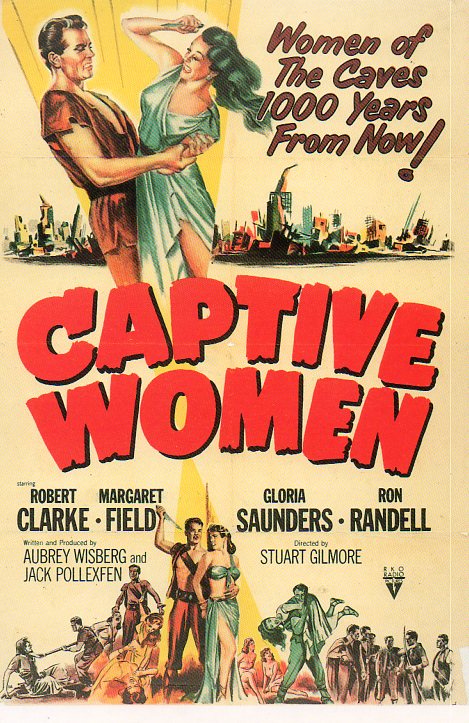
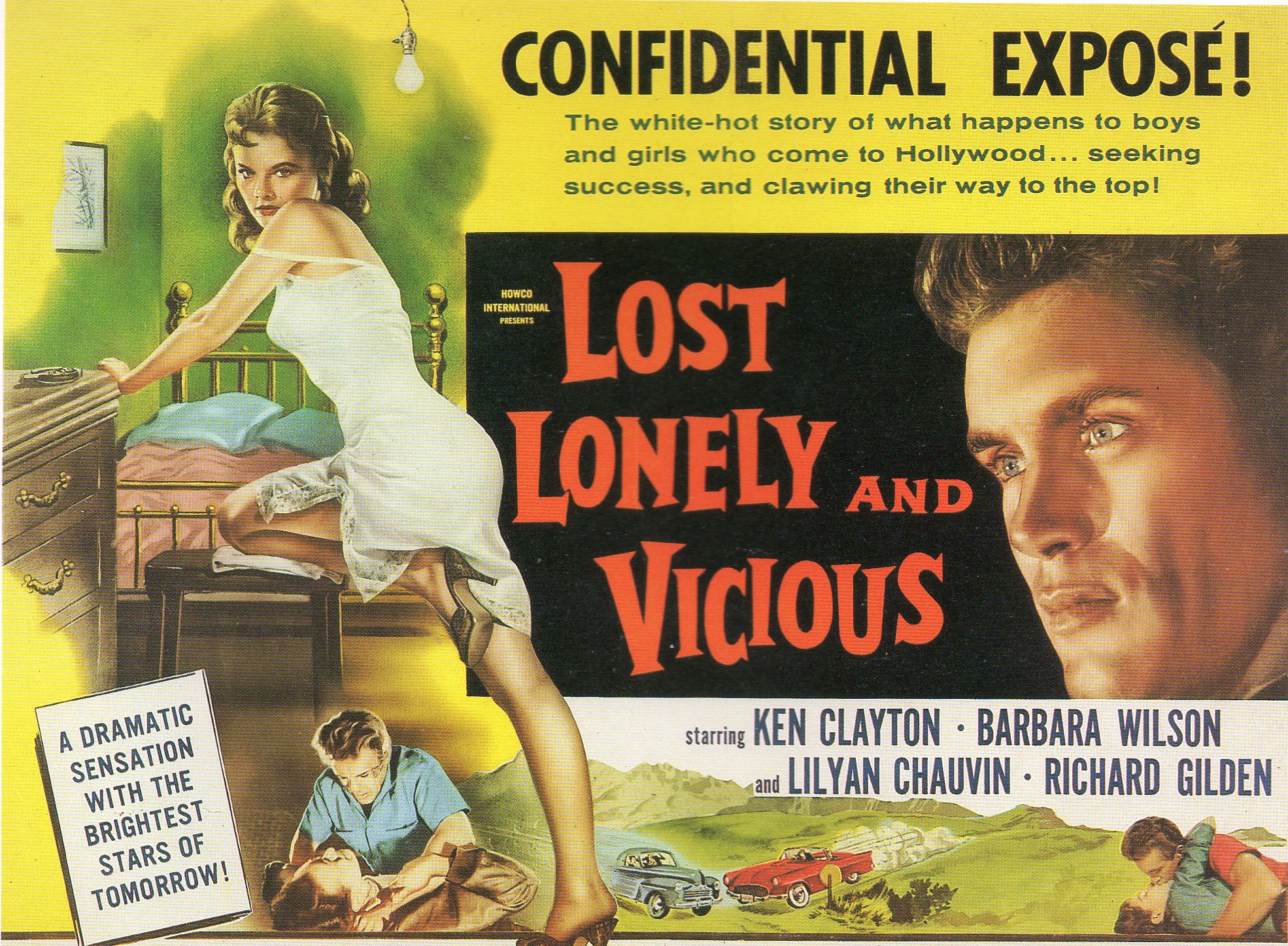
    The posters look like their movie names:  Juvenile Jungle, Betrayed Women, Girls in Prison, One Girl’s Confession, Dragstrip Girl, Girls on the Loose, Pick Up, Girls in the Night, Live Fast Die Young, Alimony Running Wild, Hot Rod Rumble, Running Wild, Blonde Bait, Captive Women, The Party Crashers and of course Lost, Lonely and Vicious.

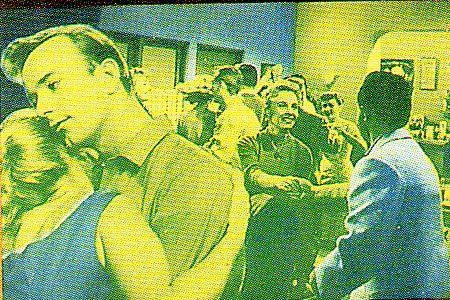
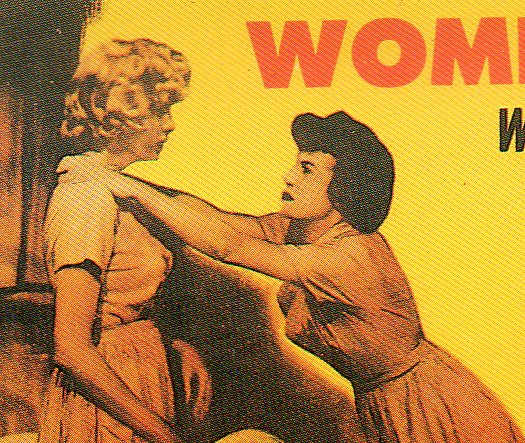
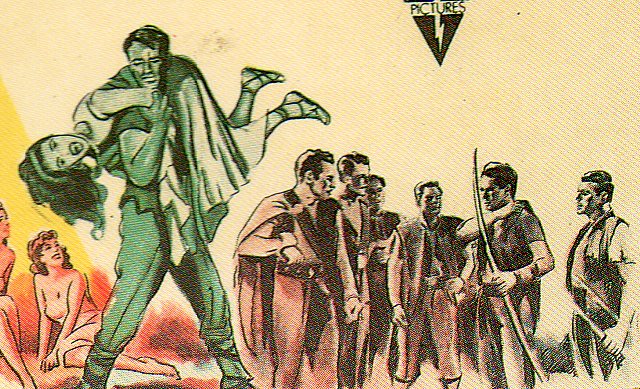
    Generally I think that folks see the big design and the colors, but lurking behind all of that are usually image-bits that sorta tell a part of the story of the film, but in a stubby, grubby way.  So I decided to do a little archaeological dig into some of these and give those small images some life through magnification.  Sometimes they’re surprising and look good big; sometimes they’re just badly design and goofy, and would look better smaller, very much smaller—dot-small.  Here’s a few examples (I’ll show the detail first and then the larger, full image of the poster after):

    Detail

    Aberrant--no time to be young kiss966

    Full poster:

    Aberrant--no time to be young laying down965

    Full poster:

    Aberrant--no time to be young964

    Detail

    Aberrant--blonde bars975


    Aberrant--blonde bait kiss971

    Full poster:

    Aberrant--blonde bait cvr970

    Detail:

    Aberrant--hot rod rumble 967

    Detail:

    Aberrant--hot rod rumble b968

    Full poster:

    Aberrant--hot rod rumble cvr969

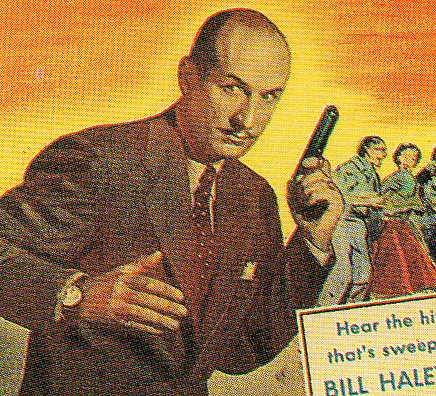
    Detail

      Aberrant--running wild gun972
    Detail

    Aberrant--running wild face973
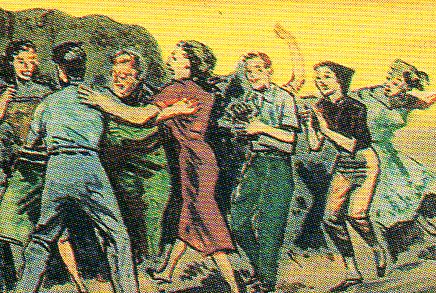
    detail

    Aberrant--running wild crowd974

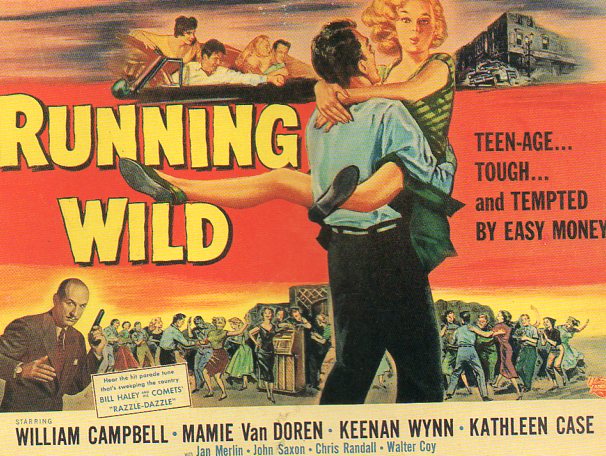
    Full poster, 1955.

      Aberrant--running wild cvr976

    Detail:

    detail:

     Aberrant--girls prison sm978

    Aberrant--girls prison sm979


    Aberrant--girls prison977

    Detail:

    Aberrant--betrayed women det986

    detail:

    Aberrant--betrayed women det987

    Full poster, Betrayed Women, 1955:

    Aberrant--betrayed women cvr990

    Detail:

    Aberrant--juvenile jungle cvr det985 |Full poster, Juvenile Jungle, 1958

    Aberrant--juvenile jungle cvr984

    detail:

    Aberrant--cative women sm983

    Full poster, Captive Women, 1952

      Aberrant--cative women sm982
    Full poster,Captive Women, 1952

    Aberrant--catpive owmen cvr991

    Detail:

    Aberrant--lost lonely sm980
    Full poster, Lost, Lonely and Vicious, 1952:

    Aberrant--lost lonely cvr981

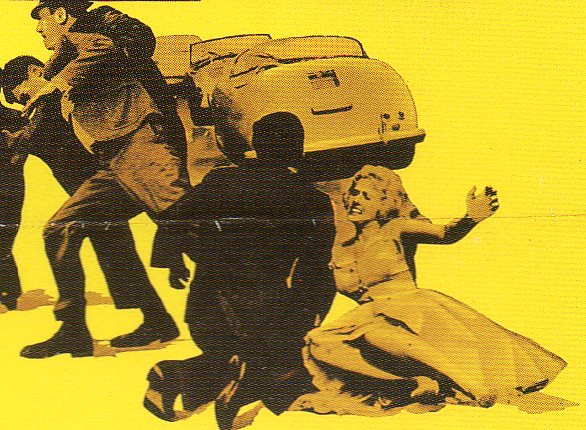
    Detail:

    Aberrant--party crashers det989

    Detail, Party Crashers, 1958

    Aberrant--party crashers988


  • VIDEO: Smashnose Grindkiss of Lady Archaeology of 1950’s B-Movie Posters.

    I posted something yesterday on this, but made a video of the whole thing (plus extras) this morning, with some decent music.


  • Polish Concentration Camps for Russians, 1920

    JF Ptak Science Books  Post 1255

    The name of the concentration camp comes to us from the (Second) Boer War, when the British imprisoned the Boers in what had first been described as refugees camps, and then in 1900/01 termed “concentration camps”.  They were hardly anything more than prisons, for men, women and children, entire families, communities.  These were the people who had escaped the systematic and revolting scorched earth policy initiated by Field Marshall Kitchener (who was in command of events after 29 November 1900), where the Boers were simply hunted and killed, or if not killed, then imprisoned; farms were destroyed, towns torched, livestock killed.  In general, the country of the Boers (all of whom were seen as guerrillas) was being taken and killed.  The survivors of this onslaught were sent to the concentrations camps. 

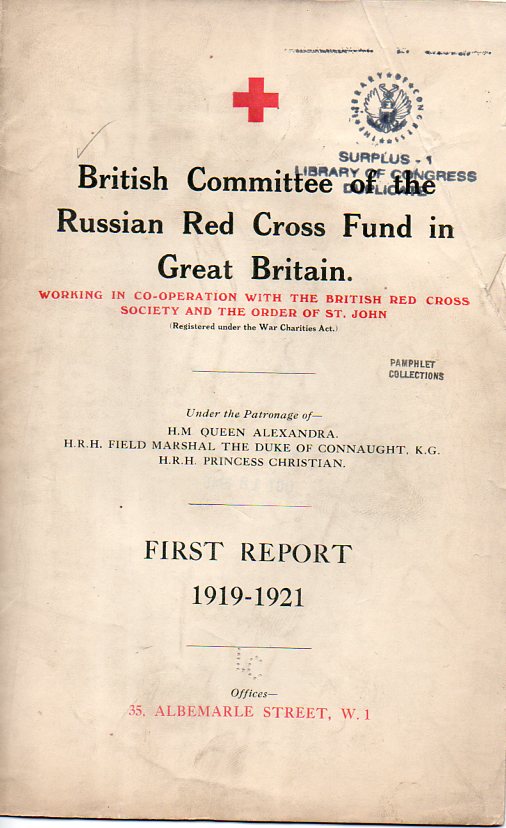
    Concentration camp009 This more modern 1921 reference to a concentration camp comes to us from British Committee of the Russian red Cross Fund in Great Britain, First report, 1919-1921.  This was a tough time for the people of Russia–the Soviet Union–who were on the beginning of a mostly long-arc downward.  Just seven years past the beginning of World War I they were experiencing enormous “hardships” brought about by fighting the war, complicated by the 1917 Bolshevik revolution and the resulting civil wars.  Then of course there was the end of the war, and the beginning fo the war with Poland in 1919/1920.  And then another in a series of natural/mostly-unnatural famines in 1921.  This particular famine–killing about 5 million people in this year–was brought about mostly by the Revolution and prodrazvyorstka–the practice of forcing peasant farmers into selling whatever “surplus” food they produced to the state at the state’s prices, and also by being forced to supply food to the Red Army and to urban areas.  Add a drought to this mix, and it lead to absolute disaster for the peasantry

    Russian Red Cross Fund wasn’t yet concerned with the Povolzhye Famine, not yet, addressing the plight of the country’s response to six long hard years of war, civil war and war again–a poor country made poorer and more miserable, this fund made some attempt at relieving at least a small burden of this impossible situation within the country. 

    What caught my eye was in the discussion of providing relief to the camps of Russian refugee expatriates, the report detailing some of those in Cyprus, Estonia, Latvia and Finland.  And Poland.  The Polish camp, however, was different, and described the attempt to send relief to the 140,000 in “the Concentration Camps”, and then describing another of 110,000 “Russians who have been interned according to the Riga Peace Terms, and that the Poles are quite unable to do anything for them”.    (This pamphlet is available for purchase through our lbog bookstore.)                     

    The reference took me by surprise–I knew a tiny bit about the Russia/Poland War at this time but hadn’t realized the extent of it, nor the extent of the Russian refugees in the country nor the amount of soldiers (and their families) within the concentration camps.  These are not the extermination camps that would appear in Poland two decades later, but the conditions of the people in the camps led to the deaths of thousands. 

    Notes:

    Kitchener (who full title without his bloody shoes on was Field Marshal The Rt. Hon. Sir Horatio Herbert Kitchener, 1st Earl Kitchener, KG, KP, GCB, OM, GCSI, GCMG, GCIE, ADC, PC) described his vision for ending the Second Boer War in the Parkenham’s history: his aim was to  “flush out guerrillas in a series of systematic drives, organized like a sporting shoot, with success defined in a weekly ‘bag’ of killed, captured and wounded, and to sweep the country bare of everything that could give sustenance to the guerrillas, including women and children…. It was the clearance of civilians—uprooting a whole nation—that would come to dominate the last phase of the war.”

  • The First American Race Riot: Harlem, 1935

    JF Ptak Scence Books  Post 1255–expanded

    “The Harlem riot of 1935, now the subject of a comprehensive report, demonstrated that ‘the Negro is not merely the man who shouldn’t be forgotten; he is the man who cannot safely be ignored’.” Alain Locke,  Survey Graphic, 1936.*


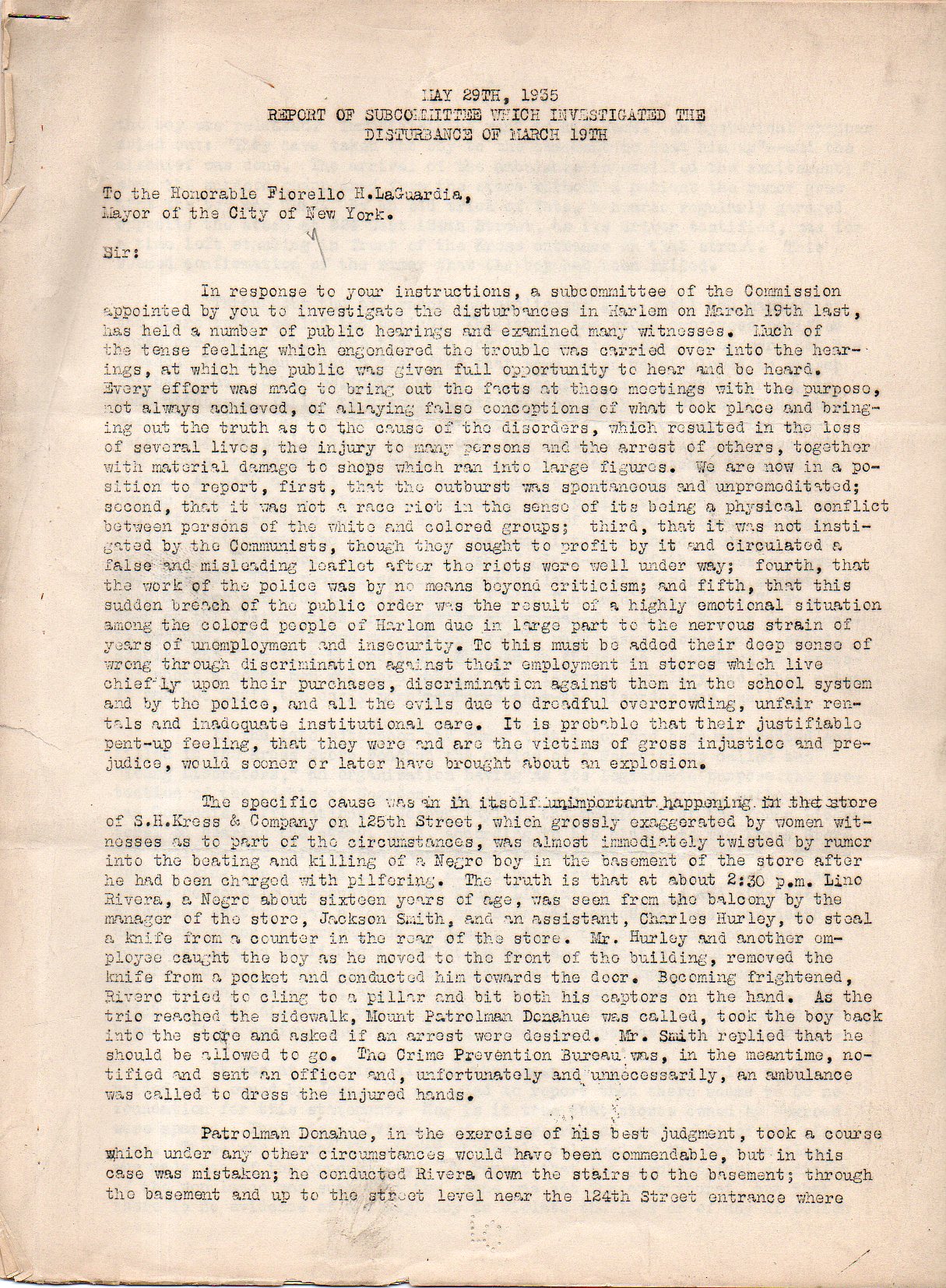
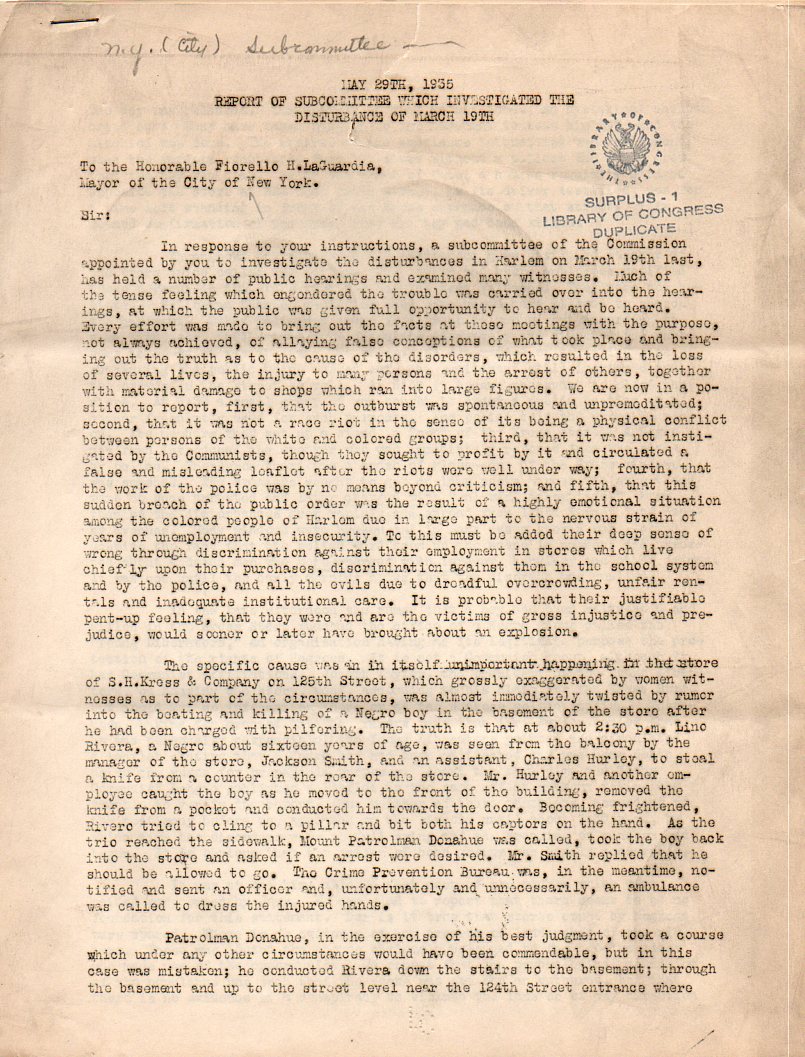
    This is a report to Mayor Fiorello LaGuardia (mayor of NYC from 1934-1945, a liberal Republican who was exactly what was needed in the city at exactly the right time) on what has come to be recognized as America’s first race riot.1 The damage was widespread, with hundreds of people injured, three killed, and $2 million 1935 dollars lost in during the Harlem event.   The action started at the S.H. Kress dime store on 256 W. 125th St. (just across from the Apollo Theater)   in Harlem, where a 16-year-old boy named Lino (described int his report as a “young Negro” though he was Puerto Rican) was detained by authorities in the store for shoplifting.  He was taken to the store’s basement and released to the backstreet unharmed, but a rumor spread violently and quickly that a young child had been taken to the basement of the store and beaten (or killed) for stealing a piece of candy.  Complications arose when the police arrived and when civic leaders’ questions went unanswered.  An odd and unfortunate twist of faith placed a hearse in front of the store during this build-up (from the business across the street from the store), inspiring outrage and “proof:” that the boy had been killed.2

    Race riot259

    In addition to the missing boy, the hearse, the police, and bad communications, were handbills distributed in the neighborhood printed by the Young Communist League and the black semi-militant Young Liberators, all helping to fan the flames of the crowds by the Kress store, which had swelled to several thousand people after just two hours–the riot came soon thereafter.

    The Report of Subcommittee Which Investigated the Disturbances of March 19th3 (and issued before August 15, 1935), was chaired by Arthur Garfield Hayes,analyzed the event in a surprisingly sympathetic way, recognizing that there was no organized response to the event, and finding that the response was understood to be a reaction to the long history of abuse of African Americans and poor governmental/police relations–and this all in eight quick pages.   LaGuardia said “We cannot be expected to correct in a day the mistakes and omissions of the past fifty years. But we are going places and carrying out a definite program. While the critics have been throwing stones, I have been laying bricks.”  It was surprising top me that the report was bi-racial, and that there was some real attempt to understand the problem and “do” something about it, rather than just chalk the whole thing up as something that could be simply solved with pure force.  [The original report is available for purchase from our blog bookstore.]

    As Locke wrote (below) the Riot of 1935 was the end of the Harlem Renaissance, and that a new era had begun.  For his part, LaGuardia at least opened a way to communicate about how to address the causes of such vast and repellent circumstances that eventually turned into the riot.

    Notes:

    * Locke continues: “Eleven brief years ago Harlem was full of the thrill and ferment of sudden progress and prosperity; and Survey Graphic sounded the tocsin of the emergence of a “new Negro” and the onset of a “Negro renaissance.” Today, with that same Harlem prostrate in the grip of the depression and throes of social unrest, we confront the sobering facts of a serious relapse and premature setback; indeed, find it hard to believe that the rosy enthusiasms and hopes of 1925 were more than bright illusions or a cruelly deceptive mirage. Yet after all there was a renaissance, with its poetic spurt of cultural and spiritual advance, vital with significant but uneven accomplishments; what we face in Harlem today is the first scene of the next act—the prosy ordeal of the reformation with its stubborn tasks of economic reconstruction and social and civic reform…” 

    1. Sociologist Allen D. Grimshaw called the Harlem Riot of 1935 “the first manifestation of a ‘modern’ form of racial rioting,” citing three criteria: “violence directed almost entirely against property”;  “the absence of clashes between racial groups”, and “struggles between the lower-class Negro population and the police forces”. “Harlem Renaissance”. Online Newshour Forum. PBS. February 20, 1998. http://www.pbs.org/newshour/forum/february98/harlem5.html.

    Another commission set to investigate the riot was headed by E. Franklin Frazier which produced a report, “The Negro in Harlem: A Report on Social and Economic Conditions Responsible for the Outbreak of March 19, 1935,” which found that the riot was not a controlled event and had happened spontaneously as a result of prolonged “injustices of discrimination in employment, the aggressions of the police, and the racial segregation”.

    2. Locke continues his observation on the Riot: “Curtain-raiser to the reformation was the Harlem riot of March 19 and 20, 1935; variously diagnosed as a depression spasm, a Ghetto mutiny, a radical plot and dress rehearsal of proletarian revolution. Whichever it was, like a revealing flash of lightning it etched on the public mind another Harlem than the bright surface Harlem of the night clubs, cabaret tours and arty magazines, a Harlem that the social worker knew all along but had not been able to dramatize—a Harlem, too, that the radical press and street-corner orator had been pointing out but in all too incredible exaggerations and none too convincing shouts.”

    3.  The commission was headed by Arthur Garfield Hayes and Charles H. Roberts, and was a bi-racial affair. “IMMEDIATELY after the March riot, Mayor La Guardia appointed a representative bi-racial Commission of Investigation, headed by an esteemed Negro citizen, Dr. Charles H. Roberts. After 21 public and 4 closed hearings conducted with strategic liberality by Arthur Garfield Hays…”

    4. Recommendations from the report:

    Increased hospital and health clinic facilities to combat disproportionate disease in the densely populated Negro areas.

    Recommended reorganization of Harlem hospitals and wider admission of Negro physicians to staff appointments, internee’ posts and educational facilities at all other municipal hospitals.

    New health center for Central Harlem District similar to East Harlem Center and a Negro supervisory health officer [the latter already agreed to by Commissioner Rice].

    Additional school buildings and extra educational facilities for vocational guidance, visiting teachers, and playgrounds. [The comparative absence of racial discrimination in the school system is one of the bright features of the report.]

    Housing legislation and additional low cost housing projects in line with recommendations of the report. Additional PWA and federal grants must be sought for such projects.

    Relaxing of the present tension in public opinion about the policy and attitude of the police in Harlem. The report recommends a Citizens’ Public Safety Committee not only to cooperate with the Police Commissioner as an advisory body but as a board of complaint in cases of suspected police brutality or reputed violations of citizens’ rights.

  • The Discovery of America(ns), 1933: a Vast Understatement of the Condition of Native Americans.

    JF Ptak Science Books  Post 1256

    Nothing makes “discovery” itself than re-discovery, with the important element being “forgetting”.  Some important thnigs in the history of science have been “forgotten”, or not remembered, actually, little reported–like Mendel’s work on genetics and the re-discovery of penicillin.  And the flying shuttle.  And so on.

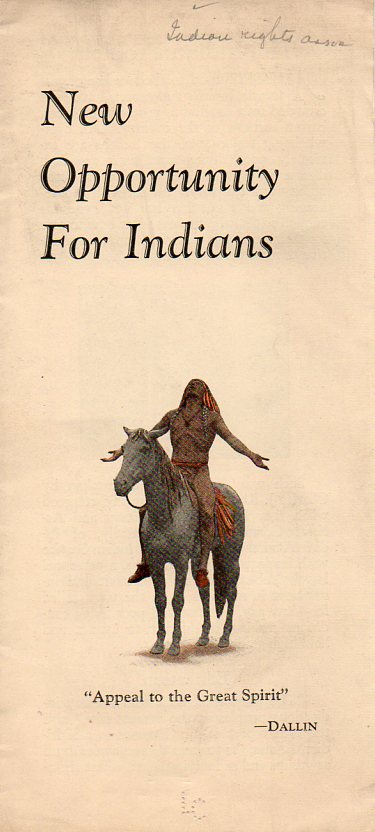
    Indian oppty011 This small pamphlet, New Opportunity for Indians (1933), may look like a solidified reverse misprint: “opportunity” rather than its plural, and singular “Indians” for its plural, and identifies what may be one of the most forgotten things in American history.  (The pamphlet is available at our blog bookstore.)

    The fact of the matter is that Native Americans had been basically forgotten during the last forty years or so, squandered away onto removed reservations with little support or money or time or effort. 

    In 1926 the Bookings Institution authorized a study of the condition of American Indians, with Lewis Meriam and his team responding with their report The Problem of Indian Administration in 1928.  It was the first statistical and analytical survey of its kind in eighty years (though the special volume of the 1890 census Indians Taxed and Indians Not Taxed comes close, though without a particular analytical thread) and was a general indictment of the government’s treatment of the Indian.

    We find most of the following in just the first dozen pages or so:
     –“the health of the Indians compared with that of the general population is bad.”(page 3) and that tuberculosis and trachoma were widespread, and infant mortality high.A major contribution was poor health facilities and the lack of Indian language understanding by the health care providers.
    –“The hospitals, sanatoria, and sanatorium schools maintained by the Service, despite a few exceptions, must generally be characterized as lacking in personnel, equipment, management, and design.”(page 9) And that “the government, through numerous on- and off-reservation health –“the most important single item affecting health is probably the food supply.”
    –“The income of the typical Indian family is low and the earned income extremely low.” (Page  4.)
    –“In justice to the Indians it should be said that many of them are living on lands from which a trained and experienced white man could scarcely wrest a reasonable living.” (Page 5. )
    –“The economic basis of the primitive culture of the Indians has been largely destroyed by the encroachment of white civilization.” (Page 6.)
    –Little attempt has been made to formulate a broad constructive program for the service as a whole, extending over a long term of years, and having for its goal the general improvement of economic conditions.” (Page 5)
    –“The survey staff finds itself obligated to say frankly and unequivocally that the provisions for the care of the Indian children in boarding schools are grossly inadequate.”(Page 11)

    And on and on.
           
    Perhaps the most important outcome of the Meriam report was the abandonment of the Dawes Act of 1887, which basically broke up tribal connections and lands, segregating individual families ad incorporating them as yet another American farming family.  Franklin Roosevelt’s Indian reorganization Act (1934) ended this practice and allowed for the organization of tribal government and incoporation of land trusts.

    But the fact that the Indians had been discovered, and discovered to have been rendered into such poor conditions, and that there was a general consensus to alleviate those conditions and provide better and more uniform health care and food (especially food) and education and tribal independence, it did not mean that getting the money for doing such things would be accomplished.

    In this slim pamphlet the outlines for helping Indians are described and failures acknowledged, though generally the planning was scant and rudimentary.  The pamphlet did identify “the first essentials tr a satisfactory home life are adequate food supply, proper clothing, and a comfortable shelter”. I think stopping at the “food supply” part would’ve been enough. 

    There was certainly an increase in money spent on health care, but the increase wasn’t much to speak of, not really.  The pamphlet states that “Indian Health Appropriations” topped out in 1911 at $40,000–or about $6/person/year.  The 1933 total was $3.2 million, but that still doesn’t spread out very thickly over 295,000 people. 

    In any event the pamphlet was not without hope, but that hope seemed to be all it had so far as implementing its new ideas for improvements and services.  In a small slug of a mention, “Crippled Services” it is noted that appropriations for the new years would be down $4 million dollars.  Unfortunately there is no figure of overall appropriations, so the figure doesn’t mean that much.  It did mean though to the author(s) of this pamphlet that even if there was no money there was hope.  Unfortunately “hope” doesn’t buy food.

    This pamphlet ends with a severe understatement: “the Indian problem is by no means solved either in education, health, making a living or providing a good home, much remains to be worked out”.  Indeed. 
                               
    The full Meriam report can be found here.

  • Reporting the Hiroshima Bomb the Day After, 7 August 1945. AND the First Graphic of NYC A-Bombed

    JF Ptak Science Books   Blog Bookstore  Post 1257 (continuing post 669)    Atomic and Nuclear Weapons Series

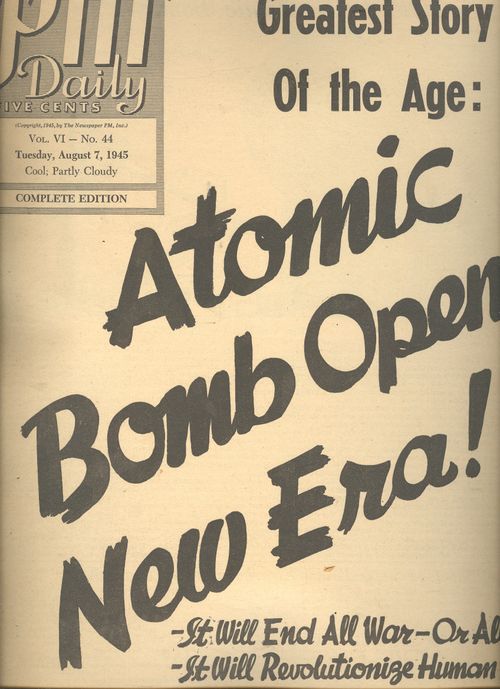
    ==Blog July 26=PM cvr bomb

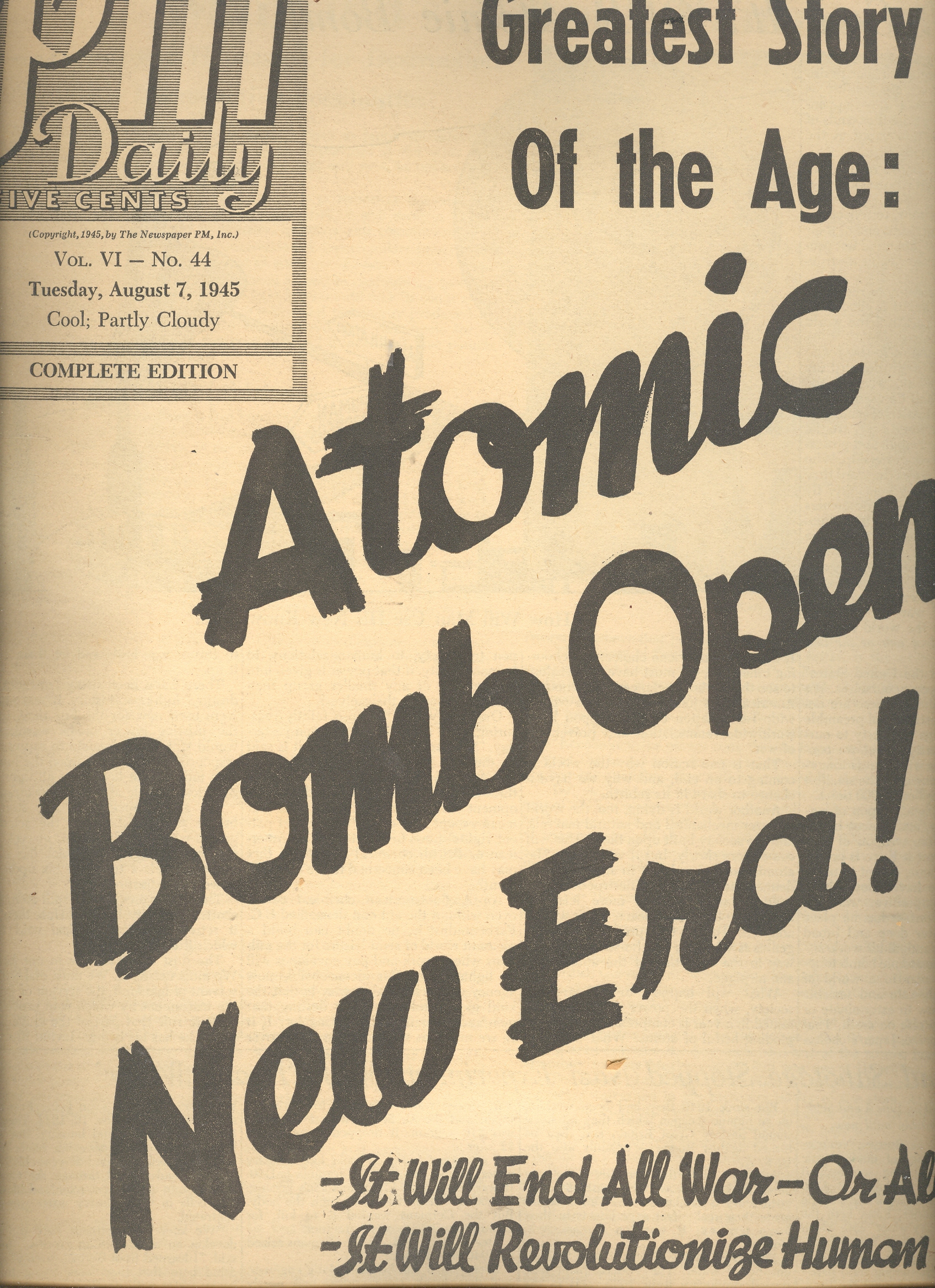
    The news coverage of the 6 August 1945 bombing of Hiroshima was covered in spectacular (all things and time considered) detail in the 7 August issue of the daily newspaper, PM.1  The entire issue of 12 pages (with no advertising2) was dedicated to the event—I have no idea, really, how they were able to put together this amount of good tough data so very quickly, nimbly and intelligently, as the bomb was detonated at Hiroshima only the day before. 

    It is odd how well the case is covered, and it is positively issued on the day after –it isn’t the case that it was issued for the week of 7 August and released on 13 August, which I thought was a possibility of explaining the deep coverage.  But there’s no mention of Nagasaki (which would come in two days), so I am certain that the coverage was all accomplished within 24 hours of the use of the weapon.  The newspaper distinguishes itself by not screaming something about the “Jap city” being wiped out (as so many other newspapers did), with its front page summarizing beyond the bomb.  (“It Will End all War—Or all Men” and “It Will Revolutionize Human Life” as sub-heads; the first being accurate, while the second being nearly so.) 

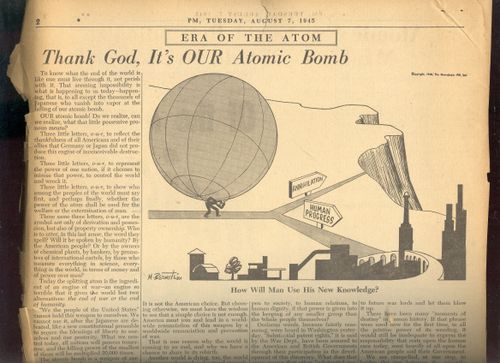
    The editorial, “Thank God its OUR Bomb”, by Irving Brant, is a lovely piece of thoughtful interpretation in the opening moments of the nuclear age. He writes: “America must join and lead in a worldwide renunciation of this worldwide renunciation and prevention of war”,and “What will happen to industry, to society, when the power of all the coal mined in a year is compressed into an exploding fistful of atoms?” And further:“There is no escape.  The split atom may shatter humanity, but not before then will it retreat into the physical void from which it came.  The dust of creation is in our hands.  We must master it.” Not bad stuff for having a few hours or so to think this  through. 


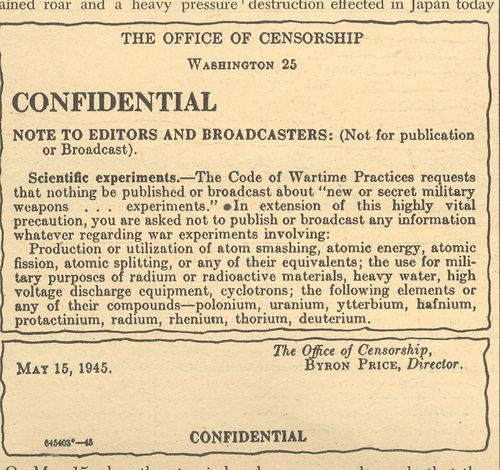
    ==Blog July 26=PM cvr bomb censor


    The other articles included “Bombs and Sabotage Stopped Nazi Experiment with Heavy Water”, “New Atomic Era Could Revolutionize Mankind’s Whole Manner of Life/Power Harnessed for Destruction Has Limitless Constructive Possibilities”, big two-page story “Stimson Reveals How Work on Bomb Was Organized”, “Bomb’s Death Range Believed to be 4 Miles”, “Four Scientists who Will Plan Postwar Uses of Atomic Energy”, “Harnessing of Atomic Power research Strengthens US Research”, “If a Piece of the Sun Were Placed on Earth”, “End Not Yet Truman Tells the Japanese”, and another 12 articles.

     ==Blog July 26=PM cvr bomb artoon

    There’s another baffling article “Steel Tower Vaporized in First Test”, discussing the shot at Alamagordo—it must have been the case that there was an enormous amount of material divulged by the government in the hours after the explosion at Hiroshima .  The work at Columbia is also chronicled, as is the personal life of the man in control, General Leslie Grove (and how completely in the dark his wife was, and so on). 

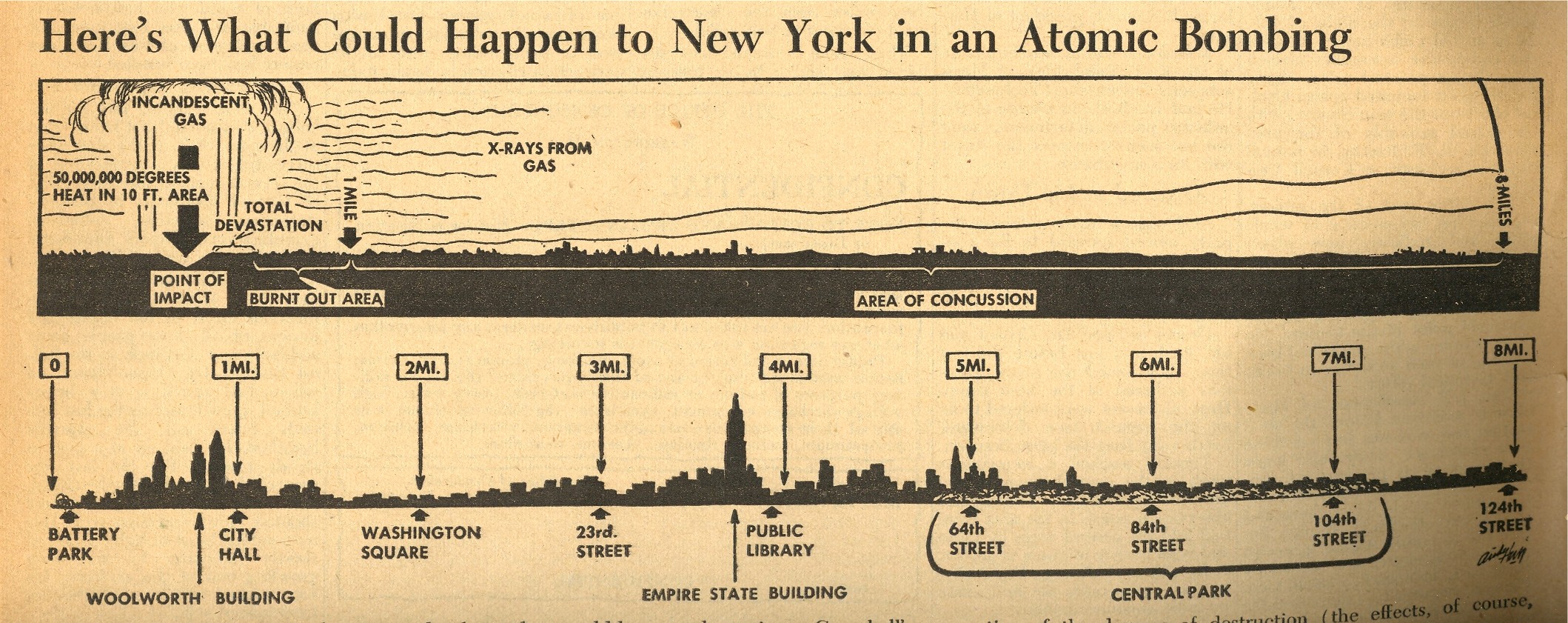
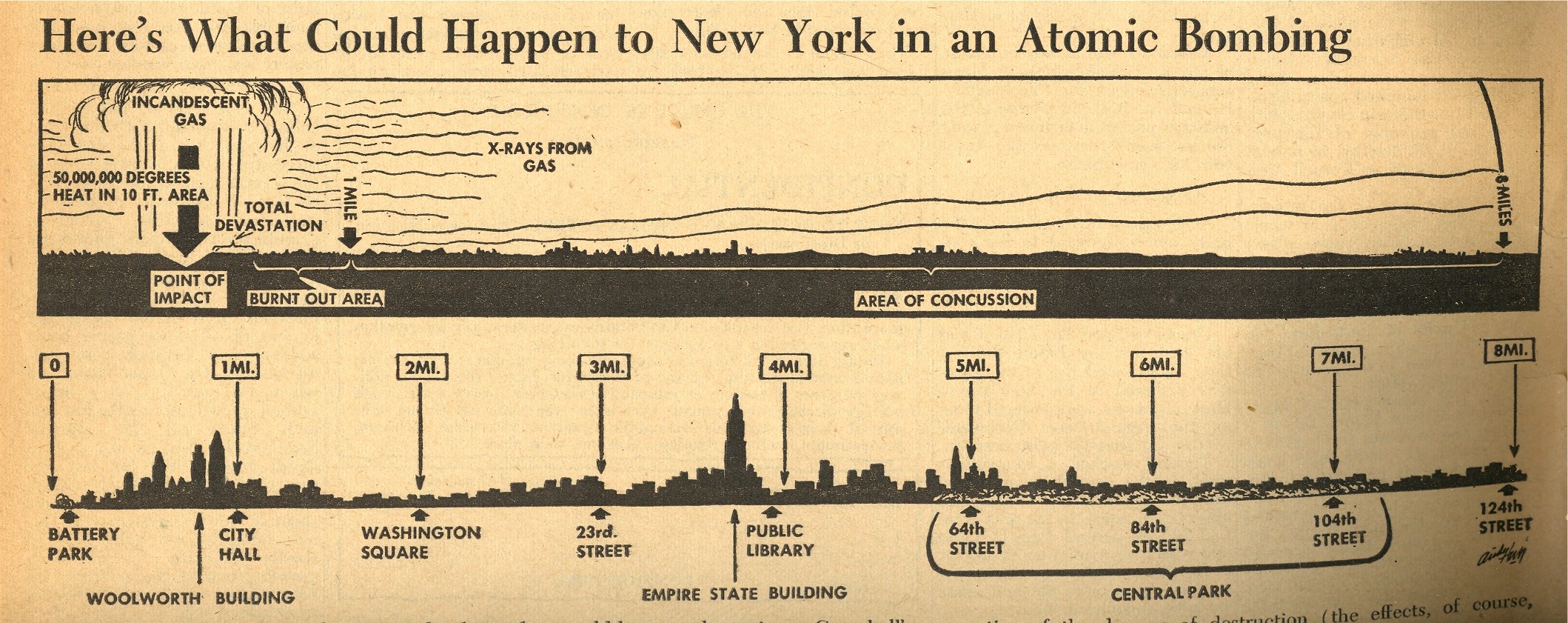
    One of the most interesting objects to me though is the small graphic on page 7 which shows what effect the Hiroshima atomic bomb would have if dropped on New York City—it was no doubt gigantically sobering to anyone who looked at it, and brought the power of the bomb and its destruction to a common, understandable point.  I’m not an historian of the first newspaper coverage of the bomb, but it strikes me that this may well be the first graphic to depict the effects of an atomic bomb exploded over NYC.

    ==Blog July 26=PM cvr bomb map
     

    In any event, the overall coverage of the event was stunning given the short amount of time to do the research, writing, and publication.  Truly a great effort. 

    Notes:

    1. PM (1940-1948) was a left-wing newspaper funded by Marshall Field III, and was home to excellent reporting.  See here for more details. Among the staff writers was I.F.Stone and staff photographers Margaret Bourke-White.  Other contributors included Heywood Hale Broun; James Thurber; (the great) Dorothy Parker; Ernest Hemingway; Eugene Lyons; Ben Stolberg; Malcolm Cowley; Tip O’Neill;and Ben Hecht.

    2. Actually, NO issue of PM had advertisements–it was entirely ad-free. (And even so it still came close to making money after 8 years.)

    PM‘s stated mission:

    PM is against people who push other people around.   PM accepts no advertising. PM belongs to no political party. PM is absolutely free and uncensored. PM’s sole source of income is its readers–to whom it alone is responsible.PM us one newspaper thayt can and dares to tell the truth.

    Theodore Geisel (Dr. Seuss) was a cartoonist for PM (see here for his War cartoons) as was the great Crockett Johnson.

  • Abbreviating Auschwitz: a Document for the Construction of the Buna Works

    JF Ptak Science Books  Post 1258 (continuing Post 274)
    Itz abbrev

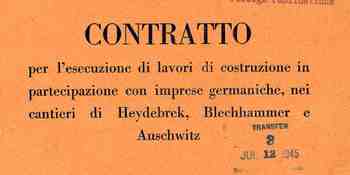
    1blogsept_23_astro_cvr_detail643 This document of death, this pamphlet is the Auschwitz III Construction Contract between IG Farben and the Confederazione Fascista degli Industriali for Construction of the Buna Works at Auschwitz III, as well as construction at Heydebrek and Blechhammer, and was printed in 1942.  I’ve only been able to scan five pages as the document is fairly weak and I have a flat bed scanner–I just don’t think it would take much more abuse without falling out of its binding.  But I have scanned some of it, notably the participatory Italian companies and some of the allocation of workers to the different concentration camps–I’ll just have to return top scanning the rest of the document when I find a better (inclinded) scanner. 
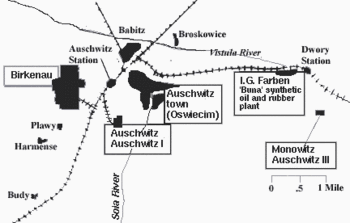
    Auschwitz_12map
    The full title reads of the work reads:

    Contratto per l’escusione di lavori di construzione in partecipazione con imprese germaniche, nei cantieri di Heydebrek, Blechhammer e Auscwitz. It was printed by Tipografia del Gianicolo, in Rome, 1942, by the Confederzione Fascista degli Industriali, Federazione Nazionale Fascista Raggruppamento Germania.  The document measures a fragile 30.5 x 21 cm,  and is 29 pages long.  Like dozens of thousands of other things here at the store, this was formerly in the “Pamphlet Collection” of  the Library of Congress (which received the publication 12 July 1945) until we purchased the collection at the end of 1999.  (This document is also availableat our blog bookstore.)

    This is also probably the most awful thing I own.  Its like looking at those blueprints for the crematoria and the barracks–so precise, swimming in their blue pool, these concise, sure, white lines; designs for one of the worst things built in the 20th century–just drawings, lines on a long sheet of paper, for building something.  Completely removed from the breathing world, just cold logical constructions for someone else’s end.  That’s the feeling I get from handling this thing–the Italians and Germans figuring out where to put the thousands of workers, making sure
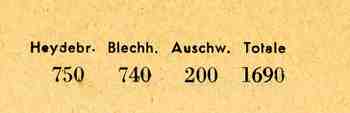
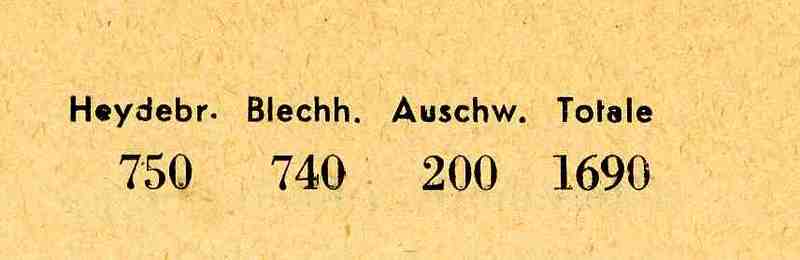
    1blogsept_23_astro_det641_2that they get paid, providing for some sort of maintenance for the workers’ health, salaries, benefits, work schedules, breaks, vacations, incentives, mailing and the post, and so on.  All of the bits of the most mundane things that go into a large construction projects, like building a highrise, or a tunnel, or a highway, or a bridge to hell.  This contract could’ve been for just about anything at all.  But it isn’t.  Its for building a part of Auschwitz when anyone with any sense whatsoever knew what was already going on there.

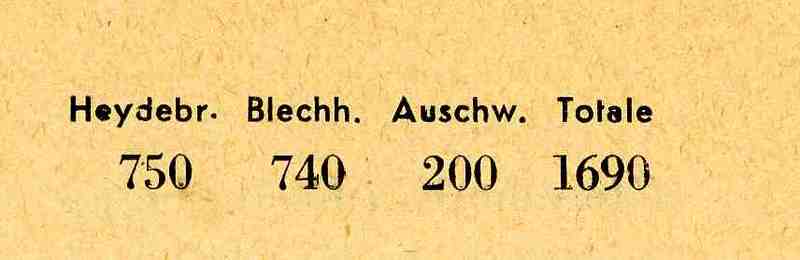
    Of the many terible things in this document I was really bothered to see Heydebrek, Blechhammer and Auschwitz abbreviated at the top of some of these pages.    This is just so wrong. Wrong on every level, being an attribute of the nothingness, of the emptiness, of this document. 

    It is a simple, basic document on one of the least simple and basic things of the 20th century.  The contract detailed labor expectations, needs and regulations from both the German and laboring Italian sides for the construction of these three concentration and slave labor camps in 1942.   Subjects of interest in this document include salaries, housing, vacations, health care and insurance, as well as the application of German laws to the workers, qualifications, and classification of occupations.

    Perhaps the part of most interest is the short list—reprinted below—on pages 3 & 4 of the firms and engineers taking part in this agreement..

    ***

    The names that are attached to this document and signing off on the contract of this agreement (of 2 March 1942  which provided 8,636 Italian laborers for this construction) include:

    1)    for IG Farbenindustrie AG, Heydebreck, Heydebreck OS
    Adolf Mueller and (Hans) Deichmann

    Hans Deichmann served as (senior) legal representative for IG Farbenindustrie in Rome and Milan from 1942 to 1945 and in 1942 was responsible for recruiting Italian workers for construction in the above-named concentration camps.

    2)    for Oberschleische Hydrierwerke AG, Blechhammer, Kreis-Consei       
    Schlick

    3)    for IG Farbenindustrie AG Auschwitz, Auschwitz OS
    Adolf Mueller and (Hans) Deichmann

    The signatures representing Italian interests include:
    Aurelio Aureli
    Giacomo Milella

    Notes:
    –Blechhammer was a satellite camp of Auschwitz III (Monowitz)
    –Auschwitz III, also called Buna or Monowitz, was established in nearby Monowice to provide forced laborers for the Buna synthetic rubber works. The German conglomerate I.G. Farben established a factory in order to take advantage of cheap concentration camp labor and the nearby Silesian coalfields. It invested more than 700 million Reichsmarks (about 1.4 million U.S. dollars in 1942 terms) in Auschwitz III.

    On Italian labor being used at Nazi Concentration camps, as found in Vol  VIII, pg 749, 
    Nuremberg War Crime Tribunals:

    Q. Did you go to ter Meer* to get Italian workers — I am thinking of a prosecution exhibit, the one which was shown to ter Meer on cross examination.

    A. I was told at the time by an official source that Italian industry, after the collapse, would no longer produce because there was no coal, no current, or something. I was also told that since the Italian State obtained goods from Germany — buna, for example — the Italian State would be willing to enter into an agreement with Germany to make labor available, as was always the case from Italy. I said to him: “In case that is so” — neither ter Meer nor I knew whether that really would be the case — I said, “help the people at Auschwitz; help them to get workers if now” — I believe this was in 1944 — “the plants gradually go into operation.” For in these plants we wanted to have skilled workers — as I said yesterday, it is very important whether or not the man in charge has knowledge of the work he is doing.   –Vol  VIII, pg 749,  Nuremberg War Crime Tribunals. 

    *”Fritz ter Meer served on the IG Farben [Farben was Hitler and Hitler was Farben. (Senator Homer T. Bone to Senate Committee on Military Affairs, June 4, 1943.] board of directors from 1926 to 1945 and was the head officer directing the operations of the IG Farben factory at Auschwitz. The Nuremberg War Crimes Tribunal sentenced him to seven years in prison. He was released after serving only four years. Not long after, in 1956, Ter Meer was elevated to the chairman of the supervisory board at BAYER, a position he held for seven years. His grave in Krefeld has a meter-high wreath on it – donated by BAYER in recognition of his services.”

    Farben & American Business, 1930-1943

    It is a very long and twisted and very crowded road to the source of intelligence on the involvement of American corporate citizens in the rise of Hitler, but the directorship roles and participation of American citizens in Farben from its formation in 1928 to the beginning of the war does provide an interesting insight to the international flavor of what was perhaps THE principal Nazi company.   Again, this is an exhausting process which I cannot even begin to undertake here, but suffice to say that American involvement and participation in Nazi war interests lasted well into the beginning of 1943.

    (The following information on American involvement int the directorship of IG Farben comes from Reformed Theology website.  Many thanks!)

    The Directors of American I.G.(FARBEN Chemical)  as of  1930 (with their citizenship and other corporate identities) providing guidance, leadership and investment in the backbone of the Nazi rise to power:
    Carl BOSCH  German  FORD MOTOR CO. A-G

    Edsel B. FORD U.S.  FORD MOTOR CO. DETROIT

    Max ILGNER  German Directed I.G. FARBEN N.W.7  (INTELLIGENCE) office. Guilty at Nuremberg War Crimes Trials. F. Ter MEER German Guilty at Nuremberg War Crimes Trials

    H.A. METZ  U.S.  Director of I.G. Farben Germany and BANK OF MANHATTAN (U.S.)

    C.E. MITCHELL U.S. Director of FEDERAL RESERVE BANK OF N.Y. and NATIONAL CITY BANK

    Herman SCHMITZ German On boards of I.G. Farben (President) (Germany) Deutsche Bank (Germany) and BANK FOR INTERNATIONAL SETTLEMENTS. Guilty at Nuremberg War Crimes Trials.

    Walter TEAGLE  U.S. Director FEDERAL RESERVE BANK OF NEW YORK and STANDARD OIL OF NEW JERSEY 
    W.H. yon RATH  Naturalized Director of GERMAN GENERAL U.S. ELECTRIC (A.E.G.)

    Paul M. WARBURG U.S. First member of the FEDERAL RESERVE BANK OF NEW YORK and BANK OF MANHATTAN

    W.E. WEISS U.S. Sterling Products

    Source: Moody’s Manual of Investments; 1930, p. 2149. Note: Walter DUISBERG (U.S.), W. GRIEF (U.S.), and Adolf

    KUTTROFF (U.S.) were also Directors of American I.G. Farben at this period.

    Again, more from Reformed Theology:

    “Directors of American I.G. were not only prominent in Wall Street and American industry but more significantly were drawn from a few highly influential institutions:”

    “The remaining four members of the American I.G. board were prominent American citizens and members of the Wall Street financial elite: C.E. Mitchell, chairman of National City Bank and the Federal Reserve Bank of New York; Edsel B. Ford, president of Ford Motor Company; W.C. Teagle, another director of Standard Oil of New Jersey; and, Paul Warburg, first member of the Federal Reserve Bank of New York and chairman of the Bank of Manhattan Company.”

    “Directors of American I.G. were not only prominent in Wall Street and American industry but more significantly were drawn from a few highly influential institutions. (See chart above.)”
    “Between 1929 and 1939 there were changes in the make-up of the board of American I.G. The number of directors varied from time to time, although a majority always had I.G. backgrounds or connections, and the board never had less than four American directors. In 1939 — presumably looking ahead to World War II — an effort was made to give the board a more American complexion, but despite the resignation of Hermann Schmitz, Carl Bosch, and Walter Duisberg, and the appointment of seven new directors, seven members still belonged to the I.G. group. This I.G. predominance increased during 1940 and 1941 as American directors, including Edsel Ford, realized the political unhealthiness of I.G. and resigned.”

    Well, I don’t know where I am going with this, it is just such a big, monstrous story.  Please forgive me this ramshakle post.  I really just wanted to get the information out on the contract and will return to it later. 
  • Eisenhower at Ohrduf Concentration Camp April 1945 and his May 1945 Report

    JF Ptak Science Books   Post 1259 (Continuing Post 273)

    [On General Eisenhower in the Ohrduf  concentration camp, April 1945, and the report that came from that visit, Atrocities and Other Conditions in Concentration Camps in Germany…May 1945.]

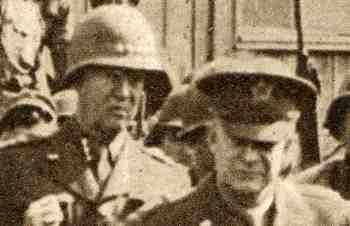
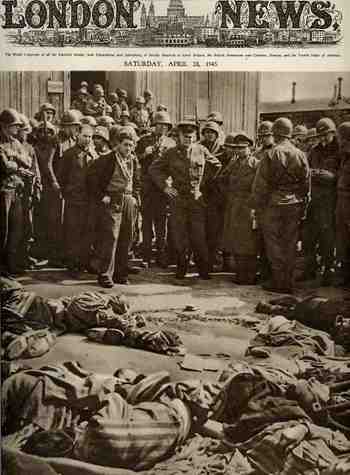
    Blogsept22_holocust_eisenhowerd_d_4 This picture Generals Eisenhower and Patton pretty much says it all–I’m not a scholar or expert on these two men, but I cannot recall seeing any photos of them with a look of utter seething repulsion. (Eisenhower would say that it was important for him to bear witness himself to all of the horrors of the camp so that there would be absolutely no question in the interpretation as to what went on there.)     This detail is taken from the photo on the front cover of the 28 April 1945 issue of The Illustrated London News.  The caption:  “The usually genial General Eisenhower shows by his grim aspect his horror of German brutality:  the macabre scene of victims murdered by S.S. guards at Ohdfruf camp”.  There are six more pages of photos inside this issue; describing the horrors of the “torture camps” (nowhere in this issue is the word “Holocaust” employed, though there is one mention of Buchenwald being a “concentration camp”.  The pictures are from Nordhausen, Belsen, Buchenwald and Langenstein, and for the record are brutal. There is an Amry movie of this scene available at youtube HERE.  (It is quite graphic.)  Ohrdrup, a “sub-camp” of Buchenwald, was the first camp to be liberated by the Allies in which there were survivors, and the first camp to be liberated by the U.S. Army ( 4th Armored Division and the 89th Infantry Division, U.S. Third Army). 
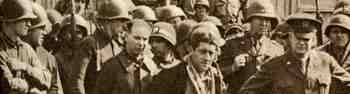
    There were 11,600 or so people in Ohrdruf as late as the beginning of April, when the vast majority death-marched to Buchenwald, with those to weak or ill to make the march to death in Buchenwald were killed right there. 

    Blogsept22_holocust_eisenhowerd_det

    Blogsept22_holocust_eisenhower613  

    Eisenhower related his experience at the camp to George Marshall, as follows:  “. . .the most interesting–although horrible–sight that I encountered during the trip was a visit to a German internment camp near Gotha [Ohrdruf]. The things I saw beggar description. While I was touring the camp I encountered three men who had been inmates and by one ruse or another had made their escape. I interviewed them through an interpreter. The visual evidence and the verbal testimony of starvation, cruelty and bestiality were so overpowering as to leave me a bit sick. In one room, where they were piled up twenty or thirty naked men, killed by starvation, George Patton would not even enter. He said that he would get sick if he did so. I made the visit deliberately, in order to be in a position to give first-hand evidence of these things if ever, in the future, there develops a tendency to charge these allegations merely to ‘propaganda’.   

    General George S. Patton described it as “one of the most appalling sights that I have ever seen.” He recorded in his diary that In a shed . . . was a pile of about 40 completely naked human bodies in the last stages of emaciation. These bodies were lightly sprinkled with lime, not for the purposes of destroying them, but for the purpose of removing the stench. When the shed was full–I presume its capacity to be about 200, the bodies were taken to a pit a mile from the camp where they were buried. The inmates claimed that 3,000 men, who had been either shot in the head or who had died of starvation, had been so buried since the 1st of January. When we began to approach with our troops, the Germans thought it expedient to remove the evidence of their crime. Therefore, they had some of the slaves exhume the bodies and place them on a mammoth griddle composed of 60-centimeter railway tracks laid on brick foundations. They poured pitch on the bodies and then built a fire of pinewood and coal under them. They were not very successful in their operations because there was a pile of human bones, skulls, charred torsos on or under the griddle which must have accounted for many hundreds.” 

    An interesting and very moving account of two of the inmates at the concentration camp being liberated is found HERE. 

    Eisenhower014

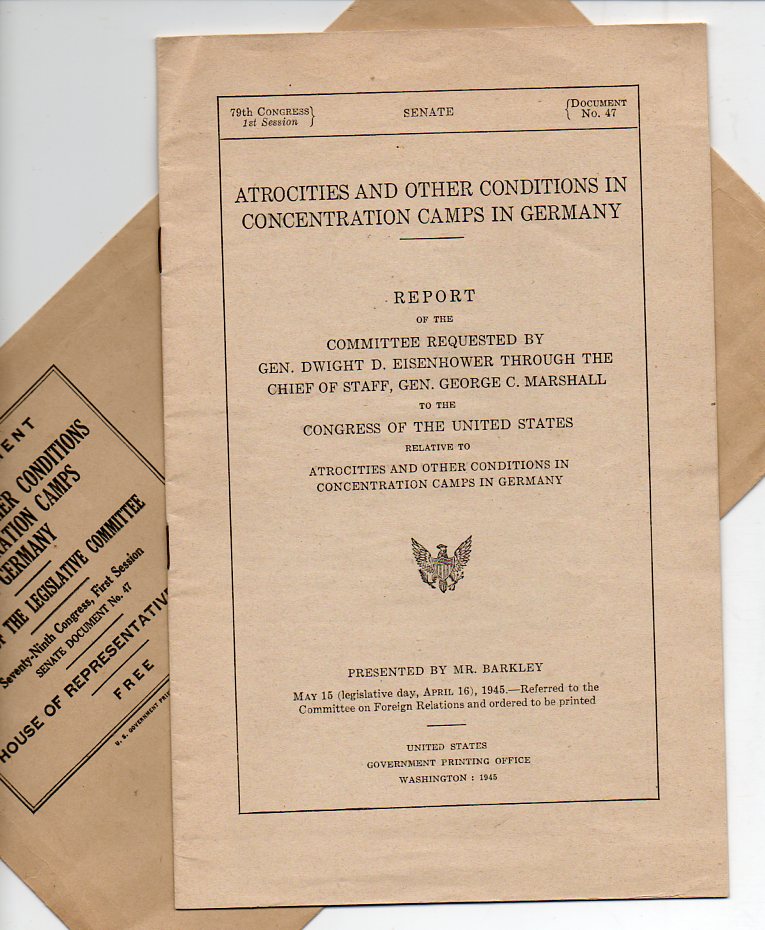
    Two weeks later came the famous report instigated by General Eisenhower, Atrocities and Other Conditions in Concentration Camps in Germany, (the full text of which is found HERE) published 15 May 1945.  In sixteen quick pages it began the process of realization for the general public about what smaller groups knew what was happening in the extermination and concentration camps.  There was at this time just a scant mention of the crematoria, or the gas “showers”, or for that matter, the suspected vast extermination of the Jews.  (There are three mentions of Jews in the report, none of which single them out for any particular treatment, necessarily.  One mention describes that there were 4,000 Jews among the 20,000 survivors at Dachau, and another statung that the “Jews, Russians and Poles were treated with a greater degree of severity…”

    As Andy Moursund3 (of the Georgetown Bookshop) points out, it was a shining moment for Eisenhower in his visit to the concentration camp, his revulsion, and his prescient insistence that it was all documented and at the highest levels, so that the unbelievable nature of the places could be believed by people in the future. 

    [This pamphlet is available through our blog bookstore, here.]

    NOTES

    1. The full title of the pamphlet reads: Report of the Committee requested by Gen. Dwight D. Eisenhower through the Chief of Staff Gen. George C. Marshall to the Congress of the United States relative to atrocities and other conditions in concentration camps in Germany … It is signed by the 12-member committee, the lead taken by Alben Barkley.

    2. Eisenhower cabled George C. Marshall of his experience at Ohrduf:

        . . .the most interesting–although horrible–sight that I encountered during the trip was a visit to a German internment camp near Gotha. The things I saw beggar description. While I was touring the camp I encountered three men who had been inmates and by one ruse or another had made their escape. I interviewed them through an interpreter. The visual evidence and the verbal testimony of starvation, cruelty and bestiality were so overpowering as to leave me a bit sick. In one room, where they were piled up twenty or thirty naked men, killed by starvation, George Patton would not even enter. He said that he would get sick if he did so. I made the visit deliberately, in order to be in a position to give first-hand evidence of these things if ever, in the future, there develops a tendency to charge these allegations merely to ‘propaganda.’

    3. Andy Moursund (of the Georgetown Bookshop)–who has had a four-decade-long interest in this area and who has been a wide collector in Holocaust material–writes: “In one of Eisenhower’s finer moments, on April 20, 1945, with the allies sweeping through Germany and encountering corpses in every concentration camp along the way, he sent a cablegram to General George C. Marshall, which read: ‘WE ARE CONSTANTLY FINDING GERMAN CAMPS IN WHICH THEY HAVE PLACED POLITICAL PRISONERS WHERE UNSPEAKABLE CONDITIONS EXIST. FROM MY OWN PERSONAL OBSERVATION, I CAN STATE UNEQUIVOCALLY THAT ALL WRITTEN STATEMENTS UP TO NOW DO NOT PAINT THE FULL HORRORS. IN VIEW OF THESE FACTS, YOU MAY THINK IT ADVISABLE TO INVITE ABOUT 12 CONGRESSIONAL LEADERS AND 12 LEADING EDITORS TO SEE THESE CAMPS. IF SO, I SHALL BE GLAD TO TAKE THESE GROUPS TO ONE OF THESE CAMPS. SUCH A VISIT WILL SHOW THEM WITHOUT ANY TRACE OF DOUBT THE FULL EVIDENCE OF THE CRUELTY PRACTICED BY THE NAZIS IN SUCH PLACES AS NORMAL PROCEDURE. A SIMILAR INVITATION IS BEING SENT TO SIMILAR REPRESENTATIVE BRITISH GROUPS.’ “

    ·Posted by :

    ·in:

  • After Liberation–Rare Interviews Relating to the Jewish People In Germany, November 1945

    JF Ptak Science Books  Post 1260

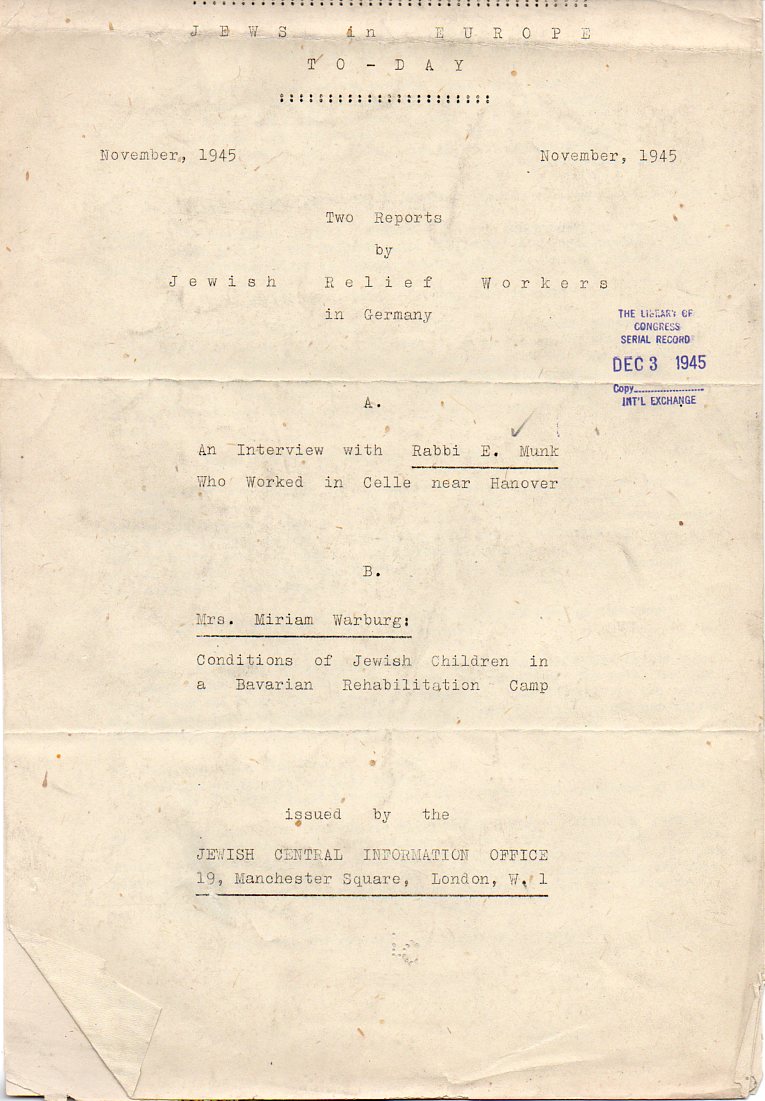
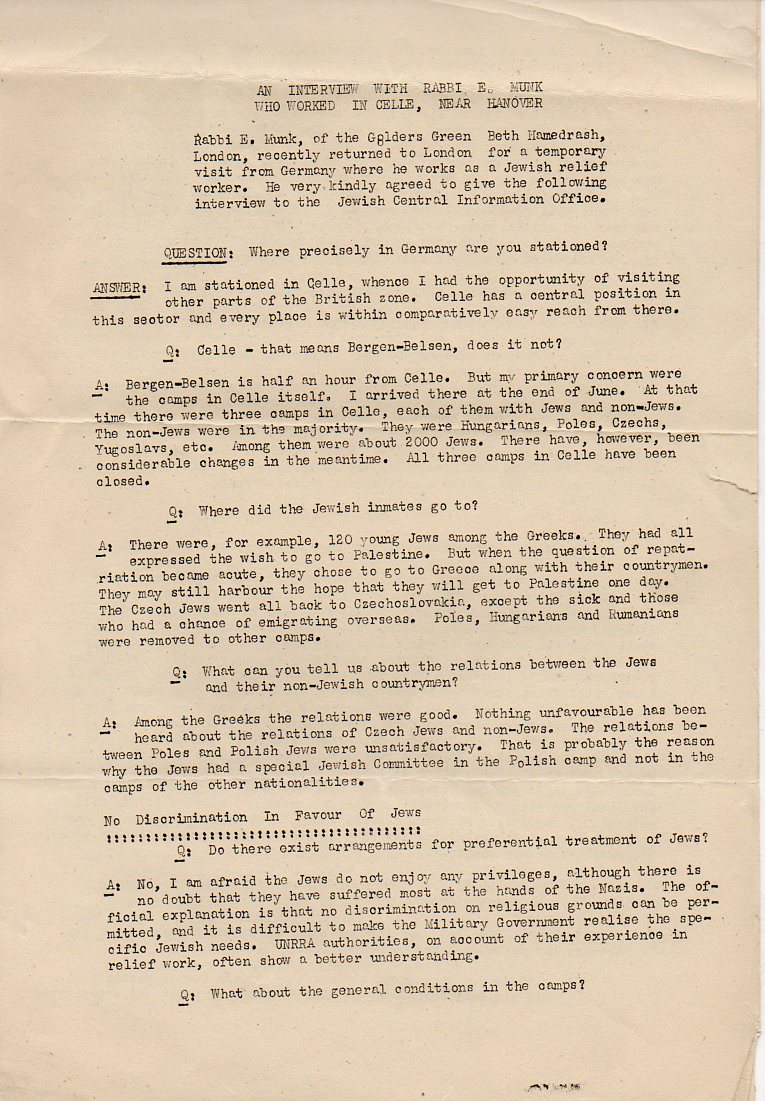
    Jews in Europe Today. Two reports by Jewish Relief Workers in Germany, published in  London by the Jewish Central Information Center at war’s end,1945, is a difficult document on the condition of Jewish Holocaust survivors in Germany right at the end of the war, October and November 1945.  The two reports comprising the whole: (1.) Interview with Rabbi E. Munk Who Worked in Celle Near Hanover, and  (2.) Mrs. Miriam Warburg, Conditions of Jewish Children in a Bavarian Rehabilitation Camp.

    Jews in europe today a015 This rare document–I can find no copies in libraries worldwide, (according to RLIN, BMC, CARL, Marchive, the NUC and the massive WorldCat)– presents interviews with people who were on hand doing relief work right after the concentration camps were liberated and right at the beginnings of helping (or simply housing in many cases) the many displaced, newly-liberated people.  (There were some 6 million displaced persons at the beginning of the peace, including a (very) estimated 200,000 Jews.)     

    This document is a small insight into the conditions of the Jews in October/November 1945, and which is also I think unpublished.  It was still an enormously difficult tome for the Jews–even though liberated, many thousands were still dying due to their treatment at the hands of the Nazis. For example, when Bergen-Belsen was liberated, there were some 60,000 Jewish survivors, but by the end of the first two weeks more than 9,000 of that number had died. In addition to continuing medical problems there were also high tides of anti-Semitism that ran through many of the DP camps–many of which received people by nationalities and not by religion, so there were continuing problems for Polish Jews who were placed in general Polish camps and who suffered from anti-Semitism there. 

    Rabbi E(lie) Munk of Golders Green Beth Hamedrash, London, contributed his report from a relief trip to Germany and was interviewed by the Jewish Central Information Office. Munk was in Celle, near Hanover, and attended three displaced person camps in the vicinity of the Bergen Belsen concentration camp (with his remarks occupying pages one through three of the document). He reported on the numbers of people in the camps as well as the relations between nationalities and Jews within the camps. For example, he says that the relations were good between Jews and Greeks, but “the relations between Poles and Polish Jews were unsatisfactory”. Regarding the question of discrimination in favor of the Jews, Munk stated that “the Jews do not enjoy any privileges, although there is no doubt that they have suffered the most at the hands of the Nazis”. He found the general conditions within the camps “to be generally appalling…many of the inmates have lost their will power …all they want to do is go to Palestine…”

    On the question of German Jews, Munk reports that “there were no German Jews in the camps of the British zone which I visited…but that there were some Jewish communities, although most consisted of ‘mixed marriages and half-Jews’”. He continues: “on the whole, I am afraid, we have to accept the fact that the overwhelming majority of the German Jews have ceased to exist. The rest are a broken people”.

    Munk was questioned on  the German people’s attitude towards the Jews, stating that “I don’t think that there is any wide-spread feeling of guilt with regard to what had been done to the Jews…anti-Semitism is forbidden, but expressions of sympathy are also wanting…”. He also went on to say that the feelings of the refugees to go to Palestine was strong and genuine.

    The remarks of (the Englishwoman) Mrs. M(iriam) Warburg occupy page four through twelve, and gathered  under the title “Conditions of Jewish Children in a Bavarian Rehabilitation camp”, at  Froehrewald, and dated September, 1945. It is ironic that this camp was located on a “housing estate” of I.G. Farben, producer of integral chemicals to the Nazi war effort and also o fcourse manufacturers of Zyklon-B.  She too refers to the refugees in the rehabilitation camps as “inmates”, and states that the Jews are still treated like prisoners, even when being “closely guarded” by American soldiers, which “the Jews resent very much…they are still prisoners, are not allowed to move about freely, and are punished daily for trespassing….”   

    These are difficult documents to read but should and must be witnessed.

    (See the blog’s bookstore for purchasing the original.)

    Jews in europe today b016

    ·Posted by :

    ·in:

    —
  • Keeping 1935’s Secretaries Unmarried

    JF Ptak Science Books  Post 1261    Part of the History of Women series

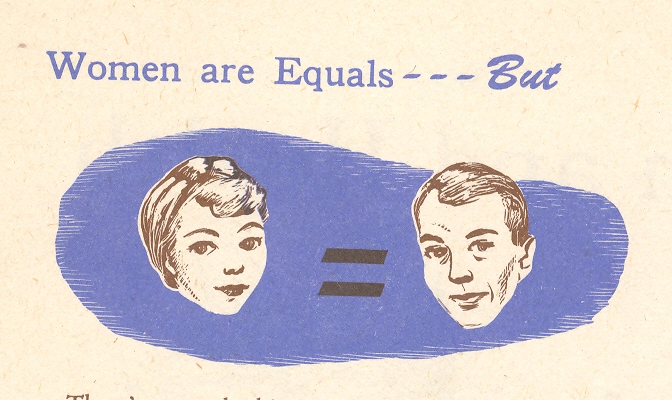
    .Mar 25 women equals but

    It good to remind ourselves of how we got so comfortable here in the present by looking at the uncomfortable parts of the past, and remembering those people who made the sacrifices necessary to ameliorate those differences.  Sometimes that spiked memory looks small but isn’t so, sometimes it’s a tidy and explosive nugget nestled in decent surroundings, but explosive nonetheless.

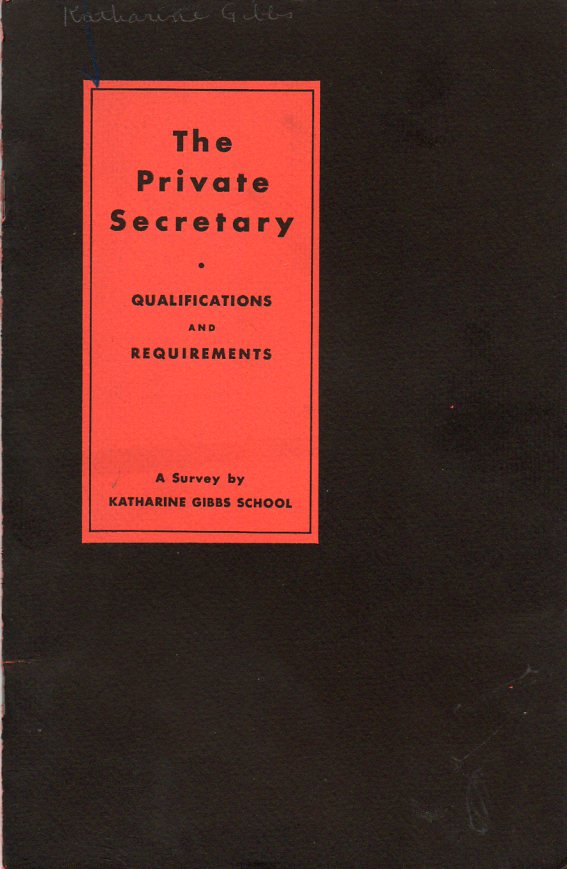
    Secretary marry cvr021 That’s what I found looking through this very considered, nicely designed and well written vocational pamphlet for the Katherine Gibbs School (of New York, Providence, Boston and Bermuda).  The Private Secretary, Qualifications and Requirements (1935) laid out all of the necessaries for the better-placed secretary, many of which no doubt were the teaching specialty of Ms. Gibb.

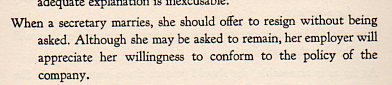
    The pamphlet described plenty of excellent qualities for anyone seeking any sort of employment–then or now–all of which could be supplied to any student of Ms. Gibb–I kept climbing over them looking and waiting for the now-severely-dated practices to appear.  Mainly they didn’t appear in whole so much as in bits and pieces, sprinkled well throughout the work. But on the last page came this nugget, which I think pulls all of the disparate pieces together in a general statement about the position of women in the workplace in 1935:
    Secretary marry det020

    And there you have it. A key to understanding the status of women in 1935.  You’ll notice that the “company policy” is generic, which means that the practice was wide-spread.  And remember too that this is just for marriage–not pregnancy, which is implied in the company’s dissociation with the married secretary, cutting their ties now before any pregnancy begins.

    [This pamphlet is available for purchase from our blog bookstore.]

Recent Posts

Archives

Categories