A Daily History of Holes, Dots, Lines, Science, History, Math, Physics, Art, the Unintentional Absurd, Architecture, Maps, Data Visualization, Blank and Missing Things, and so on. |1.6 million words, 7500 images, 4.9 million hits| Press & appearances in The Times, Le Figaro, Mensa, The Economist, The Guardian, Discovery News, Slate, Le Monde, Sci American Blogs, Le Pont, and many other places… 5000+ total posts since 2008.

  • Outrageous Analogy Dept: How Hitler Can Help in the Post-Nuclear-Attack USA, 1967

    JF Ptak Science Books  Post 1371

    “Understanding, n.  A cerebral secretion that enables one having it to know a house from a horse by the roof on the house.  Its nature and laws have been exhaustively expounded by Locke, who rode a house, and Kant, who lived in a horse.”  Ambrose Bierce, The Devil’s Dictionary

    “The German experience in reordering an industrial economy for total war in the midst of conflict offers insights into planning for postattack conditions”–Stanford Research Institute, 1967

    If such is the case for understanding, then I think that those responsible for the pamphlet German Wartime Industrial Controls:  an Analogy to Recovery from Nuclear Attack intended to ride their house in the Kentucky Derby and upgrade the kitchen in their horse.  After all, ideas are just connections among words, though it seems that here it might be just between words, or suggestions between letters, although the words might all be privately defined. [The original document is available form our blog bookstore, here.]

    This pamphlet is another one of those monuments of living proof showing the impossibility of defining where the “bottom” might be in the well of bad ideas–even when you strangle this Nazi business into its own, narrowly-defined category, trying to extricate the logic of its titanically bad idea, the pamphlet instantly ignites when removed from its ether-y vacuum of under- and over-think and  exposed to oxygen. 

    It was the Stanford Research Institute (Menlo Park, California) that produced this thing, carved whole and with precision from a quivering block of fat and federal dollars.  If the title doesn’t stop time, the first page will.  There we are introduced to Albert Speer (1905-1981), Minister of Armaments and War Production and architectural joyboy for Adolph Hitler.  We are told about the basis for his exceptional achievement in reordering the German economy to all-out war production thus:

        “…a vast armament production would have to be obtained through scrupulous attention to increased production efficiencies and the most effective use of fixed supplies and essential materials and skilled labor.  Speer developed a unique variant of conventional economic planning for a controlled economy and applied it successfully…” (from page 1.)

    Speer, a high-ranking Nazi party member since 1931 and intimate of Hitler, was convicted of crimes against humanity and war crimes at the Nuremberg Trials in 1946, and sentenced to 20 years at Spandau prison, not the least of which was for his broad and acknowledged use of slave labor.  The “P” in the square standing on its edge at the top of this post is the symbol worn by a Polish slave laborer–there were some 12 million people abducted/arrested/stolen by the Nazis to work on various parts of German society. 

    Buna069

    Perhaps this was part of the “scrupulous” detail and the “effective use” of fixed supplies that the author of the Stanford paper was writing about?  Surely anyone studying Speer’s methods would have known this–that the author would chose to ignore this sets every moral compass everywhere into free spin. 

    But such is the realm of the coin in the ugly, a bubbling bulk of post-attack scenario scripting done at the taxpayers’ vast expense in waging the Cold War is littered with vocabulary meant to redirect the attention, essentially to change the meaning of words in discussing the outcomes of vast nuclear war.   For example, we find the phrases “period of fractionation“, “the break in traditional economic time series” and “production degradation” in certain documents  (which I discuss in an earlier post here)  used to describe the breakdown of the American social and  industrial base following a nuclear war.. These are just three of thousands of such examples, not the least of which is nuclear “exchange”, which is a conceit suggesting something less than the U.S. and the Soviet Union blasting away at one another with spectacularly deadly weapons. (Perhaps the thinking is that such a situation wouldn’t necessarily be a “war”, and so it is something less than that, like the Korean War really wasn’t one but a U.N. policing action.)

    But enough of this, were not even a full page into the report, which I remind you tells us we can find useful lessons in Hitler’s monstrosity, particularly about war production–that is producing materials post-attack so that we can either defend ourselves or attack again, all by taking a look at Germany, and particularly  “the improvisation by gifted industrialists driven to the limits of their power and imagination” (page 12 of the report).  It is difficult to want to read this report because everywhere I look there are Orwellian Ghosts–half-referenced facts wrapped in Newspeak, available at random.  For example, on page 31, in discussing oil and rubber production, I find:”The output of the new synthetic Buna-s rubber was increased to 22,000 tons in 1939 and to 69,000 tons ion 1942 by accelerated production of new plant.”  The “new plant” is the think tank version of “new plants” (the plural is left off of many things for unknown reasons but I guess mostly for a form that seems to have more economo-cache than the simple English expedient), which is a very simplistic way of telling of the enormous production battles in Germany to come up with their own, home-brewed (and not foreign-dependent) rubber (the super-necessity of all things military).1 The other part not mentioned here in what seems to be a disingenuous appraisal of Nazi rubber production is the increase in 1943/1944, particularly from the “new plant” at Monowitz, which was also known as the Buna Works, and better known yet at Auschwitz III, where slave laborers were put into work-or-die situations producing Buna-s as part of the overall Auschwitz complex of forty camps and subsidiaries. 

    Here’s another example, tying Hiter and (Fritz) Todt and Speer together–Todt was “one of Hitler’s most important administrators”, who would be replaced by Speer “who had been an assistant to Todt”–though not mentioning that Todt had used millions of slave laborers (Zwangsarbeiter) in doing his “administrating”.  Speer would do the same.  

    ANd so on and on this paper crawls until it reaches its end, which is published on detachable sheets on pages one through three, pullaways for the executive summary so that the text and subsequent documentation and analysis could be discarded.  It seems to have been a waste of detachable paper when the whole thing could be thrown away at once.  The author makes a case for studying the Nazi situation because it was the closest thing in modern times to use as an analogy to the possible scenario in America after nuclear war, and then launches into an analysis of Nazi “competitiveness”.  The author never comes close to making a compelling argument for the closeness of fit for its major assumption, though, and as far as I can tell the logic of it just doesn’t work,which makes the rest of what follows unnecessary.  I guess they could’ve kept their federal grant by identifying ideas that wouldn’t work as America post-attack analogies–which is also useful–and could’ve easily used what they had here for that purpose.   But at that point I’m not sure what is the more ridiculously-titled idea–I couldn’t imagine someone reading the report on why Nazi industrial controls weren’t a good analogy, because it seems tautological and unnecessary; and yet the opposite is what gets thought about and published, in all of its error and omission, swimming in its own turgid muck.  This is what people were thinking about in 1967 when, evidently, houses didn’t have roofs. 

    ______

    1.  Germans were forbidden to import chemicals and food from 1933-1937, forcing Germany industry to come up with their own versions of things like rubber, meaning that there were many new places in which Buna-s (BUtdiane & NAtrium) was produced.  That rubber production increased so much was a function also of not being able to import the stuff. 


  • “What the Frog’s Eye Tells the Frog’s Brain” and Walter Pitts

    JF Ptak Science Books  Post 1373

    I was walking around a 1959 issue of the Proceedings of the Institute of Radio Engineers I found this fantastic article byt he great Walter Pitts.  What was Mr. Pitts and a frog’s brain article doing here?  Well, it all makes sense, really, and I was very happy to unexpectedly find Pitts here when I was looking for something else.  Walter Pitts (1923-1969) is one of those very important but now somewhat faded names in the history of American science.  He was a brilliant young man turned into a brilliant mature one, a logician/cognitive psychologist who corresponded with Russell on the Principia at age 15 and who went on to develop (with Warren McCulloch) some of the fundamental ideas in what would be known as neural networks.  The work was really much more far reaching, touching work in the fields of artificial intelligence, cybernetics, neuroscience(s), philosophy, cognitive sciences and of course computer science.

    https://historyofideasblog.com/a/6a00d83542d51e69e201156f67025e970c-piPitts was a genius I’m sure,  a sort of Matt Damon-type character from the movie Good Will Hunting1. He was offered a chance to study with Russell in the U.K. at 15, but refused and wound up running away from home to go to the University of Chicago to listen to Russell lecture, and where he stay on, finding another great logician, Rudolf Carnap (then at Chicago) and offering him critiques on his new work.  Pitts would blow like the wind in and out of Carnap’s office, the logician spending months trying to find out who and where Pitts was–and what he was was a homeless teenage boy.  Once found, Carnap got Pitts a low-level maintenance job.  I’m not sure what Pitts was doing before he switched ships and jumped (still homeless) to MIT in 1942, where he was introduced and was impressive to the not-to-be-impressed Norbert Wiener, and where he also met Warren McCulloch, with whom he would work on the Leinbizian idea of the nervous system as a sort of universal computer, publishing their outstanding “A Logical Calculus of Ideas Immanent in Nervous Activity” in September 1943.2

    Right before this paper–which is considered to be a founding effort in the field of neural networks–Pitts published three other papers of interest in this same area (and in the same journal)–all published when he was 19 years old. “Some observation on the simple neuron circuit”,    “The linear theory of neuron networks: The static problem”, and “Some Observations on the Simple Neuron Circuit” were all efforts leading up to his paper with McCulloch one year later.  {These three original papers are all available for purchase on our blog bookstore site.] Impressive work, especially for a 17-year-old, and particularly for a new, high entry point journal published by the University of Chicago, entertaining the logical structure of neural nets as coded circuitry, a new way of looking at the mechanistic view of philosophy of mind. 

    Things however really didn’t go well for Pitts: he was fiercely, probably tragically “shy” or demanding of his own attention, exceptionally modest, and with very few personal relationships.  Just a few years later, a rift developed between the wife of Norbert Wiener and McCulloch, and was of such vehemence that anyone maintaining a friendship with McCulloch would be shunned by Mrs. (and therefore, necessarily in this case, Dr. )Wiener.  And thus Pitts remained friends with McCulloch and lost contact with just about everyone else, making his working/contributing life quite difficult.  Little is known about what happens to Pitts in the 1960’s, but it wasn’t good, and he wound up dead, featuring symptoms indicative of severe alcohol abuse, in 1969.  He was 46, and his best work was already 25 years old. 

    _______

    Notes:

    1. We read in this  wonderful account of Pitts from Neil R. Smalheiser’s  appreciation, Walter Pitts ( found in:  Perspectives in Biology and Medicine – Volume 43, Number 2, Winter 2000, pp. 217-226):
    [Introduction ] “The movie Forrest Gump made the point that the greatest, most heroic Americans are people of extraordinary character who flicker briefly into public consciousness and are quickly forgotten. Walter Pitts was pivotal in establishing the revolutionary notion of the brain as a computer, which was seminal in the development of computer design, cybernetics, artificial intelligence, and theoretical neuroscience. He was also a participant in a large number of key advances in 20th-century science. Yet while his contemporaries Alan Turing, Ludwig Wittgenstein, and John von Neumann entered the pantheon of fame, Pitts remains a shadowy folk hero. Stories about Pitts have circulated among the cognescenti for years, but almost nothing has been written about him. Here, I have collected reminiscences from his friends and associates to provide a unique insight into a remarkable life; if some exaggerations and embellishments have crept in, they only underscore the basic truth that Pitts was a man with Gumption ability…”

    2. Warren McCulloch remembers Pitts in this way:  “In 1941 I presented my notions on the flow of information through ranks of neurons to Rashevsky’s seminar in the Committee on Mathematical Biology of the University of Chicago and met Walter Pitts who then was about seventeen years old.  He was working on a mathematical theory of learning and I was much impressed.  He was interested in problems of circularity, how to handle regenerative nervous activity in closed loops. …   For two years Walter and I worked on these problems whose solution depended upon modular mathematics of which I knew nothing, but Walter did. “ (McCulloch, 1989, pp. 35-36, cf. McCulloch, 1965a, pp. 9-10).


    ·Posted by :

    ·in:

  • The World’s First Popularly-Published Computer Journal

    JF Ptak Science Books   Post 1374

    Computer history082

    Nothing quite gives you the taste for the ancient history of a very modern topic–like computers–than by looking through some of the earliest popular publications on the subject. This can actually be done pretty quickly if you wanted to just get a broad taste for the subject in its modern infancy–just reading the titles of the papers and taking in the advertisements might be enough. So here’s two volumes of a very scarce and interesting journal by old Edmund Berkeley that may do this job perfectly.  Berkeley was a bona fide mover and shaker in the early days of electronic computing in the United States–he had a lot on his mind, contributed many written words and ideas, and also tried to make a fair living while doing so (there was a bit of Sideshow Ed in him for some of the things he tried to sell.  

    Computers and Automation, the brainchild of the brainy not-child Edmund Berkeley, was the first popularly-published  magazine published regarding the computer, its applications, it programming, and really just about everything else.  (It appeared seven years after the Mathematical Tables and Aids to Computation  was published in 1943, almost entirely to the mathematics and engineering communities.) Computers was published by Edmund Berkeley & Associates in NYC beginning in 1952., beginning its publishing journey as The Computing Machinery Field, its name changing to Computers and Automation in February 1953 (in volume 2, number 2).   All issues have some fair space devoted to advertising, even though the issues generally ran between 32 and 40pp. Berkeley was a real-enough mathematician, engineer and computer pioneer, but he also had a pretty large taste for making these interests pay–which was essential, as the original print runs were not very large, though his advertisers were impressive. (According to the first issue, approximately 1200 people were on the mailing list for the journal, with around 2000 issues being printed each number. All told, this is not a large print run, and thus not many of the early issues have survived.)  He was not averse to being somewhat outre with his journal—in addition to having contributors like Grace Hopper and Alton Householder, he also had Fletcher Pratt and Isaac Asimov writing some pretty arresting pieces from the SciFi/Futurama point of view.

    Computer history083

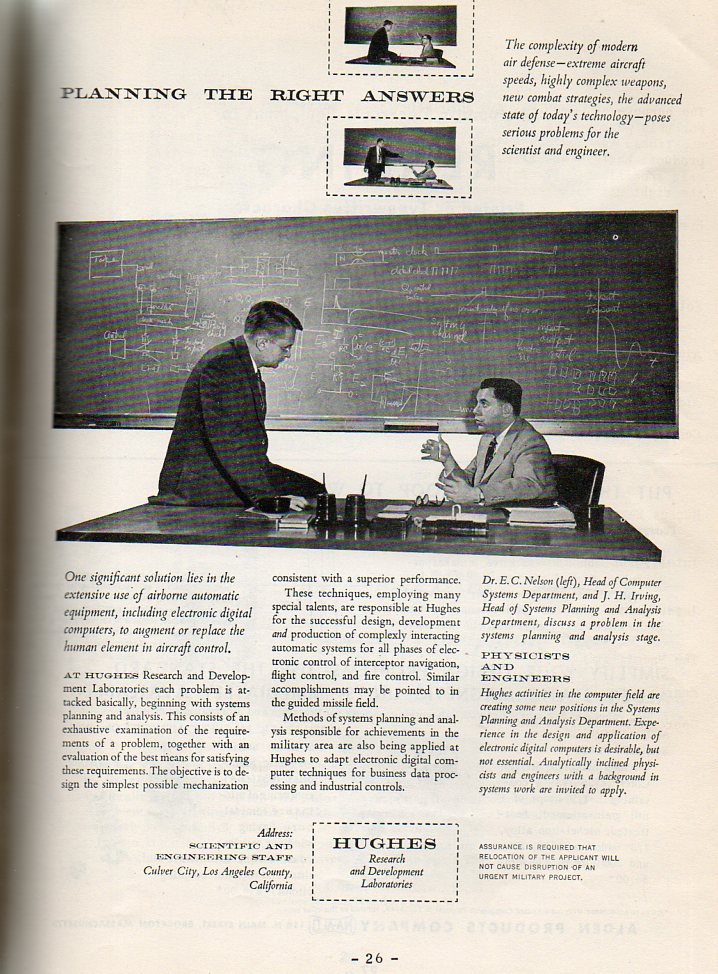
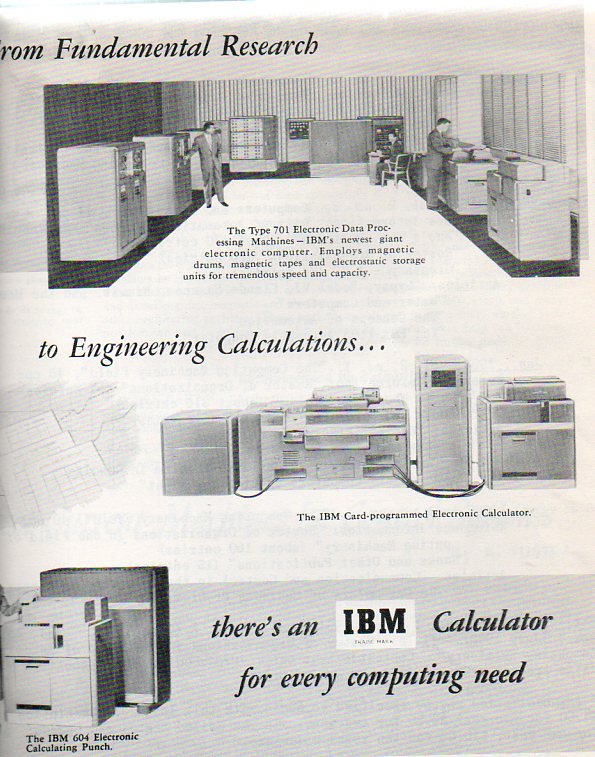
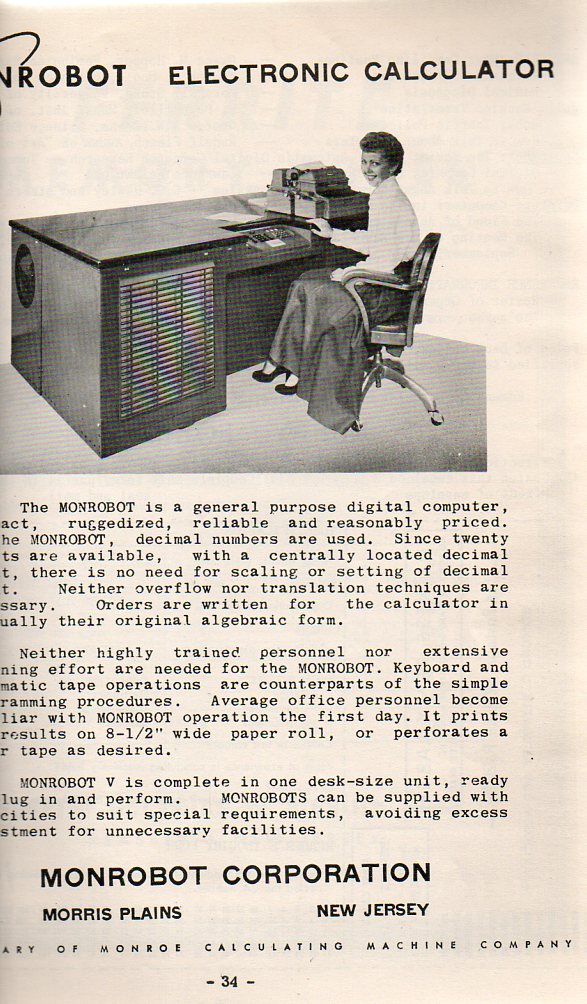
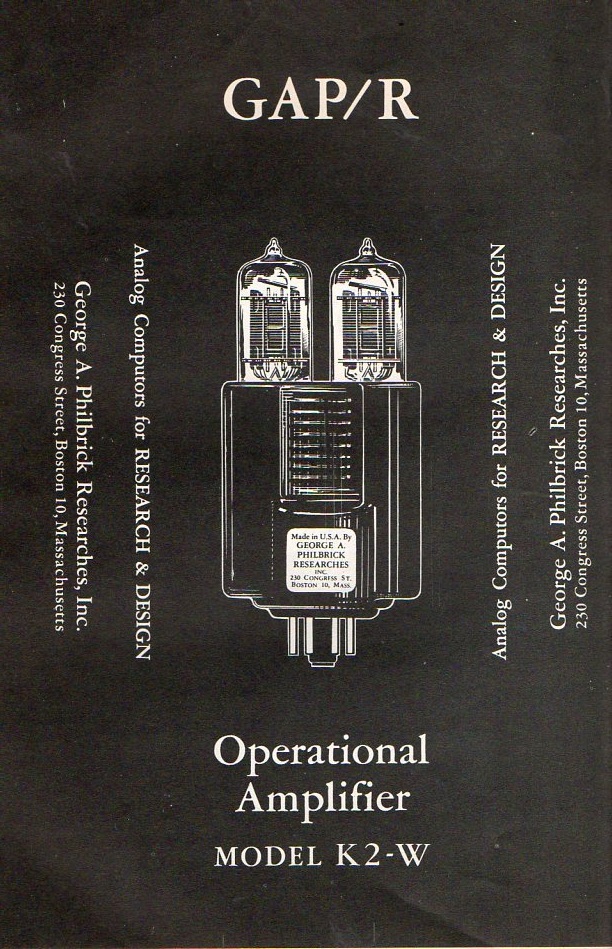
    A Note on the Advertisements: in short, they’re wonderful. For example, on the back cover of vol2/1 is Edmund Berkeley & Associates “SMALL ROBOTS”, advertising “Simon, the Mechanical Brains”, “Squee, the Robot Squirrel”, and other gadgets. To give you an example the other ads in this issue alone are for “The Circle Computer”, “General Ceramics Ferramic Cores”, “Magnetic Metals Co. Amplifier Cores”, Ross Ashby’s “Design for a Brain”, Consolidated Engineering’s SADIC System, Monroe Calculator’s Monrobot Electronic Calculator, George Philbrick’s “Computor (sic) products”, and a lovely two-page spread for Remington Rand. Further into the year are ads for Burroughs, IBM (604 ands 607), Electronic Associates Inc, Prokar capacitors, and many others.

    Some of the subjects include: The ERA 1103 computer, NIMWIT, Applications of the Computer, what the computer *is*, Admiral Grace Murray Hopper’s compiler, mechanical translation, Harper’s subroutines, the cost of coding, computer “self-repair”, automation at Ford, and so on.  Also includes perhaps the earliest announcement of the first all-transistor computer (October 1954, IBM’s “new experimental transistorized computer” , the earliest (?) printing of Asimov’s Three Laws of Robotics in a scientific journal, and more.

    Computer history086

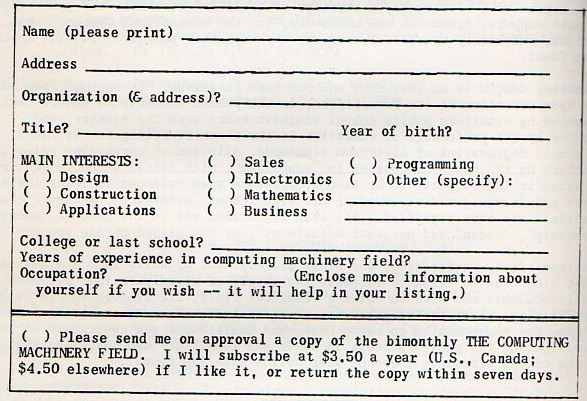
    Each section generally has three of the following categories (per issue) : computer glossary, roster of member organizations, who’s who, an annotated books and journals section, and other aligned concerns.  For example, there’s this bit, an application (cut-out) card for “Who’s Who in the Computing Field for December 1952”–utterly simple, it seems as though anyone who filled out the card was in, the “who’s who” part of this that we normally celebrate with fame or achievement really was just telling the rest of the people in the field who was exactly who.

    Computer history084

    The contents:

    Volume 2/1, January 1953. 45pp.

    Householder, A.S. Brains, Electronic and Otherwise; Williams, S.B. (President, ACM) What Computers Do; Murphy, E.F. and E.C. Berkeley. Automatic Computers on Election Night.

    Volume 2/2 , March 1953. 37pp.

    Boehm, George A.W. Gypsy, Model VI, Claude Shannon, Nimwit and the Mouse; Paynter, Henry. Water and Computers; and the editor Berkeley, The Concept of Automation, and Berkeley (with Neil Macdonald, Berkeley’s other name). The ERA 1003 Automatic Computer

    Volume 2/3, April 1953. 40pp.

    Fletcher Pratt, The Art of Solving Secret Ciphers and the Digital Computer; Berkeley, Avenues for Future Development in Computing Machinery;  Gene Hegedus, Hungarian Prelude to Automation..

    Volume 2/4. May 1953. 33pp.

    Grace Murray Hopper,  Compiling Routines; A.D. Booth, Mechanical Translation; Marshall Stone,  Medical Diagnosis.

    Volume 2/5. July 1953.

    Yehosuha Bar-Hillel (the great logician),  Machine Translation; George Boehm, Robot Traffic Policemen; Rudolf Flesch,  How to Talk to Computers.

    Volume 2/6. September 1953.

    Tommaso Fortuna,  The Soviet Union: Automatic Digital Computer Research.; Wainwright, Lawrence Wainwright,  Digital Computer Questionnaire; and a general DISCUSSION: “How to Talk About Computers”, with GG Hawley, Samuel Scharff, C.B. Crumb, and EC Berkeley.

    Volume 2/7. October 1953. 36pp.

    Brown, David W. Brown Computers in the Factory; Neil (Berkeley) Macdonald,  The Flood of Automatic Computers. 

    Volume 2/8. November 1953. 40pp.

    John W.Carr  III. Who Will Man the New Digital Computers?; E.F. Cooley,  Electronic Equipment Applied to Periodic Billing; Glenn.Hagen,  Air-Floating: a New Principle in Magnetic Recording of Information.

    Volume 2/9 December 1953. 36pp.

    Clippinger, Richard Clippinger, How a Central Computing Laboratory can Help Industry; R.T. Wiseman, “Combined” Operations in a Life Insurance Company instead of “fractured operations”.

    These are the contents for 1953; the volume for 1954 bulks up a little, but is still under an inch thick.   The MTAC journal stays quite slender throughout its pre-1960 life (it has virtually no advertisement and is entirely academic), and there are more and more computer articles appearing in old stand-by associated journals like the Proceedings of the Institute of  Radio Engineers (which by 1959 will published a massive supplemental volume called “the Computer Issue” which I’ll talk about soon.  For the time being, I just wanted to make an inroad into this journal–I’ll expand on he articles in just a bit. 

    Computer history085

  • The Alpha and Omega of Computer Questions; Asimov, 1953 and 1955

    JF PTak Science Books  Post 1375

    Asimiv question087
     

    Following up on yesterday’s post on the world’s first (popularly-published) computer magazine (Computers and Automation)  is this Isaac Asimov short story on what might be the first great computer question.  The story in mind, “Question”, appeared in the March 1955 issue of this same magazine, a two-pager sandwiched between an ad for Remington Rand UNIVAC and an article on computers and weather prediction.  It is the first appearance too of Asimov’s massive computer of the future, Multivac, a giant machine with corridors and nooks where technicians could stop and have a seat to enjoy a cup of coffee.  And it seemed to at least one worker that it wasn’t quite right to be sitting inside the machine, that the billion-tube, two billion relay computer was more than just a flow of electrons. (The ENIAC, which was basically the world’s first computer, had 20,000+ tubes, so a billion as  conceived by Asimov would’ve been a very big machine indeed, a 500,000-ENIACs-sized behemoth.) And a very hot one.   The workers wondered if you could ever tell if the machine was alive, if it thought on its own, if it attacked aparat from its instructions and programs. 

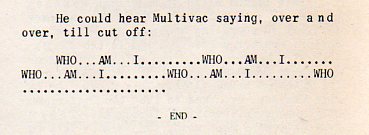
    As it turns out, the answer was positive, and not only that, but Multivac could speak.  Its answer to “the question” was “who…am…I…?”, repeated several times in the closing sentence of this rocket-fast short story.  I guess that that would give you pause, as it would anyone had the question come to them from their own computer while communicating along the spine of the great global “mind”, the Internet, and perhaps someday it will, at some time in the near-ish future when the height of our own computer-y heights looks as quaint to them as a half-million ENIAC idea of 1955’s premier scifi writer looks to us today.

    I know almost nothing about Asimov, but he seems to return to this idea of the Big Computer, Multivac, and ultimate question a few years later.  It seems as though there was an issue of serendipity involve with the structure of the “Question” story and that of another writer’s ending for a story called “Problem for Emmy” by Robert Sherman Townes. Asimov admitted the similarities but also maintained that he didn’t know of Townes and had never read his story–be that as it may, Asimov promised that he would never reprint the story, and it seems as though he never did.  But it looks as though he resurrected his idea somewhat, which is fine, because the whole idea of ultimate/penultimate questions and massive computers is a great genre. 

    Asimov wrote a story called “The Last Question” in 1956, a year later, writing about a trillion years of human history in the space of another terrifically-short short story, the short story that Asimov found to be his own favorite.  If “Question” posted the ultimate question put to the super-colossal Multivac computer,  ultimate question in “The Last Question” may well then be the ultimate answer.  You’ll have to see the ending of the story for yourself to see what it was–I can’t spoil it. 

    Notes:

    1.  I’m just a little surprised that Asimov was hung up on tubes in 1953–transistors had been in the air by 1947/8, published in 1948, and pretty-published by 1952.  I figure he should’ve been aware of them and how they would transform computer construction.  Maybe not. Perhaps he just wanted to write about a billion-tube computer. “Multivac ” stands for “muliple vacuum tubes”, and then “multiple vacuum tubes analog computer”, so using transistors might be a little at cross-odds with the name and the idea of the machine.  It woulod be interesting to put together a list of questions/answers of these early fictional machines, a longlist of which appears here.

    2. The two characters in the story by the way are named “Alexander Adell and Bertram Lupov”, both of which suggest the name Alexander Graham Bell to my head.


  • Note on an Alphabet of Computer Names in Fiction

    JF Ptak Science Books   Post 1375

    First of all let me say that I know almost nothing about Science Fiction–this  list started out  while looking for questions asked of computers in works of fiction and movies, but the question on questions is far deeper than I can deal with in a simple sit-down, though I did collect some interesting names of fictional computers along the way.  For this very preliminary list of computers in fiction I include computers with actual names–therefore, and unfortunately, beasts like the NORC-like computer that let loose Hell’s Kitchens in Kubrick’s Dr. Strangelove…. is not included because so far as I can remember it has no actual name, and names are important when you’re creating an alphabet.  Also I tried to look for images of the computers themselves, but since I stayed mostly in the 1940’s-1960’s, there are not many of those. 

    So here this is and please take pity–again this is preliminary and I hope to start filling in what made these machines interesting quite soon. In the meantime there’s an excellent list compiled at Wikipedia, here.

    AM, from Harlan Elison’s short story I Have No Mouth, and I Must Scream (1967).  AM “speaks” via paper tape, as below, using International Telegraph Alphabet No 2 (ITA2), a (much) earlier pres-ASCII-ite language, in this case saying “I think, therefore I am”. 

    AM Talkfield #1
    ALPHA 60.   From the film Alphaville, Jean-Luc Goddard, 1960.

  • A Romance of Swivel Chairs, 1945

    JF Ptak Science Books  Post 1376

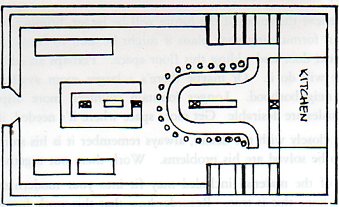
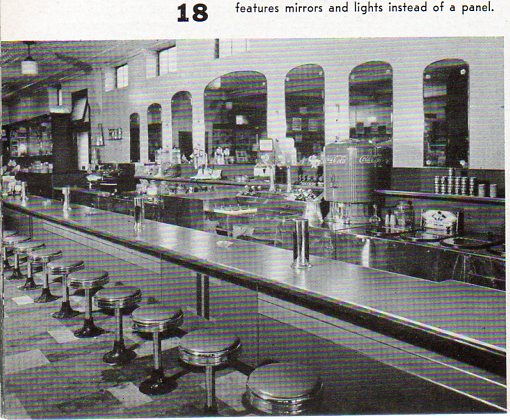
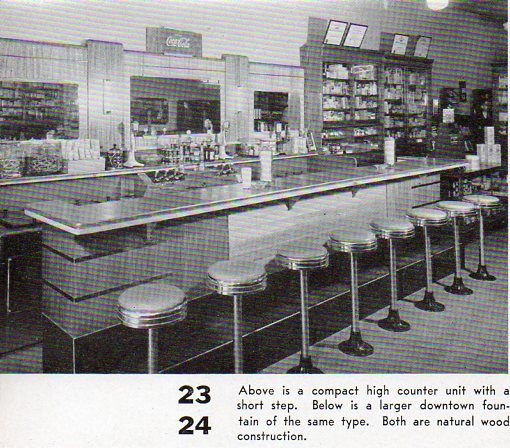
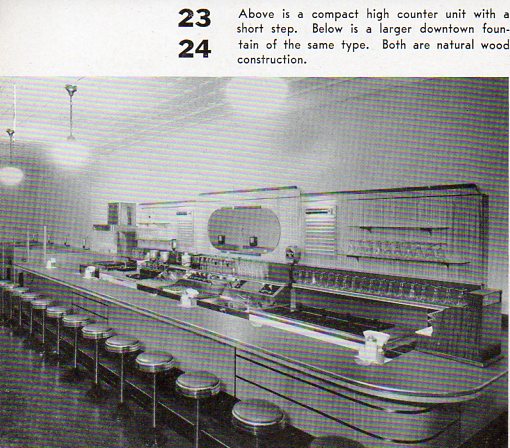
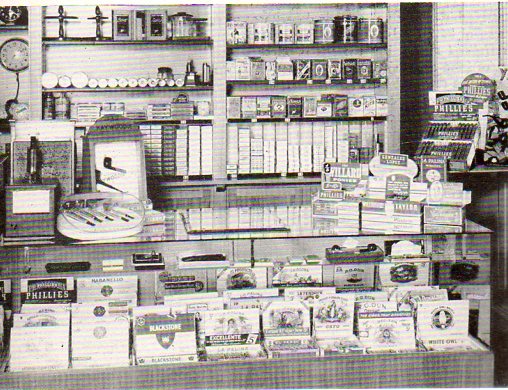
    Swivel chairs schematics099 The Borden Company–at one time the largest producer of dairy products in the U.S.– published the little pamphlet (Modernization Handbook) from which these pictures below are taken. Published in 1945, this slim work was meant to entice owners of luncheonettes and pharmacy/soda shops to upgrade their businesses, so that they could sell more product, so that they could buy more supplies from Borden.  Borden wasn’t offering financing, just supply-side friendly advice to the folks selling their goods.

    Swivel chairs091

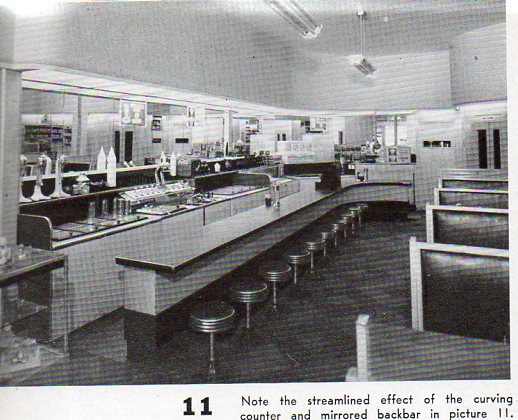
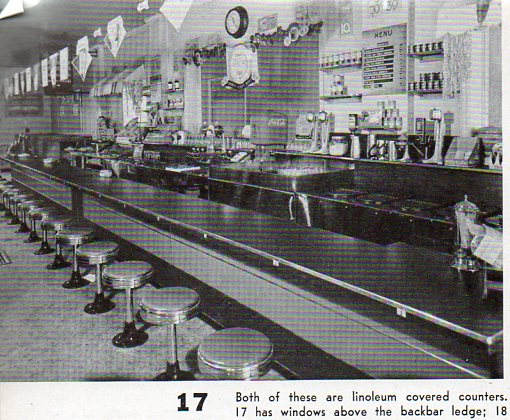
    A large amount of this “modernization” had to do with swivel chairs/stools, chairs around a long lunch counter that stood to serve the maximum number of people in a small space in the minimum amount of time, all while giving the patron a maximum visual field to the other stuff for sale in the establishment.

    Swivel chairs093

    I’ve got to say that there is a long simple elegance to this–sitting at a table within sight of the person cooking your meal, check-to-jowl with probably-unknown fellow diners, getting your food quickly and probably freshly and with minimum fuss. There is definitely pleasantness seeing your food prepared before you, a better type of fast food, far removed to a comparatively superior land when compared to dealing with simple human interfacers between customer and the Conglomerate Cook of the modern fast-food behemoths.

     Swivel chairs094


    Swivel chairs097

    Swivel chairs098

    And if you were to turn around in your chair,  this is what you would see:

    Swivel chairs turn around103
    Swivel chairs turn around102
    Of course this was all about sales for Borden, and that’s fine, especially when the end result of the money-making idea produces the ultra-sweet highly anticipated sound of your plate sliding arorss the linoleum countertop.  Don’t forget your napkin. 

  • World War I Photographs: Panorama, 1918

    JF Ptak Science Books

    WWI Photos Big Pano075

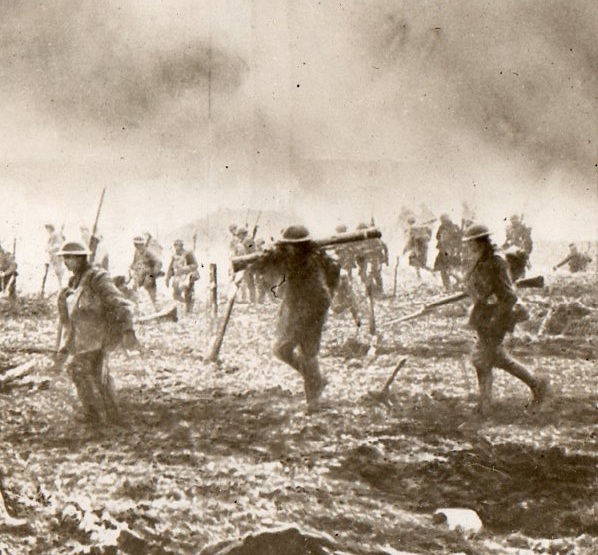
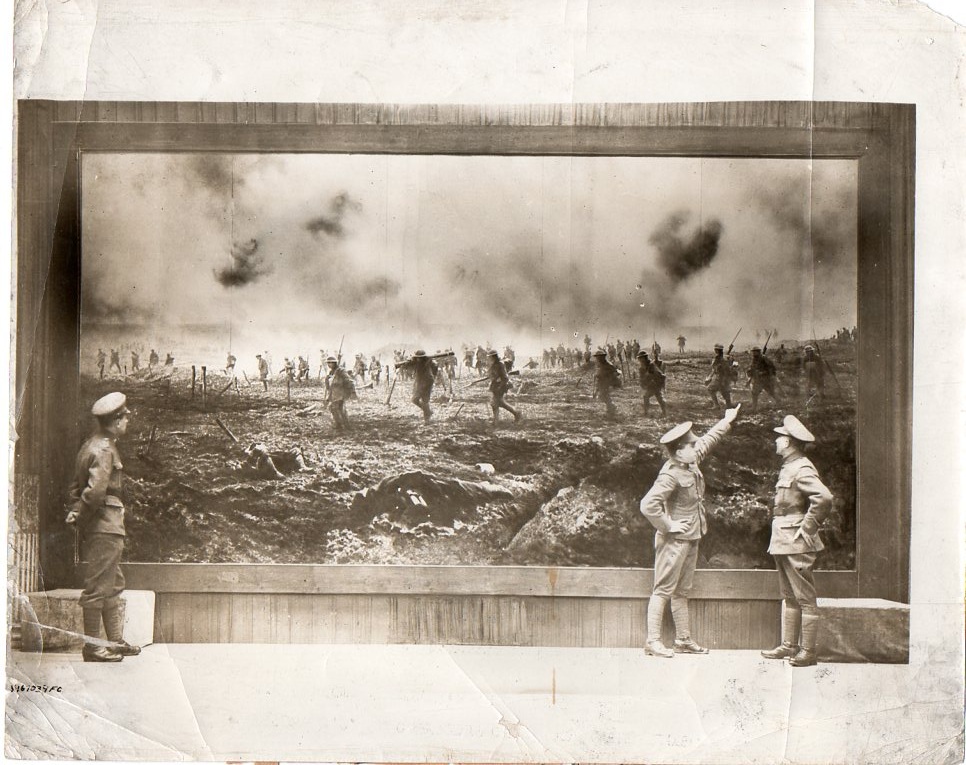
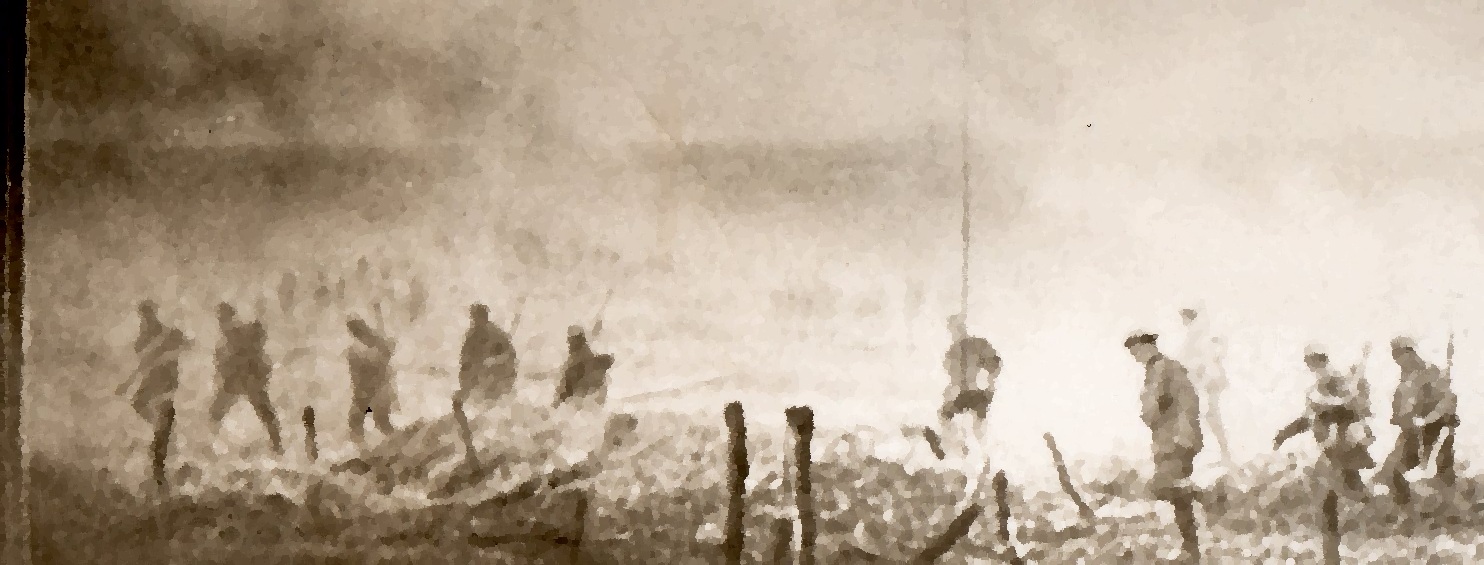
    I recall, I think, that this was the largest photograph of war printed during World War I, looking to be something on the order of 8×16 feet or so.  This photo of the photo was printed by Underwood & Underwood, and stamped “British Official Photograph”, printed sometime in 1918.  It seems that this is an actual battle scene, which was a very uncommon thing among war photographs for the Great War–more so for this group of photographs(News Photo Service)  produced by pool photographers for equal distribution among subscribing newspapers and periodicals. Actual combat photos distributed by the News Photo Service agencies were not a high priority, unless they depicted routed or retreating or being-defeated Germans–it was not a popularly-disributed subject, mainly for propagandist purposes. (The original photo is available for purchase here.)

    WWI Photos Big Pano074

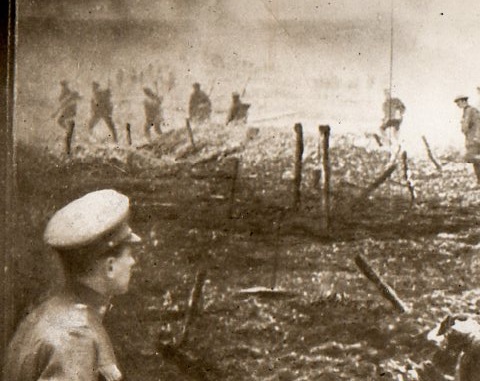
    I expect that this photo would’ve given the view a you-are-there effect, as the main characters in the composition were about life-sized–an attempt of slice-of-life experience.  There is a surprising amount of foreground in this picture, though.

    WWI Photos Big Pano076

    WWI Photos Victory Drive081artistic

    ·Posted by :

    ·in:

    —
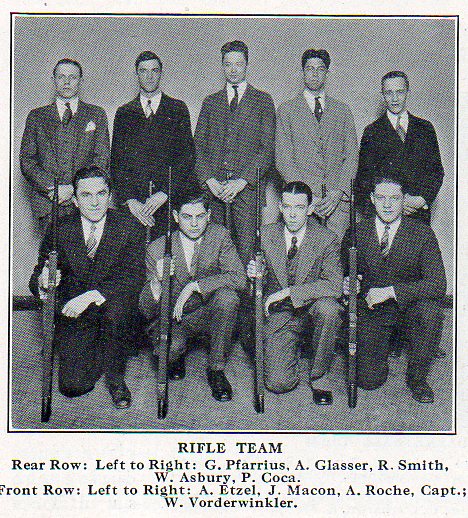
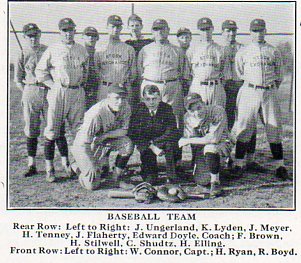
  • Baseball and the Rifle Team at the NYSE, 1927

    JF Ptak Science Books  Post 1377

    NYSE bb107

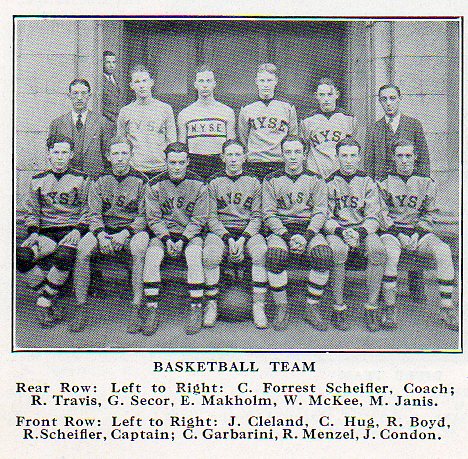
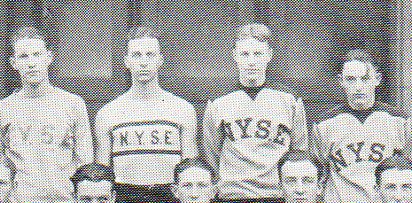
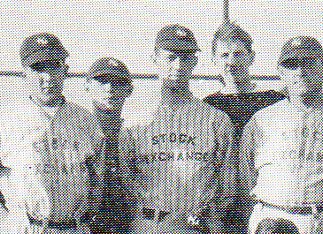
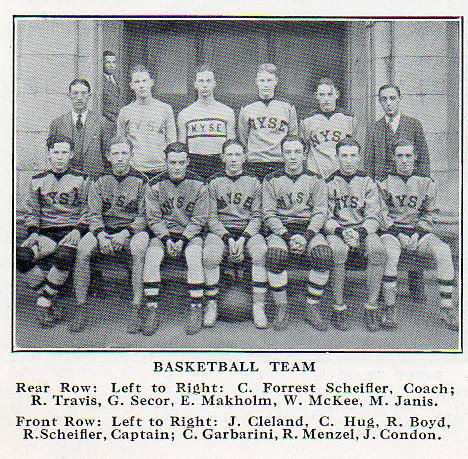
    Is there nothing else that shouts out $15 trillion market cap than this NYSE basketball team?  Well, probably.  These photos appear in a New York Stock Exchange personnel department publication for 1927, and as the HR -arm of the Exchange,  devoted itself to all things necessary to the average employee of the 1300-person entity.  The NYSE seemed to be fairly well involved with the health and free-time status of its workers, reporting on programs for self-betterment, general reading, health care, health insurance, savings and spending, training, “mental guidance”, retirement plan (singular), and so on.  These photos come from the “Employee and His Play” section, and discusses the achievements of the many sports teams hosted by the Exchange. 

    NYSE bb106

    NYSE bb105

    NYSE bb108
    NYSE bb104


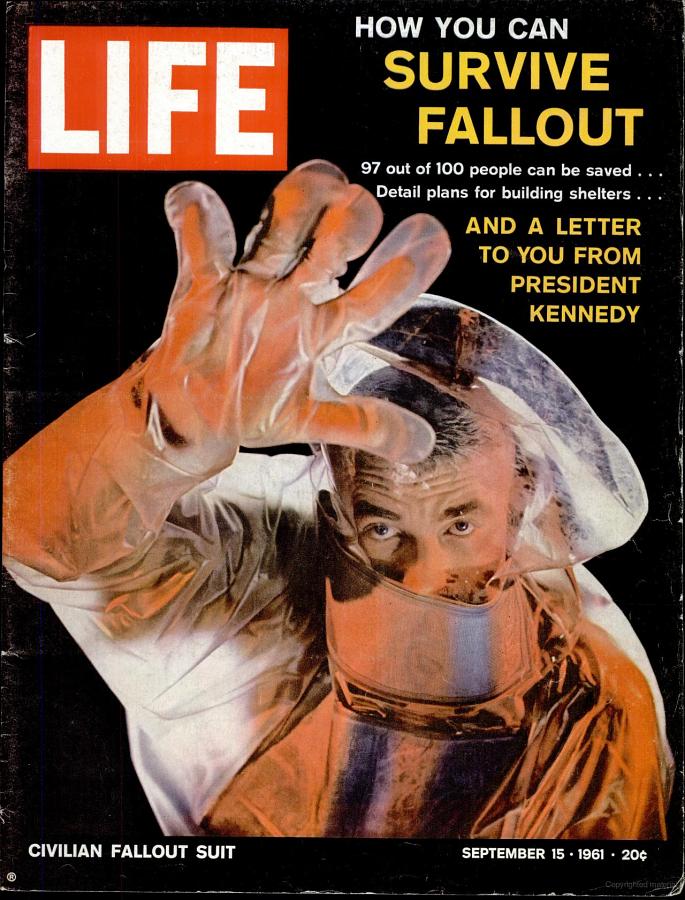
  • How YOU Can be One of the 97% of Americans Who Survive Nuclear Holocaust, 1961

    JF Ptak Science Books  Post 1378

    Books_004

    Well, I’d think that this issue of LIFE magazine would’ve sold in the hundreds of millions with the promise it makes here–right on the front cover–that 97 out ot 100 Americans could survive a nuclear slugfest–if only they were to follow the instructions of this article.

    We only get to the marrow of the issue after wading through a few articles and ads for Hires Root Beer, Maiden bras, silk skin girdles, Bayer aspirin, Schlitz beer, Old Taylor Whiskey, Ge “telephone color” night table clocks, scotchguard raincoats, Lanolin Plus Hair Spray Net, Marja bras, Red Rose cologne, nylon carpet, Maidenform girdles, NY Life, Sealy mattresses, Metrecal, Corn Flakes, Hammond organ, John Hancock Life Insurance, Friskies dog food, Cahmpion spark plugs, Budweiser, BF Goodrich tires, Tang, RCA, Anacin, Speedstick deodorant, Castro convertibles, B+W Whiskey, Kodak and  Vista TV.  Probably I missed a few. When you get to the big ad for Royal Crown Colas with the white-hatted BBQ cook getting a kiss with a big wiener on a stick, you’ve arrived at the article on saving the life of your family and your country.

    If only we could build enough shelters–and by “we” I mean “you”, and build them properly, and outfit them, and are able to get to them in the 14 minutes that you might have to get to your destination, and you stay down long enough and the attack light enough, then probably some people will survive.  How these folks got the 97% number is an issue of faith–I think that they must’ve steeped themselves in mystical prayers to secretly reformulate the percentage “23” into “97” without actually telling anyone.  I figure that this was the key to survival.

    I’ve written many times on this theology of survivability (see the series on atomic and nuclear weapons on this blog, here) but seldom does one see such an incredible, indefensible claim such as this, and splashed across the cover of America’s most popular picture magazine, accompanied by a letter of support from Camelot.  Somehow in the great looming nuclear confrontation that actually comes to pass, somehow “only”3% of the population doesn’t make it.  Of course if there was a natural catastrophe in which 3% of the country was killed–that would be about 4.5 million in 1961 population or about 9 million in 2011–it would be an absolutely phenomenal tragedy. (Ofcourse there were many European countries that lost more than 3% of their populations during WWI and WWII, but that’s another story).  But to escape nuclear Armageddon in this country with 3% loss is much better than other government figures published around the same time that predicted casualty rates exceeding 100 million. 

    But hearts and minds are won abroad and at home, so the homefires must have been stoked to prevent a colossal depression from befalling the country, which of course goes hand-in-hand with the policy of Mutually Assured Destruction, with all policies somehow making it possible for the rush to the abyss to be the one thing that was keeping us (in a Zeno-ish paradox) from falling into it. 

    But 97%?  You can read the article here from page 95 for the full story. 


  • World War I Photographs–Full Metal Jacket, 1917

    JF Ptak Science Books       Quick Post

    WWI Photos Blindfold077

    WWI Photos Blindfold078

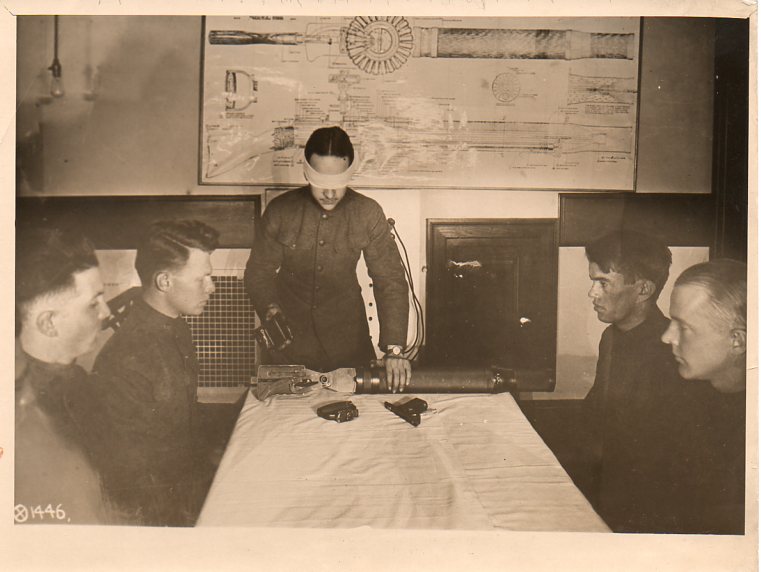
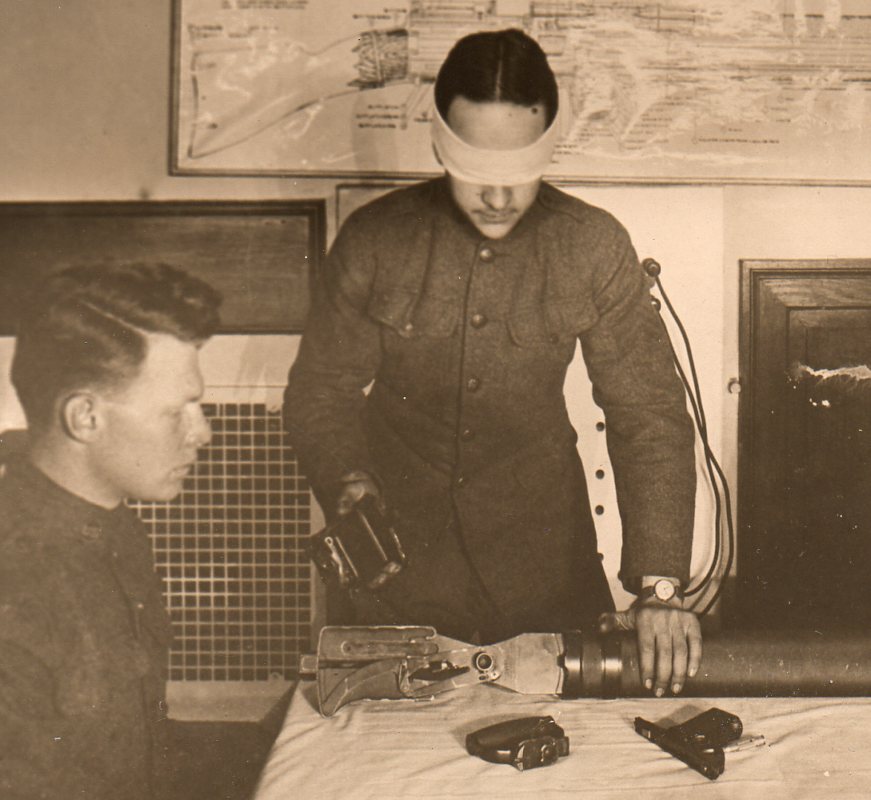
    I do believe that this is a Lewis Machine Gun, one of the most popularly-used automatic weapons by the BEF (and of American design). It was a gas-operated weapon firing a .30-06 Springfield at 500/600 rpm with an effective range of about a half-mile.  The drum magazine (not present here so far as I can see) held 47 and 97 rounds.  These soldiers were all business.

    The original is available here.

  • A Beautiful Manuscript of Square Roots, ca. 1830

    JF Ptak Science Books  (Re-visitng Post 935)

     309

    (Note: we’ll deal with square root of  3 at another time…)

    The author of this manuscript (which is available for purchase at our blog bookstore), Charles Fisher, took a solitary pleasure in calculating the square roots of numbers from 2  to 589, not bothering to write down the 24 perfect squares to 576.  (The sqrt being r2 = x for every non-negative real number x.) From the few bits that I have checked the man seems to have done a good job back there in the 1830’s. 

    I cannot determine where this book was written or who Mr. Fisher was, though it is possible that he was a (Baptist) Minister from the few short textual notes that pop up here and there. 


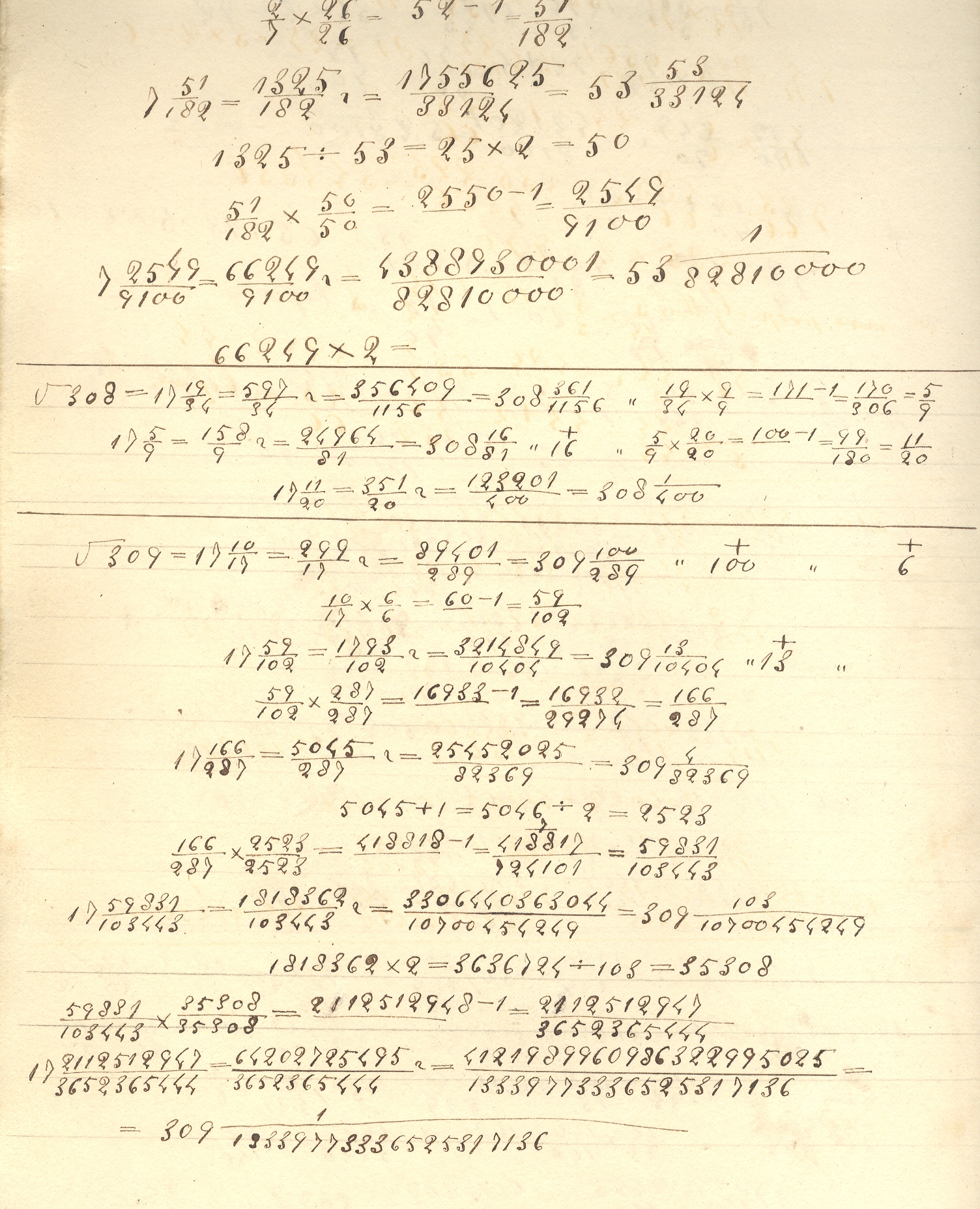
    His work is pretty elegant.  Take for example his solution (and proof) for the square root (hereafter sqrt(x)) 309,

    309 det

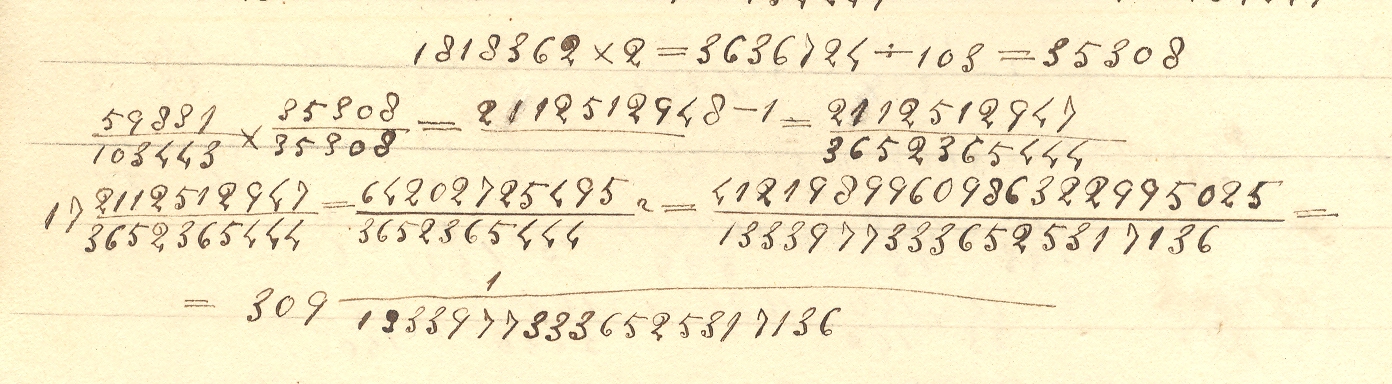
    which the calculator living under this page says is 17.578395831246947    Mr. Fisher’s answer is 17 10/17 = 799/17=89401/989=309 100/989, and after some more involved arithmetic comes t the lovely proof number of   

    4121989960986322995025 /13339773336525317136 or

    309.00000000000000000007496379247

    Which is getting pretty close. 

    309 193

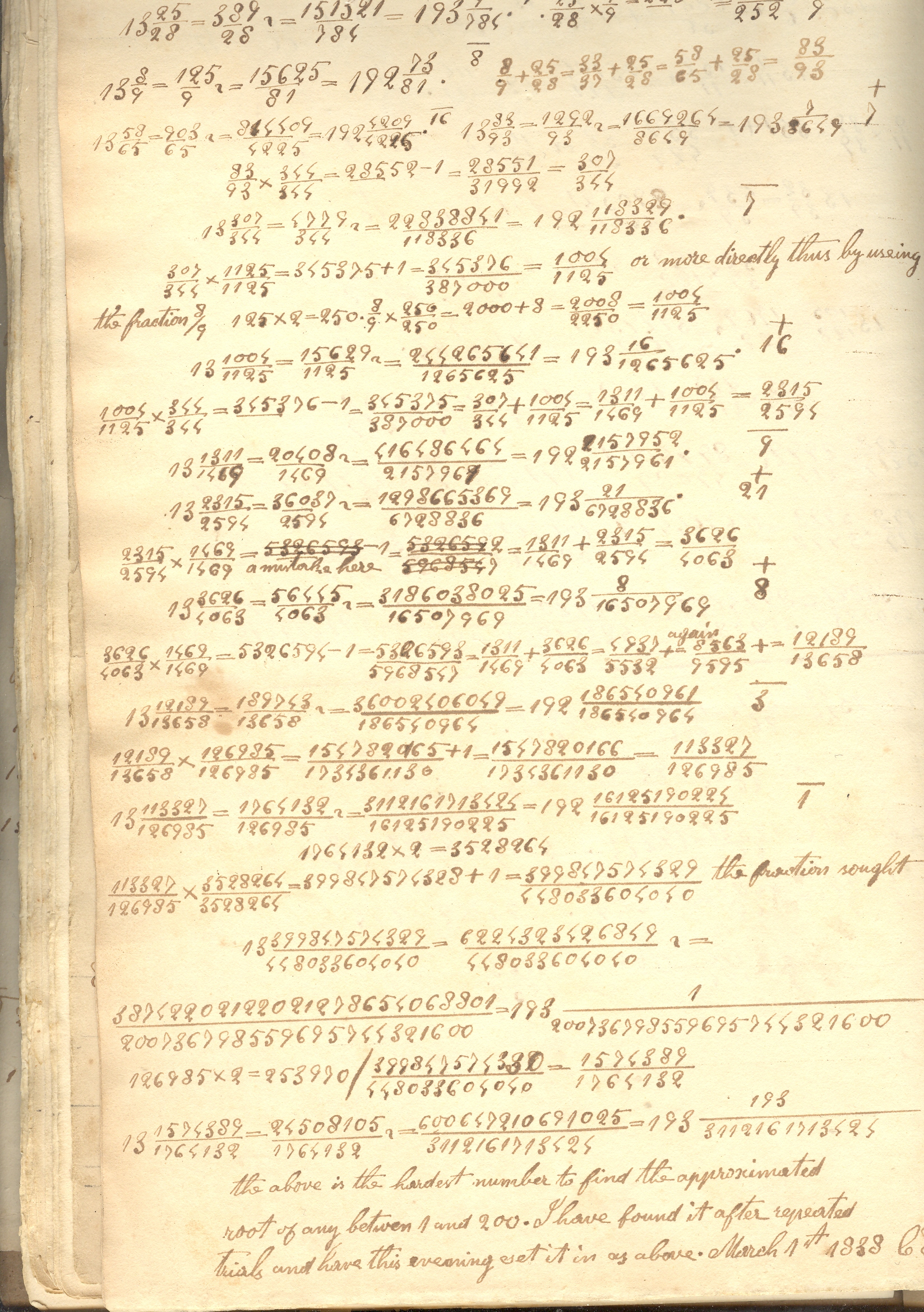
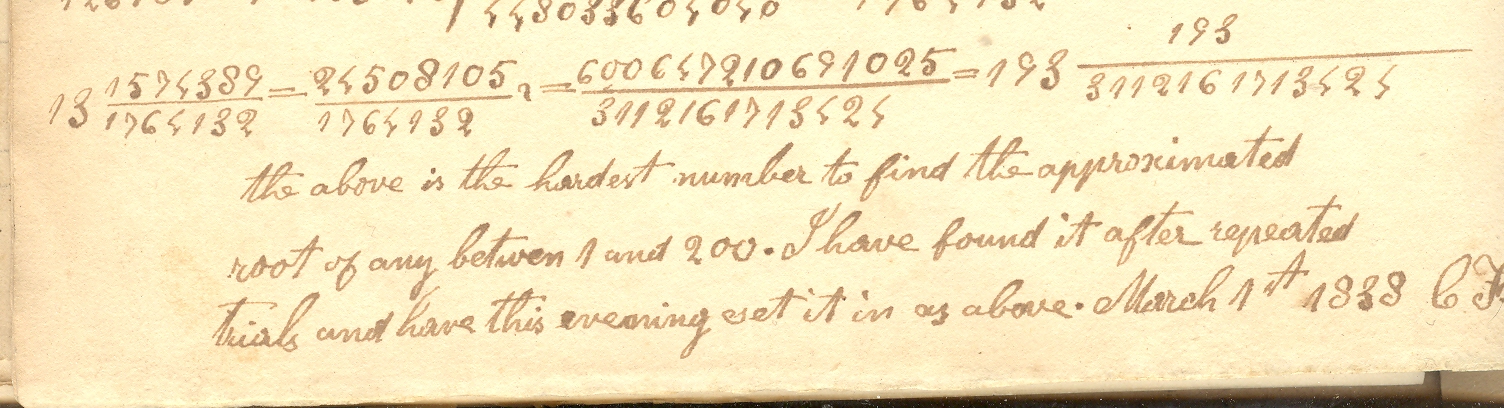
    The only note that Mr. Fisher makes on his calculations is for the sqrt(193), which he notes as “the hardest number to find the approximate root of any between 1 and 200. I have found it after repeated trials and have this evening wrote it in as above. March 1st, 1833. CF.”

    309 193 det

    ·Posted by :

    ·in:

Recent Posts

Archives

Categories