A Daily History of Holes, Dots, Lines, Science, History, Math, Physics, Art, the Unintentional Absurd, Architecture, Maps, Data Visualization, Blank and Missing Things, and so on. |1.6 million words, 7500 images, 4.9 million hits| Press & appearances in The Times, Le Figaro, Mensa, The Economist, The Guardian, Discovery News, Slate, Le Monde, Sci American Blogs, Le Pont, and many other places… 5000+ total posts since 2008.

  • Tree Power (as in Kinetic Power Generated by Tree Movement in Wind!) (1840)

    JF Ptak Science Books  Quick Post

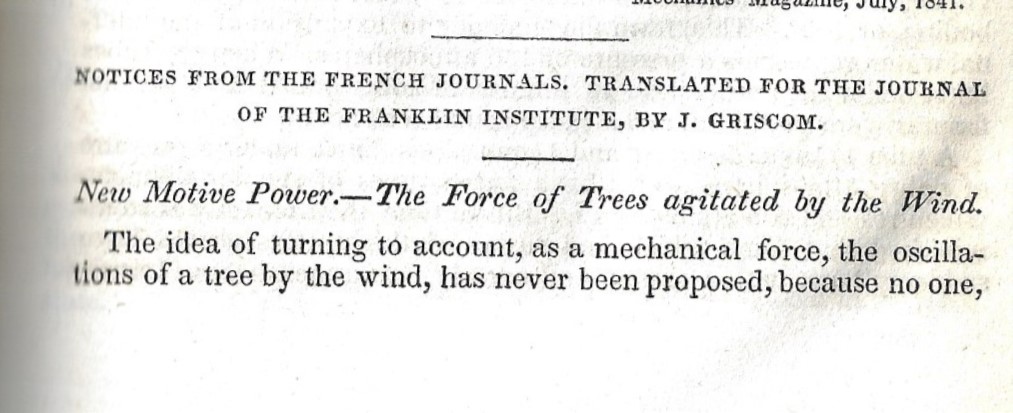
    A successful byproduct of not being to find something is finding the stuff that you weren’t looking for and didn’t know about. The article (below) is one such happy find, appearing in the pages of The Journal of the Franklin Institute, 1840. I certainly never thought of somehow (?) harnessing the movement of trees via the wind as a power source. As the author of the paper says, “The idea of turning to account, as a mechanical force, the oscillations of a tree by the wind, has never been proposed, because no one, it is probable, has ever deemed it to be a practicable source of power. A very considerable force, the least costly of all, is thus entirely lost.” There is an inventor named though I cannot find references for him–I also cannot visualize how the tree motion is transformed into that “motive force”. Have a look:


    Tree power _2_

    ·Posted by :

    ·in:

  • Time, Motion, and Awe in Regards to Moving Pictures

    JF Ptak Science Books   (This is a revision and expansion of a post from 2012.)
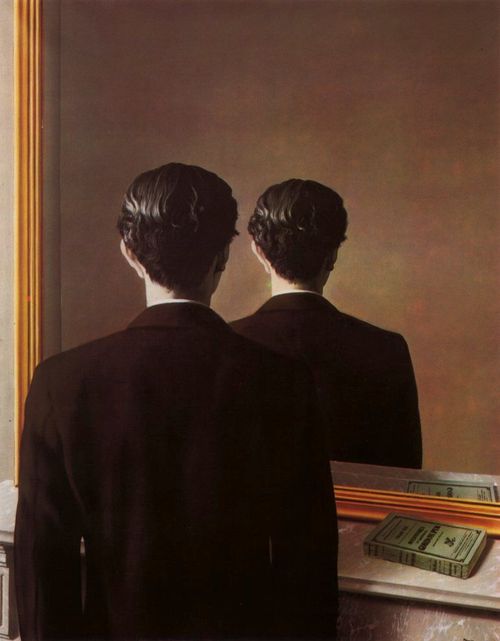
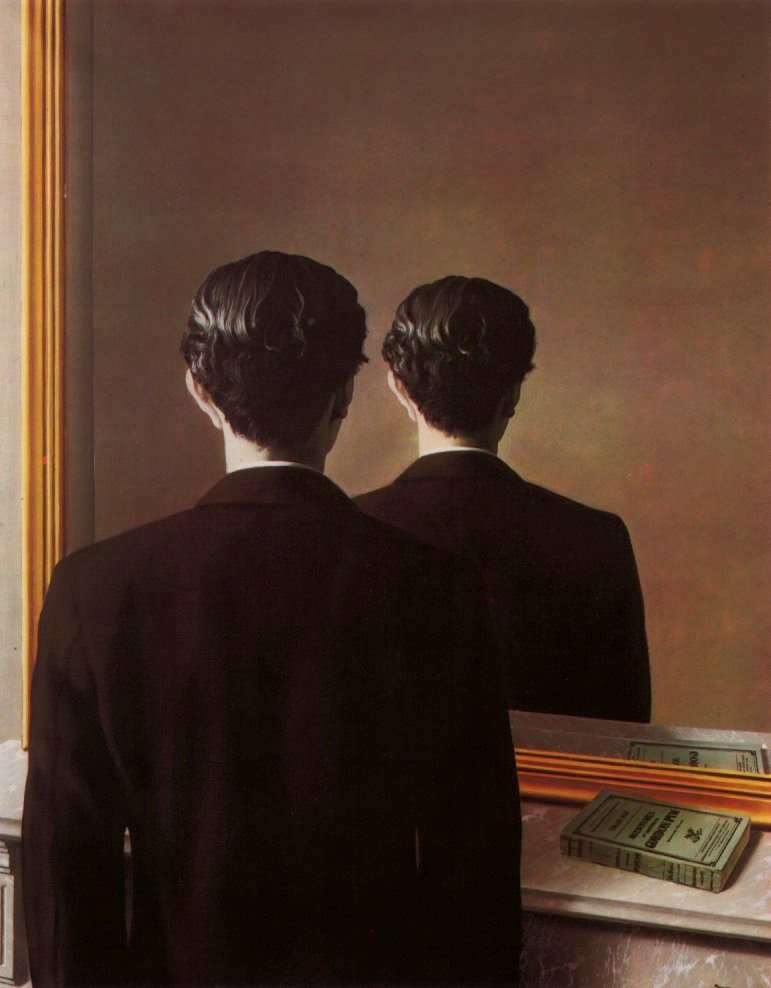
    Backwards--magritte

    Leonardo wrote backwards and from right to left, Benjamin Button lived backwards at the hands of Scott Fitzgerald, Rene Magritte’s man in the mirror saw the back of his head, Ignatz the Mouse I am sure saw the back of his head looking around the world with the world’s most powerful telescope, rugby passes are all done backwards, paper images of vue optiques appear backwards, lightning for all intents and purposes starts backwards from the ground up, reverse mathematics are worked from theorems to axioms, the Chicago River (1900) was engineered to flow backwards for the foreseeable future, while the Mississippi River famously flowed backwards for just a bit in the New Madrid earthquake of 1812. 
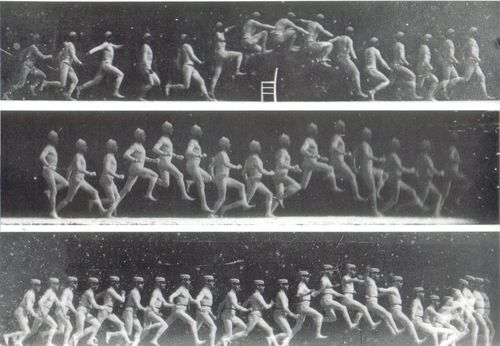
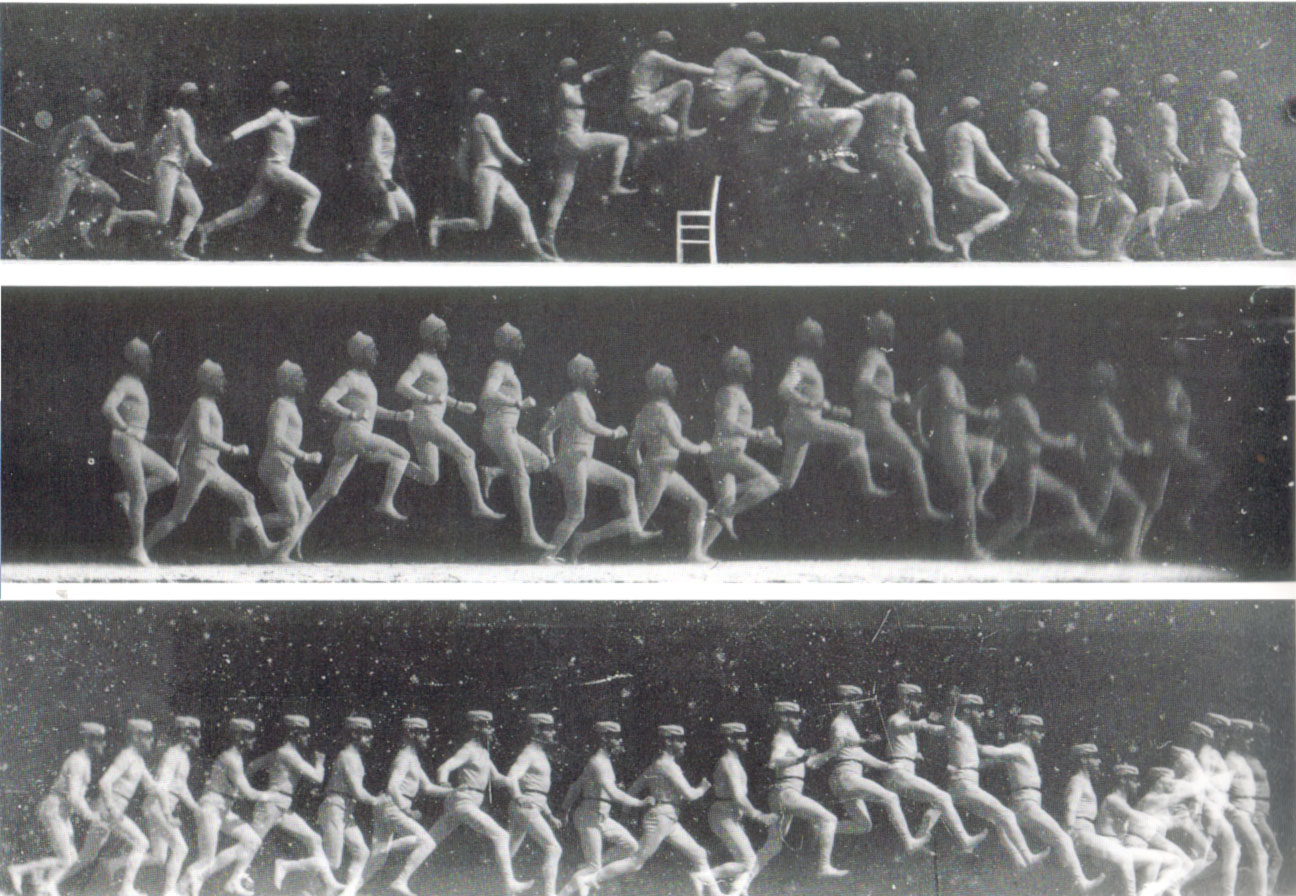
    Backwards--marey12

    I can only imagine what audiences must have felt when they saw the first moving pictures played backwards–seeing them played forwards was a novel-enough (and revolutionary) idea, but the simple idea of reversing the direction of the film would have proved to be equally fascinating.  Imagine the first time you witnessed a staged train wreck on film, back there in 18951, and imagine being able to see it played over and over again, until you were filled.  I’m not so sure that there were even any still photographs of a train wreck as it occurred to this point, even with advances in film speed and lens, so seeing the even unfold in front of you at leisure must have been overwhelming.  Now imagine these same folks seeing the event and watching the locomotives reconstitute themselves.  It would have been an extraordinary event.  Even observing the Marey sequences (above) and seeing what actually happens when a person bends over to pick up a pail of water would have revealed almost as much in new detail as when Galileo was in the middle of his earliest observations. 

    In a way the chance of controlling the direction telling of a story and seeing it displayed via moving images, and being able to see them backwards, may well have seemed a form of third-person time travel.  This came on the heals of what is for all intents and purposes the first time travel novel in  H.G. Wells’ (also in) 1895 The Time Machine (appearing earlier as “The Chronic Argonauts,” in 1888)2 and Mark Twain’s 1889 but much earlier than the first motion picture to use the idea of time travel (which was in 1921 and based on Twain’s work).  Being able to show a motion picture, and then stop it at will, and then reverse the order of time to begin everything all over again–visually–must have seemed a magnificent advantage. 

    And so to this end I’ve got the following few questions for which I have no firm answers:

    1. When was the first time people saw moving images of a of a currently deceased person? That is, when did the first dead person become “reanimated” by virtue of their images being captured by a motion picture? This question could be asked of the first viewing of a photograph of a dead person, and also the first experience of listening to a now-dead person whose voice had been recorded by an Edison machine, but I think the moving picture element is much more powerful. 

    1. When exactly was the first viewing of backwards motion, of seeing action in reverse?

    2. When was the first viewing of a continuous moving picture in which motion was purposely interrupted ?

    I’ve probably overlooked some long list of “firsts” in film, somewhere, but for now these questions are still questions. If anyone out there has answers, I’d love to hear them. 

    Notes:

    1.  It is interesting that this very early motion picture , made by the great scientist-brothers Lumiere, l’Arrivee d’un train en gare, was produced in the same year as the Wells book.  Just two years later, the Lumiere Brothers published a catalog of their available movie strips, numbering 338 productions.  In 1898, after six catalogs, there were over a thousand strips.  This is remarkable, especially considering that there wasn’t a cinema industry yet.  The Lumieres are an interesting pair of people (both of whom survived their invention by about a half-century), making perhaps the most important discoveries in the history of cinema, and continued to be interested in other fields throughout their lives.  The cinema-industry part of their work didn’t seem to interest them all that much. 

    The history of moving images is complex and long.  I’m not saying at all that it begins with the Lumieres, or with Edison, as the pre-1900 field is well sprinkled with different and interesting attempts at fooling our eye–Chronophotograposcopes, Counterfivoscopes, Phantasmagorias, Klondikiscopes, Vileocigraphiscope, and so on, are just a few examples of the many attempts at locating the seat of photographic motion in the brain.  There are very early efforts, principally by J.A.F. Plateau (1801-1883) who rediscovered in 1829 the “persistence of vision” effect in which the eye will see a continuous stream of images if presented with a flow of static pictures at 16 frames per second over a one second period, which of course is the basis for the rest of everything that was to come.  There’s much more, but I wanted to at least point out these few important bits. 

    2..  I’m not sure what to  with Mr. Dickens, if he fits in this order with the time traveling Scrooge in A Christmas Carol (1843), or not.  Perhaps he does, and if so, then he precedes Mr. Wells, though the latter’s time traveler is outfitted with a machine and a scientific basis for the belief in it.  At the very least he is worth mentioning in the same moment.
  • When a Map Should Probably Not Have Been Made

    JF Ptak Science Books  Quick Post

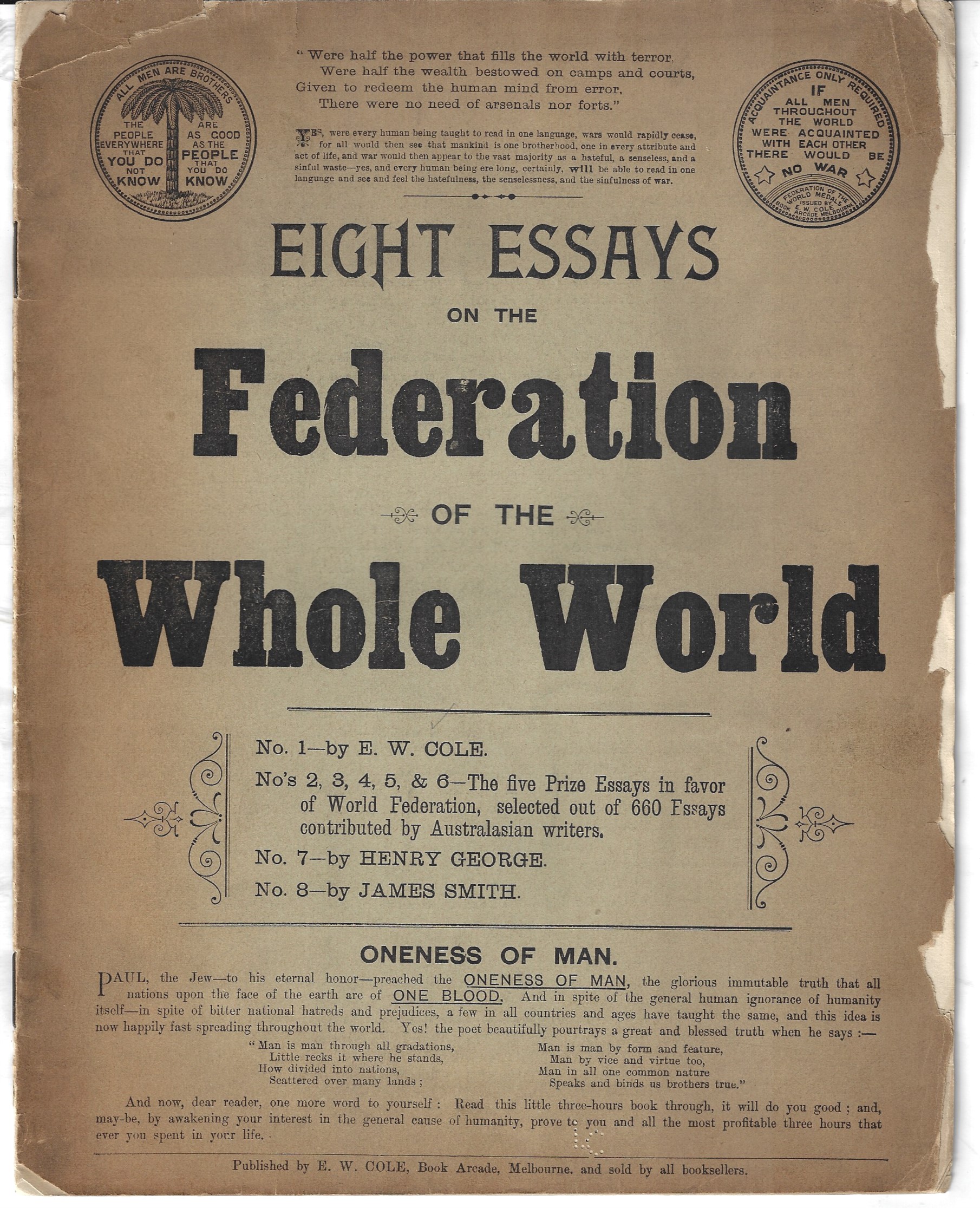
    This pamphlet was a little confusing to me–at first I thought it would fit into a category of Outsider creations, a small collection of pamphlets filled with some towering and submerged ideas on curing the Depression, keeping the U.S. out of war, flagpole painting, zipper repair, exrta-Earths populating the (regular) Earth, eyestalk plant people of Mars, flooding the Sahara, damming the Hudson River, nuclear powered _____, mega weapons, mega planes, hair massage for higher IQ, and so on. The design of the pamphlet certainly had the feel and look of a great attempt at conveying some secret truth, it turns out that it is pretty straightforward, an 1890’s/1900’s  appeal to folk on acting courteously and amicably towards others to achieve a one-government-something. 

    The message was very simple: do good, be kind, help people, live your religion.  It was the work of a very successful bookseller and publisher in Melbourne, Edward William Cole1. He sounds like he was an interesting guy, autodidact and entrepreneurial, born in the U.K. and migrating to Cape Colony and on to Australia, spending time in the gold diggings, exploring the Murray, and settling into Melbourne where he opened up a bookshop in 1864 which morphed into a large arcade with many rented kiosks.

    Cole wrote a number of short pamphlets, published them, and either sold or gave them away–the pamphlet presented here was probably a gift to his customers. It published eight essays of 660 collected for the prize of publication, extolling brotherhood and the commonality of the human condition, appealing for kindness and the common good, and reading above nearly all else. 

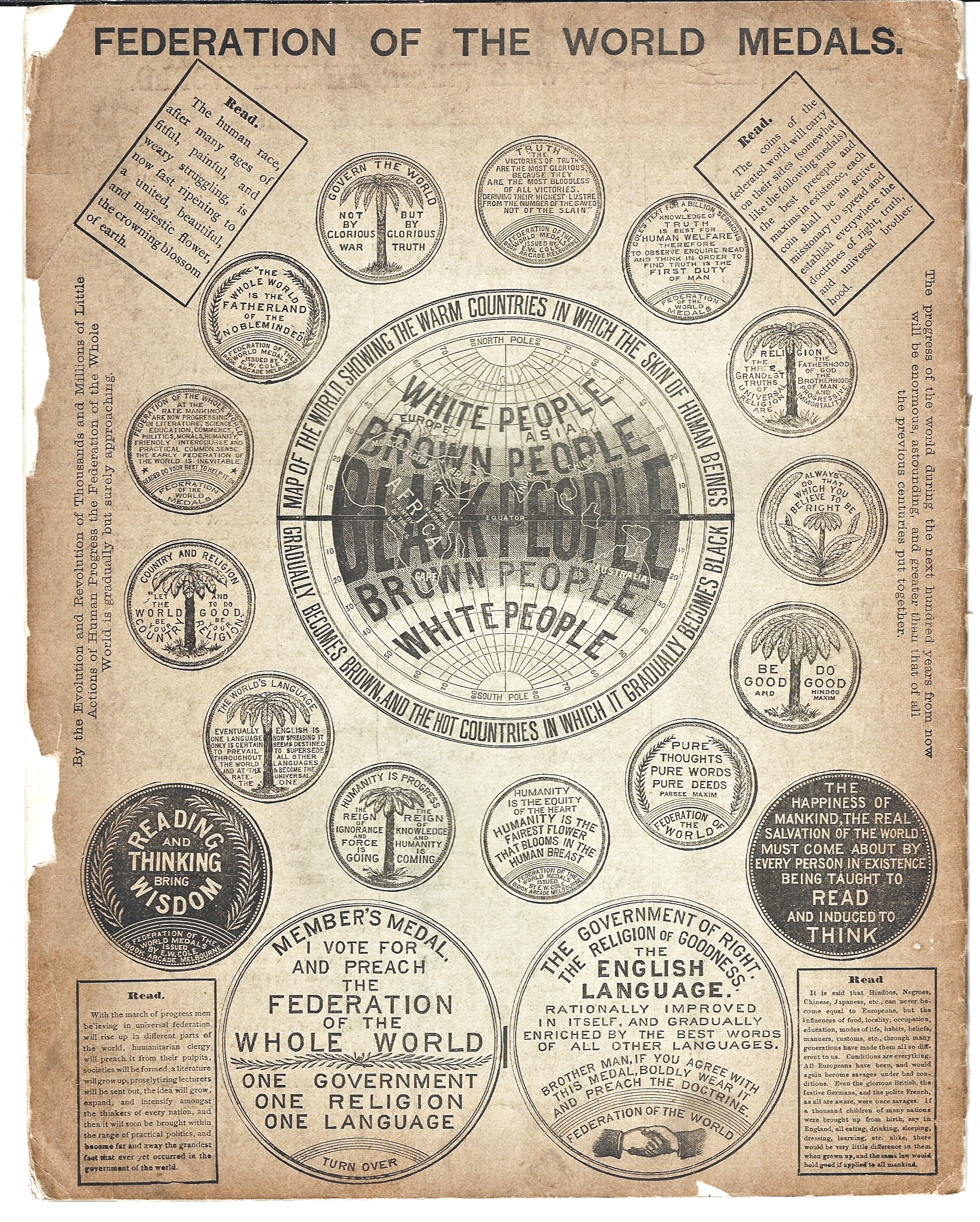
    The imagery on the rear cover is striking, most of the artwork being the fronts and backs of medals/medallions that Cole had made. The image in the middle of it all is, well, very surprising, and potentially disturbing, though it seems unconnected to any of the essays or sentiments of the pamphlet, and seems largely to be a non sequitur.  In any event there seems to be no connective text, nothing on race dominance or eugenicism, the only thing that comes close to that is a repeated belief that English should be the dominant world language for its “perfection”.  As dire as it seems the map seems to be open to speculation, though on the face of it doesn’t look like much good could come . Is it something as nasty as showing what the map maker thinks are the natural divisions of the world according to race, or could it possibly be suggesting that skin color is based on location on the globe and has nothing to do with any sponsorship of superiority or inferiority based on color? Given the rest of what seems to be in this pamphlet, it seems likely that the later is the case. The guy would’ve been better served if he left the map out.

    I’m reproducing the artwork here because there seems to be little mention2 of this work outside of stiff and undated bibliographies of books-received. 

    Black People front

    Black People front
    Black People front

    Notes:

    1.  Cole’s entry in the Dictionary of Australian Biography: http://adb.anu.edu.au/biography/cole-edward-william-3243

    2.  According to WorldCat there’s another version of this work, fleshed out to 207pp,, printed around the same time (the librarian guesses ‘189_’) and located in just one library (Victoria). There’s only one copy located of the copy mentioned here, located at the Murdoch library, 11,564 miles from where I sit in western North Carolina. 

  • A Particular Bit of Science In Wells’ “War of the Worlds” (1894)

    JF Ptak Science Books   Quick Post

    I haven’t read in Wells’ WOTW in a long time, and when I went to it just now (reading and listening) I was surprised at how quickly the Mayday Martians element evolved.  We get to it by the end of the very first paragraph:  

    • “At most terrestrial men fancied there might be other men upon Mars, perhaps inferior to themselves and ready to welcome a missionary enterprise. Yet across the gulf of space, minds that are to our minds as ours are to those of the beasts that perish, intellects vast and cool and unsympathetic, regarded this earth with envious eyes, and slowly and surely drew their plans against us. And early in the twentieth century came the great disillusionment.”

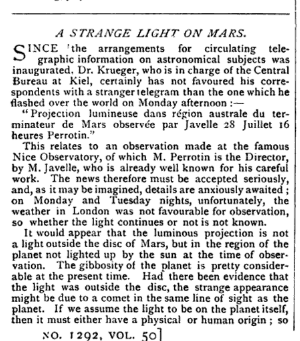
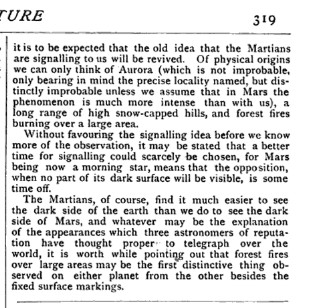
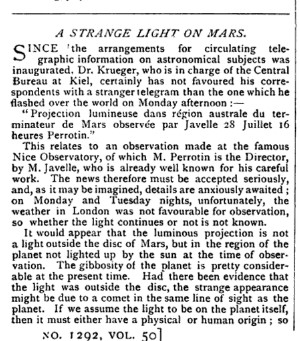
    I was also surprised by the appearance of some tech references, including a dated reference to an article in Nature magazine (2 August 1894).  The Nature article references a “strange light” which Wells uses to his own world-stabbing ends, and he gives his story some credibility by dragging in a real-life background to the possibilities of his imaginations.

    • “Had there been evidence that the light was outside the disc the strange appearance might be due to a comet in the same line of sight as the planet. If we assume the light to be on the planet itself then it must either have a physical or human origin…” (And by “human” here the editor no doubt means extra-terrestrial, or biological, or intelligent life form.)

    I’m not a big sci fi reader, but in my experience I’ve never seen a tale woven using the names of Perrotin and Schiaparelli, though I have no seen them used in the plot setup thickening agent in WOTW. (By the way Wells mentions the “palpitating” work of “Lavelle of Java” though he must have meant “Javelle”, who was Stephane Javelle, the assistant to Perrotin of the Nice Observatory.)

    On the “strange light”:
    War of the Worlds Mars in NAture _1_


    War of the Worlds Mars in NAture _1_


    Source: Nature, volume 50, August 2, 1894

    ·Posted by :

    ·in:

    —
  • Electric Time (1847)

    JF Ptak Science Books  Quick Post

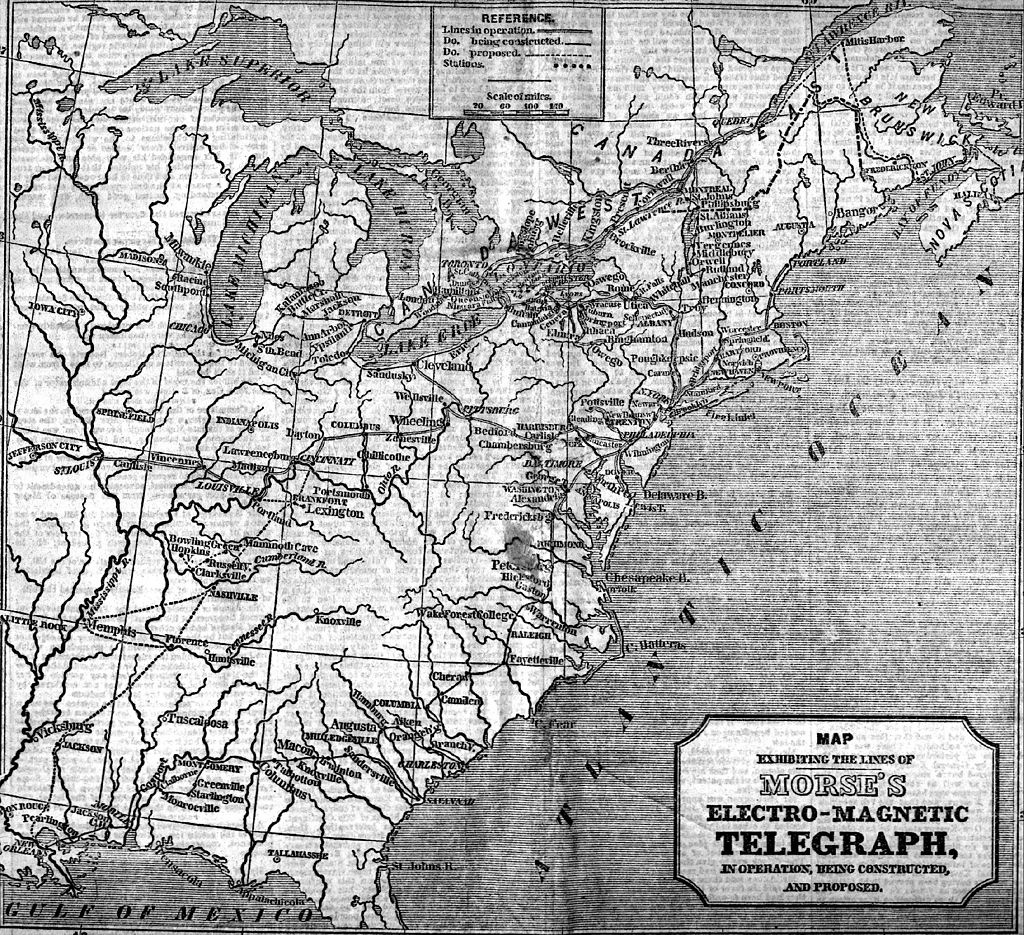
    There were some ways of getting around the problem of geography and communications over long distance–visual semaphores, smoke, drums, that sort. The issue of long-distance relatively instant communication wasn’t solved until the appearance of the telegraph, which for the most part outside of starts and fits and a complicated pre-history really wasn’t solved until Morse and Vail in about 1843. The first line was laid in the U.S. between D.C. and Baltimore in the next year, and then with the display of this success a network of electric communications exploded, as you can see in the map below showing telegraph lines in the U.S. in 1848, just five years after there was nothing at all. 

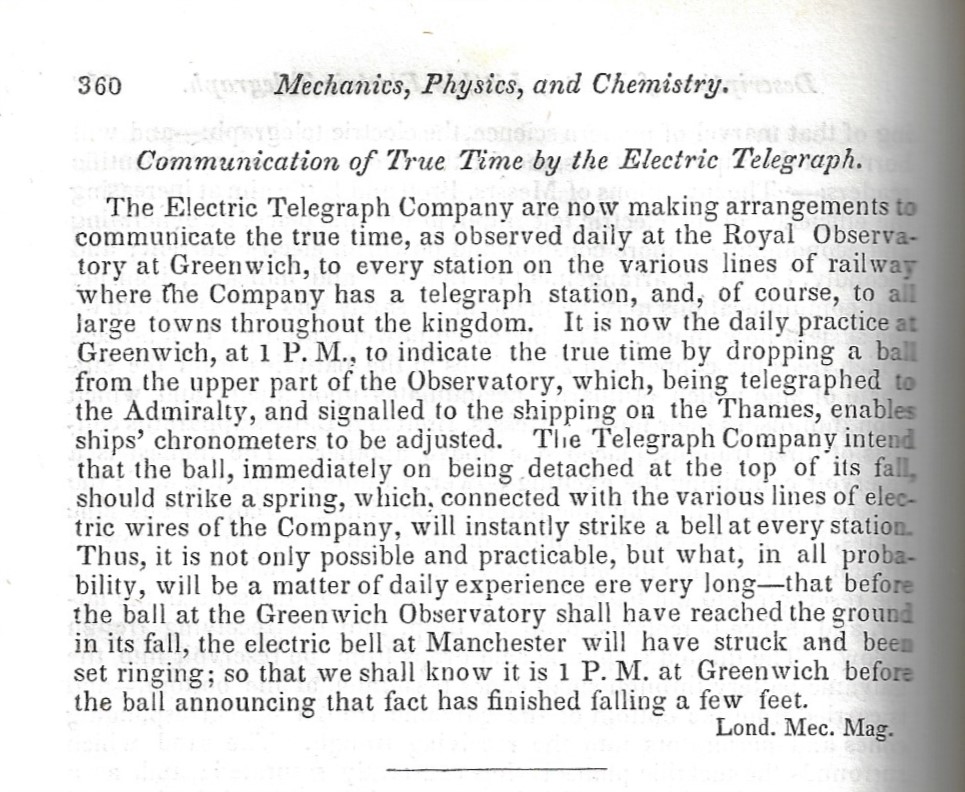
    Anyway this is what came to mind when I stumbled on the following short notice that appeared in the Journal of the Franklin Institute in December 1847–the fixing of a “constant” time communicated by electric telegraph, reporting the standard time from Greenwich, to be sent out to the furthest reaches of the telegraphic world, and which was an early attempt at the mass distribution of regulated synchronous time keeping over long distances. Pretty cool idea.  

    • “It is now the daily practice at Greenwich, at 1 P.M., to indicate the true time by dropping a ball from the upper part of the Observatory, which, being telegraphed to the Admiralty, and signaled to the shipping on the Thames, enables ships chronometers to be adjusted.”


    JFI 1847 telegraph time

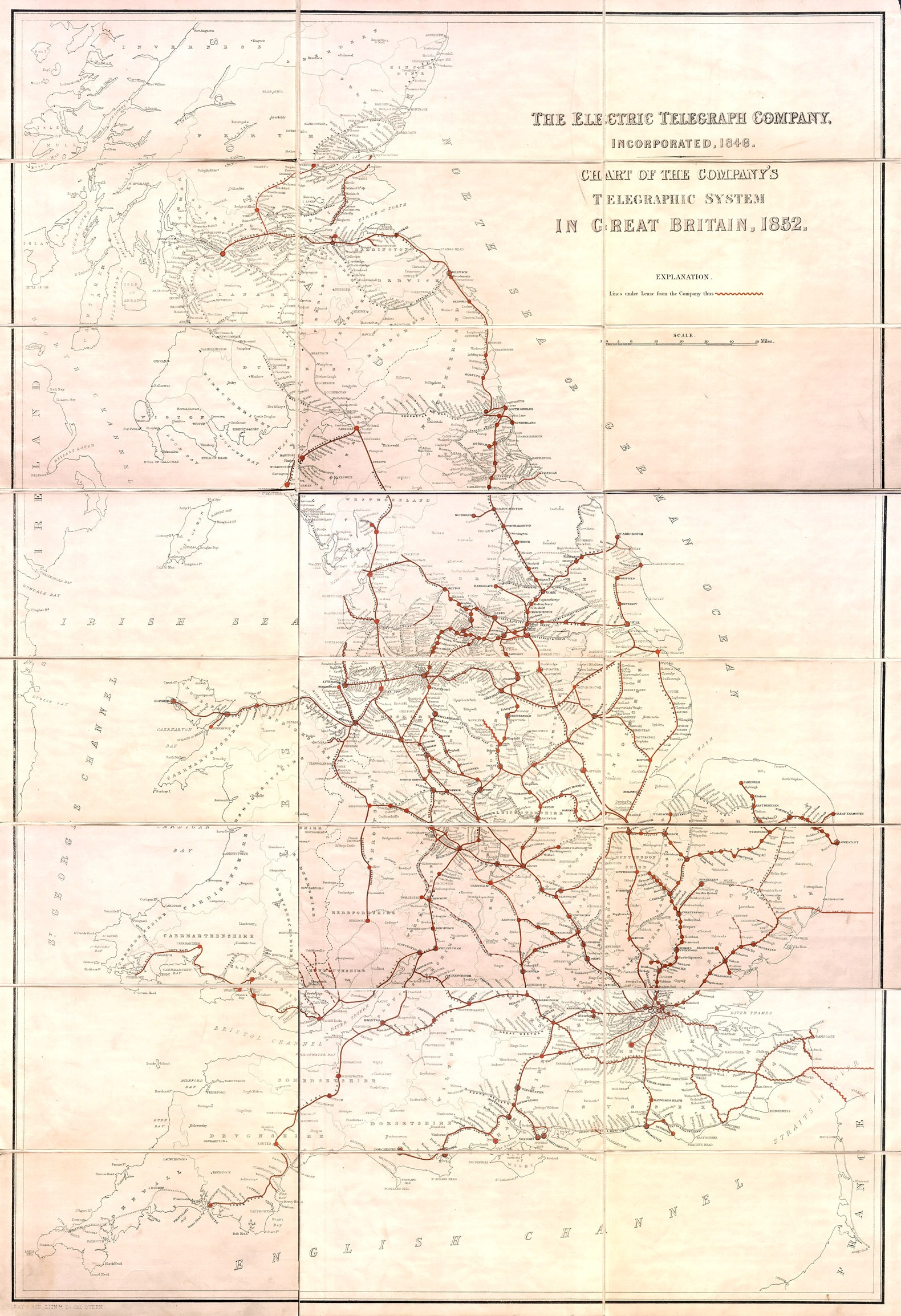
    A map of the telegraph lines in Great Britain in 1852:


    Telegraph map GB 1852

    Source: distancewriting.co.uk 

    And the map of telegraph lines in the U.S.:

    Telegraph map wikipedia

    Source: wikicommons on “telegraph history”


  • A Different Sort of Motorcycle Sidecar (1917)

    JF Ptak Science Books   Quick Post
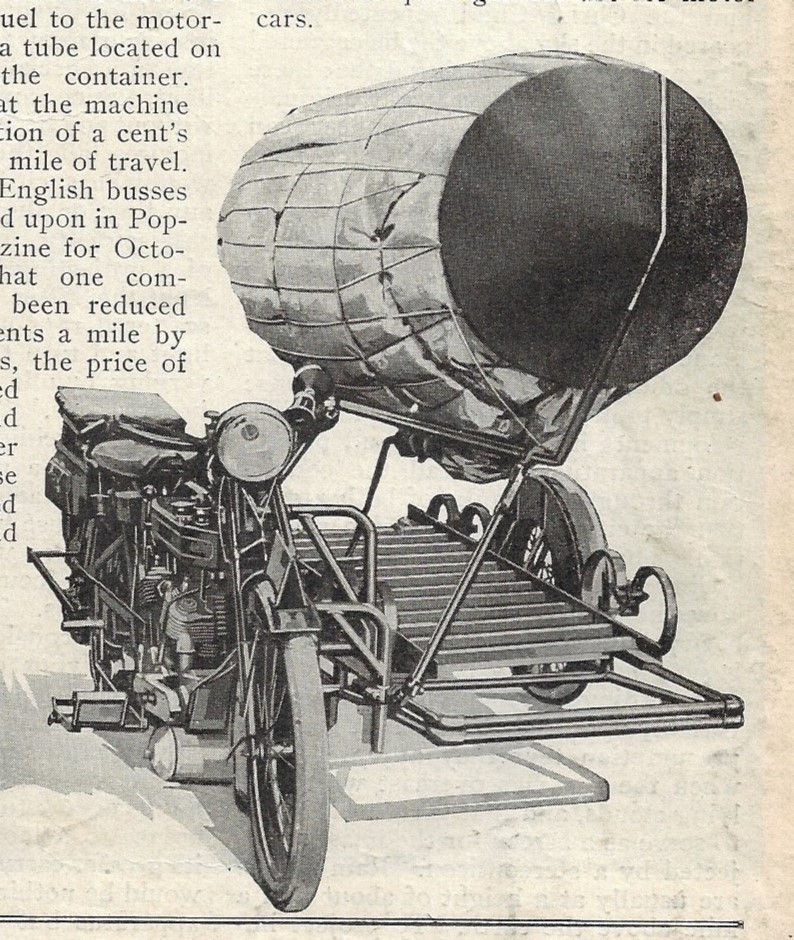
    Pop Mech 1917 gas powered motorcycleThis unlikely combination of vehicle and fuel source appeared in Popular Mechanics for June, 1917. 

    It was fueled by “illuminating gas” which was a hydrogen/hydrocarbon mix and which was made to fire street lamps and such, a destructive process introduced in the very early 19th c.  It is highly flammable. Highly.

    This suggestion for a 600 cubic ft power envelope for a motorcycle was supposed to save about two-thirds on fuel costs and replace the use of wartime gasoline, but…

    [For “illuminating gas” see the following 1869 entry from Scientific American: https://www.scientificamerican.com/article/illuminating-gas-what-it-is-and-how/]

  • A Proto-typewriter, 1857.

    JF Ptak Science Books  Quick Post

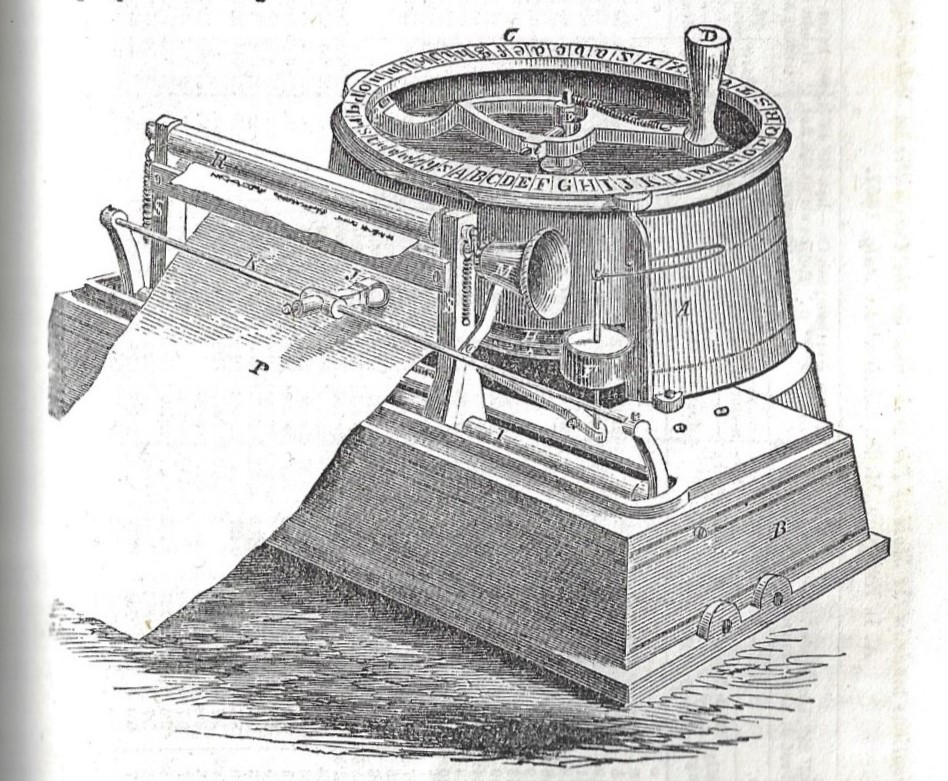
    Here we have a lovely attempt at what is close to being a typewriter (a “hand-printing machine”), found in the Journal of the Franklin Institute for June 1857. The size isn’t given but my guess is that it would be about the size of foolscap paper, easily desk-top. It seems fairly simple in a slightly complex way, and I can easily see where it would serve as a stop-gap implement between what came before and the typewriter. 

    The short article introducing the workings of the machine is surprisingly, and very readable, even though it is brisk and sharp. It is just well done.

    It is difficult to see some of the annotations, even in the original, and even with a magnifying glass, but for that first indicator “H” you can find it just southward of the bell-like object (“M”, which turns out to be a handle for the paper roller), and “E” was another difficult one to find, and that one turns out to be the pivot in the center of the type circular.  In any event, the thing operates much like a typewriter, the lever “D” moved to the position of the letter needed, then pressed down, moving the type into place against the ink and the paper, which is loaded in rollers much like a modern typewriter. 

    JFI 1857 typewriter _2_

  • On Unconditional Surrender (1943)

    JF Ptak Science Books   Quick Post

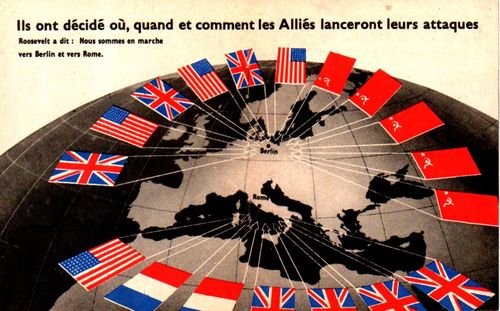
    I found this arresting map in a tiny publication called …Sans Condition, which was published in the first half of 1943. The publication is only 12 pages long but has a number of evocative images of Germany being bombed and lines of German POWs–it is in general a propaganda piece for French-speaking folk (which was printed god-knows-where) produced deep in the war and at a time when the tide has about turned on the Nazis.  The term “Sans Conditions” refers to “Unconditional surrender”, which was a phrase that President Roosevelt surprisingly used when meeting with Allied leaders at Casablanca in January 1943. It is a term that doesn’t make many appearances in U.S. military history, though it was famously endorsed by General U.S. Grant in 1862 in response to an entreaty from Confederate general Simon Bolivar Buckner jr.–and as it happened a U.S. general by the same name was killed om Okinawa by a direct hit from a Japanese heavy gun. Roosevelt would send the same directive to the government of Japan at Potsdam July 26, 1945 (later modified somewhat to accommodate the Japanese keeping their emperor). 

    Books covers sans conditions _1_

    The title of this post is the title of the map,  “Ils ont decide ou, quand et comment les Allies lanceront leurs attacques”–and you don’t need to know French to know what it says.  

    Books covers san conditions __2_

    ·Posted by :

    ·in:

    —
  • Bombing Tokyo with Dollars (1943)

    JF Ptak Science Books   Quick Post

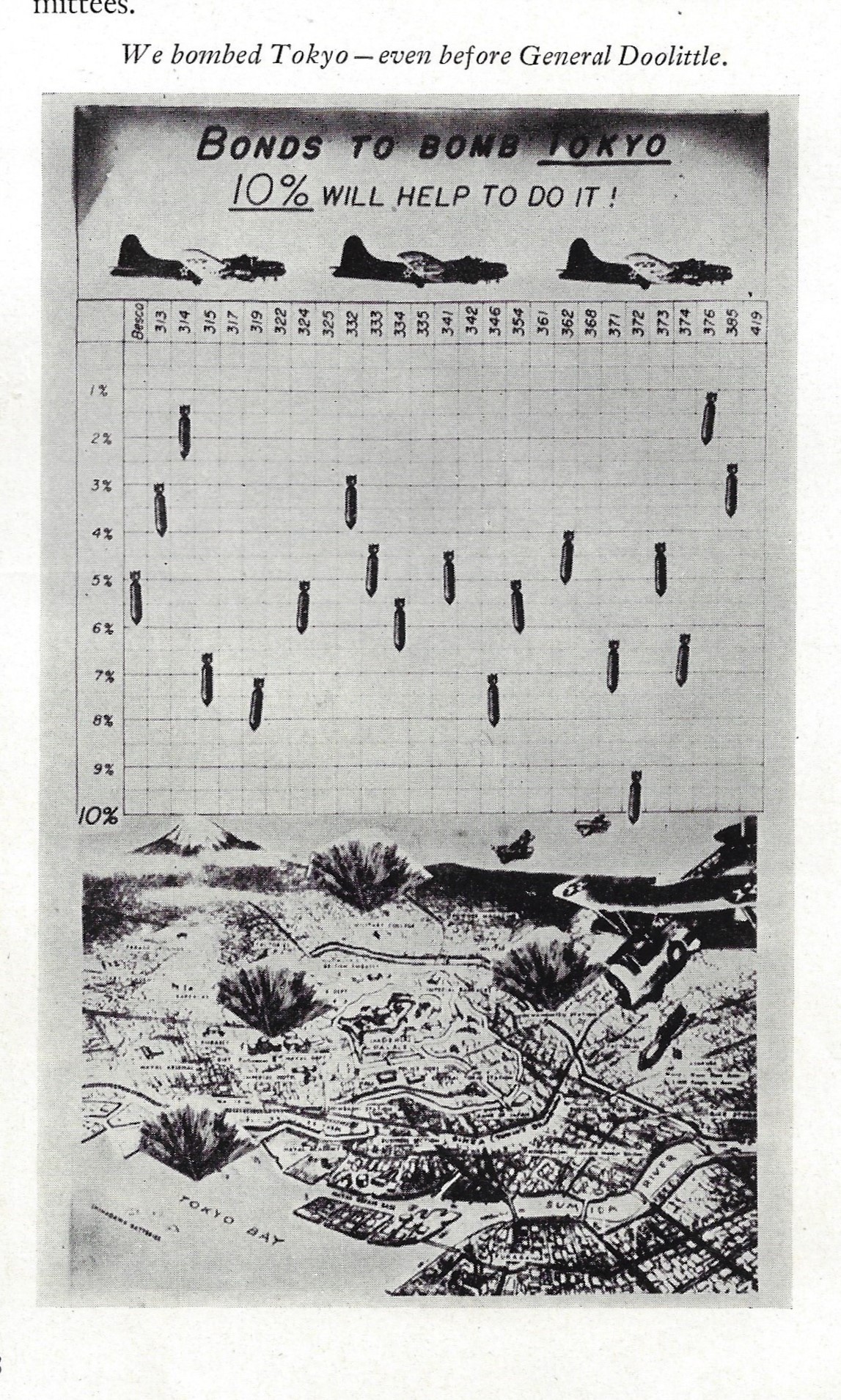
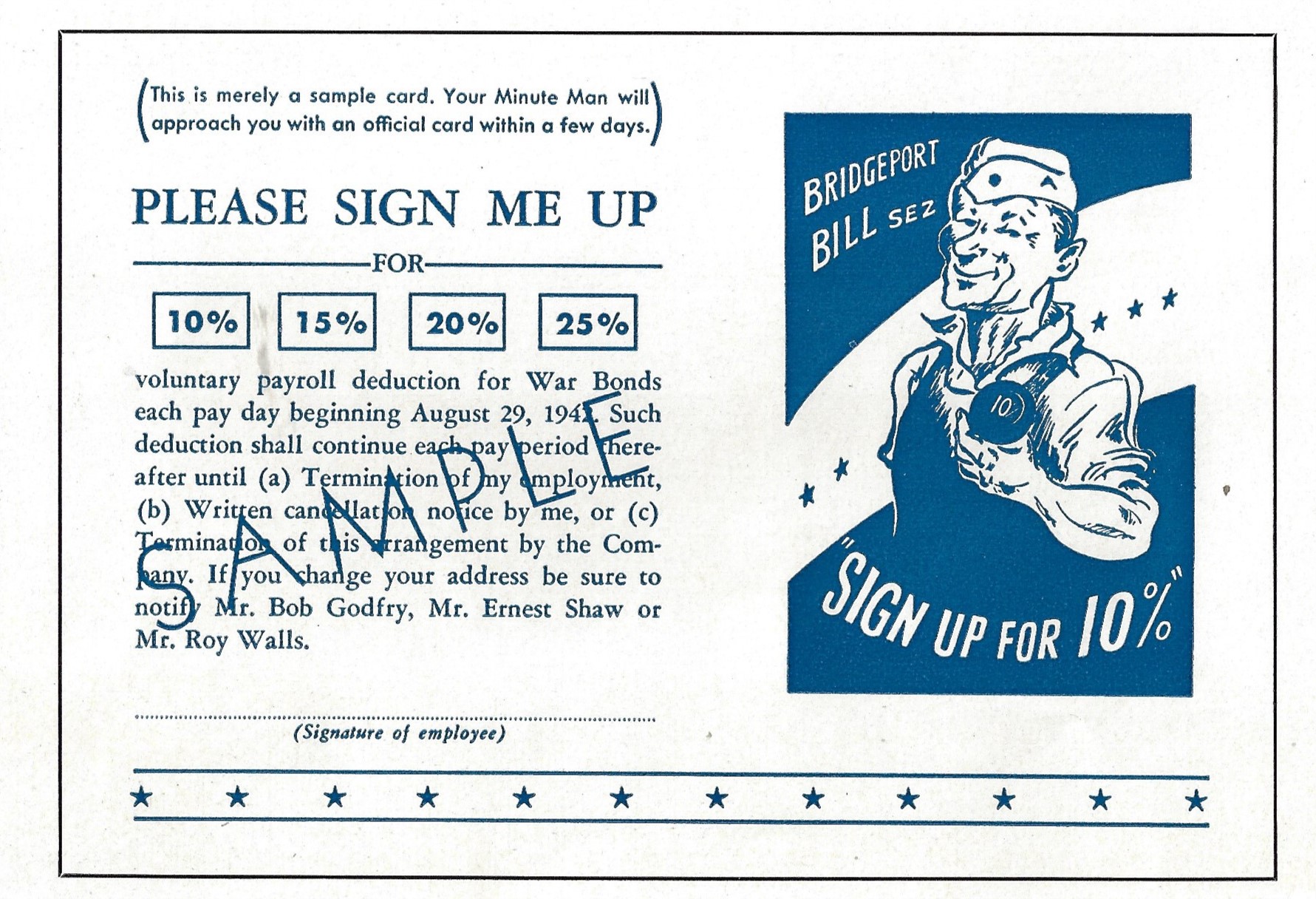
    This is part of a report of the Bridgeport Brass Company for 1943 detailing the company’s activities in the war effort. This was apart from the general war products industry, and included what the company was doing in response to the U.S. War Production Board’s outline for pulling together labor and management in joint committees to solidify the extreme national war effort. One small part of that was the donation of a portion of every paycheck–the suggested amount was 10%–that would be used towards war production. The poster below was a reminder to folks in the factories about where and how that money was being used:

    Bombing Poster money drive

    Bombing Poster 10 percent war drive billboard

    Bombing poster 10 percent card

    ·Posted by :

    ·in:

  • The Earliest Appearance in the U.S. of an Experiment Showing Lead in the Atmosphere? (1835)

    JF Ptak Science Books   Post 2792

    For various obscure and unknown reasons I rarely share a post from the books-for-sale section of this blog here in the “readerly” part. Today is an exception, mainly because I can’t quite hammer down what it is I’m writing about and perhaps someone out there might be able to share what they know about it.  The post is on a scientific paper from the Journal of the Franklin Institute, a quick 1-pager from 1835 that caught my eye, a middle-of-the-page bit about lead in the atmosphere. I thought it sounded “early”, this business of determining whether or not killer lead was in the air, and relatable to a lot of modern stuff, like human impact on the environment, lead-added gasoline, and that sort. So I checked it out. I couldn’t determine exactly what this little paper was in the history of such literature, but I think that I came close:

    The Earliest Appearance in the U.S. of an Experiment Showing Lead in the Atmosphere? (1835)

    Arthur Dunn, “Experiments to ascertain the Existence of Lead in the Atmosphere of a White Lead Manufactory”, pp 355-6. In: Journal of the Franklin Institute, Philadelphia, Vol 16 (third series), volume 20 (overall), July-December 1835, 438 pp, with text illustrations.  Half-calf, with raised bands. Ex-library, with some scuffing on the spine; also a few stamps on the title page. Nice copy. Good condition.  (There are dozens of other papers of interest in this volume–this seems to be the most compelling of the group.)

    • This paper seems among the earliest printed in the U.S. to experimentally demonstrate the presence of lead in the atmosphere. It is also suggestive of what would become the concern of human impact on the environment.

    The issue of lead poisoning was considerable—people became sick by touching, drinking, and breathing in lead under many different circumstances. For example, poisoning occurred when lead was used in paint by breathing or touching or eating paint chips, the most harmed of those would be the color mixers who prepared the paint. There was also a problem with lead caused by eating it in the form of food coloring for bread (to give it a yellowish tint using ‘chrome yellow”), candies, bon bons, and an emulsifier for snuff, among many other things. Lead was also ingested via the use of lead utensils, pipes, and drinking ware.

    The deadly problem of lead sickness/poisoning (“colic”) was known to the Hippocrates, Nicander, Celsus, Dioscorides, Galen, Avicenna and other ancients of Greece, Rome, and Persia, and was a known concern through the Dark and Middle Ages, through the Renaissance and up to the present day. (It should be stated that some of these writers described the effects of lead poisoning without the association with lead.) It was Stockhausen, “the father of lead colic”, who would in the 18th establish the connection between lead and the diseases caused by it, with Henkel showing lead as the exclusive vector agent to the diseases (in 1812).

    It has been shown that the “(f)irst article about lead poisoning was published in 1848” by Samuel L. Dana1. This was the first translation and expansion of the article “Traits des Maladies de Plomb, ou Saturines”, by Tanquerel des Planches, which was published nine years earlier, in 1839, which has been noted as one of the earliest papers in the medical literature on lead poisoning. 2,3 The Dana translation, according to the American Journal of Science, was a great contribution to health in the U.S., as the Tanquerel des Planches work was “doubtless unknown to intelligent readers of this country”. American Journal of Science, volume 6, November 1848.

    I have been unable to find anything by Dunn, whose work is reprinted in the Philosophical Magazine five months earlier in the year (series III, vol 7, issue 31). There are other earlier works that come close to what Dunn is doing4, but so far as I can determine this seems to be the first to prove that the lead could be supported in the atmosphere and be breathed into the body (or absorbed through the eyes), something that no doubt was suspected but not demonstrated. 

    Notes

    1.  Lead Diseases: A Treatise from the French of L. Tanquerel Des Planches: With Notes and Additions on the Use of Lead Pipe and Its Substitutes, printed in Lowell, (Ma.), by Daniel Bixby & Co., 1848)–Parissa Karrari  et al., “A systematic review on status of lead pollution and toxicity in Iran; Guidance for preventive measures” (–Daru Jnl Pharmaceutical  Sciences, 2012; 20(1): 2:.
    2. “The medical literature on lead poisoning in children can be traced back to the work of Louis Tanquerel des Planches he remarked on children placing leadpainted toys in their mouths and developing lead colic. As early as 1887, medical authorities in the United States noted cases of lead poisoning. David Stewart reported in Medical News that nine members of a single family developed lead poisoning from lead chromate used to dye bread yellow. [Stewart, “Notes on some obscure cases on poisoning by lead chromate manifested chiefly by encephalopathy.” Med News 1887; 1:676-81. 11.] In the 19th century, lead chromate was often added to lead sulfate to form what was called “chrome yellow,” a substance used by bakers and candy makers as a coloring agent. In 1889, an article in Science reported on the deaths of two children from the ingestion of baked confectioners’ products that contained chrome yellow. [Glenn W. Chrome yellow considered as a poison. Science 1889; 13:347-9. 12.]”— David Rosner, et al, “Lockhart Gibson and the Discovery of the Impact of Lead Pigments on Children’s Health: A Review of a Century of Knowledge”, Public Health Reports (1974-) Vol. 120, No. 3 (May – June., 2005), pp. 296-300
    3. On Louis Tanquerel des Planches (1795-1868): “He is known for his research of lead poisoning, about which, he is credited with conducting one of the first comprehensive studies of occupational illness. By way of analysis of 1200 cases of lead poisoning at the Hôpital de la Charité in Paris, he reported that the disease was more frequently found in workers who were exposed to lead fumes than those who worked with the solid metal. In his studies he used the term encéphalopathie saturnine to point out neuropsychiatric indications of lead poisoning.”—Wiki
    4. But then there’s this earlier paper (1830), which certainly describes the consequences of lead in a closed environment but does not discus at any point any experiment to show that this is so: “…favorables à la production du mal Qui ne sait que parmi les professions qui exposent à la colique on compte celle d imprimeur c est à dire celle de compositeur ou de metteur en page en un mot celle des ouvriers qui manient les caractères Car je ne sache pas qu on voie fréquemment cette maladie attaquer les corrcctcurs ou autres employés qui vivent dans la même atmosphère si l on se rappelle en outre que le plomb n entre que pour une très faible proportion dans l alliage dont on se sert Pour les caractères Qn comprendra qu il est fort difficile qu il s en échappe en grande quantité des émanations saturines et que ce n est que par un contact Inumédiat que l infection doit avoir lieu…” -discussing the problems to employees handling lead type in a print shop.  Fouquier, “Colique de Plombe, Nature et Traitement” (Revue Clinque de la Medicale), in Gazette Medical, vol 1, 1830, pp 430-1


    ·Posted by :

    ·in:

  • Car Travel for No Good Reason Whatsoever and “Motorist Road Homes” To Accommodate That (1922)

    JF Ptak Science Books  Quick Post

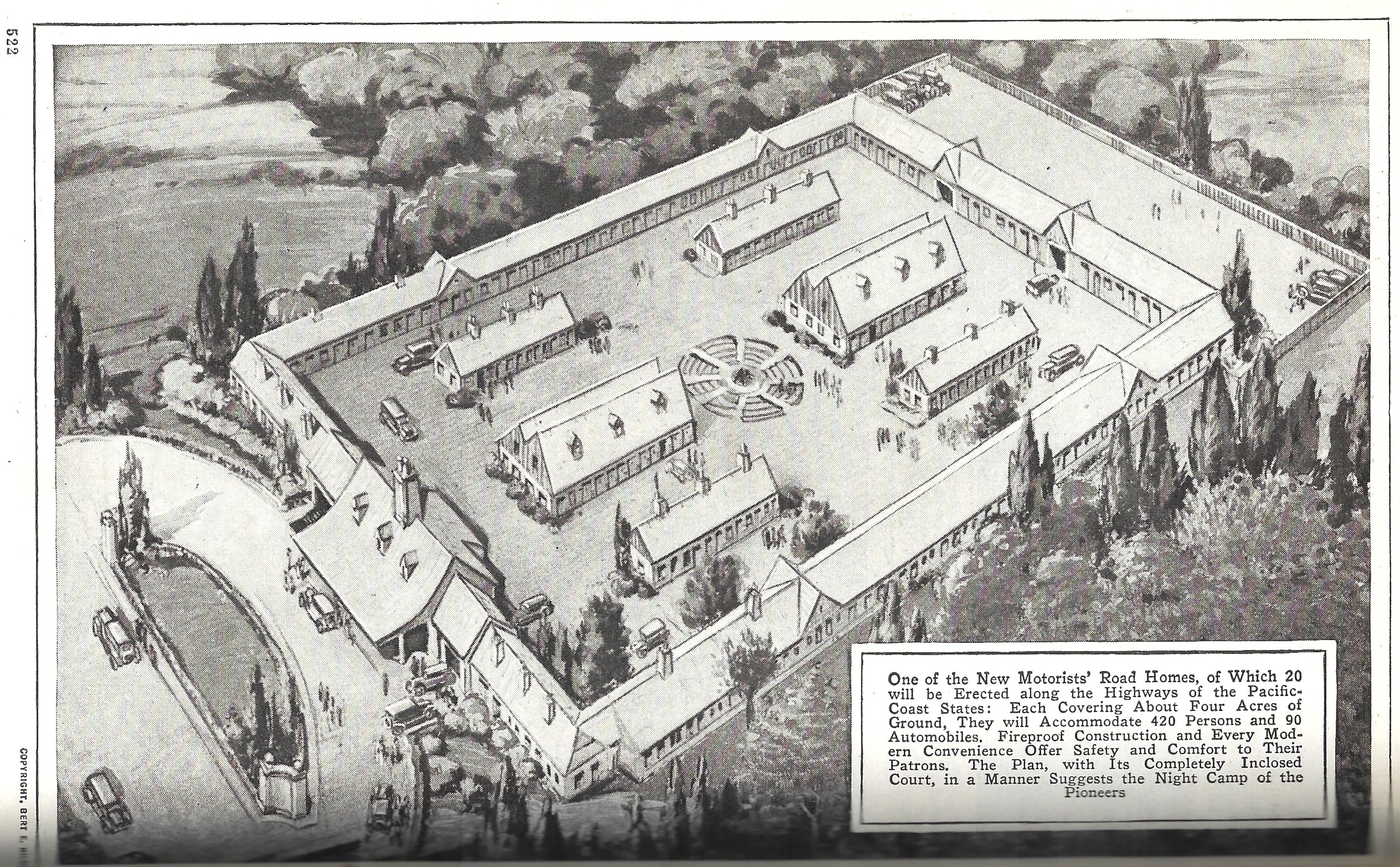
    This diagram reminds me of an enormous and mega-completed versions of the imaginary Joey the Juices’ “Stop ‘n Go Inn ‘n Out” motel down on the nice part of Rt. 1.  This exploded version of the motoring motel was meant for West Coast for travelers “aimlessly covering thousands of miles”, a giant influx of people riding the wave of massive new car ownership. This ranch was to welcome 420 people with room for 80 cars–which means, I guess, that people were traveling together–really together–five to a car, which implies that there were a good number of people contributing in an organized way to “aimless” activity. Perhaps people were just doing a lot of serendipitous driving as an organized crew. In any event I’m pretty sure that I’ve not seen plans for a motor lodge of this size, and thought to share it, finding it in the pages of Popular Mechanics for October 1922. 

    Given the birth of a much wider middle class, and the capacity for some disposable income, and access to cheap/affordable transportation and the roads to ride these new cars on, a large part of the working population of the U.S. did have the luxury at this point of travelling for the sheer hell of it. 

    Pop Mech 1922 car ranch

Recent Posts

Archives

Categories