A Daily History of Holes, Dots, Lines, Science, History, Math, Physics, Art, the Unintentional Absurd, Architecture, Maps, Data Visualization, Blank and Missing Things, and so on. |1.6 million words, 7500 images, 4.9 million hits| Press & appearances in The Times, Le Figaro, Mensa, The Economist, The Guardian, Discovery News, Slate, Le Monde, Sci American Blogs, Le Pont, and many other places… 5000+ total posts since 2008.

  • On Being Obvious–Towards an Illustrated Alphabet of the Obvious

    JF Ptak Science Books    Post 1850

    “It is obvious that we can no more explain a passion to a person who has never experienced it than we can explain light to the blind.”–T.S. Eliot
    “We have now sunk to a depth at which restatement of the obvious is the first duty of intelligent men”.– George Orwell 
    “There is nothing more deceptive than an obvious fact.”–Arthur Conan Doyle
    The obvious thing about the full sense of obviousness is that it isn’t obvious. Sure, there are plenty of aspects and bits of obviousness that are obvious, but like reverse plasma flashes of lightning, and the great bulk of icebergs, and the tops of clouds and the interiors of mountains, there is much more to the state of Being Obvious than necessarily meets the eye, even when the clues are all visual. 

    Dutch soldier next to a sea mine
    What is it that makes something “obvious”?  There must be hundreds of reasons to label something so, yet the cause of the labeling is much fuller than the label it wears.  There can be a rich and varied life in the obvious and its different stages, as rich and varied as snow and fog and clouds, though those examples seem to have more qualifiers and descriptors than the obvious does.  “Painfully”and “woefully” obvious are certainly two qualifiers for different states of obviousness, though at this level of inspection the different levels of obviousness seem to be a little oblivious. And yet there seems to be great depth in so many different aspects of The Obvious.
    It would be nice to be able to construct a Geometry of the Obvious–of course this is entirely plausible so long as it doesn’t actually have to mean anything or be rigorous in any way.  A fantasy geometry would then be pretty easy to construct (which also is being used for the letter “G” in our alphabet):
    G   Geometrically Obvious:
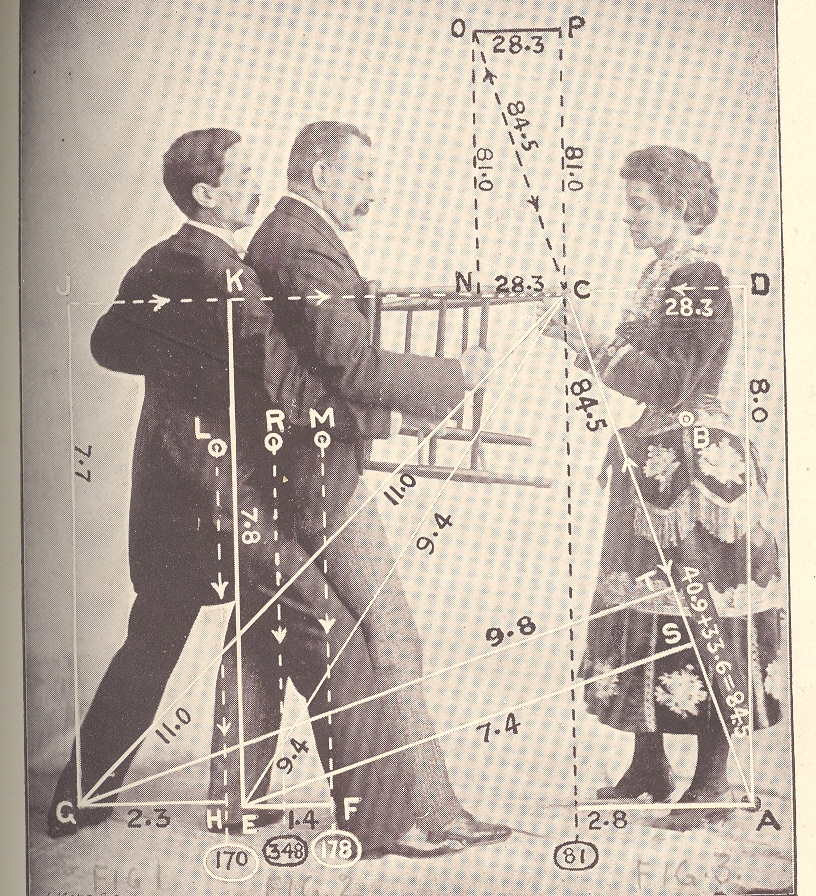
    Mar 23 center of levity cvr det 2

    It would be easy to assume that the visual assumption for the Aspect of Obvious would be the center of the image, though it is not necessarily so, even in this imaginary compilation of defining the obvious aspect of the photo. The stuff that makes something obvious can be anywhere.

    And so to lay the groundwork for an Alphabet of The Obvious I’ve made a few selections, below–suggestions really for what the categories and assignments to letters might be. 

    For example,this would be a fine example of:

    A  The Absurd & Doubly Out of Place Obviousness–the horse seems to be the one with a sense of irony for the surroundings its quiet semi-absurdiy: 
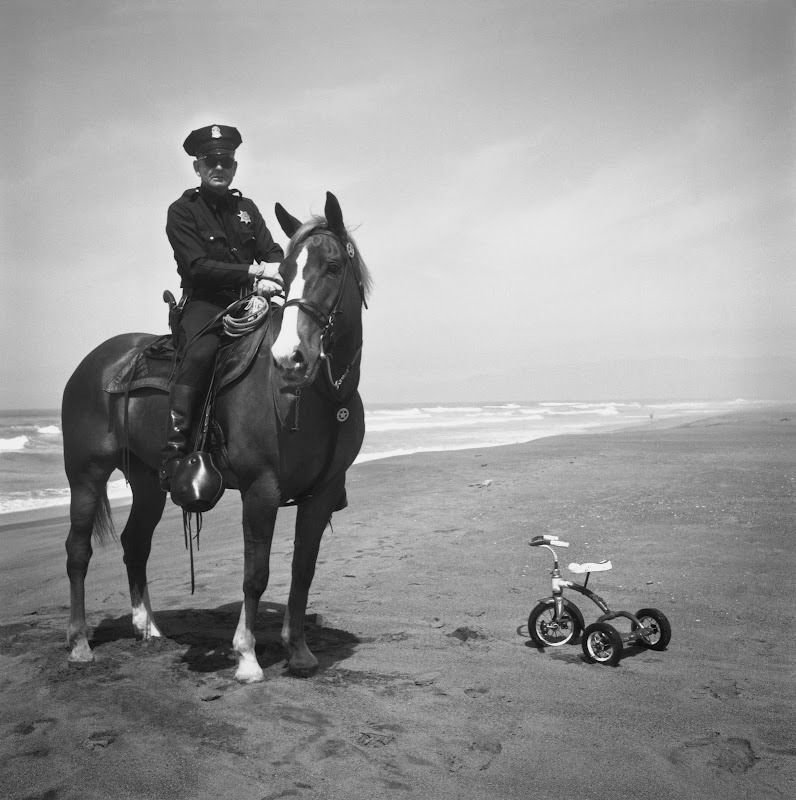
    Arthur Tress
     
    B  Better-Him-Than-Me Obviousness:
    Absurd aug 3greggsegal7 
     

    ·Posted by :

    ·in:

    —
  • French Canadian Bean Soup & Fevered Last Words From a Bullet in the Belly

    JF Ptak Science Books    Post 1851

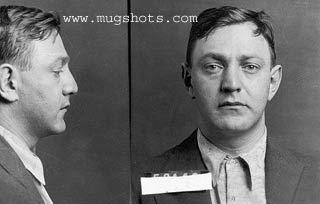
    Dutch schultz mug

    “STEVENS:  Yet you invented the coincidence.
    TEMPLE:  Mrs Gowan Stevens did.
    STEVENS:  Temple Drake did. Mrs Gowan Stevens is not even fighting in this class. This is Temple Drake’s.
    TEMPLE: Temple Drake is dead.
    STEVENS:  The past is never dead. It’s not even past.”
    –Mr. William Faulkner, Requiem for a Nun

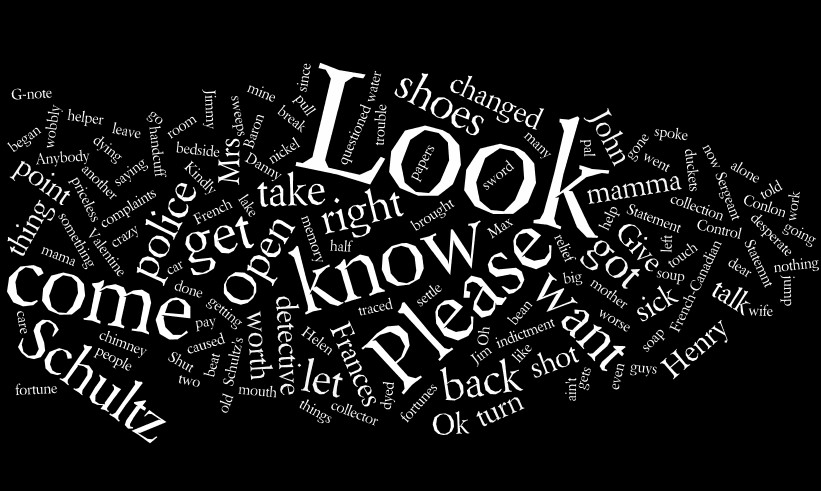
    Wordle--dutchclean

    This is a Wordle of the stenographic recording of the last words of the gangster Dutch Shultz, slipping quickly into dark oblivion, the stenographer (F.J. Lang) at the foot of his deathbed recording all the man had to say. Arthur (Dutch Schultz) Flegenheimer was in rough shape, laying there in Newark, shot with a bullet in his belly, spiking a 106-degree temperature, and sliding back and forth between states of  insanity and lucidity. And say stuff he did–responding to the questions of a police detective (including a Sergeant Luke Conlon), Schultz’s answers are remarkable for their tapestry of wrenching artfulness of drug-induced and mind-slipping schizo blather, sprinkled with infection induced fancy.  The cops were looking to see who it was that shot and put the Dutchmen in the bed–they weren’t going to get any responses worth anything.  A number of the law enforcement officials, local and federal, tried to analyze the oracle after Schultz’s death, but couldn’t make any sense of it all.

    William S. Burroughs, a supreme black-humorist and still dead, had at this idea and transcript long ago, and did a wonderful job with the story, a real achievement. 

    I wonder what the last words were of F.J. Lang and Sgt. Conlon.

    This is about the only place where I can add a note about another notorious gangster, Arnold Rothstein, partner of Meyer Lansky and fixer of the Black Sox World Series of 1919. He also had police questioning him as he lay dying, shot by an unnamed and uncaught assailant in NYC in November 1928. When asked who shot him, one of Rothstein’s final replies was “Me mudder did it”. 

    ·Posted by :

    ·in:

  • The Care of the Dead, WWI, 1916

    JF Ptak Science Books     Post 1852


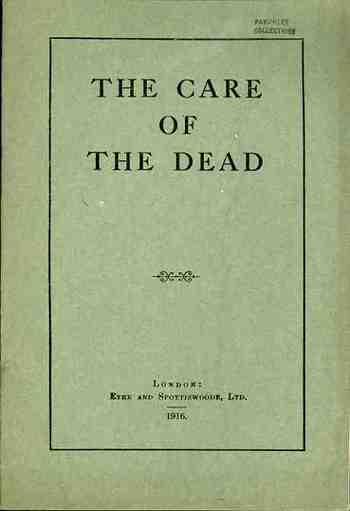
    Blogsept_2_dead478 The Care of the Dead, published by Eyre and Spottiswoode in London in 1916, is a quiet, spare pamphlet, on what was happening to the fallen British soldier in France and Belgium.  It is a big topic–physically the little paper-wrapper work seems barely strong enough to support the implications and heaviness of its title–and I’m sure the issue would’ve been the most important questions in the minds of the families of the hundreds of thousands of dead British soldiers*–the pamphlet really does seem to be feather-light under the solidity of its title. 
    Reading though this  work gave me an insight into the depth of what millions of war dead means–and an insight I think that I’ve never had before.  The anonymous author writes about touring the battlefields of France in 1915 and 1916, driving in an automobile, “the eye of the traveler along the roads is struck by many low crosses sticking out o the ground–in the fields, in cottage gardens, in corners of farm yards and orchards, even on roadside strips of grass.”

    Where the ground has changed hands a good deal in the course of a war, you may see, within a few hundred yards of each other, the gabled and eaved cross of the Germans, with “Hier ruht in Gott” and a name painted in white on a dark ground, the beaded wire wreath of the French, with its “Requiescat” or “Mort pour la France: and the plain-lined cross of the English, white or brown or just the unpainted wood, “In loving memory” of officers or men…”  Now I’m sure I read any number of accounts of the views of battlefields from commanders’ line and soldiers’ views and the like; but I don’t think I’ve had the perspective of an officer driving around a no-longer-a-contested-battlefield in a car and being struck by the appearance of the little white crosses, well, everywhere.  I have a very crisp imagined image in my head, now, with this 92-year-old war memory described from the driver’s seat of a car. 

    ·Posted by :

    ·in:

    —
  • Daily Dose of Dr. Odd: Chess Covers from Science Fiction Pulpworld

    JF Ptak Science Books  Quick Post

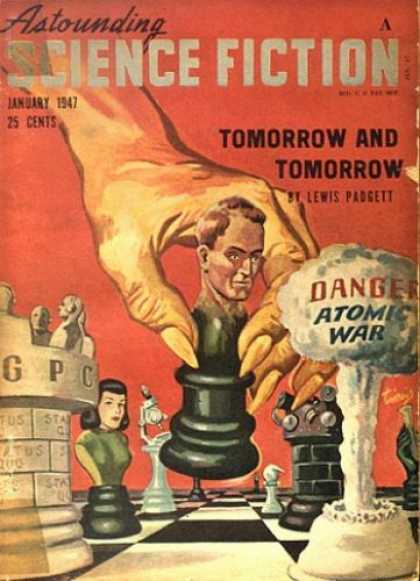
    I don’t often see pulp sci fi covers decorated with chess figures, but I did find these three, recently.  The first, “Tomorrow and Tomorrow” is interesting because of teh author.  Or “authors”, as Lewis Padgett is a pseudonym for a husband and wife writing team, Henry Kuttner and C.L. Moore.  And although there is a small sub-genre of married people.couples writing books together, few of them have taken a separate name for their efforts.  “Padgett” is one of them.  In any event, the chess pieces are unusual, and their appearance on the cover of a journal such as this makes this doubly-so. 
    Astounding Stories 194 - Chess - Atomic War - Tomorrow And Tomorrow - January 1947 - Danger

  • Daily Dose of Dr. Odd: Fabulous Spherical Spacecraft from Pulpworld

    JF Ptak Science Books   Quick Post

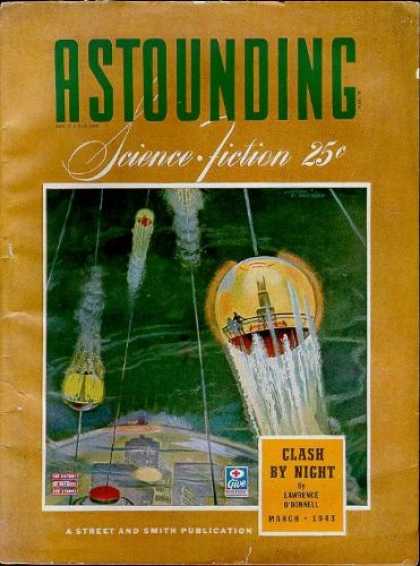
    Piecing my way through the great collection at Cover Browser, looking for science fiction pulp covers for images of Enormous-and-Montrously-Huge-Outer-Space-Things, I developed a very small collection of spherical spacecraft and/or “stuff”.  They’re quite lovely, I think. 

    [All of the images I used below I selected from the big and wonderful collection at Cover Browser, here.]

    Astounding Stories 148 - Science Fiction - March 1943 - Short Stories - Golden Age Science Fiction - Classic Science Fiction Short Stories

  • Magritte-Like Disorienting Geometry in Found-Art Urban Design, 1925

    JF Ptak Science Books  Quick Post

    Future street630 a

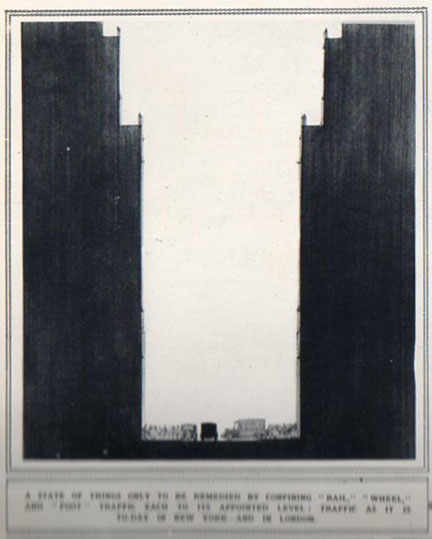
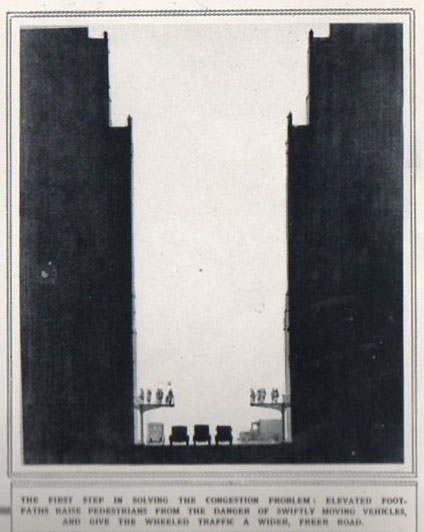
    These images “Traffic on Three Levels; Solving Street Congestion” from the Illustrated London News (15 August 1925) struck me as something much more–or much less?–than their appeal to urban design.  I think that it is very difficult to look at these images and not see them from the top, down. Even by the time you get to the fourth image at bottom right, the design still pulls attracts your eye to the top of the image and away from the traffic scene below.

    They seem to have that sense of abstract art, achieving a type of geometry and disorientation, both at the same time, pulling you into the work and de-arranging it at teh same time.  And that to me makes it highly artful, if unintentional.  They are sort of hallucinating–I know that is a bit of a stretch–but their confusion of the expected with this sort of misty, unknown atmosphere, has a sense of Rene Magritte to them had he worked his magic in geometrical blocks. 

    Future street630 b

  • Daily Dose of Dr. Odd: Arithmetic of 1935

    JF Ptak Science Books   Quick Post 

    Arithmetic of 1935 is an interesting book discussing the four prinipal operations of mathematics, though it is not quite Busby Berkeley’s Gold Diggers of 1935.  It is however a very neat and orderly and in some ways exhaustive treatment of its subject, and that it does share with the brilliant choreography of Mr Berkeley. 

    I’ve touched on Mr. Berkeley’s work a couple of other times on this blog:  Bio-Mathematics in Busby Berkeley Musicals (here)  Mr. Mole, the Stationary Busby Berkeley of Mass Crowd Installation Photographs, 1918 (here).

    Daily ose arithmetic of 1935647

  • An Interesting Concentric Graphic and the Number 12 (Twelve XII 2^3X3)

    JF Ptak Science Books   Post 1819

    Oh TIme, thou must untangle this, not I; it is too hard a knot for me t’untie! — Twelfth Night. 2.2.40-41

    Graphic bouvelles
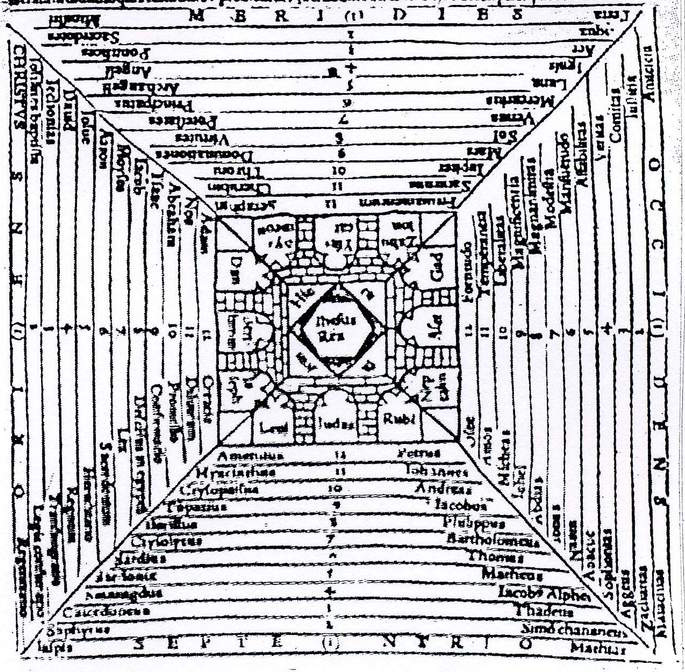
    I really should have included this in yesterday’s post about a terrific and creative image of concentric circles used early-on to display concepts of terrestrial distance and importance (A Table of the Cheifest Cities and Towns in England, printed in London in 1600,  ), as they both use this organizing concept in a bit of an uncommon way.  This image appears in  Charles de Bouelles’ beautifully titled Que hoc volumine continuentur; Liber de intellectu; Liber de sensu; Liber de Nichilo; Ars oppositorum; Liber de generatione; Liber de sapiente; Liber de duodecim numeris; Epistole complures, and printed in 1510 in Paris (from which also appears another interesting image on the “evolution” of the rock from being to thinking to being again, here), and maps the importance of the city of Jerusalem, but more importantly places its significance in the histories of the number twelve, centering on the city itself and the twelve tribes of Iraeli, and then branching out in more creative listable ways.

    Besides the twelve tribes, there are the twelve constellations of the ecliptic, Apostles, knights of the Round Table, trials of Hercules, Olympians, sons of Odin, books of Paradise Lost and the Aeneid, hues of the color wheel, inches, months, dozen, virtues, Olympians, half unit of the day, and on and on. 

    There are twelves enough to carry out just about any iconographic need, and that limited to just occidental resources.

    Source:  Les Pierres du Songe, Etudes sur les graffiti medievans, here.

  • Selections of the Work of Renaissance Artist, Georg Pencz

    JF Ptak Science Books   Quick Post

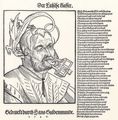
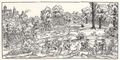
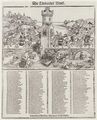
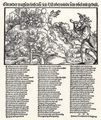
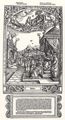
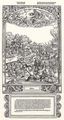
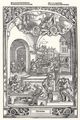
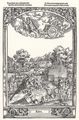
    Some of the work of Georg Pencz (who I wrote about last week, regarding the representations of the zodiac) from the website Zeno.org.

    Each image is expandable.
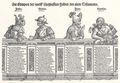
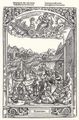
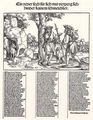
    Pencz, Georg: Ehrenpforte der 12 sieghaften Helden des Alten Testaments«, 1. Blatt
    Ehrenpforte der 12 sieghaften Helden des Alten …
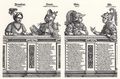
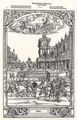
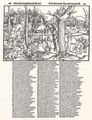
    Pencz, Georg: Ehrenpforte der 12 sieghaften Helden des Alten Testaments, 2. Blatt
    Ehrenpforte der 12 sieghaften Helden des Alten Testaments, …
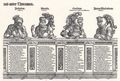
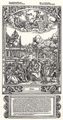
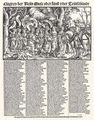
    Pencz, Georg: Ehrenpforte der 12 sieghaften Helden des Alten Testaments, 3. Blatt
    Ehrenpforte der 12 sieghaften Helden des Alten Testaments, …
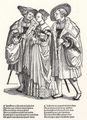
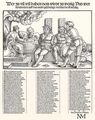
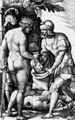
    Pencz, Georg: Braut zwischen den beiden Brautführern
    Braut zwischen den beiden Brautführern
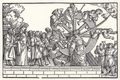
    Pencz, Georg: Das Glücksrad
    Das Glücksrad
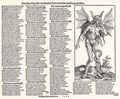
    Pencz, Georg: Der Neid mit seinen 12 Eigenschaften
    Der Neid mit seinen 12 Eigenschaften
    Pencz, Georg: Der Neidische und Geizige
    Der Neidische und Geizige
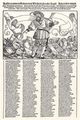
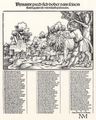
    Pencz, Georg: Der Niemand
    Der Niemand
    Pencz, Georg: Der Verleumder
    Der Verleumder
    Pencz, Georg: Diana und Actaeon
    Diana und Actaeon
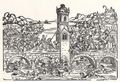
    Pencz, Georg: Die Ehebrecherbrücke Königs Artus
    Die Ehebrecherbrücke Königs Artus
    Pencz, Georg: Die Hasen und die Frösche
    Die Hasen und die Frösche
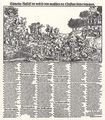
    Pencz, Georg: Die sieben Hindernisse des Christussuchers
    Die sieben Hindernisse des Christussuchers
    Pencz, Georg: Ehebrecherbrücke
    Ehebrecherbrücke
    Pencz, Georg: Esel in der Löwenhaut
    Esel in der Löwenhaut
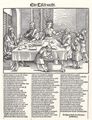
    Pencz, Georg: Familie bei Tische
    Familie bei Tische
    Pencz, Georg: Folge der »Planetenbilder«, Jupiter
    Folge der »Planetenbilder«, Jupiter
    Pencz, Georg: Folge der »Planetenbilder«, Mars
    Folge der »Planetenbilder«, Mars
    Pencz, Georg: Folge der »Planetenbilder«, Merkur
    Folge der »Planetenbilder«, Merkur
    Pencz, Georg: Folge der »Planetenbilder«, Mond
    Folge der »Planetenbilder«, Mond
    Pencz, Georg: Folge der »Planetenbilder«, Saturn
    Folge der »Planetenbilder«, Saturn
    Pencz, Georg: Folge der »Planetenbilder«, Sonne
    Folge der »Planetenbilder«, Sonne
    Pencz, Georg: Folge der »Planetenbilder«, Venus
    Folge der »Planetenbilder«, Venus
    Pencz, Georg: Gerücht
    Gerücht
    Pencz, Georg: Geschichte vom Hirten und dem Wolf
    Geschichte vom Hirten und dem Wolf
    Pencz, Georg: Hasen fangen die Jäger
    Hasen fangen die Jäger
    Pencz, Georg: Klage der Musen
    Klage der Musen
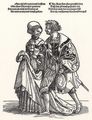
    Pencz, Georg: Paar aus dem Hochzeitszug
    Paar aus dem Hochzeitszug
    Pencz, Georg: Thomyris mit dem Kopf des Cyrus
    Thomyris mit dem Kopf des Cyrus
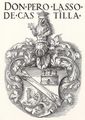
    Pencz, Georg: Wappen des Don Pero Lasso
    Wappen des Don Pero Lasso
    Pencz, Georg: Zwei Zuschauerinnen des Brautzuges
    Zwei Zuschauerinnen des Brautzuges
    Pencz, Georg: Zweierlei Predigten

    ·Posted by :

    ·in:

    —
  • Annalen der Physik (1799–Present): Useful, Searchable, Full-Text Sites.

    JF Ptak Science Books   Quick Post

    I just  posted this as a “page” (in the left-hand column) and thought to distribute the move by carrying it as a quick post on the daily side of this blog.  It seems to me that between these four links that there is some very good, easily-governable access now to the Great and Fabulous Annalen der Physik, one of the great physics journals in the history of science.  There are some full-text sites available with good search engines, as well as a link to a site that smooths out the occasionally cumbersome way in which Annalen volumes have been referenced. 
    I can safely say–after having staggered my way through hundreds of volumes of the Annalen–that these links represent to me the easiest ways thus far of navigating the massive journal. It makes using the Annalen a pleasure far more than a challenge, which it always seemed to be to me, even working at it with the (scarce!) index volumes. 

    http://de.wikisource.org/wiki/Annalen_der_Physik//at Wikisource, via ANNALEN DER PHYSIK

    http://upload.wikimedia.org/wikipedia/de/4/4f/Annalen_der_physik_Titelblatt_1900_Drude_Band_306.gif

    Annalen der Physik Annalen der Physik (Wiley-VCH) [Journal Page]
    Annalen der Physik Annalen der Physik [Wikisource Page]This offers a key for corresponding overall volume numbers with series/folge volume numbers. AND has a full text hyperlink set.
    Annalen der Physik Annalen der Physik [Gallica Page]
    Annalen der Physik Annalen der Physik [Welt der Physik Page]

    And just for the heck of it, Einstein in the Annalen, available on this blog here.

    For my history of physics readers who work with the Annalen der Physik I reproduce a useful little key to the two-tier numbering system for the Annalen‘s first and second series.  The tables come from Sachregister zu den Annalen der Physik und Chemie Poggendorr’sche Folge… published in Leipzig in 1888.  Up to this point the physics journal had been published since 1799 in two series for a total of 160 volumes (plus a Jubelband and eight volumes of Erganzungsbaende); some people reference the appearance of articles via the total volume number, while others (myself included) reference the series (as  series “I volume whatever” or series “II, volume _____”.  There is a handy table at the very end of the Sachregister that correlates the two “systems”. 

    ·Posted by :

    ·in:

  • Inventing Nothing: a Lovely Little Cipher, by Lewis Carroll

    JF Ptak Science Books      Post 1807     Part of the series   The History of Blank, Empty and Missing Things

    Carroll cipher536
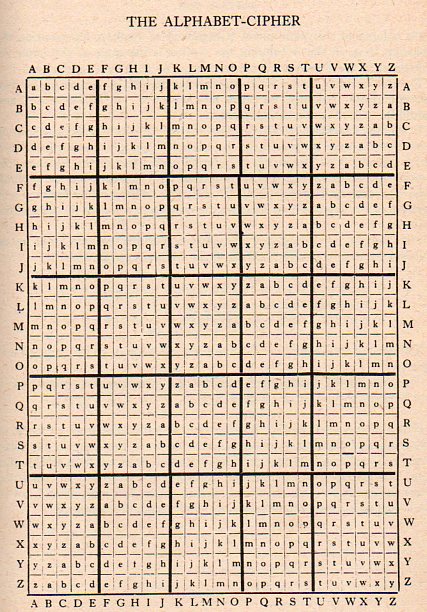
    Lewis Carroll created a lovely, simple cipher in the midst of his Alice and Snark and Logic and Sylvie publications.  It really is just a simple bit of polyalphabetic substitution, bu tit gets the job done.  (Many others have walked this royal road:  Leon Battista Alberti, A Treatise on Ciphers, [De componendis cyfris];  Giovan Battista Belaso, La cifra del Sig. Giovan Battista Bel[l]aso, gentil’huomo bresciano, nuovamente da lui medesimo ridotta à grandissima brevità et perfettione, Venetia 1553 (and also his Novi et singolari modi di cifrare de l’eccellente dottore di legge Messer Giouan Battista Bellaso nobile bresciano, Lodovico Britannico, Brescia 1555); Giombatista Della Porta, De furtivis literarum notis vulgo de ziferis, G. M. Scoto, Neapoli 1563; Galileo Galilei, Intorno a due nuove scienze, Opere, . Vol. VIII, Firenze; Blaise de Vgenere, Traicté des chiffres ou secrètes manières d’escrire, Abel l’Angelier, Paris, 1586; and so on…its a very wide literature, even pre-18th century).  Louis Carroll. Louis “Cipher” Carroll.  Comes sort of goofily close to “Louis Cipher”. Lucifer. Not the case, of course unless you were trying to figure out one of his tricky puzzles.

    Perhaps it is the cipher’s presentation and design and simplicity, its elegance, that I like so much.  It reminds me in some ways of the Henry Holiday masterpiece of nothignness created for Carroll’s Hunting of the Snark–and that of course would be the Bellman’s map, a map of nothing, a map showing nothing at all to the sailors who must follow it and who were all happy that the map had nothing to obstruct their vision of possibility and blank expectation. (I wrote about that in The Most Beautiful Map in the World, here). It is interesting to note that none of the illustrators who followed Holiday chose to illustrate the nothing map with such nothingness as in Carroll–there would be hands on it, or the map would be oblique, or not the central image of the illustration.  Holiday’s map was just that–straightforward, simple, strong).

    I’ve decided to make this a part of the History of Blank, Empty and Missing Things series simply because everything is missing unless you have the missing key–here you have all the parts of the puzzle, and then some, everything that you need to solve it, save for the integral part of ordering.

    From Carrolls’s text:

    Explanation

    Each column of this table forms a dictionary of symbols representing the alphabet: thus, in the A column, the symbol is the same as the letter represented; in the B column, A is represented by B, B by C, and so on.

    To use the table, some word or sentence should be agreed on by two correspondents. This may be called the ‘key-word’, or ‘key-sentence’, and should be carried in the memory only.

    In sending a message, write the key-word over it, letter for letter, repeating it as often as may be necessary: the letters of the key-word will indicate which column is to be used in translating each letter of the message, the symbols for which should be written underneath: then copy out the symbols only, and destroy the first paper. It will now be impossible for any one, ignorant of the key-word, to decipher the message, even with the help of the table.

    For example, let the key-word be vigilance, and the message ‘meet me on Tuesday evening at seven’, the first paper will read as follows—

    v i g i l a n c e v i g i l a n c e v i g i l a n c e v i
    m e e t m e o n t u e s d a y e v e n i n g a t s e v e n
    h m k b x e b p x p m y l l y r x i i q t o l t f g z z v
    

    The second will contain only ‘h m k b x e b p x p m y l l y r x i i q t o l t f g z z v’.

    The receiver of the message can, by the same process, retranslate it into English.

    If this table is lost, it can easily be written out from memory, by observing that the first symbol in each column is the same as the letter naming the column, and that they are continued downwards in alphabetical order. It would only be necessary to write out the particular columns required by the key-word, but such a paper would afford an adversary the means for discovering the key-word.

Recent Posts

Archives

Categories