A Daily History of Holes, Dots, Lines, Science, History, Math, Physics, Art, the Unintentional Absurd, Architecture, Maps, Data Visualization, Blank and Missing Things, and so on. |1.6 million words, 7500 images, 4.9 million hits| Press & appearances in The Times, Le Figaro, Mensa, The Economist, The Guardian, Discovery News, Slate, Le Monde, Sci American Blogs, Le Pont, and many other places… 5000+ total posts since 2008.

  • Wholly Mondo Bizarro: Outsider Thinking, 1888

    JF Ptak Science Books   Post 1844

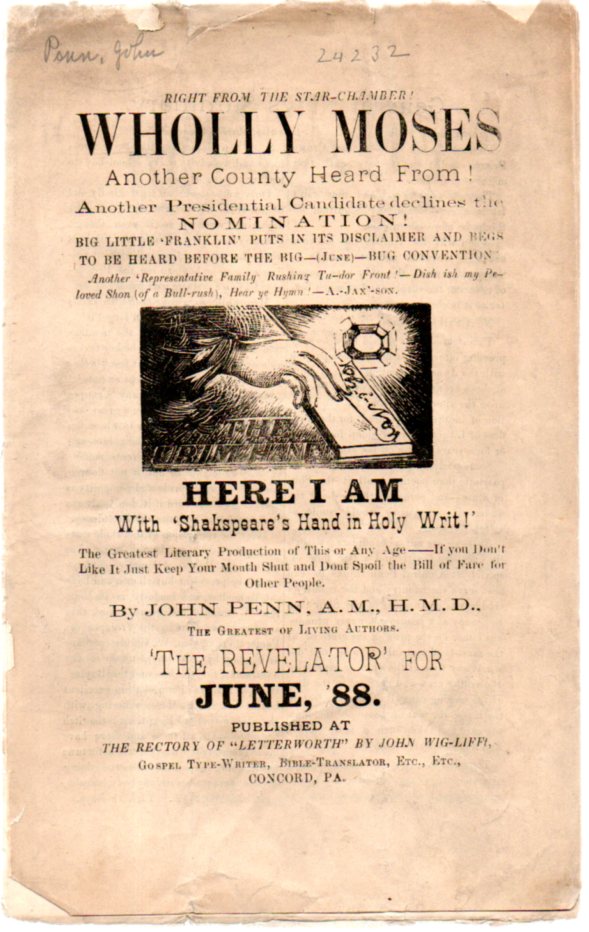
    It is difficult to lose your reader right in the very title of your text. But I do think that John Penn (“the Greatest of Living Authors” accomplishes this in his  

    Right from the Star-Chamber! Wholly Moses Another Coutnry Heard from Another Presidential Candidate declines the Nomination! Big Little Franklin Puts in its Disclaimer and Begs to be Heard Before the Big–(June)–Bug Convention... And on and on. 
    Bizarre602
    I can find nothing for Mr. Penn, who claims that this is Volume 3 Number 2 of a magazine called The Revelator (June 1888), a magazine that doesn’t seem to exist in the holdings of the massive WorldCat/OCLC.  The message of the slim and fragile pamphlet is–in the most kind appreciation possible–unclear.   There seems to be a lot of political something going on, though it is a tangled webby road. Much of the center stage seems occupied by the election of 1888, when President Cleveland was renominated in a peaceful convention, but then bested by Republican challenger Ben Harrison in the electoral college in one of those elections where most stuff seemed to be going relatively fine in the United States.  (Cleveland would come back to defeat Harrison in 1892.)  So references to something like “Big Little Franklin” might actually refer to Benjamin Franklin Jones (1826-1903) who was the chair of the RNC from 1884-188 and the force behind the failed James Blaine nomination in ’88.  Some references are obscure but solid, and some are just obscure and unsolid, and others turn the deep corner of obscure and fly into the arms of mondo bizarro.

    Perhaps it was all just theatre.  And perhaps it was the work of someone who had some money and insisted of giving a platform to his black-and-white kaleidoscope, and had the thing printed (if not published) there in Concord, Pennsylvania, in 1888 (also known here as “J.P. 6600”).

    Here’s the last page–the pamphlet is too delicate to open and scan any of the interior–perhaps this is enough:
  • The First Sightings of Great Things: the Telephone, March, 1876

    JF Ptak Science Books   Post 1845

    Bell patent close
    Besides it being the Centennial year, 1876 saw a number of major games in the history of human thinking. Sometimes the announcements or earliest public appearances of these breakthroughs didn’t get all that much attention.  As one of the major means of transferring technical and applied science info to teh general public, it is interesting to see how Scientific American reacted to such innovations.  For the thick, heavy volume for 1876, amid

    Bell patent
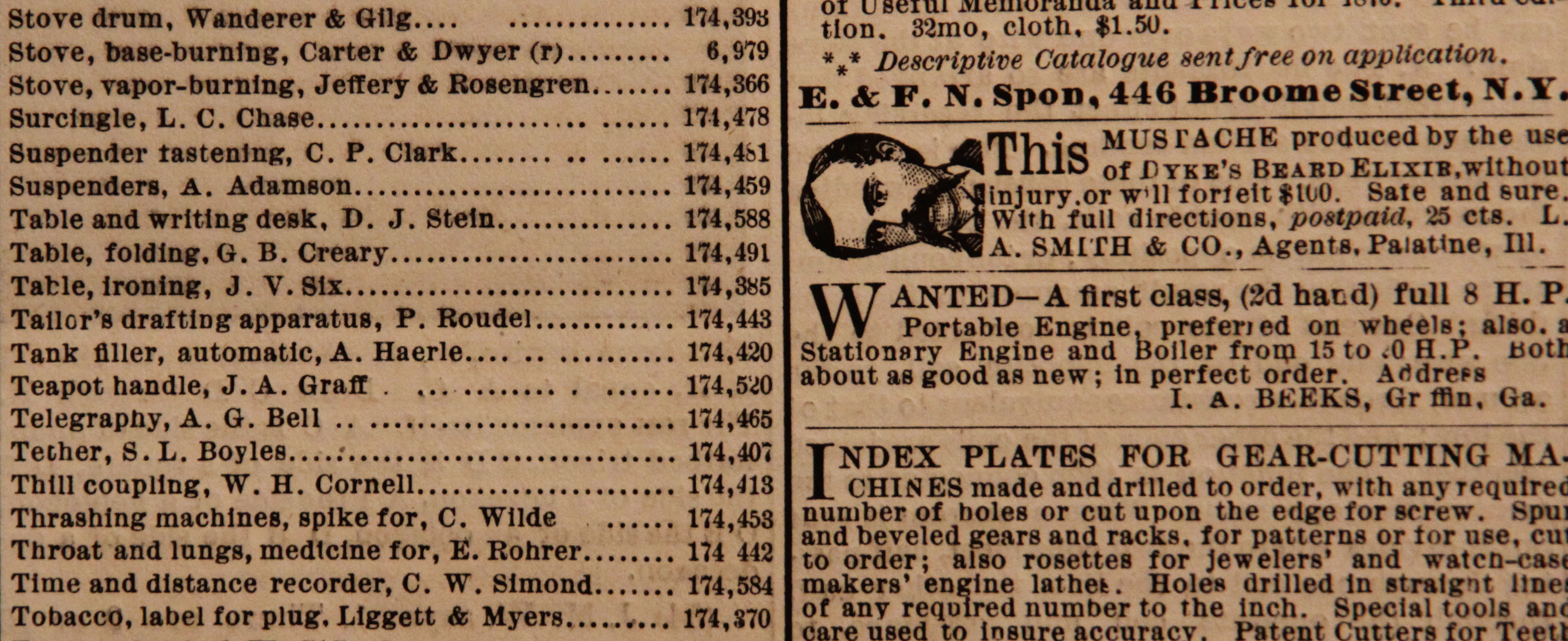
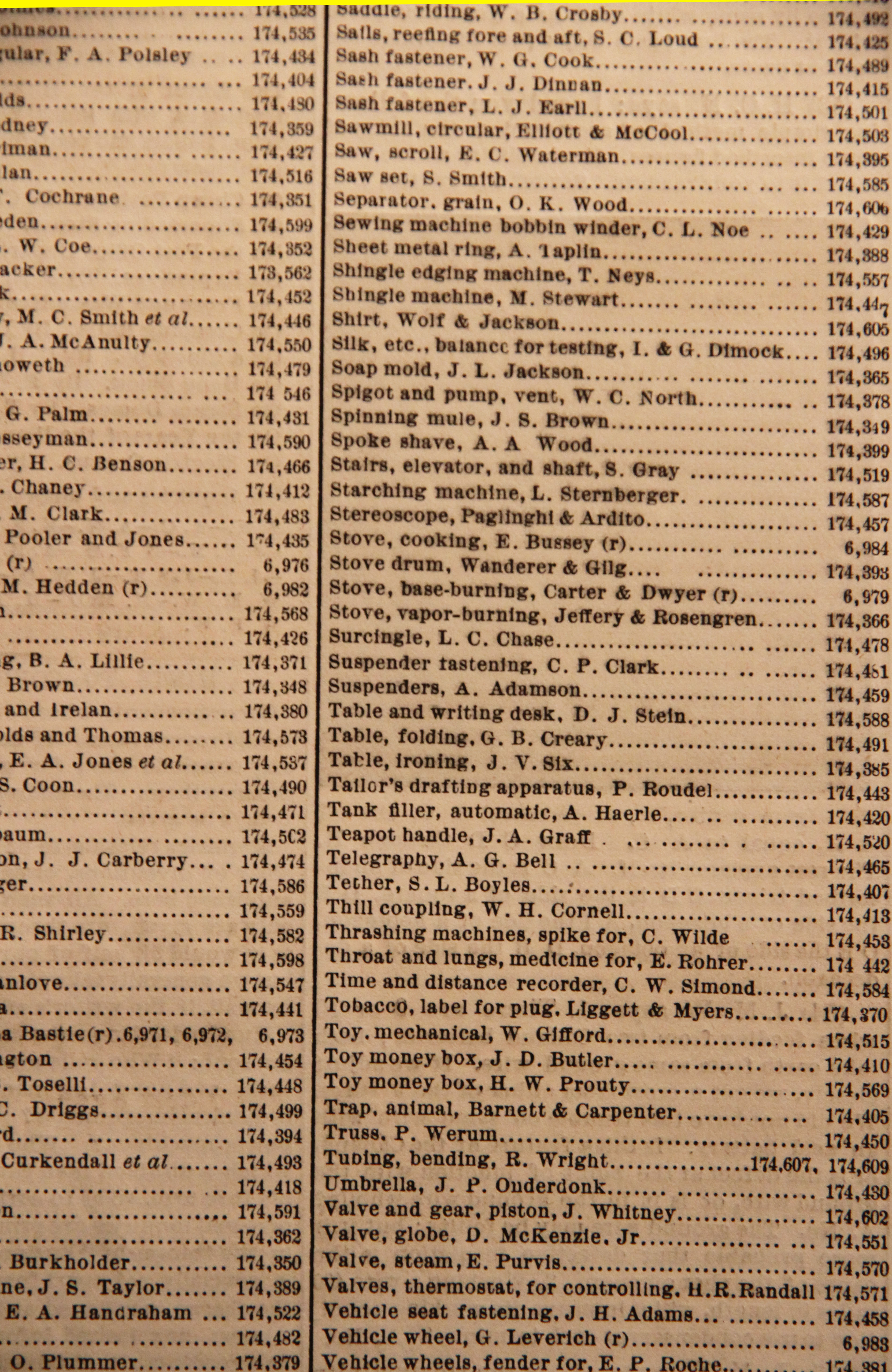
    patent announcements and articles on telegraphic fire alarms, electro-harmonic multiplex telegraphs, recording telegraphs, electro-magnetic telegraph railroad car signals, signal box telegraphs, underground telegraphs, telegraph keys and armature, acoustic telegraphs and the l;ike (though there weren’t that many reported, not really, just on the order of dozens), we find one of the most important of them all, patent # 174,465, by Alexander Graham Bell, appearing 8 April 1876.  It would be a rude resumption of being here in the future of this event to call the coverage short-sighted

     In an earlier article in the 4 March 1876 issue of SA, there appeared “The Invention of the Telephone”, by P.H. Vander Weyde, in which there is yet any mention of Mr. Bell.  There is an illustration of one of his precursors in the field, the Reuss telephone, with ample description. (This was actually Philipp Reiss, and his telephone really wouldn’t work to transmit the human voice, though did so work for music to some degree.)  Bell’s patent  would be at the Patent Office in March, and would appear as a one-line notice (among a hundred others), the patent stating it was “the method of, and apparatus for, transmitting vocal or other sounds telegraphically … by causing electrical undulations, similar in form to the vibrations of the air accompanying the said vocal or other sound”.  (The first image above is a detail; the second image a longer version, which is really only less than half of what the real-life version looks like in the tall listing.)

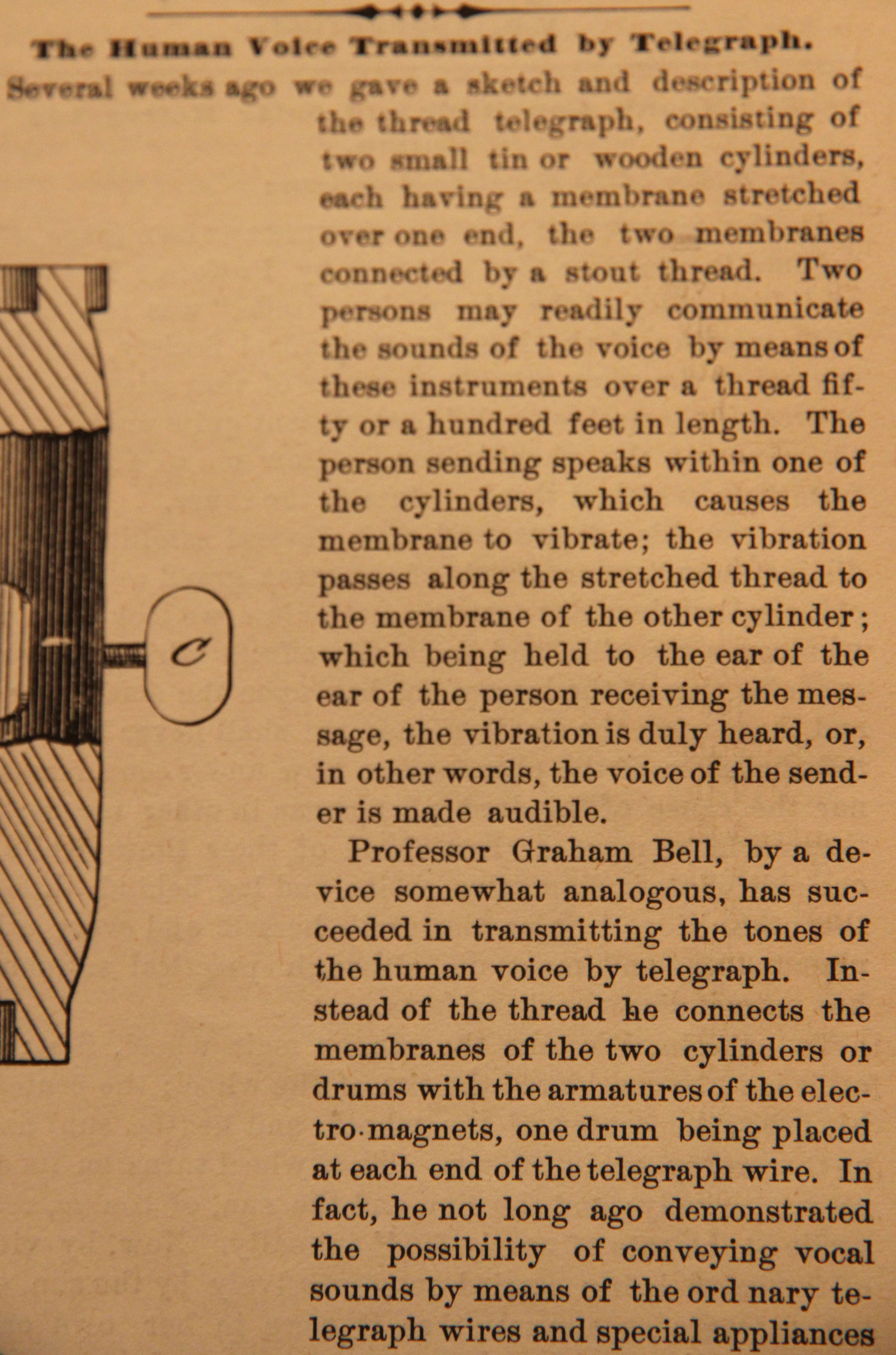
    Weeks later, Elisha Gray‘s (on 13 May) telegraphic telephone patent (175071) appears in the Scientific American, and later, on 9 September, on page 163, there is the article “The Human Voice Transmitted by Telegraph”, on the successful transmission by Graham Bell. 

    Bell human voice

    Admittedly there were a number of developments in the production of the speaking telephone at this time, though in general there seems to have been no great attention paid them in the pages of the Scientific American than pipe cutting machine improvements or improved gravel separators.  Obviously the great impact of the invention was yet to be appreciated, even in any sort of fictional way.

    The original volume of these reports is available for purchase via our blog bookstore, here.

    Some of the earliest speaking telegraph patent illsutrations follow:

    ·Posted by :

    ·in:

    —
  • H.L. Mencken and the Anarchist, 1933

    JF Ptak Science Books   Quick Post

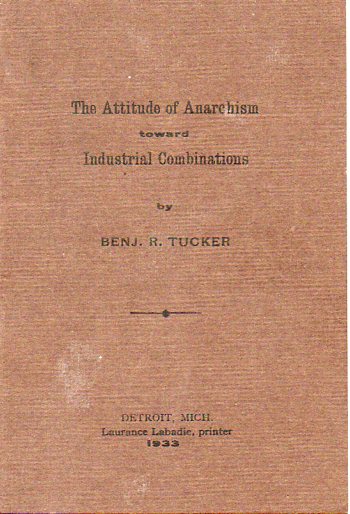
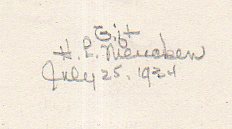
    Tucker mencken605The long-spirit anarchist (and “Unterrified Jeffersonian”) Benjamin R. Tucker (1854-1939) wrote  “The Attitude of Anarchism toward Industrial Combination” in 1926, but we see it here printed in Detroit (by Lawrence Labadie) in 1933.  It is interesting to see on the inside of this tiny pamphlet that the anarchist Tucker’s work was sent to H.L. Mencken, as a gift from the printer.  It wouldn’t stay long in Mr. Mencken’s possession, as he sent it (along with a number of other works by Tucker that I can’t lay my hands on at the moment) to the Library of Congress in July 1934 (and coming into my possession as part of a purchase of “the Pamphlet Collection” 65 years later.).  I’m  not so sure about what Mr. Mencken would have thought of most of it, only that he didn’t keep it for long, I think, despite what might seem to be his “Tory Anarchism” and general oppositionist stances. left and right, whatever they might have meant at the time.

    The full text of the pamphlet is found here, and the original found for sale at our blog bookstore, here.

    Tucker mencken607

    ·Posted by :

    ·in:

  • Created and Estranged Alphabets of Visionary, Creative and Boring Things

     JF Ptak Science Books  Quick Post

     So.  As it turns out there are at least 23 alphabets (of sorts) created or estranged on this blog (compared to the six that show up in my archive search under “alphabet”).   A few more and we might have an alphabetical post of alphabet posts.  Here they are, the ABCorama:

    An Alphabet of Australian Convict Mugshots, 1900-1920, here. 

    Alphabet of Retro-Vision Women, ca, 1940’s/1950’s, here.


    Grrlz--mopsy

    An Alphabet of Anatomical Emotions and Feelings–Installment 1, here. 

    Contempt

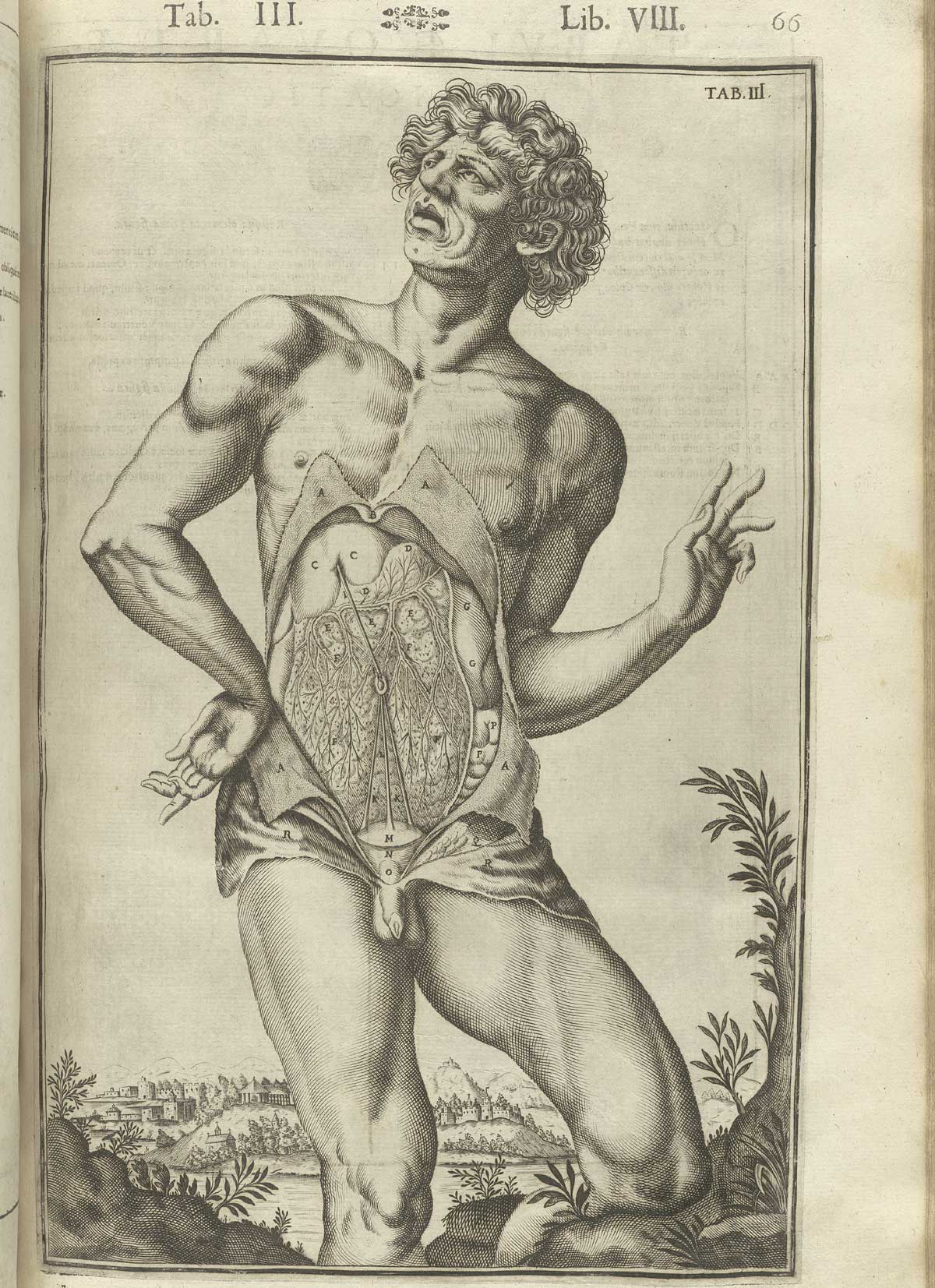
    Casseri_p66  dandy

    ·Posted by :

    ·in:

    —
  • The Family Tree of Computer Development, Part II

    JF Ptak Science Books  Quick Post

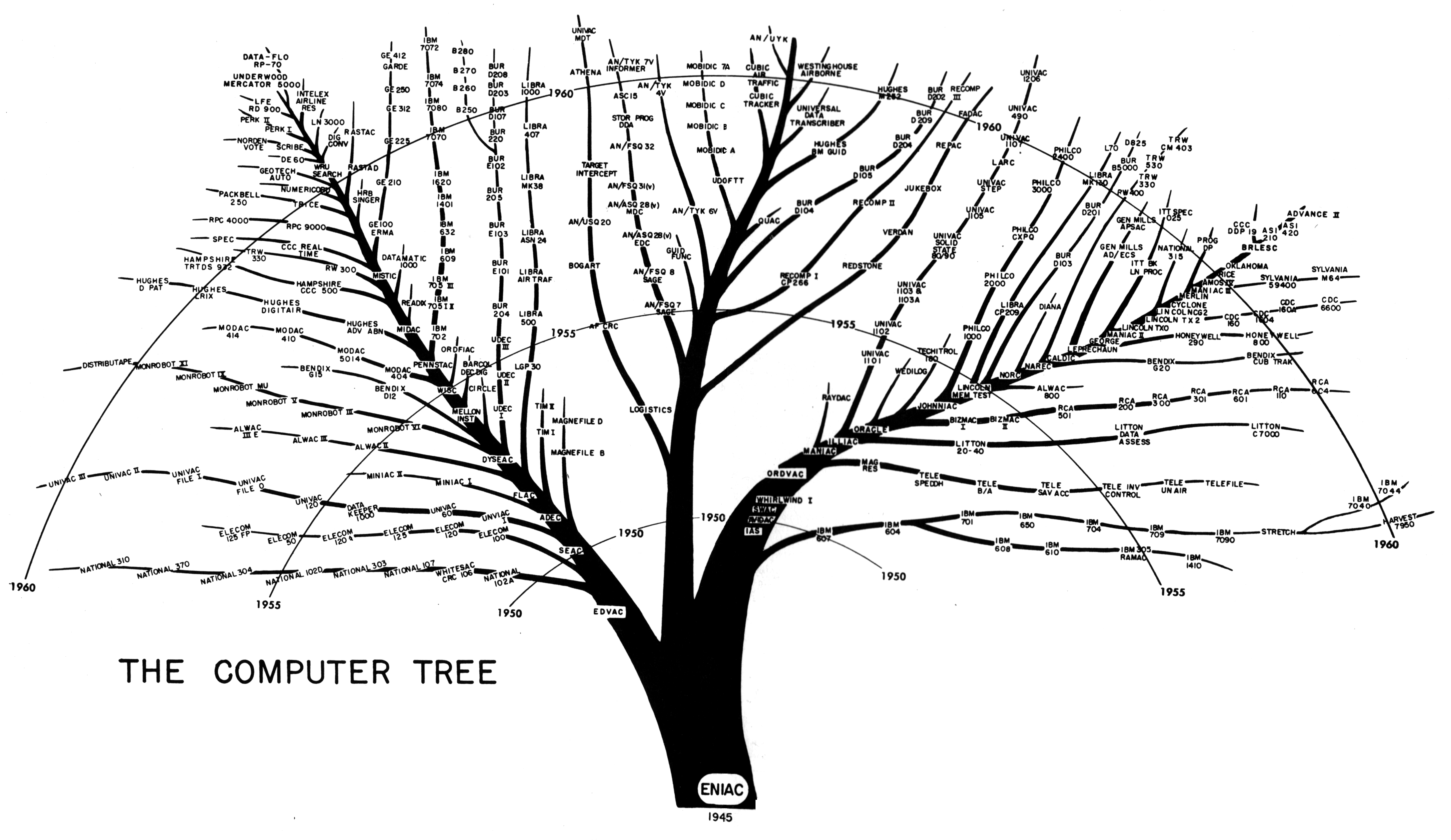
    I’ve found a supplement to an earlier computer tree that I published on this blog (here) as a part of a chronological list of (nearly every) computer manufactured from 1943 to 1990.  The new one is interesting and has its differences from its predecessor, and divides its generations of computers in terms of logic technology. It is found in a 1960 NSF pamphlet called “The Family Tree of Computer Design”, a Brief Summary of Computer Development, and I found its reference in a good book by I.B. Cohen, Howard Aiken, Portrait of a Computer Pioneer, published by MIT and available here.

    [Image source: Microsoft.]

    The earlier “Computer Tree”, from Electronic Computers Within the Ordnance Corps , by Karl Kempf. “U.S. Army Diagram”, the source of this information coming from the U.S. Army, here.

    This image is expandable.

    Computer tree

    More detailed images of the computer tree are found below:

  • The Beautiful Inscrutable: Khunrath’s Fabulous Alchemical Exploratorium, ca. 1600

    JF Ptak Science Books  Post 1846   Part of the Series on the Artistic Display of Information

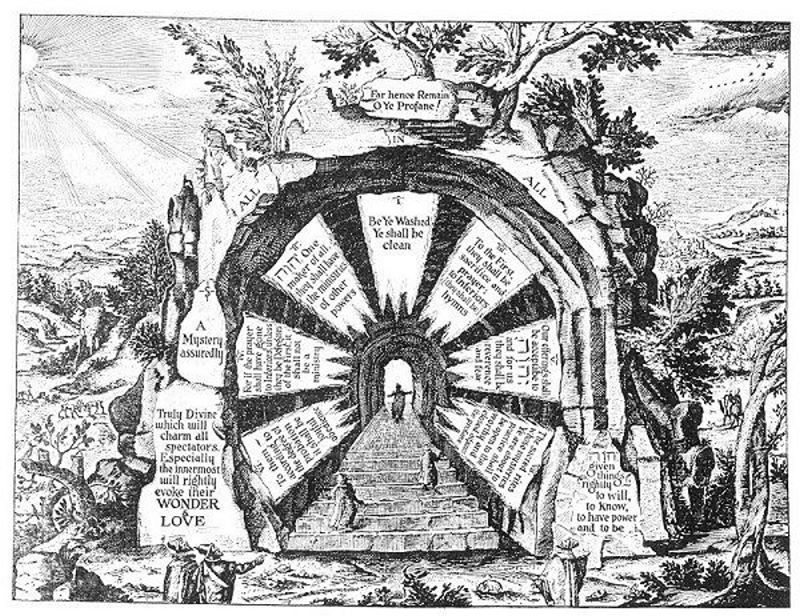
    I followed a link to the lovely website Res Obscura and found this great image from the work of Heinrich Khunrath, Ampitheatrum Sapientiae Aeternae (Hamburg, 1595, or in English  “The Amphitheater of Eternal Knowledge”).  Khunrath (1560-1605) packed about as much perplexing, confusing, inscrutable and beautiful displays of not-verifiable alternative information into his very full 45 years as just about anyone. He was a  Paracelsian, John Dee-ophile, hermeticist/alchemist seeker of “eternal wisdom” via medico-magical-interpretative Christianity, a deeply physico-chemical-spiritual experimentorium, and the meaning of his work (outside of where it fits int he history of science) really pretty much escapes me–except that the illustrations are beautiful. Res Obscura has a lot to say about the interpretation of the images, as do the other links below. I have really nothing to add, as I really dont’ know enough to say what is being represented in these very complex displays. 

    One thing that does seem obvious to me: the meanings and interpretation of this work is extremely fluid.

    [Image is greatly clickable]

    http://1.bp.blogspot.com/-R1UEoMw5nTM/Tx1DNSxW4GI/AAAAAAAAA44/gbeH-3zD6Js/s1600/hermtxt1750.jpg

    [Source: http://resobscura.blogspot.com/]

    Transcription of the text surrounding the Hermaphodite (that someone refers to as the Hermaphrospehere, is available here from the Special Collections Department at the University of Wisconsin.

    And other very complex symbolist allegorical somethings:
    ..

    which is an English version of the Latin of Amhitheatrum Sapientae Aeternae (from 1606) and available here along with other in-English goodness.

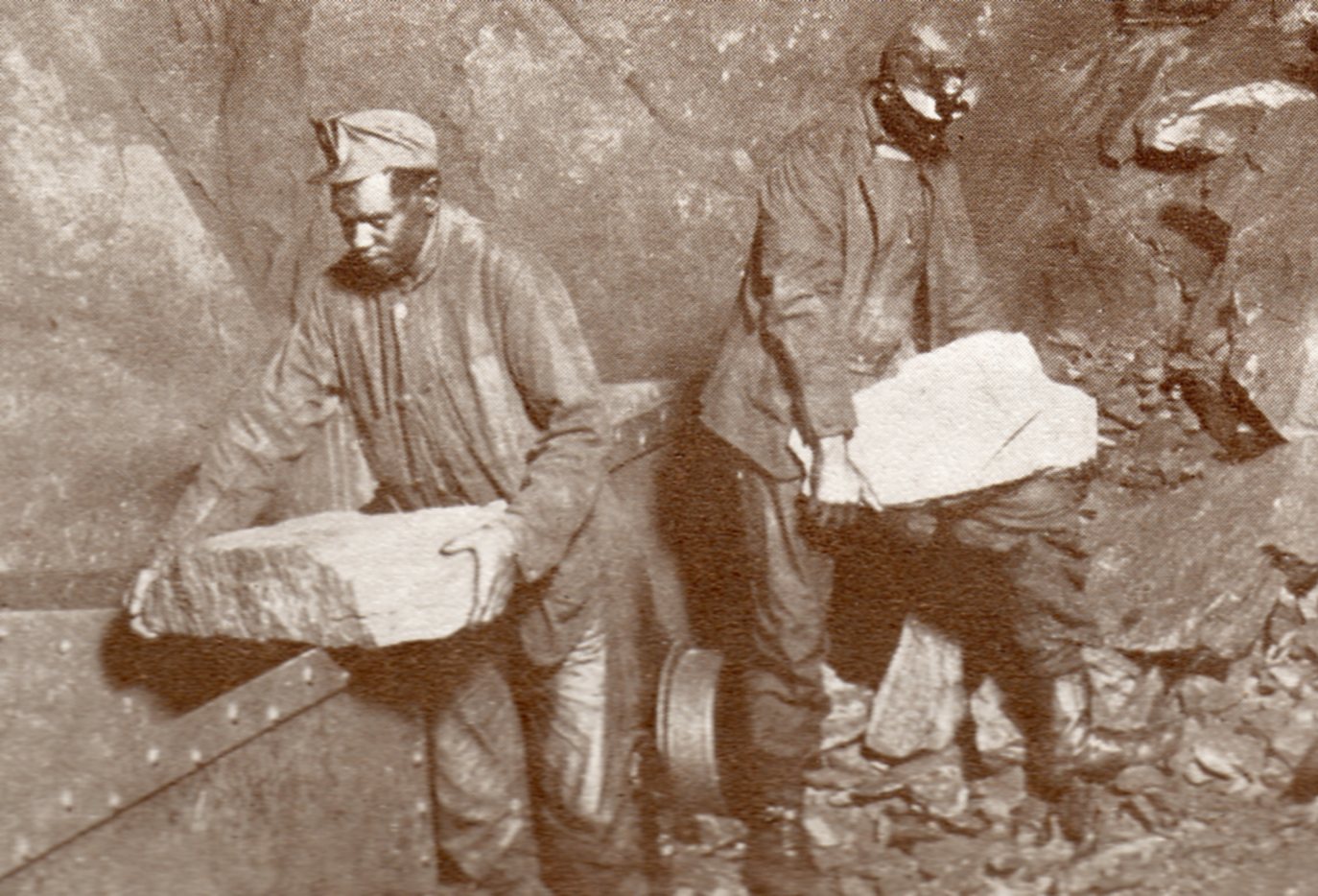
  • Black Iron Mine Workers, Birmingham, Alabama, 1918

    JF Ptak Science Books 

    I found this item today out in thye warehouse, mixed in for some reason with Hitler Jugend pamphlets and many issues of the 19th century Archiv fuer Anthropologie, just completely out of place.  It is an accordion fold multiple panel oversize postcard, I suppose, an advertisement for a meeting of the Rotary Club of Birmingham, Alabama, and probably for 1917/1918. 

    Lack birmingham'616

    Which is a detail of the image (below):

    Unfolded the obect is 25 inches long and about 9 inches wide, divided by five panels, seven of which have photographic images, one is for the contact information, and one for the addressing and mailing part.  It all folds nicely into a somewhat-larger-than-pocket-size object, printed on pretty thick, very thick stock.  (The original is available at our blog bookstore, here.)

    ·Posted by :

    ·in:

  • 1937 Anniversary of the Black Settlement and Town of Mound Bayou, Mississippi, 1937

    Mound bayou619JF Ptak Science Books  Quick Post

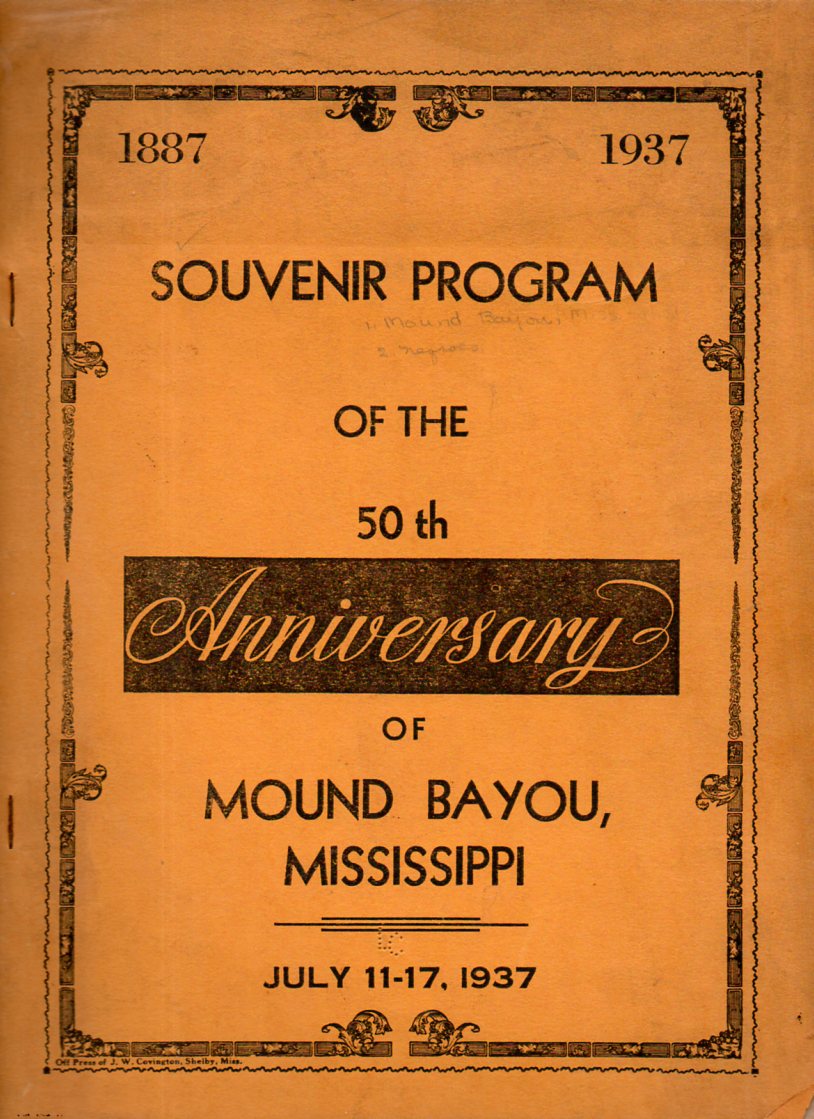
    There is something terribly American, full of hope, and trust, and celebration in this anniversary celebration pamphlet for the city of Mound Bayou, Mississippi. (I talked to someone in town administration this morning and the “Mound Bayou” is pronounced as one, quick, word: “Moundbayou”, with equal pronunciation emphasis.)  The Souvenir Program for the 50th anniversary of the establishment of the town (July 11-17, 1937) is filled with town history, and advertisements, and photographs. 

    Isaiah T. Montgomery was one of the founders of Mound Bayou, clearing out the bottomlands in the wilderness of northwest Mississippi, the town populated by Freedmen.  But here at the time of the anniversary, in 1937, with the failure of cotton prices and the Depression being at its height or depth, the majority of the people living in Mound Bayou were sharecroppers, with most property lost.

    Mound bayou617
    But that didn’t matter too much to the people of Mound Bayou.  As is stated on page 47 of the pamphlet:

    “The real significance of Mound Bayou…cannot be measured by the number of acres we own, neither by the size and number of businesses we operate, the strength of our financial institutions, nor by the eminence of or native sons and daughters. But the true significance of Mound Bayou lies in the fact that we are able to demonstrate to the world that the Negro can and does live as a law abiding citizen under the authority of the “bone of his bones and flesh of his flesh”.  The reading continues:  “We have no jail because we don’t need one. Int he entire community dwell 8,000 Negroes and we have not had a capital crime in thirteen years.  Petty crimes are infrequent.”

    The original document is available at our blog bookstore, here.


    ·Posted by :

    ·in:

  • On Seeing the Future in Waves, 1876

    JF Ptak Science Books  Post 1847

    I wrote a few days ago on one great event of 1876–the invention of the Graham Bell telephone, the successful, most appropriate, best working telephone–mentioning that there were others great achievements in this year as well..  The four stroke engine (Nikolaus von Otto, the application of thermodynamics as applied to chemical change (J. Willard Gibb s, one of the very few portraits of whom would later hang on Einstein;s Princeton walls), Robert Koch’s bacterial cultivation, Eugen Goldstein’s work on Pluecker’s (cathode) rays, all came into being in this year.  But there was another remarkable development in that year that also contained a pretty clear vision of the future, of the shape of things to come.

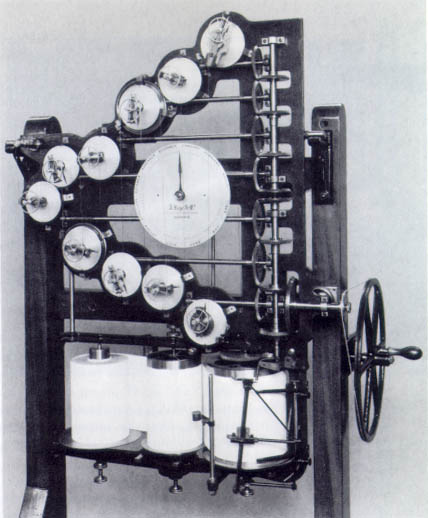
    That vision belonged to Lord Kelvin,  whose work across many different fields, and at great and expanded levels, was extraordinary; but it was in his tide predictor that the future materialized.. He was one a few people who could really wear the future-specs really well, right alongside Strickland, and Babbage, and Bush, and Turing and von Neumann, a true visionary whose vision awaited the appropriate technology to machine it.

    Thomson was attracted to many things, not the least of which were gadgets, like slide rules, to which he brought his profound capacities. He saw that these arithmetical tools were analog computers, and that bound together, they represented much more than just themselves, the seeds of far more powerful calculating engines. His great breakthrough was devising a tidal predictor, something that he devised in 1873, and wrote about in a seminal paper in 1876, describing what is basically the world’s first analog computer.

    Baron Kelvin's Tide Predictor (1876-1878)

    “1876-1878, Baron [ Lord ] Kelvin builds his harmonic analyzer and tide predictor machines. The harmonic analyzer broke down complex harmonic, or repeating, waves into the simpler waves that made them up. The tide predictor machine could calculate the time and height of the ebb and flood tides for any day of the year.“–York University, here.

    See Thomson’s excellent lecture given at the 25 August 1882 Southampton Meeting of the British Association for the Advancement of Science, here.

  • The Very Seat of Solitary Utopian Anarchy–a Radical Approach from Scranton, 1878

    JF Ptak Science Books     Post 1848

    “In 1873, when Morse advocated an end to all political rule, Alcott commented about Morse in his journal.  ‘Once, I might have accepted fully his doctrine of Individual Sovereignty, ignoring all interference from institutions conventions and creeds of all kinds, as during the Fruitlands and non-taxpaying periods of my life.  It was putting this logic to its ultimate consequences, and individual issues,—abolishing the social and political order altogether. . . .  It left me an outcast and a vagabond.—  The sincere victim of a half-truth seen in the light of an idea at last’.”–Amos Alcott, friend of Sidney H. Morse (author of the pamphlet below), from the site Alcott.net 

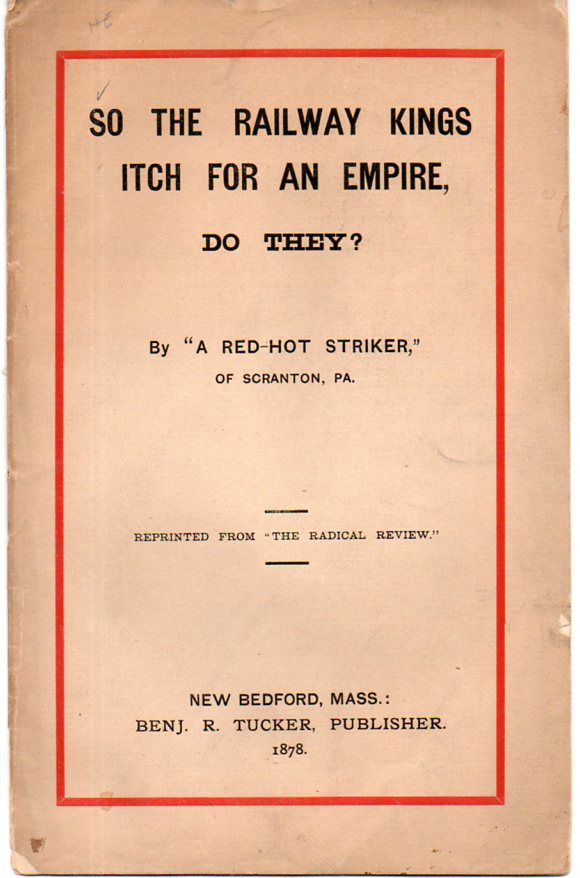
    I just could not resist this pamphlet, all dressed in white and red, catchy and playful title…I thought it would be a nice catch for my Daily Dose of Dr. Odd series, until I realized straight away that it was a serious publication.  Well, the mood of the discourse was a little common and jocular, but the message certainly wasn’t. 

    Radical620[The original is available from our blog bookstore, here.]

    The author was Sidney H. Morse (“The Red-Hot Striker”) and the piece was a rant against big money, monopoly/combinations and The Ruling Class. It was published in “The Radical Review”, which was published by the anarchist and free-thinker Benjamin Tucker, in 1878.  The executive summary for this short piece is plain–first, there should be no “executive”, and second, most of all of this revolves around free Communism and the statement “it takes a great many poor men to make one rich man”. 

    It seems that Mr. Morse (fl. 1870-1900) might have left many of his radical thinkers behind (like Mr, Alcott, above) when he went free-range and advocated no government or controlling system whatsoever, every person their own entity.  I’m not sure so that most people could get away with that thinking even left to themselves in a themself universe, every person in their own Utopian-solitary-anarchy. Seems as though the expectations of whatever this was, (no expectation or all-expectation) , was just too expectant.

  • Cliff’s Notes for Nazi School, 1937

    JF Ptak Science Books    Post 1849

    Oh happy day for this handy Cliff’s Notes pamphlet for the visiting visitor, for the foreign foreign, to the “new” Germany of 1937.  It is difficult to imagine but not horribly so the subtitle here, “Vacation Course for Foreigners”–it was, after all, so far as the rest of Europe and England and the rest of the world was concerned, still only a conceit that the Germans were harboring for themselves, the sabre-rattling Lebenstraum was still in the theoretical stage, though the loathing and discrimination of the Jews and other sorts of humans was not. 

    Nazi school621

    The pamphlet promises to “give our foreign guests an opportunity o f seeing young National-Socialist Germany as it really is” and to “show them that the German people do not want anything but to attend to their work in discipline and peace”. Which was not the case.

    I was interested to see the “programme” of instruction, and to check out the near-futures of the people who were the lecturers for each section.  Before I began, I wondered how much their fates would be changed eight years hence and if they would resemble the fates of other high ranking Nazis. (I looked at the lives of Nazi medical personnel and experimenters in an earlier post here called  “Kristallnacht: The Long post-WWII Lives and Forgotten Pasts of Criminal Nazis: Doctors”, here.)

    Mostly, they went on to live long lives.

    In the program, Dr. Reinhard Hoehn delivered a talk on “National-Socialist Law”. Hoehn was a Nazi academic lawyer with a criminally morose view of jurisprudence; he went rather high-ranking and was successful in laying the “legal” groundwork for Nazi ambitions, including being a representative at the Wannsee Conference.  Born in 1904, Hoehn went on to live until 2000.

Recent Posts

Archives

Categories