A Daily History of Holes, Dots, Lines, Science, History, Math, Physics, Art, the Unintentional Absurd, Architecture, Maps, Data Visualization, Blank and Missing Things, and so on. |1.6 million words, 7500 images, 4.9 million hits| Press & appearances in The Times, Le Figaro, Mensa, The Economist, The Guardian, Discovery News, Slate, Le Monde, Sci American Blogs, Le Pont, and many other places… 5000+ total posts since 2008.

  • Borges in Reverse–Diary Absolutists of Everything.

    JF Ptak Science Books  Quick Post in the Series on the History of Need.

    There are diarists who record everything that happens and everything that they do during the course of a day. The diary entry is not a simple line or two of waking and seeing the morning sky–it is one that records the number of brushstrokes of the toothbrush, the amount of water used in drinking, the amount of time the tea steeps, the sound of the spoon on the saucer, how the cookie crumbles, and so on–and this all in the first half-hour of being awake. 

    By necessity then people like this would be trapped in their own terrifying need to record their actions; having an adventurous day imperils their sense of balance and the ability to record the event. The course of the day is lost to the record of time, and it is as if whatever happened that wasn’t recorded never happened at all.
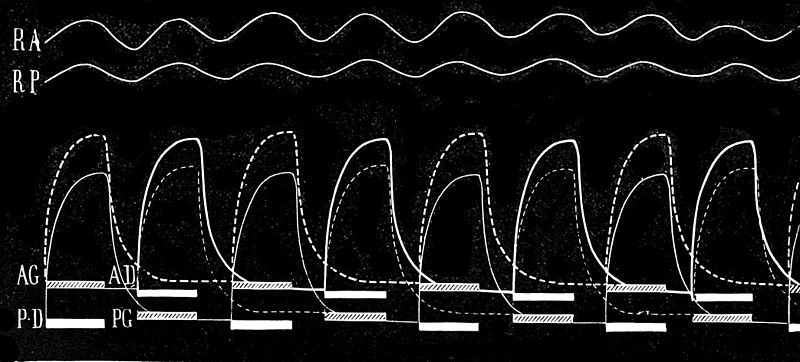
    Marey paces of horse
    The less that is done, the better, insofaras it would be easier to record and capture. On the other hand, though, that allows for more time to be spent on the diary description of the moment–not only the number of toothbrush strokes, but also the reflection of whatever appeared in the sink bottom, or what besides the face was seen in the mirror, or how many rice krispies were in the bowl, and so on.

    In such cases, going outside and becoming a witness to the rest of the world’s event would be impossible–even a stolen glance through a venetian blind could dictate a 30-minute entry.  The less to record that there is, the more recording of the lesser events could be made.  As with Dr. Zeno, there really never is nothing to not record. 

    Its a scary thought, a life lived in an anti-Borgesian library like that, getting pulled closer and tighter into nothing.  Well, its that, or it is a more zen-like observation of the world around you.  Either way, the diarist is tied to a bad destiny. 

    There are probably many variations on this theme:  people who must record everything that they purposefully look at during the day, or record everything that they hear but cannot see.  I imagine that there is someone who can look at  a notebook of drawn footsteps to see how their feet were placed in relation t the earth for every waking minute since 1965. 

    Its a crushing amount of nothingness.  Unless of course that nothing was everything. 
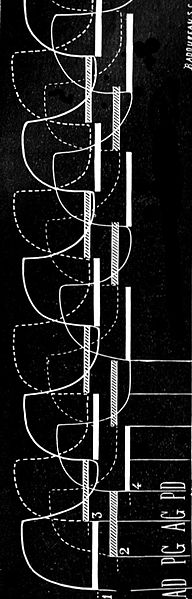
    Marey paces o fhorse vertical
    [These images are really early and very impressive efforts by Etienne Marey in recording the pace of a horse, as seen in (Etienne Marey), “The Paces of the Horse”, in Popular Science Monthly, December 1874–they have nothing to do with human locomotion.
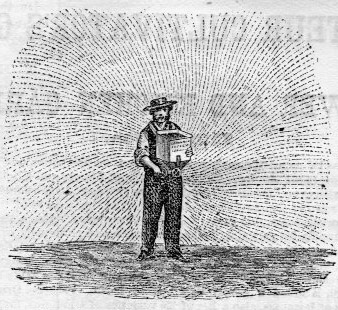

  • The History of Want: Ads in 1871

    JF Ptak Science Books  Post 1944

    Want ads corn horizon928

    Want ads corn horizon927
    In the long history of People Wanting Things, it has only been in the past few centuries where human beings were able to see the possibilities of their wants, or needs, displayed in print in the forms of advertisements in newspapers and magazines.  For thousands of years previously the wants were visceral and obvious–certainly the physical part of stuff that wasn’t exactly needed was not on display in any format, their descriptions passed by word of mouth–at least for the vast unwashed and working classes who could neither afford the newspapers or the goods for sale, as these were the times (in general that were BDI (“before disposable income). The “luxury” of catalogued needs really didn’t begin until the mass circulation broadsheet or newspaper and the growth of the lower middle class, which in North America wasn’t until the 19th century. Not only did this medium display the possibly variations of need, but also made suggestions of needs-not-yet-imagined, introducing the unknown for consideration in the “need” department. These are early advertisements that were also selling the possibilities of themselves, as well the dream that went with them.

    Want ads elastic917It is interesting to look at advertisements from other eras–they seem to have an hypnotic effect, a small about of caffeinated want-lust is perhaps left over from those antique displays.  In any event it is fascinating and revealing to see what the popular goods were that were being displayed.  And by the time of the example that I’m using for today’s post–American Agriculturist for the Farm, Garden, and Household (published in New York in 1871, this being volume XXX of the rock-of-Gibraltar journal for the small farmer)–the pages were teeming with material for sale. For this one issue (February, 1871) there were a scant forty pages to the issue–the format though was packed with info, the type was about 8-point and in triple columns, and the sheets were 13 inches tall.  Pages 121-148 (of 160) is news and reports on all matters agricultural, from news on different seeds to newly manufactured sowers to discussions of fertilizers to a new type of cucumber; the rest of the issue, pages 149-160, were entirely dedicated to advertisement, the ads running cheek-to-jowl, some of which were 1/8-pagers, and the other tiny slugs of one square inch. There’s about 250 ads on these twelve pages, many of which are illustrated. The woodcut images are occasionally fantastic. 

  • Renaissance Fire Eyes and Solar Faces

    JF Ptak Science Books   Quick Post 

    Follow Me on Pinterest

    Fire in the eyes unmask the smoke of the heart–not Ambrose Bierce


    Flaming eyes

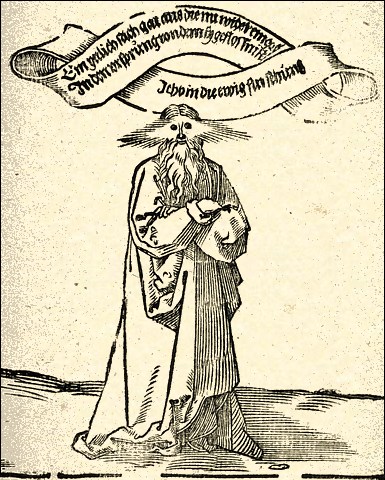
    These interesting images of searing eyes, of stars in the eyes, solar eyes, of the universe in the head, come from Albrecht Durer (1471 – 1528) and maybe-Durer, respectively.  The top image is very shocking and is attributed to Durer though it is not signed by him.  Die Sonne der Gerechtigkeit (Sol Iustitiae) was printed in 1499 in Ulm (source here), and is part of a larger work; the floating moebius-like ribbon reads “Everything that goes
    out now re-enters the source from which it flowed. I am Eternal
    Providence.”  With eyes and a head like that, I can imagine the statement to approach the truth.

    The copperplate engraving below (and this definitely by Durer) was printed between 1499-1501 and is known as Sol Justitiae; or The Judge; not necessary providential per se, but as a representative of truth or justice, it comes close to being the Great Determiner.  In any event, they are very strong images.  See HERE for a listing of Durer engravings.


    Flaming eyes durer

    ·Posted by :

    ·in:

  • Future of Flight, 1836

    JF Ptak Science Books   Quick Post 
    Follow Me on Pinterest


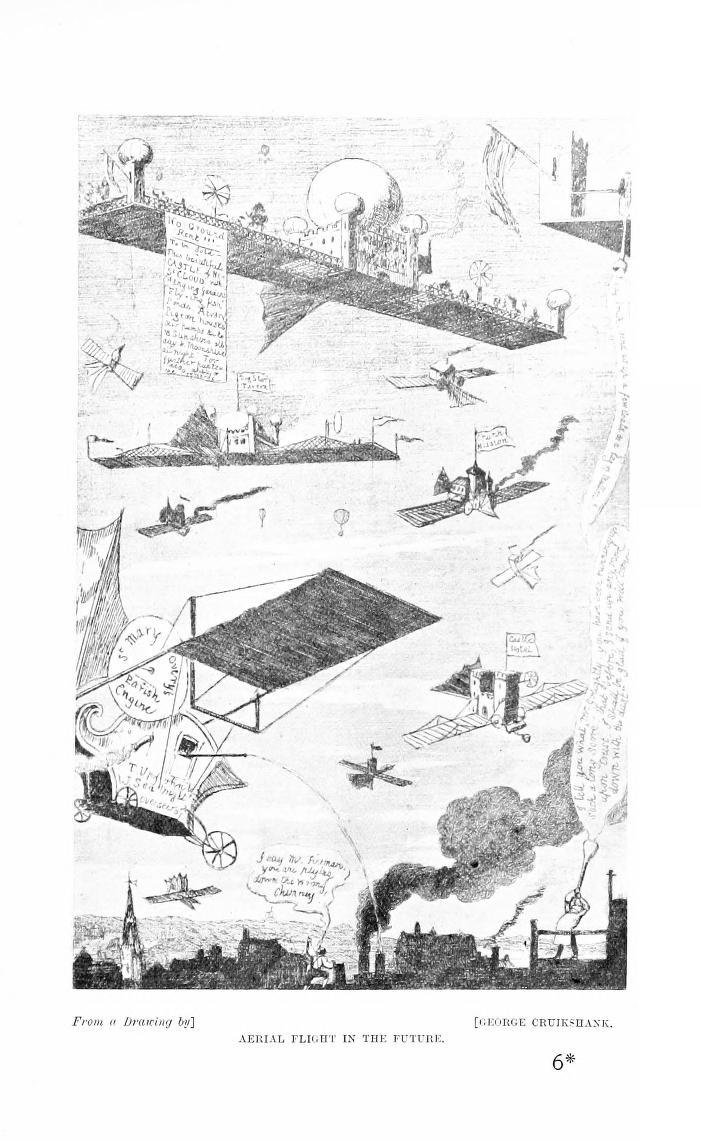
    This lovely image of the possibilities of future aerial flight was made by the celebrated caricaturist and illustrator George Cruikshank, and was printed in 1836.  The aircraft at top is a massive affair (the selling of the “beautiful Castle in St. Cloud”) offered great possibilities along with “no ground rent”.  It is absolutely a castle int he sky, literally and figuratively, and must’ve seemed to be something of a possibility to Cruikshank in the fifth decade following the first balloon ascension.  Of course he was having a turn at aviation, but I think he also saw the bits of the feasible within his hopeful caricatures. 

    Aviation of the future[Source:  E. Seton Valentine, Travels in Space, a History of Aerial Navigation, 1902.  Here.]
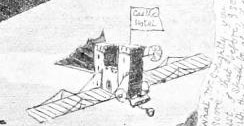
    Details below:Aviation of the future--house in sky

  • The Ineffable Delicacy of the Million-Pound Shithammer

    JF Ptak Science Books   Post 1944
    Follow Me on Pinterest


    The idea of the mastery of nature presents itself at different levels at different times, and the mid-Victorian Brits had a particular and interesting handle on the issue int he mid-late 19th century.

    Mr. Darwin created a new threshold for the deep understanding of Nature and the possibilities of what that knowledge base might mean for generations to come–it was in a sense a time machine of possibility.

    Darwin Origin announcement931It is thrilling to see this announcement from Darwin’s publisher, John Murray (London), leading off On the Origin of Species in their list of nine new books appearing in their new books list for 26 November 1859 in the journal The Athenaeum..  Most of the other books have slipped into dusty bits, though, remarkably, a few are still around. One of them is coyly significant, and its author is important for yet another reason.  The book is number eight on this list: Samuel Smiles Self-Help1, which was about the first book of its kind, a homily to honest work and insight and mutual benefit–it also outsold the Origin, with 20,000 sales in the first year, a bona fide bestseller.  (The book would sell a quarter of a million copies by the time of Victoria’s death.) So in its way, this book too helped people master another sort of nature–their own.

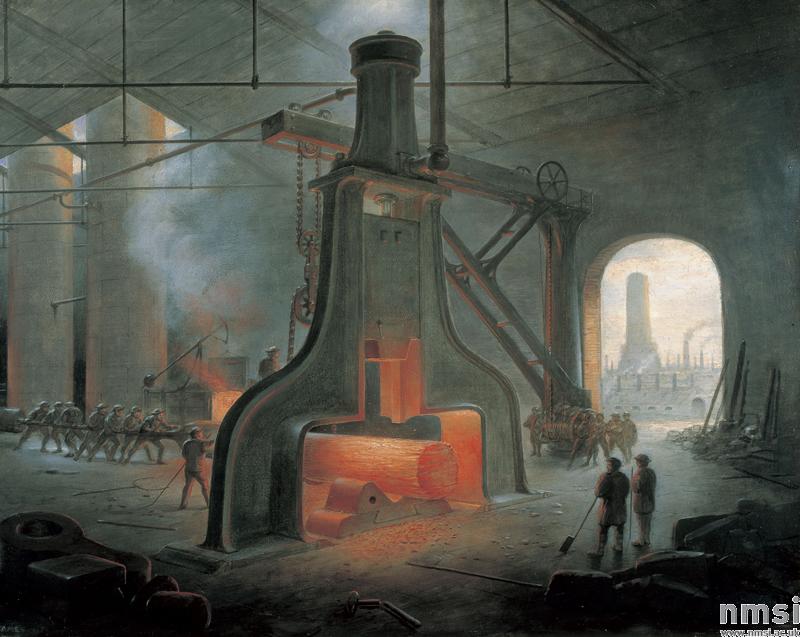
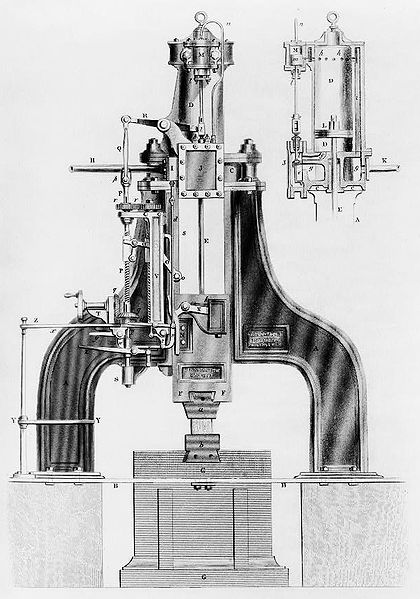
    But that is not why we’re visiting with Mr. Smiles–I’m more interested in his description of an element of British technology that was a wonder of its age:  the powerful industrial hammer of James Nasmyth2. It was a technological achievement of the highest order and something that seems difficult to appreciate today.  Invented in 1839 (the year of the invention of photography and the publication of Darwin’s report from his researches on board the Beagle) a more massively-powerful version was displayed at the Great Exhibition of 1851, and was its star performer. 

    Nasmyth engine 2[Image source and notes: see Note #4 below]

    Smiles’ made a very interesting observation on the nature of power the machine–rather on its power and the control of its power. The often-told story is that in demonstrating the device Nasmyth would explain and at times demonstrate the capacity of teh hammer to work on large elements going into huge ships; he would also explain that this vast power was also finely tuned and controllable and show this to be the case by having it crack an egg that was in a wine glass without damaging the glass.  This meant that aside from being able to handle metals almost as thick as a person, it could also be relied upon to do extremely delicate work, and that the tens of thousands of pounds of pressure it could exert could be called upon to do even the most delicate task.  This was a fantastic triumph of control, and was a keen insight into the coming nature of the machine and the rest of the developing Industrial Revolution. 

     .
    Nasmyth 1854The post-Exhibition of a smaller variation of the hammer, about 12′ tall, from Cyclopædia of useful arts, mechanical and
    chemical, manufactures, mining, and engineering
    , ed. by Charles
    Tomlinson, London : New York, G. Virtue & co., 1854.

    Notes

    1. The book (the full text available here) is introduced with the following two quotes from Mill and Disraeli:

    “The worth of a State, in the long run, is the worth of the
    individuals composing it.”—J. S. Mill.

    “We put too much faith in systems, and look too little to men.”—B.
    Disraeli.

    Self Help ends with this quote from Francis Drake:

  • Is the Mona Lisa Smile Nothing?

    JF Ptak Science Books   Quick Post
    Follow Me on Pinterest 

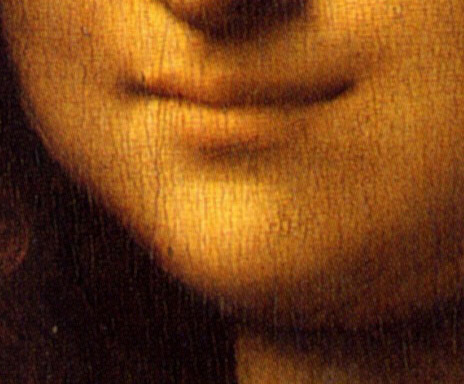
    It is said that the smile of the Mona Lisa says everything to everyone, but in saying all of that so loudly in such a quiet way, is it possible that the smile is saying noting?  That in the vast encyclopedia of emotion that this smile is said to contain, is there really no “there” there?

    Mona_Lisa smile
    It has been pointed out by many that while the male figures in Leonardo’s work have a great diversity, the female figures seem not to, that there is a definite overlapping consistency of charm and image from one figure to the next.  The young Leonardo took his time with la Gioconda1, in a way making the painting his own in spite of the person for whom the work was painted.  Perhaps he did more than that, perhaps he developed the Mona Lisa within an existing framework, and then continued that practice in his painting over the years. 

    It is intriguing, in its way, to think of her like this, a simple solution under the great enigma.  But I think it is probably wrongheaded, and that at base those other folks writing about the sameness in the female figures are incorrect.  Though there is something to be said about a continuing fascination in Leonardo with that smile. 

    So, I think thinking of Leonardo’s women as more-or-less invariant and their smiles tending towards one another, establishing the Mona Lisa’s smile as the apotheosis of the symbol of some sort of glorified, unified, aspect of women might make for an interesting sci-fi adventure, but I believe it doesn’t exist in the real world–or in mine, anyway.  That smile is not nothing. 

    Notes

    1. Like many paintings, this one is known by a number of names: La Gioconda or La Joconde, or Portrait of Lisa Gherardini, wife of Francesco del Giocondo, or Mona Lisa, and so on.

  • How Much Did Athanasius Kircher’s IQ Weigh? The Polymathic Genius Alphabet

    JF Ptak Science Books   Quick PostKircher

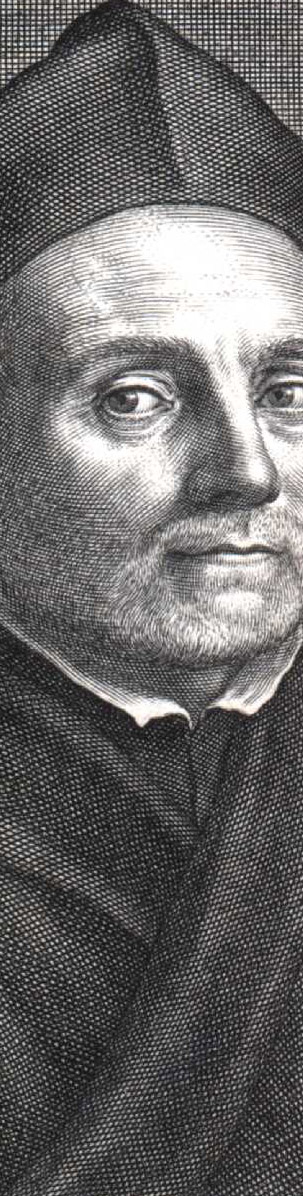
    It has been said elsewhere along the aethery intertubes in discussions of the intellectual value of the great and problematic Jesuit scientist/experimentalist/visionary/encyclopedist Athanasius Kircher that he may be the greatest polymath who has ever lived.  He certainly was a genius, and worked across a wide and occasionally invisible spectrum, inventing/describing/discovering/fabricating. The great semi-mystifying polymath  Kircher (1602-1680) lived
    for a long time and filled his life with ideas and words,  producing
    dozens of books during his time on Earth, some of which were never
    published even though written, some manuscripts lost forever. His was a
    massive output of extraordinary breadth, most of which was original to
    him, and a lot of which was original to others and not credited, as was
    often the case with some scholarship at this time in history.   He
    wasted little time what I can see, writing on a spectacular range of
    subjects, enlightening people, confusing people, generating great
    theories and some bad ideas

    He was often correct, and occasionally toweringly smart–but certainly not all of the time, and probably not enough of the time to earn him such high-altitude praise.

    But even with the great and lofty things he has accomplished, I am pretty certain that he would not make the first rank in the alphabet of great polymaths–not only are there other polymaths in general who are more, um, polymathical, there are also more “K” polymaths who would push him out of his alpha-order.

    Here’s one example of an alphabet of great polymaths:  Aristotle/Agricola, Boyle/Bartholin/Babbage, Carnot/Chandrasekhar, Descartes/Davy, Euler, Faraday, Gauss/Gilbert, Helmholtz/Huygens/Herschel, Jevons, Kepler/Klein, Leonardo/Lavoisier, Maxwell/Malppighi, Newton, Poincare/Priestly/Pasteur, Quetelet, Sommerfeld, Thomson, von Neumann/Vesalius, Young, Zeno. 

    Well.  There’s certainly a lot of room for debate on this quick list–perhaps it would be more interesting to assign chess pieces to these same names; and if this was so, I would have Fr. Kircher be a pawn.

    And so:  are there more dots on Kircher or squares behind him? 

    Kircher squares

  • The Daily Addict: Feeding Drug Addicitons in 1937

    JF Ptak Science Books    Post 1946

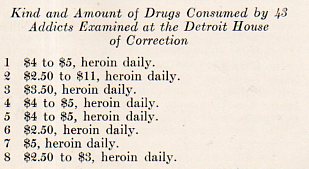
    I’m not sure that I’ve ever seen a list of the personal daily cost of antique drug use, though I did manage to stumble across one in a remarkable little pamphlet by Edward C. Jandy called Narcotic addiction as a Factor in Petty Larcency in Detroit (published November 1937).  There’s a lot packed into its 23 pages, not the least of which is a pretty sophisticated look at how to examine the costs of drug addiction to the sales economy of that city. One of the interesting historical bits that emerges from it is a list of the daily cost of the addiction of one of the target study groups–a selection of 43 local addicts with a combined 673 years of addiction (averaging an unholy 15.5 years of addiction/person). 

    Drug prices934
    [Full list in the Continued Reading section.]

    There are immediate limitations to this info–for example there is no correlation to the number of years of addiction to the individually-reported daily drug costs–but since this data seems to be fairly rare it does at least give some idea of the strain of usage per person.

    And what does it mean to spend  $5/day on your heroin habit?  CPI is useful, but it is better to look at what that figure means in terms of the average salary and costs of  basic goods. If you were working back there in a bad spot of the Depression in 1937 the average salary was about $1,700/year, which means that if these addicts were working (and the great majority wasn’t) then they would be spending about 1/3% of their annual income per day–or a little more than all of their  daily salary–on their everyday habit. Spending $1,800 a year on drugs on a $1,700 salary leaves not-so-much-room for anything else but crime, and not having any income at all would mean that all of that money would have to be from criminal activities.

    In another (potentially gross) way of thinking about this expense is by looking at the average salary in 1937 being about 1/30th of what the average American family income is in 2012, so the daily $5 heroin hit would be something like $150 today, which sounds about right.  And if you applied that multiplier to some other standard 1937 prices1, the numbers are fairly constant from then to now–the big exception being postage stamps (which would be $1.50 for a first class stamp) and gasoline ($6/gallon), both of which would show a decline. Again, that’s a very crude approximation, but it does pause. 

    The author then does some tricky and interesting semi-statistical work with the bottom line showing that drug addicts stole a total of about 3% of the total retail sales (of $545 million) in the U.S.  That’s a big number–in today’s economy, which currently stands at about $33 billion in thefts (or 1.5%) that would 3% for just addicts would be an enormous number, twice the national general total which would spike drug losses at $100 billion for theft alone. 

    I’m thinking that these 1937 stats might be a little (or a lot) loose, but it the report still is decently argued and nicely presented though the data might be not-great–and the daily/habit numbers are a fine thing to find. 

    ·Posted by :

    ·in:

    —
  • A Hole in the Mirror–Part of the History of Holes series

    JF Ptak Science Books  Quick Post in the History of Holes series

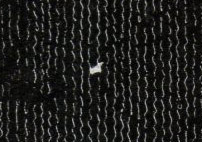
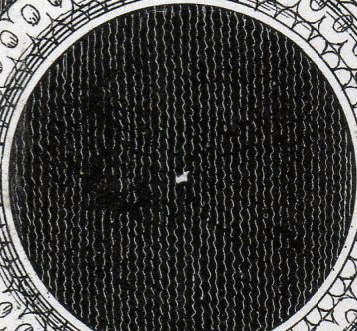
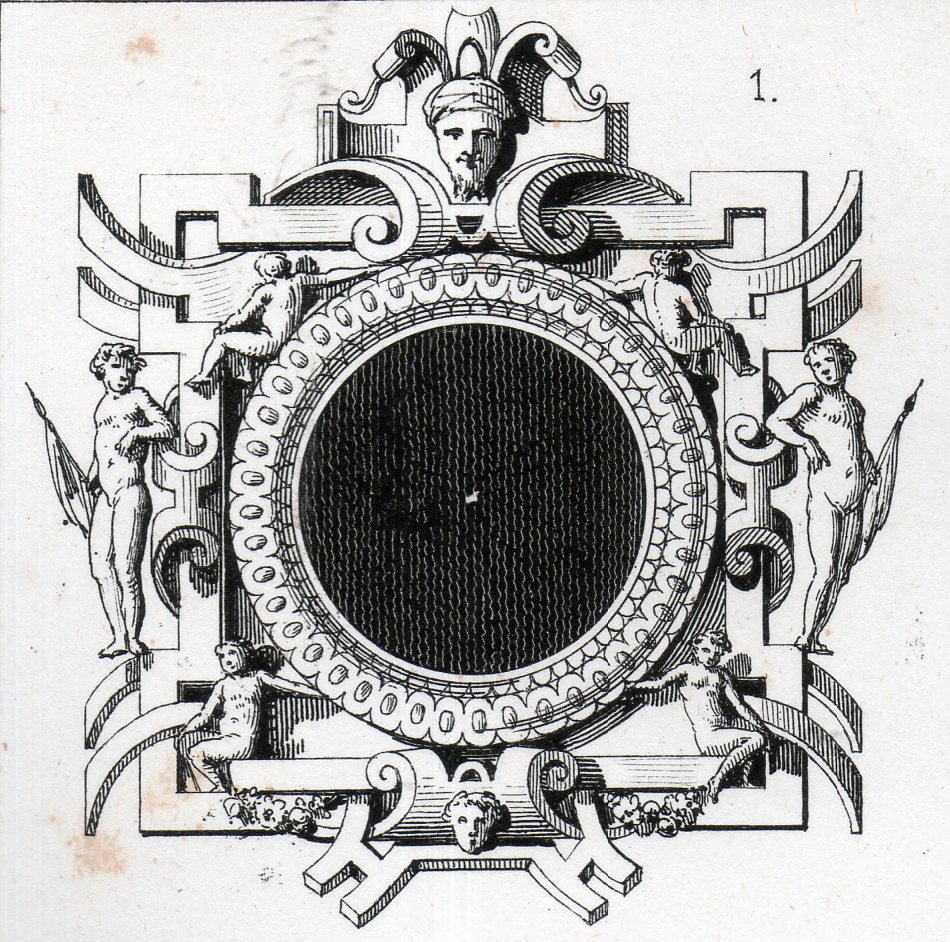
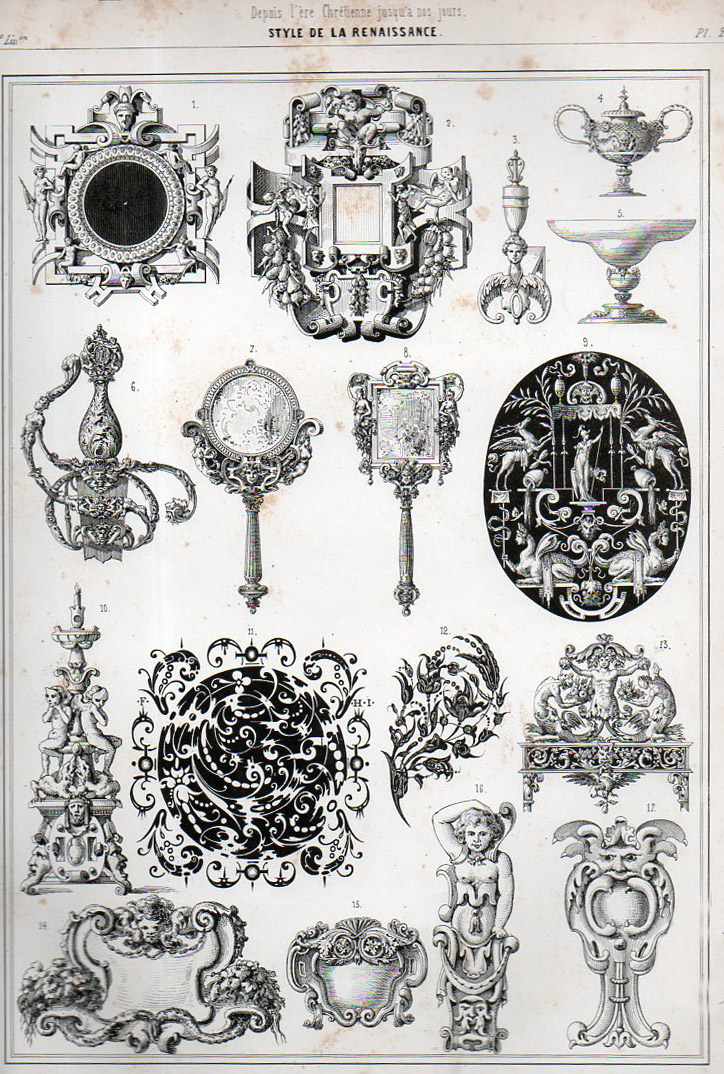
    While looking through D. Guilmard’s La Connaissance des Styles de l’Ornementation (published around 1860)–a work that is a sort of early clip-art assembly of aspects of bits and details of historical ornamentation from the Gothic to Louis XVI– I found several engravings of mirrors with some unusual detail.  For some reason the Renaissance mirrors nearly all had a small white dot–a hole–in the center of their jet-black mirror surface.  I imagine that this was a simple printing error, but I liked the idea of this spec of a mistake right in the middle of a dark field, in effect making a hole in the mirror, looking something like a light leak. It makes for an intriguing series of images.


    Mirror a

    Mirror b

    Mirror c

    Mirror936

    Which is a detail (about 2×2 inches in life) from the full sheet, below

    Mirror e938

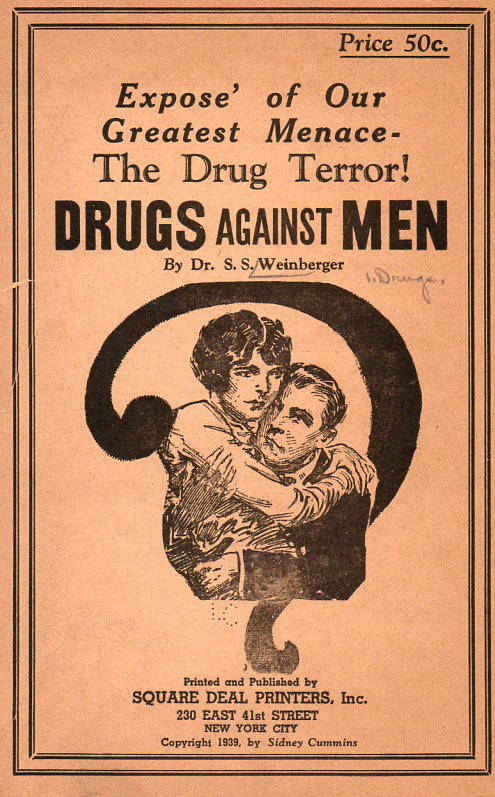
  • Drugs Against Men (1939)

    JF Ptak Science Books  Quick Post

    Drugs against men933

    This is a fairly straight-forward report on the growing drug menace in the U.S.–it is a little melodramatic in places but beyond that it is a reasoned and sensible account of the terrors of addiction and its social cost. And as the cover art suggests, this short pamphlet by Dr. S.S. Weinberger (which was published in 1939) the work takes it aims mostly at the social and family damages associated with drug use. 

    This is a detail from the full cover, as so:

    Drugs against men932
    [As it turns out this is a rare pamphlet, with no copies located in the 150-million-item library cataloging tool, WorldCat.]

Recent Posts

Archives

Categories