A Daily History of Holes, Dots, Lines, Science, History, Math, Physics, Art, the Unintentional Absurd, Architecture, Maps, Data Visualization, Blank and Missing Things, and so on. |1.6 million words, 7500 images, 4.9 million hits| Press & appearances in The Times, Le Figaro, Mensa, The Economist, The Guardian, Discovery News, Slate, Le Monde, Sci American Blogs, Le Pont, and many other places… 5000+ total posts since 2008.

  • More Outhouse Book Reviews: British Privy Statement

    JF Ptak Science Books  Quick Post   [Part of the Daily Dose from Dr. Odd series]

    Follow Me on Pinterest


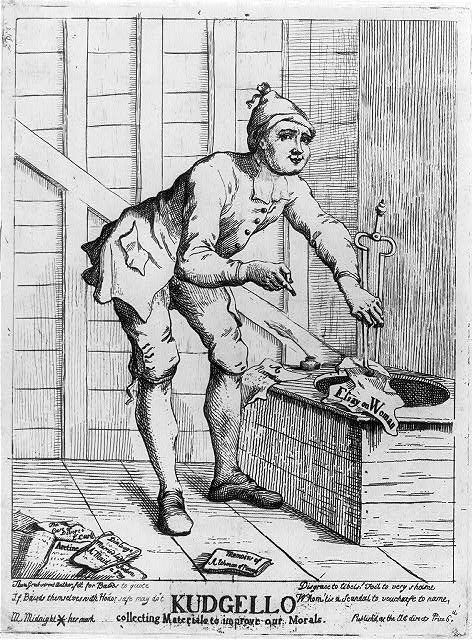
    Just two days ago there appeared in this blog a bit on an image I had never seen before–dogs acting as biological book reviewers, doing with books one of the things dogs do best. And then, this, (“Kudgello collecting materials to improve our morals”) printed around 1766 and another scatological review of books, this based on morals and highly scented books of a sexual nature, all seemingly removed with fire tongs from the wastebucket of an outdoor privy.

    Outhouse books
    {Source: the Library of Congress]  

    The books on the floor, the rescued books, include Dialogue
    … Married Lady … A Maid, Aretine
    (Mansfield, William Murray, Earl of, 1705-1793), Sodom, a play, and Memoirs of a woman of pleasure (Cleland, John, 1709-1789)

    The verse at bottom includes: “Thou Grub street author, fit for Bawds to
    quote / If Bawds themselves with Honor safe may do’t / Disgrace to
    libels! Foil to very shame / Whom ’tis a Scandal to vouchsafe to name.” Also: “M. Midnight * her mark ; Publish’d as the Act directs, Price 6d.”

    Of course the principal interest here is what the semi-smug Kudgello is hoisting from the pit, Essay on Woman, which was written by Thomas Potter in about 1755 with the assistance of John Wilkes This was a take-off of Alexander Pope’s Essay on Man, though without the intelligence, art, insight or writing ability. I’ve included this image in the blog because it is so unexpected–and that it comes fast on the heals of a similarly-unexpected scatological book review found only 48 hours earlier.

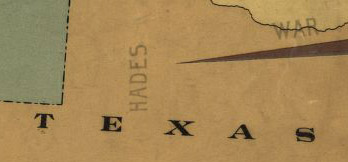
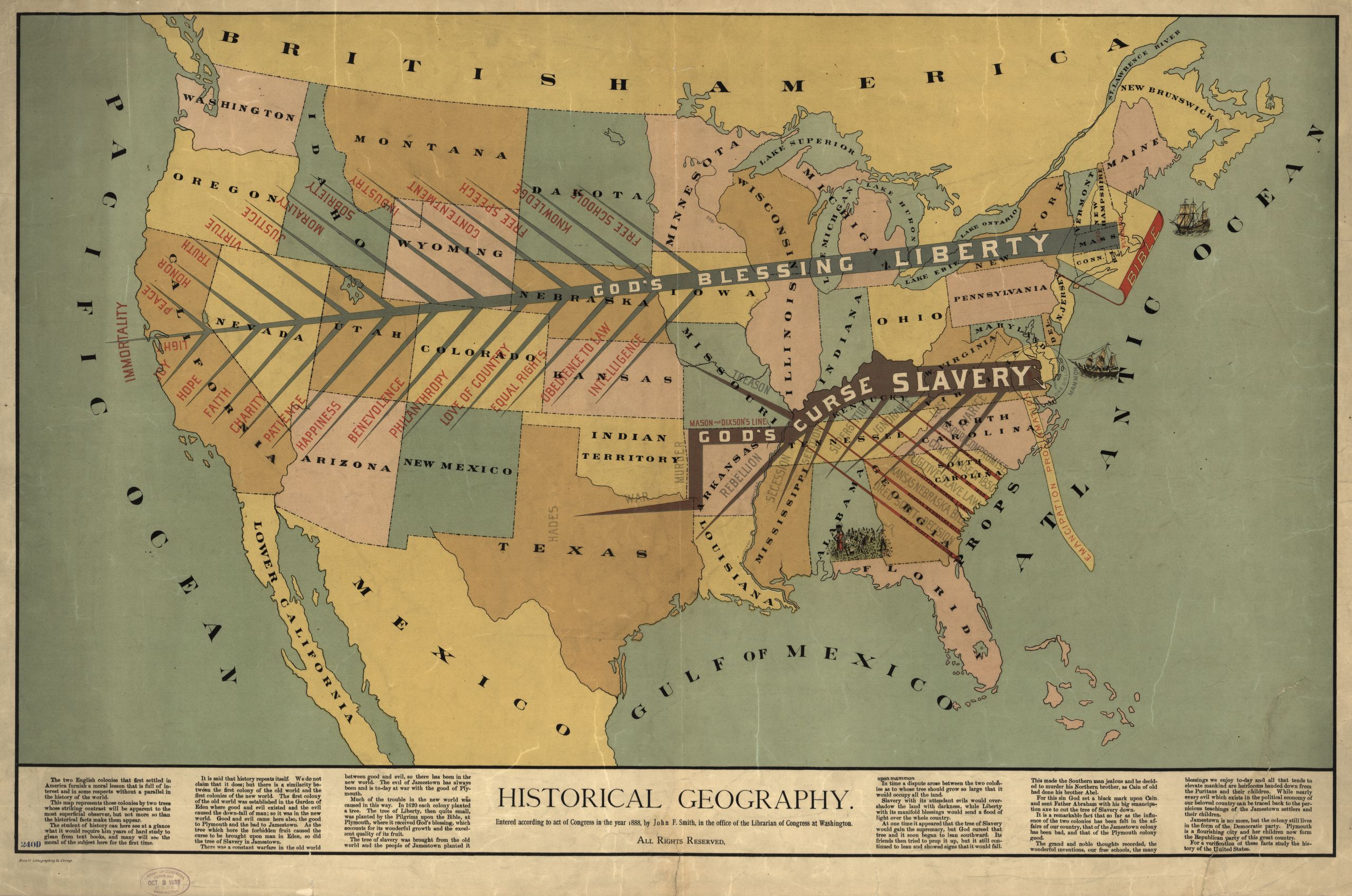
  • Cartographic Evidence of Hell in Texas, 1888

    JF Ptak Science Books    Post 1941  
    Follow Me on Pinterest 

    Slave map 1888 texas
    Just yesterday in this blog I made an entry on a very striking, viciously anti-slavery Moral Map of the U.S. It is very red and was printed in 1854, just barely before the great troubles really started to begin in 1856, and it stands on its own as a fine representation of a map-with-a-message.  The map below by John F. Smith (Historical Geography) was printed in 1888, and although it was made after slavery it still carried a very strong message–perhaps not as graphic as the 1854 map, but certainly as vehement, and perhaps more-so, with a very heavy dosage of Reconstructionist retribution laced in its text. There is a sense of channels of warm blood flowing through canali of stone altars, a mass on the chest to Huitzliopochtli.  It has its own sense of deep danger.

    Slave map 1888
    [Source:  the Library of Congress.  The map is very expandable.]

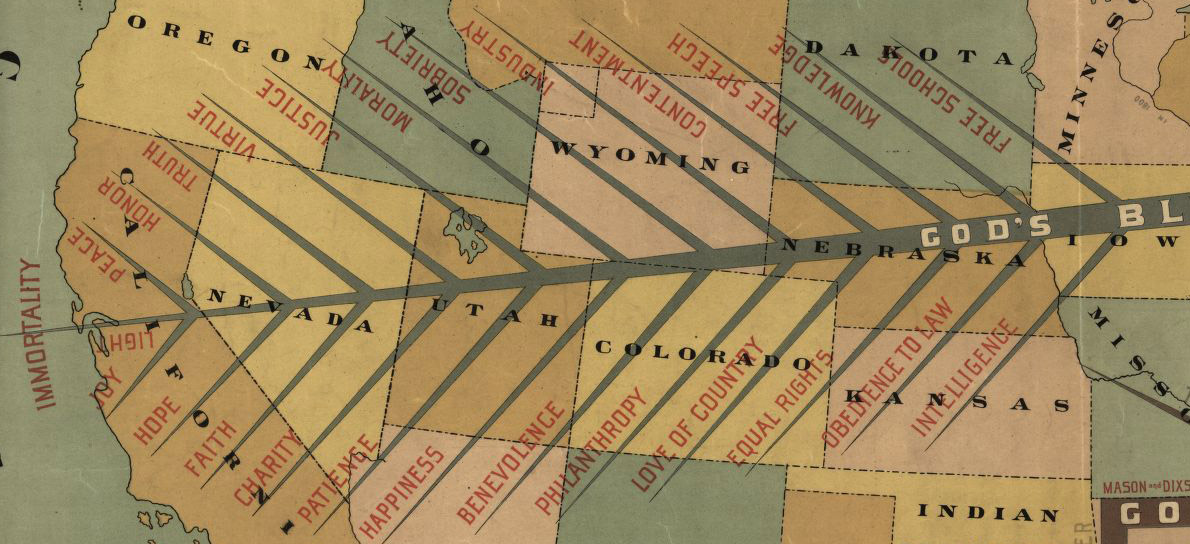
    The map is divided North and South by two lightning-like trees, “God’s Blessing, Liberty” and “God’s Curse, Slavery.”  The limbs of the tree of Liberty read “Light, Joy, Hope, Faith, Charity, Patience, Benevolence, Philanthropy, Love of Country, Equal Rights, Obedience to Law, Peace, Honor, Truth, Virtue, Sobriety, Industry, Contentment, Free Speech, Knowledge, Free School.”

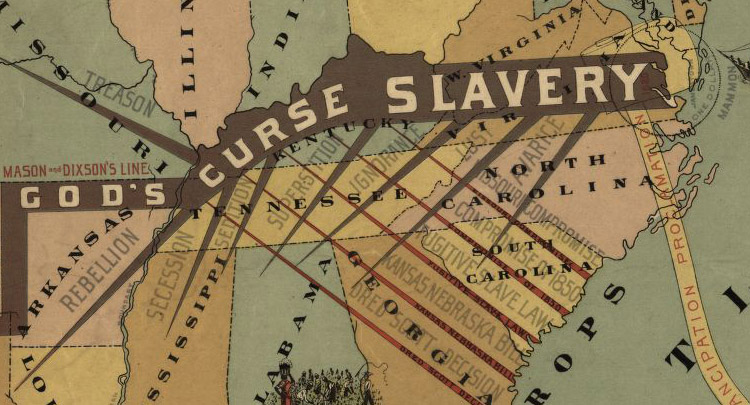
    The limbs of the dark, crooked tree of slavery read: “Murder, War, Rebellion, Treason, Secession, Sedition, Superstition, Ignorance, Avarice, Lust” and of course “Hades”. these are hosted on the spikes of the Missouri Compromise, the Compromise of 1850, Fugitive Slave Laws, Kansas-Nebraska Act, Dred Scott.”

    “Hades” might not be that far off, at least for the heat/difficulty index, as this one seems to be located right about at the eastern boundary of the Llano Estacado, which in centuries past was a very highly difficult place to navigate. 

    Slave map 1888--detail 2

    Slave map 1888 det 3

  • Fabulist Images from an Accomplished Genre-ist

    JF Ptak Science Books  Quick Post

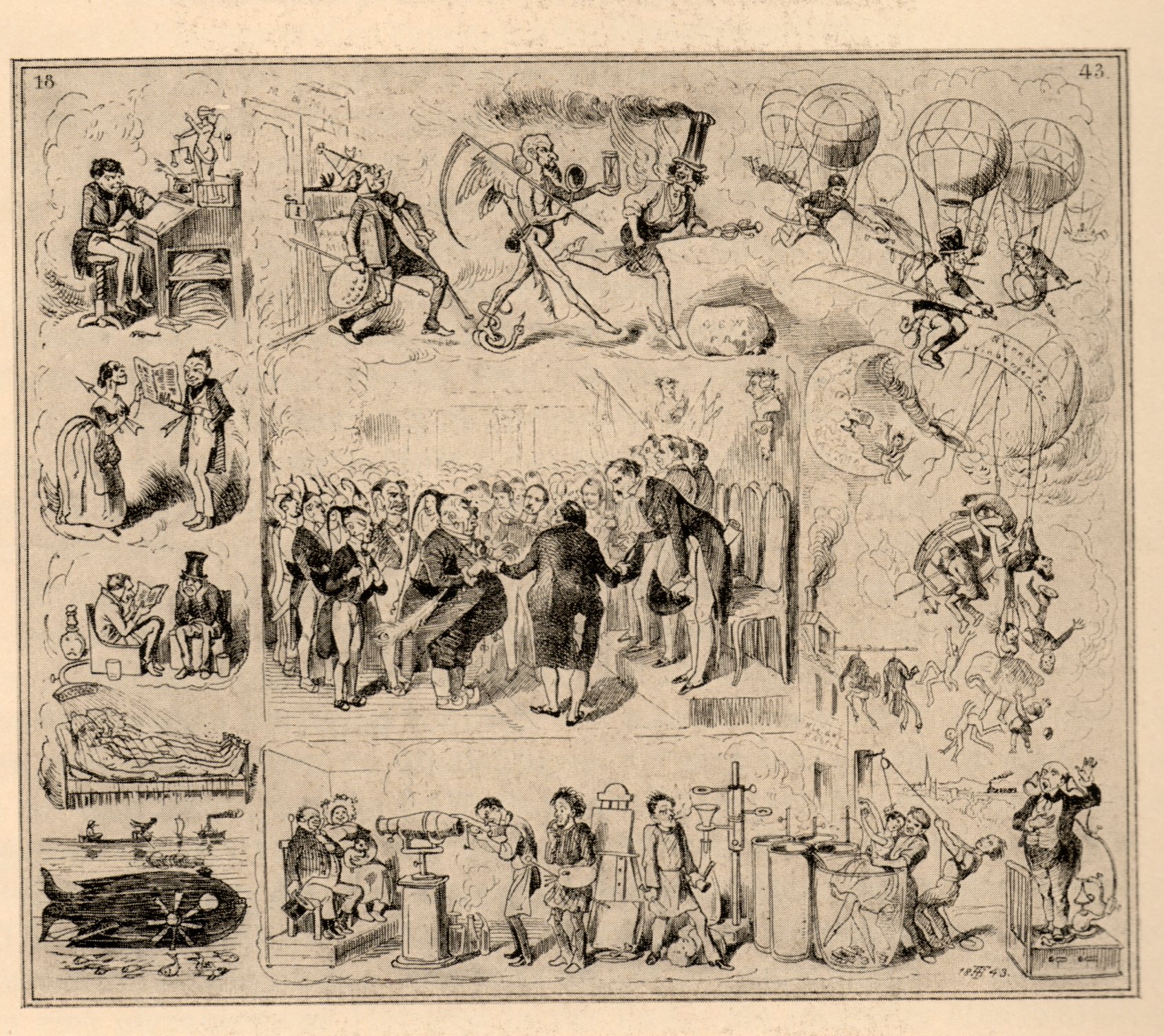
    I stumbled upon these very inventive, peep-into-the-future of  imagination images by Theodor Hosemann in journal Exlibris Buchkunst (for the year 1910).  Hosemann’s (1807-1875) name came into a blurry recognition as a leading genre painter and very busy illustrator in mid-century Germany, but certainly not for these images, which remind me very much of J.J. Grandville, one of the leading imagist illustrators of the 19th century.  (Grandville has been a subject in this blog quite often; for example, see here.)

    Hosemann908
    The originals were completed in 1847 and depict some of the trials demanded of future vision, looking into the year 1947. I particularly like the steam-driven horse-mobiles and the steaming-hatted Mercury laughingly outrunning a grimaced Time. 

  • The Most Beautiful Perspective Drawings of the Baroque?

    JF Ptak Science Books  Quick Post

    Follow Me on Pinterest

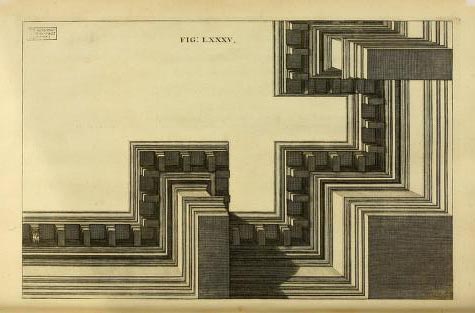
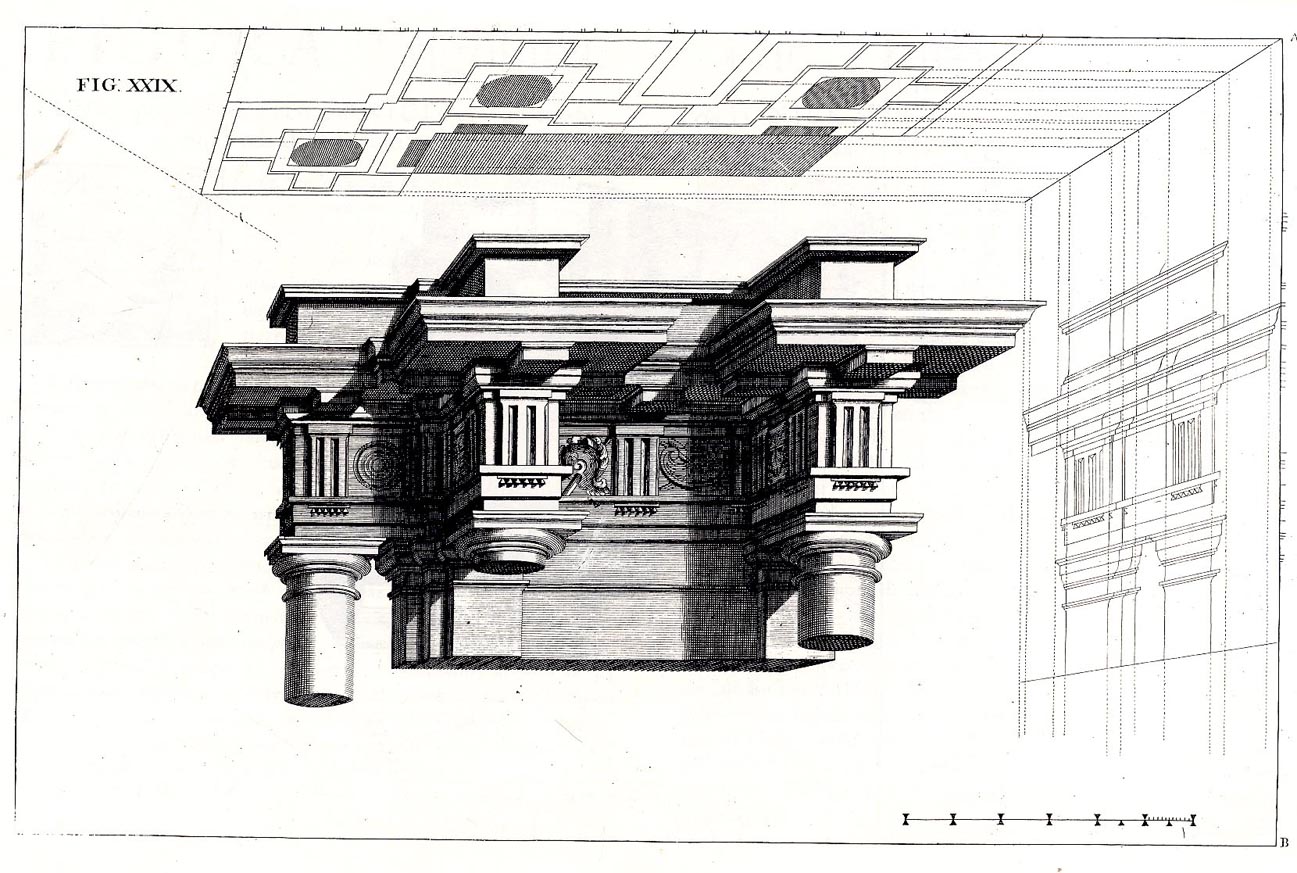
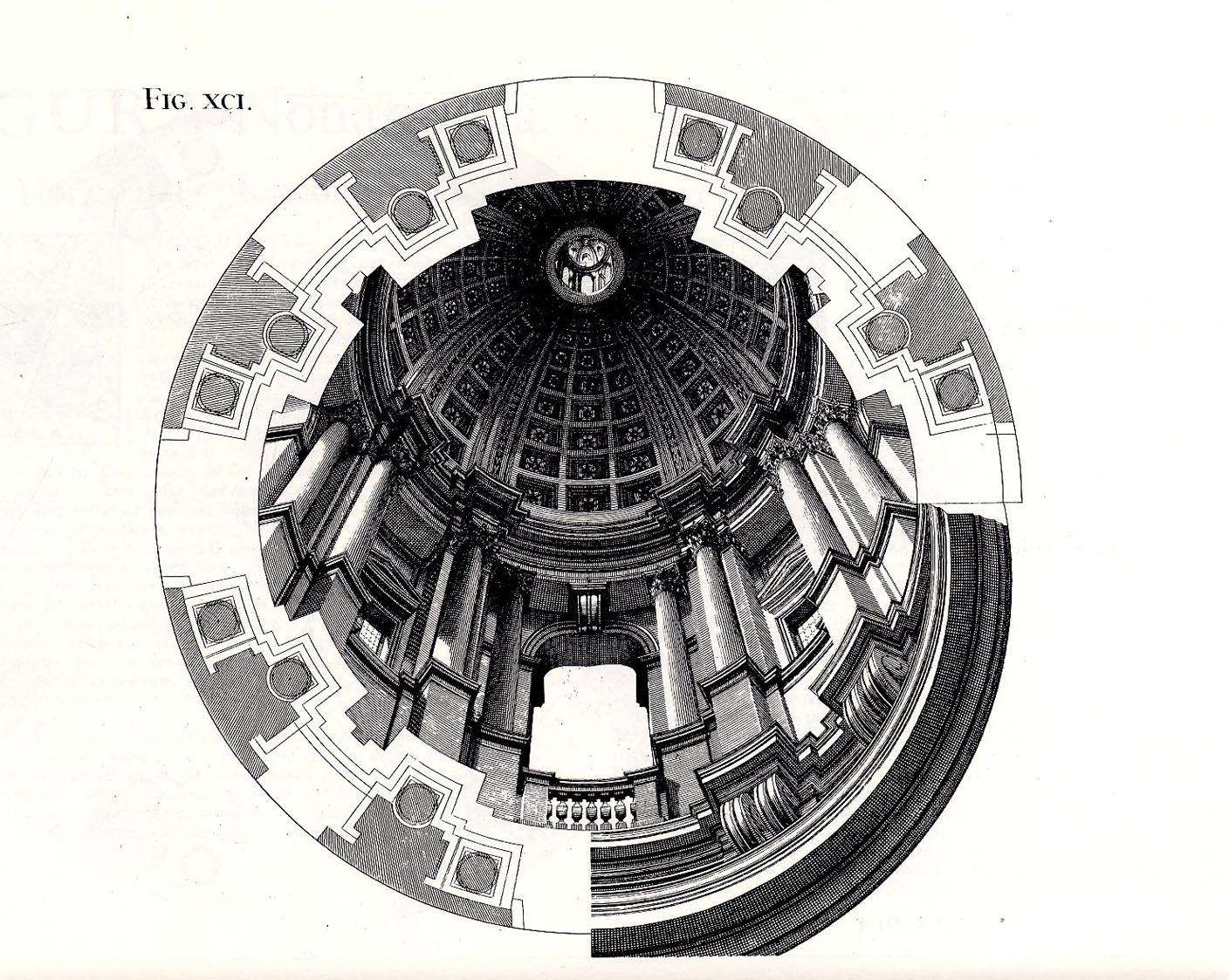
     The fantastic Jesuit Andrea Pozzo published results of his researches on perspective in his Perspectiva pictorum et architectoru (1693),
    explaining how he was able to compellingly, unbelievably  represent
    three-dimensional images on two-dimensional spaces, this image showing
    plan and projection and profile, effectively giving you a
    three-dimensional cross section of the architectural element…and having them seemingly float in space. His work is just absolutely gorgeous. 

    Pozzo 7


    Pozo
    Pozo 2

  • Zoomology: Girls in the Island of Legs

    JF Ptak Science Books   Quick Post       Part of the Zoomology series.

    Follow Me on Pinterest

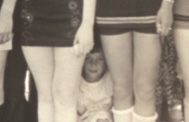
    Bath beauties huntington detail girl


    It would be easy to rhapsodize on the “quieter” or “simpler” lifestyles and demands of society from 90 years ago, especially when you compare this bathing beauty image (below) to the pupal-pulsating extravaganzas of the modern image-formulating beauty fairs.  For people who were alive in this photo in 1925 I have no doubt that their life was just as complexified as any life situations as they exist today.  One thing that has changed are the speeds at which societal inputs can be responded to–we can certainly achieve more-or-less instant satisfaction addressing a problem today than could have ever been dreampt of in 1925. The fluidity of thought and communication that are a given in 2012 were not even a scientific fiction possibility in 1925–as a matter of lexicograph record, the term “science fiction” didn’t even exist in 1925, much less be a bucket for collecting rumblings of future possibilities. There were certainly fewer levels of things to deal with in 1925, but the time it took to deal with the dealables would  have been far greater than today’s timetables of answers, so perhaps the issue of the simple vs. the complex would be a wash/trade off so far as the actual amount of time was concerned in the global addressing of combined complexities.  Anyway, that horrible sentence out of the way, the idea of the “simpler life” is highly relative, and relational.

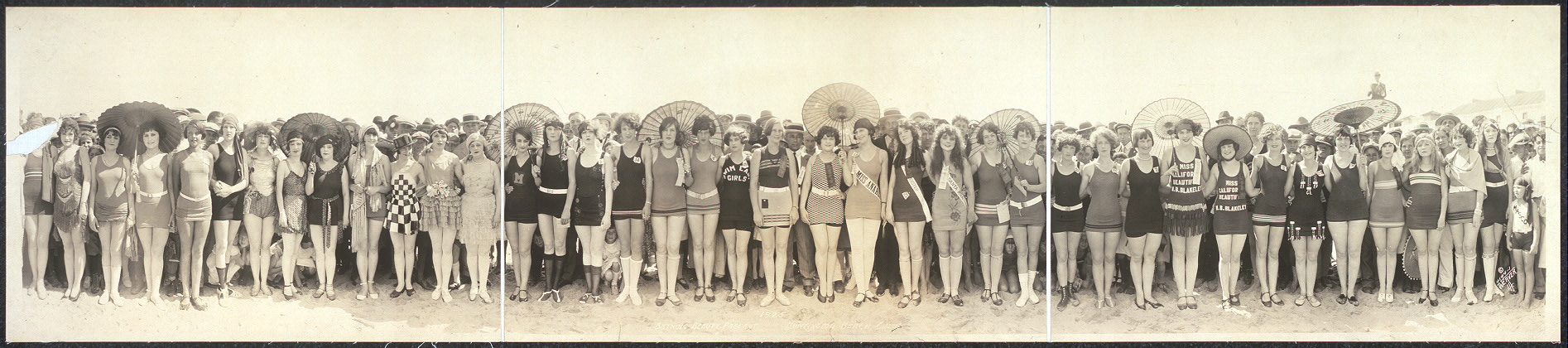
    That said, here is the line-up of contestants for a beauty contest at Huntington Beach, California, in 1925.

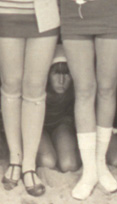
    Everything seems interesting in this photo–the women themselves, their bathing attire, the men standing behind them, the footwear on the beach, and of course the girls peeking out through the legs of the contestants.

    All images are found at the Library of Congress, here. All image are also greatly expandable.

    Bathing beauty huntington beach

    Bath beauties huntington detail girl 2

    Library of Congress, here.

    ·Posted by :

    ·in:

    —
  • Have a Very Meaty Christmas and Other Christmas Advert Disasters

    JF Ptak Science Books  Quick Post

    Wrong is wrong, and sometimes there’s not much more than can be said…


    Photo


    Santa Meat

    ·Posted by :

    ·in:

    —
  • The Solids in Bellini (?) Is the Blankness a Heritage of Uccello or Bartleby?

    JF Ptak Science Books   Post 1943 (Part of the series on the History of Blank, Empty and Missing Things.)
    Follow Me on Pinterest 

    “Where is abstract without solids, I ask you?” — William Gaddis, on the solids in Uccello, The Recognitions, 1955

    Actually, I think that there’s plenty of abstract without solids, so long as you’ve seen solids before.

    I’ve returned to a slightly recurrent theme in this blog dealing with the great Paolo Uccello (1397-1475) and his study of perspective–but most directly as he was observed by William Gaddis in his Great American Novel The Recognitions.  (I am forever grateful to my brilliant Patti Digh for really hooking me into Gaddis so many years ago–Patti was long intrigued by Gaddis and wrote her UVa master dissertation on his Big Book. Gaddis’ book can be found here.) Among other things Uccello is recognized as being one of the greatest and among the earliest artist to re-discover the science of perspective, and was throughout his life a passionate student and practioner. 
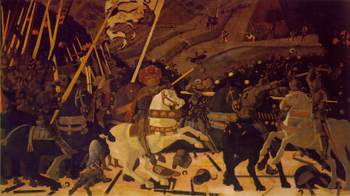
    Blogsan_romano[Much of Uccello’s work can be found at Paolo Uccello Complete Works website, here.]

    “Painting is exquisite as the punishment for the thinker.”–William Gaddis, The Recognitions

     The “solids’ recognized by Gaddis (and not really
    discussed, and mentioned only twice in the book I believe) are incredible to me.  Looking at his painting Battle of San Romano 
    (1457) we see Perspective in her place; but when we look at, say, the rumps
    of the horses, we see almost no detail, just a mass of color, a solid,
    with spectacular plainness. What in the world was he thinking?  He could
    certainly have painted the horse and the other solids with texture and
    detail, but he didn’t, and to me it seems antithetical to the painting. 
    What in the name of all motherly things was he thinking?  And who else
    on earth was using such huge amounts of plain solids in their
    paintings?  I’m not aware that anyone else was, and I am relatively
    clueless as to why he did it, abandoning detail in order to raise awareness of the surrounding parts of the painting, or perhaps heightening  a sense of the not-yet-existent abstract, or drawing attention to the perspectival aspect of the work?

     

    Blogsan_romano_rump[A detail of the missing detail, above.]

    But the solids are not just limited to Uccello, though they may have appeared there first, especially as the “exhibited” variety of this thinking. Jacopo Bellini (ca. 1400-ca. 1470) was a contemporary, living pretty much during the same period of time as Uccello, and who was responsible as much as anyone else for introducing oils in painting and establishing the Venetian style.  He was a brilliant artist, the teacher of Mantegna, ran a fabulous studio, and was the father of two great artists. (One son, Giovanni, was a highly regarded artist who was also the teacher of Girgione and Titian.) 

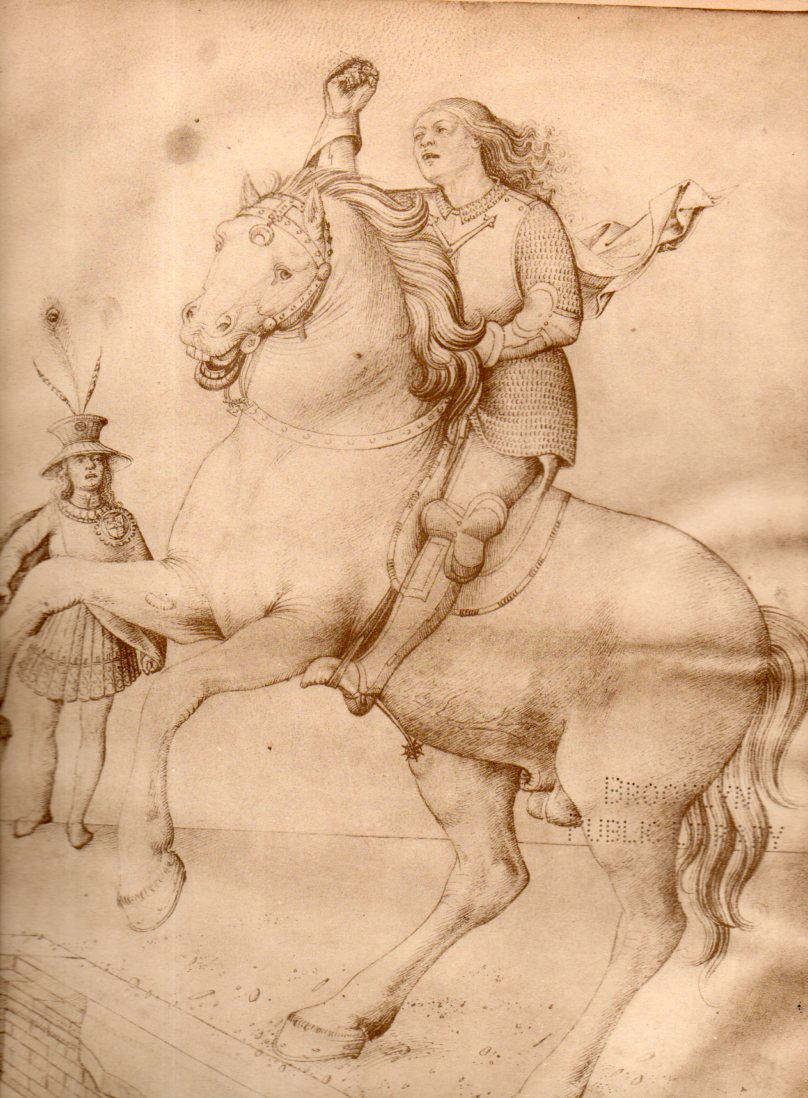
    In looking through two volumes of Jacopo’s drawings, I was struck by the number of times that horses and other objects appeared without detail, as solid solids, or mostly solid, quite outside the way in which these things were painted in the 15th century. Pacing though the books flipping through the open pages is like looking at a pop-up book in reverse–each set of pages opened are like looking into, looking through, the book, into space.  They are collections of perspective. And they are populated by those other solids, which was surprising.

    His horses appear very much like those in Uccello–except of course that these images were personal, workbooks for the artist, idea-machines and memory devices.  There was plenty of detail in other aspects of these drawings, but the lack of the detail int he Uccellian manner really struck me.

    Christiane L. Joost-Gaugier’s “Jacopo Bellini’s Interest in Perspective and its Iconographical Significance” found in  Zeitschrift fuer Kunstgeschichte  (1975)
    makes a very learned and eloquent case for the overwhelming interest
    that Belinni had in the study of perspective–not to the exclusion of
    all other things, because there were still patrons to be satisfied and
    religious and triumphal scenes that needed to be  painted–and
    concentrated on that interpretation focusing on Bellini’s stylebooks. 
    (Most of Bellini’s output has been lost, but there are two volumes of
    manuscript studies that have survived.)

    “Though
    many of Jacopo Bellini’s drawings are reminiscent of model-book notions
    in that they illustrate a variety of suggestions for the representation
    of traditional themes – for example Flagellations, Adorations, Davids,
    and animals -they are, taken as a whole, entirely different from model
    book drawings. Jacopo rarely concentrated on a subject for the sake of
    its thematic content. Almost never does a bald statement of fact appear
    to describe, for example, a biblical event. Rather than focusing on the
    event itself, Jacopo’s compositions characteristically are concerned
    with other things. In the vast majority of cases the subject is set
    within the context of a variety of architectural motifs or in that of an
    extensive naturalistic world. It would appear that for Jacopo Bellini
    biblical subject matter was a justification for his participation in a
    variety of other new interests. Primary among these was the special
    attention given to perspective…”
    No mention of course of the Uccello horses.  And perhaps they’re really not there there, but it certainly looks like they are, at least to me.  They might not have been there for Gaddis, either, as Bellini doesn’t show up in the book, Gaddis thinking more about Uccello, and then even more so of Hieronymous Bosch, Hugo van der Goes, and Hans Memling.

    And here it is, Bellini’s solids, an example:
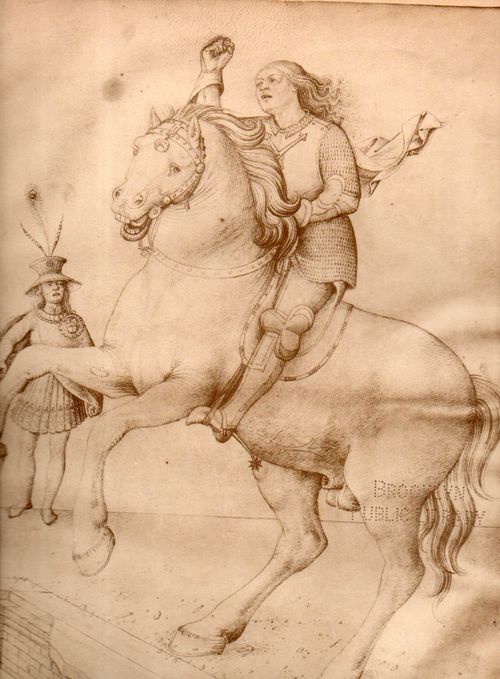
    Solids bellini913
    There are others as well, examples of what, I am not sure–fantastic visions into blankness and into the future of what painting would become 450 years hence.

    Perhaps they were just place-keepers, to be filled-in as neededm just a shrt-hand expression of a horse rather than a transcendental imperative.  After all, Bellini knew horse muscles, and decided in his workbooks that he just didn’t need to draw them, or that in the sense of Bartleby the scrivener that he’d prefer not to. 

    Notes:
  • The Origin of Shadows and Directions of Vanishing Points

    JF Ptak Science Books  Quick Post

    Dubreuil origins of shadows det 1_edited-1

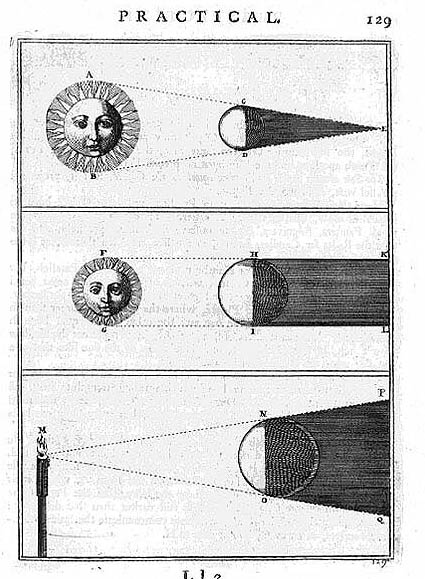
     Shadows must come from somewhere, and it is that “somewhere” that this beautifully-titled chapter addresses.

    Dubreuil origins of shadows det 1

    In another unusually-titled piece, we find a “shadow-maker” embedded within  patented “cloud creator”, as so

    this taken from the 25 May 1892 patent granted to Steele MacKaye, though his apparatus was only for generating special effects for the theatre.  Still, the title of the patent was pretty catchy, as was the “shadow-maker” part, which is evidently the only time that phrase is used in U.S. patents through 1900. 

  • Standing on Your Stagnant Nerve-Juice Nostril Tube? The Daily Dose from Dr. Odd

    JF Ptak Science Books     Daily Dose from Dr. Odd  
    Follow Me on Pinterest

    This cure-all from G. Anston looks simple, but the hydraulics of his nerve juice pumper is actually a little involved, or more involved than it needed to be given the fact that the machine didn’t actually do anything productive.  That said, Anston was  setting out to “move fluids” and cause all manner of cure-alls for “air stagnation” in the body, without the trouble of losing any time except for sticking those tubes into your nostrils.  I do not know why the artist has the subject standing on  #44 (the nerve-waste elimination tube) which was basically the tail-pipe of the cure-waste that was supposed to be flushed from a window.  It seems as though stopping the exit of the stagnated brain-air and nerve-fluid effluvia might’ve made the subject’s head pop off a little, which would be problematical. 


    [Source:  Google Patents, here.]

  • Movable Maginot: a Feast of Morbidly Techno-Gigantism

    JF Ptak Science Books LLC   Post 959, extended.     Daily Dose from Dr. Odd
    Follow Me on Pinterest


    Nothing
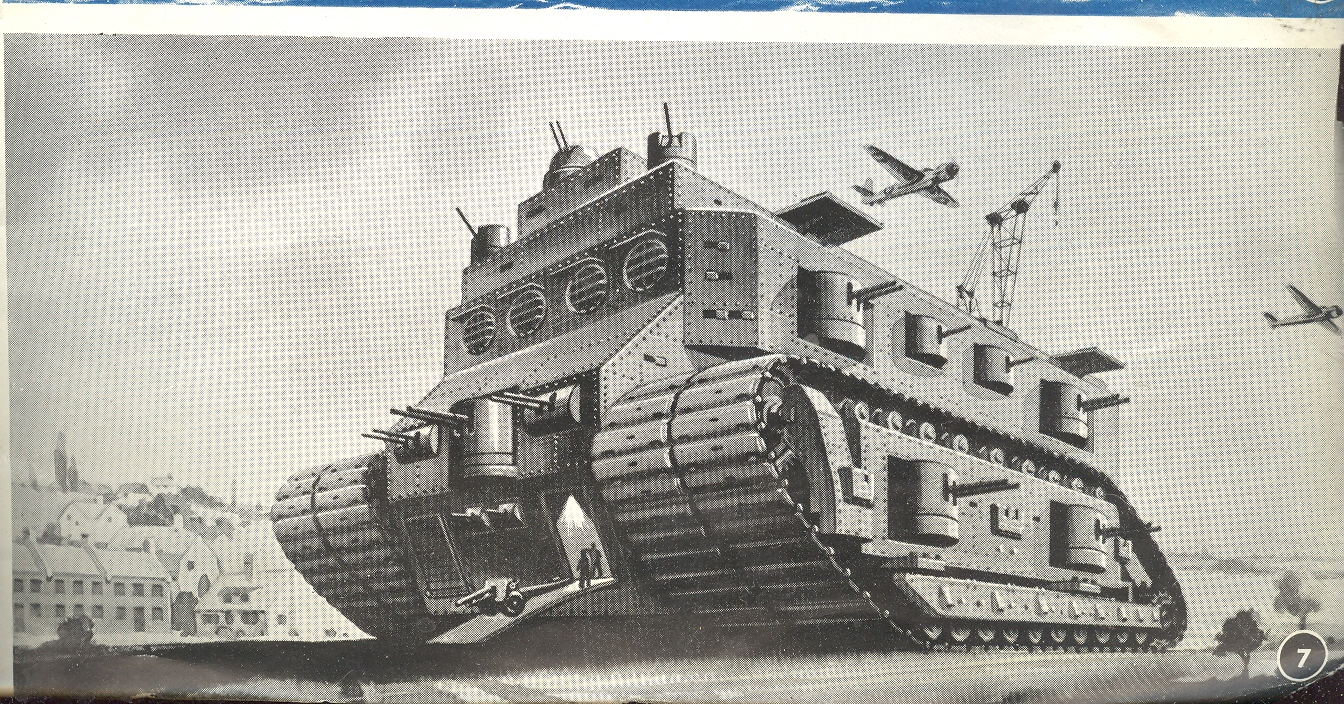
    quite exceeds like excess said Mr. Wilde (and others) , and he/they could be no
    more correct when looking at this picture of a Movable Maginot Line—it is a
    mobile fort, complete with plane launching capacity, two dozen long canons, a
    crane, and a host of other stuff.  


    000--win--land tank


    It
    looks as though it has ample room for all sorts of materiel though leaving
    little room for, perhaps, an engine.  I
    just can’t see where it might be…perhaps it is near the
    not-room-enough-for-it-either ammunition compartment.  Maybe they were in a smaller armed cart being
    pulled by the mothership?  I reckon that
    this beast was 66 feet high, 100 feet long and 60 feet wide, which is a very
    big, heavy near-cube. Good luck with driving the thing in anything that was
    less than perfect conditions.  A big
    profile like this, filled with guns and canons or not, also makes for a big
    target profile—a tall, broad target with flat/non-inclined sides. ( I should
    also point out that there are two 10’ loudspeakers mounted on the front of the
    fort to instill fear in the people that the thing was approaching with loud
    noise.  The author points out that the
    Nazis used noise against the French with their “screaming dive bombers”, and so
    the fort would use the same tactics against the Nazis in the moveable fort—not
    that the sound of the engines and the attendant noise wouldn’t’ve been enough
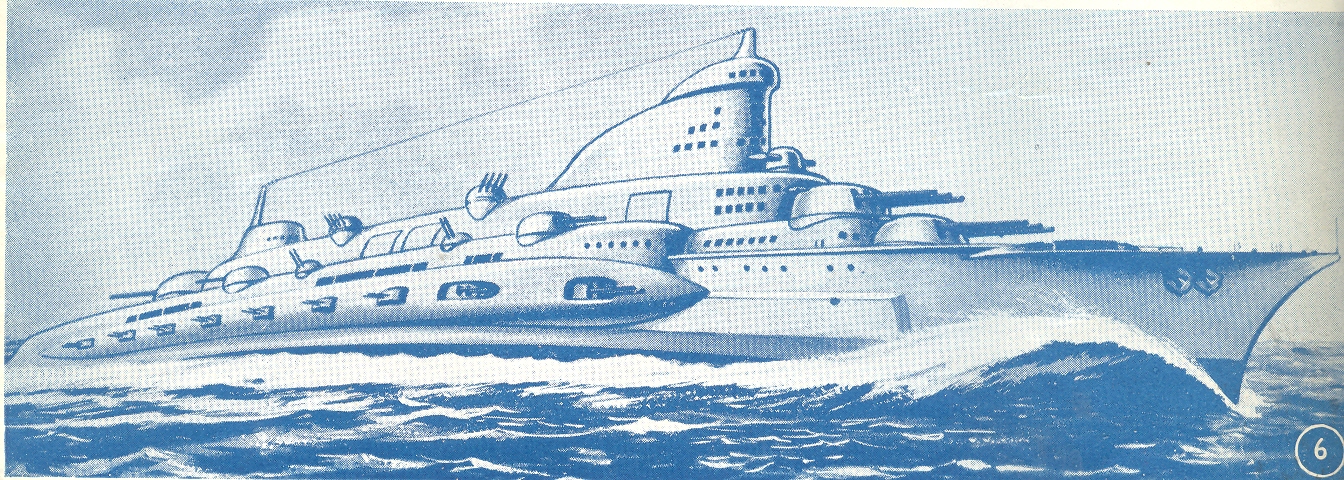
    of a fear factor in themselves…)000--win--tubular ship

    But
    the image of such a monster, sensical or not, was enough for the purposes of
    the pamphlet in which it appeared.  The Brains to Win was a piece of British
    spirit/hope propaganda issued at about the time of the Battle of Britain in
    1940, and it listed the sorts of technological breakthroughs that were going to
    push the nation over the top to victory. 
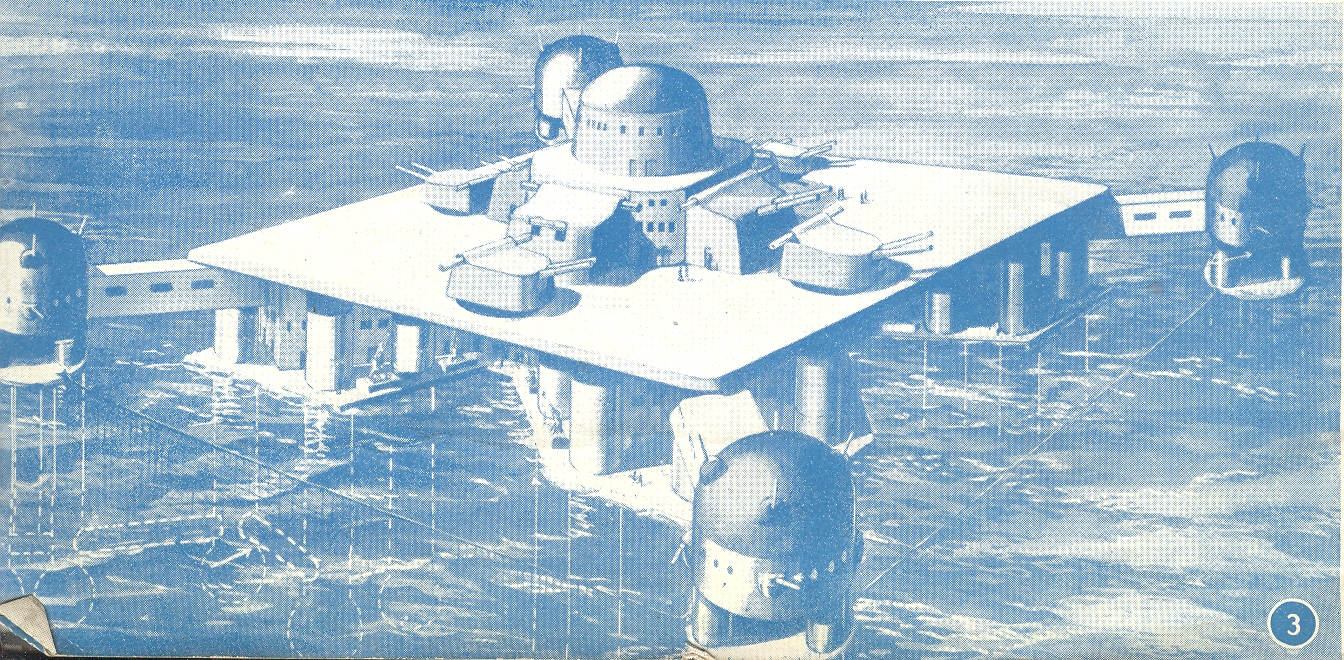
    Some of the stuff was real, some not—like the moving fort/Howl’s Castle
    above, and the floating fort, below.


    000--win--floating airport


    I’m
    not sure where a floating fort would make sense, especially one of that size.
    (Iterating the figures on deck into distance, it looks as though the deck on
    the floating platform was 150 or 200’ square. 
    It would’ve looked like a big target from above.) Given the time and
    expense and material  needed for such a
    thing, it seems that it would’ve been cheaper to make a moveable fortress not
    quite so big, with less of a profile, and more mobile—I think that this was
    called a “destroyer” or “battleship”.  

    But
    no matter, I’m just poking fun at some of the future vision that became archaic
    the moment it was drawn, punk retro-future. 
    All the pamphlet was trying to point out in its 32 pages was that
    overall the Brits were smarter than the Germans and that would be the balance
    for victory in the war.  “Hitler will get
    some very unpleasant surprises before this is over” the author very politely
    pointed out, no doubt with one eyebrow raised.  The scientists agreed.

    And
    they were right, which is all that matters.


  • Tech Quiz: The Tooth Telephone? (1880)

    JF Ptak Science Books  Quick Post

    This device looks a little suspect, but it isn’t. Well, on first sight of the patent drawing this device seemed dubious and quacky, and since the patent office issued some-number of patents for quackery, it was entirely plausible that this was one of those beasts.  This is the kind of quackery beasty that would latch on to a new discovery or invention and somehow derive and twist the name or concept of the new thing into something fabulous or miraculous (as with the case of  radium suppositories and x-ray massages for the bones).

    The device is a vibrating element to help people with hearing loss hear conversations on the telephone. On reading the patent though it becomes pretty clear that this thing could work, or should work, depending upon the hearing loss of the receiver.  Patented about four years after the Bell patent, there were nearly immediate reports on Mr. Fiske’s invention in Scientific American, The Electrical Journal, and Engineering (seen below). 

    ·Posted by :

    ·in:

    —

Recent Posts

Archives

Categories