A Daily History of Holes, Dots, Lines, Science, History, Math, Physics, Art, the Unintentional Absurd, Architecture, Maps, Data Visualization, Blank and Missing Things, and so on. |1.6 million words, 7500 images, 4.9 million hits| Press & appearances in The Times, Le Figaro, Mensa, The Economist, The Guardian, Discovery News, Slate, Le Monde, Sci American Blogs, Le Pont, and many other places… 5000+ total posts since 2008.

  • Daily Dose from Dr. Odd: Let Your Man fill Your Eyes With Smoke

    JF Ptak Science Books  Quick PostDaily Dose from Dr. Odd series

    Follow Me on Pinterest


    Man Keep225Darrell Drake was full of advice, not much of which seems to have weathered the wearying bits of time very well.  Most of what he has to offer has to do with being coy, reserved, and retiring, and so much so to the point of being insipid acquiescing in the superior qualities of the man, forever in the back seat, quiet and demure, patient and understanding and making the back-step always the job of the woman. Not much of a surprise.  But what was very unexpected was the chapter called “Let Smoke Get in Your Eyes”, a four-page baiting in which he warns women against the antagonism of correcting the manners and behavior of the man, so much so that she should be well willing to have  smoke blown into her eyes rather than suggest that the smoker not do so–you don’t see that every day. 

  • An Underground Tornado of Coal

    JF Ptak Science Books   Quick Post  #427 

    Follow Me on Pinterest


    Coal tornado220

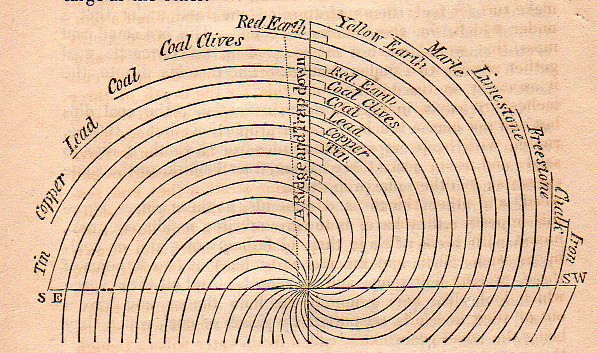
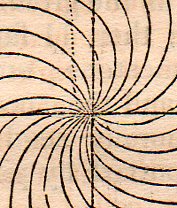
    This simple theoretical map is an invented scheme of John Strachey (1671-1743), an early geologist who with this thinking introduced the very big geological idea of strata. The original appeared in the Philosophical Transactions in 1725 (full text here, and another, with a more-realized version of representing strata, is here), and was reprinted I believe in Popular Science Monthly in 1869 with the above illustration (somewhat changed from the original).   My interest in the image is tinged with design, as it reminds me of an enromous subterranean tornado of coal, even though what Strachey is doing here is establishing the idea of strata.  

    Coal tornado221

    These lines then are the strata of these geological elements as they fan themselves out like pages from a book from the center of the Earth outward.  Its all very vague at this point, but the kernel of a great idea is present.

    The phrase “underground tornado” appears very few times in the intertubes with the world “shelter” accompanying it.  It is nonsensical, mostly, to think of underground weather and particularly extreme weather, but it has certainy playud itself out many times in literature in the pre-science-fiction fiction days. In some stories there are multiple suns, amd waterfalls, and vast canyons many times the size of the Grand Canyon, and so on–there just doesn’t seem to be much bad weather, down there.

    [Note: Strachey, a country squire and gentleman of science, published his theories and findings in two papers in 1719 and 1725, and then in a small pamphlet in 1727.]

  • Found Art in Antique Books and Writing to the Future, 1808

    JF Ptak Science Books  Quick Post

    Follow Me on Pinterest

    Found art list d232

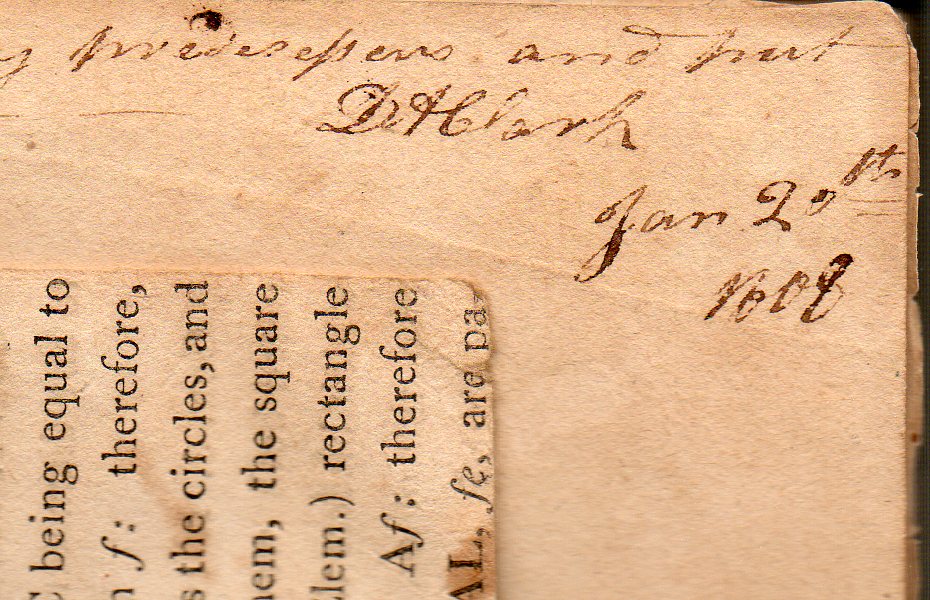
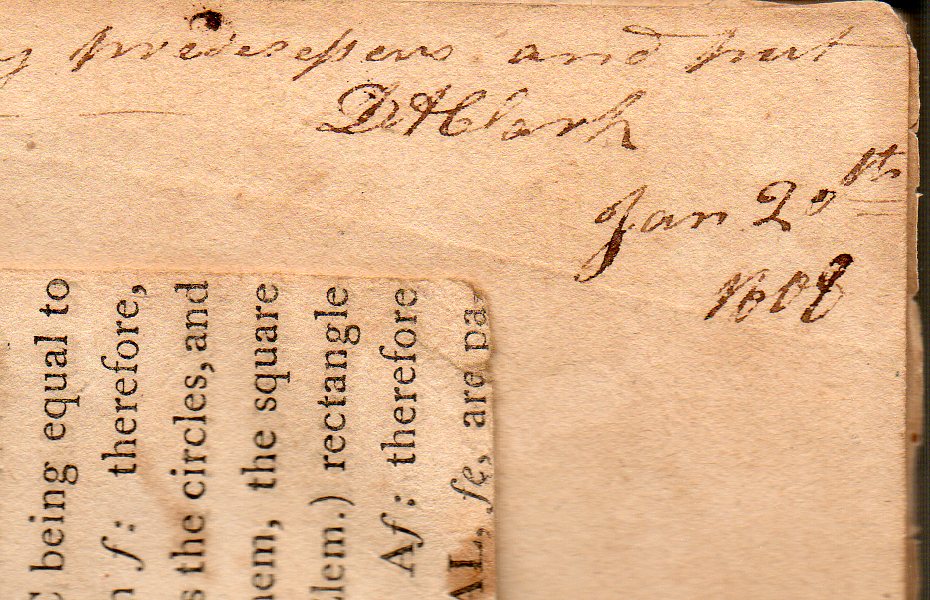
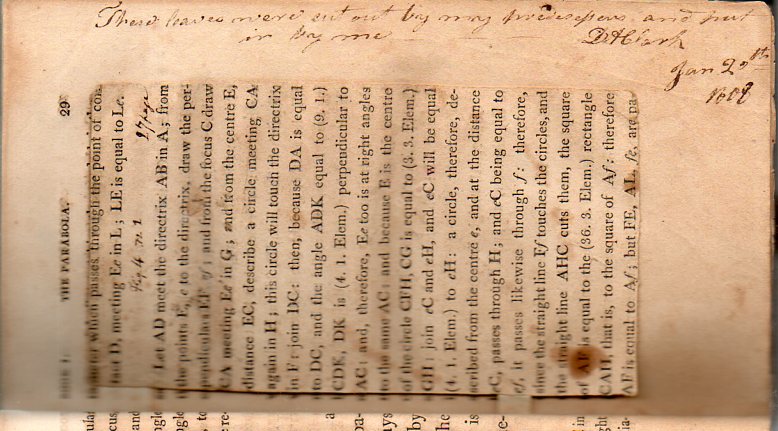
    • “These leaves were cut out by my predecesor and put/ in by me.  D.H. Clark, January 20, 1808”,  detail, inscribed on page 29 of Simson’s Elements, 1808.

    There was a leaf missing in Mr. Clark’s book–the leaf for page 27/28–some of which he salvaged and placed back into the book on tabs, which you can see at the side of the book.  He also did not want to have any future owner of this book to think ill of him for having disfigured it.

    The text is by Dr. Robert Simson, and called Elements of the Conic Sections, and was printed in New York in 1804. It was owned at some earlier point by Joseph Cheetham (“Princeton”), and then by L(ewis) D. Bevier (“bought of Cheetham”) and then probably by Clark. They were all at Princeton College, and all associated with the bachelor of arts class of 1806 (though Cheetham seems to have graduated some years later). 

    I am the owner of the book today, some 200 years later, and I hear Mr. Clark.  Somehow the page got loose Mr. Clark put it back. The end. 

    Found art list d232

    There is also a bit of found poetry in that bit of text:

    Being equal to

    therefore

    the circles, and

    the square rectangle

    therefore

    are.

    Found art list d231

    ·Posted by :

    ·in:

  • Found Art & a Massive Simplification

    JF Ptak Science Books   Quick Post

    Follow Me on Pinterest

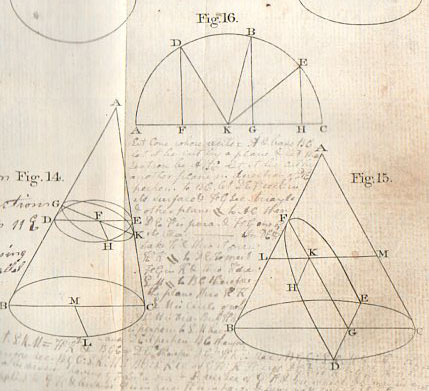
    I wrote yesterday about found poetry in Simson’s Elements of the Conic Sections (1804)–there was much more.  Some of the owners of this book used it pretty hard over the years (mostly in the early decades of the 19th century), and there are numerous examples of worked problems in the margins and in the folding engraved plates of illustrations of proofs.

    Found art list c230

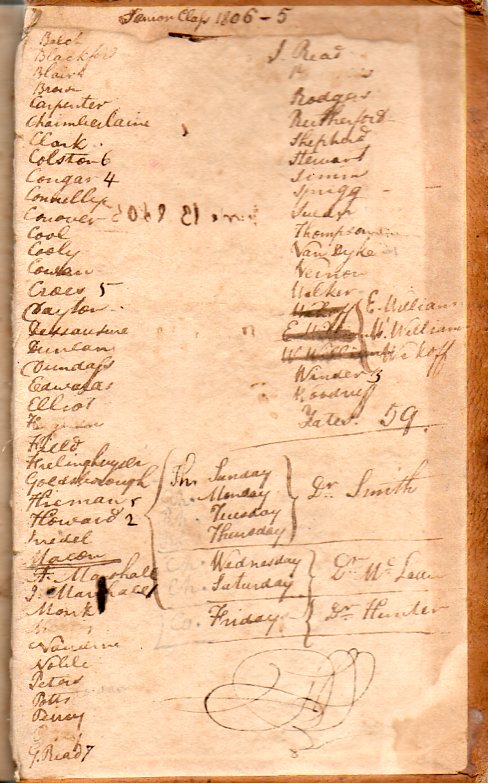
    They are beautiful works. But one of the other finds in this book is written out on the rear paste-down, which contains (on one sheet of paper) the entire 1806 class for the bachelor of arts degree at Princeton College for 1806. ( A little more information on these Princetonians is available at the General Catalogue, Princeton Universtiy–the list checks out to a man.)

    Found art list229
    It is interesting to consider that an entire attending class of what is today a very major institution could be easily listed on one 8×5-inch piece of paper.

    ·Posted by :

    ·in:

  • Outsider Thinking–Space Friction, 1944

    JF Ptak Science Books   Quick Post

    Follow Me on Pinterest

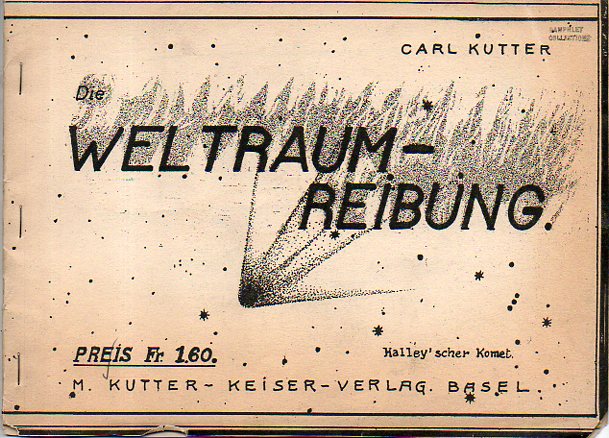
    “Ist der Weltraum absolut leer, oder nicht?” (“Is outer space absolutely empty, or not?”)

    Outsider weltraume 234
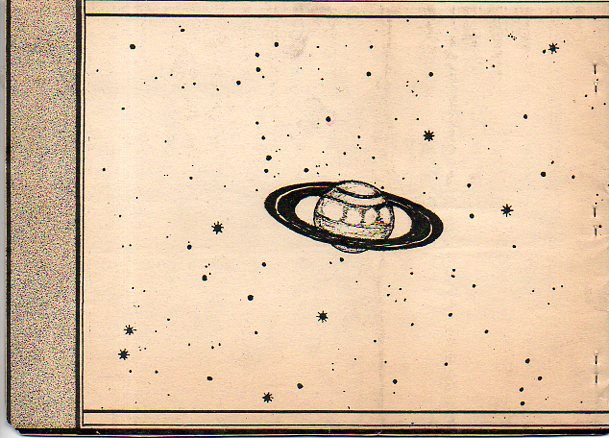
    Carl Kutter challenged Isaac Newton on the 1st law of motion.  Or at least that is what it looks like to me, the story presented in a slim but attractively designed pamphlet, published in Basel in 1944. Die Weltraumreibung presents the issue of “space friction”, and I frankly could not make my way through that much of it–not even to the point of understanding whay Halley’s Comet is illustrated on the front cover. But the design is interesting, and the issue was certainly very highly unexpected.

    Outsider weltraume 235

    This site is interesting:  http://tvtropes.org/pmwiki/pmwiki.php/Main/SpaceFriction 

  • Shovel-Leaners of 1565

    JF Ptak Science Books  Post 2011   Paper Microscope series

    Amman--shoveler_edited-1

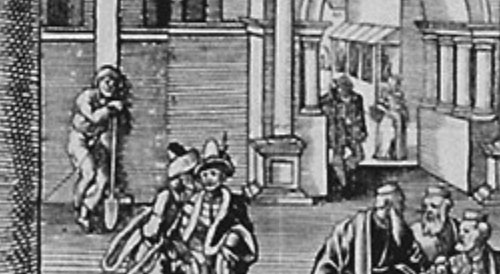
    There is a particular class of illustration in which, among the secondary figures of the image, there is a small happening, an everyday trifle, that has been captured by the artist and included in the overall communication for no necessary reason. (for example, see here ). I’ve written about this a little before on this blog in posts about finding images-within-images: the unecessaries among the unnecessaries, the bits and pieces of everyday human existence that in and of itself is not worth commentary but which nearly everyone experiences.  Small bits, they are, of a tremendous human nature, the things that are done in private, or are so universal but inconsequential that they are shocking to see when illustrated in print. Another fine example of the unexpected story enclosed in great detail is found in this earlier post,  On Antique Waves and Dropping Your Hat in Them, based in an engraving in Romische Historie…, published in Mainz by Johann Schoeffler 1450 years later in 1514, which was one of the most beautifully illustrated books ever produced in that city.

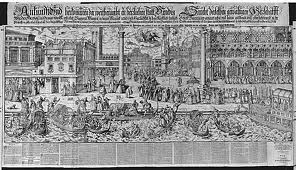
    Today’s example under the paper microscpe is a magnificent and complex recording of the procession of the Doge of Venice by Jost Amman (1539-1591, Swiss, Procession of the Doge to the Bucintoro on Ascension Day, with a View of Venice), and printed ca. 1565, (the full version of which is found here).

    Its the worker leaning on the spade (above) that attracted my attention–just a worker taking a moment out of his worday to watch the procession, caught in the act by Amman…and here we see him still, 447 years later, a wonder occupying 1% or less of the engraving.

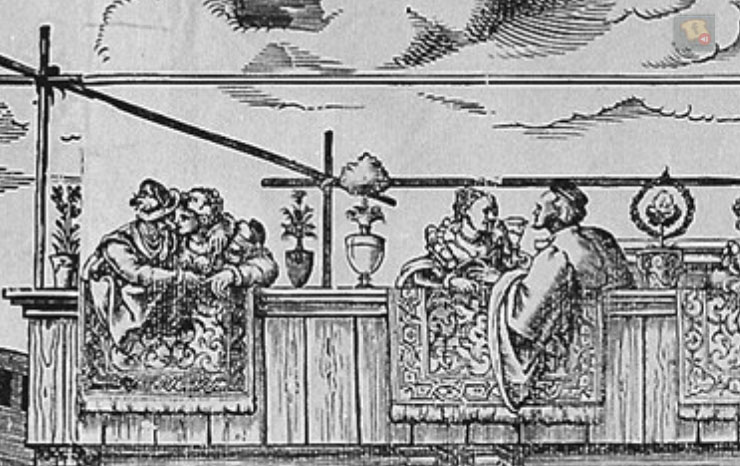
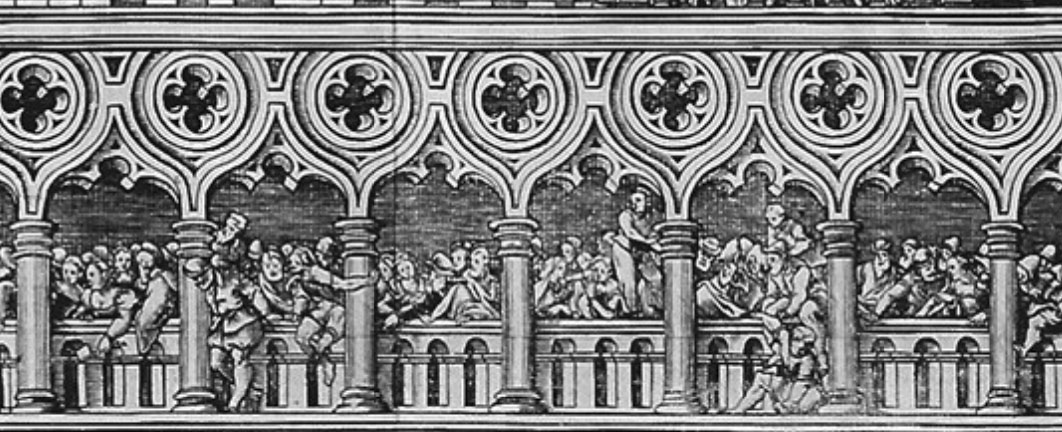
    There are many of these small vignettes laced throughout the engraving, like these upper-echelon folks having a few liberties with each other from the roof of one of the buildings:

    Amman--doge--upper level_edited-1

    Amman--railing

     And the full engraving:

    Amman doge full
    A full, searchable version is available here from the Metropolitan Museum of Art


  • Decimals, Holes & Dots in the History of Mathematics

    JF Ptak Science Books   Post 2011

    There is an interesting side note to this blog’s series on the histories of holes and dots–a mathematical aspect involving decimal points, decimal notation and placeholders.  This is exclusive of the number zero, however, which is an entirely different topic. 
     

    Reisch b

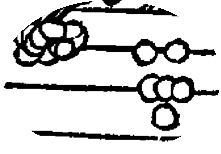
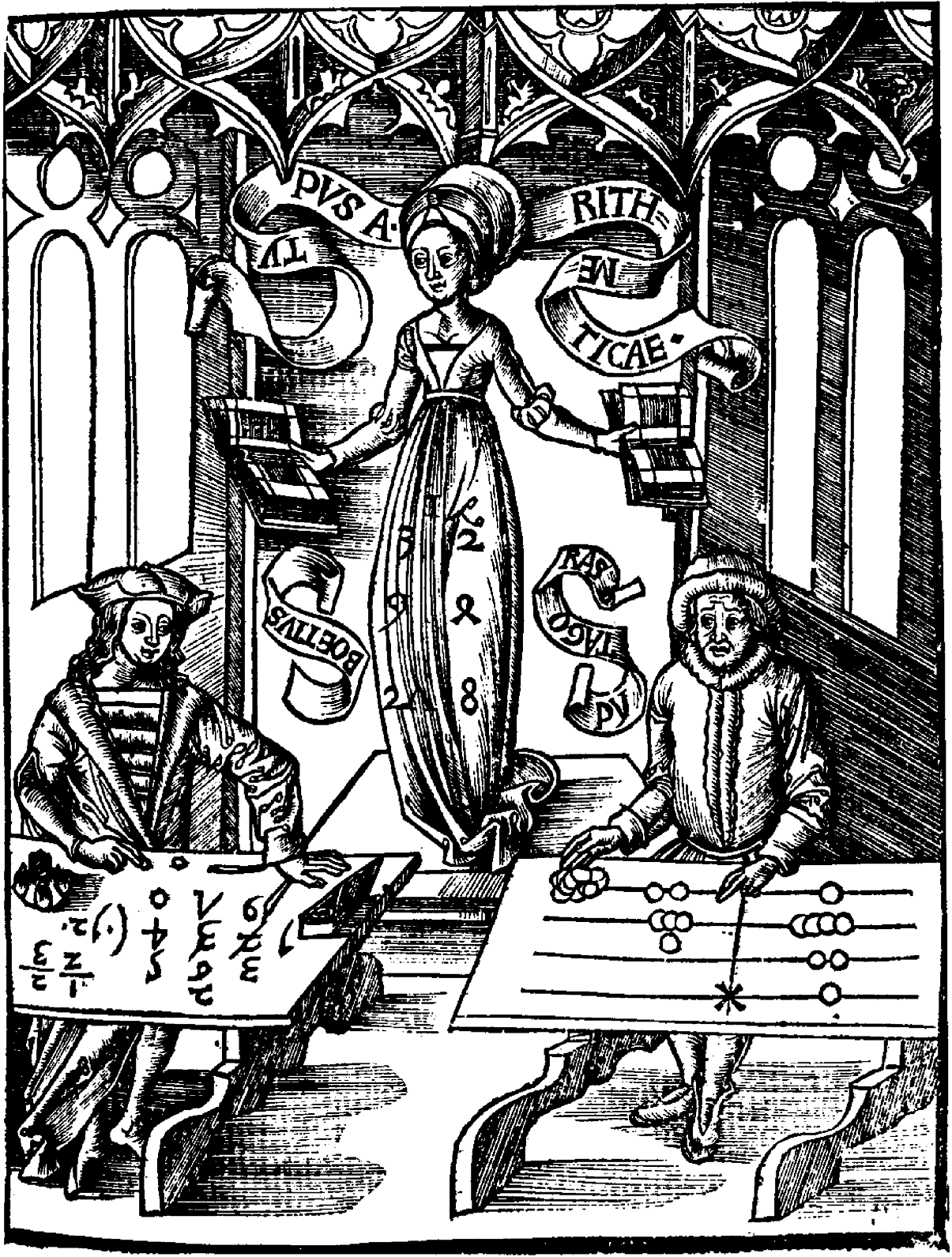
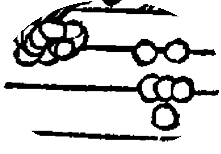
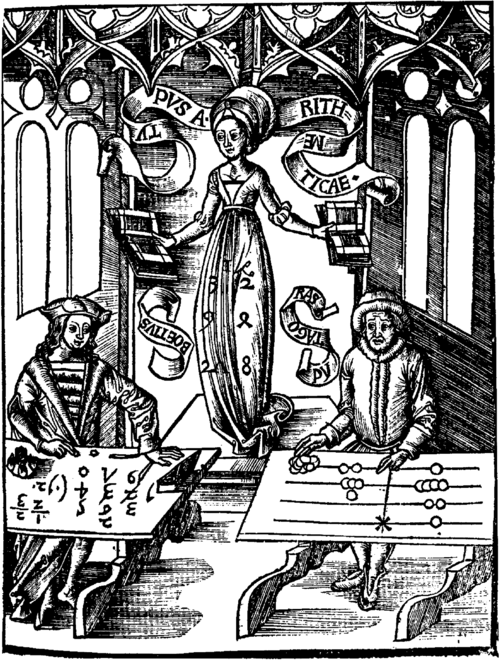
    The book that this  beautifully-illustrated counting board (below) is found is in Gregor Reisch’s  (1467-1525) Margarita Philosophica (1503)  and depicts (amidst much else in the greatly humanist volume) representations of the mathematicians Boethius and Pythagoras working math problems on the given tools of their day. The tools on the right seem to be circles, but they’re not–they’re counting stones, and for our intents and purposes here, they shall be dots, and in the history of dots in math and business reckoning they have had a strong and long life. 
    Reisch

    We can see in his expression that Boethius, on the left, is rather enjoying himself, knowing the superiority of his system of counting, which was the the Hindu-Arabic number notation–he definitely has a sly, self-appreciating smile on his face.  Pythagoras, working with the old counting table, definitely looks worried, or at least unhappy, unsettled.  Never mind that Pythagoras (570-495 b.c.e., none of whose works exist in the original, another sort of entry in our Blank History category) was at a definite disadvantage in the calculating department, being dead and all that for hundreds of years before the Arabic notation was more widely introduced in the West, probably being introduced by Pisano/Fibonnaci in the 12th century.  But it does fall to Boethius, the smirker, to have introduced the digits into Europe for the very first time, deep into the history of the Roman Empire, in the 6th century.

    The numerical stand-ins in the Reisch book with which Pythagoras worked were blank, coin-like slugs used as placeholders, and would be used in place of rocks or pebbles or whatever other material was at hand. It is interesting to note that the Latin expression, “calculos ponere”, which basically means “to calculate”or “to compute”, is more literally translated into  “to set counters” or “to place pebbles” (upon a counting board) or to set an argument2,  which is exactly what some of the Roman daily reckoners would do at their work. And also used, in this case, by the unhappy Pythagoras.

    The foundation for the .14159… that comes to the right of the integer 3 in pi is a relatively recent idea in the history of the maths–at least so far as the represrntation of the ideas in numbers and the decimal point is concerned. 

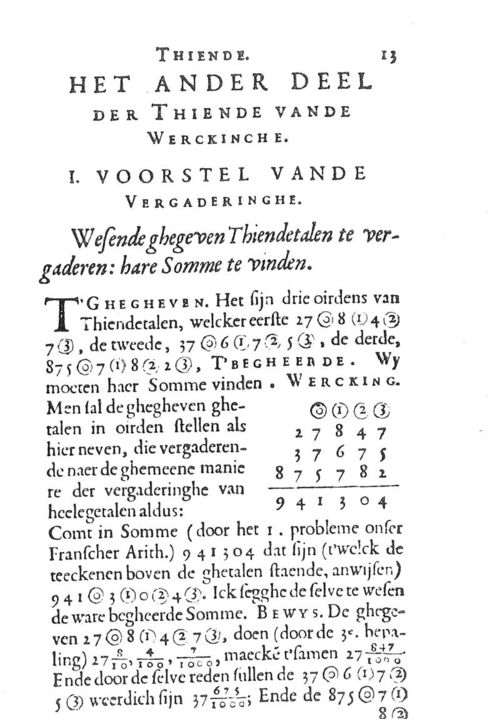
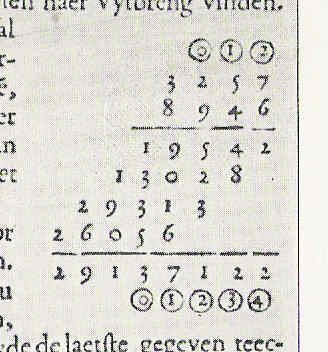
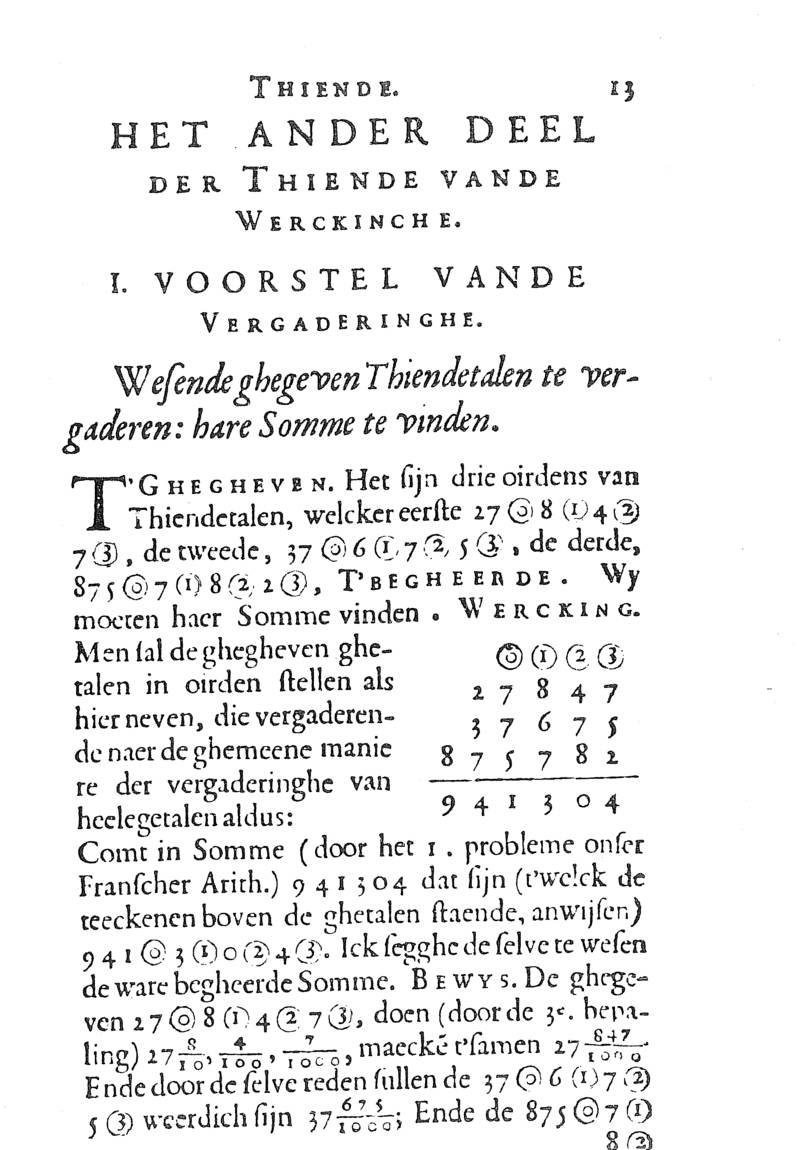
    Simon Stevin (1548-1620) introduced the idea of decimal numbers in his 36-page De Thiende (‘The Art of Tenths”1) in 1585, an idea that replaced much more cumbersome earlier methods of representation.  So, the number 3.14159 would be written in the Stevein notation as (where in this case numbers enclosed by brackets, i.e. “[9]” would have been represented in print as a 9 within a circle) 3[0]1[1]4[2]1[3]5[4]9[5].  It is also seen here:
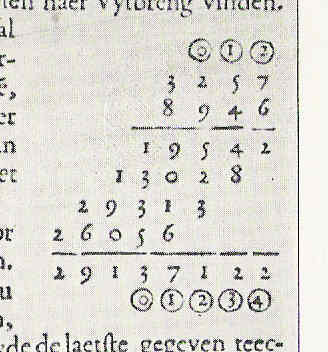
    Stevin decimal
    [Source:  math Words, here.]

    Stevin decimals[Full text available here.]

    The importance of the introduction of this idea is difficult to underestimate, according to many and by example the  The Princeton Companion to Mathematics by Timothy Gowers:

    The Flemish mathematician and engineer Simon Stevin is remembered for
    his study of decimal fractions. Although he was not the first to use
    decimal fractions (they are found in the work of the tenth-century
    Islamic mathematician al-Uqlidisi),it was his tract De Thiende (“The tenth”), published in 1585 and translated into English (as Disme: The Art of Tenths, or Decimall Arithmetike Teaching ) in 1608, that led to their widespread adoption in
    Europe. Stevin, however, did not use the notation we use today. He drew
    circles around the exponents of the powers of one tenth: thus he wrote
    7.3486 as 7�3�4�8�6�4. In
    De Thiende Stevin not only demonstrated how
    decimal fractions could be used but also advocated that a decimal system
    should be used for weights and measures and for coinage.

    This idea would be further developed by Bartholomeus Pitiscus (1561-1613) who was the first to introduce the decimal point in 16123.   It was a far more robust and simple was of dealing with decimal notation than anything that had come before.

    Notes:

    1. Decimal arithmetic: Teaching how to perform all computations whatsoever by whole numbers without fractions, by the four principles of common arithmetic: namely, addition, subtraction, multiplication, and division. 

    2. The Reisch book is remarkable: it is basically a Renaissance encyclopedia of general knowledge, divided into twelve books:  grammar, dialectics, rhetoric, arithmetic, music, geometry, astronomy, physics, natural history, physiology, psychology,  and ethics.

    3. Pitiscus was also the first to introduce the term “trigonometry” earlier in 1595 in a highly important and influential work he produced in 1595.

  • A Beautiful Timeline: the U.S. Civil War

    JF Ptak Science Books   Quick Post 
     
    Follow Me on Pinterest


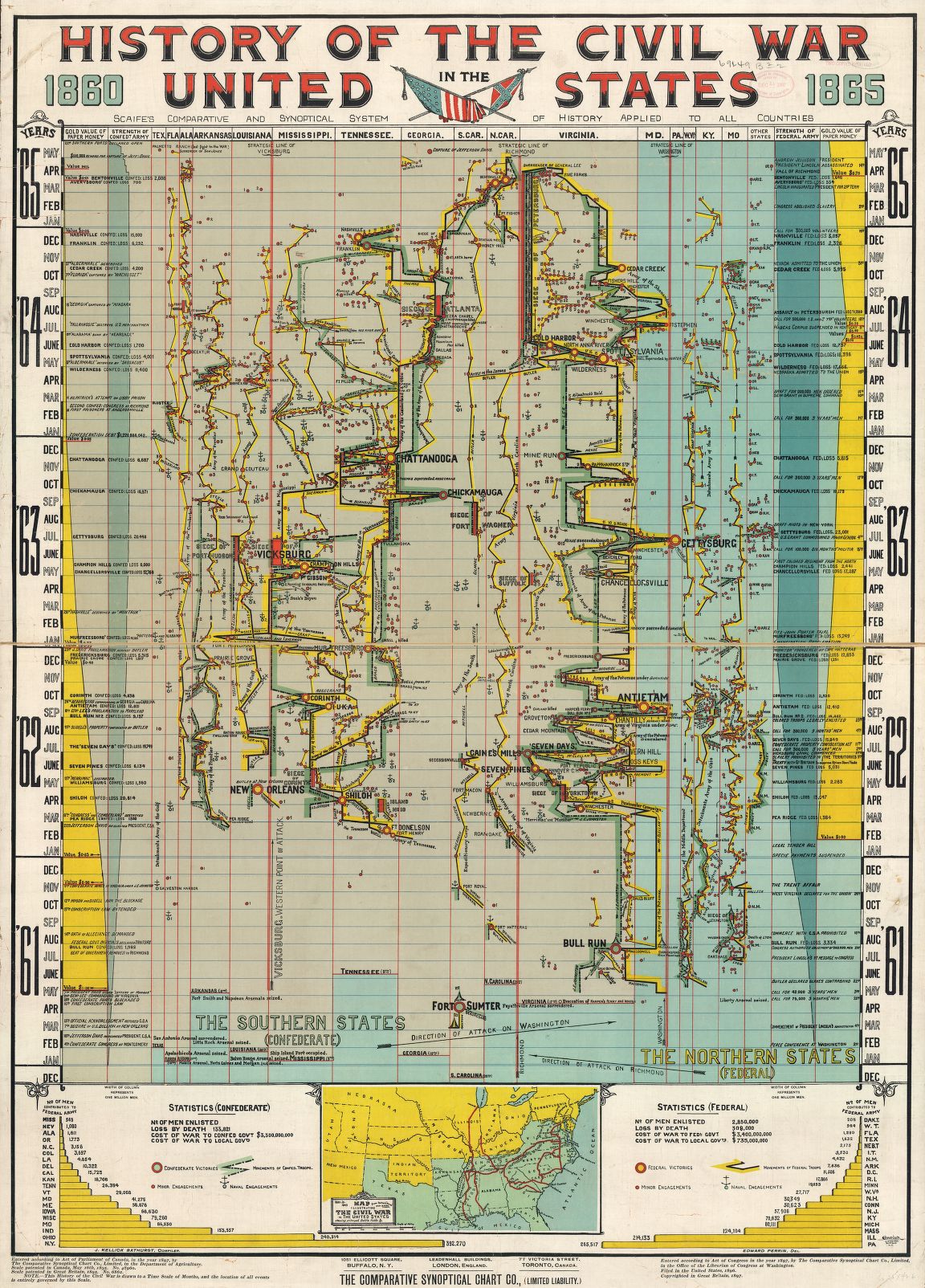
    This fantastic timeline of the U.S. Civil War  (History of the Civil War in the United States, 1860-1865) was compiled by J. Kellick Bathurst, drawn by Edward Perrin, and printed by the  Courier Lithographic  Co. of Buffalo, N.Y. in 1897. It is a beautiful thing, and is actually pretty useful:

    Maps--Civil War Infographic

    Source: the Library of Congress, here.

     
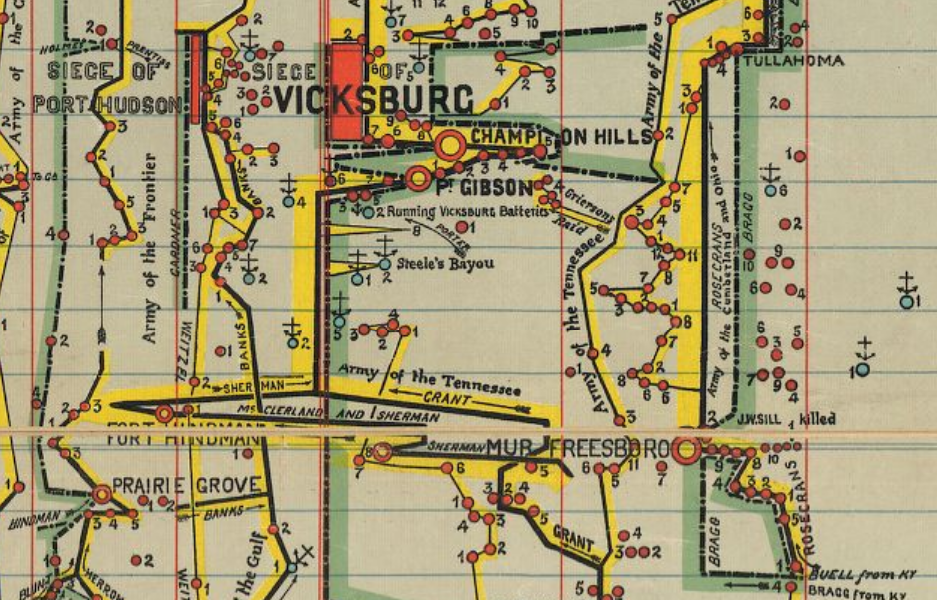
    A detailed view reveals that the timeline includes major (and minor) battles weighted for their importance and distinction:

    CW synoptical vicksburg


  • Notes on the History of Lines: Sight Lines

    JF Ptak Science Books   Quick Post    History of Lines 

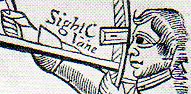
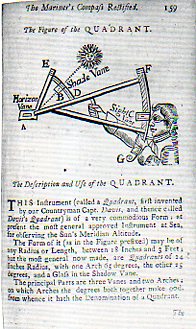
    These are particularly fine and relatively early printed images depicting a specific kind of line of sight–this one, a positioning, rather than a line of sight in fire control, or radial velocity, EM radiation or acoustics wave propagation, or targeting…this instrument was used to establish an imaginary line in perceived objects. 

    Sextant 237This is a detail from Andrew Wakley’s  The mariner’s compass rectified : containing tables, shewing the true hour of the day, the sun being upon any point of the compass ; with the true time of the rising and setting of the sun and stars, and the points of the compass upon which they rise and set … With the description and use of those instruments most in use in the art of navigation. Also a table of the latitudes and longitudes of places, published in 1763 and reprinted many times after that. (Full text is available from Google books and also from the Haithi Trust which offers a text version of the book as well.)

    The full page from which the detail is drawn:

    Sextant 236


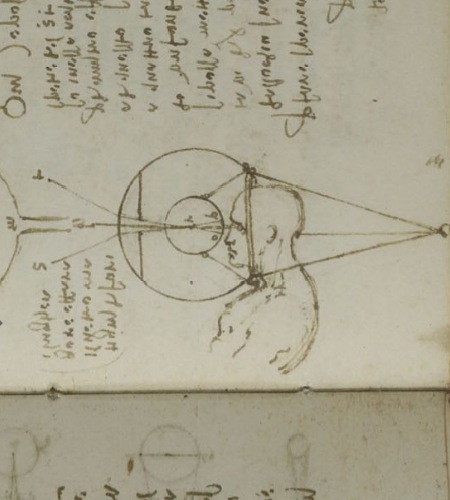
    There is a certain continuum in developing sight lines that comes to mind, as with this famous image drawn by Leonardo in 1508, perhaps the first modern interpretation of how the eye functions, kept privately in manuscript, the result of theory and experimentation:

    Leonardo eye

     Which leads us to the sigh lines of Albrecht Durer, illustrating (some 17 years later) the use of a perspective tool, the vielo, in his work The Drawing Manual published in 1525:

    http://www.oneonta.edu/faculty/farberas/arth/Images/ARTH_214images/Durer/durer_perspnude_large.jpg


  • History of Holes: the Battle of the Bulge, 1944-5

    JF Ptak Science Books   Post 2013  History of Holes

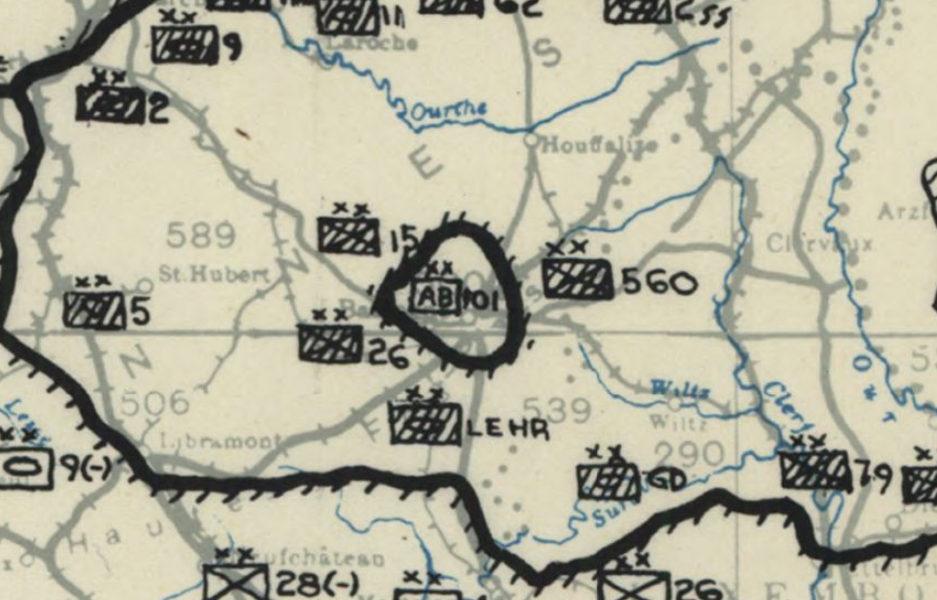
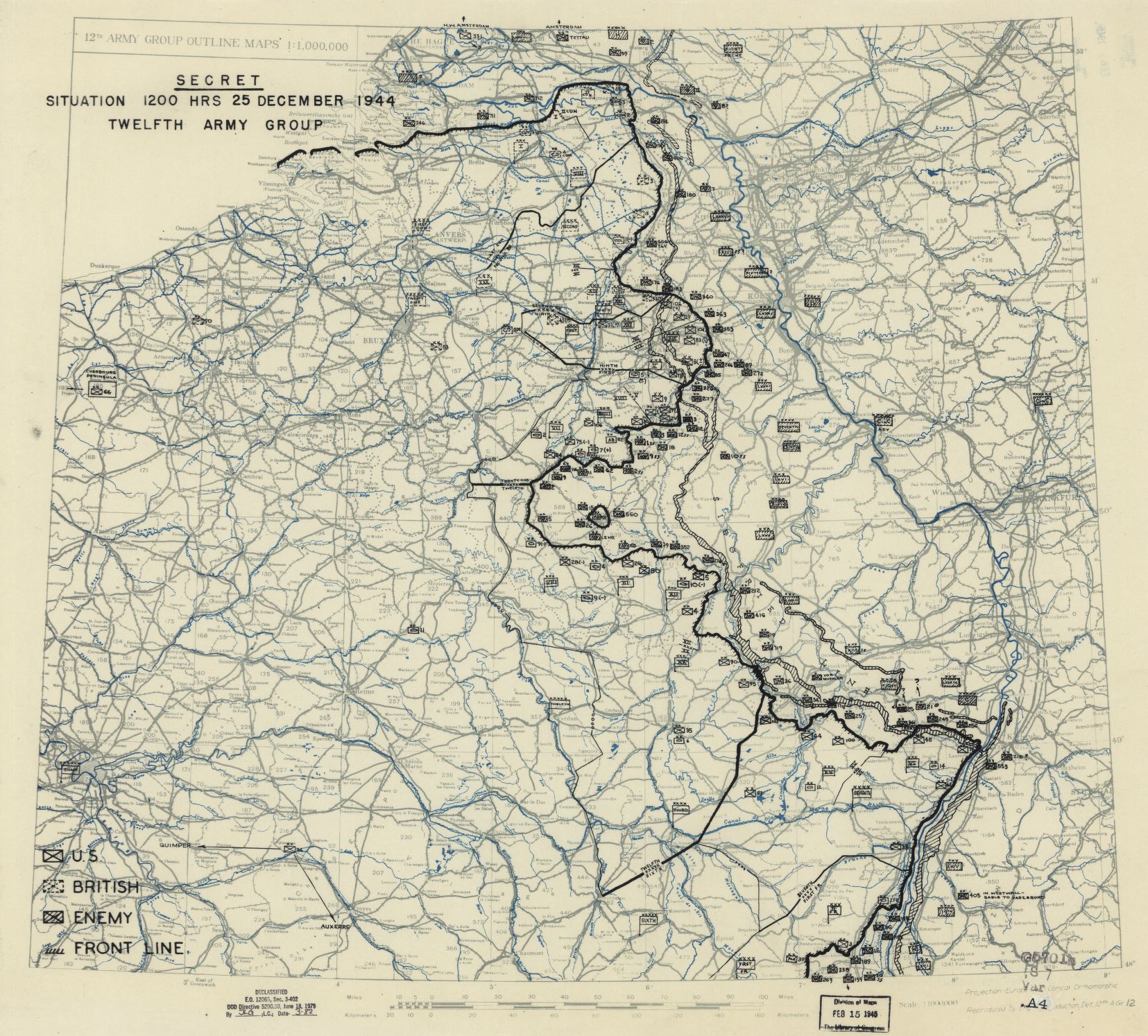
    This detail is from a pivotal moment in time in a crucial battle in the endgame of the European Theatre of WWII.  It is Christmas, 1944, and the action takes place in the Ardennes.  The German forces made a very unexpected assault through thick and very problematic wood, pushing Allied forces back along a long front, forcing a very perceptible bulge in the line–a bulge pointed the wrong way.  The bulge was pretty much in the middle of the line and in the middle of the bulge was a famous circle, and inside this circle was the 101st Airborne division in the town of Bastogne, and it was surrounded for the time being by overpowering elements of the Wehrmacht, including three infantry divisions and a panzer division  The boxes with the cross-hatches are all enemy forces, and for a time, the “AB101” stood quite by themselves.

    Bulge Dec 25

     The full map from which this detail is made is found at the Library of Congress site, here; the full suite of eleven maps showing the development of the battle from 16 December 1944 to 18 January 18, 1945 is also found here.

    Bulge dec 25 larger still

  • History of Lines–Big Lines, June 1944

    JF Ptak Science Books   Quick Post 

    DDAy lines

    [Source:  the Library of Congress, here.]

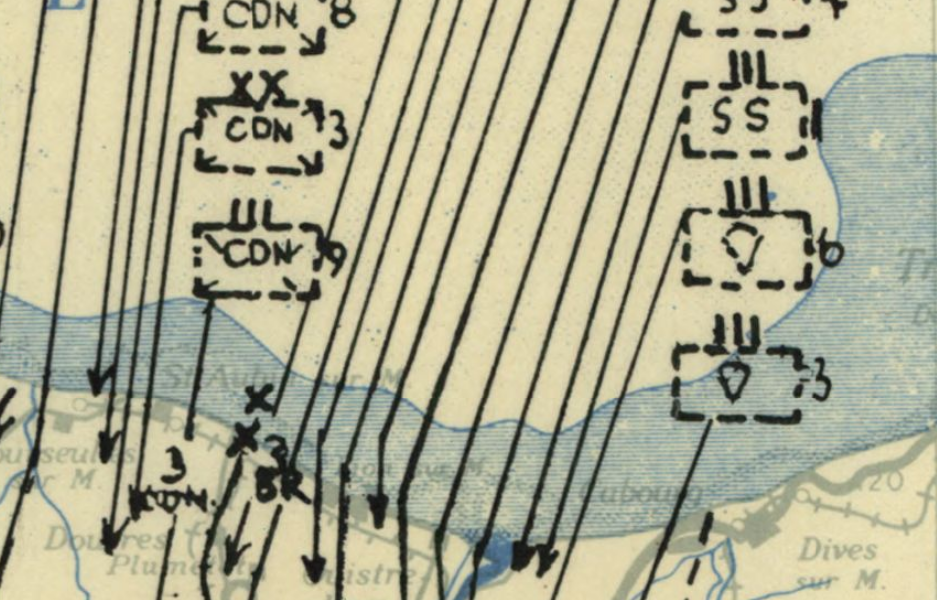
    The idea of being on the receiving end of these lines on 6 June 1944 is terrifying.  General Rommel pretty much figured out what was going to happen, and sort of when it was going to happen, but he was kept out of the strategy loop even though he was in charge of the German defences here, unable to convince Hitler to move men and machines southward to meet the invasion where he thought it was going to come rather than strengthen the position of defence in a place where he knew the invasion wasn’t coming, which was Pas de Calais. The pull of war by this time had destroyed the Luftwaffe, and German high command had been destroyed by Hitler–or at least communications and straegy within the command system of the German army was very highly compromised.  In any event, once the invasion had begun, there was not much hope for the Germans–it had been a complete surprise, with the huge efforts of misdirection playing themselves out beautifully. So beautifully, as a matter of fact, that once the invasion was well underway it was still a matter of no small debate as to where the “real” invasion would take place.  Even after the airborne divisions began landing some hours before the assault began, it was only the elderly and problematic General von Rundstedt who reacted appropriately, believing that the airborne assault was far too large to be a feint, and ordered two reserve panzer divisions to Normandy.  the amount of men and materiel moving onto Normandy was gigantic, impossible, overwelming, as some part of this map makes clear. 

Recent Posts

Archives

Categories