A Daily History of Holes, Dots, Lines, Science, History, Math, Physics, Art, the Unintentional Absurd, Architecture, Maps, Data Visualization, Blank and Missing Things, and so on. |1.6 million words, 7500 images, 4.9 million hits| Press & appearances in The Times, Le Figaro, Mensa, The Economist, The Guardian, Discovery News, Slate, Le Monde, Sci American Blogs, Le Pont, and many other places… 5000+ total posts since 2008.

  • The Concentration Camp in the Soviet Union, 1938

    JF Ptak Science Books  Post 2052

    Adolf Ehrt (1902-1973) was a twice-born Nazi who in 1935 let
    his 3-year membership in the party lapse so that he could do better work for
    Hitler from the “outside”.  In short, and
    to skirt some very interesting detail (over which I really don’t have much
    expertise), Ehrt felt that there was too much influence from the Church and government
    sources to fuel his unrequited need for purity in the party. 

    Ehrt wrote this anti-Communist propaganda (Der Weltbolschewismus ein internationales
    Gemeinschaftswerk über die bolschewistische Wühlarbeit und die Umsturtzversuche
    der Komitern in allen Ländern
    ) from an imaginary perch in something called
    the Anti-Kominetern, but was really nothing more than an arm of the Nazi party.  Appearing in Leipzig
    in 1936, this book savaged communism, communists and the Soviet
    Union to no end.  I own a copy of the book because it is an interesting document and speaks to its period, and also has
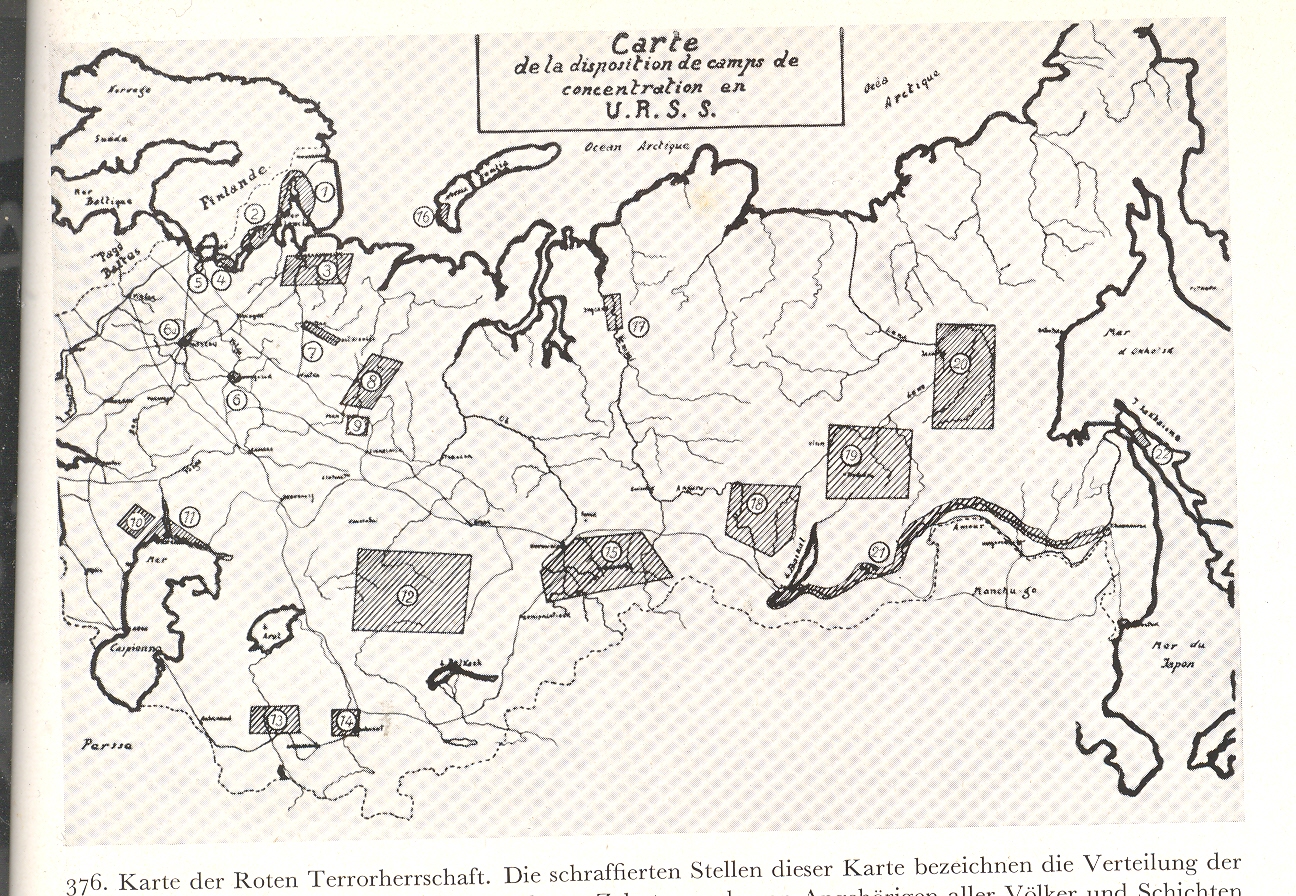
    hundreds of unusual photos, giving it a documentary appeal.  What I noticed just recently though was a map
    on part of page 481 in the weirdly skimpy section on the Soviet Union—a reproduction
    of a French map showing the distribution of concentration camps in the USSR.  I cannot remember seeing such a map in
    English during this time period.  (The forced labor camps are referenced in the map as “concentration camps”, though in th eSoviet Union they were known by the acronym “Gulag”, which stood for Glavnoe Upravlenie ispravitel’no-trudovykh LAGerei, or “Main Administration of Corrective Labor Camps”.)

    + USSR concentration 002


    + USSR concentration 001 


    (Clickable/expandable image)
     

    + USSR concentration b


    A more modern mapping of the Gulag system (for the period  1923-1961):

    Gulag_Location_Map.svg
    [Source: http://en.wikipedia.org/wiki/File:Gulag_Location_Map.svg]

    Ehrt was a Nazi painting with broad historical/Nazi strokes
    across a Communist canvas, and did get a lot of stuff right in his attacks; but
    considering the source his book is useless except for its pictures.   The USSR was a wicked place to be at this time for millions and millions of people, the
    bestial Joseph Stalin busy killing hundreds of thousands, imprisoning more—but
    this was in general not the story reaching folks in the United States.
    That this French map (source not given) showed two dozen or so concentration
    camps (Gulags, work camps) is remarkable; and of course it is just the tip of
    the Gulag system iceberg.  It was at
    least a start. It was also just the beginning of a particularly nasty period
    for the Russian people, who staggered under the weight of an edict called Article
    581 that sent millions of people to their doom. 
    This map was also published just before the Great Terror2, a
    spectacularly bad war of internal doom that tore millions from their homes and
    hundreds of thousands  from the
    earth. 

    The map, rare as it is in appearance and sentiment,
    seriously underestimated the extent of the barbaric Soviet existence of the
    time. 

    1. “One can find more epithets in praise of this
    article than Turgenev once
    assembled to praise the Russian language,
    or Nekrasov to
    praise Mother Russia: great, powerful, abundant, highly ramified, multiform,
    wide sweeping 58, which summed up the world not so much through the exact terms
    of its sections as in their extended diacritical interpretation.  Who among us has not experienced its
    all-encompassing embrace? In all Truth, there is no step, thought, action, or
    lack of action under the heavens which could not be punished by the heavy hand
    of Article 58” Aleksandr Solzhenitsyn,
    The Gulag Archipelago    See “Article 58″  http://en.wikipedia.org/wiki/Article_58

    2. NKVD Order no. 00447, 1937, directed against
    “ex-kulaks”
    and other “anti-Soviet elements” (such as former officials of the Tsarist regime,
    former members of political parties other than the communist party, etc.)  See http://en.wikipedia.org/wiki/Great_Purge  Generally, any unfriendly could be uprooted and shot or sent off to Siberia. .  The operative made it easy for local justice
    units to identify trouble makers and shoot them.

    ·Posted by :

    ·in:

  • Recipes for the Laboratory by Thomas Taylor, 1865

    JF Ptak Science Books   Post 2053

    Recipes for the Laboratory
    by Thomas Taylor, 1865

    The following are some interesting examples of laboratory nostrums and general roundabout handiperson knowledge taken from Thomas Taylor’s Natural Philosophy (London, 1865).

    SILVERING LOOKING-GLASSES WITH
    QUICKSILVER

    Take a piece of marble or some other substance very smooth, true, and level,
    lay on this the glass you wish to silver, then make a ridge of putty on the
    marble against the edge of the glass all round it, so that you can pour
    quicksilver on the glass until it is all covered over, and will be prevented
    from running off by the ridge of putty; an inch or two, or three outside this
    ridge make another of putty; then cover the quicksilver on the glass all over
    with tin-foil, and press it firmly but cautiously against the glass until you
    have squeezed out all the quicksilver you can. while you press this you may
    remove part of the first ridge of putty to give the quicksilver a chance of
    escape. When it is well pressed against the glass there will be an amalgam
    formed of the tin-foil and the quicksilver that is left, which will firmly
    adhere to the glass. By this means you have a very beautiful and cheap
    looking-glass; the quicksilver that escapes, being saved by the second ridge of
    putty, may be used again.

    ·Posted by :

    ·in:

  • An Elementary and Perhaps Useful Cheat Sheet for Names of Big Numbers

    JF Ptak Science Books  Quick Post

    I thought to include this little cheat sheet for the names of large numbers—I didn’t know the name for some big number, and had to go and find it. Here’s a bunch that I cobbled quickly together to serve as a recipe should you ever need a big-number-name and not know it.

    I’ll save the suspense—the largest number identified here is 1×10^3003, which is a millinillion, and it looks like this (and for some reason typepad insists (!) on returning the commas to periods, apologies):
    100,000,000,000,000,000,000,000,000,000,000,000,00 0.000.000.000.000.000.000.000.000.000.000.000.000. 000.000.000.000.000.000.000.000.000.000.000.000.00 0.000.000.000.000.000.000.000.000.000.000.000.000. 000.000.000.000.000.000.000.000.000.000.000.000.00 0.000.000.000.000.000.000.000.000.000.000.000.000. 000.000.000.000.000.000.000.000.000.000.000.000.00 0.000.000.000.000.000.000.000.000.000.000.000.000. 000.000.000.000.000.000.000.000.000.000.000.000.00 0.000.000.000.000.000.000.000.000.000.000.000.000. 000.000.000.000.000.000.000.000.000.000.000.000.00 0.000.000.000.000.000.000.000.000.000.000.000.000. 000.000.000.000.000.000.000.000.000.000.000.000.00 0.000.000.000.000.000.000.000.000.000.000.000.000. 000.000.000.000.000.000.000.000.000.000.000.000.00 0.000.000.000.000.000.000.000.000.000.000.000.000. 000.000.000.000.000.000.000.000.000.000.000.000.00 0.000.000.000.000.000.000.000.000.000.000.000.000. 000.000.000.000.000.000.000.000.000.000.000.000.00 0.000.000.000.000.000.000.000.000.000.000.000.000. 000.000.000.000.000.000.000.000.000.000.000.000.00 0.000.000.000.000.000.000.000.000.000.000.000.000. 000.000.000.000.000.000.000.000.000.000.000.000.00 0.000.000.000.000.000.000.000.000.000.000.000.000. 000.000.000.000.000.000.000.000.000.000.000.000.00 0.000.000.000.000.000.000.000.000.000.000.000.000. 000.000.000.000.000.000.000.000.000.000.000.000.00 0.000.000.000.000.000.000.000.000.000.000.000.000. 000.000.000.000.000.000.000.000.000.000.000.000.00 0.000.000.000.000.000.000.000.000.000.000.000.000. 000.000.000.000.000.000.000.000.000.000.000.000.00 0.000.000.000.000.000.000.000.000.000.000.000.000. 000.000.000.000.000.000.000.000.000.000.000.000.00 0.000.000.000.000.000.000.000.000.000.000.000.000. 000.000.000.000.000.000.000.000.000.000.000.000.00 0.000.000.000.000.000.000.000.000.000.000.000.000. 000.000.000.000.000.000.000.000.000.000.000.000.00 0.000.000.000.000.000.000.000.000.000.000.000.000. 000.000.000.000.000.000.000.000.000.000.000.000.00 0.000.000.000.000.000.000.000.000.000.000.000.000. 000.000.000.000.000.000.000.000.000.000.000.000.00 0.000.000.000.000.000.000.000.000.000.000.000.000. 000.000.000.000.000.000.000.000.000.000.000.000.00 0.000.000.000.000.000.000.000.000.000.000.000.000. 000.000.000.000.000.000.000.000.000.000.000.000.00 0.000.000.000.000.000.000.000.000.000.000.000.000. 000.000.000.000.000.000.000.000.000.000.000.000.00 0.000.000.000.000.000.000.000.000.000.000.000.000.


    000.000

     And the rest (I’m sorry to say that one cannot make columns in typepad posts):

    106 Million

    109 Billion


    ·Posted by :

    ·in:

  • A Couple of Cubist Comics

    JF Ptak Science Books   Quick Post

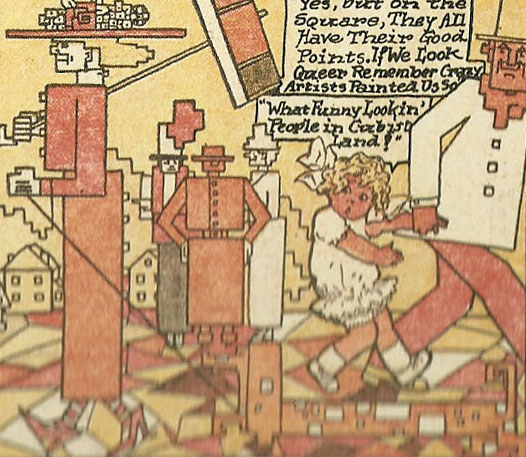
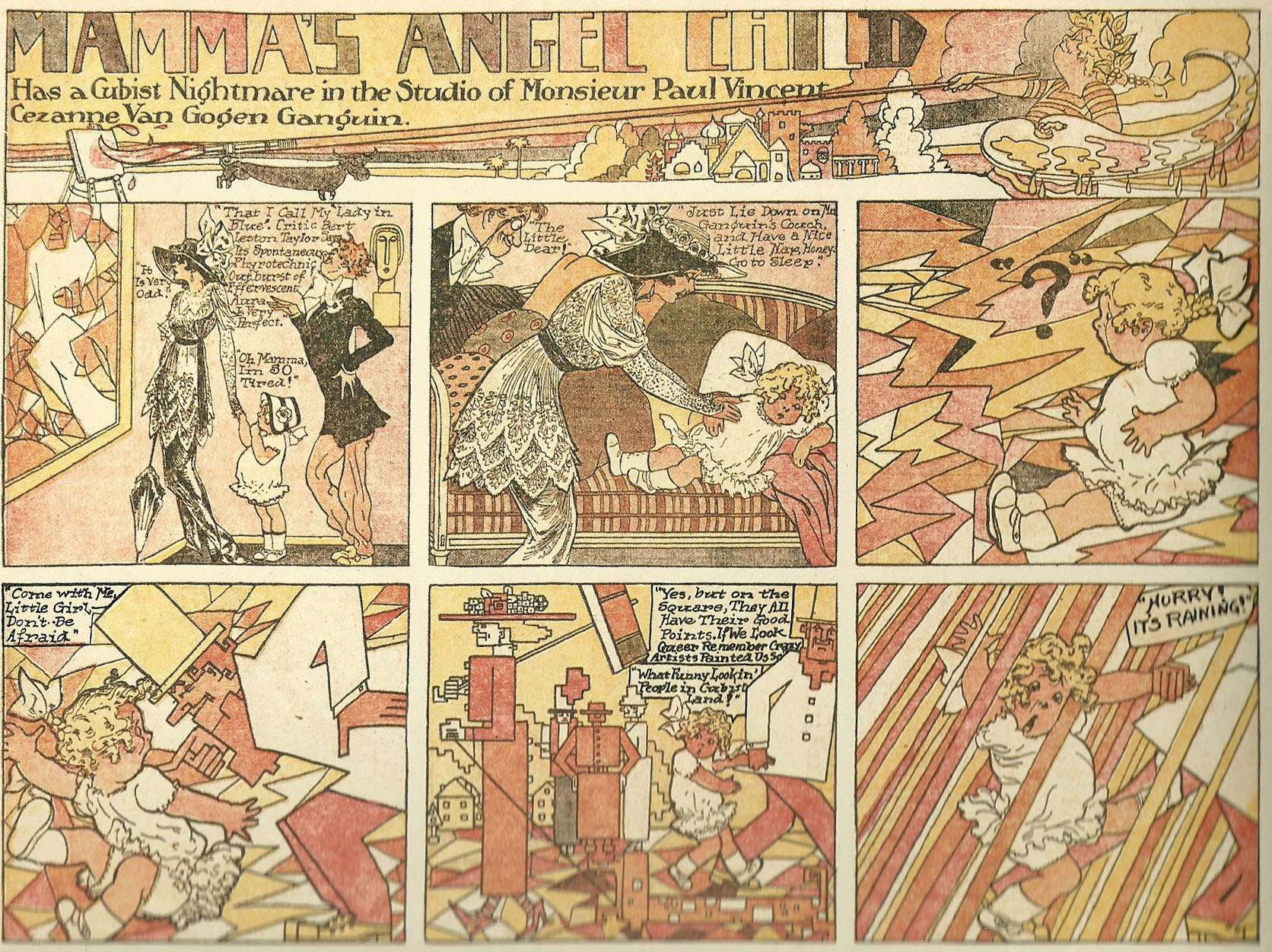
    This is not a particularly early Cubust-like comic book or sci-fi pulp image–it actually comes quite late in the career of early Cubism, in 1934–some 21 years or so following the pro forma appearance of the movement at the Armory in 1913.  But it is interesting, and seems to have been composed in context with the story–and it looks rather good.

    Razzle sci fi man det

    [ast_3501.jpg]

    The earliest examples go right back into the very heart of Cubism:

    Cubist comics det

    This is a detail from a very early example, “Mamma’s Angel Child”, by M.T. “Penny” Ross, which appeared within a year or two of the show.  Ross (1881-1937) was a very active illustrator and seemingly somewhat Zelig-like, somewhat everywhere, and signed this work “Paul Vincent Cezanne Van Gogen Gaugin”, just to make sure that there was no mistake, and no real understatement. 
    Cubist comics

    ·Posted by :

    ·in:

  • Home Run Records and a Prime Number Oddity (1927-1974)

    JF Ptak Science Books  Quick Post  

     
    Follow Me on Pinterest 

    Babe ruth kids
    Babe Ruth x Hank Aaron = the product of the first seven primes multiplied in succession.

    Babe Ruth hit 714 home runs over his long and incredible career, a record that would stand until the fantastic Henry Aaron broke it on 8 April 1974, hitting his own 715th home run. Multiplying the two numbers makes an interesting product:

    714×715=510510

    510510=2x3x5x7x11x13x17, which is the first seven primes.   And the first seven primes add up to 58, which is close to the record 60 single-season home run mark set by Ruth on 30 September 1927 off a .493 lifetime w/l pitcher in Tom Zachary, (but close doesn’t count). The average of those primes is 8.2–Aaron wore the number 44.  Again, “close” doesn’t count, but it is a fun observation. 

    Hank-aaron

    I must point out that this is not my own work–its a remembered bit from The Long Ago and I just can’t remember the originator. 


    ·Posted by :

    ·in:

  • Pabst Malt Extract as a Cure for Typhoid Fever, 1895

    JF Ptak Science Books 

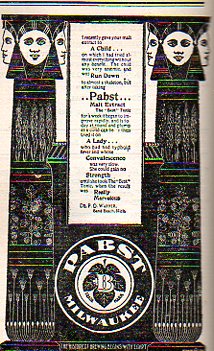
    Pabst Brewing Company, makers of Pabst Blue Ribbon Beer (evidently named for the Blue Ribbon that they did not receive in the 1893 Columbian Exposition) marketed one of their malt extracts as a curative, a palliative of some sort.  In this ad–rendered in a sort of Egyptian motif, because as we see in the legend at the bottom of the image in a barely-visible type, “the history of brewing begins in Egypt”–the malt extract is useful for a very wide variety of aliments. 

    Pabst372
    The two testimonies quoted in the ad come from a Dr. P.O. Warner, of Sand Beach, Michigan.  The first example is for the use of the Pabst product for an “anemic…run down to almost a skeleton” child–after a week of use of the malt extract, the child was again “plump”.  Unfortunately, the use of malt extract is generally used to treat constipation, and irritable bowel syndrome, and as a stool softener–something to help folks go to the bathroom….in the case of a weakened child, this seems to have been exactly the opposite thing to prescribe. 

    The second case is even more reaching:  “really marvelous” results in using Pabst malt extract to help a woman with/getting over (?) typhoid fever.  I’m not sure how this would have come into play, or if  the simple consumption of a Pabst beer would have been a less-harmful remedy. 

    The elegant ad appears in a beautifully printed nickel Little Magazine called The Chap Book, printed by the estimable Stone & Kimble of Boston. 

    ·Posted by :

    ·in:

    —
  • On the Scarcity of Human Lines in Renaissance Art, 1522

    JF Ptak Science Books LLC   Post 2055

      0 blog feb 20 line611det


    “My car gets forty rods to the hogshead, and that’s the way I likes it!” –Grandpa (Abe) Simpson, from The Simpsons  (That’s about 500 gallons to the mile.)

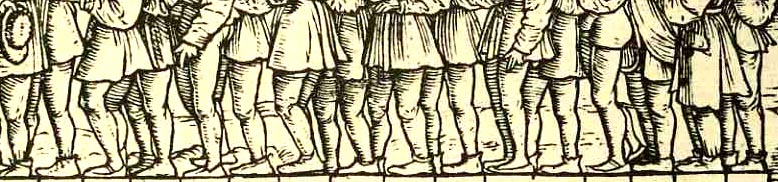
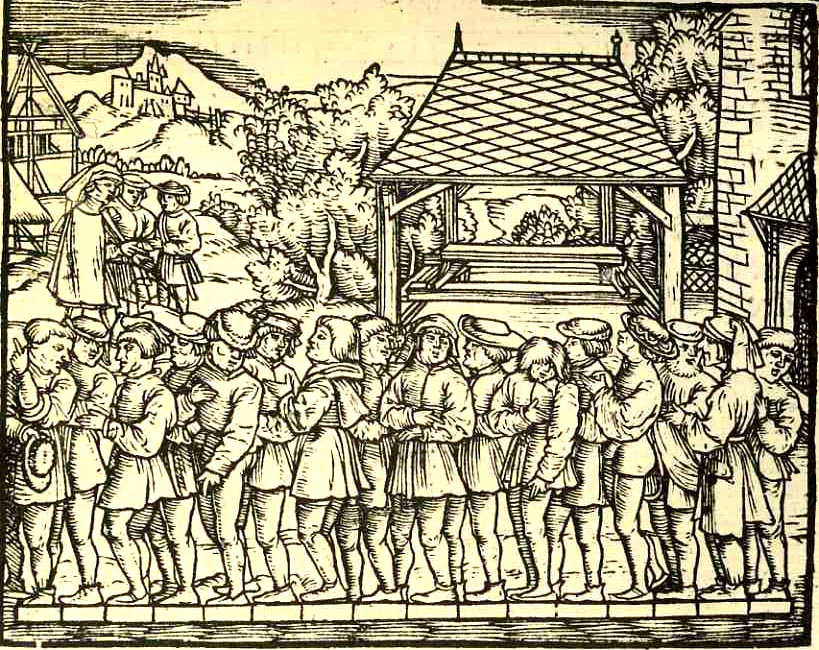
    A line, a connection of two points in space, is about as basic an imaginary thing as we have here on earth.  Humans have used these creations to build all sorts of straight things, from roads to building to ships to literature to mathematics and on and on.  What doesn’t happen very often, at least not in Western art in the last 500 years or so, is for people to be represented in art in a straight line that is not a processional (including military, religious, political venues), or that is not along a bench next to a table, or not supported by another artificial structure like a fortress wall (to give their waiting or standing a form to accommodate).   That weakens the line field considerably–after all, what else is there to line up for?  They’re not queuing up for a sale at Gimbels, and they’re not waiting patiently for a place on the bus.  There’s just not that much to form a line for, evidently. 

    0 blog feb 20 line611

     There is, on the other hand, this (above and below), what I take to be
    rare representation of my odd requirements:  a delightful woodcut from
    Jacob Koebel’s 1522 Von Ursprung der Teilung, Mass und Messung dess Ertrichs, der Ecker, Wyngarten, Krautgarten und anderer Velder…,
    an early surveying handbook (probably the first ever printed in
    Germany) that could be used to measure and set out (as stated in its
    title) herb gardens, vineyards, farms and the like.

    I’m not 100% sure of this, but I think what is going oin in this image is the measruing of a rod (or “rute” in German), which is about 5.5 meters or 16 feet; and what we have in the picture is 16 men being positioned over a measuring device and beign overseen by the powers that be, at rear. On the other hand, maybe not:  the English rod was 16.5 feet, while the rod measurement for Saxony, Rhineland, Bavaria and Baden were different as well; Sweden also came in at 16 feet to the rod.  The other big question was:  how long was a “foot”? Since that measure also chnaged (varing between 23.51 cm in Wesel and 40.83 cm in Trier and  31.387 cm up north in the RHineland)  the measurement of anything with variable units of measure seems to have been problematic, or at least in a post-facto measure.  [The whole issue of “absolute” units of measurement is another post for another time (and a much bigger and moire compelx story).] For right now I’m content to have found this pretty image, which in the end was probably the work of the author Koebel (1470-1533), who seems to have been a jack-of-all-trades; and while he was concerned with property and measurement, he also showed his flair with charm, as this group of men atest. 

    ·Posted by :

    ·in:

  • Electro-Punk Memory, 1929

    JF Ptak Science Books   Quick Post  

     
    Follow Me on Pinterest 

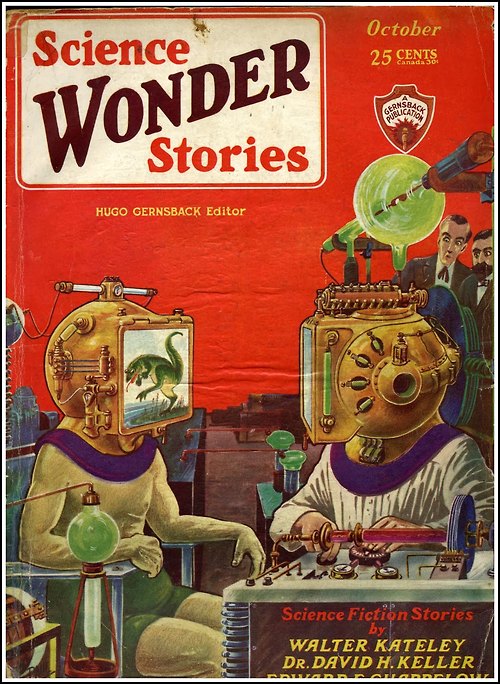
    Gernsback memory machine
    [Image source: the wonderful Frank Wu (sci-fi fanasy artist) website, here.]

    This is the delightful and reaching cover art by the great Frank R. Paul for the October 1929 Science Wonder Stories, illustrating “Into the Subconscious” by Ray Avery Myers, a story of a physician/shrinkologist/physicist who concocts a way of reading into the memories of his subjects–long, deep, ancestral memories. The doc (Macey) is seated at right on the cover, somehow retrieving images from the patient–an idea that has had long legs, and seen famously in the end-all road movies,  Wim Wender’s 1991 PunkNoir film, Until the End of the World. Or perhaps its  more future-driven than that, where each viewer is viewing the other’s memories or dreams or visions, rather than their own, the images flickering to life onto the monitors, initiated by the simple proximity of another person…all memories available, nothing secret.

    At least in the Wenders portrayal of the dream-end of this idea, there was precious little time for anything but dreams.

  • Crowded Scenes of Horizon-Busting Buildings

    JF Ptak Science Books  Daily Dose from Dr. Odd     

     
    Follow Me on Pinterest 

    Dr. Odd presents these two fine images as part of the developing series Stuff Blocking the Horizon.  The first image is a superb photo montage by Paul Citroen (1896-1983), called Metropolis–complex, controlling, massively detailed, and beautiful. 

    Metropolis1.jpg

    [Paul Citroen, Metropolis, 1923.]

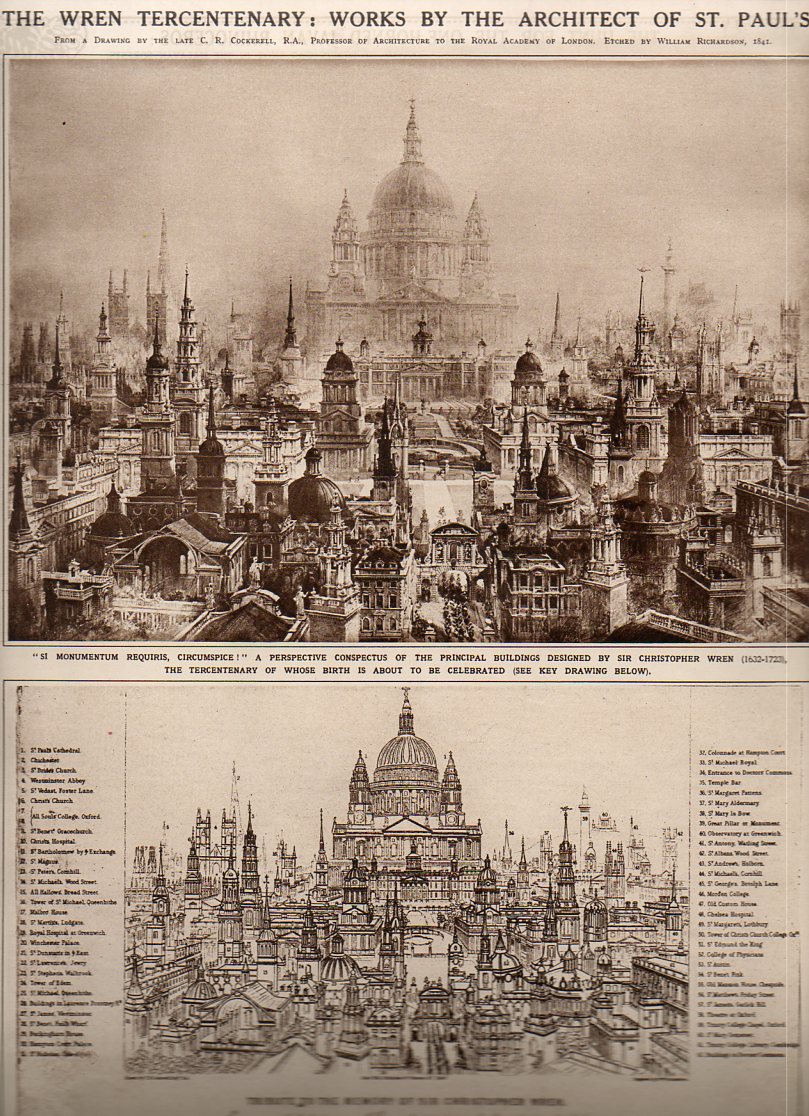
    The second image is another montage of the architectural works of Sir Christopher Wren (1632-1723)
    https://historyofideasblog.com/a/6a00d83542d51e69e20134897ab137970c-pi
    Wren was a complete package, working in many different fields at a high level. His great and polymathic genius fiend Robert Hooke said of Wren “”Since the time of Archimedes there scarce ever met in one man in so great perfection such a mechanical hand and so philosophical mind”–which was very true. In any event this image (from The Illustrated London News) shows the buildings designed by Wren, all of which are dominated by St. Paul’s (on Ludgate Hill), which was probably the greatest of his works and perhaps still the Great Masterpiece of the city of London (and where Wren would be buried).
    Photographs of the Wren buildings (courtesy via Wikipedia):

    ·Posted by :

    ·in:

  • Everything in the World, in 19 Chapters (1495)

    JF Ptak Science Books    Post 2057  
     
    Follow Me on Pinterest 

    The beautifully-named book by Bartholomaeus Anglicus, All the Properytees of Thyings, which was published in Westminster in 1495 (and also known as De proprietatibus rerum, also translated as On the nature of things, or On the properties of things),  was originally written around 1225.  The book was a
    bestiary, a marvelous encyclopedia, a collection of all things as known
    in the 13th century–it would be interesting to represent all that is
    know today and compact it into a workable, logical, usable (printed !)
    book of a thousand pages.  The question of organization of knowledge
    would be the key, of course, and how to make one flow to another
    complimentarily as practicable…it would be an interesting project (for
    someone else) to try and arrange the basis of human knowledge in a
    finite space like that.

    The titles of the sections of Anglicus’ work consist of the following, lovely, topics:

    1. De deo (On God)

    2. De angelis (On angels)


  • The Structural Imposition of Anatomy

    JF Ptak Science Books   Quick Post   

     
    Follow Me on Pinterest 

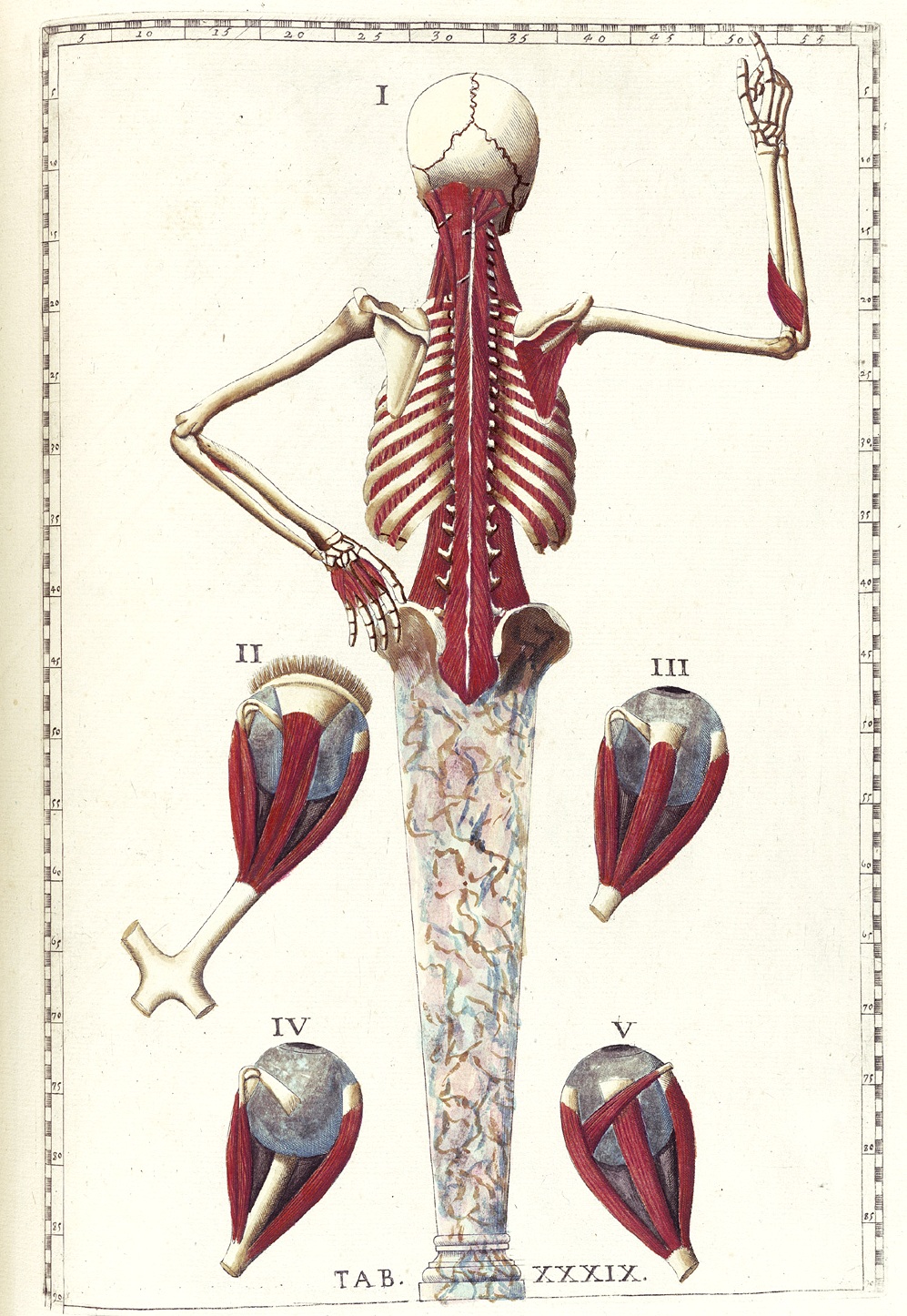
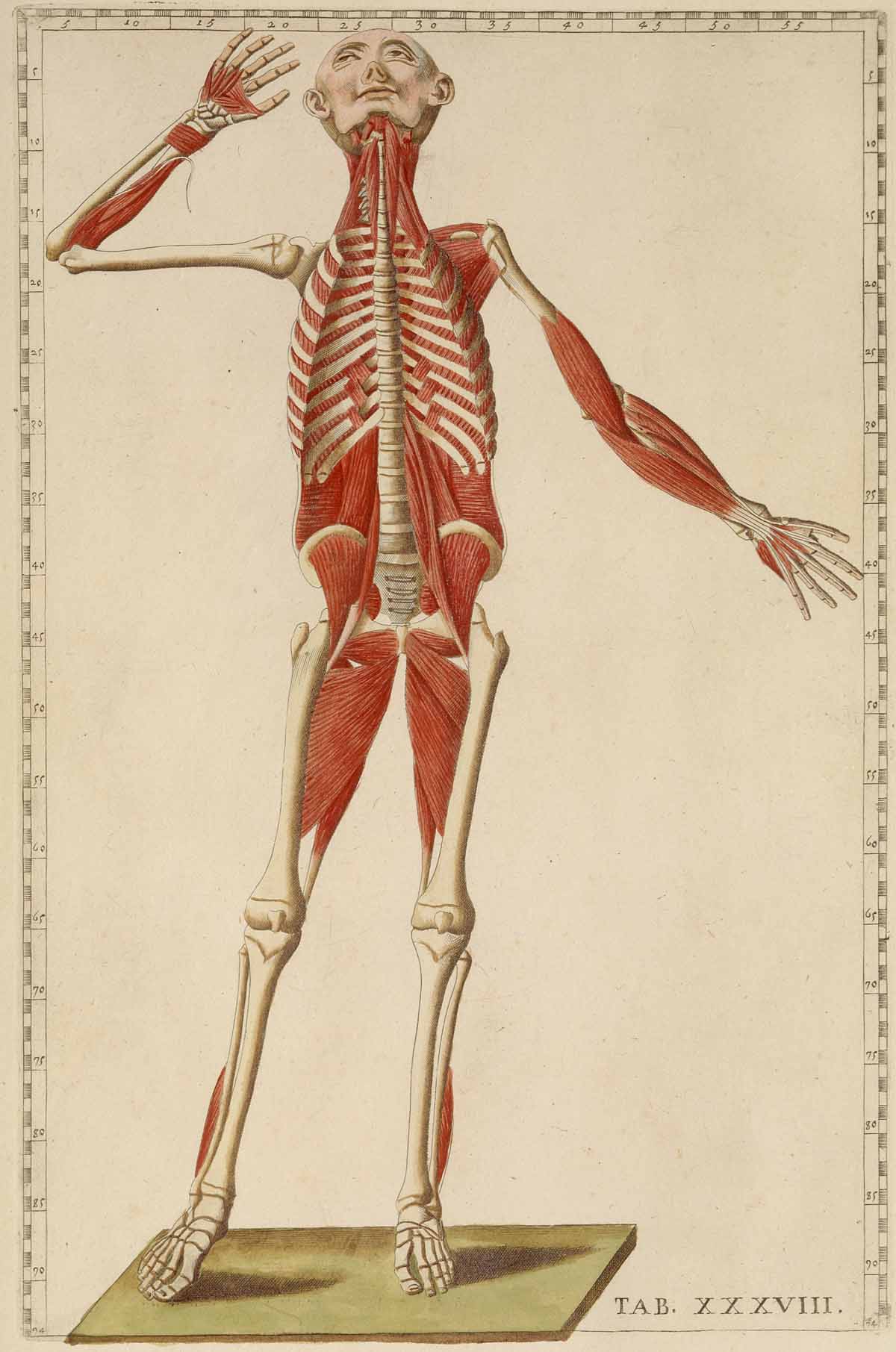
    There is something very art/plastic about this work, sculpture without the material, though there is already a marble stand from which the anatomical presentation springs.  The depiction of muscle is beautiful, and the inclusion of the muscles of the eyes–seemingly laid in to avoid letting the blank space go without use–gives the overall affect of the unintentional absurd.  The source for this delightful work is Bartholomeo Eustachi’s (d. 1574),  Romanae archetypae tabulae anatomicae novis…, published in Rome in 1783, the images drawn by Giulio de Musi for the anatomist Eustachi.  

    Eustachi_t39

    [Source:  National Library of Medicine, Dream Anatomy, here.]

    Eustachi

    ·Posted by :

    ·in:

Recent Posts

Archives

Categories