JF Ptak Science Books Post 1418–revisited and expanded History of Lines
This book is available for purchase at our blog bookstore, here.
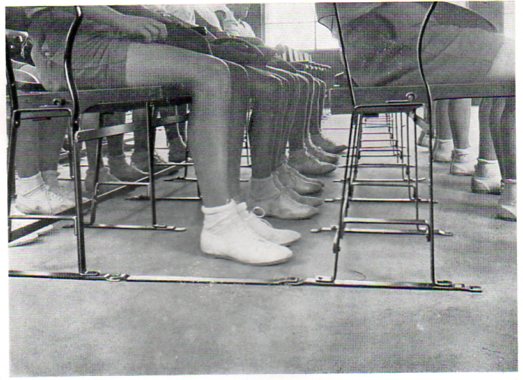
In my imaginary History of Lines there is a chapter or two for humans-in-line(s). In the history of the world, the fourth and fifth decades of the twentieth century—the 1930’s and ‘40’s—were big ones for human lines. Big does not imply good, because as we all know lots of humans lined up for all manner of unspeakable nastiness during this time and well more than 100 million didn’t make it out alive (considering all of the wars, purges, revolutions and stupidity).
The lines here are a little more benign, though with shriveled overtones of corrected respect.
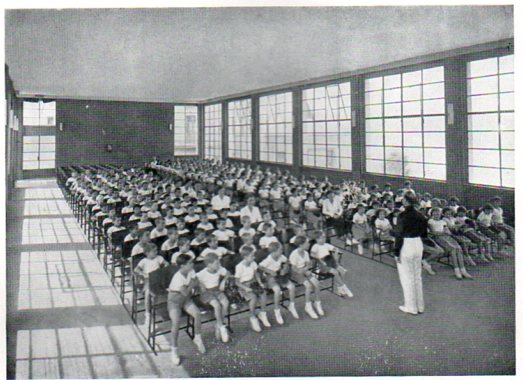
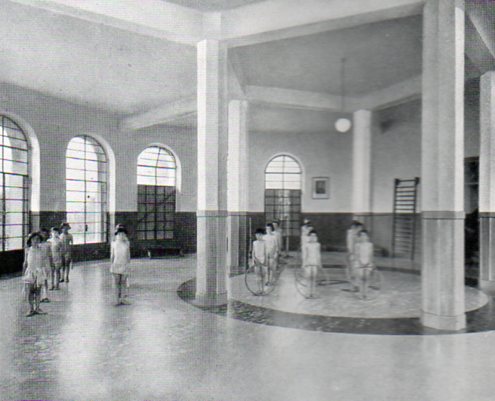
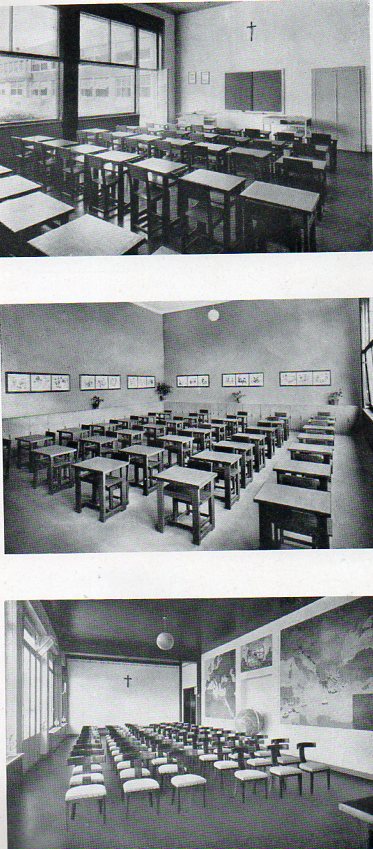
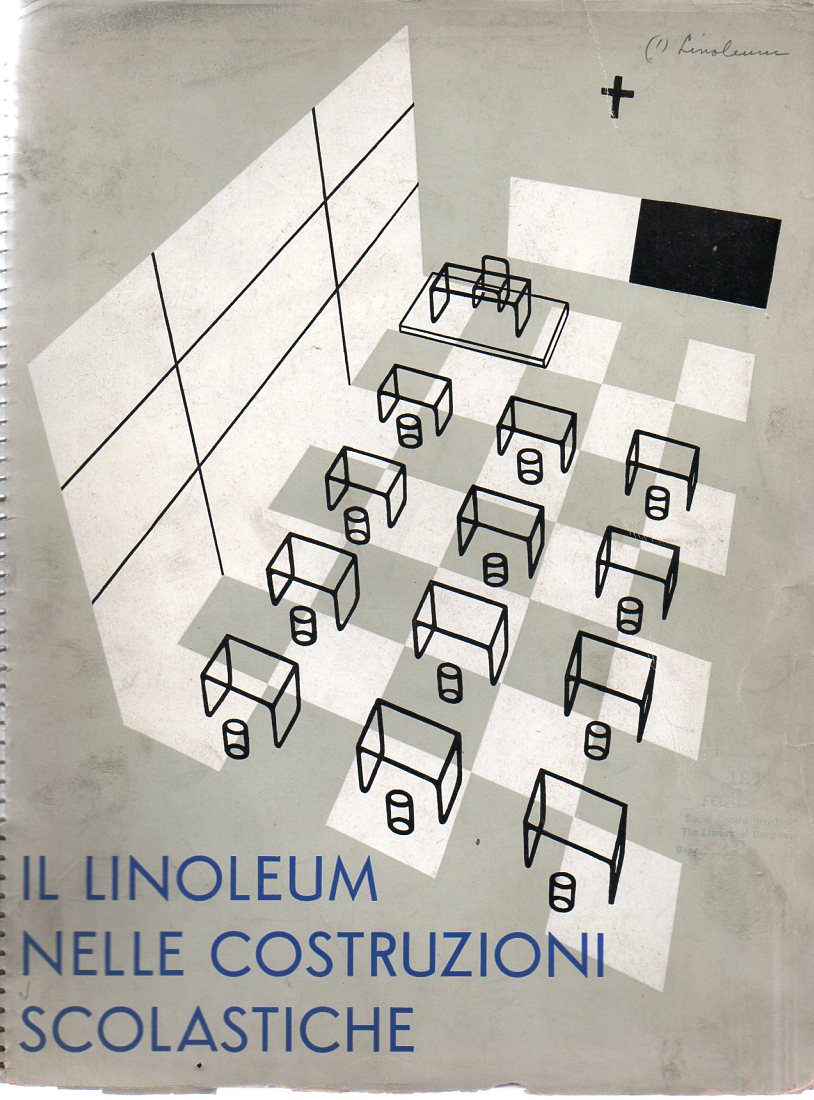
Oppressive obedience in a well-designed environment is still like dressing your ear-infected 14-year-old St. Bernard/Jack Russell (?!) mixed breed in baby booties—its just not right, and these images attest to this simpy comparison. All of these photographs come from a delightful manufacturer’s catalog for linoleum products (Il Linoleim nelle Costruzioni Scolastiche), which was printed in Milano in 1935.(The original is available at our blog bookstore.)
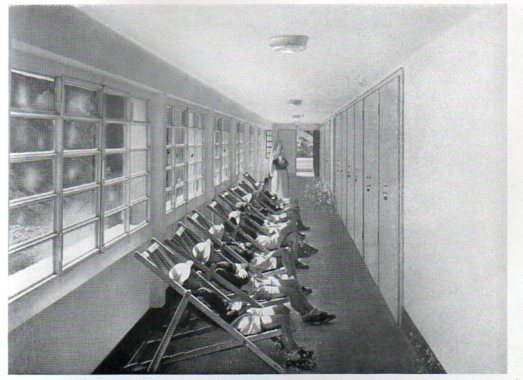
I’ll undoubtedly write a post on this stylistic beauty later on, but suffice to say for right now that it really is a lovely thing. If only we could forget the Mussolini part. Now I’m no fan, necessarily, of linoleum, but if I had to live on a linoleum island far removed from civilization and I had to choose a design for my world, I would choose the designs from this catalog, without hesitation. They’re spare, well-proportioned, beautifully design utilitarian designs; they are also very shiny and cold with a dispirited order, but so it goes. The catalog seems to speak for its times, the inspired design bowing to the weighty needs of the flatulent state.
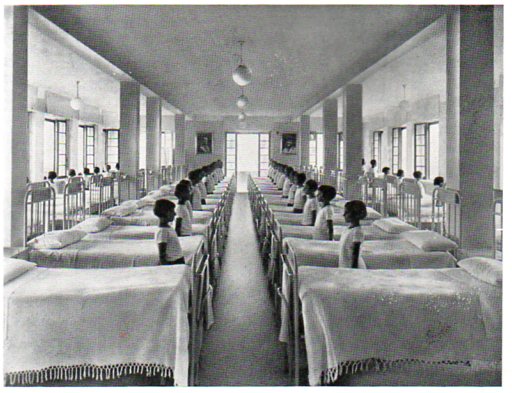
Even though the people (mainly child people) are in very structured environments, they still look as though they really don’t believe in whatever it was was happening–of course the y were at school, or in an academic environment, or hospital, or something (as the titlf of the work states). There is something just wrong in the child-straight lines and seemless expanse of linoleum, something that looks as though details have been left out, that there is a ground-in sameness to everything, that the indifference to difference is so to make the children of a sort of sameness. Ihope that they did okay–most would be around 80 or 85 by now, if they survived.


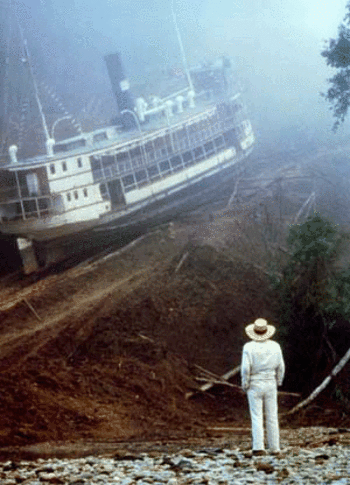 In 1982 Werner Herzog, in what may have been a weirdly fashioned and irresistible death-wish effort, released a very difficult film that he wrote and directed: Fitzcarraldo. It is a spill-over-big, magnificent film about a would-be ice-making rubber baron bringing an opera house into the trans-Andes, trying to make his way into the dense forest in a huge rear-paddle steamboat on the Amazon to stake a claim in exploiting leased lands filled with rubber trees The problem faced by Fitzcarraldo (played by the probably-insane Klaus Kinski–just see Herzog’s 1972 Agiurre, Wrath of God and you’ll know what I mean) is that his path is blocked by unnavigable rapids–he can however reach his destination by hauling his very large ship up and over a mountain to get to a more pliant river and then to his goal. Herzog actually does this for the film–no digital anything here–in what is one of the most glorious things I’ve even seen in the movies. He really does have native people clear a path up and over a mountain, and they DO haul this ship up and over. It really, truly, is magnificent.
  The bigger and deeper back-story though is the effort–mainly by Elmer Cotherell and James Eads–to build a combination railroad ship canal across the Tehuantepec isthmus in Nicaragua. The idea of moving across central America rather than taking the enormously long route around the tip of South America and up again is hundreds of years old. The Cotherell/Eads plan, begun in 1870’s and alive in the early ’80’s, was really the first feasible (and workable) initiative.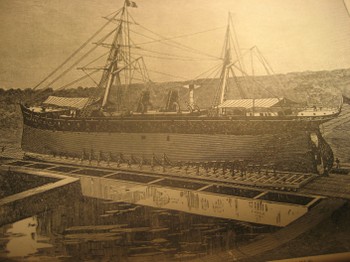
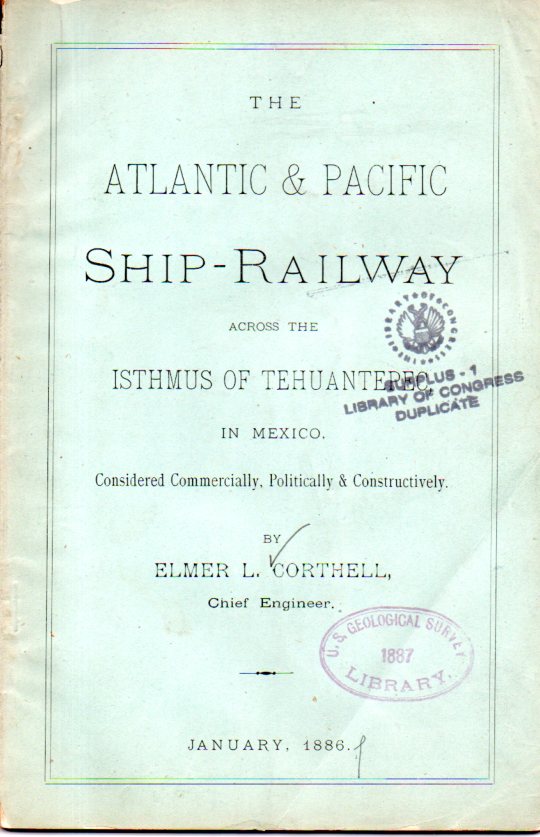
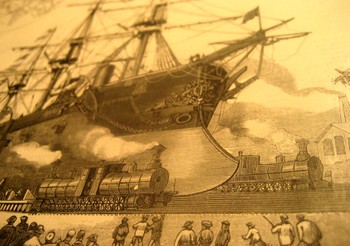
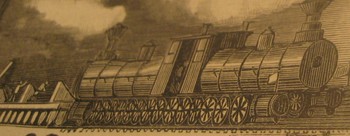 .There is something pleasing though about the Ship Railway, though, something that appeals to the little bit of Mr. Herzog in me. Perhaps it was the appraisal of the very stiff-lipped Sir Edward Reed–who was the former master engineer for the British navy and consultant to Eads—that makes it all so irresistible. “It would be best to avoid a very high rate of speed” when hauling the massive ocean-going and heavily laden cargo ships. Indeed.