A Daily History of Holes, Dots, Lines, Science, History, Math, Physics, Art, the Unintentional Absurd, Architecture, Maps, Data Visualization, Blank and Missing Things, and so on. |1.6 million words, 7500 images, 4.9 million hits| Press & appearances in The Times, Le Figaro, Mensa, The Economist, The Guardian, Discovery News, Slate, Le Monde, Sci American Blogs, Le Pont, and many other places… 5000+ total posts since 2008.

  • When a Non-Prediction Was and Wasn’t a Prediction (1651-1666)

    JF Ptak Science Books   Quick Post
    London fire
    [Source: the City of London]

    There was once a scrutable man who wrote a scrutable book with the description of a scrutable event that was actually a non-event of a scrutable happening. There was no problem with all of this–especially as it was lounging beneath layers of a Very Demanding Title–until one of the events  somewhat “foretold” by the author came to be true.  It could not have been a bigger deal unless the story had been about the king or queen, and maybe not even then.  The event was the catastrophic Great Fire of London, an extreme ravage that burned for four days in September 1666, and which ate up 13,000 houses and 87 parish churches.  

    The event was predicted after a fashion by astrologer William Lilly (1602-1681) in his book Monarchy or No Monarchy, which was printed in 1651, fifteen years before the event.  Perhaps it might have attracted less notice to authorities had Lilly not written (and illustrated) what he thought to be the coming of a great plague in the same work–the plague struck London a year before the Fire.  

    The Great Plague killed far more than the Great Fire, perhaps 100,00 or more with teh plague, and far fewer than that in the fire, though the fire did cause huge destruction. (It seems that casualty figures for the fire are indeterminate, from a few to hundreds to thousands.)  

    So some central figures in government bade Mr. Lilly visit them soon after the fire, just to make sure that “England’s Merlin” and the most popular astrologer of his day did not have an actual role in starting the fire. He didn’t of course have anything to do with the fire, or the plague.  His predictions were cloudy enough to both mean something and nothing, part of the great anti-charm that is the heart and soul of all manner of  what James Randi calls “Whoo-whoo”.  He was left to the rest of his life, which still had a fair bit of fame and social acclaim left to it, though most of that would slip away with the Restoration.  It turns out that a number of people predicted a great fire for London, which was not surprising given the way the city expanded and converted itself into a major metro area (of 500,000+ people) which was partially built on kindling.  

    ·Posted by :

    ·in:

  • CartographArtia of the Flight of Homing Pigeons

    JF Ptak Science Books  Quick Post 

      Homing pigeon151

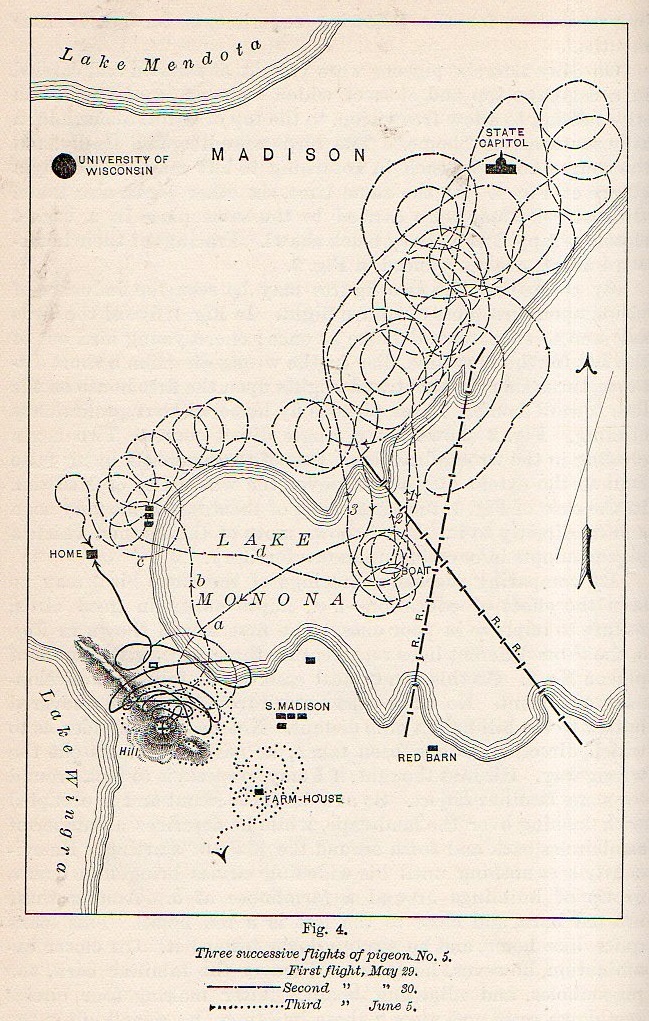
    Non-representational art was still nearly twenty years in the future when this lovely cartographic artwork was published in 1894.  And what we are seeing here in the collection of circles and spirals is a representation of three trials of a homing pigeon finding its way home in the Lake Monona region of Madison, Wisconsin.  C.F. Hodge Ph.D. (of Clark University, psychology) wrote “The Method of Homing Pigeons” for Popular Science Monthly (volume 24, 1894), showing at least in this found instance that behavioralists (yet named at this point) enjoyed working with pigeons well before C.B. Ferster recommended them over rats to B.F. Skinner (mainly because, as Ferster said, he didn’t like rats).

    Actually Hodge was more of a neuro/pathology person, but for now I’m just interested in the artwork generated by his experiments.  

  • A Finely Designed Microscope Ad, 1890

    JF Ptak Science Books  Quick Post

    I’m just stopping for a moment in the MArch 16, 1890 issue of Nature to admire this lovely add for Browning’s “Perfect” Microscope.  In the issue it is about two inches square–it is just a nicely designed thing. 

    Microscope154

  • On Vast Numbers in War, 1918

    JF Ptak Science Books   Quick Post

    WWI  UK official capture
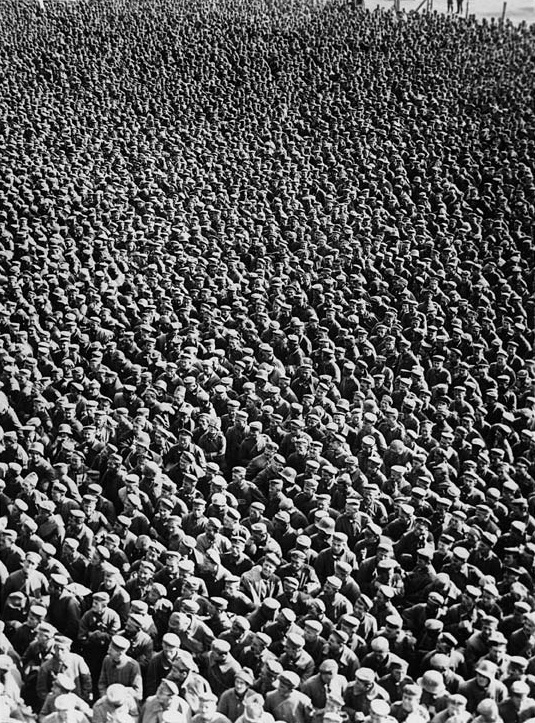
    [Source: National Library of Scotland, First World War Official Photographs, here. My estimate is that there are about 10,000 soldiers in this photo, or about 1/10th of 1 percent of all German POWs of WWI]

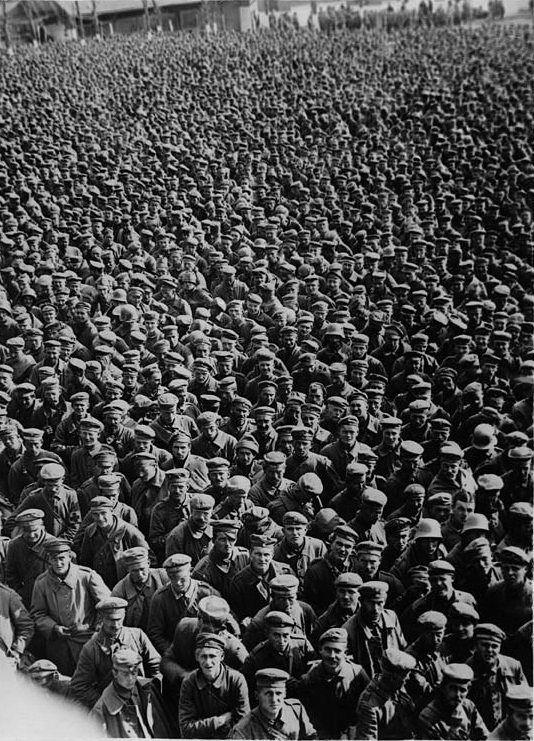
    At the end of WWI the Imperial German Army was losing battles, and int hose losing battle thousands and thousands of soldiers were killed and wounded, and thousands more were taken prisoner.  This remarkable photograph is a tale in itself of the vastness of the undertaking of that war–it is a small section of one large group of German prisoners taken in the battle of St. Quentin Canal, October 2, 1918.  Five weeks before the end of the war, and I am sure every German soldier knew the war was lost.  Perhaps it was a physical relief to be captured at this point, to be removed from the feed line of death in which millions perished and placed under guard for the remainder of what would be from this point a short end-game.  The photograph has a visceral feeling of hope to it, these men now not going to die, their lives saved to short-wait the end of the war, becoming part of the fortunate 35% of the entire German army of 11.2 million who made it out–they were a piece of the million soldiers taken prisoner, and not part of the 6 million comrades who were killed or wounded.  

    Here’s another view of the same mass of men, taken froma  slightly different angle, though here many men are looking at the photographer:

    WWI official capture facing towwards

    From the National Library of Scotland site:

    ·Posted by :

    ·in:

  • Videos: von Neumann, Gell-Mann, Bethe, Feynman, Oppenheimer…

    JF Ptak Science Books  Quick Post

    A few videos of some of the big folks to start the week…

     John von Neumann in 1956:


    ·Posted by :

    ·in:

  • A Note on the History of Simultaneity

    JF Ptak Science Books     

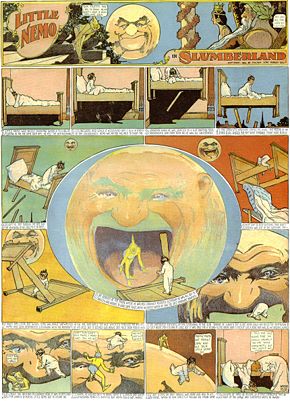
    There is a great, unifying factor drawing together Aztec glyphs, Little Nemo in Slumberland, Marcel Duchamp, the Renaissance Sienese Sassetta, Guillaume Appolinaire, William S. Porter—they all display disparate chronological sense to a single story.

    Blog--may 25--st. anthony
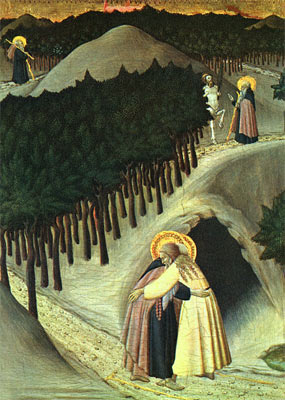
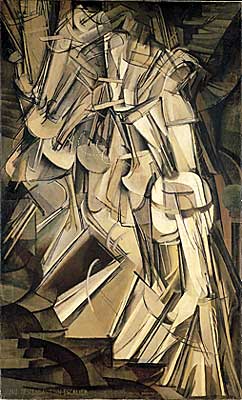
    The concept of displaying the passage of time, relating multiple events taking place at the same (or different) times, is really quite a lot older than the what is generally considered to be its recent modernist beginning.  Duchamp’s Nude Descending, which is a masterpiece of modernism displaying unfolding time and multiple perspective views across time of the same object, is the direct descendant of centuries-old artworks.  The Egyptians and the Aztecs certainly made use of this idea of multiple stories at multiple times in their stone storyboards.  Closer to the present is the genre of early Renaissance painting like Sassetta’s The Meeting of St Anthony Abbot and St Paul the Hermit (painted circa 1440), which shows several aspects of the story over time, and depicted on the same canvas. (We see the beginning of St. Anthony’s journey at top left, heading out on his journey as a younger man, winding his way through dark wood and along a curving trail; we see him a second time as an old man, and then lastly at bottom, elderly, finally meeting the other monk.)


    Blog--may 26--nemo

    The rollout of the Sassetta masterpiece (hanging happily at  the National Gallery in D.C.) reminds me a lot of the great hallmark of storytelling at the beginning of the twentieth century—no, not Barzun or Cendars, but Little Nemo (who predates all of the other greats who were to come in the next ten years or so).  Winsor McCay’s (1871-1934) Little Nemo in Slumberland (appearing in the Hearst newspapers beginning in 1902)—better yet, the comic strip in general—adopts a platform for storytelling that is nothing short of revolutionary.  By breaking out the development of the narrative in front of the reader and on one single sheet of paper gives the author fantastic maneuverability.  This is also seen in the early motion pictures of Edwin S. Porter (like The Ex Convict, 1905) and D.W. Griffith (The Lonely Villa, 1909) who both use a new concept of contrasting editing—cutaways from the main action and pace of the.

    Blog--may 26--nude descending


    film and incorporating vignettes of actions that are related and happening elsewhere, sometimes all of it happening at once.   The story is able to develop multiple themes that are occurring at the same time but in disparate locations—the artwork of futurists Balla and Boccioni and the unclassifiable Duchamp reach for the same end, and so to (again) with Apollinaire and Cendars and the rest…and all of them coming into view in 1912/1913 or so.

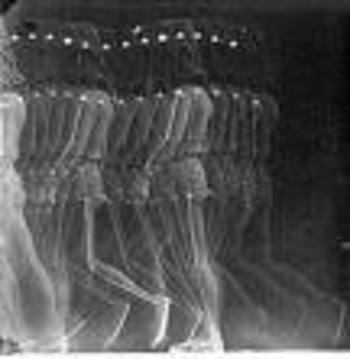
    There’s a lot to talk about on the tech end of this too, not the least of which is the work of Etienne Marey who made highly successful photographic investigations (in the 1870’s and 1880’s)
    of all manner of locomotion, some of the results of which look like the x-ray of Duchamp’s Nude.  Perhaps the greatest early enablers of technological simultaneity are the telegraph and (more impressively) the telephone, both of which allowed people to be in two different places at the same time (so to speak).

    Blog--may26--marey

    Again, this is just a note, thinking out loud, about the concept of simultaneity, and I doubt that I’ve even broken the surface…I’ve not even considered the math and physical aspects of it all, not even a whisper about Einstein and Schroedinger.  I’ve just done a search and found two works by eminent historians of science on this topic which I should think would demand reading:  Max Jammer’s Concept of Simultaneity (2005) and Peter Galison’s Einstein’s Clocks, Poincare’s Maps and the Empire of Time (2003).  I’d like to return to this post when I think I might have an idea of what I’m talking about…


    ·Posted by :

    ·in:

    — —
  • How to be a Hobo (1946)

    JF Ptak Science Books

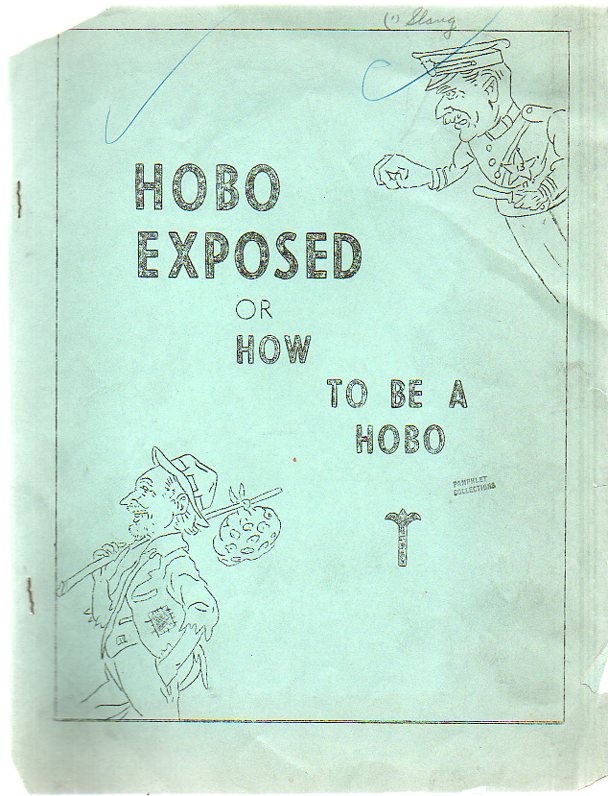
    Hobos lingo title344

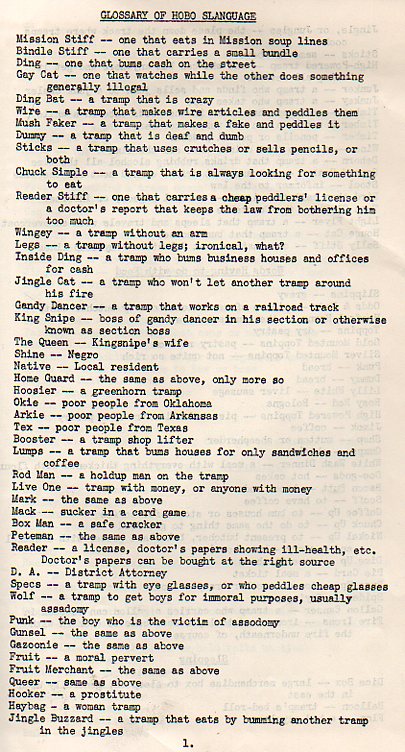
    Hobo Exposed, or How to be a Hobo, a pamphlet  with no claim for a writer but copyrighted by “Kelly’s Specialities” in 1946,  is dedicated to Sun Down Slim, Boston Blackie, Sticks Red and Commissary Blackie. It gets right to the point of my principal interest in the work, the Hobo Slanguage.  The collection here is not quite as road-elegant as other collections from the Hobo Kings–not that it is less “regal”, just more common and less imaginative. 

    For example, “Wingey” is the name for a hobo without an arm; “Sticks” is a tramp who sues a crutch; “Legs”, well, you know.  On the other hand I find “grouch bag” (which was a bag of Bull Durham tobacco worn around the neck, which was either valuable enough to be worn that way to keep people out of your pockets or you just didn’t have any pockets), “hogger” (a railroad engineer), “dice box” ( a large discarded merchandise box to sleep in), “slippins” (gravy), “canned heater” (an unfortunate tramp who drinks sterno), “Jingle Buzzard” (a tramp who begs food from other tramps), the “lump bum” (a hobo who bums food and stuff from another hobo), the “chuck bum” (as above but bumming meat), the “mush faker” (who counterfeited laundry soap and sold greasy/fat white powder-like material door-to-door,  and so on.

    There are many others–here’s a further sample:

    Hobos lingo a341

     There are useful bits beyond the Hobo lingo–essentially this is what the pamphlet is really all about.  There is info on how to jump a train moving 10 mph, what train lantern arms and signal whistles meant, how to make your own bed down (“glim”), the best use of newspapers in keeping warm and sanitary, and other such interesting ideas.

    The author figures that to start tramping you should go hungry for three days, and get plenty hungry, and then the following ten days, half-hungry.  After two weeks you should have your pride behind you…and you will be on your way to full-fledged trampdom…”

    ·Posted by :

    ·in:

  • Survival of Features: Darwin in Architecture and Art, 1875

    JF Ptak Science Books  Quick Post

    Architecture darwin065 det[Source: Building News, April 2, 1875]

    This is a curious pair of articles, both of which appeared 13 and 16 years after the publication of Darwin’s On the Origin of Species.. (1859). The “survival of the fittest” used in conjunction with good and bad architecture is somewhat loosely affiliated with Darwin though it employs a term that was actually coined by Herbert Spencer in his book on Darwin and evolution that was published in 1864. (Here it is: “This survival of the fittest, which I have here sought to express in mechanical terms, is that which Mr. Darwin has called ‘natural selection’, or the preservation of favoured races in the struggle for life.”-Herbert Spencer, Principles of Biology of 1864, volume 1, page 444.) It is an interesting idea that employing the ideas of evolution to areas of study like art and architecture, and not without some merit.  

    ·Posted by :

    ·in:

  • History of Ladders Series–an “Empty” Stubby Ladder of Hull

    JF Ptak Science Books  Quick Post

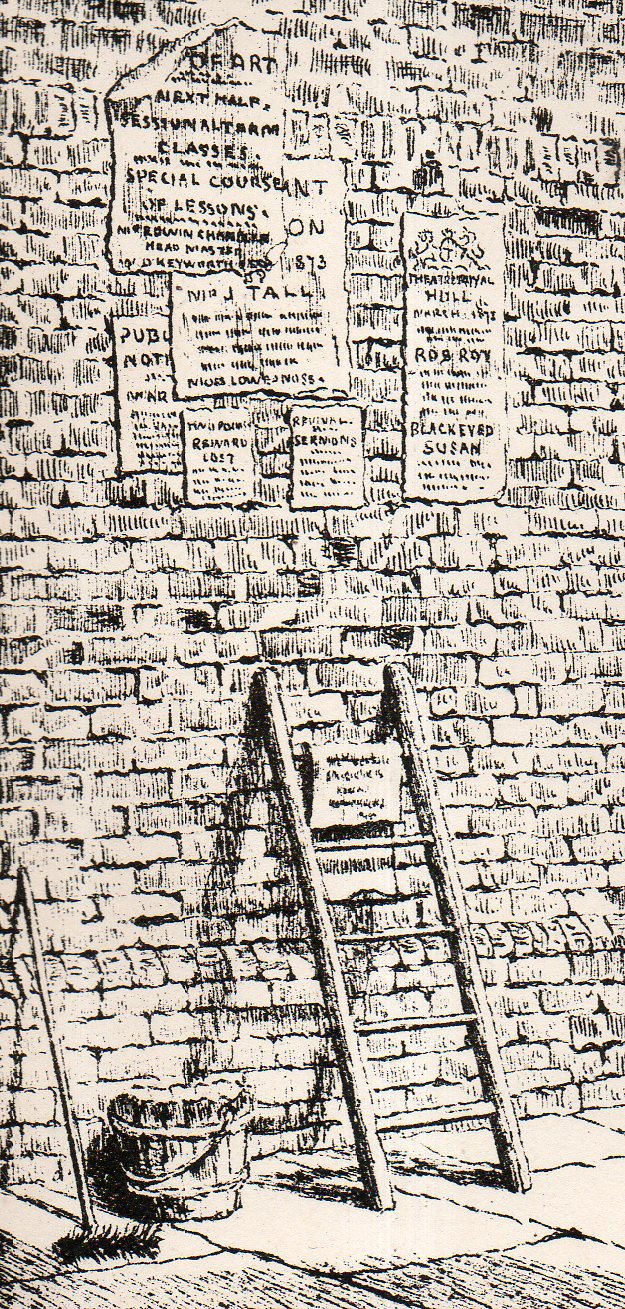
    Breezing through a volume of Building News for February 19, 1875, I came upon this interesting lithograph for a building in Hull, a city in East Riding of Yorkshire, England.  It depicts ancient brickwork on “an old house in Dagger Lane”, in one of the “nooks and corners of ancient Hull, an old city reaching back evidently to the 13th century. (An interesting assessment of this building appears here at Paul-Gison.com.) What attracted me in this image was not necessarily the ancient structure but the empty ladder–and I can say that after having looking at x-thousands of antique prints that (a) ladders are uncommon and (b) unused ladders are even more so.  Here we see t he ladder of a person posting bills on a wall, his bucket of paste and brush on the ground, the next poster on a ladder rung, and the laborer just not present.  It is an interesting snapshot of a bit of daily life not usually recorded from long ago…

    There are several other posts on this blog regarding ladders: 

    Beautiful Ladders of the Baroque (Here)

    One Upmanship–a Short Note on the History of Ladders  (Here)

    Renaissance Ladders in the Brooklyn Bridge, 1876 (Here)

    HULL069

    And the full image:

  • A Library of One Book

    JF Ptak Science Books  Post 2234

    + card factory det

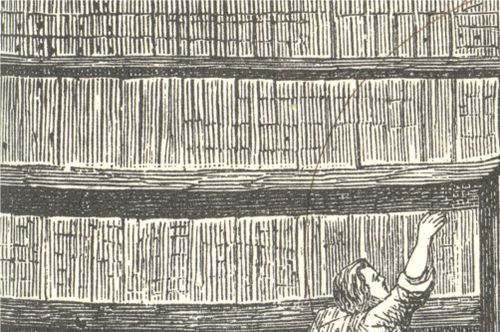
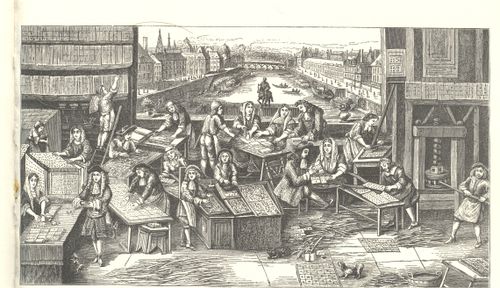
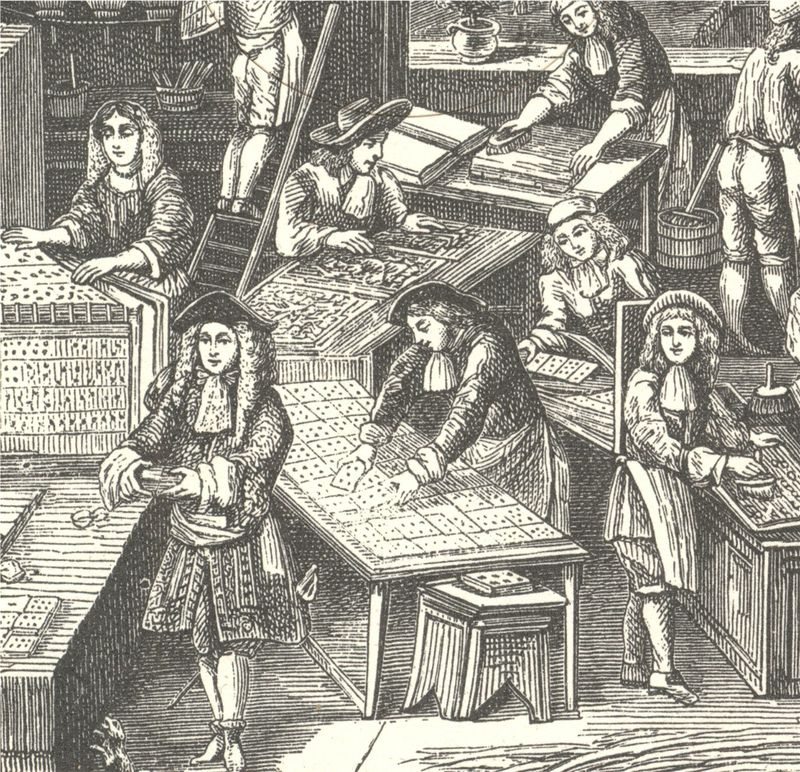
    Is this an image of a  librarian carefully reaching for a carefully placed book, carefully arranged in a carefully-odd Borgesian-style library housing only books of the same height and thickness?  Or is this a librarian in a Library of the Same Book, housing thousands of copies of copies of the same book, climbing the ladder to make sure that he had a copy of just the copy that was requested (“a copy held at least 5 feet from the ground, near a side window though not touching a vertical piece of wood”)? 

    + card factory

    Neither.  These are shelves filled with nothing but uncut sheets of playing cards, housed for the playing card factory somewhere in Paris (?) “during the reign of Louis XIV”.  Playing cards, which were introduced to Europe via Marco Polo from China or traders coming from the Middle East or etc., are much older in Europe than one would think, I think, and by the time this print was made, playing cards were already quite popular there for two centuries. 

    I can’t identify all of the activities of all of the twelve tables of card preparation here, though some seem pretty obvious:  the trimmer working near the pressman, the sorters and assemblers of decks of cards at the lower left corner, the paper preparer (?) just to the right of the man on the ladder, the pair of men preparing the type trays at middle-bottom, and that’s about it.  I’m not sure what everyone else was doing.  I’m not even so sure what’s going on with the sheets of cards on the bookshelves, the target of this post—it can’t be for drying purposes, as the sheets are too close together…perhaps it is just for storage of different sheets of cards for different decks.  

    In any event I’m right or I’m wrong on this guess, about the same odds as being dealt “nothing” in a game of five-card poker (almost 1:1 odds), but that’s fine:  I just like the composition of the print.

    + card factory det 2

    ·Posted by :

    ·in:

  • Iconography–the World on a Globe on a Title Page (1537)

    JF Ptak Science Books   Post 2235

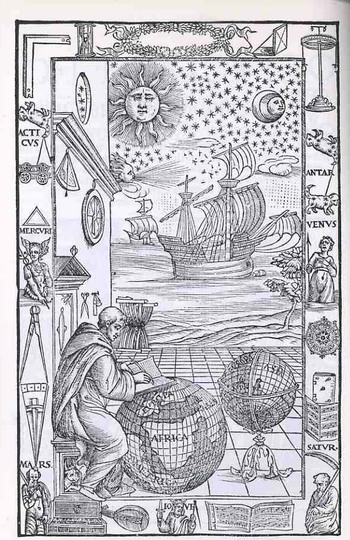
    This magnificent piece of tidy work (below) was executed for a new edition of Johannes de Sacrobosco’s (latinized for John Halifax or Holywood, a teacher of mathematics and astronomy at the University of Paris, a monk/scholar/astronomer ca. 1195-1256) Tractatus de Sphaera Mundi  by Fra Mauro Fiorentino (1492-1556), and gives us all a chance to have a bit of fun reading late Renaissance iconography. The work is entitled Sphaera volgare novamente tradotta con molte notande additoni di geometria, cosmographia, arte navicatoria et stereometria (and so on), published in Venice in 1537, and as stated in the title this is an augmented edition of Sacrobosco with Mauro adding segments on geometry, cosmography, navigation and perspective. (Full text of this classic here.)
    Blogtpamerica105

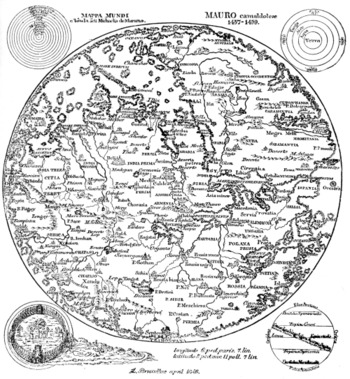
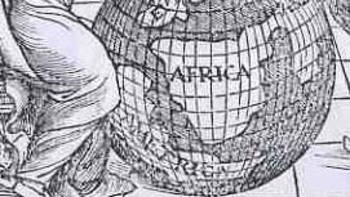
    The wood engraving is of particular interest because of the globe upon which Fra Mauro is writing—as you can more clearly see in the detail; shot (below) we can see a large continent labeled “America” just hundreds of miles off the coast of Africa.  The Americas still make only guest appearances on globes at this point, and seeing it here, as a bit of an afterthought, is a treat (considering how easy it is to overlook it).  There is another Fra Mauro, much more famous than our’s above, whose cartographic workshop produced a seminal, magnificent  map of the world in 1453, thus bringing the two Mauro’s together, if only slightly, via their maps (one great, the other incidental).

    From the Sphaera, chapter one:  

    THE FOUR ELEMENTS. — The machine of the universe is divided into two, the ethereal and the elementary region. The elementary region, existing subject to continual alteration, is divided into four For there is earth, placed, as it were, as the center in the middle of all, about which is water, about water air, about air fire, which is pure and not turbid there and reaches to the sphere of the moon, as Aristotle says in his book ofMeteorology. For so God, the glorious and sublime, disposed. And these are called the “four elements” which are in turn by themselves altered, corrupted and regenerated. The elements are also simple bodies which cannot be subdivided into parts of diverse forms and from whose commixture are produced various species of generated things. Three of them, in turn, surround the earth on all sides spherically, except in so far as the dry land stays the sea’s tide to protect the life of animate beings. All, too, are mobile except earth, which, as the center of the world, by its weight in every direction equally avoiding the great motion of the extremes, as a round body occupies the middle of the sphere.

    Looking a little more closely at the elements of this image we find a number of interesting bits.  Working from the upper right hand corner across and down we find a right angle (for the architectural and building parts of the book), then a sand clock, a decorative laurel wreath with a pocket sundial (!) right next to it, ending with an object that looks as though it might be a physical sciences demonstration tool (I’m guessing).  Working down from the “what is it” we see the first cut of a three-times-repeated constellation that I think has nothing to do with the word “Antar” beneath it. 
    Mauro_map

    “Antar” probably refers to the famous Arab warrior-poet, subject of lots of attention over the centuries including two works by Bach and Rimsky-Korsikov (and also the name of Apollo as worshiped at Actium) Below Antar is an armed and clothed (?!) Venus, major domo goddess of love and beauty and for whom existed innumerable cults (witnessed by just some of the famous Venuses as Venus de Milo ,Venus de’ Medici, Capitoline Venus, Esquiline Venus, Venus Felix, Venus of Arles, Venus Anadyomene (also here), Venus, Pan and Eros, Venus Genetrix, Venus of Capua, Venus Kallipygos, Venus Pudica, and so on into the sweaty  night.)


    Following Venus is, I think a complex compass rose, though it may also be a calendar—I can’t quite tell from the detail of the cut.  This is turn is followed by a heavily fortified book (actually this sort of bonding, meant for heavy use, was relatively common at this time)and a score of (5-line staff) music. 

    Returning to the right angle and moving down we se the same constellation under which hangs a very stable-appearing wagon, with a triangle beneath it , followed by a representation of Mercury, the messenger of the gods, who in turn is positioned over a large set of dividers.  On the wall over the head of Fra Mauro we see two precision instruments—a surveying tool and an astrolabe.  The two small tools near Mauro’s head seem to be a scale and a pair of scissors. 
    Blogtpamerica_detail

    The central panel shows two caravans (approximately 100-footers?), being driven by a favorable wind to hospitable shores beneath a starry and benign firmament. 

    The bottom tier is the most emblematic of the set of images, as we see the related Saturn-Jove-Mars all together.  Saturn is also Kronos, which is why we see the old horned man caring the scythe of time’s reckoning; he is also the father of Zeus, also known as Jupiter (Juppiter Optimus Maximus Soter (Jupiter Best, Greatest, Savior)), also known as Jove, who stands here crowned and warning us with a sword and dividers.  Jove in turn was the father of Mars, who here doesn’t look terribly war-like at all.  Punctuating the spaces between these three are a keyboard instrument, a lute and a score of music.  I’m not sure that these lyrical/musical devices had anything to do with the three generations of super gods, but there you have it. 

    The ending of the Sphaera: 

    ECLIPSE DURING THE PASSION MIRACULOUS. — From the aforesaid it is also evident that, when the sun was eclipsed during the Passion and the same Passion occurred at full moon, that eclipse was not natural — nay, it was miraculous and contrary to nature, since a solar eclipse ought to occur at new moon or thereabouts.

    On which account Dionysius the Areopagite is reported to have said during the same Passion, “Either the God of nature suffers, or the mechanism of the universe is dissolved.”
Recent Posts

Archives

Categories