A Daily History of Holes, Dots, Lines, Science, History, Math, Physics, Art, the Unintentional Absurd, Architecture, Maps, Data Visualization, Blank and Missing Things, and so on. |1.6 million words, 7500 images, 4.9 million hits| Press & appearances in The Times, Le Figaro, Mensa, The Economist, The Guardian, Discovery News, Slate, Le Monde, Sci American Blogs, Le Pont, and many other places… 5000+ total posts since 2008.

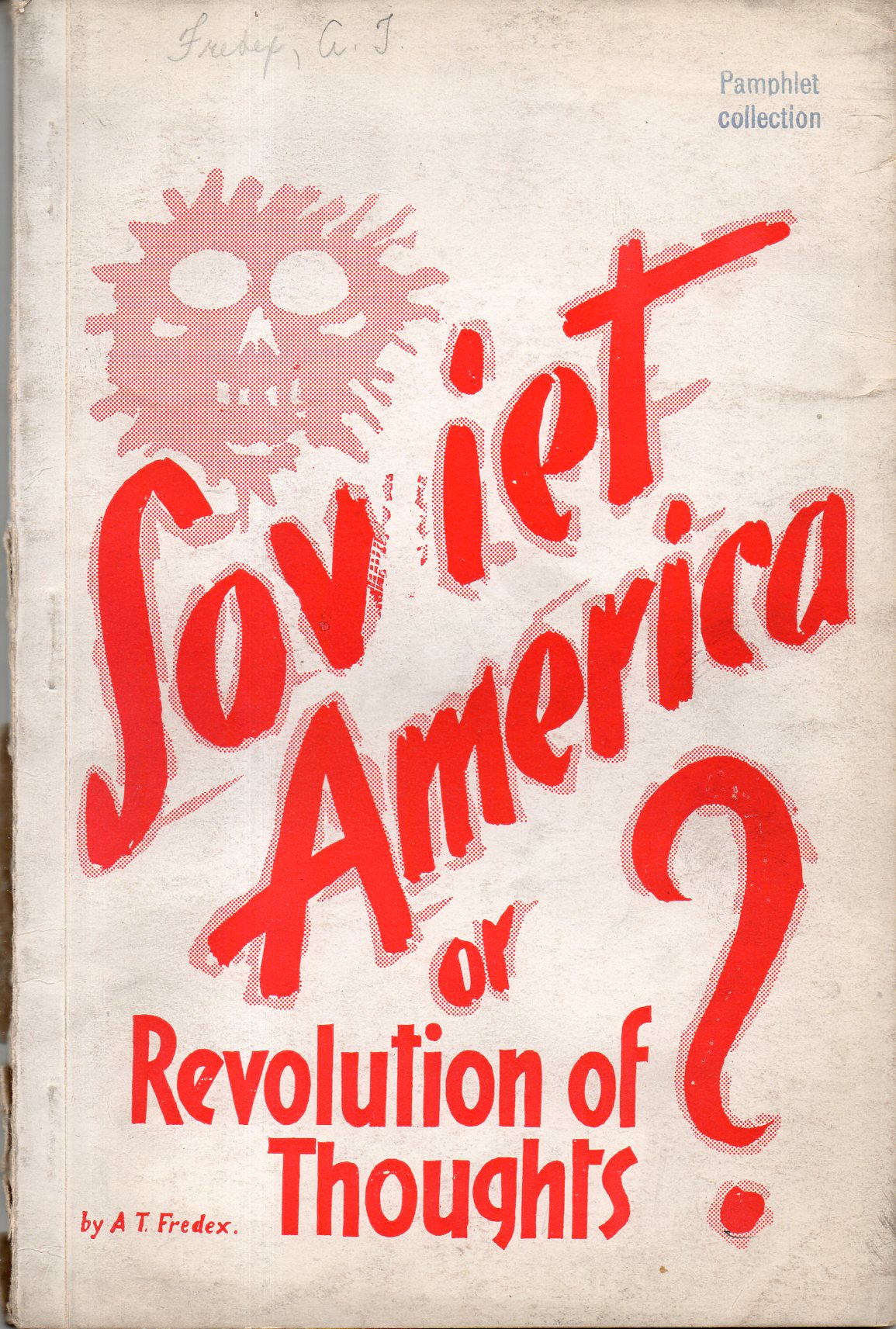
  • An X-Ray of Hate: a Bitter, Biased, Horribly Racist Pamphlet (1936)

    JF Ptak Science Books   Post 2300

    I wondered about this pamphlet, with the odd cover design, odd question, odd feel, odd smell, odd paper.  It turns out that it is a raving, sodding racist work of low order and high hate.  

    We are told that Democracy is a menace in the United States now, with an uncontrolled melting pot, being overtaken by “inferior raced hodge-podge”, “inferior human material”, ranting against Democracy and Communism (as written and “contrived” by “the Jew” Marx and the “Half-Jew” Lenin), while the press continues to put out its “stupid emanations” and “poison” against the German government and the “tormented” German people.  

    And this is just from two paragraphs.  Quite remarkable, and about as bad as I’ve read. 

    Bottom line seems to have been that the U.S. is headed towards an unspeakable betrayal without a revolution of thought aligning the Anglo-Saxon elements against all of the other “filthy elements” of society.  Well.  ALl of these people are dead now, and the U.S. is doing okay, while the  dream-date Nazis of ’36 were gone nine years later.  

    Soviet America272

    ·Posted by :

    ·in:

  • Superior Cover Design, Chem Industry, Nazism, and “Race Suicide” (1944)

    JF Ptak Science Books   Post 2301

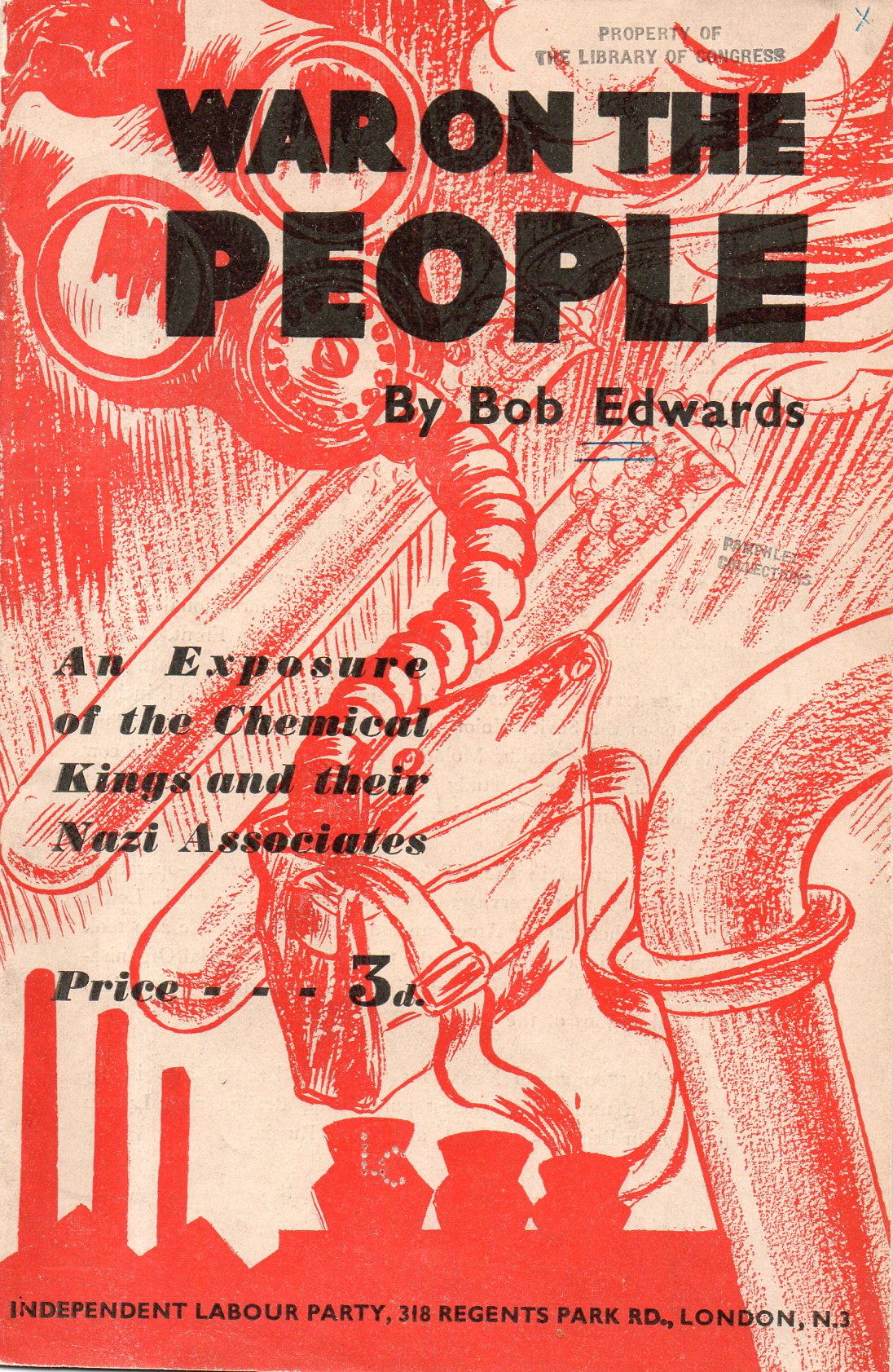
    Bob Edwards, MP (1905-1990) was a trade unionist and socialist who wrote a particularly savage appraisal of the British chemical industry during WWII.  The pamphlet stopped me because of the cover design, and then of course by its subtitle:  War on the People, an Exposure of the Chemical Kings and their Nazi Associates.  And the big deal about this was that it is the second edition, and it was printed in 1944.  

    War on the People273

    I don’t want to start even just a little on the matter of American/Allied multinationals  (like Brown Brothers, Standard Oil, Renault, I.C.I., Ford) doing business with Nazi-controlled companies and concerns, mainly because it is a very deep story and a simple scratch reveals too much and it sounds too odd to be true, but it all seems to be so.  Edwards though concentrates on the British chemical industries, and in particular the Imperial Chemical Industries (I.C.I.), which Edwards has a long association with as his personal labor affiliations in general have been with the chemical trade.

    This is already the “third edition” in two years for Edwards, so the pamphlet must have proved (a) interesting  or (b) printed in very small runs allowing for corrected bits here and there.  He addresses the “Chemical Kings” and how much  they effect local and international communities, and extend their political power, and about unfair labor practices, and large profits, swindles, and in one three-paragraph section the association of I.C.I. and I.G. Farben–Edwards concentrating on business arrangements and profits, though at this point there is no mention of any of the Farben connections to the Holocaust.  He moves on to chemical warfare, the “prostitution of science” , poison gas, a magnesium conspiracy with Hitler, and other bits…and allows himself the position of having a solution for it all–the socialization of the I.C.I.  

    It is unclear from this pamphlet how Edwards stood on the war, or what it would mean to socialize the massive chemical industry, though it seems at least that the reorganized industry would not be doing business with Hitler, though it is unclear if there would be any involvement with the war beyond that.  

    ·Posted by :

    ·in:

  • TV Field Trials, the Beginning of Networks, and an Early TV Dinner, 1936

    JF Ptak Science Books  Post 2302

    The first broadcast images in the history of television transmission were revolutionary if not very interesting.  Beginning in 1928 the first experimental Radio Corporation of America (RCA, via the National Broadcasting Company, NBC, its broadcasting division) images were of Felix the Cat, and something that would be received with 60-line clarity on a two-inch display.  For the most part, the daily two-hour broadcasts consisted of Felix or test patterns, broadcast from NYC, until 1931.  

    Tv 1936 set924

    Image quality increased markedly by the 1932 field trials with the use of iconoscope cameras, which allowed for 240-line reception though still with very noticeable flickering. The 1934 trials were improved further to 343 lines and with some less amount of flicker. 


    For the 1936 field test the transmitting station and offices for NBC and RCA were located in the Empire State Builidng (utilzing the mooring mast at the top of the building for the antenna, as well as some of the upper floors for the transmitter and offices on the 52nd floor, while the transmitting studio was located in the RCA building in Rockefeller Center).  The broadcast began on 29 June 1936 from W2XF/W2XK “to an audience of some 75 receivers in the homes of high level RCA staff and a dozen or so sets in a closed circuit viewing room…(in the RCA building)”.1


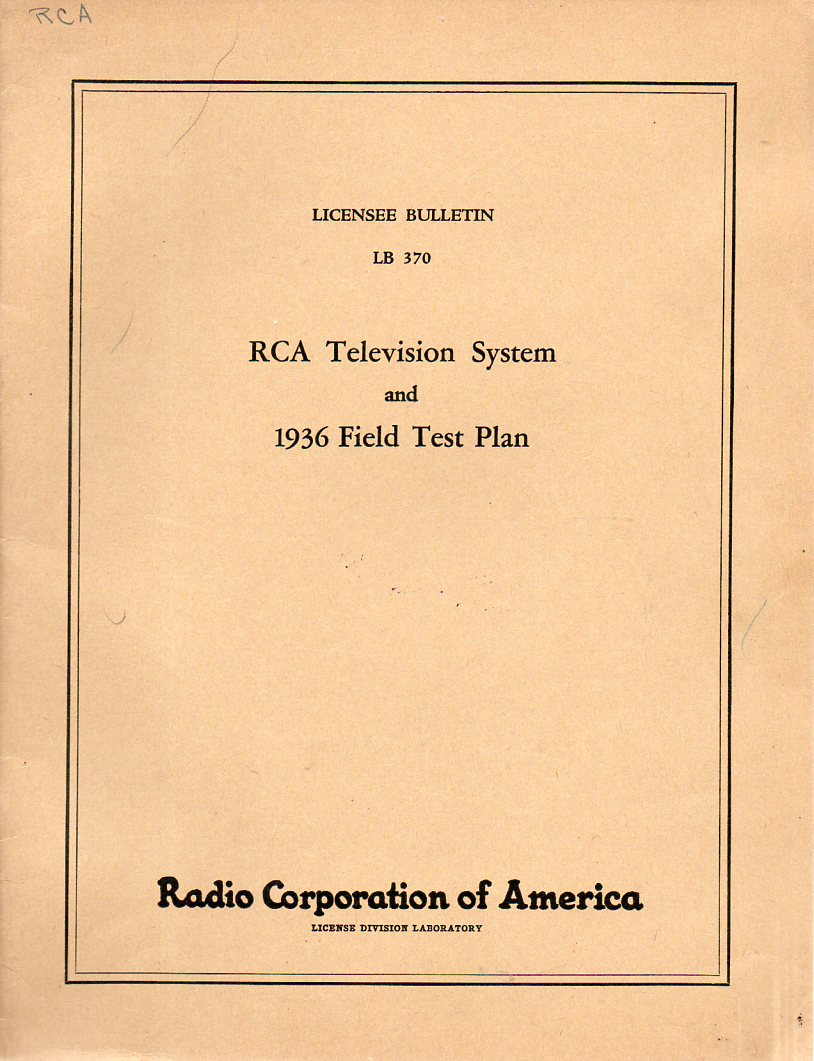
    The rare pamphlet [available for purchase from our blog bookstore, here] that I uncovered in the attic speaks to the first public demonstration. “The first public demonstration of these field trials took place on July 7, 1936 to RCA’s 225 licensees. Major General J. G. Harbord, chairman of the board of RCA announced that there were three sets in operation at the time, the most distant in Harrison, N. J.”2  It addresses the history of the field tests as well as the tech specs for the 1936 test, as well as the need to address the fuller and complicated issues of establishing a network of transmission capabilities:  “Television services required the creation of a system, not merely the commercial development of apparatus.”–July, 1936, RCA Field Test Plan, page 8.

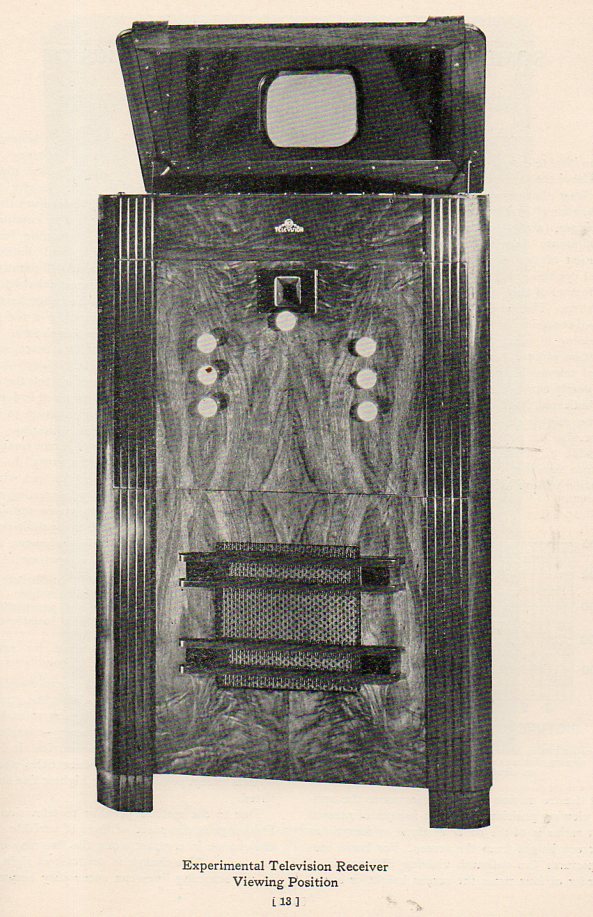
    The set on which the transmission was received was the RCA RR-359 trial set:

    Tv 1936 set922
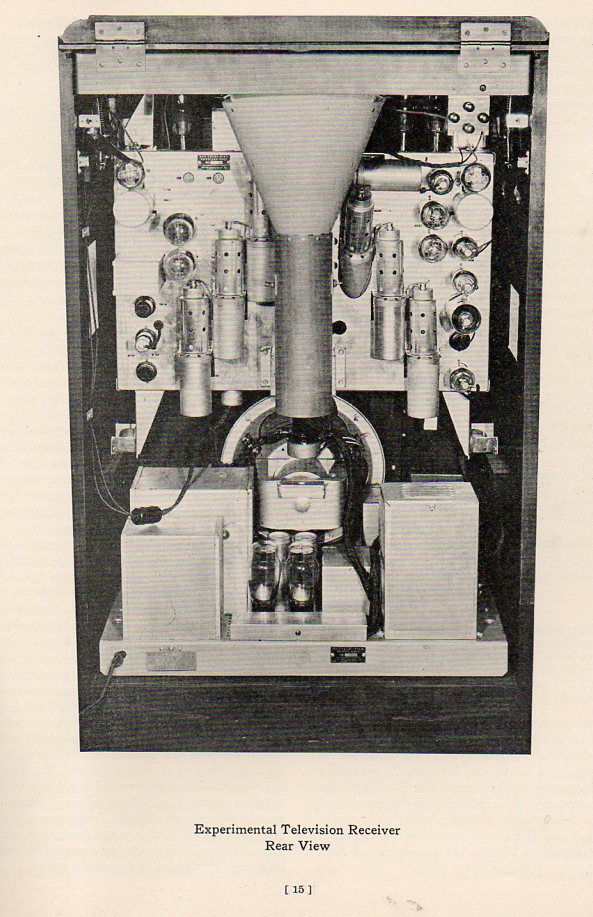
    and the innards:

    Tv 1936 set923

     Notes:

    1.  See The Television Museum, at Earlytelevision.org, here.

    2.  The Early Television Museum, located here.

    ·Posted by :

    ·in:

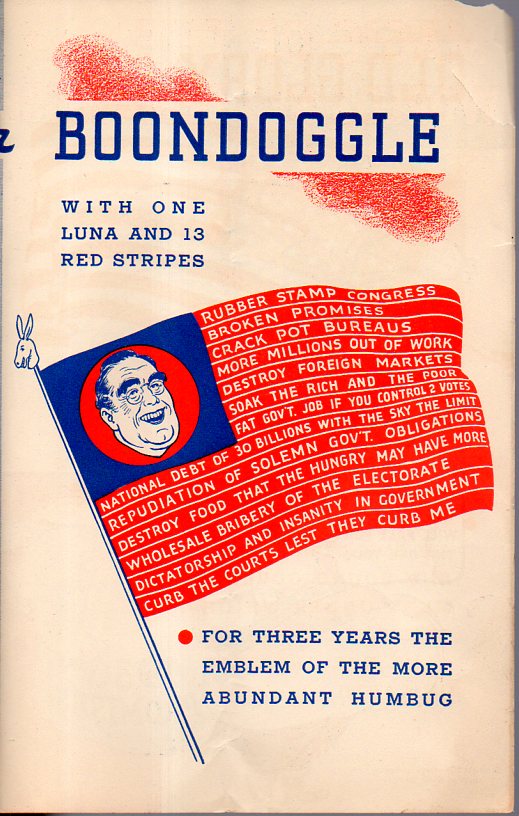
  • The Minority Speaks: F.D.R. as Boondoggling Demagogue (1936)

    JF Ptak Science Books  

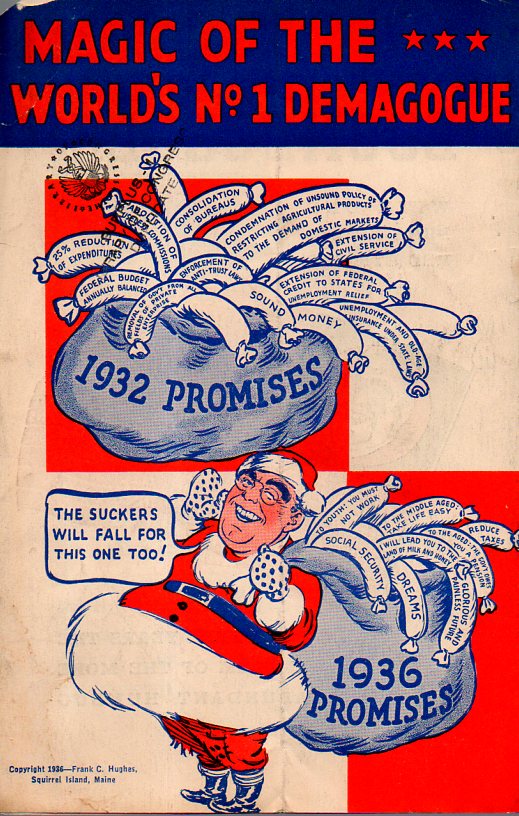
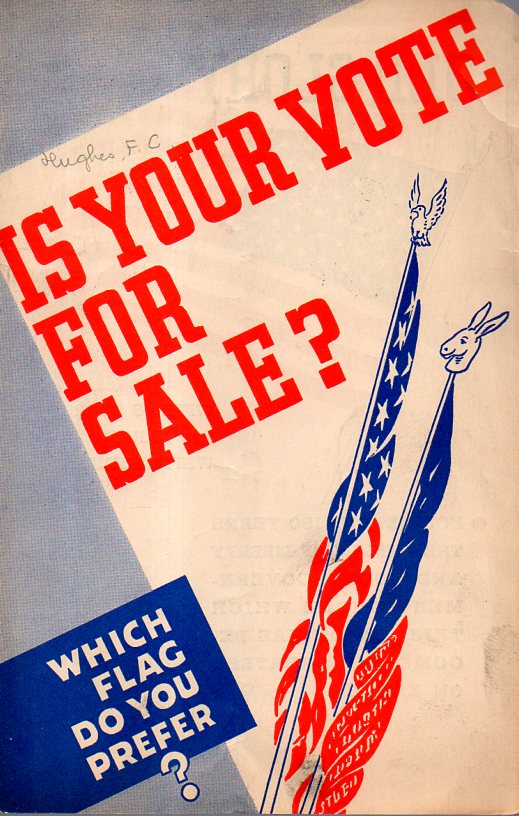
    This is quite a flag being flown by Republican interests, waving in a relatively non-existent lunar breeze prior to the 1936 election. That was a lot of discrimination leveled on FDR in that flag, which is particularly disdainful given the successes of the administration in its first term.  (Of course FDR would go on to win in the mother of all landslide, beating Alf Landon and Frank Know 523 to 8 in the electoral college).   The electoral map has seldom been so monochromatic as in ’36, though George McGovern took only a single state in his bid against RMN in ’72.  Landon took Vermont and Maine, and Maine (Squirrel Island) is where the holder of the copyright on this pamphlet–Frank C. Hughes–was from.  Hughes was, um, not a fan of the administration, and seems to have written a number of little pamphlets proclaiming himself as the dire opposition, the ruined associate of democracy, the injured party…a gadfly.

    FDR279


    Anyway I guess some of the meaty stuff that could be the cause of some of the stripes on that flag are the occasional favorite of revised opinion and theory nowadays, that FDR messed around with taxes and wages when he shouldn’t have, and imposed the tariff that some think pushed the country further/deeper into Depression. Bottom line is that he saved us all.  

    FDR278

    FDR277


    By the way, that’s pretty much the whole pamphlet–there’s one more image, but the whole of it was one sheet of paper, folded.  

    ·Posted by :

    ·in:

  • A Rare Technical Report on the V-1, 1945, Published in Newly-Liberated Paris

    JF Ptak Science Books   Post 2304

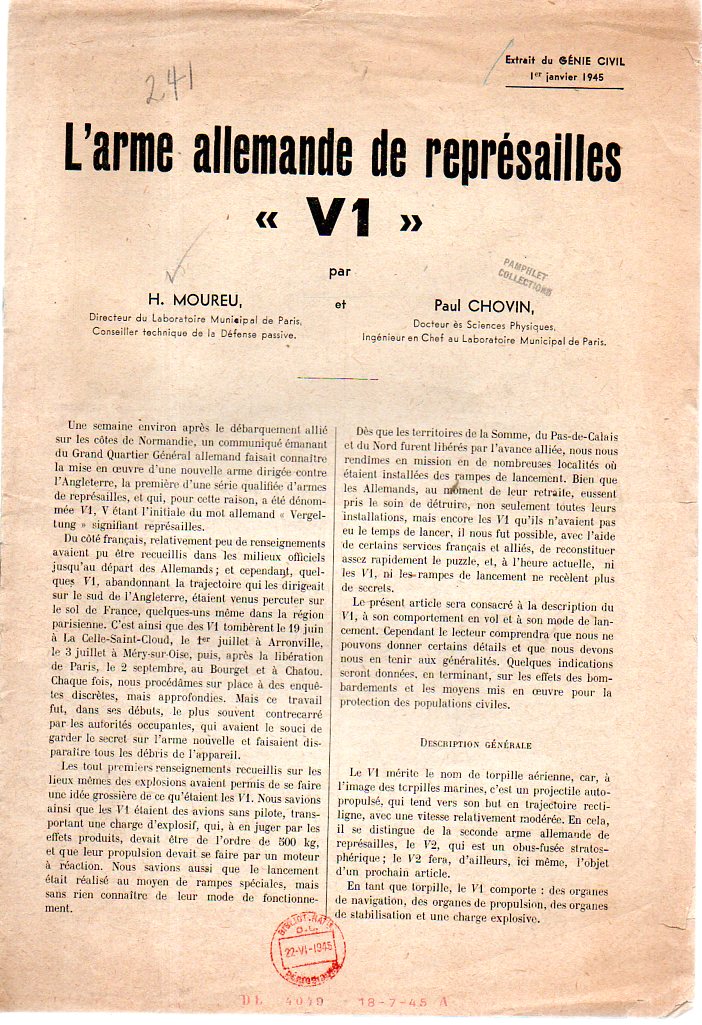
    The eyes of top-ranking Nazis must have popped when they saw this work by Henri Moreau  (1893-1978) and Paul Chovin.  It is a fairly technical paper on the V-1, the progenitor of their supposedly war-ending “secret weapon” the V-2, and to see the data and detail published in a tech journal in the city that was until very recently held in Nazi hands….well, there was very strong irony there.  “L’arme allemande de represailles <<V1>>”, seen here in offprint form, was published in Genie Civil, 1 January 1945–it is eight pages long, and printed in Paris (newly liberated from the German army 25 August 1944) in early 1945.  The offprint itself is a rare thing, with no copies whatsoever located in WorldCat, and nothing floating around on the interwebtubes. I was frankly surprised to find this fairly-well documented piece on the V-1, but no report itself, so I decided to reprint the report in its entirety. Some of the text runs off the side of the scanner, but that is the best I can do in scanning the pamphlet without taking it completely apart. 

    V1519


  • Grace Murray Hopper and “Compiling”: Computers, 1953

    JF Ptak Science Books  Post 2305

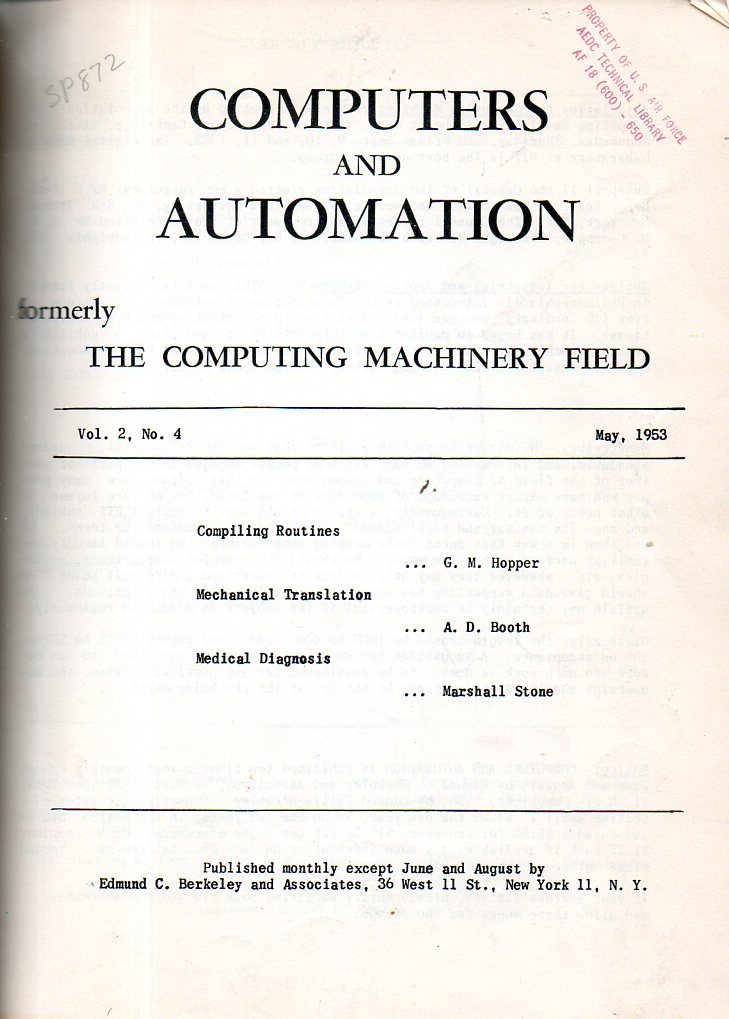
    Hopper511Grace Murray Hopper.  “Compiling Routines”, in Computers and Automation, volume 2, no.4, May 1953.  11×8 inches, ii + 33pp.  The Hopper article occupies pp 1-5.  Also in this issue, keeping Hopper good company: A.D. Booth “Machine Translation” and Marshall Stone, “Medical Diagnosis”, plus a Who’s Who in Computers (A-D) and section 2 (C,D,E) of  the first edition of the computer glossary.

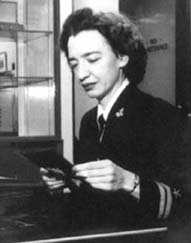
    It was in the article “Compiling Routines” that the pioneer and visionary Grace Murray Hooper (1906-1992, and at last, Admiral Hopper) laid out the foundations of compiling (which is a program that translates a program written in a high-level language into another language, usually machine language). Vassar ’28 and Princeton Ph.D. ’34, she worked at the Harvard Computation Lab on the Mark I, II, and III, and then seemed to be at a high level just about everywhere else.

    Grace hopper[Image source: National Women’s History Museum, here.]

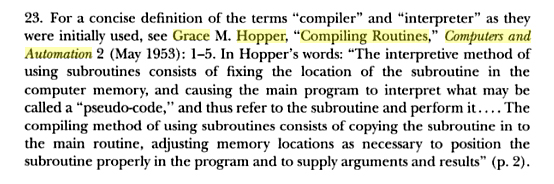
    The following from Paul Ceruzzi, A History of Modern Computing, page 367:

    Hopper compilerComputers and Automation, the brainchild of the brainy not-child Edmund Berkeley, was the first popularly-published magazine published regarding the computer, its applications, it programming, and really just about everything else. (It appeared seven years after the Mathematical Tables and Aids to Computation was published in 1943, almost entirely to the mathematics and engineering communities.) Computers was published by Edmund Berkeley & Associates in NYC beginning in 1952., beginning its publishing journey as The Computing Machinery Field, its name changing toComputers and Automation in February 1953 (in volume 2, number 2). All issues have some fair space devoted to advertising, even though the issues generally ran between 32 and 40pp. Berkeley was a real-enough mathematician, engineer and computer pioneer, but he also had a pretty large taste for making these interests pay–which was essential, as the original print runs were not very large, though his advertisers were impressive. (According to the first issue, approximately 1200 people were on the mailing list for the journal, with around 2000 issues being printed each number. All told, this is not a large print run, and thus not many of the early issues have survived.) He was not averse to being somewhat outre with his journal—in addition to having contributors like Grace Hopper and Alton Householder, he also had Fletcher Pratt and Isaac Asimov writing some pretty arresting pieces from the SciFi/Futurama point of view.

    ·Posted by :

    ·in:

  • On a Certain Part of the History of Echoes

    JF Ptak Science Books   Quick Post

     There is a wonderful, short paper by Lord Rayleigh in the August  21, 1873 issue of Nature on echoes, “Harmonic Echoes”, echoes which have a life of their own, seemingly, after their initiation….echoes with 5 or 10 or more reverberations, echoes which seem to advance, or recede or both.  

    The mythological, beautiful nymph, Echo, a creature of Greek invention–or discovery–was much in love with her own voice and thus some of this interest in repetitive reverberations.  Echo was interested in Narcissus, which means that between the two of them, there was more more than enough interest in them for anyone outside themselves, but neither could get enough of themselves. And with Echo there were others who couldn’t get enough of her, though she denied herself to everyone. And so the tragedy.  Pan wants her, the old lech, and is denied, and becomes enraged which leads to her tragedy of being torn to pieces. She is resurrected, a little bit, her voice surviving everything else, repeating the last words of others.  

    I’ve repeated below a story on the Rayleigh paper which in some respects is as interesting as the original. 

  • Baseball and World War I

    JF Ptak Science Books   Post 1262 (from 2010)–expanded

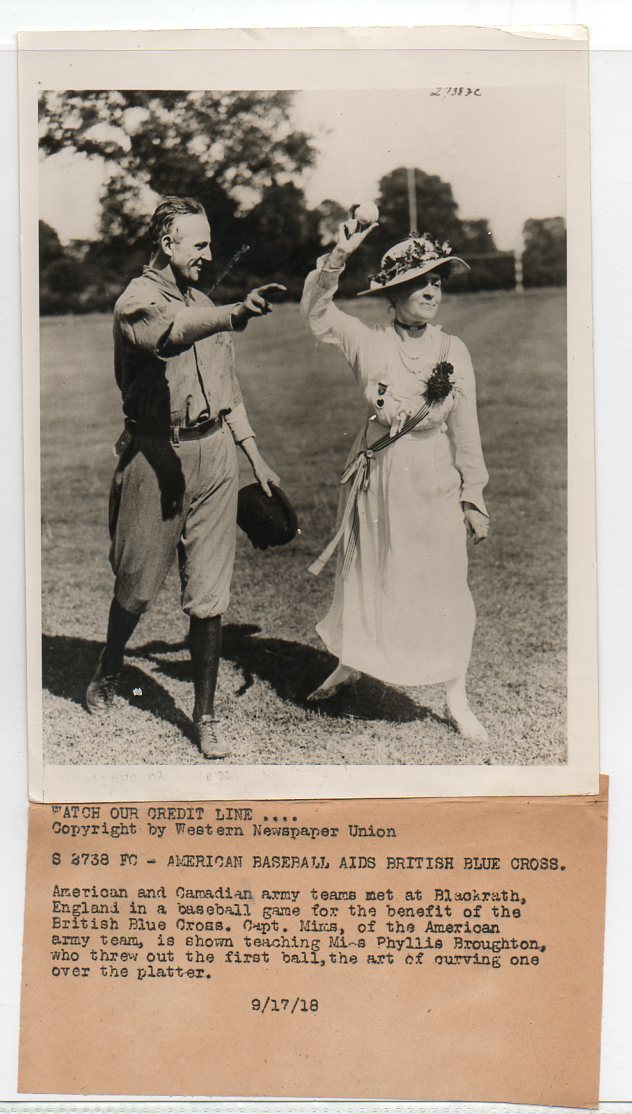
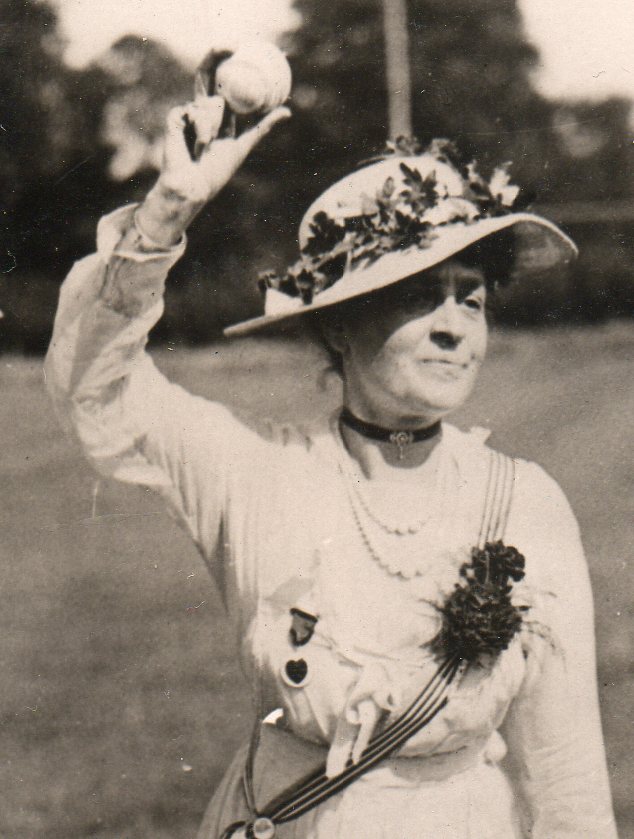
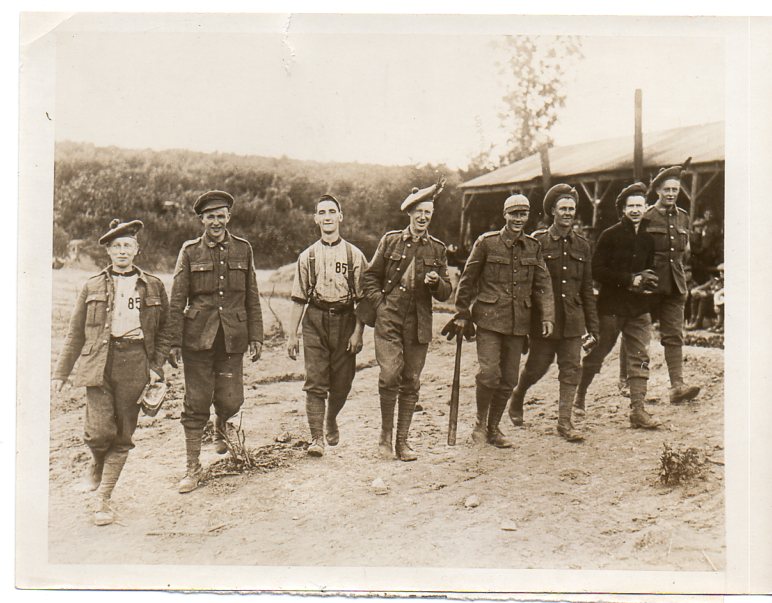
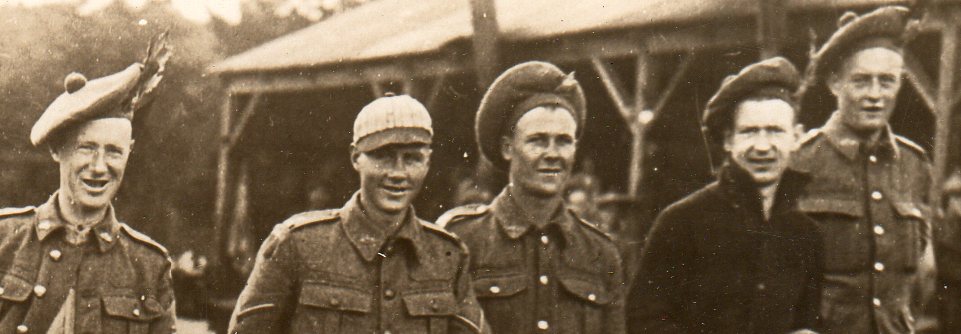
    The following photographs are part of a large-ish archive of news photo service images for the years 1917 and 1918–all are made by American firms, and almost all are related in one way or the other to WWI.  The images below are among the very few depicting wartime sports, and in all cases, these sports was baseball.

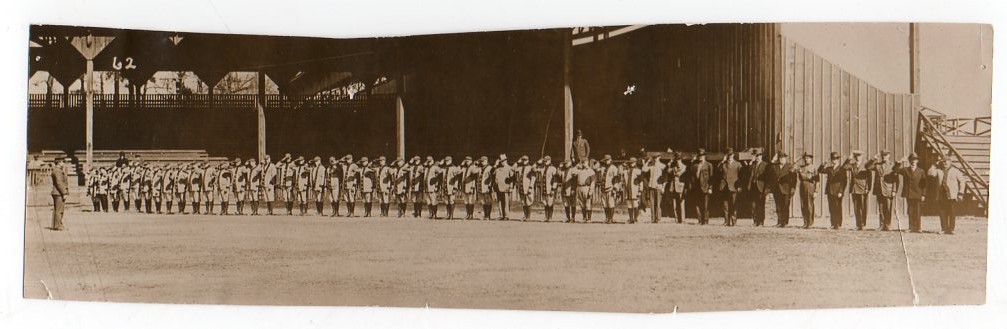
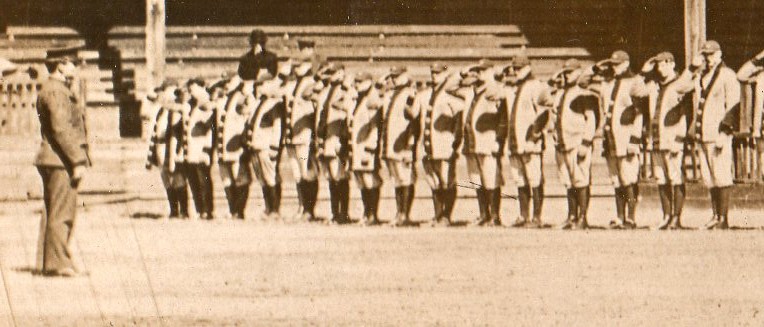
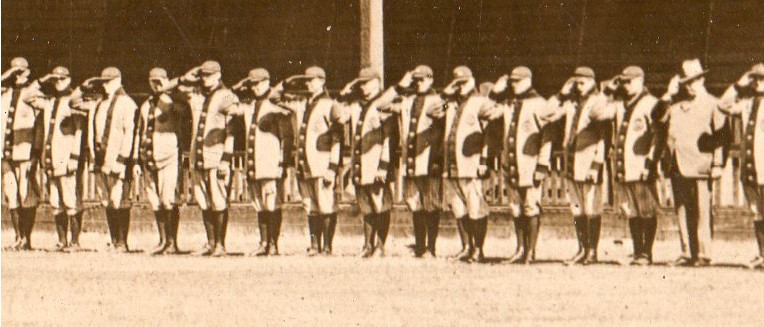
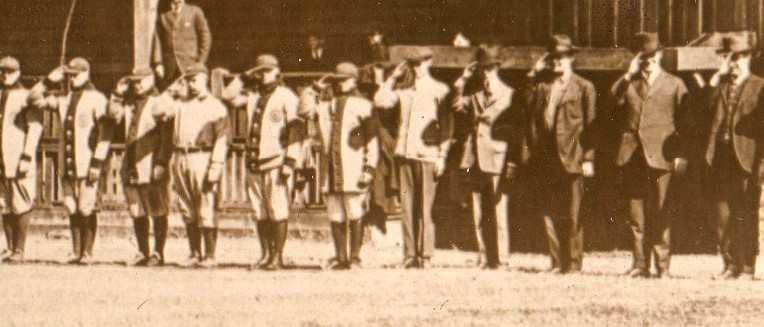
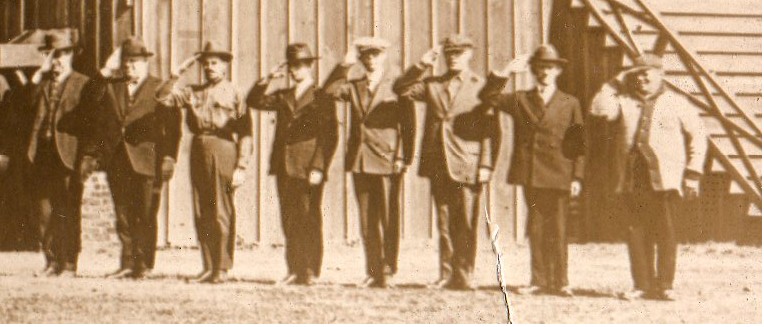
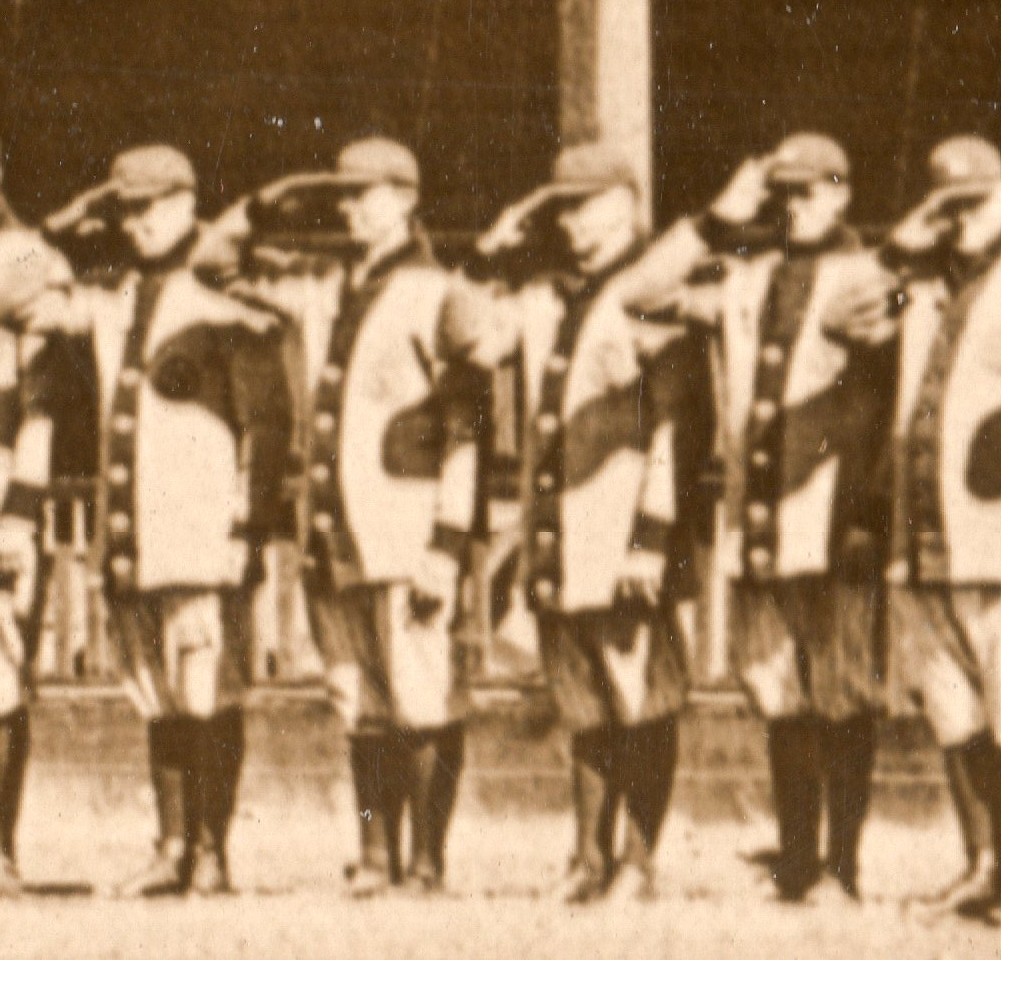
    The first photo is a rather remarkable image of summer training for (as is stamped on the back of the image) “the New York Americans” baseball club, which would be more famously and more continuously called the New York Yankees.

    The identifying stamp on the back also records that among the saluting folks is a sportswriter, Jerry Donovan, “(Wild Bill’s father)”–that “Wild Bill” was also “Smiling Bill”  Donovan (1876-1923), the New York Yankees’ manager for 1915-1917, being replaced in 1918 by Miller Higgins. (Huggins was famously more successful, managing some famous Yankees teams from 1918-1929, winning three World Series, taking six first place finishes, and a .597 career winning percentage with the New York club.)  Donovan was an average manager in his four MLB managerial years (including a last year in 1921 with the Phillies), finishing out with a .479 winning percentage. (He was evidently on his way to a new start with Clark Griffith’s Washington team when he was killed in a train wreck.) Among the other members of the ’17 squad were the beautifully-named Urban Shocker and Slim Love.  

      Baseball 1918022

    And the details:

    Baseball 1918 b023

    Baseball 1918 c024

    Baseball 1918 d025

    Baseball 1918 e026

    Baseball 1918 f massive027

    In 1918 many teams involved their players in “military training”, and this picture shows the Yankees (along with coaches and writers) doing their part to make it look as though they were making some sort of good effort having to do with the war. During the 1918 most teams mostly/sorta let the season go–not so for the Yankees or for Boston (which one its only 20th century World Series title that year).

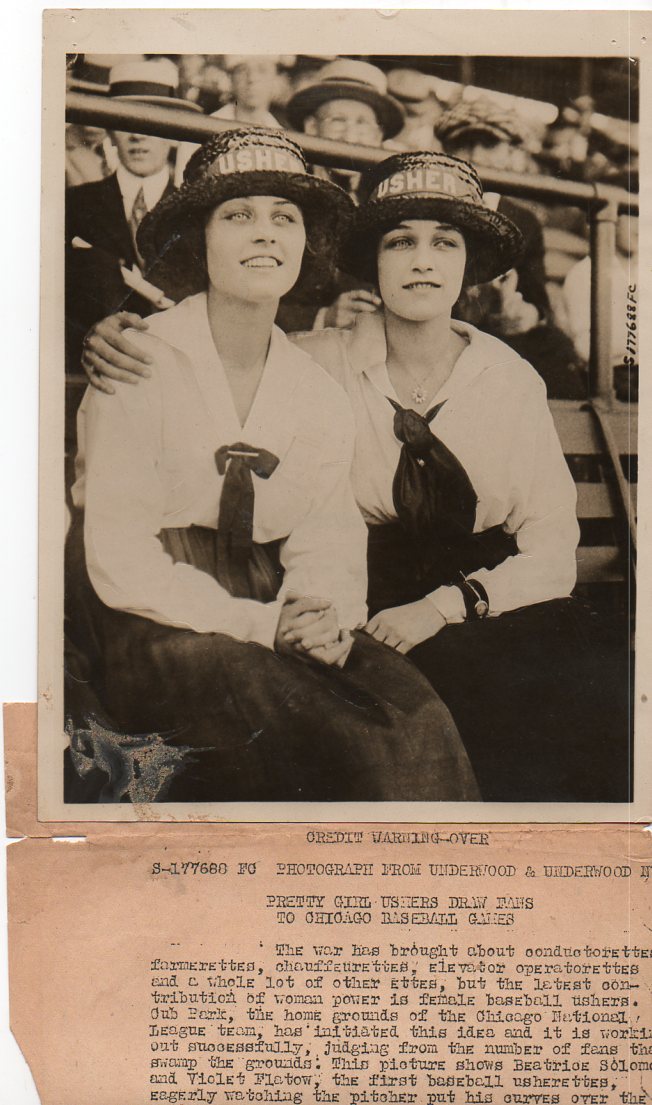
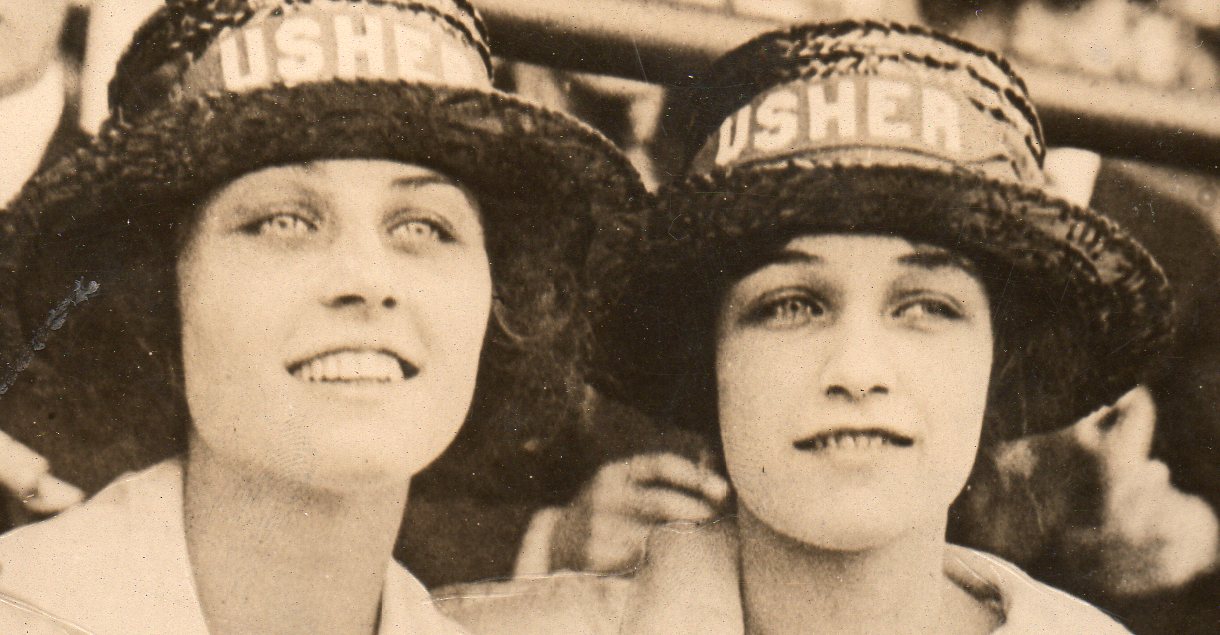
    Lovely image of two baseball ushers, 1918:

    WWI--e--women ushers684
    WWI--e--women usher dets685

    Also, this lovely picture:

    WWI--e--women-baseball672

    WWI--e--women-baseball det673


    And lastly, this:

    Baseball 1918 happy faces028
    Baseball 1918 happy faces b029

    ·Posted by :

    ·in:

  • “Render the Light Soft and Cool”–Found Poetical Bits in Scientific Advertising, 1899

    JF Ptak Science Books   Quick Post

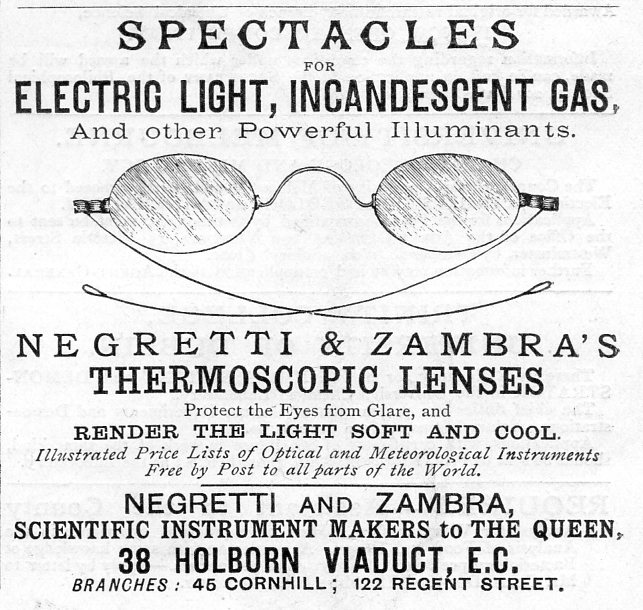
    I have seen many thousands of pages in the populist hard-science journal, Nature, from its opening volume in 1869 through WWII–at least those are what I have in the studiom ready for a browse. (In recent years even a good share of the titles in Nature are mysterious to me–I’m more able to do cover-to-cover grazing before WWII.)  In any event I have notice many times certain poetical phrasing in the ads of the later issues (adverts coming into being a few decades after the first by-subscription issues) and I’m a little sorry now for not saving or noting them.  This ad for lab specs is a decent example: it is a nicely designed bit, and small (less than two square inches int he original issue in 1899), and has the nice turn, “render the light soft and cool”, a line that could be used anywhere.  But here it is, selling specs by the redoubtable Negretti & Zambra.  

    NAture Spectacles286

    ·Posted by :

    ·in:

  • A Scribble Climate of Antique Numbers

    JF Ptak Science Books   Quick Post

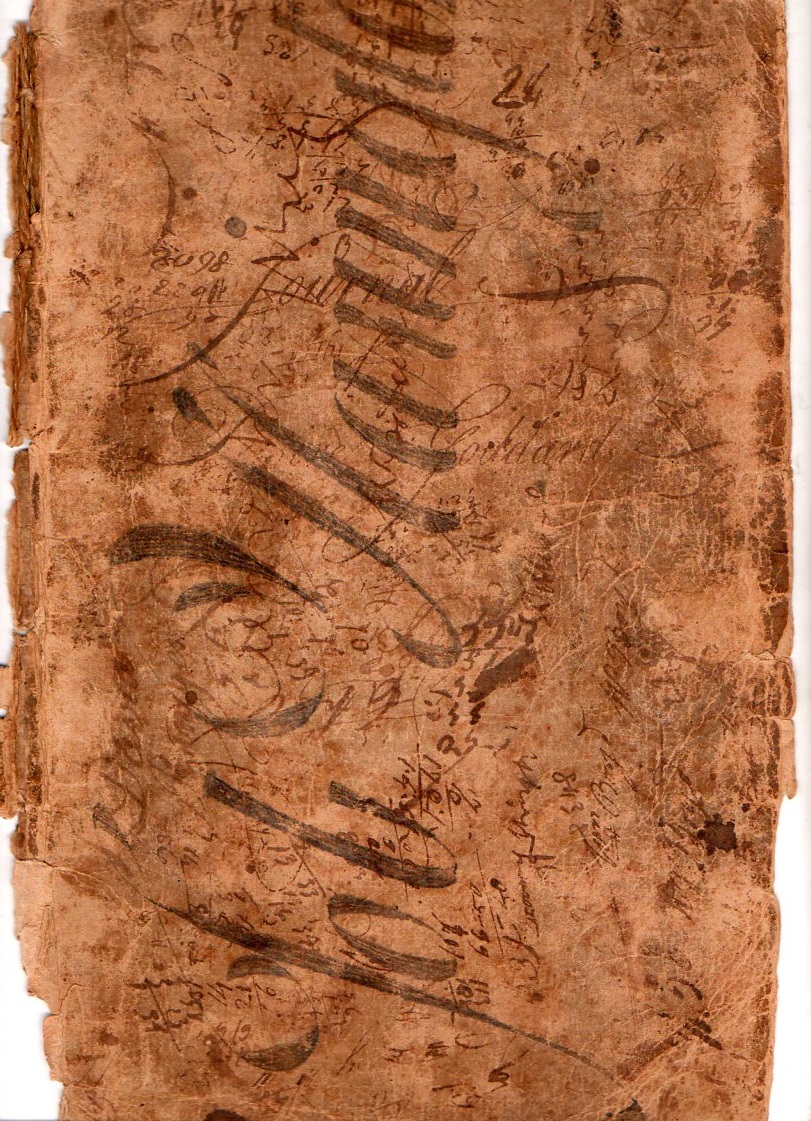
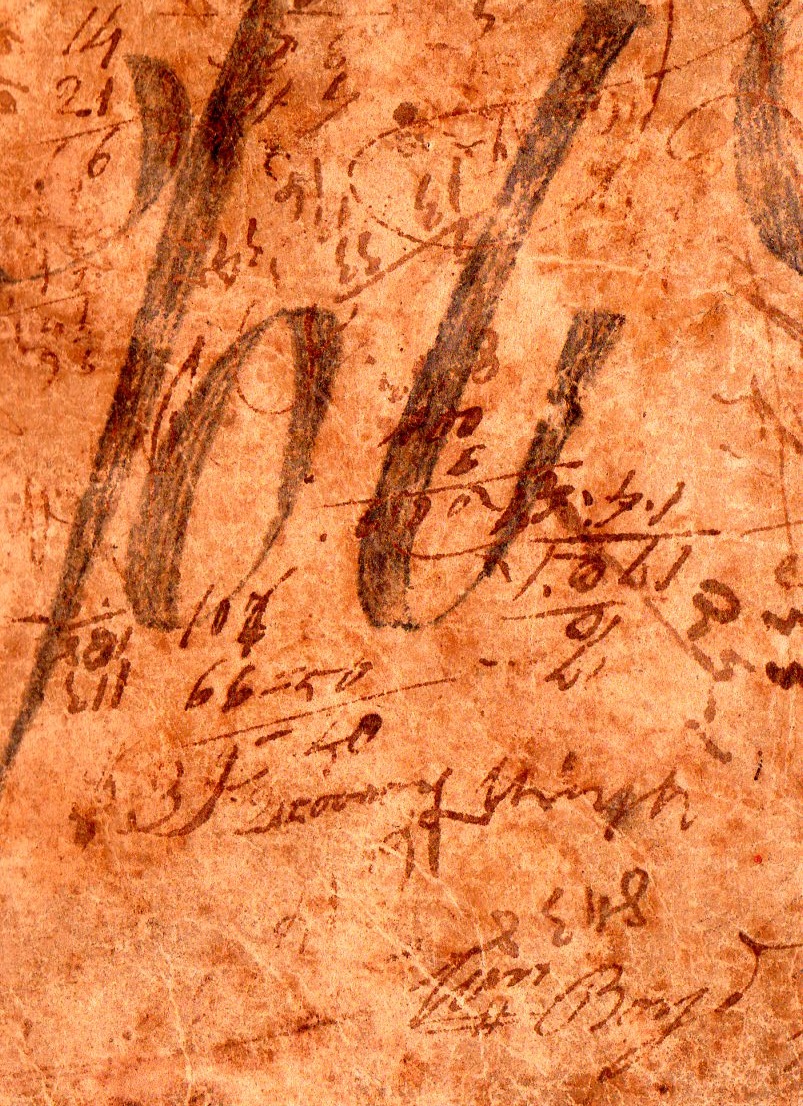
    The ScribbleVerse is a captivating place–similar to a microscope slide or the night sky, there are multiple layers of images, layers of layers, an enormous variety of found connections and contours, a poetry of found nothingnesses.  I guess if you looked hard enough this could easily be someone’s night sky, and it wouldn’t take all that much to start connecting the bits into constellations.  The more you look at images like this, the more there is to look at.  

    Found cover art 289

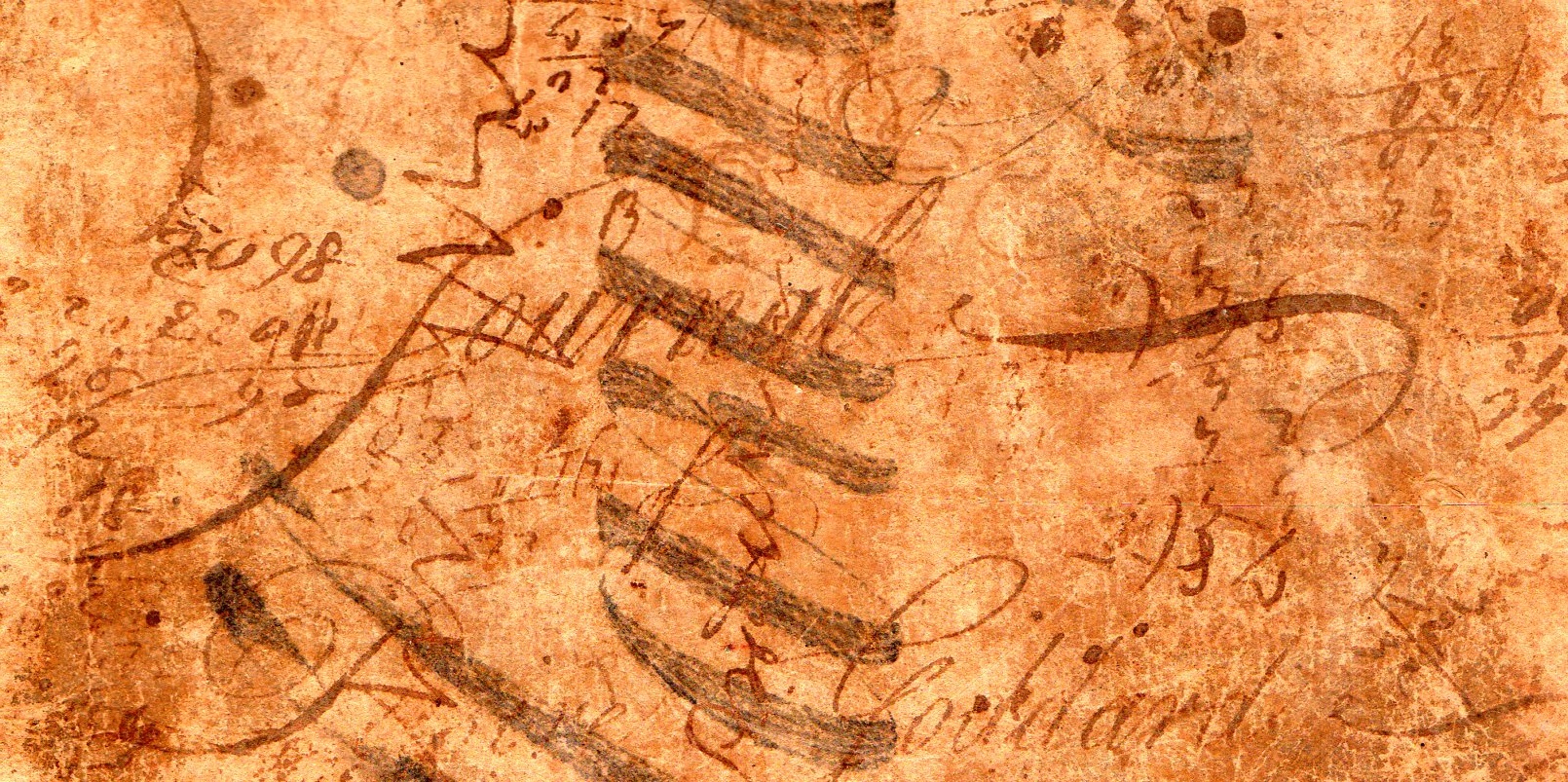
    This is the cover to a ledger/notebook that was probably first owned by someone named “Goddard’, with entries beginning in 1803, but the book itself is older than that.  Not long afterwards the book became the property of John Harrington, who writes a large and embellished signature across the length of the cover. (“John Harrington” appears elsewhere inside the work–the big ownership bit on the front is a bit off, but that is evidently what was being written.)

    And a detail:

    Found cover art  det290

    And another:

    Found cover art  detb291

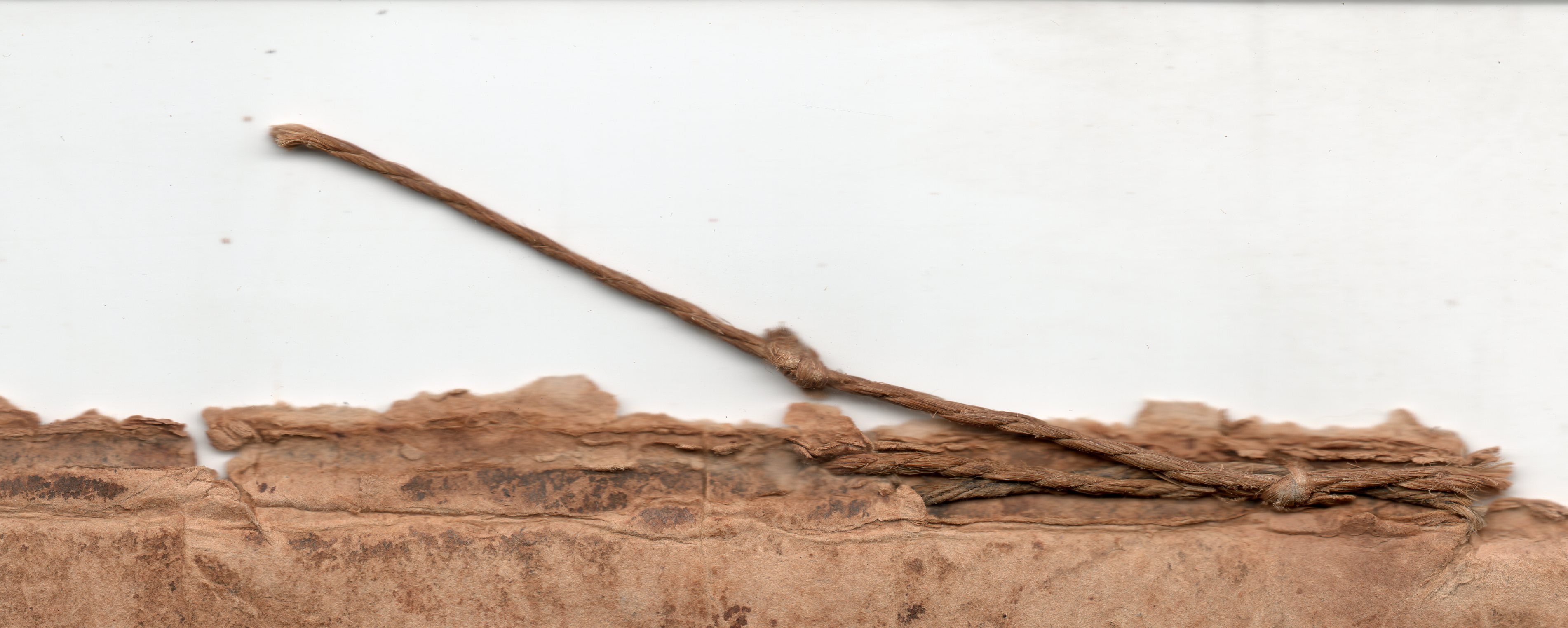
    And some glorious string:

    Found cover art  detc292

    ·Posted by :

    ·in:

  • Usherettes, Elevator Operatorettes, and Baseball, Part II

    JF Ptak Science Books   Quick Post

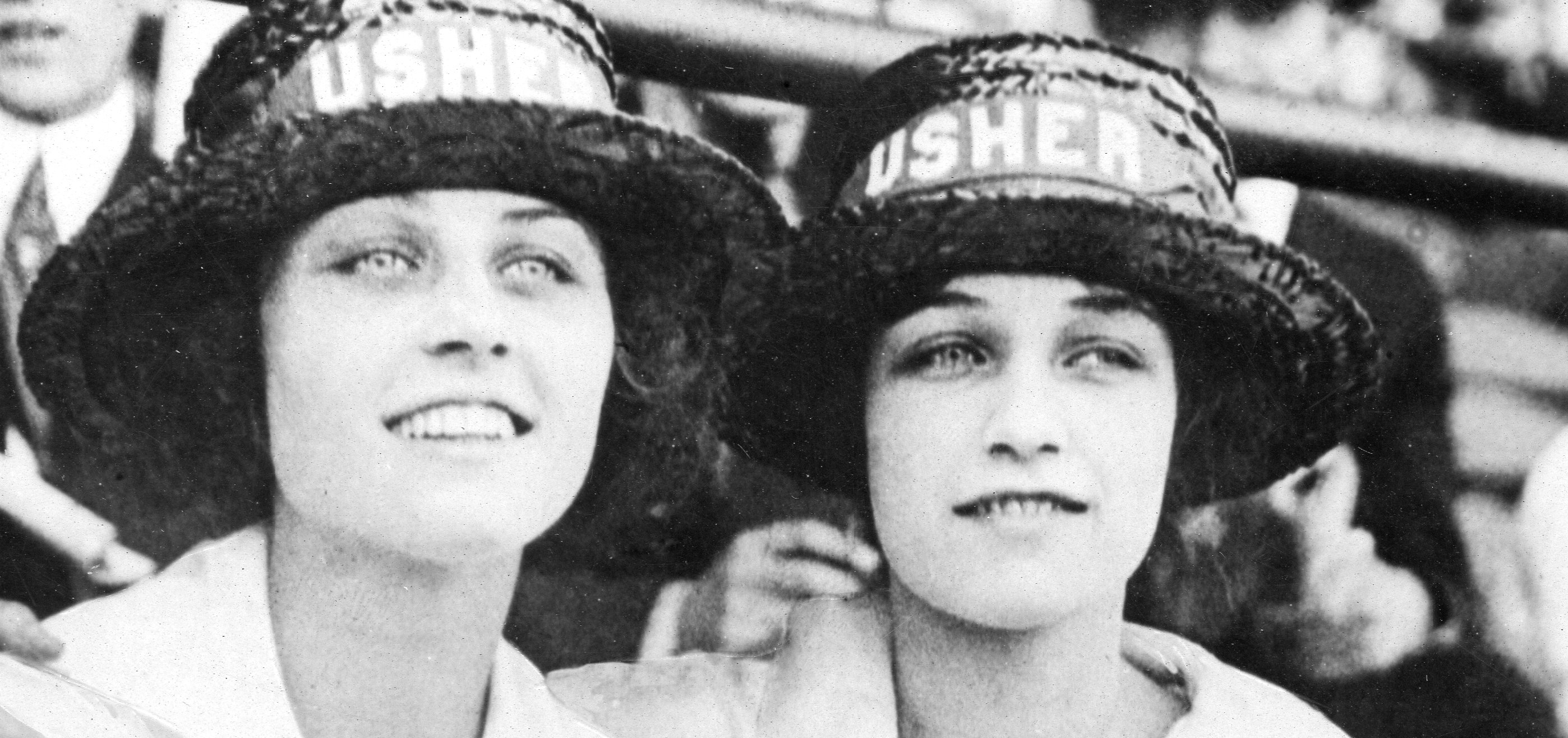
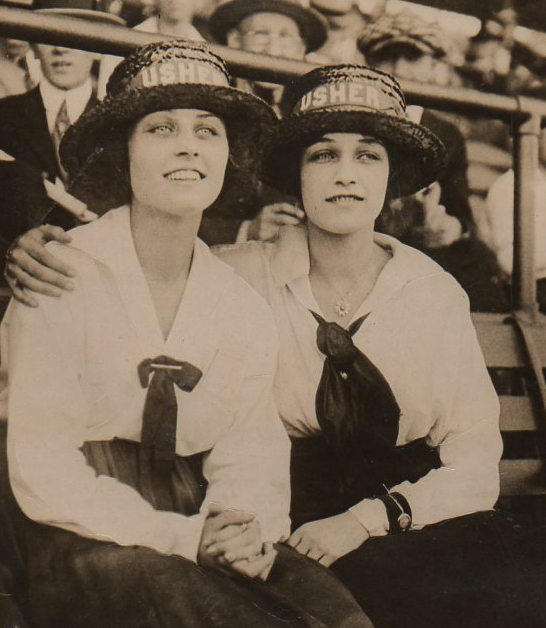
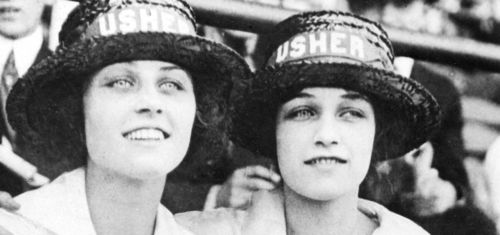
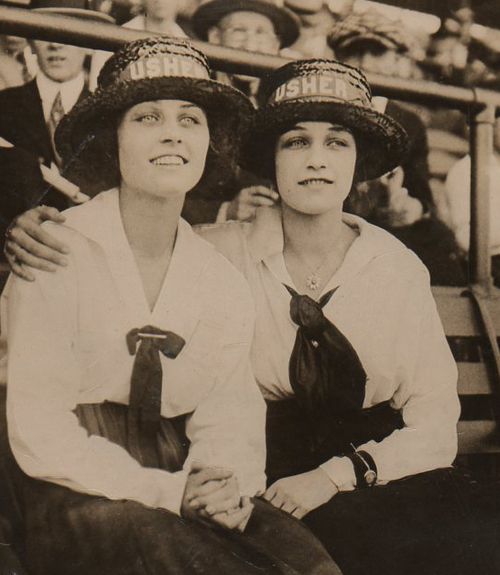
    One of the images that appeared in a post a few days ago (Baseball and World War I) became very popular, appearing in a number of other blogs and retweeted and shared in a number of media. The image was the “Usherettes” of the Chicago Cubs, and the photograph was made by a photographic pool by Underwood & Underwood (N.Y.) and was published July 12, 1918.  Its a wonderful image of two young women–both lovely, with the one of the left having no doubt crystalline light-blue eyes–who were identified as replacements for the male ushers who may have gone off to war.
    POSTER Usherettes detail

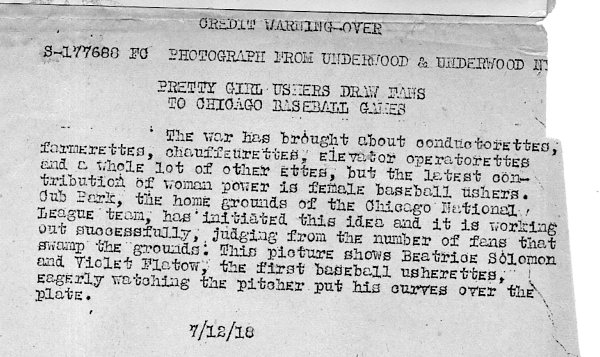
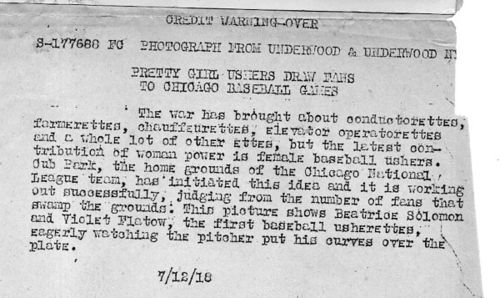
    The photograph was made by one a number of news photo service agencies who submitted their wartime work to censorship so that (basically) only mostly-positive images of the war was shared. This image was not of that particular concern, being made in Chicago at a ballpark and all, but it was still produced  by the photographic group of Underwood & Underwood.  And as was the common practice for this sort of photography the photo was accompanied by a slip of paper that was to be used as a caption for the work. So, if the Asheville Times was interested in using a photo illustrating women in the U.S. doing the work of men who had gone off to war, they’d contact a group like Underwood & Underwood who would supply them with the image as well as the description, both of which would appear in the Asheville paper.  
    Ushettes for blog image

    In any event, the caption (reproduced below) reads in part:

    “the war has brought about conductorettes, farmerettes, chauffeurettes, elevator operatorettes, and a whole lot of other ettes” and which would now include female ushers.  

    ANd just so we’re ont he same page, the Oxford English Dictionary defines the suffix “-ette” so:  

    “Forming nouns denoting small or brief examples of the thing denoted by the first element, as diskette, essayettes, kitchenette, towelette, etc.”   As well as:

    “Forming nouns denoting women or girls linked with, or carrying out a role indicated by, the first element, majorette, suffragette, usherette…”etc.

    It turns out that the use of “usherette” for this image predates the “usherette” first usage in the O.E.D., which gives a date of 1924 for the first appearance of the word.  

    It should be stated that the two women in the photograph above were Beatrice Solomon and Violet Flatow, “the first baseball usherettes”.
    Usherettes text294

    ·Posted by :

    ·in:

Recent Posts

Archives

Categories