A Daily History of Holes, Dots, Lines, Science, History, Math, Physics, Art, the Unintentional Absurd, Architecture, Maps, Data Visualization, Blank and Missing Things, and so on. |1.6 million words, 7500 images, 4.9 million hits| Press & appearances in The Times, Le Figaro, Mensa, The Economist, The Guardian, Discovery News, Slate, Le Monde, Sci American Blogs, Le Pont, and many other places… 5000+ total posts since 2008.

  • Display of Data: WWII Resource Material Maps

    JF Ptak Science Books   Quick Post

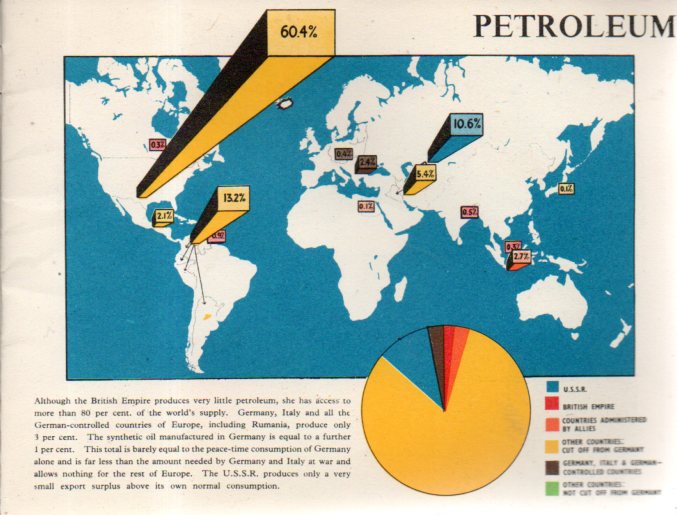
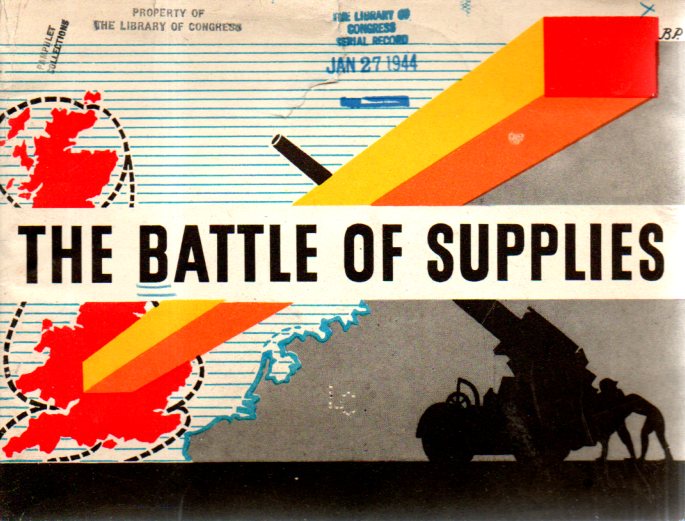
    The Battle of Supplies (1944) is an interesting propaganda publication, simultaneously celebrating achievements and promoting the new for greater production.  The method of displaying the relatively simple data is pretty striking.

    Maps--battle supplies693

    Maps--battle supplies694


  • A Beautiful Regression (1877)

    JF Ptak Science Books   Quick Post

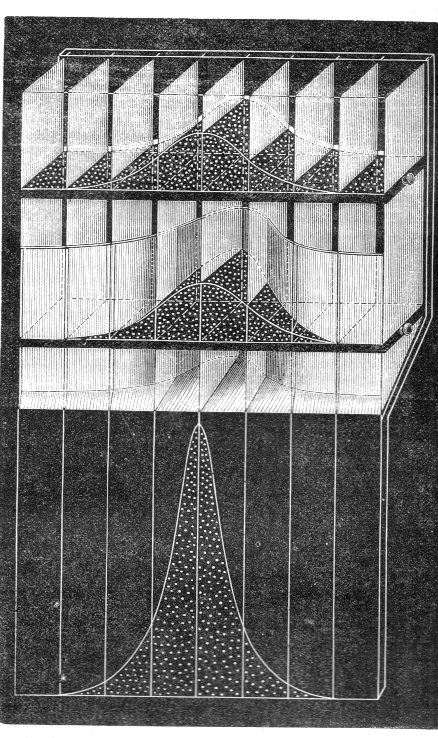
    This beautiful bit of data visualization was a significant development in the history of statistics and was employed in pioneer Sir Francis Galton’s “Typical Laws of Heredity, III”, which appeared in Nature magazine on April 19, 1877.  

    Galton707[Image: Francis Galton, “Typical Laws of Heredity, III”, Nature. p 513, April 19, 1877] 

    This contribution by Galton is the “first major step in the development of correlation and regression analysis” according to Judy Klein’s Statistical Visions in Time: A History of Time Series Analysis, 1662-1933, (page 131). She continues: 

  • Quick List of Alan Turing Publications

    JF Ptak Science Books   Reference Series

    Alan Mathison Turing. 1912-1954

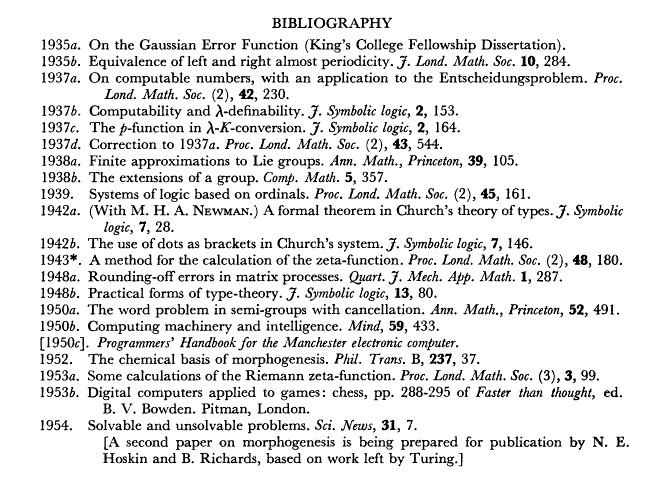
    Bibliography of his works by M. H. A. Newman from Biographical Memoirs of Fellows of the Royal Society, volume 1, November 1955, pp 253-263 (with the bibliography of page 263). 

    (I’m posting this simply because I thought some readers here could use it.)

    Bibliography Turing Roy Soc

  • Robert Oppenheimer as a Ted Williams or a Joe DiMaggio?

    JF Ptak Science Books    Post 2407
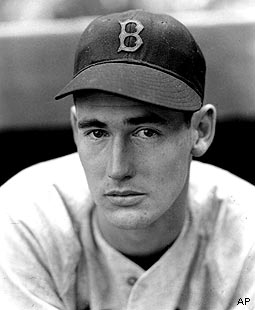
    Oppenheimer williamsOppenheimerOppenheimer dimaggio

    Years ago I phone-met the physicist Al Wattenberg. He started his long and fine career under the bleachers at the University of Chicago, working with Enrico Fermi where on December 2, 1942, they achieved the first controlled nuclear chain reaction.  (The moment was celebrated with a bottle of Chianti donated by Eugene Wigner, and it was signed by all those present at the creation.  It turned out that Wattenberg was the last man to leave the area, and he saw the abandoned Chianti bottle and rescued it–he gave it to the Argonne National Lab where it lives to this day.)

    One day I asked him about Fermi and what he was like when he wasn’t working. Wattenberg said that he used to play tennis with Fermi, who (paraphrasing here) played tennis like he did physics–meticulous, methodical, careful. He said he was frustrating to play with, and he never beat Fermi at the game.  

    I like these offbeat cross-interest metaphors for explaining complicated things. And it was this thinking that brought me to Oppenheimer and the New York Yankees–and that Boston team–in the hope of dislodging a little piece of insight that might come from comparing disparate things. And so far as I can tell discussing Robert Oppenheimer in terms of Ted Williams and Joe DiMaggio doesn’t get very much red carpet room as an idea, and I suspect that there are good reasons for it.  

    Let’s face it—Robert Oppenheimer left his theoretical physics career sorta behind when he went to win the war at Los Alamos in 1943. I was surprised to see today that his publishing career for the hard stuff stopped around 1950 He was an absolute brilliant light when he started out in 1926, and a massive influence in his field by 1940.

    Here’s what the production looked like: 

    • 1926-29:  16 papers
    • 1930-39   36 papers
    • 1940-42  10 papers

    Which makes 62 papers for the 1926-1942 period . After the war, from 1946-50, there were five papers. And after that, none. That’s not to say that he didn’t publish, because he did, and was prolific—it was just a different career. Also from 1926-1942 he was a theoretical physicist with wholly different responsibilities than those he would take on in 1942, when he became not only the brilliant physicist but also the brilliant administrator/director/curator, working an almost-impossible job with thousands of creative people and the U.S. Army in shacks  in the desert trying to beat the Nazis to a bomb that would end the war.

    After the war Oppenheimer helped to formulate the direction of physics in the U.S., leading Princeton’s Institute for Advanced Study as its director;  then he helped formulate American nuclear policy going into the Cold War as the Chair of the Atomic Energy Commission. And then there was the great tragedy of his “security hearings” (1954) which crushed him on a McCarthyite slab,  costing him much of the rest of his career. And then he was dead in 1967.

    Had he not gone to war, had he not taken the job only he could have done, what would he have become? His accomplishments were already large–the Born-Oppenheimer approximation, Oppenheimer-Phillips process, neutron stars, quantum tunneling. More than likely one of the things he would be well known for today would be his development of the discovery and understanding of black holes—a singularity that he discovered in with in a paper called printed in Physical Review on September 1, 1939, but this was somewhat premature for the time.  And then came the war.

    Millions of other people went to war, too, stopping their lives on one end, starting a new life on the other, and then returning to their previous lives with varying degrees of retention or creation. Two of those folks were Ted Williams and Joe DiMaggio.

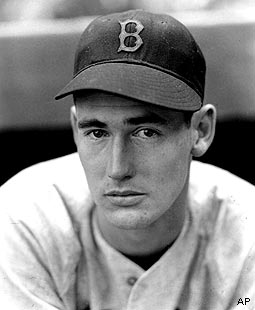
    Ted Williams went to war too, from 1943-1945. Williams just started out in his brilliant career hitting .406 in ; then two years later, he was gone. Williams was 24-26 years old for the war. Oppenheimer 38-40, though Ted got to play from 1946-1960 when he came back, absent a year that he spent as a Marine fighter pilot during the Korean War (“strafing Commies”). No doubt Williams would have piled up the numbers in a big way had he played ball in those four years

    Then there’s Joe DiMaggio, who also served for those years when he was 28-30. He had finished up seven years with the Yankees before he left, brilliant—perhaps the most stellar thing about it all (long pointed out to me by my friend, Mr. Baseball, Andy Moursund) was that he hit 219 home runs while striking out 196 times in 7 years. His batting averages were very high, and he was a slugger, and he didn’t walk all that much compared to Williams. This seems more in-line with Oppenheimer—a different sort of precision, one where DiMaggio hit for power and rarely didn’t hit anything at all, going up swinging but rarely going down swinging at nothing on the third strike. Although he was relatively young went he left for the war, he came back at 30, and played another 6 years,

    It may be too weird or nonsensical to think of these sorts of things, let alone thinking of Oppenheimer in units of Joe DiMaggios, especially since Oppenheimer knew/cared nothing about sports2. Plus in the alternative histories world we really can’t express the potentials of missing years, especially in terms of metaphors from non-related entities.

    On the other hand, I did create a physicists vs. mathematicians chess set, matching up people with what their possible position of the board might be, we can probably Oppenheimer to his baseball equivalent.

    Perhaps this is also my pneumonia talking rather than my brain, what with Spring Training approaching, and perhaps this was all useless–but for some reason if Oppenheimer suddenly appeared out in the front yard wearing a baseball jersey, I’d see him in pinstripes, with a “5” on his back.  
    ·Posted by :

    ·in:

    —
  • Beautiful Ball Bearings, II

    JF Ptak Science Books  Quick Post

    Ball bearings are exceptionally important and have a long history, I mean, long stretching back more than 2000 years (in its most primitive form), finding formative articulation in the Renaissance, and then their first patent in 1869.  They are important parts in the history of technology, metaphorically similar to the elevator brake in the development of skyscrapers.  And they can be lovely objects in addition to their fine engineering and application. 

    The Bearings Company of America (of Lancaster, Pennsylvania, established in 1897) published a fine catalog (in 1938) for their products, including a few pages of photos of their gorgeous goods.  Sometimes photographs like these have as much artistic impact as the techno works of Paul Strand and Dorothea Lange–the images are just fine.  

    Ball bearings710


    Ball bearings709

  • Product Placement, 1615

    JF Ptak Science Books   Quick Post

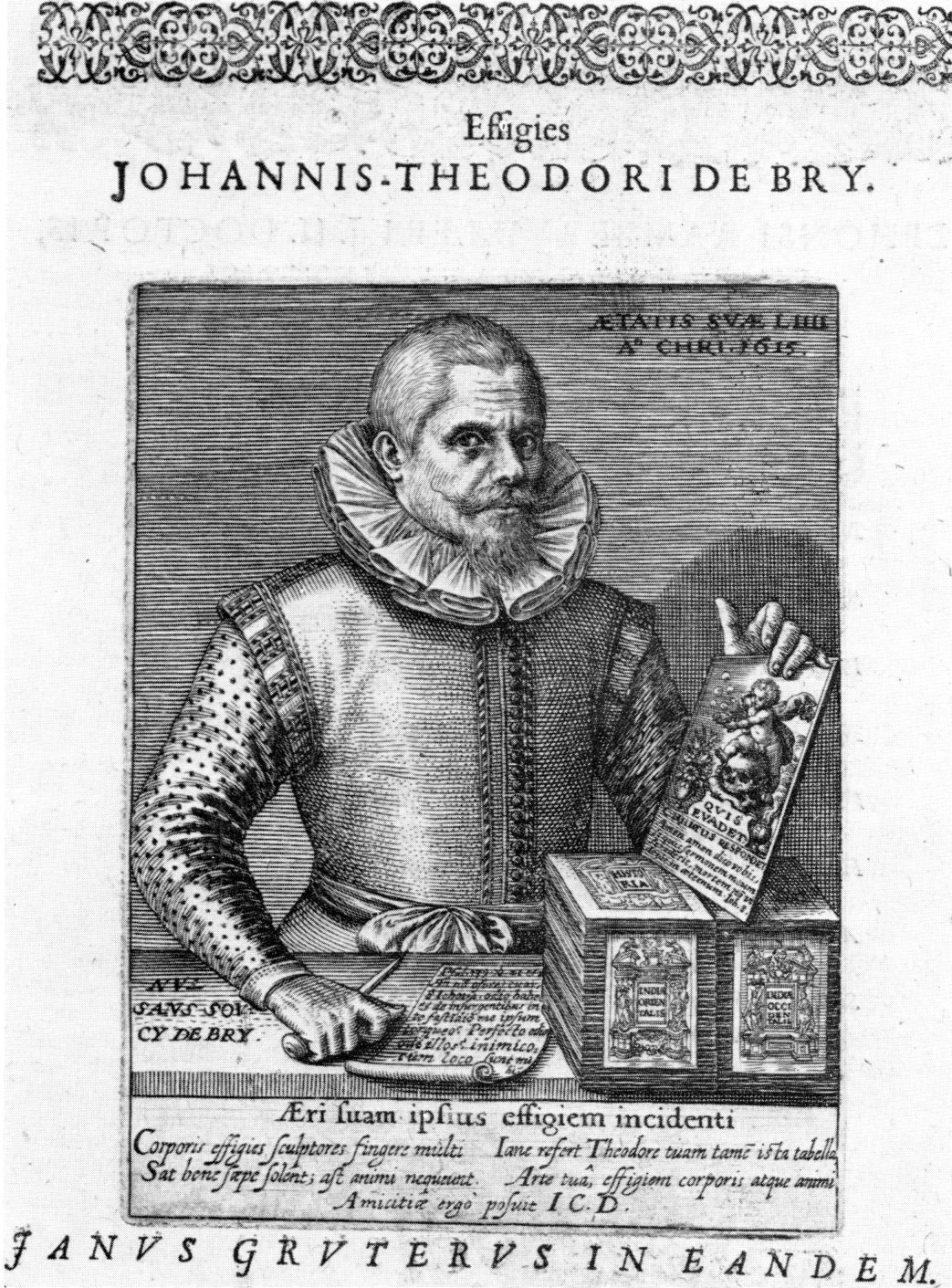
    It is a very uncommon sight to see a book illustrated with the self-portrait of its engraver standing next to the unbound sheets of his own (and unrelated) travel book. But so it goes, and it goes in Jean-Jacque’s great 1601 Baroque illustrated work on the occult arts,  Tractatus posthumus Jani Jacobi Boissardi … De divinatione & magicis praestigiis.  The book was published by Johann/Jean Theodore de Bry, who also engraved the images after Boissard’s designs, who had died 14 years earlier.  

    De bry711

    De Bry–who with his brother had earlier helped his father (Theodor de Bry) with his massive work on the American Indian and travel in general–completed some 30 volumes of illustrated travel, which was a monumental achievement, even if some heaping part of his work was based on very little reality.  So Johann is standing there with the family coat of arms (on the right) and the family epigram (on the left). Theodor de Bry’s self portrait also makes use of the same epigram, “Nul sans soucy”, or “None without worry”.  

    De bry elder[Image source: wikipedia.]

    Another, earlier edition of this work is seen here, at Rara, and was formerly the copy of Carl Jung. 

  • In Really, Really, “Dark” Africa (1879)

    JF Ptak Science Books    Quick Post

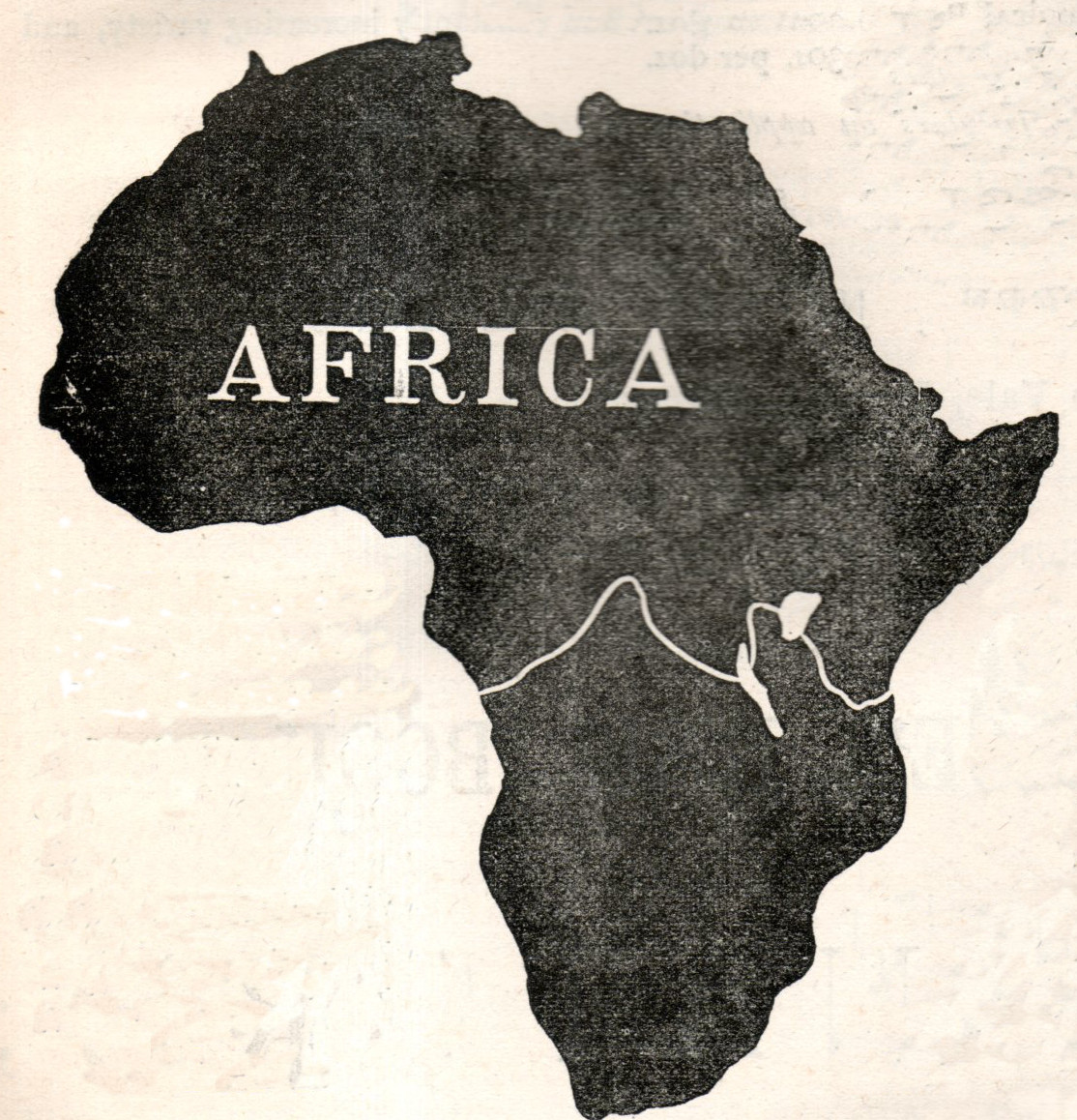
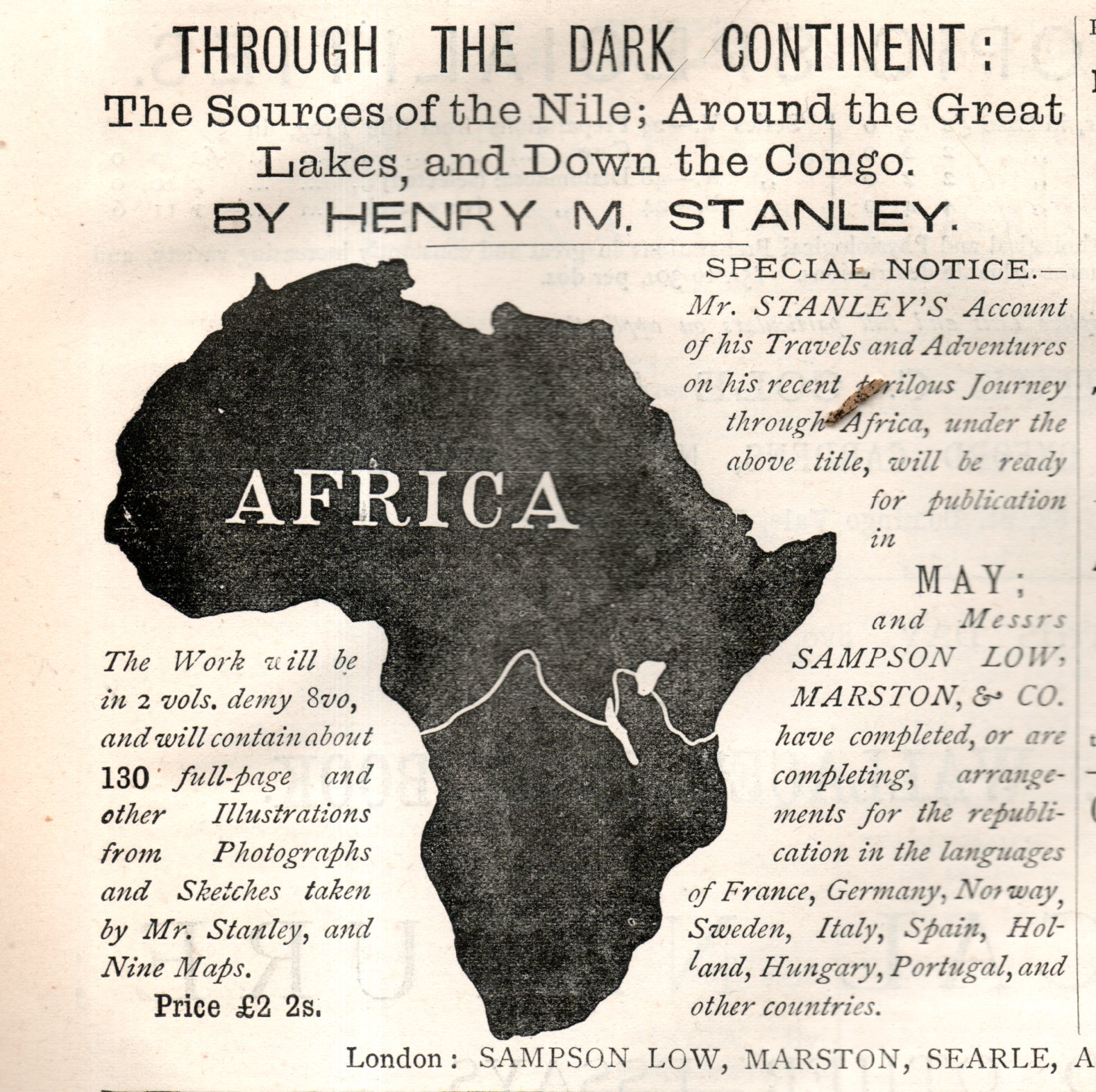
    Advertisers for Henry M. Stanley’s Through the Dark Continent could not paint Africa any darker than they did in this ad which appeared in the journal Nature on May 3, 1878.  Stanley plowed his way through Africa from 1874 to 1877, and was quickly into print on his return, which may have been more armed Imperial Pushing than it was a geographical expedition.  

    Africa, dark715detail

    Stanley published another book, In Darkest Africa. twelve years later in 1890, no doubt alluding to the unimaginably dark places of a dark place.  

    And just for the sport of it I had a quick tour around the massive 75,000,000-item database of library holdings in WorldCat and found that there may be only one other book earlier than Stanley’s published with dark/darkest Africa/Continent in the title (Christian Liberia, the Hope of the Dark Continent, with Special Reference to the Work and Mission of Edward S. Morris, 1838). After Stanley’s book was published there are easily dozens of other books using that phrase published between 1878-1900. So there’s that. In my long career of looking at maps I cannot recall the continent appearing on world maps as simply an entirely blacked out/filled-in geographical region–certainly in earlier maps of Africa (or at least before 1900) the unknown spots were simply left blank; the older the map the more likely it was to be that the blank spots were filled in with unusual representation of flora and fauna.  But never, it seems to me, was it just entirely black.  

    The full add looks like this:

    Africa, dark715

  • Bugs

    JF Ptak Science Books   Quick Post

     “Insecte, an Insect; a small fleshlesse, and bloudlesse vermine, diuided (in some sort) betweene the head, bodie, and bellie, as an Ant, Fly, Bee, etc.; vnder which, the Earthworme, Caterpiller, etc. be also comprehended”.–1611   R. Cotgrave Dict. French & Eng. Tongues,  from the Oxford English Dictionary

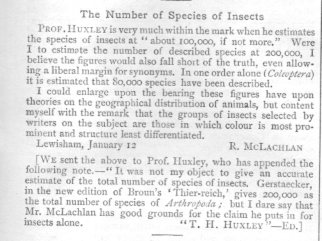
    The “insect” has been around on Earth for a long time, but only in English since 1589. (The OED has an earlier use of the word, but the Cotgrave is the most poetic.) And there have been lots of them–and so my interest in this short Letter to the Editor in the January 25, 1877 issue of Nature, in which the number of species of insects is discussed.  Mr. McLachlan is the writer who questions the great Thomas Huxley on his round estimate, which is recorded at “about 100,000, if not more”.  Huxley responds and says that yes, the 100,000 is probably quite low.  And of course he was correct.  I suspect that then as now that insects were about the most varied groups if animals on Earth, and accounting for half of all organisms on the planet–today though the estimates of the number of species range above 10,000,000.  

    If there are 10 million species, I wonder about how many bugs there are, and about their combined weight compared to the biomass of the Earth?  I don’t have numbers for the big questions, though I do for the number of ants, which comes out to about 10 x 10^17–a big number, and just for ants.  

    Bugs716


    ·Posted by :

    ·in:

  • The First Field Recordings (1890)

    JF Ptak Science Books   Quick Post

    Anthropologist Jesse Fewkes (1850-1930) was the first to use the Edison phonograph for recording legends, songs, stories, rituals and so on of North American Indians, making him a pioneer in field recording. Work like his was essential to the preservation of vanishing ways and stories and languages and music, and provided inspiration to people like Frances Densmore, John Lomax and Herbert Halpert.  

    This came up just now looking for a paper by Lord Rayleigh in the journal Nature, and to my surprise bumped into this short note by Fewkes in that issue for April 17, 1890 (volume 41, # 1068). This was undoubtedly the first notice of his field work reported outside of the United States.  Music in the Social and Behavioral Sciences: An Encyclopedia (edited by William Forde Thompson) establishes Fewkes as making the very first field recordings of any kind (page XXX, chronology).  

    Recording sample via the Library of Congress, here. 

    ( “Mr. Phonograph.”  (1:11) Text in A National Project with Many Workers. Jesse Walter Fewkes talking to the new Edison cylinder recording machine in order to demonstrate its capabilities to a visiting Passamaquoddy man. Probably recorded in Boston, late 1890-early 1891. Jesse Walter Fewkes Passamaquoddy Cylinder Collection.)

  • Of Baseball Cards and Computer Companies, 1950’s

    JF Ptak Science Books  Quick Post

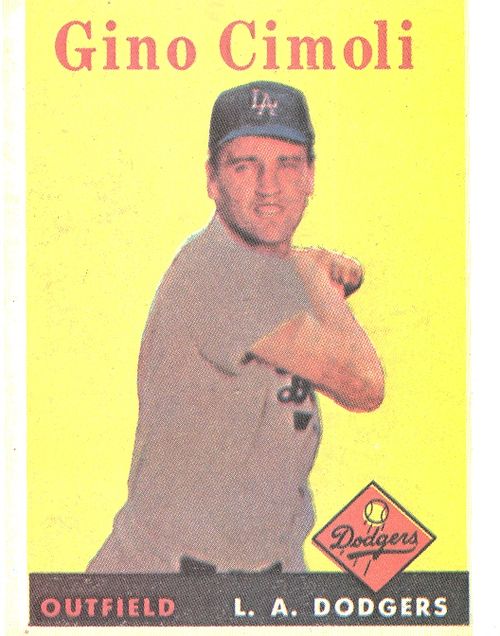
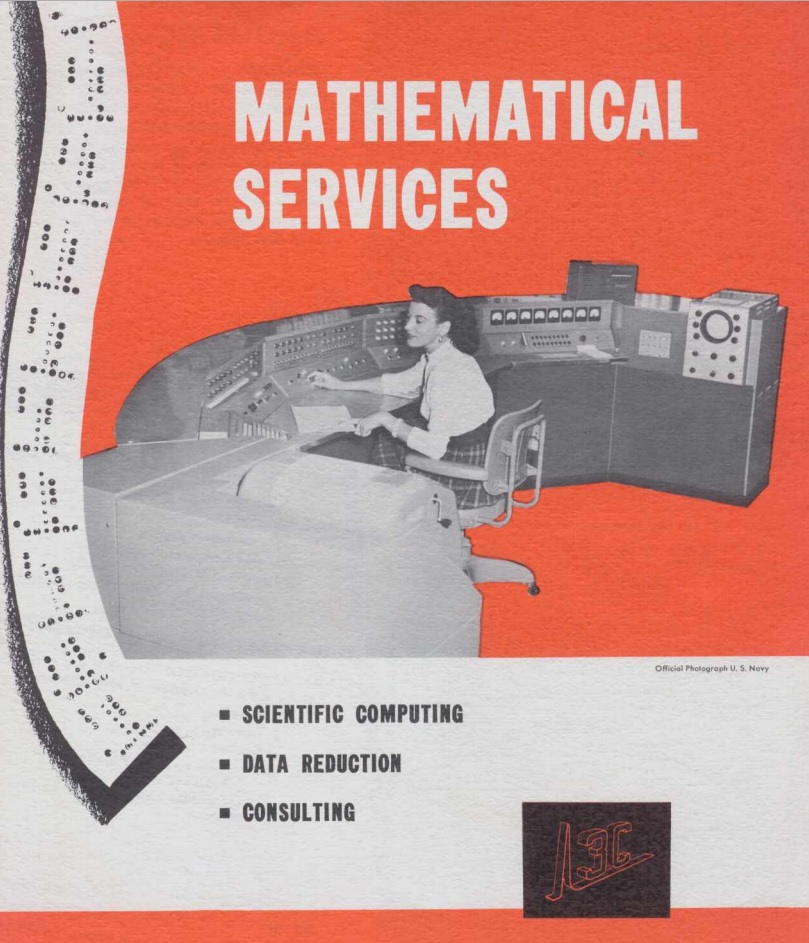
    Baseball cardsThis brochure for the Computer Control Corporation Inc (of Berry Drive, Los Angeles) has that peculiar background feel similar to 1950’s baseball cards–detail of the subject, while the rest of the platform is a sharp, no-nuance solid color.  On the other hand I have no doubt that work was getting done in this place.  For all of its simplicity, and for all that they were doing, this is a miniature and quiet monument to People Thinking.  


    3C Computer Corp


  • What 1935 Looks Like, Tech-Wise

    JF Ptak Science Books    Quick Post

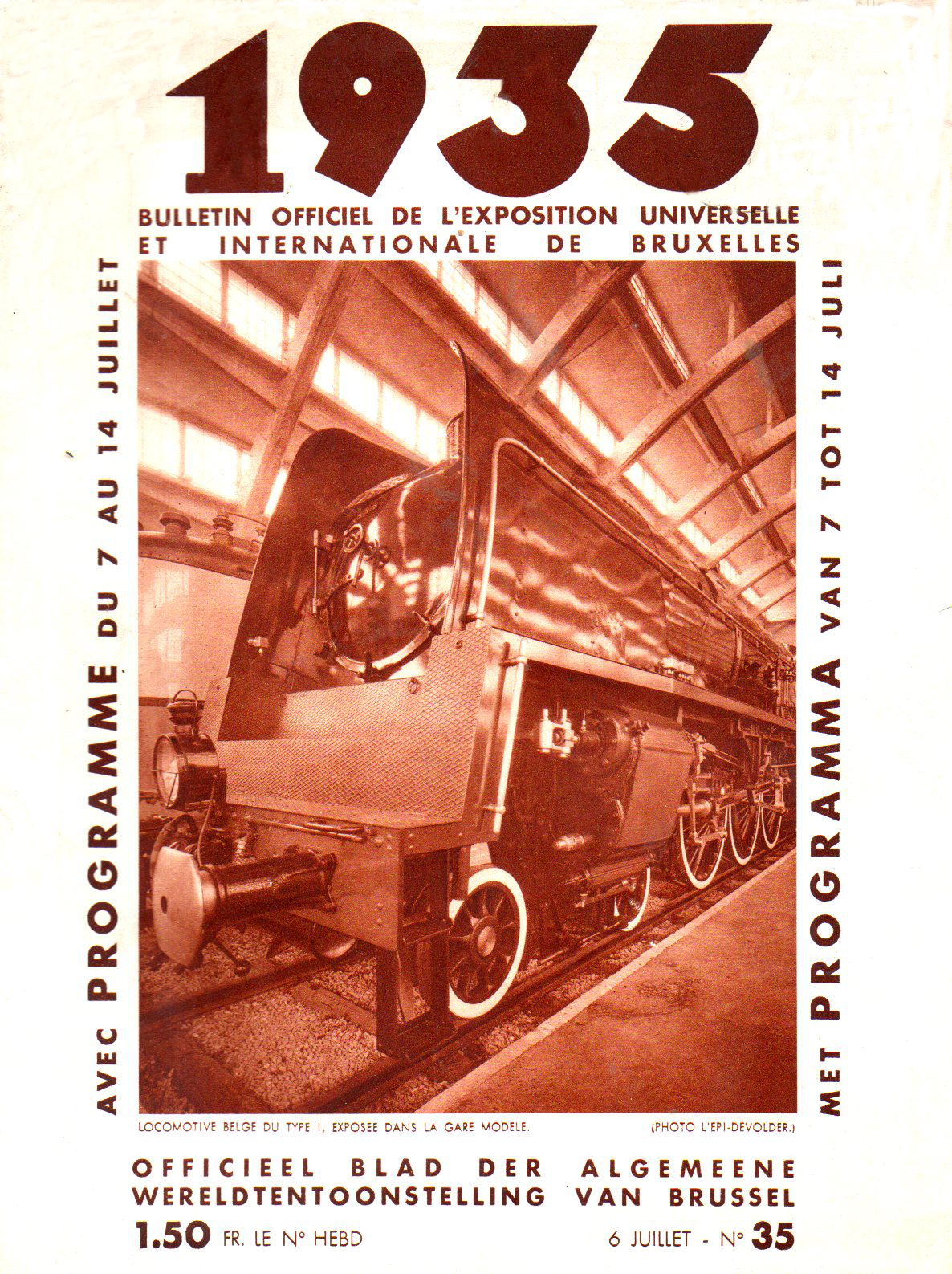
    As soon as I saw this pamphlet–and its cover–I thought that it was one of those perfect statements for a particular year:

    Loco 1935721The pamphlet is a program for an international expo in Brussels:  Bulletin Officiel de l’Exposition Universelle et Internationale de Bruxelles, and it is very heavily laden with trains and signals and track and such, all the properties of powerful movement and promise, gigantic power in a directed environment.  And beautiful.  

    ·Posted by :

    ·in:

Recent Posts

Archives

Categories