A Daily History of Holes, Dots, Lines, Science, History, Math, Physics, Art, the Unintentional Absurd, Architecture, Maps, Data Visualization, Blank and Missing Things, and so on. |1.6 million words, 7500 images, 4.9 million hits| Press & appearances in The Times, Le Figaro, Mensa, The Economist, The Guardian, Discovery News, Slate, Le Monde, Sci American Blogs, Le Pont, and many other places… 5000+ total posts since 2008.

  • Man as Robot and Robot as Man

    JF Ptak Science Books  

    I’ve written earlier in this blog about the advent of robots and human machines, and I’d like to add these two images to that thread.    Both are male, which is not horribly surprising since the earliest creation of a female robot belongs to the fertile Fritz Lang, who used his creation in his extraordinary movie Metropolis in 1927.  (Male robot-like creations go back fairly deeply into the 19th century; so perhaps the creation of female robots was verbotten because of the possibilities for unacceptable sexual fantasies in the high- and post-Victorian world, struggling under the weight of many and multiply-applied public inhibitions. Perhaps it was because of the possibility of sexual relations with an inanimate object that was the cause for uni-gender robots, or perhaps it was a fear of a powerful, intelligent, unstoppable, superior creation that was also “womanly”.  I don’t know.)
    Robot human machine817

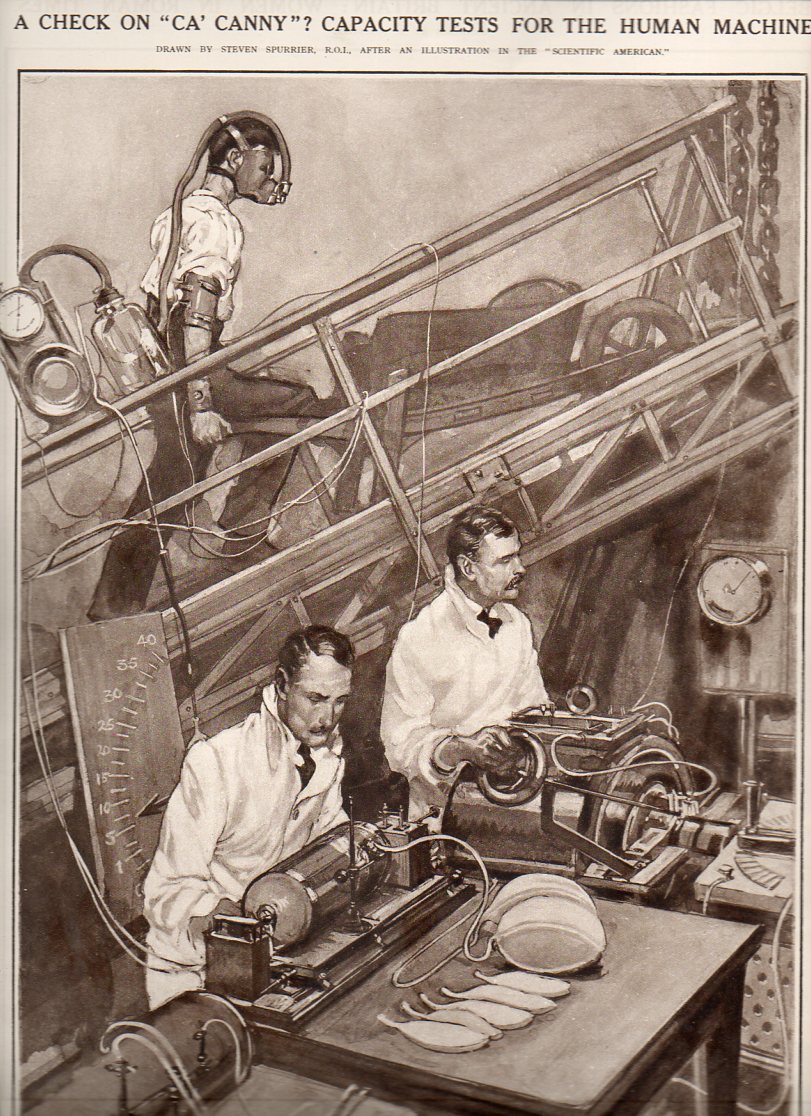
    [And by the way “ca’ canny”–which I’ve never bumped into before–is evidently a practice of deliberately slowing down work.]

    The first is an image of the “human machine”, a cog-like adaptation of human workers in a Frederick Taylor-like Scientific Management study.  Though many people had written and worked around Taylor’s 1911 semi-revolutionary book (and not necessarily a good revolution, but one nevertheless), I’m not certain that I’ve seen the worker trussed up so before this, encumbered by so many technical testing elements as to make him look like a cyborg (though that term would still be a while coming into the vocabulary.  

    This image is actually testing a person’s energy expenditure while pushing a wheelbarrow on an incline, and utilizes the newly-created equipment of the French physiologist Langlois, which in 1921  may well have measured for the first time  the real-time changes in the rhythm of the heart and blood pressure, changes in body temperature and lung capacity of humans in an activity.  I have no doubt that the results would have been very interesting to cardiologists, and probably didn’t mean a thing to industrialists like Henry Ford, who would’ve plowed ahead with their demands on their workers regardless of what tests said, schedules being schedules and all. 
    Robot steam816 

    (I’m no tsure where this experiment fits in, historically speaking, even within the context of biological advances for that very year.  Frederick Banting was able to do some pretty nasty stuff to dogs in a basement lab somewhere at the University of Toronto and come up with a successful treatment for diabetes mellitus–insulin, which would save the lives of millions and earn Banting a Nobel two years later.  In the quasi/fake biological arenas came two biggish events: Jung’s creation of the concepts of introvert and extrovert, and Hermann Rorschach’s one-way conversational device for detecting psycho-pathological conditions (in people).  I suspect that the Langlois data would fit in there somewhere along the rough edge of Jung and Rorschack, if only because the data was real.          

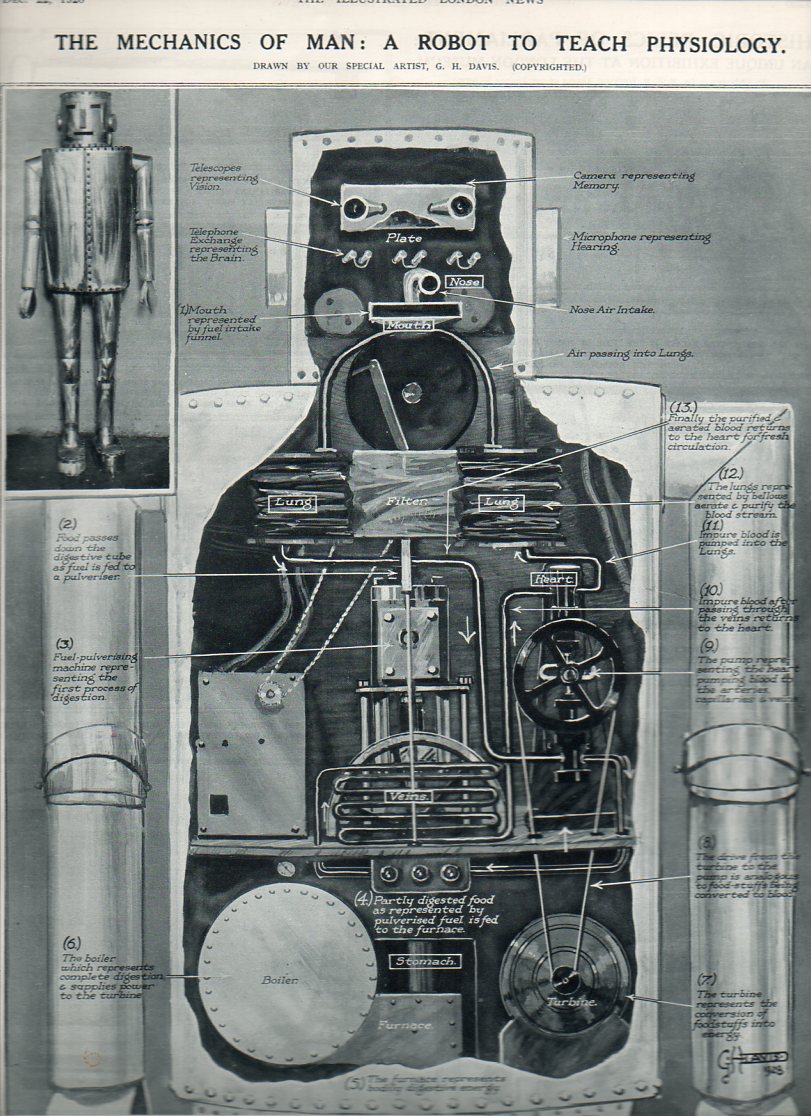
    The second image is in a way a reverse sequence of the preceding–an out-and-out robot that was being used to teach human physiology.  In this case, the robot was a steam engine, constructed for the Schoolboys’ Exhibition at the New Horticultural Hall for 1928, perhaps under the  influence of Karel Capek’s newly published drama R.U.R., which coined the term “robot”. The biological functions of humans were reinterpreted along a more user-friendly vocabulary of the steam engine, using pumps, boilers, hinges, belts, pulleys, filters, compressors and a furnace to explain the functions of respiration and circulation.   It was an interesting approach to show these functions on their most basic level–and in less than 75 years, many of these mechanically represented organs were actually replaceable by real mechanical units performing the same task as the biological (as in the heart), while others could be replaced (via transplant). 

    Man as machine and machine as man.

  • The End for You is Coming: WWII Propaganda Leaflets

    JF Ptak Science Books

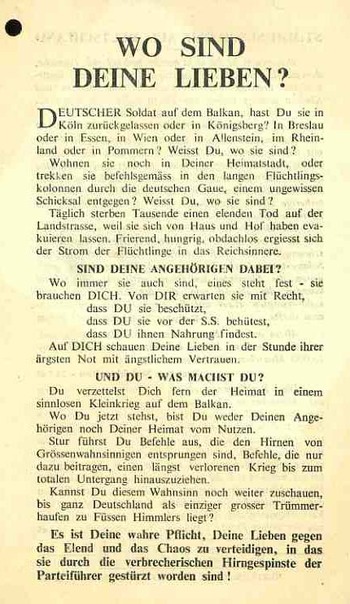
    Propag--25753

    A part of the payload dropped on German and Japanese forces were not metal and explosive, but paper. Hundreds of thousands of pieces of paper with real and imagined information, tickets to surrender, reminders of the coming of the end of the war, passages to a prisoner of war camp somewhere that would ensure the soldier’s survival of the Blogpropogwhere_are099rest of the war.  Convincing someone to surrender, or making it easier for them to not fight too hard and to surrender, is sometimes easier than to confront and kill them.
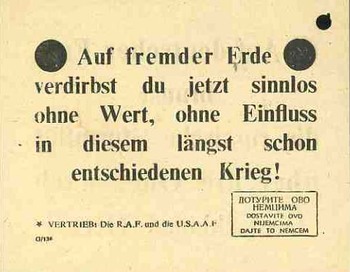

    For the most part these were distributed in a combination effort between the U.S. Army Air Force (USAAF) and the Royal Air Force (RAF), while the other major segment was done by the Supreme Headquarters of the Army Expedition Force (SHAEF) and the 8th U.S. Army.  There pieces of directed information were very persuasive, but of course they were hardly new—not even the delivery system (via aircraft) was an innovation.  

    These leaflets were more or less an “information” service relating factual events and presented in such a way to persuade and convince whomever picked them up that their cause was at this point futile.  In just about every case in the 150 items in my small collection as far as I could determine all of the statements made were indeed correct and accurate.  Leaflets were dropped by the ton during the war that were pure fabrication, intended to confuse the scare the recipient into surrender, deceiving them;  but not these. (For example, a famous use of deception in major confrontations was Operation Quicksilver and the creation of the First United States Army Group (FUSAG), a non-existent fighting enemy that was supposed to distract the Germans while real preparations were underway elsewhere for the invasion of Europe (D Day).
    Blogpropogon_german_soil100  
    There was a distinct threat of terror in many of these leaflets, though the terror would never come from the Americans or Brits—the Russians, however, were another story. (Remember that the U.S. gets into the war at the end of 1941; the British had been fighting since 1939; and the Russians, well, they had been fighting too since 1939 [starting out without chivalry and with cold malice against the Finns], but they did fight against the Nazis once they had been completely deceived by them,  losing 20 million people in the process.  The Germans had much more to fear from them than anything on earth. And rightly so.) The use of terror in propaganda is probably as old as warfare itself—for example the Mongol leader Tamerlane built a pyramid of 90,000 human heads in front of the walls of Delhi to persuade the inhabitants to just forget about fighting, and leave.   The British employed a terror tactic in the use of the Gurkas and their curved and menacing Kukri to great advantage; the Americans had the Phoenix Program in Vietnam (for the assassination of leading Viet Cong and their supporters), and so on, into the sunset. 
    Blogpropogpunctured101

    ·Posted by :

    ·in:

  • Save Baseball for the Youth of America

    JF Ptak Science Books  Quick Post

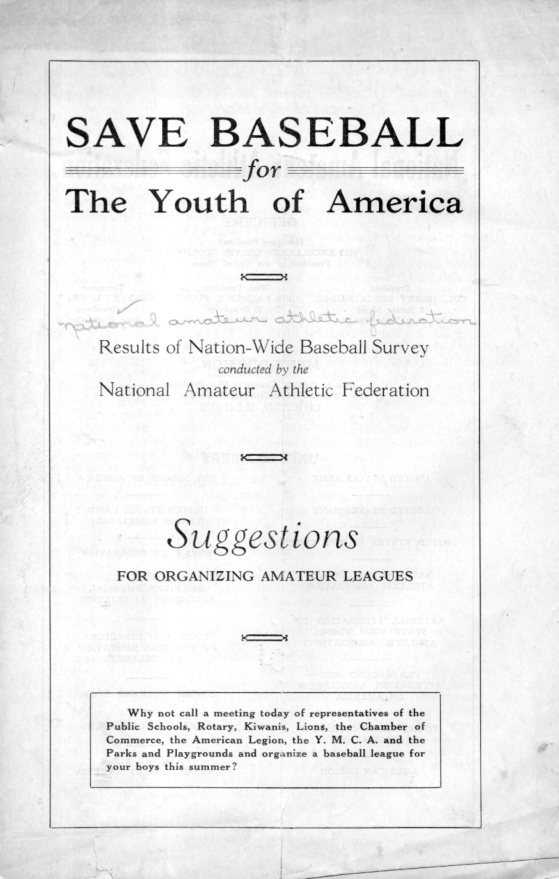
    Baseball, Save668The National Amateur Athletic Federation published this wonderfully-titled pamphlet, Save Baseball for the Youth of America, in 1925. in the attempt to bring some of baseball’s hurtful ways to public attention.  The pamphlet was in answer to the “results of a nation-wide baseball survey” sponsored by the Federation, which found, in short, that amateur and semi-pro baseball was in trouble, and it was hurting baseball in general. Most of the no-frills complaints had to do with stacking and overpaying semi-pro teams–evidently some were so strong that they could be beaten, sending many teams to disband. I’ve never heard of this before, but, then again, I’m not an historian of baseball.   In short, the positive response was found in kids, and for getting them involved in little league sports at a young age.  The “unit members” of the federation included the U.S. Army, Navy, Marines, NCAA, YMCA, BSA, Boys Club, Jewish Welfare Board, and the NRA.  (I’m posting this mostly because of the design and the title…)

    ·Posted by :

    ·in:

  • Note on Two Very Early Papers on Gravitational Lensing: Zwicky, 1937

    JF Ptak Science Books   Quick Post

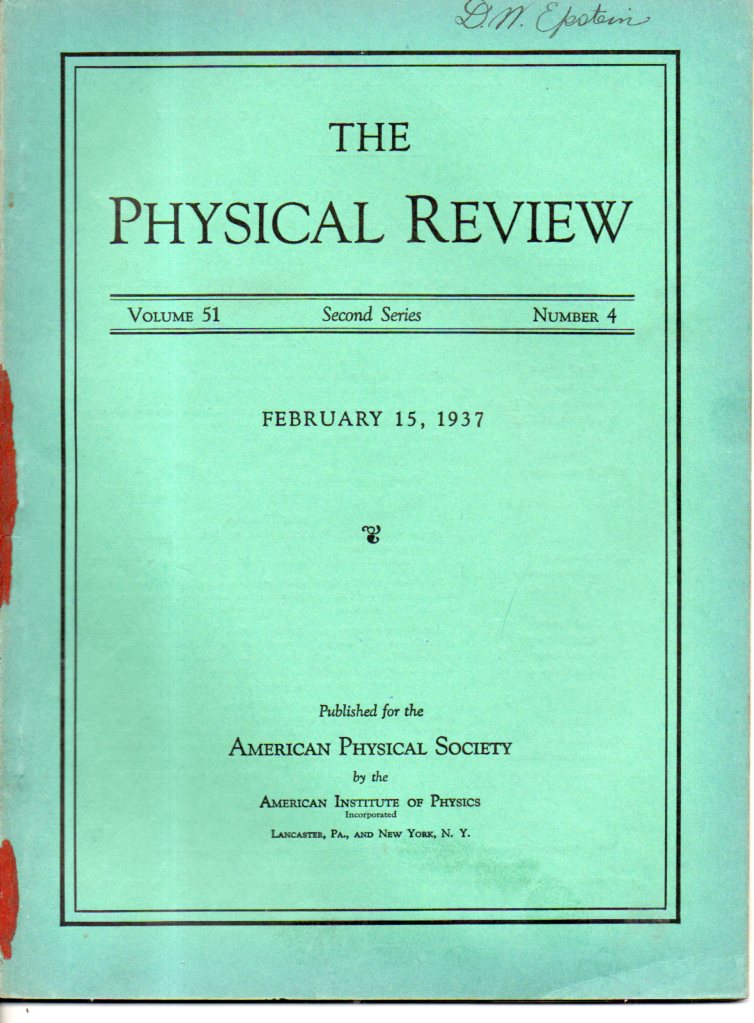
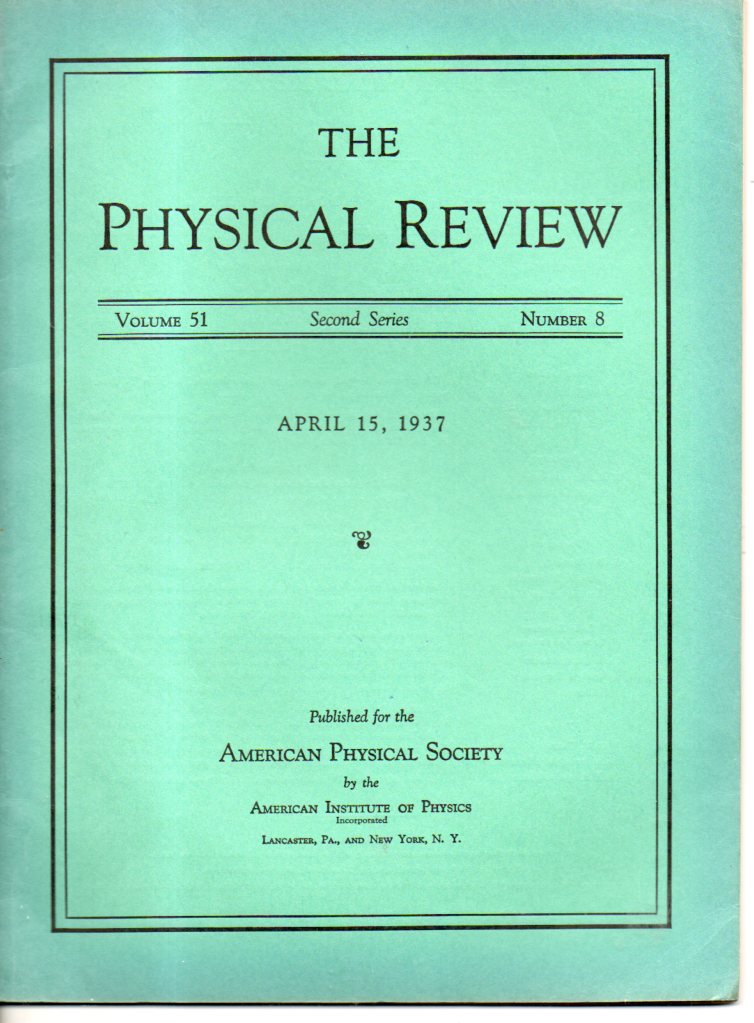
    Zwicky PR 1937647

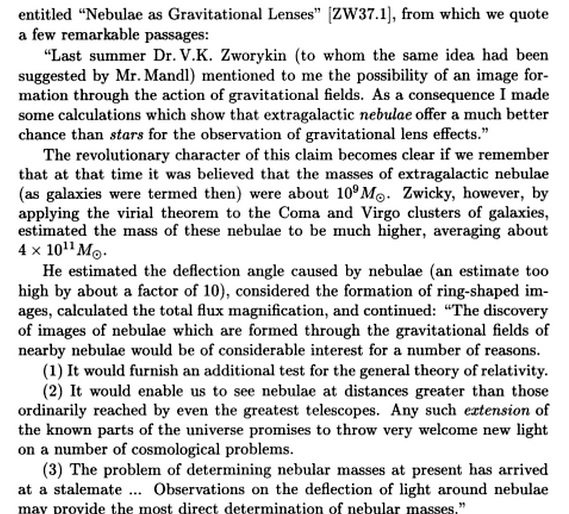
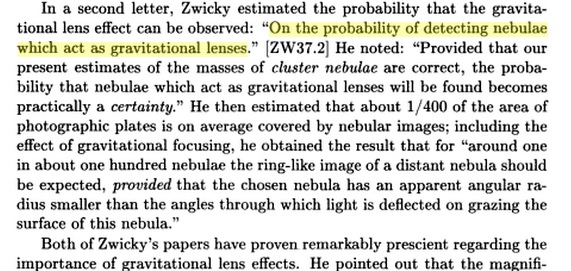
    These two papers by Fritz Zwicky constitute  among the earliest announcements on the use of gravitational lensing, and the first mention of the possibility of using galaxies as gravitational lenses. The  two letters to the editor followed the very brief notice that Einstein sent to Science magazine in 1936 (and which was a follow-up on some earlier thinking (24 years 


    earlier) he had done on the gravitational lens, this publishing as a result of “insistent prodding”1 by Rudi Mandl, a Czech engineer. Einstein all but disowned the idea, noting “of course, there is not much hope  of observing this phenomenon directly”2 The papers also follow a popular mention of the idea by Henry Norris Russell in Scientific American in 1936.  Aside from the appearance of the idea in Zwicky’s 1957 Morpholigical Astronomy, it is noted in Singularity Theory and Gravitational Lensing (see footnotes below) that there is a period of virtual silence on the subject for the next 25 years, and that from 1960 to 1980 there seem to have been fewer than two dozen additional papers. [ZWICKY, Fritz. “Nebulae as Gravitational Lenses”, 1937, in the Physical Review, 51(4), a one-page letter to the editor on page 290, and  ZWICKY,  Fritz. “On the Probability of Detecting Nebulae Which Act as Gravitational Lenses.”  American Physical Society,  1937, in  The Physical Review, 51 (8), April 15, 1937.]   

    Zwicky PR 1937646

    Zwicky lens

    Zwicky lens b

    Zwicky lens c

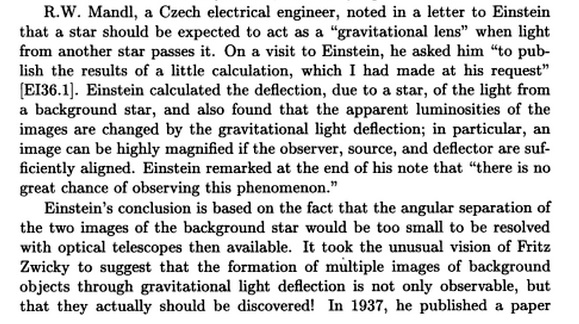
                                    Footnote 3, –Long quote from Gravitational Lenses, by P. Schneider, J. Ehlers, E.E. Falco

    ·Posted by :

    ·in:

  • Dr. Strangelove’s Computer

    JF Ptak Science Books   Post 2405

    ‘Russia reveals Cobalt Bomb; Total World Destruction Ahead”, ending of Philip K. Dick’s “Exhibit Piece”, 1952

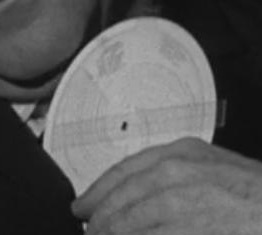
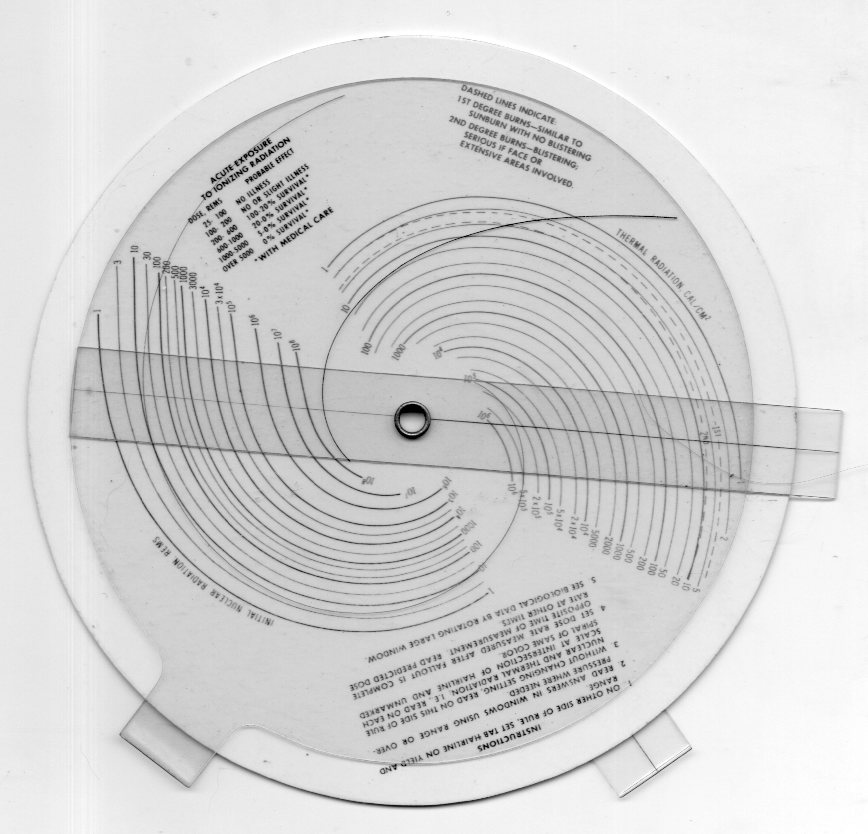
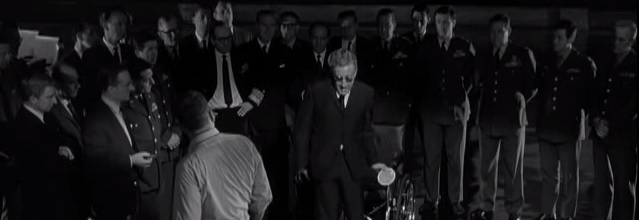
    I never really thought that much about what Dr. Strangelove was fiddling with to calculate the “half life of cobalt thorium-G” in Stanley Kubrick’s mega-dystopian steam-nuke 1962 film, Dr. Strangelove. (We’ve looked at this film a number of times on this blog–just search the title in the Google search box to see the others.) So I went to some clips online and found a still showing him putting away his circular slide, which turns out to be the 1962 version of the “Nuclear Bomb Effects Computer” that was published and issued along with Sam Glasstone’s The Effects of Nuclear Weapons (published by the Department of the Army as No 39-3, one edition n a continuing series.

    Dr. strangelove computer 1964

    My calculator is actually from the 1964 edition of the work–there seems to be no difference from computer to computer, but there are differences in the text of the book, one of which relates directly to Dr. Strangelove.  There is a very brief, barely-two-page section called “Radiological Warfare” in the chapter dealing with radioactive contamination from nuclear weapons. there is nothing overtly technical in it, though the writers seem not to like the idea, given the inherent difficulties in producing and storing such advanced gamma radiation weapons, saying too the the use of such beasts would be either “impossible of very hazardous”. The author also makes the point that the high fission energy yields of the new bombs, which make them “in effect, weapons of radiological warfare”.1

    Here’s the reverse of the computer, rendered in black and white:

    Nuclear bomb computer677

    So, that’s it. Dr. Strangelove though wasn’t the first to discus a cobalt-laced dirty dirty dirty bomb, with the idea managing to surface several times in the ’50’s (as with the PKD example, above, and Fritz Lieber’s Moon is Green, 1952, where there are cobalt bombs galore, then things happen, and then everything goes badly). The ideas of total destruction+total destruction=total destruction seems to have originated with Leo Szillard in a radio broadcast from the University of Chicago in February 1950 with the introduction of the cobalt-based bomb, which produces a far more intense radiation than U-238. Szillard presented his case as a what-we-will-soon-be-capable-of argument, putting not the destruction of entire cities into question, but the entire planet.  

    Dr stangelove computer bThis is about the final minute of the movie, when Dr. Strangelove  finds himself rising and walking by a secret Fuhrer-based miracle, his little computer still in his hand.  And then seconds later the really bad stuff happens.  

    ·Posted by :

    ·in:

  • A Wooden Mechanical Demonstration of Wave Propogation, 1897

    JF Ptak Science Books   Quick Post

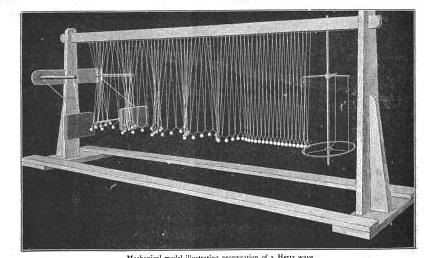
    This fine, geometrical wooden apparatus was made by electrician and physicist Sylvanus P. Thompson (1851-1911)–two metres long, the model was for a demonstration before the Physical Society of London, “illustrat(ing) the propagation of a transverse wave”.  The image appeared in Nature, August 12, 1897.

    Thompson mechanism

    ·Posted by :

    ·in:

  • Early Flight Powered by Wind, Fishing Line, and Boys (1897)

    JF Ptak Science Books     Post 2406

    Pilcer679

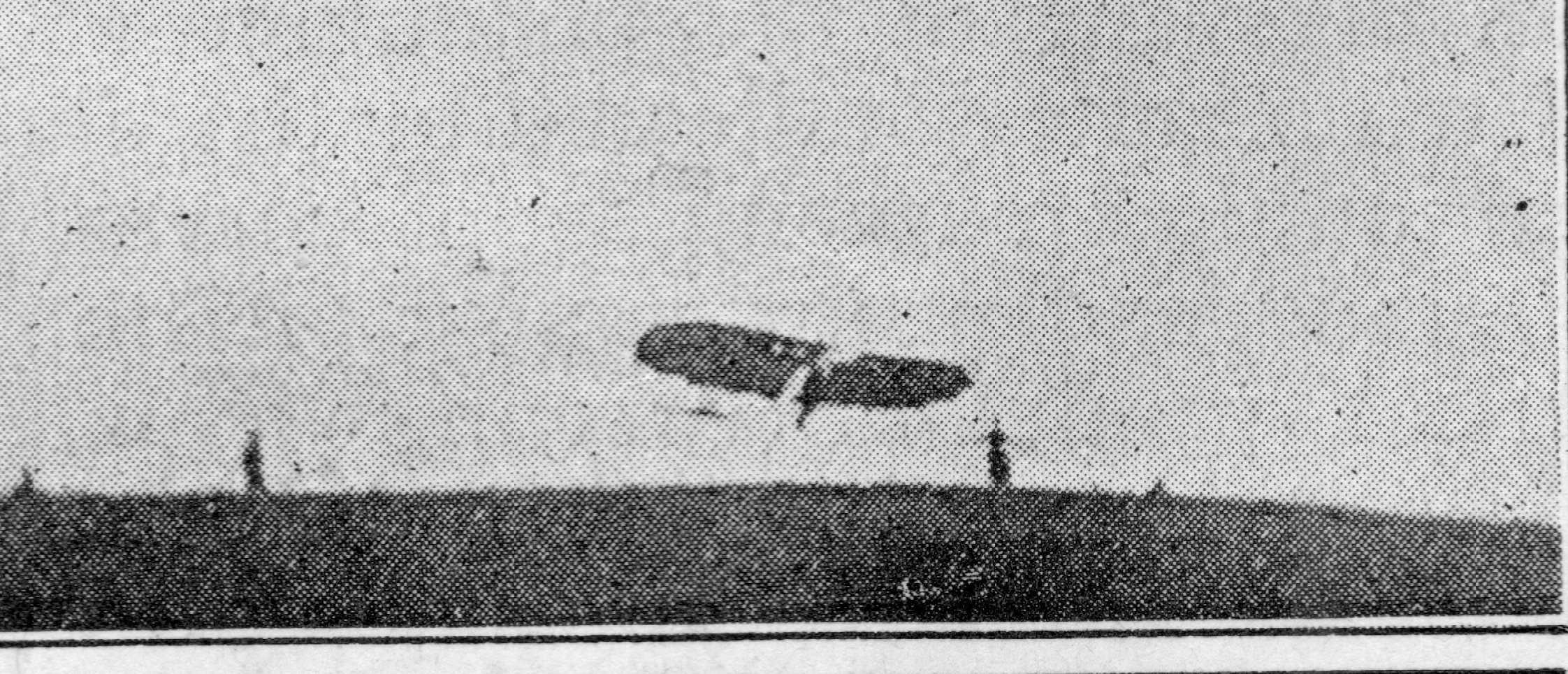
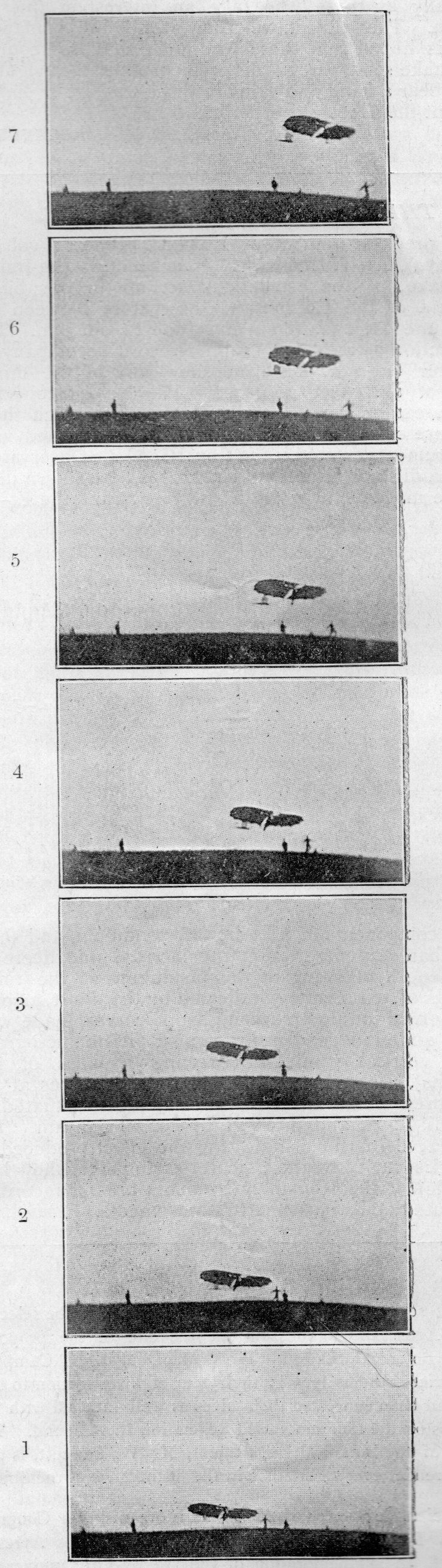
    Percy Pilcher was a true aviation pioneer who met his end very early, during an event that probably shouldn’t have happened, killed by in 30′-fall in 1899.  He was creative, and figured out a way to address the knotty problem of lift vs. wing dimensions vs. weight, coming to a tri-plane design in 1898, but was killed before he could fly it in public. His death comes about two years after this appearance in Nature magazine, which tells a quietly dramatic and essentially sotto voce story about attempted soaring flight. It seems so extraordinary to me because–aside from needing a fit of genius to try to figure out the physics of flight, there was a lot that could be done with canvas, pipes, fishing line, and boy-power. When I read this account I could literally feel that soft breeze that he looked for on my teeth–few pieces of major histories of technology get this close to the “common person”.  

    Pilcer678


    Someone made this nice, short video from the seven stills, perhaps making this one of the earliest “movies” of an human in flight:


    “At the time of the flight here illustrated the wind was so light and variable in direction that an ascent from even the elevated position taken up was almost impossible. Means however were at hand by which one end of a thin fishing line 600 yards long could be attached to the machine while the other end passed through two blocks placed close together on the ground at a distance from the aero plane of about 550 yards. These blocks were so arranged that a movement of the aerial machine in the horizontal direction corresponded to a fifth of the movement of the boys pulling the line.”

    “The start was made at a given signal the line being pulled by three boys and Mr Pilcher gradually left the ground and soared gracefully into the air attaining a maximum height of about 70 feet… A safe and graceful landing was made at a distance of 250 yards from the starting point. The photographs illustrate that part of the flight previous to the attainment of the greatest height…if the machine had been fitted with a small engine or motor to give (this) amount of thrust by means of a screw or otherwise perhaps an equal or further distance would have been covered.”

    “Mr Pilcher now proposes to employ as soon as possible a small and light engine indicating about four horsepower this being considerably more than sufficient for flights of moderate length. It is however thought advisable to have rather too much than too little power to commence with as a factor of safety. With this improvement it is hoped that further distances will be covered and a nearer approximation to a flying machine will be attained.”

  • Children and Labor, 1937

    JF Ptak Science Books     Quick Post   

    • (There are several posts on this blog relating to child labor–a simple search in the Google box will bring up a few.)

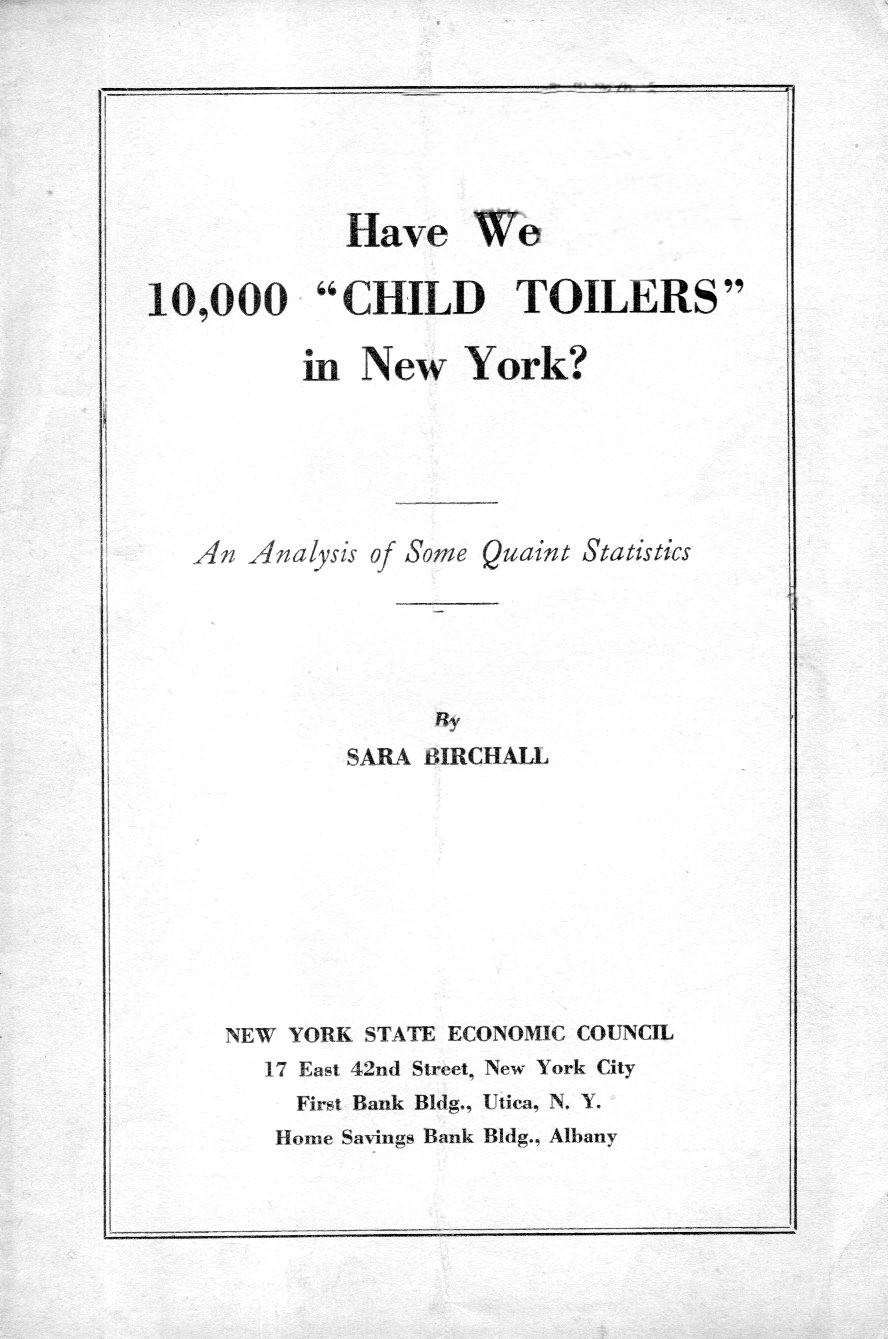
    What a dirty little pamphlet this is–at least that’s the way it feels in my hands.  The author, Sara Birchall, takes to task the results of a survey that finds 10,000 child toilers” in New York (in 1937). The push behind the survey was for the passage of a constitutional amendment banning all child labor. Birchall makes the case that the “quaint statistics” are incorrect, and that state in themselves have taken great leaps to end the child labor menace, and therefore the need for a federal involvement (“boondoggle”) was happily unnecessary.

    Child labor680

    I don’t know what the National Child Labor Committee (founded 1904) had to say about this in particular. They were certainly active in the push for a constitutional amendment, though that effort would be pretty much d.o.a. in the mid 1930’s.  Ironically just  a year after this missive was written came the Fair Labor Standards Act, which very heavily favored child labor laws pushed by the NCLC.  In the weight and gravitas of the issue, Birchall’s effort left a mean, red-knuckled impression on me, saying the federal initiative wasn’t worth the effort and that the whole deal could be handled at the state level.  That was sort of true, though my guess is that things might have happened quick for a couple of generations of child laborers had there been a cohesive national plan. 

    ·Posted by :

    ·in:

  • And in the Middle of Nothing: Racial Purity Bubbles (1937)

    JF Ptak Science Books    Quick Post

    Piedmont purity681 detail

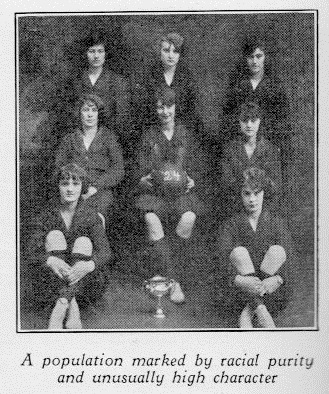
    I was having  a breezy little time looking through Piedmont Carolinas, Where Wealth Awaits You, published by Duke Power in 1937 and extolling the many virtues of living in the section of North Carolina between the western mountains and the western edge of the lowlands–this is not far from where I’m sitting right now, in the Southern Highlands, 50 miles west. I was enjoying reading about the beautiful roads, and the fine country (where farmers outnumbered industrial workers three to one).  

    But then the romance stopped, bumping into this:

    Piedmont purity681

    The pamphlet was pleasant and standard-enough discussing manufactures,industrial markets, industries, farms, opportunities, and so on, and then along comes this bit, folded into the teased normalcies. 

    ·Posted by :

    ·in:

  • A Note on “Hiding” in Plain Site: Razzle Dazzle Camouflage, 1917-1918

    JF Ptak Science Books  (Fixing an earlier post from 2011)     Part of a series on the History of Blank, Empty and Missing Things.

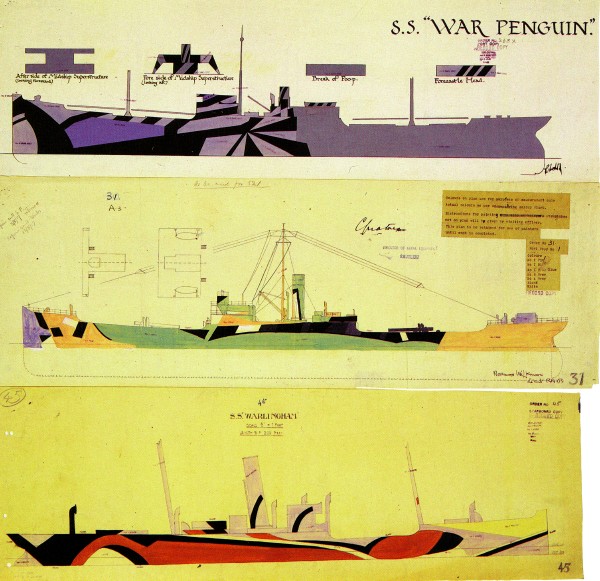
    In the history of defensive warfare it was a revolutionary idea that painting the entirety of large ocean-going  ship in sharp geometric shapes and in dazzling colors would make the ship in essence–disappear, a sort of camouflage-without -camouflage (sorry Flannery O’Connor).  It wasn’t like biological camouflage where all sorts of bits come into play to make an animal blend into its surrounding environment to protect it from predators, or conversely to make it a better predator by allowing the animal to stay completely hidden until their prey could do nothing but become their prize.  Nor was it really like thermoregulation, or sexual or warning signals (again drawing from the bio world)–it was simpler than that, though are there many relational examples in the biological world as well. Nor was it similar to the camouflage schemes used by the air corps, with different and usually sky/ground-blended colors used for the top and bottom of SPADS and Nieuports and Albatrosses.

    The effect of using the geometrical shapes on the whole of a 600′-long vessel was to make the speed and direction  of the ship more difficult for offensive pursuit vessels like submarines to figure out and calculate so that the point-to-target launch of their torpedo would be far more complicated. 

    Razzle dazzle via gotouring

    [Examples of razzle dazzle camouflage from the GoTouring website, here.]  [A very nice selection of images can also be found at iO9.com, here; also, an even larger one, here, from Public Domain Review]

    When the prolific maritime painter Norman Wilkinson (1878-1971) came to this realization for disguising the intentions of ships (around 1917) he instantly recognized its applicability in anti-submarine warfare:  not only would it be difficult to distinguish bow/stern properties of a ship, but also how long it was, and whether it was coming or going, and how big it was–all major factors in determining the launch of a torpedo.  Basically, dazzle camouflage made it difficult to produce a trajectory for the ship.

    This must have been an extraordinary experience, seeing these things for the first time by military commanders, who not but a few years earlier were sending troops into combat with white gloves and red pantaloons. 

    In a “Letter to the Editor” (“Camouflage of Ships at War”) in Nature (19 June 1919), Wilkinson explains his dazzle approach, saying that the whole point of this sort of camouflage was not necessarily “obliterative” as in biological camouflage, but rather was intended to “upset a submariner commander’s estimate of a vessel’s course, when carrying out an attack with torpedo”, and stating further that it was not intended for “ships of the line” or to help deceive topside gunnery from another ship, especially at greater distances where the paint would simply not come into play.   [An often-used but never-cited quote from a Wilkinson “lecture”  runs as follows:  “The primary object of this scheme was not so much to cause the enemy to miss his shot when actually in firing position, but to mislead him, when the ship was first sighted, as to the correct position to take up. [Dazzle was a] method to produce an effect by paint in such a way that all accepted forms of a ship are broken up by masses of strongly contrasted colour, consequently making it a matter of difficulty for a submarine to decide on the exact course of the vessel to be attacked…. The colours mostly in use were black, white, blue and green…. When making a design for a vessel, vertical lines were largely avoided. Sloping lines, curves and stripes are by far the best and give greater distortion.”]

     http://upload.wikimedia.org/wikipedia/commons/3/3d/SS_Empress_of_Russia_1918_cropped.jpg

    [ Another example of razzle dazzle at work: RMS Empress of Russia, from the University of British Columbia, here]

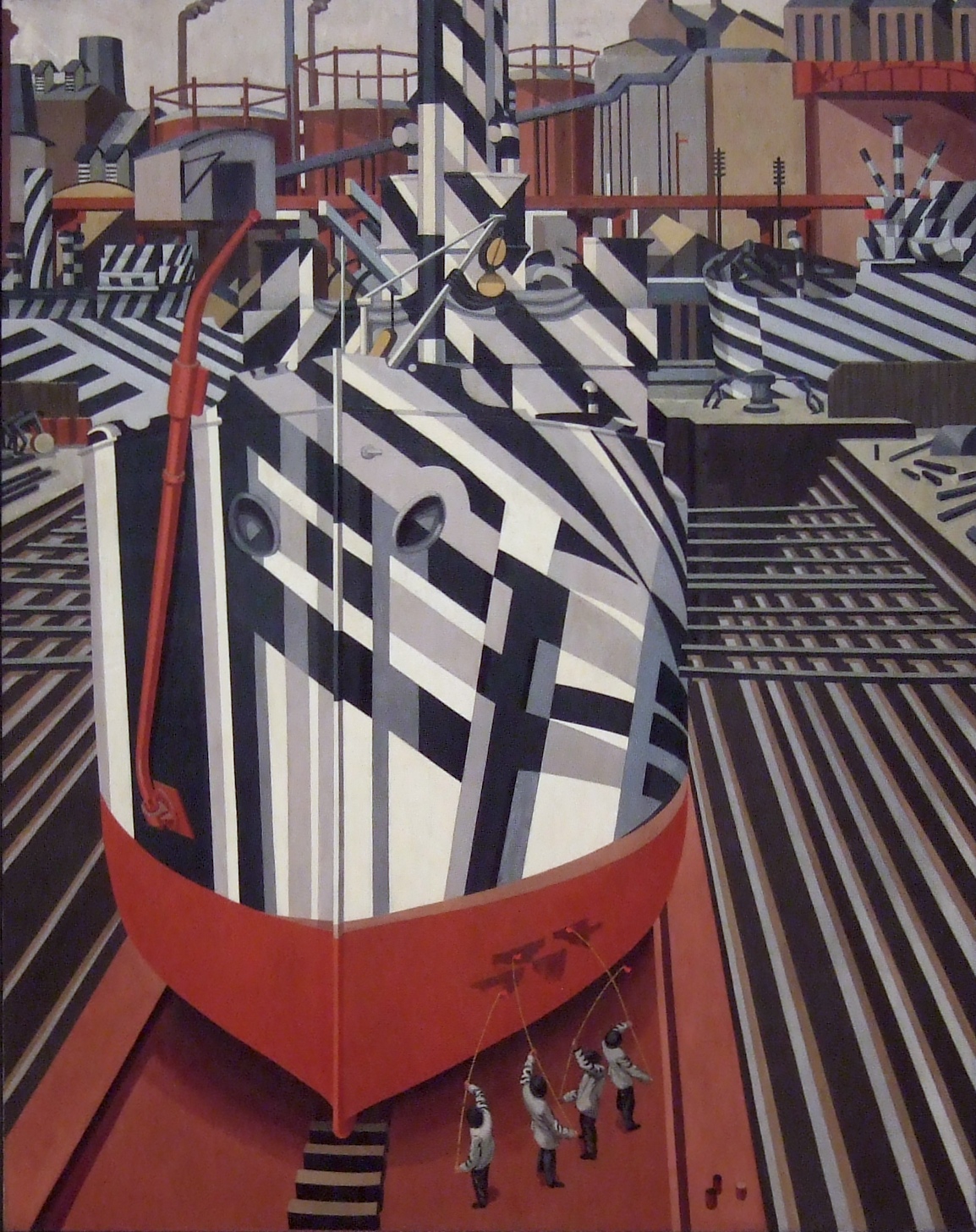
    File:Dazzle-ships in Drydock at Liverpool.jpg[Image source: Wikipedia, here.]

    Edward Wadsworth (1889-1949)  produced razzle dazzle designs during the war and also painted about it afterwards–something one really doesn’t see much of–in his fine  Painting of Dazzle-ships in Drydock, completed in 1919. (More of Wadsworth’s works, as prints, here.) There are well-known stories of great artists–like Villard among many others as well as the questionable Picasso, who claims to have originated the idea, along with Cubism itself–who made contributions in this effort, from making designs to doing the actual painting.  But it was the estimable Wilkinson who made the major contribution and invention of dazzle-at-sea.  

    The concept is still used, with more advanced applications, and appears on one of the world’s stealthiest ships, Sweden’s Visby Corvette.  Apart from having an exceptionally low magnetic signature, it also has geometric low-radar reflective gray dazzle paint. (It also has applications for land warfare use in the camouflage of armored vehicles against RPGs.).


  • On Saving the Jews, 1943

    JF Ptak Science Books  Post 2406

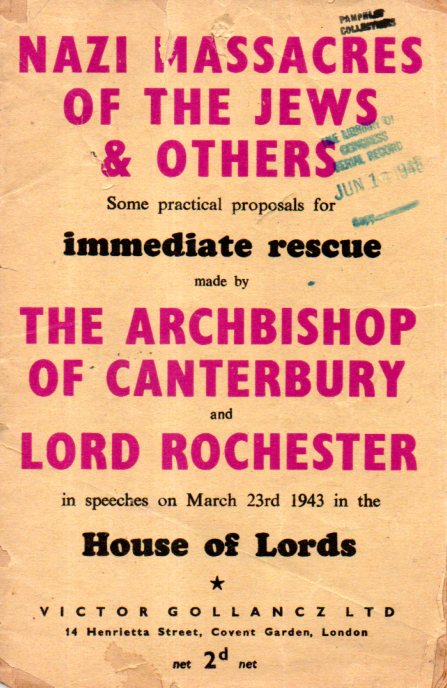
     There was a time in 1943, in London, that there was a great call for the “immediate rescue” of the Jews and other victims of Nazi massacre–given everything, those were pretty strong words, a call to instant action in helping populations in the immediate threat of “extermination”. Nazi massacres of the Jews & others : some practical proposals for immediate rescue (1943) was written with the addresses made by the Archbishop of Canterbury (William Temple) and Lord Rochester (Ernest Henry Lamb, Baron of Rochester) in speeches made on March 23rd 1943 in the House of Lords, an addressed an issue that few cared to discus.

    Save the Jews683


    There are volumes of reports and newspaper articles by 1943 on the extermination and deportation of the Jews and other people, but, really, there was very little discussion about what to do about it.  There were no plans for rescue.   Even when it came down to much more simple issue of raising the levels for accepting refugees (and this by the tens of thousands) there was usually struggle and defeat. On the practicable end of the argument, ships full of refugees were often turned away.  

    It is a very contentious issue as to whether the Allies could have taken pro-active measures against the concentration camps, and the issue of the discussion of whether help could have been given is contentious in itself. What makes this pamphlet noteworthy is that it showed there was a public display of concern during a time when there wasn’t much public thinking being done on that.  This is a complex issue, though I think the capacity to effect some sort of rescue of thousands, or hundreds of thousands (or millions) of people could have taken place2, though it did not, for reasons of indifference more so than for ability or capacity. 

    This pamphlet certainly laid the issue wide open:

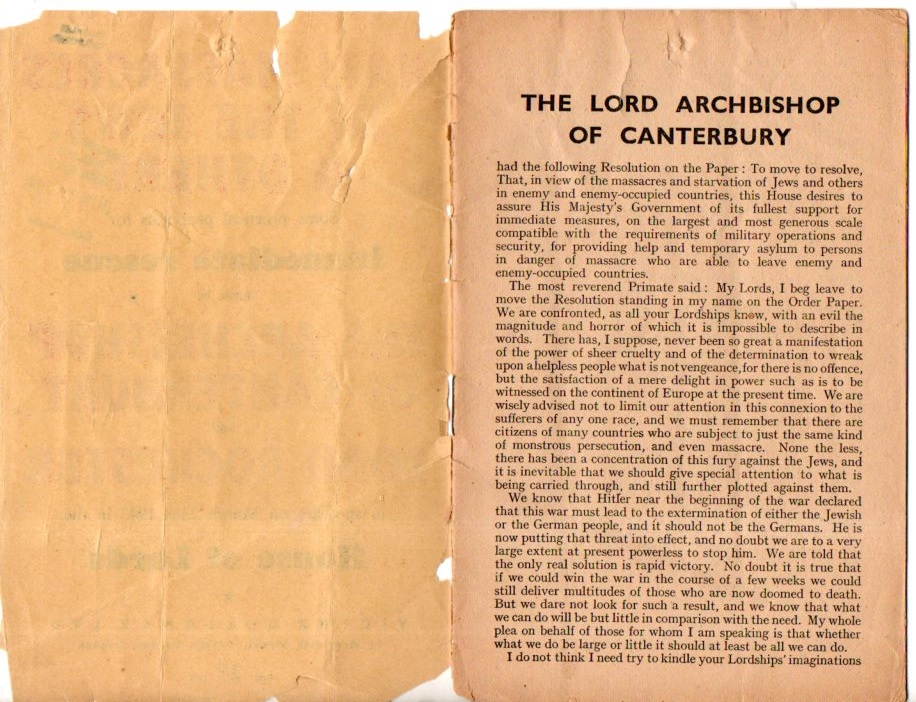
    “My chief protest is against procrastination of any kind. … The Jews are being slaughtered at the rate of tens of thousands a day on many days. … It is always true that the obligations of decent men are decided for them by contingencies which they did not themselves create and very largely by the action of wicked men. The priest and the Levite in the parable were not in the least responsible for the traveller’s wounds as he lay there by the roadside and no doubt they had many other pressing things to attend to, but they stand as the picture of those who are condemned for neglecting the opportunity of showing mercy. We at this moment have upon us a tremendous responsibility. We stand at the bar of history, of humanity and of God.”

    I couldn’t find the full text online, so I scanned my copy and include it below:

    Notes:

    1. Nazi massacres of the Jews & others : some practical proposals for immediate rescue  made by the Archbishop of Canterbury and Lord Rochester in speeches on March 23rd 1943 in the House of Lords / [William Temple, Archbishop of Canterbury ; Ernest Henry Lamb, Baron of Rochester.

    2.  This has been shown work by David Wyman The Abandonment of the Jews, America and the Holocaust 1941-1945 (1998) and Richard Breitman  FDR and the Jews (2014), among others.  

    Save the Jews684

    ·Posted by :

    ·in:

Recent Posts

Archives

Categories