A Daily History of Holes, Dots, Lines, Science, History, Math, Physics, Art, the Unintentional Absurd, Architecture, Maps, Data Visualization, Blank and Missing Things, and so on. |1.6 million words, 7500 images, 4.9 million hits| Press & appearances in The Times, Le Figaro, Mensa, The Economist, The Guardian, Discovery News, Slate, Le Monde, Sci American Blogs, Le Pont, and many other places… 5000+ total posts since 2008.

  • Bumping into the Invisible: the Coolidge Tube, 1911

    JF Ptak Science Books   Post 2463

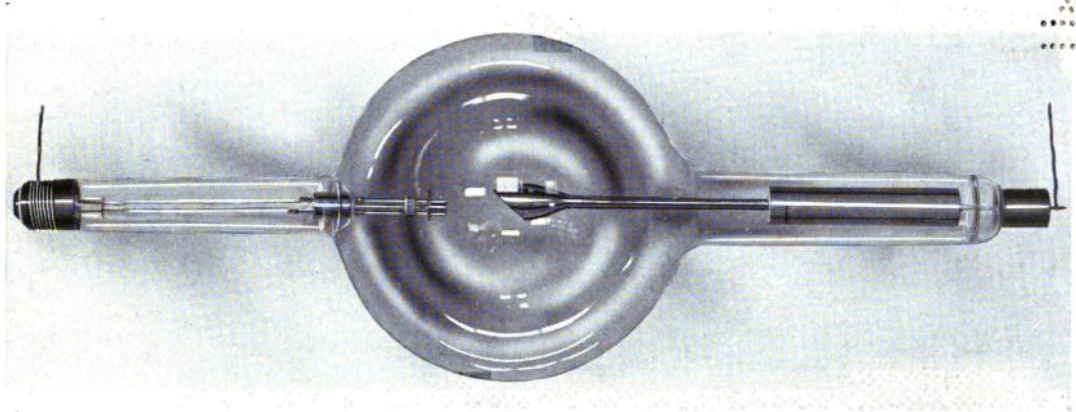
    I’ve bumped into another issue of the Physical Review (December 1911, pp 409-430, volume II (second series), #6) with the important William D. Coolidge  paper, “A Powerful Roentgen Ray Tube With a Pure Electron Discharge”.

    A decade-and-a-half after Wilhelm Roentgen’s discovery of x-rays (an epochal paper published at the tail end of 1895) this is the first appearance of what we think of as the modern X-Ray tube–a design that would be used for decades to come, and which provided clear and more accurate that had been seen, in a way opening this world up, well, exponentially. It is a very significant contribution to the history of science, and it was cool to find it again by chance.

    Coolidge_xray_tube[Source: Wikipedia, showing the Coolidge tube ca. 1917.]

  • Hitler, the Booze Weapon, and a Bizarre Prohibition Myopia, 1943

    JF Ptak Science Books   Post 2464

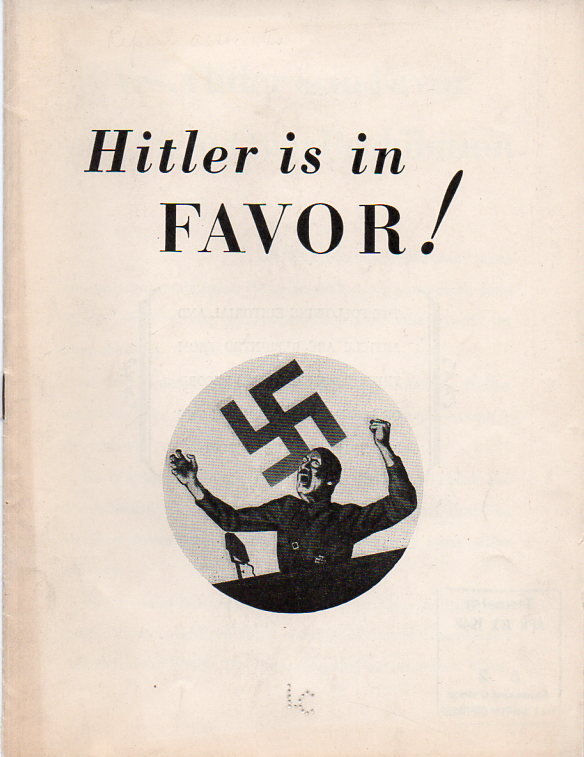
    Until today I had never considered the idea of alcohol as a propagandistic weapon in war until I read Hitler is in Favor (1943), a slim pamphlet that turns out to be an anti-anti-Prohibition statement from the Repeal Associates (of Washington D.C.). The statement “Hitler is in favor” seemed more an interogatory or than a declarative, and the issue of what he was in favor of seemed to be pretty open-ended.  Alcohol was not on the suspect list.  
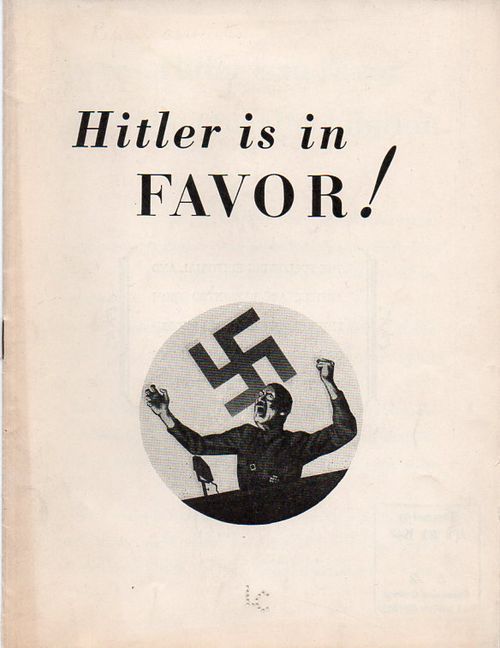
    Hitler is in favor!984

    From what I can tell the pamphlet is a declaration against an earlier pamphlet written by R(overt) Hercod (b. 1876), who was a prominent international figure on the prohibition scene, general secretary  of the International Bureau Against Alcoholism (Laussane, Switzerland), and also active in organizations like the Swiss Total Abstinence Federation and other such groups. He wrote (necessarily) on the evils of alcohol and the need for the reintroduction of prohibition, while recognizing that Hitler was against alcohol, and trying to distance his views from those.

    This however is not achieved in high relief. 

    For example in 1939 Hercod observes in a pamphlet purchased and distributed by the Board of Temperance of the Methodist Church that “(Hitler) knew Prohibition was a good issue for starting up trouble” by trying to cause a wider division between wet/dry forces in the U.S., which I’ve never heard of before as a tool in the Nazi propaganda toolbox.  

    Things get more problematic for the Hercod pamphlet, as the author of Hitler is in Favor points out the “Dr. Hercod has a kind word for Nazi sterilization law, although agreeing that it cannot have much effect in bringing about temperance”.  This sterilization law must have been a subset of other sterilization laws in Germany, this one being the sterilization of “serious cases” of alcoholics which could prove to be a “danger…for the race”. 

    Hercod identifies the German government in 1938 and 1939 as “benevolent”, at least in regards to its participation in organizations like the International Temperance Union, which seems to be an extreme example of single-issue politics.

    Another positive influence seen by Hercod is in Hitler Youth, where even though they “are not required o take a pledge of abstinence…they are expected to abstain from alcohol and tobacco…”

    Then this nugget:  “As to the future of alcohol in German, Dr. Hercod does not believe such a drastic step as prohibition is in the offing”.  

    The sterilization part is a very sobering insistence that this weird intellectual effort is not without its fair share of bizarre, real-life implications, and that there was an overall positive if not foggy interpretation of National Socialism, with everything weighed in terms of prohibition.

    But then the stiffener comes at close of the pamphlet–an incredible statement made in 1939 that no doubt demanded the consumption of an obscuring potion by the writer. The anonymous author notes that Hercod relates “how active German Jews were in temperance movements) in 1939, but then “without promulgation, so far as we know of any special decree to this effect, the Jews disappeared from the temperance societies (when the authorities took control of these societies) where they had often occupied an important place”.  

    In the pursuit of an alcohol-free world Hercod overlooks the Nazi plan for the Jewish-free world.  Being in neighboring Switzerland it seems impossible that Hercod could have missed the previous six years of bitter race laws instituted in Germany (including the Nuremberg Race Laws of 1935), but it seems as though he did.  He also does not seem to have been affected by the Austrian Anschluss, either. Or any of the other Hitler stuff that wasn’t playing out so nicely in 1939.  (I can only assume that all this was written before September, 1939, but…)

    And so that is the end of the tour of this very brief but deeply troubling nine-page pamphlet.  It is  difficult to understand the thinking that makes such extreme disgusting myopia possible, though I think it is helpful to surface such a brew as this to appreciate a part of the low wavelength thinking that contributes to making monstrous social licensing possible. 
  • A Vocabulaic Sanitary Surprise of Filth in a Plain Vanilla Wrapper

    JF Ptak Science Books    Quick Post

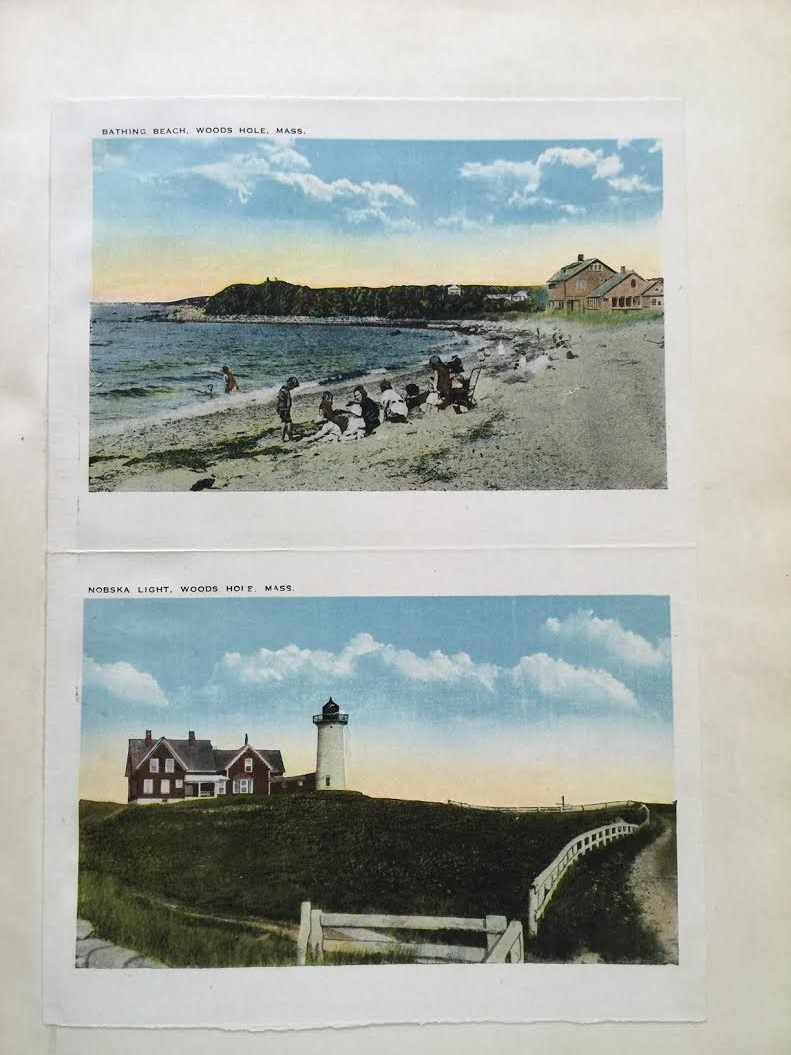
    There is a warehouse of boxes of books set into rows, and at the back of a row of boxes is a column of boxes, and in the bottom box of the column at the bottom of a stack of books sat the unpromising-sounding “A Sanitary Survey of Woods Hole” (1926).  Woods Hole (in Barnstable County on Cape Code) as most people would know it today is the home of the largest privately-funded oceanographic research institution in the U.S. (organized in 1930), though when this report was written in 1926, it was still a fairly sleepy resort town for the privileged of Boston and NYC.

    • This document is available for sale at the blog’s bookstore, here. 

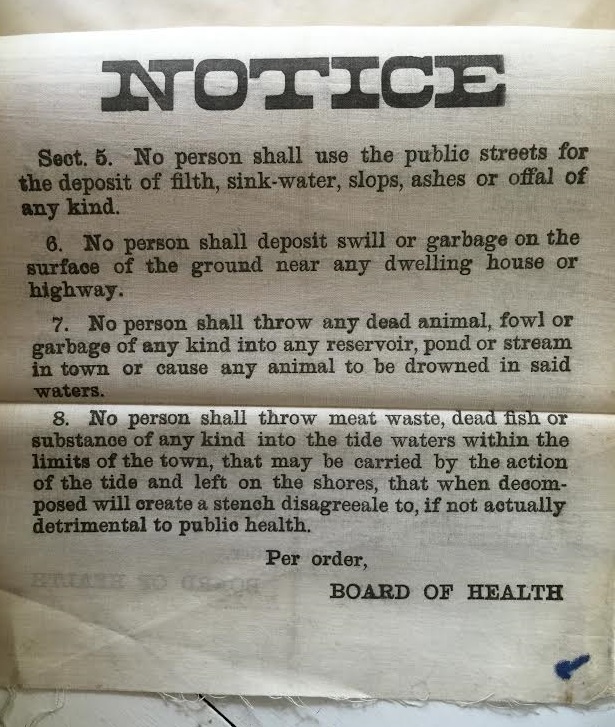
    The report (written by James Bernard Graeser) is pretty much as it says, including a social health history of the small town. But tucked away in the back of this typescript is what seems to be an original health notice (printed on cloth) outlining what people should not be throwing into the ocean and harbor. It uses some surprising language–at least to the 21st century reader–which is a little on the disturbing side, though there would not have been a need to print such a poster and put it up around town if there wasn’t a need.

    WOods Hole

    Strong stuff.  “…(O)r cause any animal to be drowned in such waters”?

    The ironic part of this is that one of the areas referenced is Penzance Point, which was a wealthy summer home development, and which had been built on the site of the  Pacific Guano Company (bust in 1886),  “which produced fertilizer from guano imported from islands in the Pacific Ocean, the Caribbean, and the coast of South Carolina” (Wiki)

    Woods Hole pc

    ·Posted by :

    ·in:

  • An Index of the Treatment of the Insane, 1875

    JF Ptak Science Books    Quick Post    

    History of Fear series

    Insane poor987
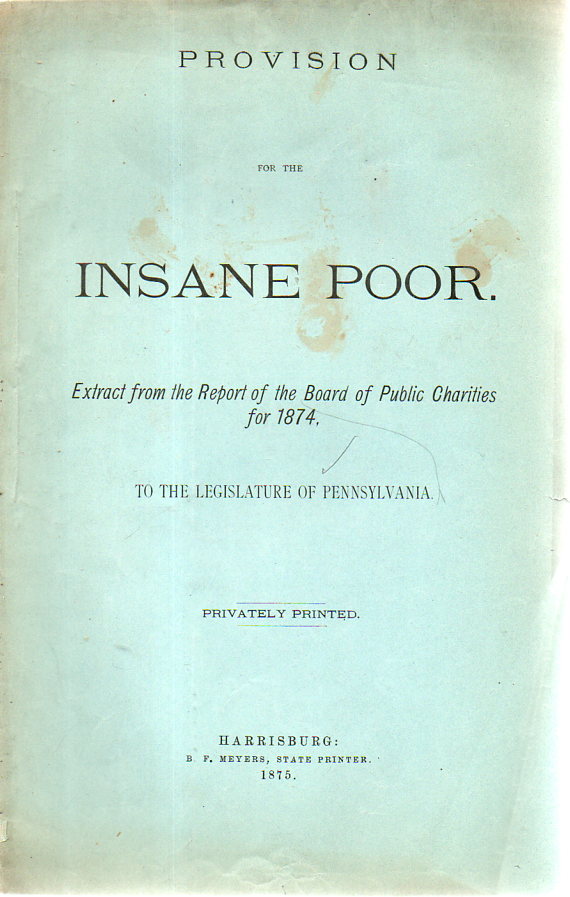
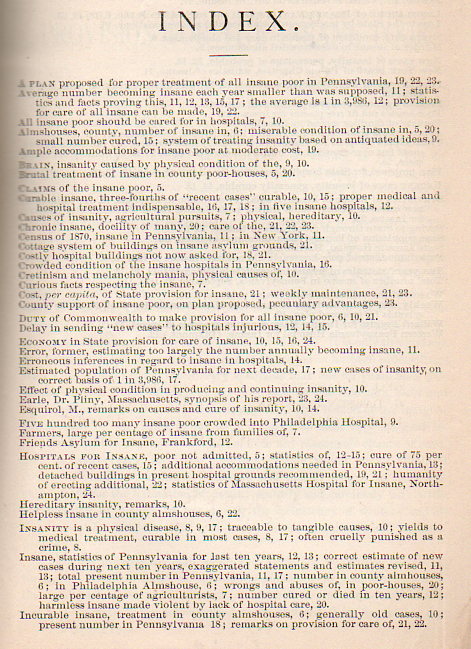
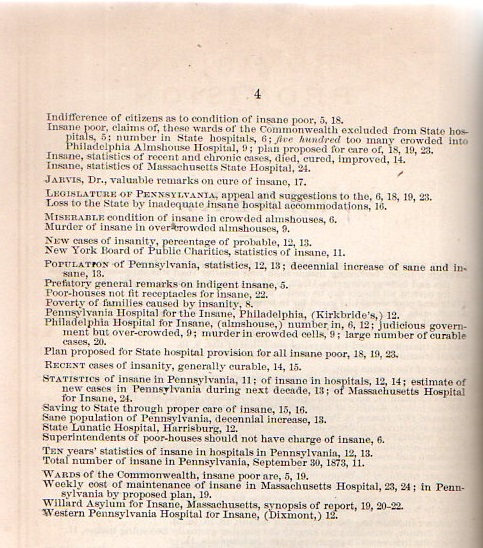
    I wish there was more time so that I could scan and post the contents of this pamphlet, though sometimes you can get a pretty good insight into a work by reading the index–this is one of those times:

    Insane poor986

    • This pamphlet may be purchased through the blog’s bookstore, here.

    It is a tough go.  

    I had a difficult time categorizing this pamphlet outside of the obvious “history of medicine” category (broad, I know, but this is mainly a physics/maths place).  I did choose “History of Fear” as a category because in many cases the insane–and especially the unreachably insane, and beyond even that, the poor and unreachable insane–because there was little these people could “offer” to the world on the other side of their eyeballs other than the reminder that this condition could happen to anybody; that, and of course the state of physical fear because the medical community didn’t know what to do with these people for the most part.  This becomes painfully obvious before a reader makes it past the two pages of the index.  

    Insane poor988


    Notes:

    Provision for the Insane Poor. Extract from the Report of the Board of Public Charities for 1874.  Harribburg; B.F. Meyers, State Printer, 1875.  9×5″, 24pp, original printed wrappers.  Deaccession stamp on rear wrapper; also s small oval “Library of Congress/Smithsonian Deposit” stamp on the title page.  Four copies located by WorldCat: Duke, University Chicago, NY Academy of Medicine, College of Physicians of Philadelphia.  

    ·Posted by :

    ·in:

  • Early Medical Statistics on Treatment of the Insane, 1866

    JF Ptak Science Books    Post 2465

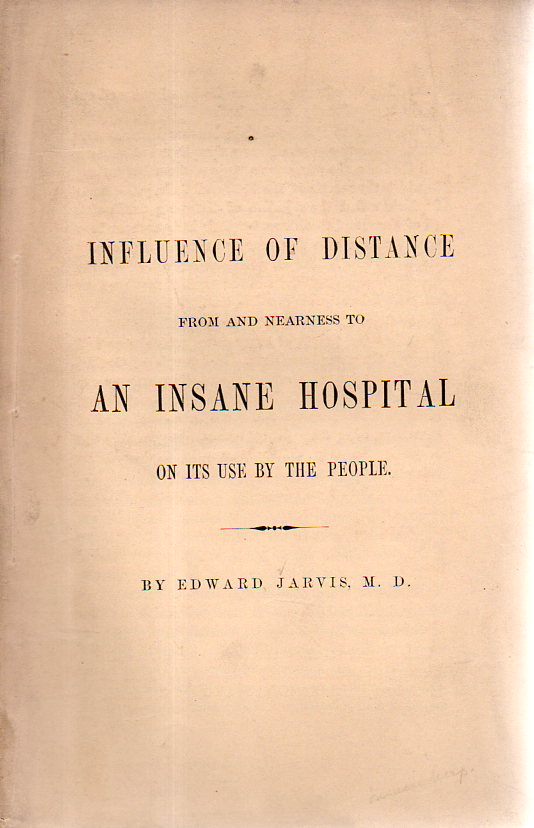
    Dr. Edward Jarvis (1803-1884) conducted a study1 in 1866 to determine how much a factor distance from an “insane hospital” was in regards to people using the facility. It sounds like an obvious-enough question with a probably-obvious answer, but these things are really never so until someone actually looks at the data and extracts an answer.  And so Dr. Jarvis performed this function, answering the question once and for all that yes, indeed, the further away you are from a facility the less likely you are going to be to use it.  

    Jarvis Insane989

    For example, in my own state of North Carolina, Dr. Jarvis breaks down the rather long and narrow state into five sections, and then lists the number of people per section making use of the state facility in Raleigh.  

    • This item can be purchased from the blog’s bookstore, here.  

    The findings by section and distance as follows:

    •  I, Wake county, including Raleigh; 1 in 4,875 residents used the state hospital
    • II, 50 miles distant; 1 in 6,433
    • III, 50-100 miles “from the asylum”; 1 in 9,707.
    • IV, 100-150 miles from Raleigh; 1 in 10,982
    • V, 150-250 (+) miles; 1 in 45,790.

    This is pretty much consistent with the few other states that I checked.

    Jarvis conducted another study that also conclusively stated that the closer people are to an asylum that the more they are subjected to the idea of being able to help/cure the people attending the institution.  

    Jarvis had a few pages of analysis at the end, establishing a “law of nearness” on the use of facilities. He established that just because the institution is equally available to all (white) people doesn’t mean that it will be used equally by all.  He suggested that institutions be established in different sections of the state to help make it possible for all people in a state to use the state asylum.  

    Again, something isn’t obvious and correct until it is. 

    This was some early and instructive medical statistics work conducted by Jarvis, who in addition to being an M.D. served from 1852 to 1884 as president of the American Statistical Association.  He completed this survey not long after having tabulated the national statistics of mortality for the Eight U.S. Census (of 1860).  

    Notes 

    1. JARVIS, Edward, M.D. “Influence of Distance from and Nearness to an Insane Hospital on its Use by the People.” Offprint from the American Journal of Insanity, XXII, January 1866, pp 361-406. This publication paginated 1-46. 

    ·Posted by :

    ·in:

  • (Fashionable) Fireproof Bombwear for Air Raids, 1941

    JF Ptak Science Books  Quick Post

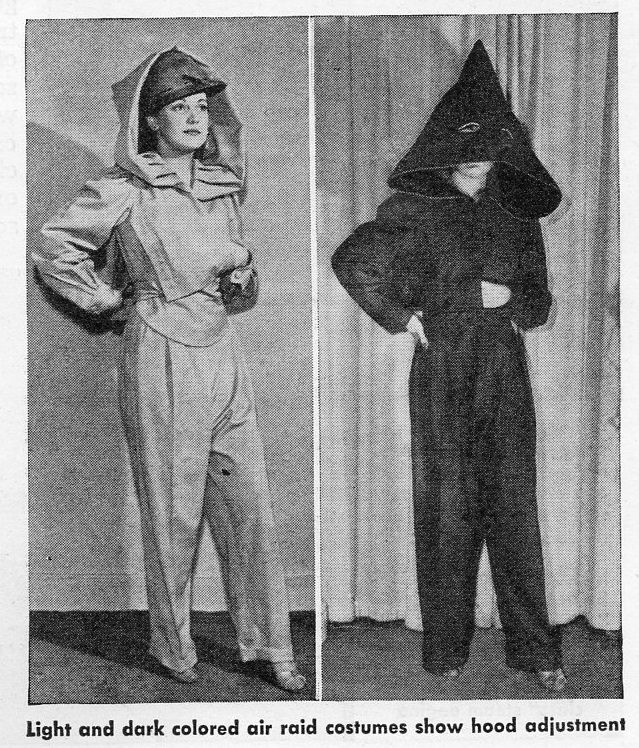
    In the heat of the Battle of Britain (September 7,  1940 to May 21, 1941) a contribution was made to the women of the U.K. by Mrs. Frances Ruskin of NYC–well, sort of a contribution, or at least a suggestion of something bearing some resemblance to camaraderie.  “Light and dark colored air raid suites”, with adjustable hoods and deep pockets outfitted with blast plates, and made “fireproof” by a “treatment” from du Pont.  This short note appeared in Popular Mechanics in May, 1941.  

    Fireproof clothing992 detail

    ·Posted by :

    ·in:

  • What They Wore: the U.S. Soldier, May 1941

    JF Ptak Science Books  Quick Post

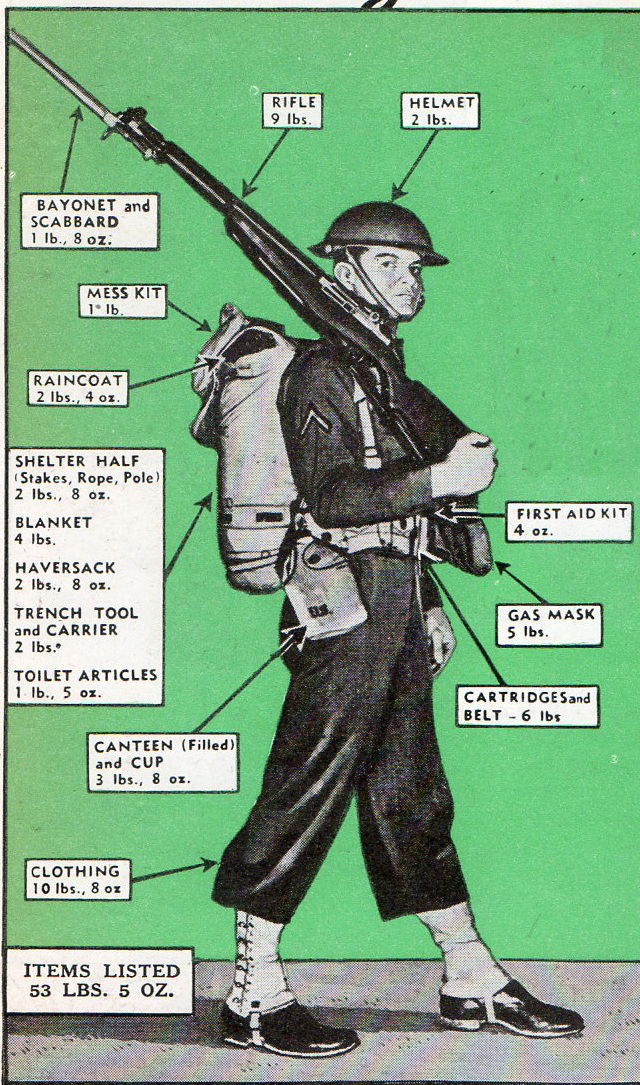
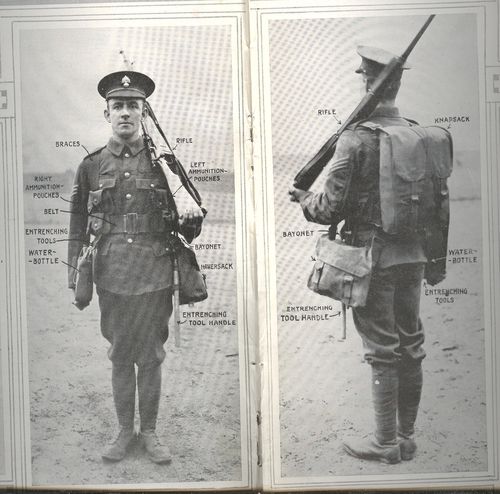
    Earlier in blog I wrote a post (“Things They Took to War, 1915“) about what the soldiers of the U.K. carried into battle.  In many ways it was inspirational and heartbreaking to see what there soldiers marched off with to meet their fate.  I’ve stumbled into another visual record like this, though this time for the U.S. just before our involvement in WWII, appearing in the July 1941 issue of Popular Mechanics.  

    WWII SOLDIER GEAR993

    I reckon that this soldier weighs 148 pounds. which means that his gear amounted to about a third of his body weight.  I suspect that one of the first things these soldiers learned was what they actually needed to carry, and how to make whatever that was to be quiet and non-reflective. Of course this gear would change in about six months, and change again shortly after that.  

    • For example this private was using the M1917 helmet, which would within months be replaced by the steel M-1 helmet–over 22 million of these helmets would be made by September 1945.
    • That’s a lot of helmets. End-to-end in a line they’d stretch from NYC to L.A. and halfway back. On the other hand that number represents about 1/3 of the total war dead in WWII.  

    The outfitted solider of the British Army, 1915:

    Blog jan 30 infantry center btm

     (“Things They Took to War, 1915“) 

  • German Police in Caricature, 1926

    JF Ptak Science Books   Quick Post

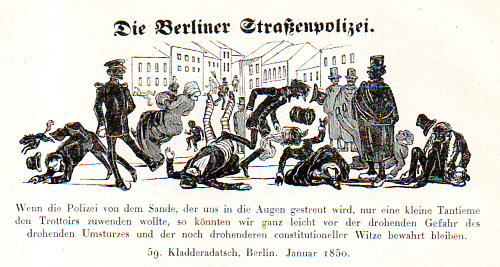
    Police caricature996

    I’ve long found this book (Die Polizei in der Karikatur, by Fritz Hellwag, published by Gersbach & Sohn, Berlin, 1926) interesting, though not interesting enough to go looking for the other nine (!) volumes in this slim series1. The images of the police are at best slightly benign, but then almost entirely mostly-negative, with a major dollop of vicious and crushing.

    Truth be told I bought it for the rear cover design/medallion:

    Police caricature994


    Police caricature995

    For a long time I’ve been meaning to begin a series on Weimar Germany, mostly through the long run of Illustrirte Zeitung (Leipzig) that I have here covering WWI and then through that 1919-1932 period that is so, well, “full”.  Perhaps that can begin soon.  The political/social crush of the 1919-1929 period was remarkable, and the decade+ as presented in the IZ is (as its name states) very illustrated…

    Notes:

    1.  The others in the series–edited by Dr. W. Abegg, a high-ranking police official–include [with notations “672 abb.” meaning “62 illustrations”, “125 S.” meaning “25pp”, and “Bd.” “meaning “volume”]; Die Polizei in Einzeldarstellungen including  Band 1: Polizei und Volk (von Ernst van den Bergh, 32 Abb., 119 S.); Bd. 2: Geschichte der Polizei (von Kurt Melcher, 43 Abb., 119 S.); Bd. 3: Polizei und Politik (von Bernhard Weiss, 140 Abb., 160 S.); Bd. 5: Polizei und Wirtschaft (von Julius Hirsch u. C. Falck, 83 Abb., 167 S.); Bd. 6: Polizei und Verkehr (von Erich Giese u. H. Paetsch, 207 Abb., 198 S.); Bd. 7: Polizei und Technik (von Franz M. Feldhaus, 80 Abb., 134 S.); Bd. 8: Polizei und Kind (von H. Degenhardt u. M. Hagemann, 65 Abb., 124 S.); Bd. 10: Polizei und Mode (von Max von Boehn, 124 Abb., 119 S.); Bd. 11: Polizei und Zensur (von H. H. Houben, 62 Abb., 141 S.); Bd. 12: Die Polizei in der Karikatur (von Fritz Hellwag, 178 Abb., 125 S.).

  • A Naval Battle on Land: the Flavian Amphitheater of Caesar Domitian

    JF Ptak Science Books  Quick Post

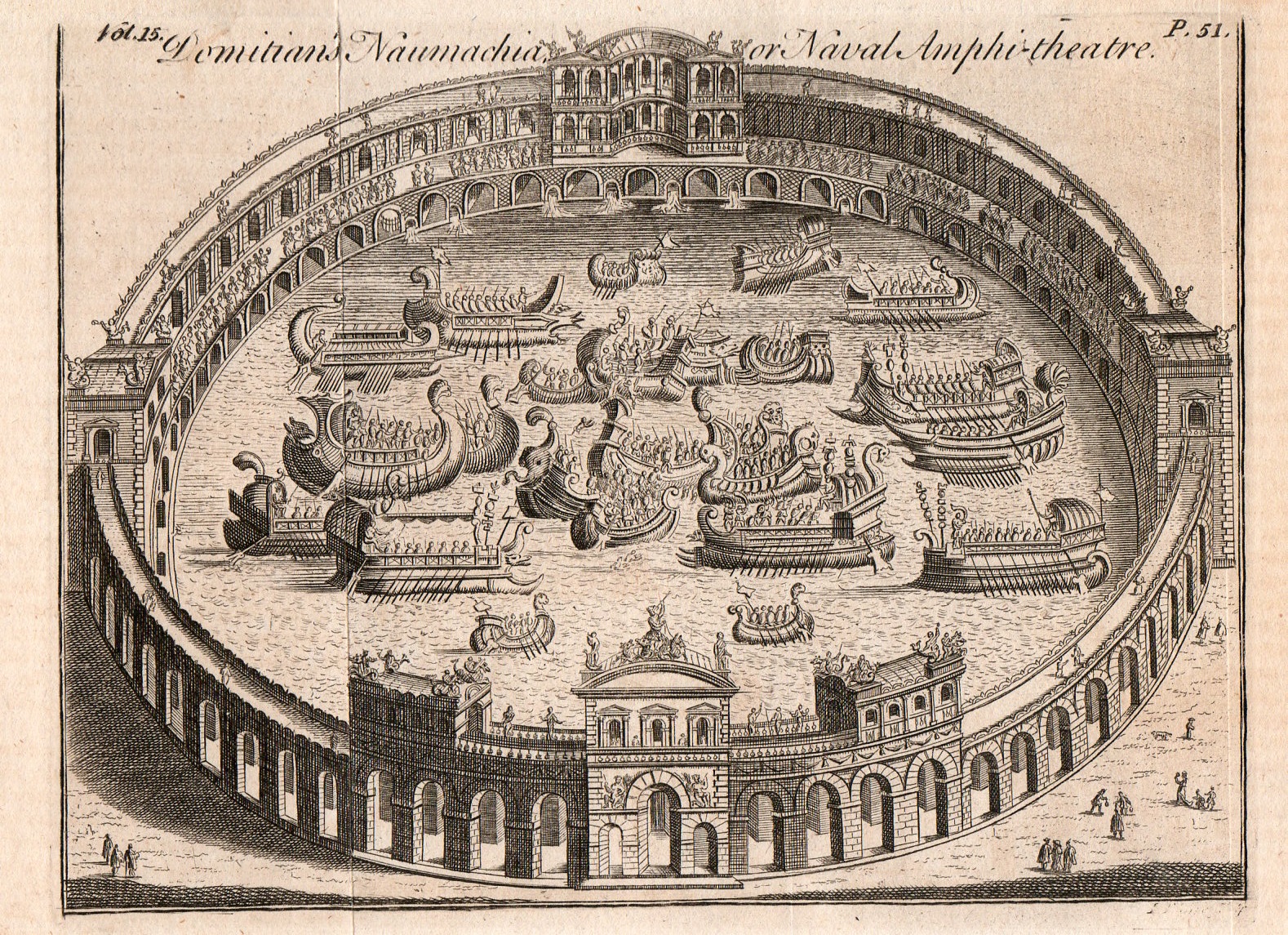
    The content of this antique print was expected (on some level) though it was still surprising.  “Domitian’s Naumachina or Naval Amphitheatre” is from an unknown source though the basis of the image has been used and reused a number of time in the 18th century–I expect this one to be mid-18th or so. Domitian was not the happiest of Caesars, and from time to time engaged in enormous spectacles, which may or may not have included scenes like that below, flooding the amphitheater and launching ships for combat and amusement of the spectators. Or not–the issue is evidently a debated one among people who know this period; the image, however, is interesting.  

    Domitian amphitheater997

    The following–describing Domitian and his compounded public display interests is from –Readings in Ancient History: Illustrative Extracts from the Sources. II. Rome and the West, edited by William Stearns Davis (Boston: Allyn and Bacon, 1913, pp. 194-195, Source:   http://www.shsu.edu/~his_ncp/Domit.html

    • The original print is available for sale at the blog bookstore, here.

    “Despite their control of the army and the subservience of the Senate, the average Emperor quailed before the hootings and ill will of the Roman mob. Thus Domitian (81-96 A.D.), a bad and tyrannical Caesar, tried to win popularity by providing the idle masses of the capital with their favorite games and arena massacres.”

    “He frequently entertained the people with the most magnificent and costly shows, not only in the amphitheater, but in the circus; where, besides the usual chariot races, with two or four horses abreast, he exhibited the imitation of a battle betwixt cavalry and infantry; and in the amphitheater a sea fight. The people too were entertained with wild-beast hunts, and gladiator fights even in the night-time, by torchlight. He constantly attended the games given by the quaestors, which had been disused for some time, but were revived by him; and upon those occasions, he always gave the people the liberty of demanding two pair of gladiators out of his own [private] “school,” who appeared last in court uniforms.”

    “He presented the people with naval fights, performed by fleets almost as numerous as those usually employed in real engagements; making a vast lake near the Tiber, and building seats around it. And he witnessed these fights himself during a very heavy rain.”

    ·Posted by :

    ·in:

  • A Tiny and Obscure Appearance of California as an Island, 18th c.

    JF Ptak Science Books  Post 2466

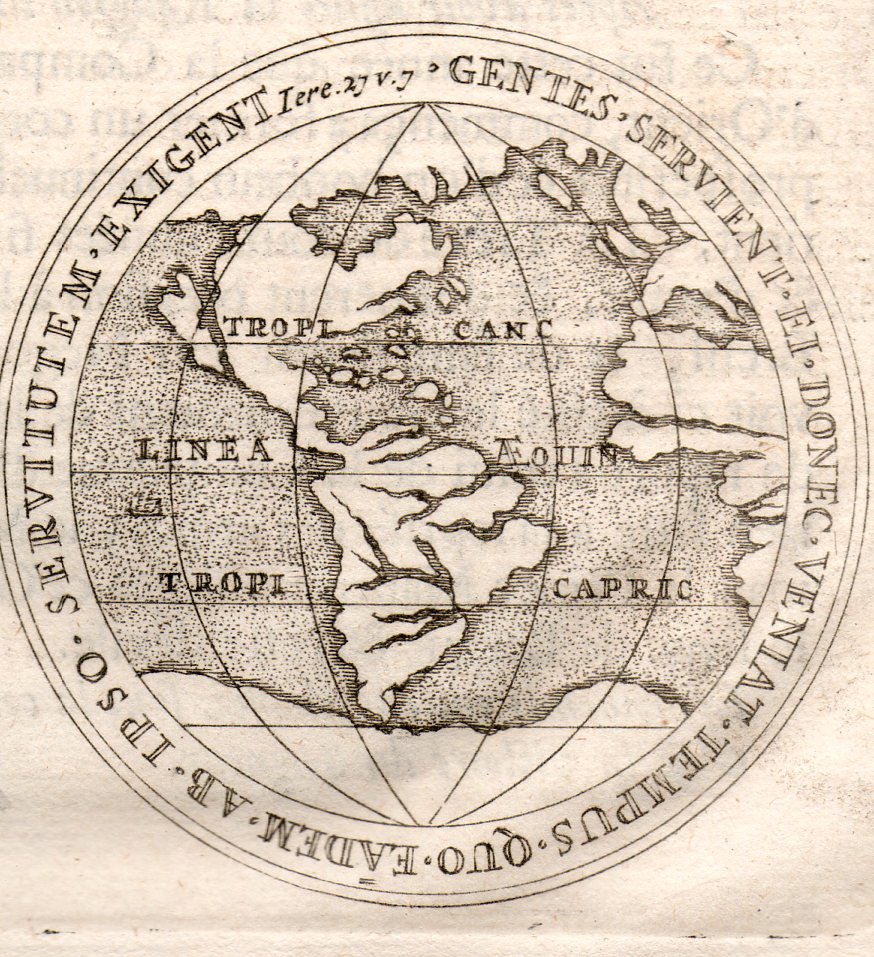
    There is a long history of portraying California as an island, and this may be one of the most obscure instances.  The source is not known (though ca. mid/late 17th c), but it seems to me to be a depiction of Dutch East India Company medallions (depicting city views of Leyden, Harlem, and Breda), and the California map turns up on the reverse of one of them, as bottom.  The original is only about 2.5″ in diameter–here it is, enlarged:  

    California as an Island001

    Antonio de la Ascensíon is credited with first giving flight to the idea that the California Peninsula was in fact an island–and so, beginning in 1620, California would frequently make guest appearances on maps as an island. (Fray Antonio was born in Salamanca in 1573/4 and studied there and at the College of Pilots in Seville; he was ordained in the Order of Discalced Carmelites, and sent off to Mexico. As a cosmographer he accompanied Sebastian Vizcaino (1548-1624) on his expedition to California to find a good port for Spanish galleons coming from Manila, which is when Antonio produced his diaries with the famous island maps.)  This map was created during a period where there was heavy competition for trade routes and geographical knowledge was actual currency, so there was some amount of cartographic information that was proprietary. When the abbot’s map was lost to/and recovered by the Dutch, the changes that were made to California were codified and published–the Spanish thought it not necessary to correct the misinformation. Perhaps.  In any event, it seems plausible that the Spanish crown had no interest in involving itself with what may or may not have been the loss of proprietary information, and so let the island business slide.  Until1751, when the King of Spain issued a proclamation saying that California was indeed not an island.

    This practice continued to about 1747, when there was more than ample evidence to suggest that the island status of California was erroneous–still, it took several decades for the last of the island-maps to make its appearance. 


  • Daily Dose of Dr. Odd: Magnetic Golf Hat

    JF Ptak Science Books  Quick Post

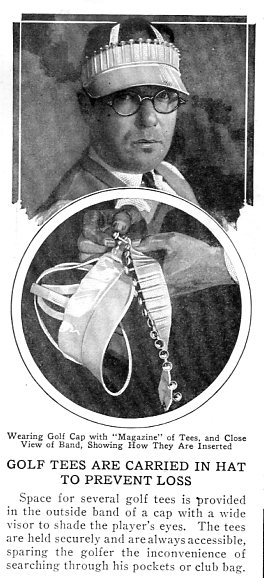
    Golf hat009I have not been a very faithful blogger to the Daily Dose of Dr. Odd series on this blog–certainly not from want of material, because when you allow yourself to see and record it then it is all around you; probably it is because there is so much material that it just washes over a person, like unexpected moonlight.  

    Anyway, I opened this 1926 volume of Popular Mechanics right at page 636, and this remarkably unnecessary use of, well, a hat.  A similar design with little bottles of Scotch might make more or less sense–and what ever it turned out to be didn’t matter one way or the other.  


    ·Posted by :

    ·in:

Recent Posts

Archives

Categories