A Daily History of Holes, Dots, Lines, Science, History, Math, Physics, Art, the Unintentional Absurd, Architecture, Maps, Data Visualization, Blank and Missing Things, and so on. |1.6 million words, 7500 images, 4.9 million hits| Press & appearances in The Times, Le Figaro, Mensa, The Economist, The Guardian, Discovery News, Slate, Le Monde, Sci American Blogs, Le Pont, and many other places… 5000+ total posts since 2008.

  • A Sympathetic Pamphlet on the Plight of U.S. Japanese, 1944.

    JF Ptak Science Books   Post 2880
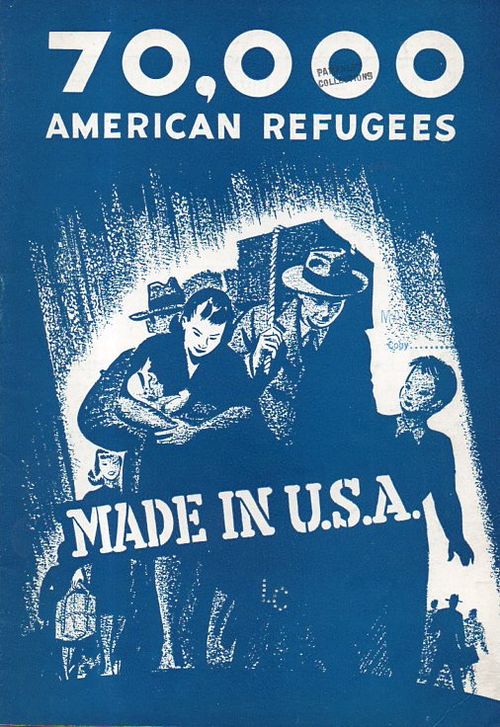
    70 000 JapaneseThis pamphlet, 70,000 American Refugees, Made in U.S.A., by Truman  B. Douglass1, was a sympathetic appeal to the deeply grave situation legislated to 140,000 Americans. They were Americans of Japanese descent, many of them U.S. citizens, who by Executive Order 9066  were ordered to stand down from their lives for the sake of national security and be removed to distant and remote internment/concentration camps  in May 1942, mostly for the duration of the war.  There weren’t that many appeals for the primacy of the rights of these people at this time–the war for the United States was newly begun via the Japanese attack on Pearl Harbor five months earlier–and the understanding was to protect the security of the country via the segregation and housing of what were seen to be the potential enemies in the existing Japanese-American population living on the U.S. west coast.

     Franklin Roosevelt’s  February 1942 Executive Order 9066 (issued 19 February 1942) to imprison more than 140,000 Americans (70,000 of whom were U.S. citizens, including children) for the duration of the war was the legal bombshell that gave the War Department the authority to authorize the removal of the Japanese  to theoretically prevent those people from engaging in sub rosa and fifth column activities and wartime terrorists fighting for Imperial Japan.

    Given that this pamphlet was in it third edition just a few months past its first appearance in October 1944 says that there was at least some interest in this political/moral anti-Executive Order 90662 position, though how much of that is from a popular groundswell of support it is not possible to say. (Also “edition” could mean “printing”, and the print run may have only been a few thousand at a time). That said I imagine that the print runs of this pamphlet were rather small given that there are only ten copies of all three editions in the collections of libraries worldwide.  And since there are many collections that should have this pamphlet but don’t–copies are found in California State University Northridge, California State Irvine, Yale, Wisconsin Historical, Cornell, Berkeley, Davis, Huntington, according to WorldCat–and no copies seem to pop into the rare book market very often at all, I suspect that not many copies were printed per edition, which means that there was a repetitive demand for the pamphlet that exhausted small print runs, which means maybe there were 2000 copies printed…not exactly “groundswell” support for what was an unpopular position).  

    The story of the removal and control of the American Japanese population is complex and deep and has been addressed in many places in print and online (and even on this blog several times), and it is not my intent to address that issue in this post.  I want to highlight what must have been a largely high-minority and mostly lonely voice of consideration and caution

    Full text available via the California Digital Library. 

    Notes:
    1.  The printing and publication information for the pamphlet:  “The Citizens Committee for Resettlement, 6501 Wydown Blvd., St. Louis 5, Missouri, 25 cents. May also be ordered separately at cost indicated. Reduced price in quantities. Community Preparation for Resettlement of Japanese Americans, published by The Committee on Resettlement of Japanese Americans, The Federal Council of Churches”.  
    ·Posted by :

    ·in:

    —
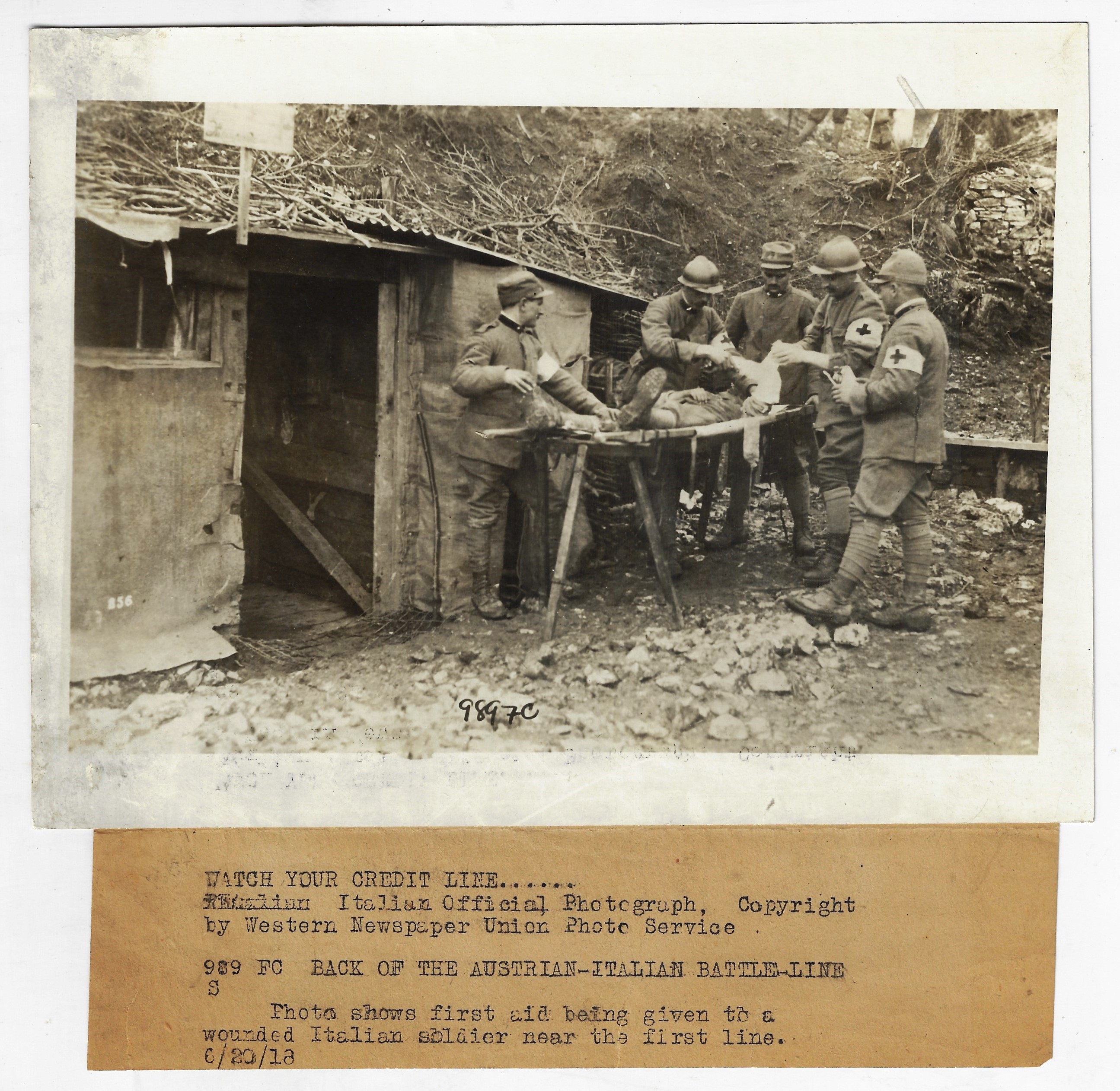
  • Front Line Field Medical Station, Italy, June 1918

    JF Ptak Science Books  Quick Post

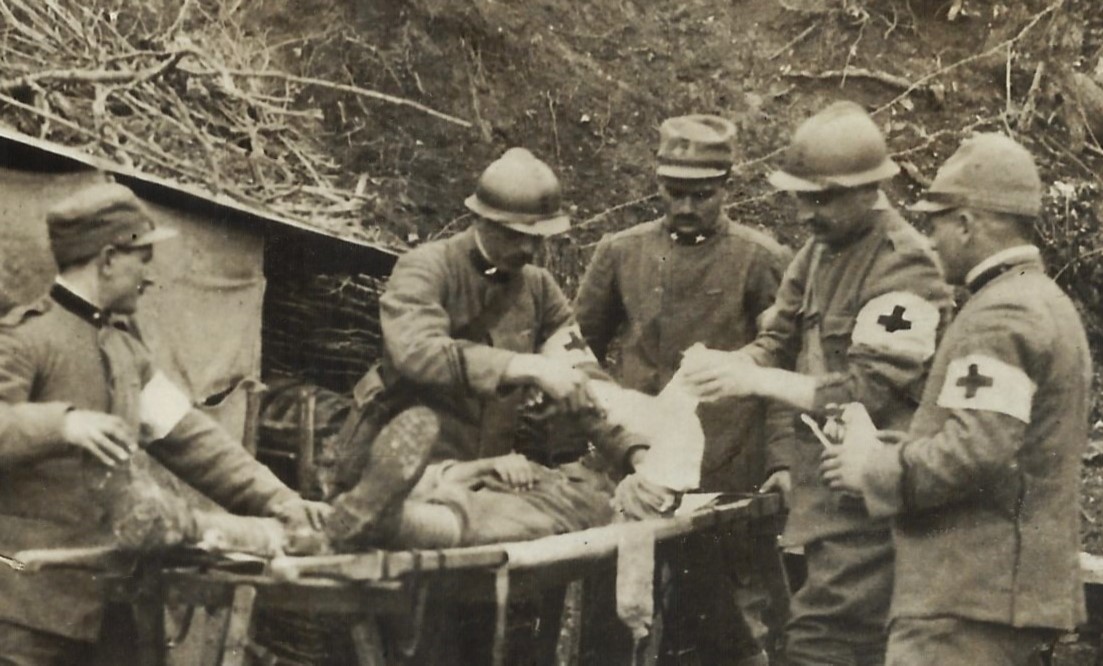
    This is another interest image from my WWI News Photo collection–a front line Italian medical/triage post on the Italian-Austrian front, June 1918.  It is bare-knuckle bare, very rudimentary, though the soldier is receiving the attention of five medical personnel. What attracted my attention was the fifth medical aid, standing at the foot of the soldier, placing two calming hands on the soldier’s leg and foot, delivering calm and sympathy.  

    WWI Photo field hospital _1_

    Western Newspaper Union Photo Service, Itaian Official Photograph

    WWI Photo field hospital _2_

    ·Posted by :

    ·in:

    —
  • Simple Sublimity: Images of Disappeared Common Objects. Traffic Lights from 1936.

    JF Ptak Science Books  Quick Post

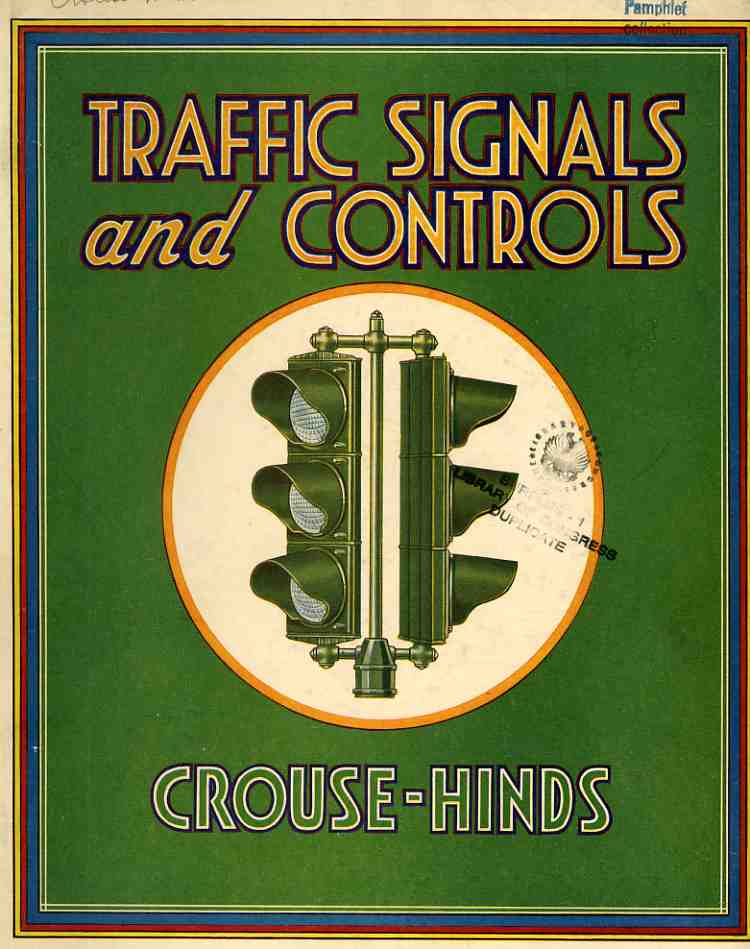
    Traffic lights _1_These images are about as basic as it gets for the common, everyday, overlooked objects from the disappeared past.  They come from the Course-Linds manufacturer’s catalog for traffic lights and other control systems called, yes, Traffic Signals and Controls, published in Syracuse (NY) in 1936. It is a beautifully designed catalog—excellent illustrations laid out perfectly on their pages, with all of the data you’d ever need to order these things for your municipality. 

    What I find so fascinating about the images here is that they depict ubiquitous objects that today would today—given their ephemeral nature—be exceptionally difficult to find. 
    Given this catalog, today they are not.

  • Subduing Insanity with Narcotized Sleep: Mental Illness Treatments in 1846

    JF Ptak Science Books (Earlier post, expanded)

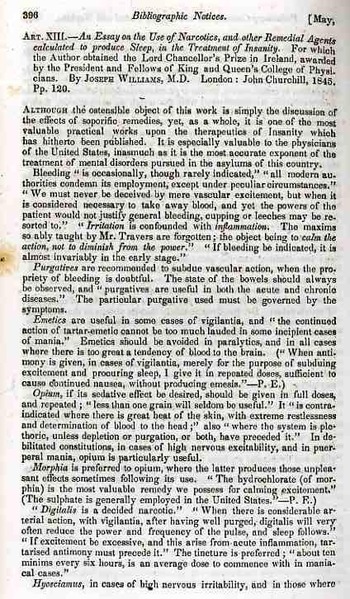
    Drugs for insanity _1_This book review on the use of narcotics to induce sleep in treating the insane appeared in the New York Journal of Medicine for 1846.  The book, An Essay on the Use of Narcotics, and other remedial Agents calculated to produce Sleep in the Treatment of Insanity…., was written by Joseph Williams, M.D., and was published in London in 1845.  The theory behind the sleep treatment was that the basic mechanism of insanity was “cerebral inflammation” or “excessive vascular action” in the brain—inducing deep sleep, evidently, was a good way to combat the over-active brain.

    The article itself comes at an odd time in the history of the treatment of the insane.  It came almost 40 years after the establishment of  McLean Hospital (first known as the “Asylum for the Insane,” a division of the Massachusetts General Hospital), which opened on Oct. 1, 1818, and was the first hospital dedicated to the treatment of the insane in the U.S.  It came 70 years after the great advances of Benjamin Rush, who elevated the “Mental Patient” from chains on the floor to the status of medical or nervous illness or disease.  The use of narcotics over this period seems to have surged and waned.  In 1879, in an article in the New York Times, the reputation of the Asylum for the Insane on Ward’s Island in NYC was considered—and one of the high points was that it had (largely) discontinued the use of narcotics. (There were still problems, of course, what with the asylum being overcrowded, housing 1100 in an institution meant to house 700, and where the chores and even nursing positions were staffed by the inmates, who were feed on 32 cents a day.)  As late as 1921, though, Jacob Alter Goldberg notes in his Social Aspects of the Treatment of the Insane, that there was a new, sharp increase in “toxic narcotic” treatments of the insane.  Of course, I guess one could replace “narcotic” with some sort of other misplaced treatment, like shock therapy, or Freudian mélanges, or something.  Each age must necessarily have their entry in the encyclopedia of embarrassments

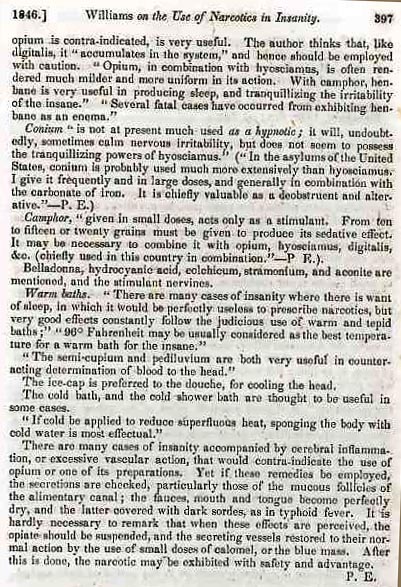
    In this article we find sleep assaulted by the use of the following: purgatives (“to subdue vascular action when the propriety of bleeding is doubtful’), emetics, opium (to be used “in cases of high nervous excitability and in puerperal mania”), morphia (“the most valuable remedy for calming excitement”), hyosciamus (“to produce sleep, tranquilizing the irritability of the insane”).  It is weird to see that the last sentence in the description of hyosciamus reads “some fatal cases have occurred from exhibiting henbane as an enema”. 

    A narcotic enema?  Still to come in the review is conium (“I have used it frequently and in large doses…it is chiefly valuable as a deobstruent and alternative”, followed by camphor, Belladonna, hydrocyanic acid, colchirum, stramonium aconite, and others.  “Warm baths’ makes an appearance (“90 degrees may be considered to be the best temperature for a warm bath for the insane”), as do cold baths, and the applications of ice caps. 

    Drugs for insanity _2_

    I’m not so sure about what to make of it all, the sleep treatment of insanity I mean—after all, Joseph Lister only makes his epochal pronouncements on cleanliness in the operating theatre 15 or so years after this paper, which seems today to be the most rudimentary thing that one could do in treatment in the surgical room, so treating extra blood in the brain through drug-induced sleep doesn’t seem all that far away from the realm of possibility back there in early Victorian England.

    I don’t think I’ll forget the toxic narcotic enema any time soon, though.  Or the word “deobstruent”. 

    ·Posted by :

    ·in:

  • Albert Messiah in Berchtesgaden (1945)

    JF Ptak Science Books   Post 2881

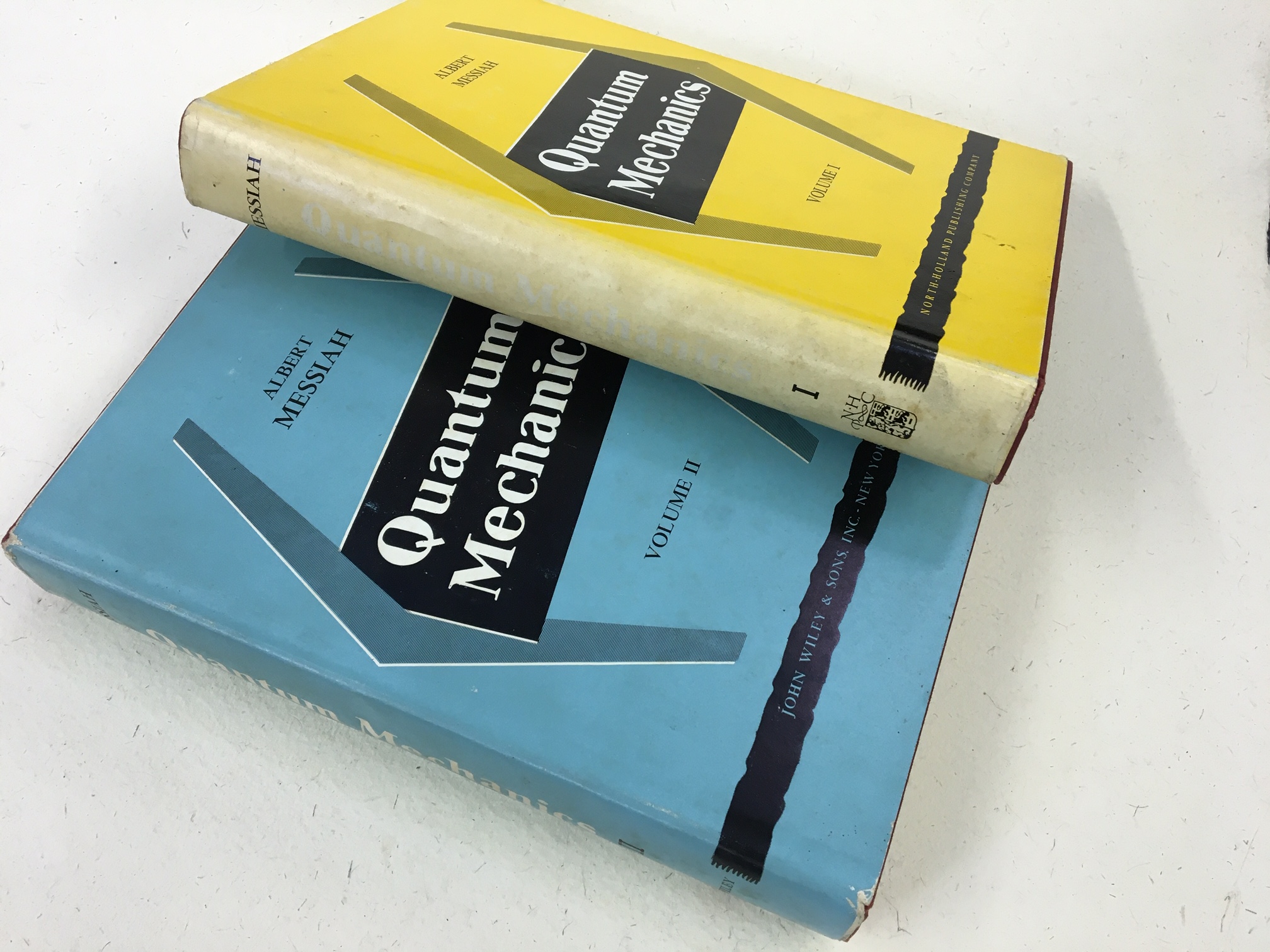
    I recently unboxed (after a long and deep in-box slumber) the classic two-volume work Quantum Mechanics by Albert Messiah. It was published in French in 1959 and soon found its way into English in 1961 (and 1962), and was a staple in the studies of two generations of physicists.

    I had no idea of Messiah’s background, which is extraordinary. I learned that he was accept to the IAS (Princeton) with only a high school education—this was due to Messiah (1921-2013) having spent his formative years from 1940 to 1945 fighting and killing Nazis. He heard Petain on the radio announcing that the gentlemanly thing to do for much-fallen-France in 1940 was to lay down arms, which to Messiah was the clarion call to resistance. He also refers to Petain as an imbecile. He recalls Petain intoning a vainglorious “…entre soldats et dans l’honneur, il fallait cesser le combat, etc. etc.” , and that he does not recall this “stupidity” being much shared at the time (“…cette stupidité n’était pas tellement partagé à l’époque.”)  This was indeed his path, as he joined the Resistance and fought for five years.

    IMG_1417 (1)

    Here are a few interesting responses to questions put to Messiah at the Ecole Polytechnique in January 2009 regarding his time during WWII:

    On a question of the lack of use of armor in 1940, Messiah says it simply was that French command sucked. (“Tout simplement parce que le commandement militaire français était un peu nul, c’est tout.”) Mediocrity was the ruler by which things were measured, and in general is very well spread. (“La médiocrité est une chose qui finalement est relativement répandue.”)

    The people who won the war, and the reason why the Resistance was successful, were those who could think and stand out from the crowd. (“Parce que l’histoire justement est faite par les gens qui se démarquent de ça, des gens qui réfléchissent et qui éventuellement prennent des risques, c’est ce qui a donné la Résistance d’ailleurs, des gens qui prennent des risques mais qui ne vont pas dans le sens de l’histoire.”)

    At the end of the interview Messiah relates being among the first to occupy Hitler’s residence/seat of government in Berchtesgaden in May, 1945. He found it very amusing and ironic that Hitler’s place would in the end by occupied by a Jew. (“…le malheureux Hitler a eu la malchance de voir son repaire occupé par un Juif.”) 

    And a Jew named “Messiah” at that.

    ·Posted by :

    ·in:

    —
  • On the Souls of Toys (1892)

    JF Ptak Science Books  (Expanded earlier post)

    Fact:  toys have souls.  Or, if we can establish that in this case a “fact” can be so identified, then a “fact” this must be.

    Toys 6 det325
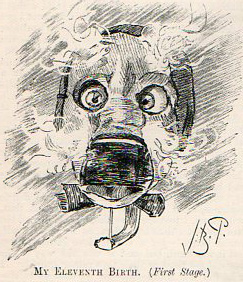
    I’ve stumbled onto a remarkable short story in Punch’s Almanack for 1892 (as part of Punch, or the London Charivari) called “The Evolution of a Toy Soul, or Nursery Karma”.  This piece establishes that toys have souls, that they have an inner, thinking, emotional existence which is capable of Karma and reincarnation, a life of their own–lives of their own. Cognizant, penetrative, analytical.  And a toy.

    The story is told partially in the first person, in the voice of a toy who recounts its long series of births and rebirths–eleven (so far) in all–and its (his or her’s) long experiences.  And this all more than a hundred years before Toy Story.  I don’t know this literature very well, not really, but so far I have not found other “toys have souls” stories, nor have I been able to find out anything about this particular toy story, with searches done in JSTOR and Google and a host of other repositories turning up nothing at all.  Its a puzzling thing, really, because it is a wonderful story.

    In a brief summary, our toy soul starts out it life (“my first birth”) as a rubber ball (“the body in which I first became conscious of my existence”).  The toy soul figures too that it must be its first body, because there is no lower entry point in toydom, except, as is noted, for a brick, which happens to be not-really-a-toy. 

    “My Second Birth” find the toy soul returned to the nursery as a Ninepin, a Ninepin King, who lives part of its life in the hands of a (“quite mad”) human child who dresses the Ninepin in dolls clothes and fabric.

    “My Third Birth”:  “the law of Karma has mysteries which are hid even from the initiated, and I am still at a loss to explain how it came about that I was next incorporated in an Organ Top”, which was basically a spinning top that produced a melody of some sort.

    “My Fourth Birth”:  “I was advanced at a bound” in Karmic hierarchy by being held in the form of a fur monkey with bead teeth and glass eyes.  Here our toy soul has a recollection of its earlier self as a musical top, as it leaves with the monkey a “chronic melancholy”, who takes care (as it were) of a sick girl for a long period of time, and then in the end is given over to a careless boy, and ends up burning in a fireplace.

  • A Little Sturm und Drang in a Piece of U-Boote 977 Ephemera (1945)

    JF Ptak Science Books  Post 2882

    Here’s a short tale of surprise and of some disappointment. First, the pamphlet pictured here is a standard work (Der Signalgast, Handbuch fuer Signalkunde, fifth edition, 1935) on naval communications using Morse code and flags. It seems to have been standard issue in Germany through the early 1930’s through WWII. It must’ve been quite popular because there are a number of these for sale around the web in the $10-$50 range, more towards the ten dollar range than not.

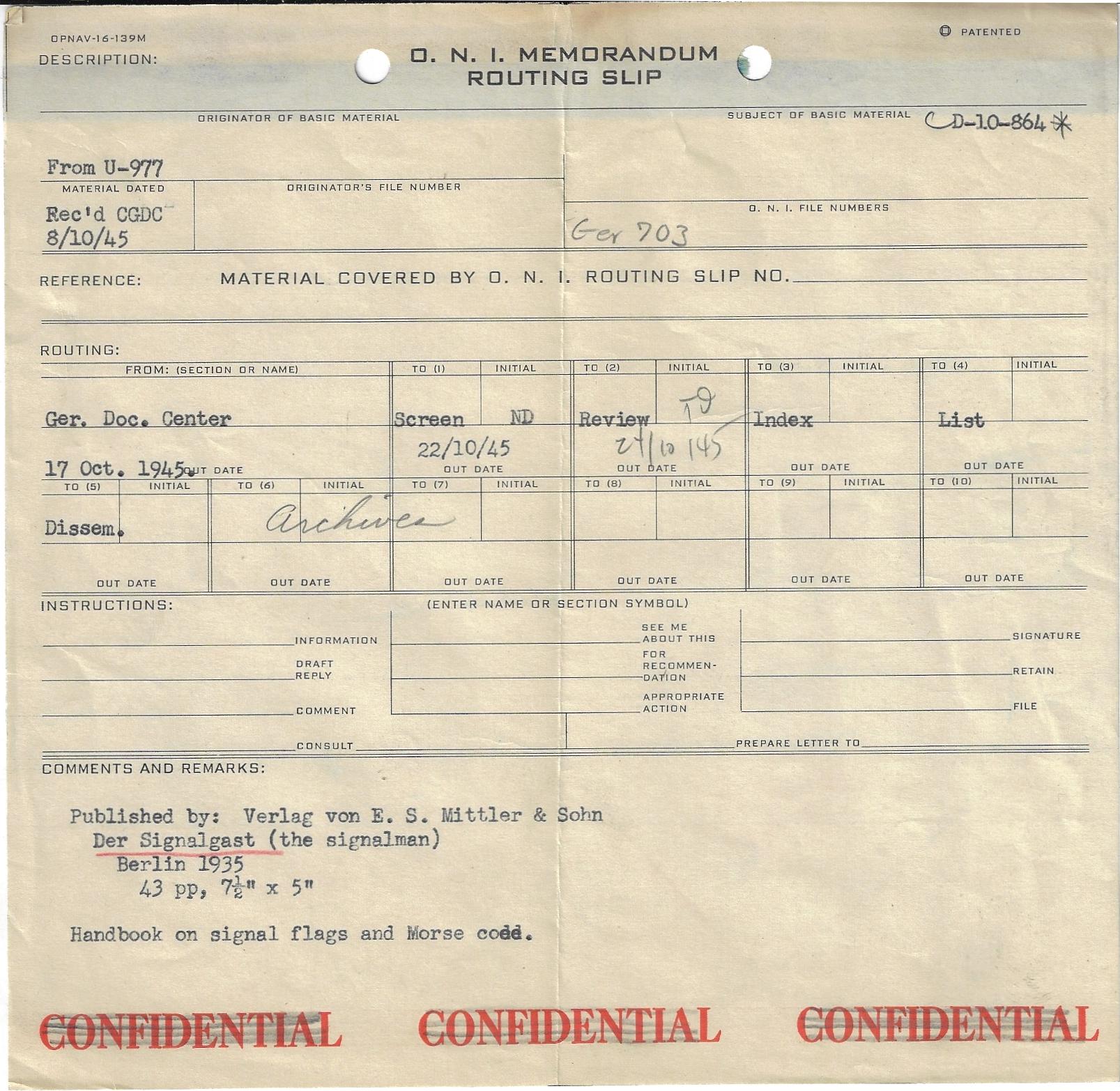
    U 977 signal US receipt_0001This copy is different because it has the Office of Naval Intelligence paperwork of having been removed and secured from the German submarine U-977, captured/surrendered at the port of Mar del Plata, in Argentina, 17 August 1945. U-977 has a provocative history after the war, making a 108-day voyage from Norway to Argentina in the supposed hopes of being able to surrender in peace. There are a number of rumor/tales/conspiracy theories offering other explanations for this long and time-consuming voyage, including transporting Hitler or his remains to Argentina, or carrying stuff of great value, or transporting leading Nazi figures, or some such. There are many stories about the U-977 voyage spread around the web—including one of legend that the boat traveled for 66 consecutive days submerged–though for my reading (and I know very little about these matters) the boat’s last captain, Heniz Schaeffer, who wrote a book about the adventure and which was published in 1952 had nothing to say about a number of the high-flying (sorry) tales of intrigue.

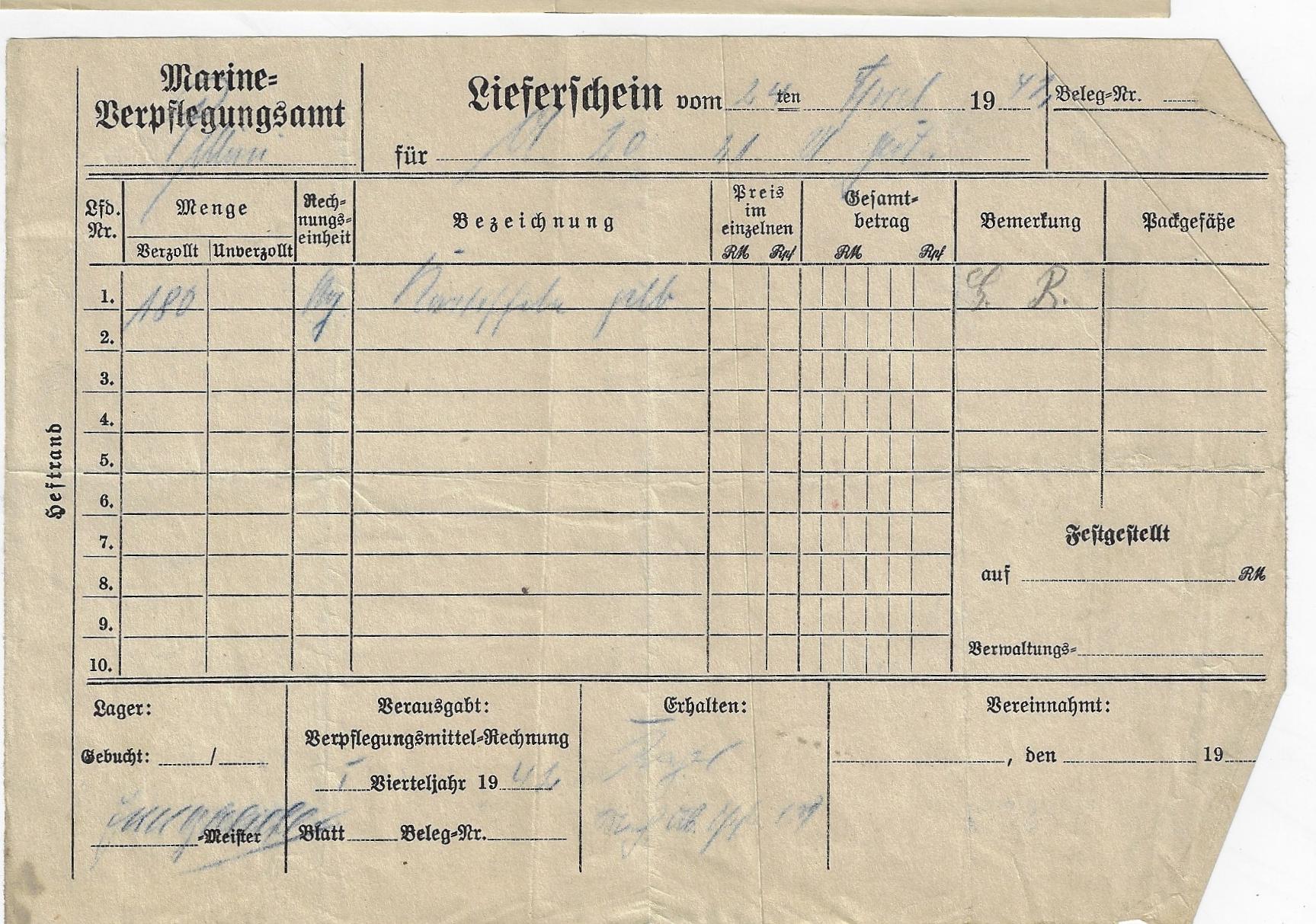
    U 977 signal receipt_0002It is interesting to me though that the pamphlet was on the submarine, and seems to have been pretty heavily used, which gives all of it together a secondary ephemeral life. The ONI paperwork is pretty straight forward; there was some secondary paperwork that was more mysterious to me, and was not readily readable as it is in Fraktur, which is hardly an alphabet basking in obviousness. Anyway once the script was punched through, all this attractive printed note was was an invoice for some sort of food loaded onto the sub on 24 April 1942. “Delivery note” is the heading from the Marine-Verpflegungsamt (Marine Catering Office), with someone signing off on having received some amount of unsalted something-or-other in the first quarter of 1942.

    It was a little deflating as I built the thing up in my head a little, not being able to read the script offhand. Anyway, there it is.

    The pamphlet does have one more mysterious piece to it—there are some notations on the title page made in German script (which is basically undecipherable to me), and I don’t know yet if it is just a few words or (hopefully) the owner’s name. I’ll have to get back to you on that. For the time being, enjoyment will have to be found in the fact that this book spent two years on a German sub, then made an enormous journey across the Atlantic at the end of the war, then made its way to Washington DC (where I bought it), and now is temporarily in western North Carolina. It has one more trip to make after the title page annotations get figured out, and that may be the last trip that the pamphlet makes.

    As it turns out the date on the food invoice predates by a couple of months the date on which the U-977 was laid down, so there’s that.

    Finally, the U-977 was escorted north to New London, Connecticut, and then used for target practice and sunk off Cape Cod on 13 November 1946. The U-977 never lost a man and never sank a ship.


    Some references:

    http://www.uboatarchive.net/U-977A/U-977INT.htm

    http://www.uboatarchive.net/U-977A/U-977Photos.htm

    “The U-977, one of the most interesting Kriegsmarine ships in history…” https://www.mhistory.net/the-last-mission-of-u-977-cruise-across-the-atlantic-and-hitlers-alleged-evacuation/

    ·Posted by :

    ·in:

  • Public Humor Displayed: London Signboards (1866)

    JF Ptak Science Books   Post 2883

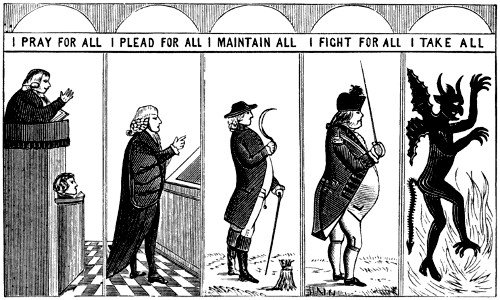
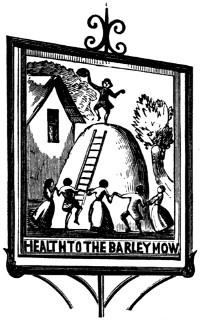
    What is the first stop for looking at—hold on to your seat!–socio-descriptive stationary public humor? I do not know, though I have found an example of the history of such a thing in a book written by the author of which I wrote about on this blog earlier (in post 2882) named John Camden Hotten, who contributed a fine effort in the history of cant and slang. All I’m really talking about here are intentionally funny signs, advertisements and store/shop/business signs that identify what goods/services are offered, or the name of an establishment, that sort, but in there is another story of humor and sarcasm in the display of the name—sometimes it is the name itself but it seems mostly that the funny part of it all are the parable-like qualities of the elements that visualize the name. Hotten’s contribution to this genre of humor is a wonderful catalog called The History of Signboards, from the Earliest Times to the Present Day (1866), which is, at it states, a history of advertising and shop signs, some of which are lovely, some are bizarre, many are funny,  all of which make this book an irresistible browse.

    Signboards 4

    Signboards _6_

    Here are a few examples of the legends of such signs:

    Barber:

    “I devote my razors to all faces,
    And defy the criticism of faithful mirrors.”

    Public Houses:

    “You gentlemen, and yeomen good,

    Come in and drink with Robin Hood.

    If Robin Hood be not at home,Come in and drink with Little John.”


    And:

    “Your head cool,Your feet warm,

    But a glass of good gin Would do you no harm.”

    An inn:

    “Stay, Traveller, a while and view

    One that has travelled more than you,

    Quite round the Globe in each Degree,

    Anson and I have plow’d the Sea;

    Torrid and Frigid Zones have pass’d,

    And safe ashore arriv’d at last.I

    n Ease and Dignity appear He—in the House of Lords, I—here.”

    Hotten has hundreds and hundreds of examples, and he tells the story in an odd manner, with a lilt of an 18th century antiquarian more so than a Victorian. Here’s the link for the full text with illustrations available at Project Gutenberg, and I do recommend even just a quick browse, as there is only so much I can do in a one-hour post like this. 

    ·Posted by :

    ·in:

    —
  • A Glimpse of a Small Part of the Big Lie, Soviet Style (June 1945)

    JF Ptak Science Books   Post 2884

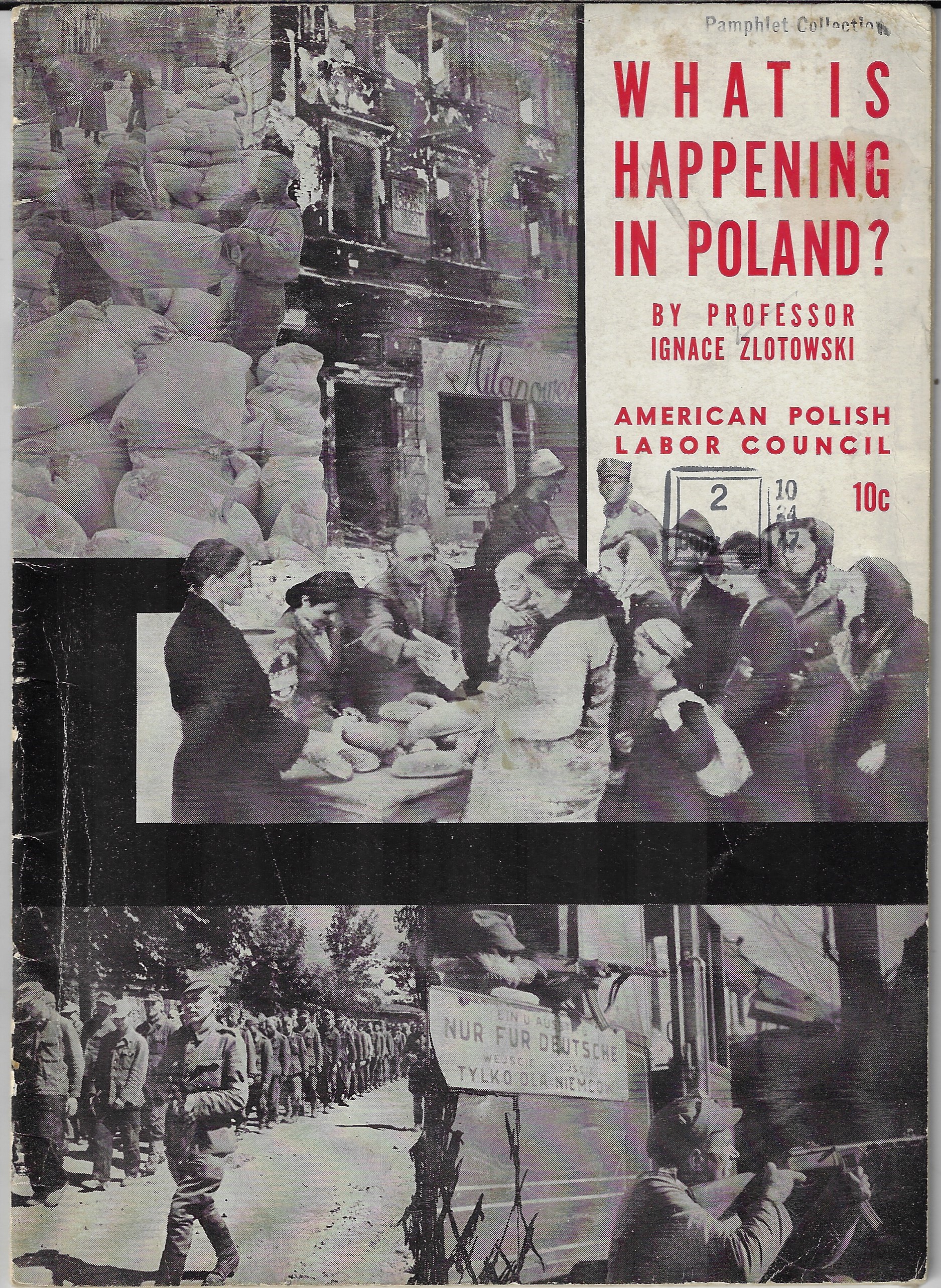
    Poland 1945 cvrThere’s nothing quite like a series of lies that is a vast series of lines, lies all the way up and mostly all the way down, lies that are built into Borgesian extravagancies with a sweetener here and there of a little bit of truth. That is pretty much what we have here in the pro-Stalinist/Soviet pamphlet, What is Happening in Poland, with an imprint of June, 1945.

    There’s a lot of difficulty in this work’s 29 pages, all of which are ultimately directed against the still-extant Polish government in exile (in London) insisting that those are the anti-democratic and anti-Soviet forces at work in Poland. The write, a physicist named Ignace Zlotowski is the author, and he makes an abundant case for the London government setting out to destabilize (and de-Stalinize) the “New Poland”.

    The rhetoric is really quite remarkable.

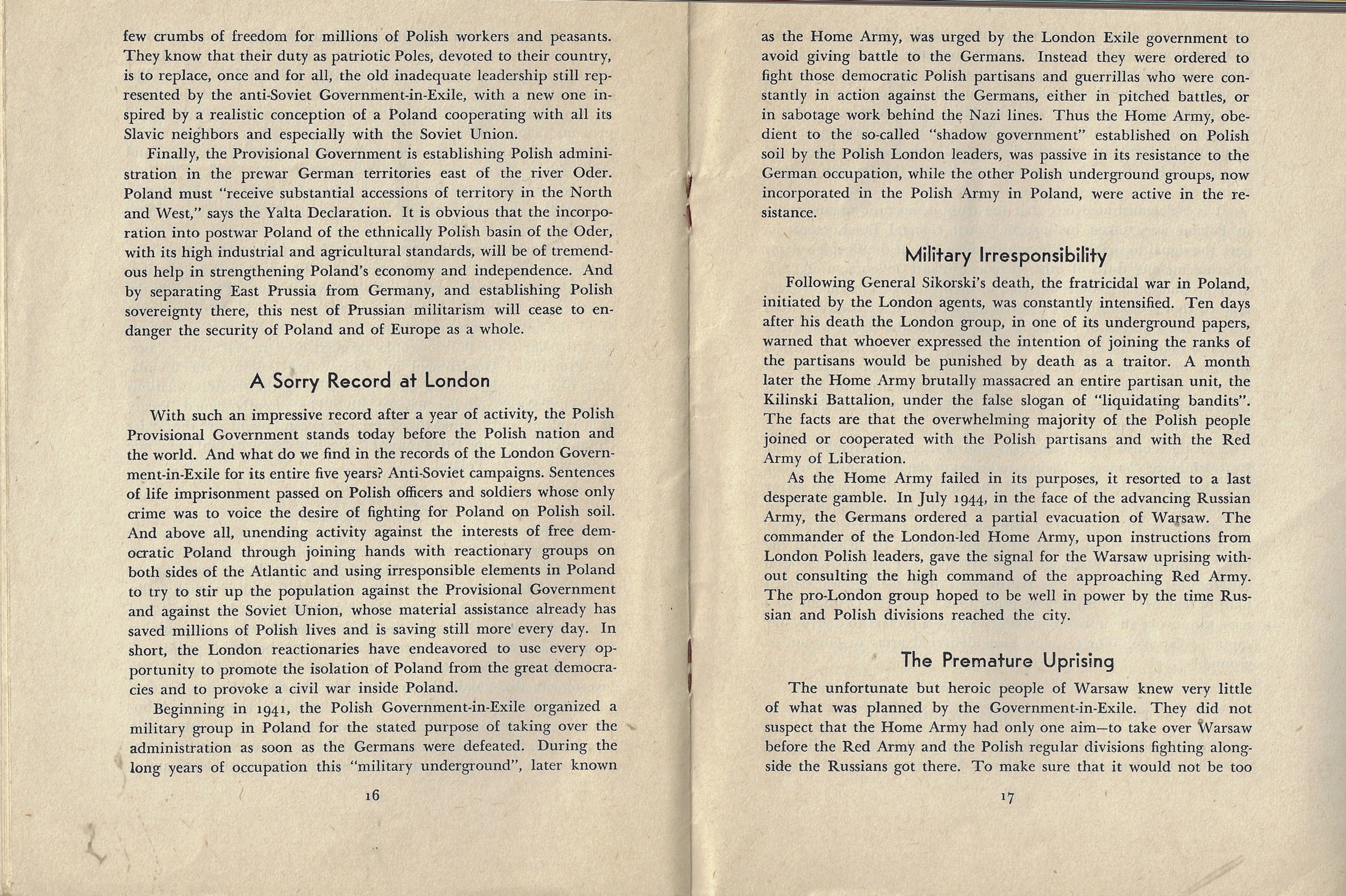
    For example, Zlotowski makes the case for the catastrophic defeat of the Polish underground in the Warsaw Uprising (1 August—2 October 1944) directly on the Polish exile leadership. Even though far away in London the government did exert considerable influence in Poland, and did organize and begin the uprising. The rest of the story and the failure of the uprising against the Nazis can be placed in squarely in the lap of the Soviets, who—even though at the gates of the city, advancing West—did nothing in this fight against the German army. The Soviet forces sat just across the Vistula, ignoring pleas from Churchill and Roosevelt to help the Poles, and waited the tragedy out, until the Germans destroyed the uprising in bitter house-by-house fighting, ultimately destroying nearly the entire city, killing some 200,000 people (mostly civilian, and mostly murdered). The Wehrmacht pushed through the city from October to January, hunting people, destroying the city almost completely. It was a strategic move by Stalin, deciding to let two enemies fight it out, allowing the Nazis to destroy elements of the population that the Soviets found to be problematic for the administration of the country once they decided to push through Poland on their way west.

    This was standard procedure for the Soviets—for example, there was the Katyn massacre, where 22,000 Polish military officers, police, and intelligentsia were executed in various parts of the Katyn forest. The Great Terror, the Great Famine, the Show Trials, the Holodomor, the Pogroms, and on and on. This was what the Polish government in exile was fighting against, and this is what they would lose to.

    This pamphlet displays just a little of that Stalinist thinking, and it is enough to understand what those people were up to.

    I’ve included (below) some of the text related to the Warsaw Uprising and the Trial of the Sixteen–we don’t have the results of the trial though they are pre-ordained, as is the fate of the fabled and heroic General Okulicki, who would be found guilty and then murdered by the NKVD in 1946. 

    Poland 1945 _5_


    ·Posted by :

    ·in:

    —
  • “Why Bother About the Government?” (1932)

    JF Ptak Science Books   Quick Post    

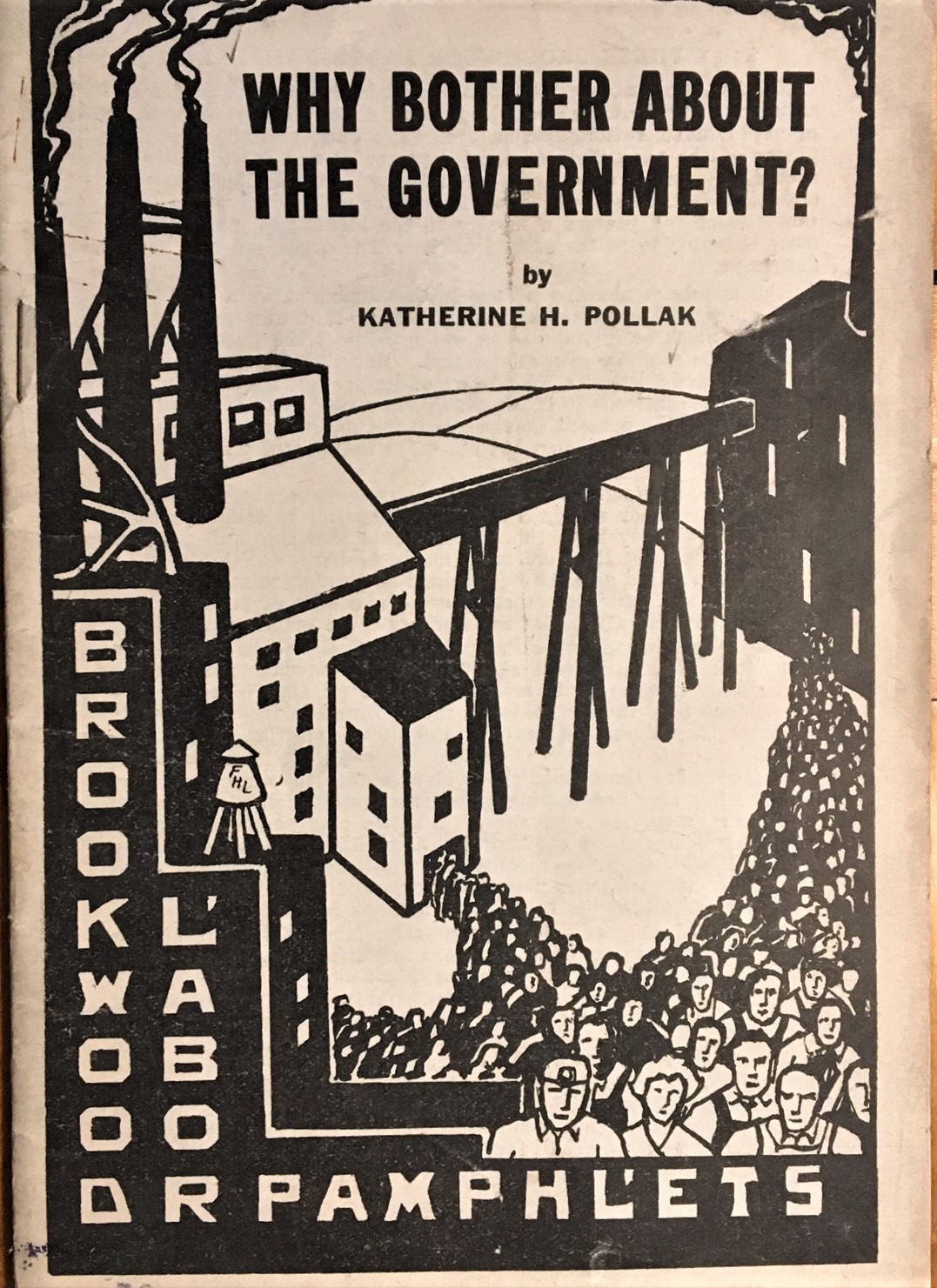
    Why Bother _1_Katherine Pollack’s 1932 Why Bother About the Government, the third installment of the Leftist Brookwood1 Labor College pamphlet series, is a bit of a Socratic polemic about the problems and advantages of government, owners of the means of production, workers, and labor organizers…coming down firmly in the square of very-pro forces of organized labor.

    Offhand I am not finding anything about Katherine (Heilprin) Pollack2, though there is quite a bit about Brookwood (see below for an intro) and its captain, A.J. Muste.

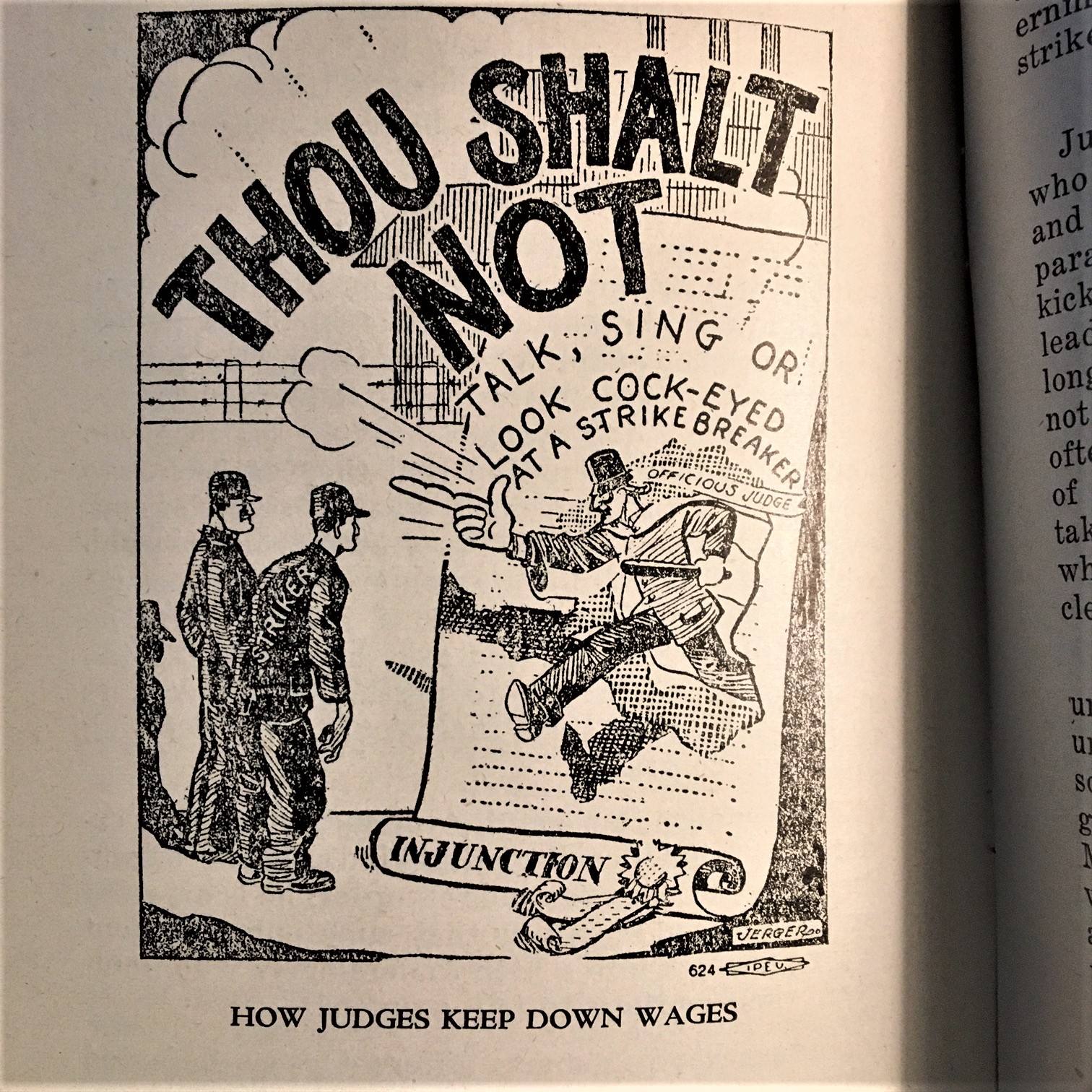
    Also I can’t find much about the cartoonist whose work attracted me to this pamphlet to begin with, Herbert Heasley, though his work has a certain 1930’s feel to it.  I’ve included his three drawings, below. 

    Why Bother _3_

    ·Posted by :

    ·in:

  • A Sociological Map Made for and by Hoboes (1870)

    JF Ptak Science Books   (An earlier post, expanded)

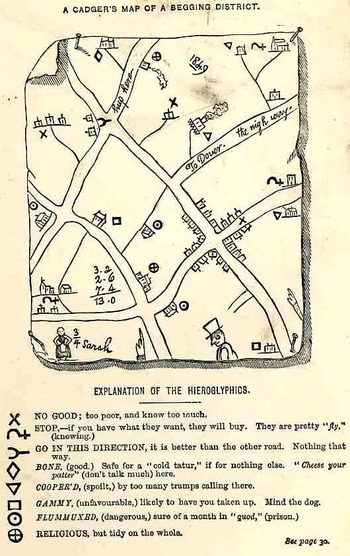
    Hobo mapThis is the frontispiece to the delightful work with the luscious title of The Slang Dictionary; or, the Vulgar Words, Street Phrases and Fast Expression of High and Low Society… printed in London by John Camden Hotten, in 1870.  It is a hobo or “cadger” (“a  mean or vulgar fellow who would rather live on other people than work for himself”)  map (or the map of “a tribe of vagabonds”) of Maidstone, in Kent, drawn by a “screever” (a sidewalk chalk artist who normally would draw religious images for money), and showing the various chalked and etched signs that the hoboes (“and other mendicant marks”)  would leave for one another, being a key to the town, for what was practicable, safe, dangerous, and the like.

    Recorded antiquarian hobo and tramp symbols like these are really quite rare, given their ephemeral nature to begin with; of course the need to record these obscure signs by polite society was not on a high order.  There are many indications that signs such as these existed, but not many illustrations.  For example in the book The Triumph of Wit; or, Ingenuity Display’d in its Perfection, edited by John Shirley. (1724), as well as works by Holyland and Borrow there is a description of English gypsies and their travels, and a short description of their use of boughs and sticks, set out for each other, so that a duplication of effort by different bands or families would not occur.

    (The figure of the woman, wonderfully named “3/4 Sarah”, probably connects this Sarah to a sort of popular dance.)Bloghobo_a199_2

    Hotten also published the following interesting and title-bending work in 1874:  THE ORIGINAL LISTS OF PERSONS OF QUALITY;  EMIGRANTS; RELIGIOUS EXILES; POLITICAL REBELS; SERVING MEN SOLD FOR A TERM OF YEARS; APPRENTICES; CHILDREN STOLEN; MAIDES PRESSED; AND OTHERS WHO WENT FROM GREAT BRITAIN TO THE  AMERICAN PLANTATIONS 1600-1700, WITH THEIR AGES, THE LOCALITIES WHERE THEY FORMERLY LIVED IN THE MOTHER COUNTRY, THE NAMES OF THE SHIPS IN WHICH THEY EMBARKED, AND OTHER INTERESTING PARTICULARS.

Recent Posts

Archives

Categories