JF Ptak Science Books Quick Post
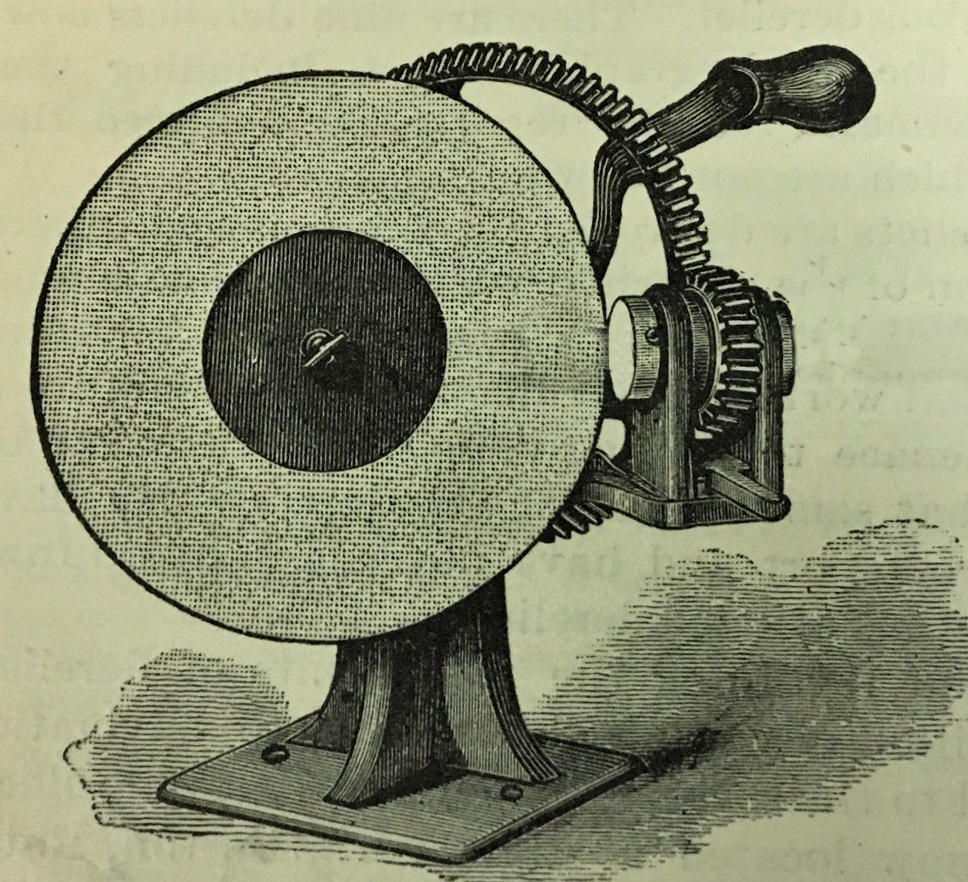
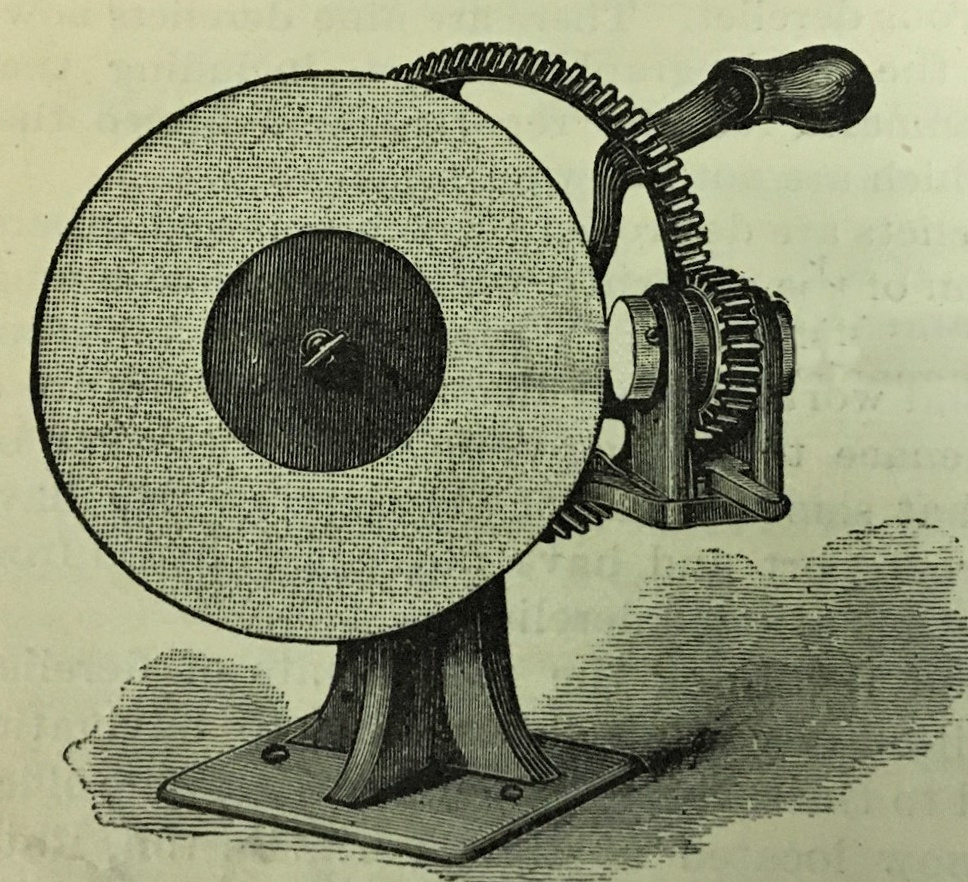
What is it? You’ll be surprised at what this device does, given the gear, and the weight, and the utter simple beauty of the thing.
A Daily History of Holes, Dots, Lines, Science, History, Math, Physics, Art, the Unintentional Absurd, Architecture, Maps, Data Visualization, Blank and Missing Things, and so on. |1.6 million words, 7500 images, 4.9 million hits| Press & appearances in The Times, Le Figaro, Mensa, The Economist, The Guardian, Discovery News, Slate, Le Monde, Sci American Blogs, Le Pont, and many other places… 5000+ total posts since 2008.
Contact johnfptak at gmail dot com
JF Ptak Science Books Quick Post
What is it? You’ll be surprised at what this device does, given the gear, and the weight, and the utter simple beauty of the thing.
JF Ptak Science Books Quick Post
Welcome to the push button electro-deluxe-lux world of 1913 of the marvel of electro-mechanics, the (proposed) Hotel Electro-Ferla. I read in the issue of Scientific American for 1 November 1913 (p 345) that the design is that of M. Georgia Knapp, the design of another all-electric house that appeared in the pages of the SciAm just a year earlier. (M. Knapp appears to have been a busy person in a number of different fields…) The hotel design is Electro-Luxurient–we read in the caption that a person staying at the hotel, waking on the third floor, only had to speak out loud to have the time illuminated on their ceiling; another series of vocal commands opens the shutters and window, delivers their coffee, and retrieves the paper and mail. Another command sends his breakfast up through the hotel in a dumbwaiter to a device that gets his plates right to his bed. we are told that these electric commands respond with good delivered in 10 seconds, whereas telephoning the front desk and getting everything operated and delivered by hand would take four minutes (!)…so, think of the time saved.
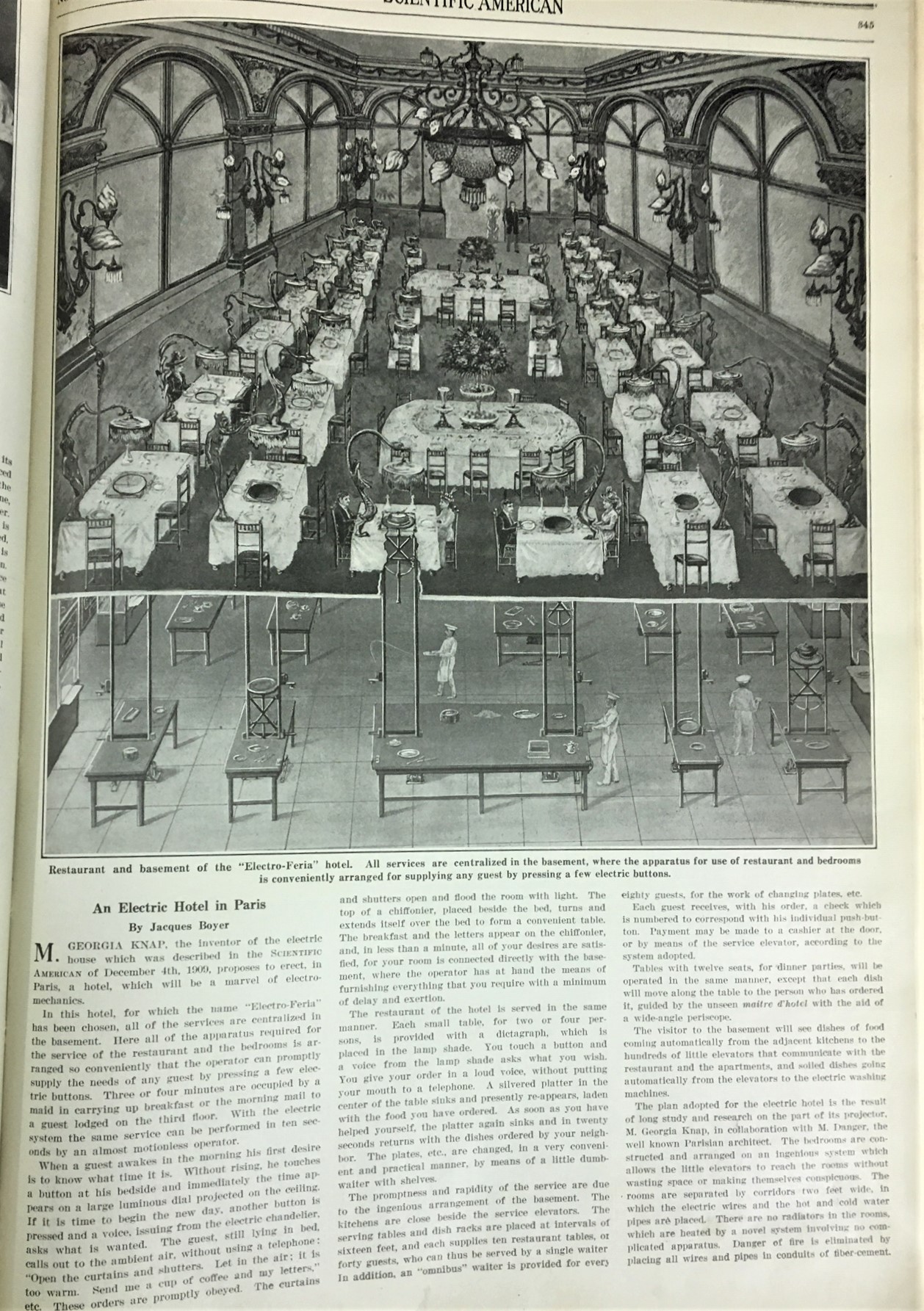
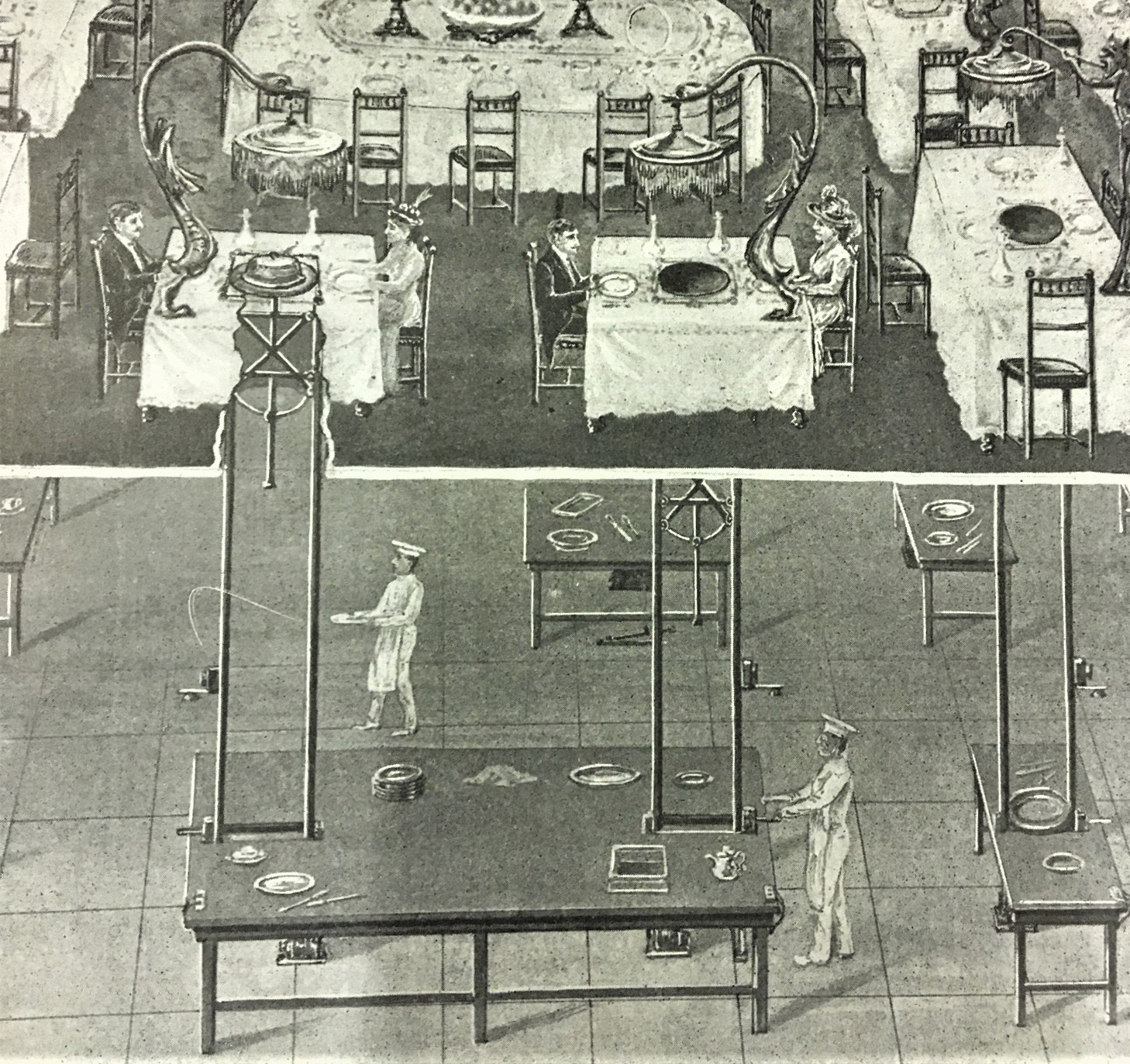
And of course we have the electric dining room, which is the subject of the illustration for the short article. You can see clearly in the detail that all of the service is taking place in the basement of the hotel, with each table having a tiered dumbwaiter that connects it the the kitchens down below. The diner speaks their wants, and the stuff appears, plate after plate. Evidently there is one waitstaff member per tables, though who knows how many people are wailing away at the varied kitchens in the basement.
It seems like a scary situation…particularly when you read that there are hundreds of these dumbwaiters snaking their way through the hotel in a Terry Gilliam-like ductwork maze of tunnels and tubes.
JF Ptak Science Books Quick Post
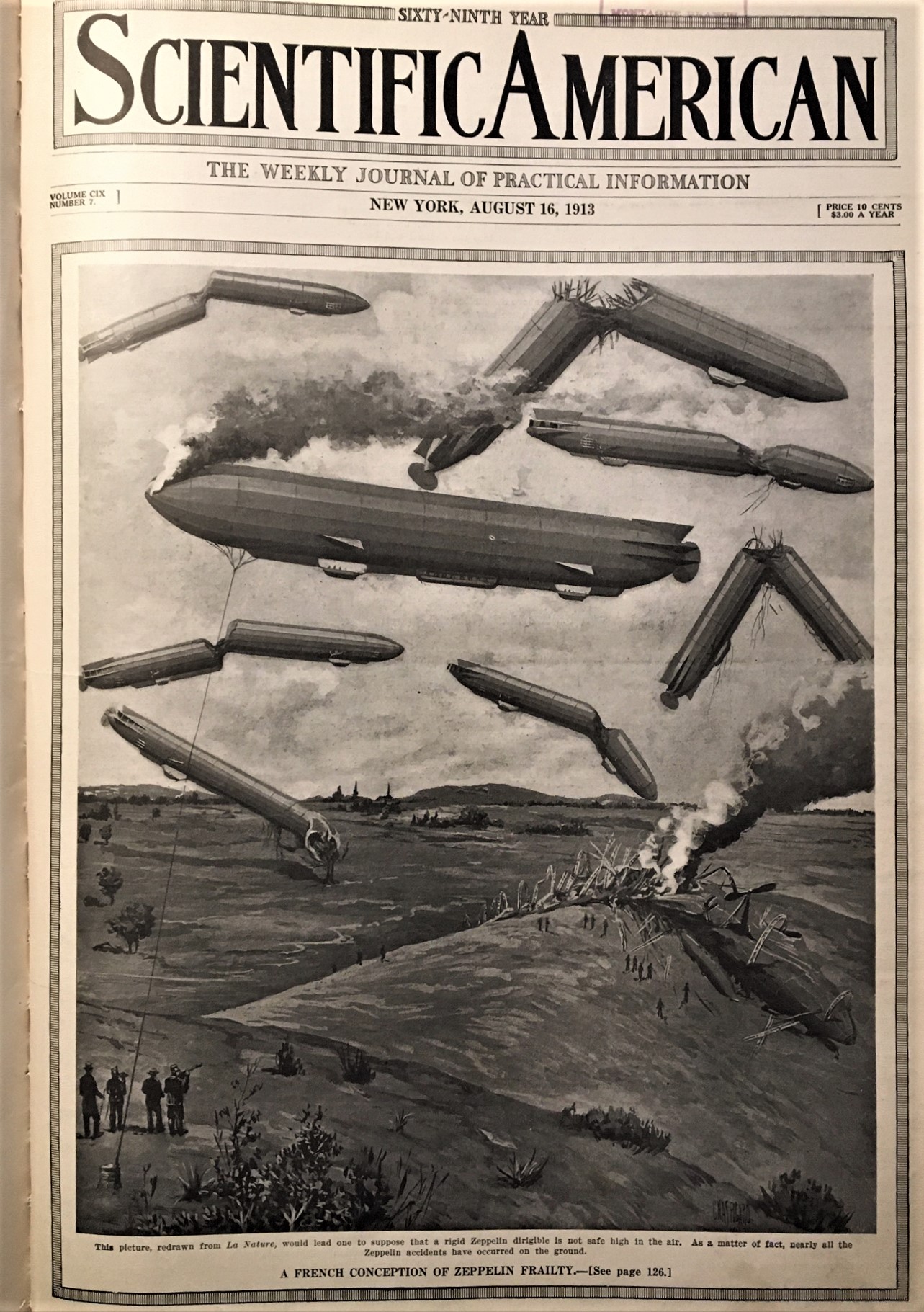
I knew I needed to do something with this tremendous image (found as you can see in Scientific American for 16 August 1913) and thought it might be nice to make something of it rhyming “zeppelin” all the way through…but there aren’t very many single words that do that, though if you cheat a little you can have a lot of two-word constructions with the second word being “in” that would close the gap. Anyway, that’s not all that fruitful or interesting, so I’m just going to note that this composite image depicts Zepps on their way to be zero and zed following their zigs and zags through the sky. It is an attempt–I think–to show that in spite of their tremendous size and threatening nature, the Zeppelins could break just like everything else.
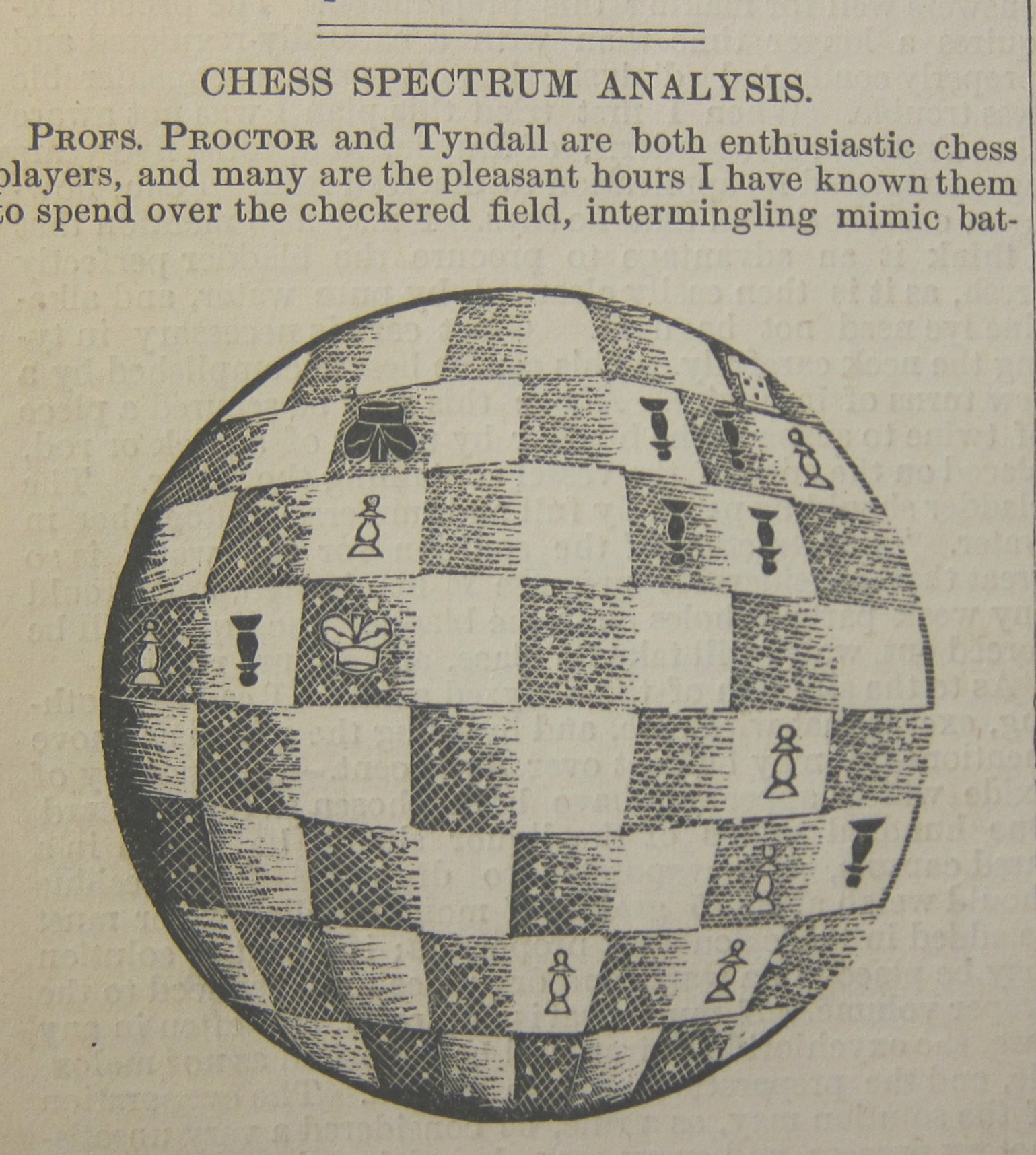 As is often the case in looking through the early-ish issue of Scientific American, I usually find much more than what I was originally looking for, finding a lot that I had no idea that I needed to find, mostly because I had never heard of them before. And so grazing though the 1877 volume of the Scientific American Supplement I found in the weekly chess review in the back of each issue an extraordinary image and title:
I was tempted to add “Pre-Escherian” in the title to this post, but that would put the thing way over the top–but that is what came to mind first, a polished gazing ball with an interesting perspective. This was meant to illustrate an imaginary dialog between two astronomer-chess players (Richard A. Proctor and John Tyndall, though Tyndall’s interests were spread far and wide and deep and then not so much in astronomy), both of whom had made contributions to astronomical spectroscopy. Further into the short article there was a little discussion of Dante and sunspots, which I was not aware of, though when I went looking for that reference I did find the following chess quote in Paradiso (Canto XXVIII) with our Poet in the ninth heaven:
“So sparkled then those circles all and each And every spark did more and more abound, In fiery light and so their number grew, Beyond the chess board’s doubling problem’s bound”
And another translation
“And after she had finished with her speaking, The circles all around began to sparkle, Like red-hot iron shooting off bright sparks. Each sparkle stayed within its fiery ring, So many that their number runs to more, Millions than the redoubling of the chessboard.”
Moving on from the sunspots mentioned in the SA article, it has been pointed out by many that in the quote above that Dante may be referring to an earlier chess story, told at least by the 12th century, where the inventor of the game of chess agreed to give it over to the king if the king paid him in grains of wheat based upon the chess board, starting with one grain in the first square and then doubling the amount until the last square is reached. The big surprise for the king who agreed to this payment was a very fine lesson in the quick-as-a-bunny doubling sequences: you’d move from 1 to 2 to 4 to 8 to 16 to 32 to 64 to 138 to 276 just in the first rank, 56 more squares of doubling to go, until you summed them all up on square 64 and find yourself with the number 18,446,744,073,709,551,615, which is a big number. Bigger still if you consider that this is in terms of wheat, and I figured the weight of that wheat to be about 4 trillion kg, 4 trillion being about the equivalent of stars in 40 Milky Way galaxies.
Even though the article was very heavy in the discussion of some real games, and light in the inclusion of our astronomers and their conversation, everything winds up and out in a whimsical fashion, with a discussion of Gutenberg and spell-check. The author tells us:
“It would take but little argument to show that a mere oversight of Guttenburg’s [sic] proof-reader made the world believe the moon was composed of cheese instead of chess”.
And so it goes. 19th century astronomy/chess humor, as whacky as it gets.
JF Ptak Science Books Quick Post
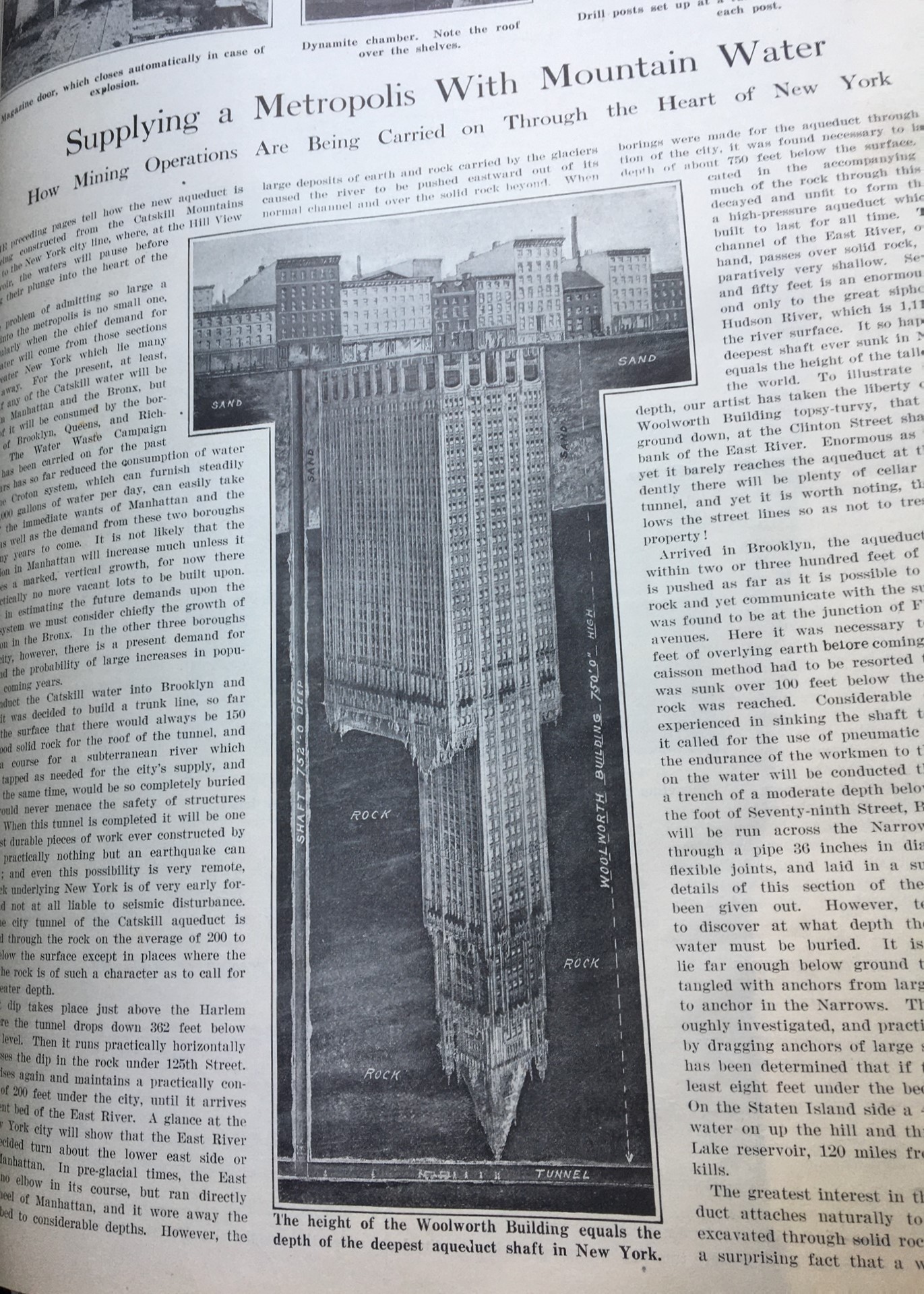
I’ve made a dozen (or two?) posts on this website on measuring things with other thigs. And by that I mean instead referring to something in terms of measurement units like miles or tons or other standards, the item in question is measured against some well-know object for a side-by-side comparison. These units of measurement do seem a little odd, but they really have a capacity to humanize inescapably difficult numbers by putting them in context with a known entity, like Trinity Church. In the past I’ve seen graphical/comparative displays of information the Eiffel Tower, gargantuanly-oversized bread, enormous nails, collections of beef, miles of soldiers, Hoover Dams, Eiffel Towers, mountains, 400′-tall cars, train gangs, and such. Today’s new entry is the newly-built Woolworth Building in NYC from a 1913 issue of Scientific American. The Woolworth Building got quite a bit of ink as it was the world’s tallest structure (for a few months, anyway) so it was a pretty well-known phenomenon by the summer of 1913. This entry is a little more unusual in that it used the Woolworth upside down to show the great depth of tunnels being built under Manhattan:
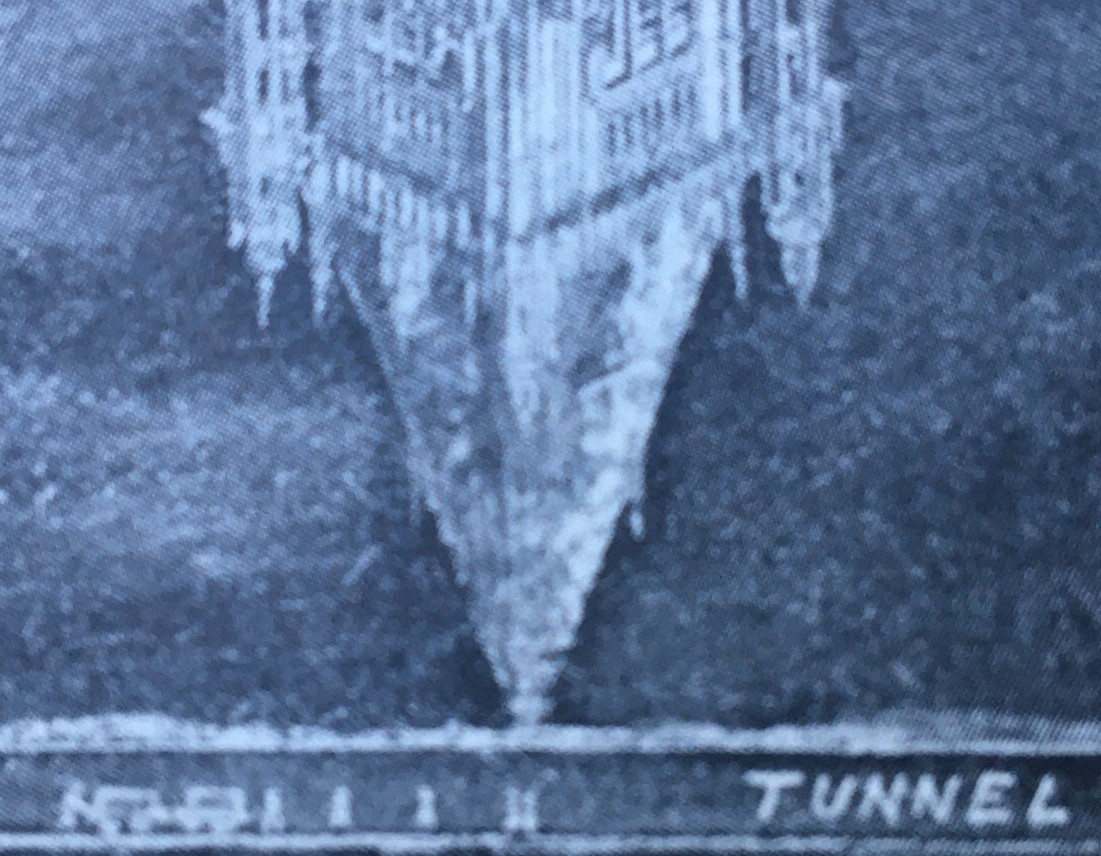
And a closeup of the figures at the bottom/top of the building, showing human workers and a cart:
This is a striking image that really does gets its message across.
JF Ptak Science Books Quick Post
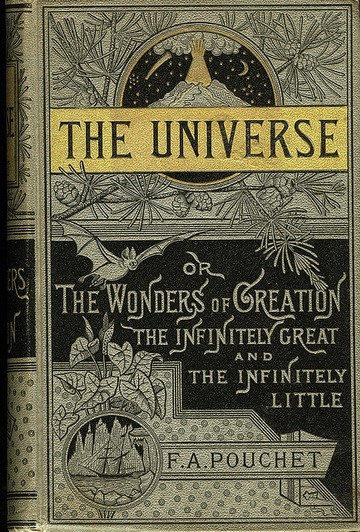
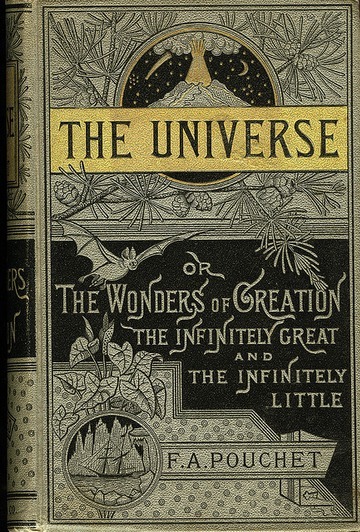
 “When, at the very outset of our studies, we cast a
glance upon creation, we are astonished at its
vastness, and we  see that none of our fictions
attains the sublimity of its  proportions."

This is the opening salvo from the first
section of this delightful little book by
Felix-Archimede Pouchet (1800-1872),
The Universe: or, the Infnitely Great
 and the Infinitely Little, which was
published by Scribners in 1870.
JF Ptak Science Books Post 2838
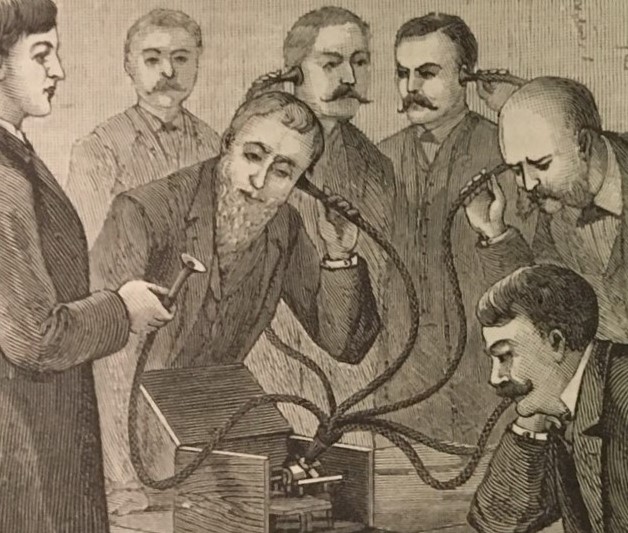
This device isn’t so much a six-person internet as it is…well, it isn’t that at all. It was however one of the first times where a group of people could share a recorded piece on their own earphones, though. This was Thomas Edison’s new photograph of 1888:
Thomas Edison–who in a furious few years in the mid 1870’s–invented the light bulb and the phonograph (the later coming as a direct byproduct on work done on the telephone and telegraph)..He celebrates his phonograph in the North American Review (May 1878) and then lists what he saw as the readymade faits acomplis of the phonograph, the first of which was weirdly/spectacularly worded: “1. The captivity of all manner of sound-waves heretofore designated as fugitive, and their permanent retention.” Do you hear a soundtrack with that description? I did. He proceeded with less fanfare: “2. Their reproduction with all their original characteristics at will, without the presence or consent of the original source, and after the lapse of any period of time. 3. The transmission of such captive sounds through the ordinary channels of commercial intercourse and trade in material form, for purposes of communication or as merchantable goods. 4. Indefinite multiplication and preservation of such sounds, without regard to the existence or non-existence of the original source. 5. The captivation of sounds, with or without the knowledge or consent of the source of their origin.
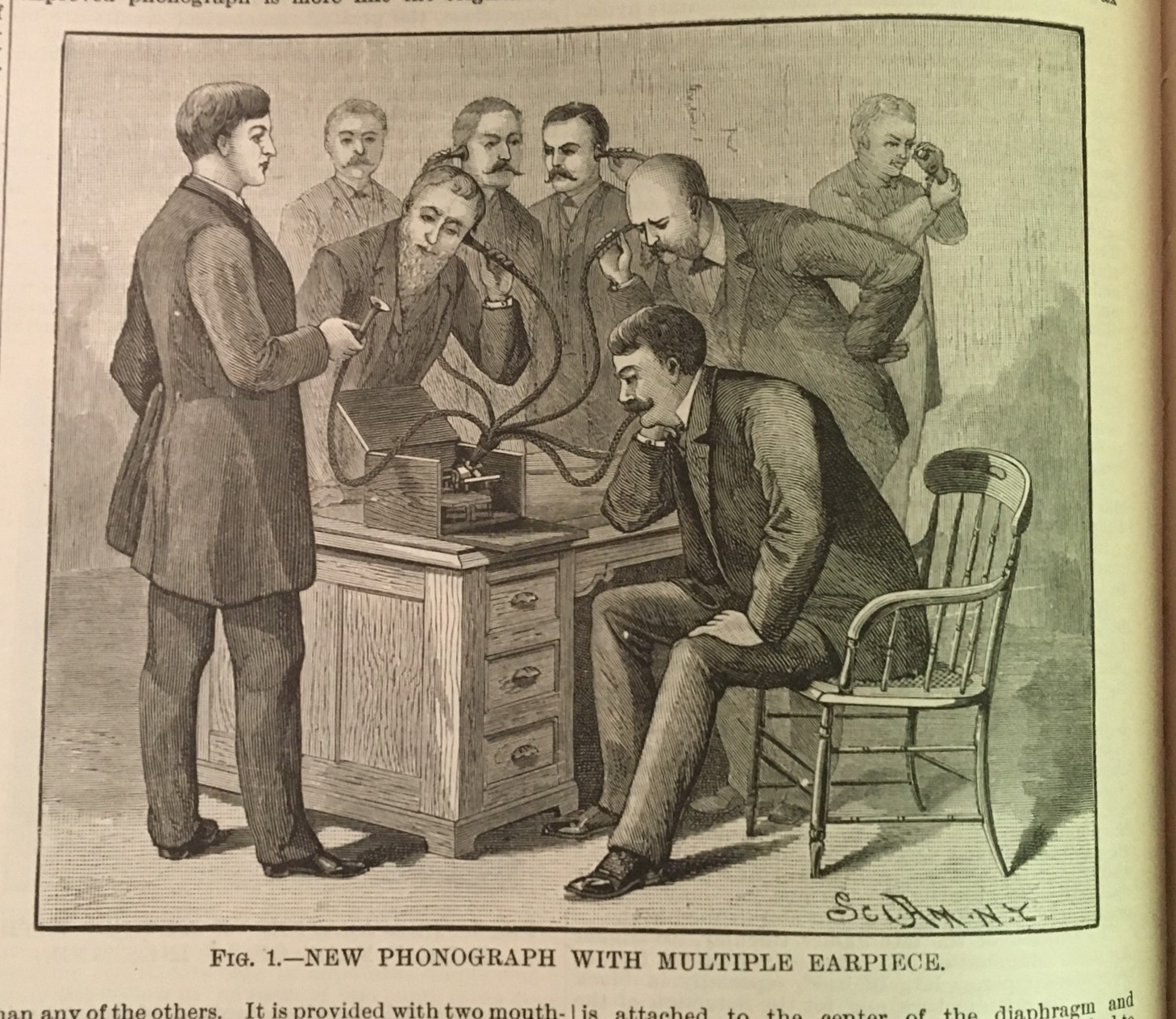
Edison then goes on to list what he saw as distinct “possibilities” for the use of the phonograph in the not-too-distant future. There are ten major prospects, the “bookish” aspect and the first major assault on the way we read is listed fourth (though he wasn’t necessarily weighting his list in any way). Some of the others in this list (all of which cam to fruition) include: 1.Dictation and letter writing—using the phonograph to record letters and correspondence, which was baldly aimed at the business and corporate trade as the machine was relatively difficult to operate and expensive. 2 Phonographic “books”. I noticed that that Edison did not change the word “book” in any way, even though the book is no longer there with the application of the phonograph, just the read and spoken words. “Books may be read by the charitably-inclined professional reader, or by such readers especially employed for that purpose, and the record of such book used in the asylums of the blind, hospitals, the sick-chamber, or even with great profit and amusement by the lady or gentleman whose eyes and hands may be otherwise employed; or, again, because of the greater enjoyment to be had from a book when read by an elocutionist than when read by the average reader.” 3. Family records. “For the purpose of preserving the sayings, the voices, and the last words of the dying member of the family [emphasis mine] as of great men the phonograph will unquestionably outrank the photograph.”4. Toys: “A doll which may speak, sing, cry, or laugh, may be safely promised our children for the Christmas holidays ensuing. Every species of animal or mechanical toy such as locomotives, etc. may be supplied with their natural and characteristic sounds.”
Edison continued, writing on the phonograph’s application for the study of elocution, speaking clocks, language preservation (as in documentation of the proper way of speaking a certain language, something that would’ve come in handy in the spike of disappearing languages at the end of the 19th century), telephone recorders and pedagogical lessons.
There was a lull in activity on the phonograph for Mr. Edison between the machine’s invention and 1888—this was the first major iteration/improvement the man made on his machine in nearly 10 years. The most significant reach was replacing the surface of the recording foil cylinder with wax, which was more reliable. In any event, in this picture (published in Scientific American Supplement in March 1888, we see the new instrument, equipped as it was for six private listeners.
JF Ptak Science Books Quick Post
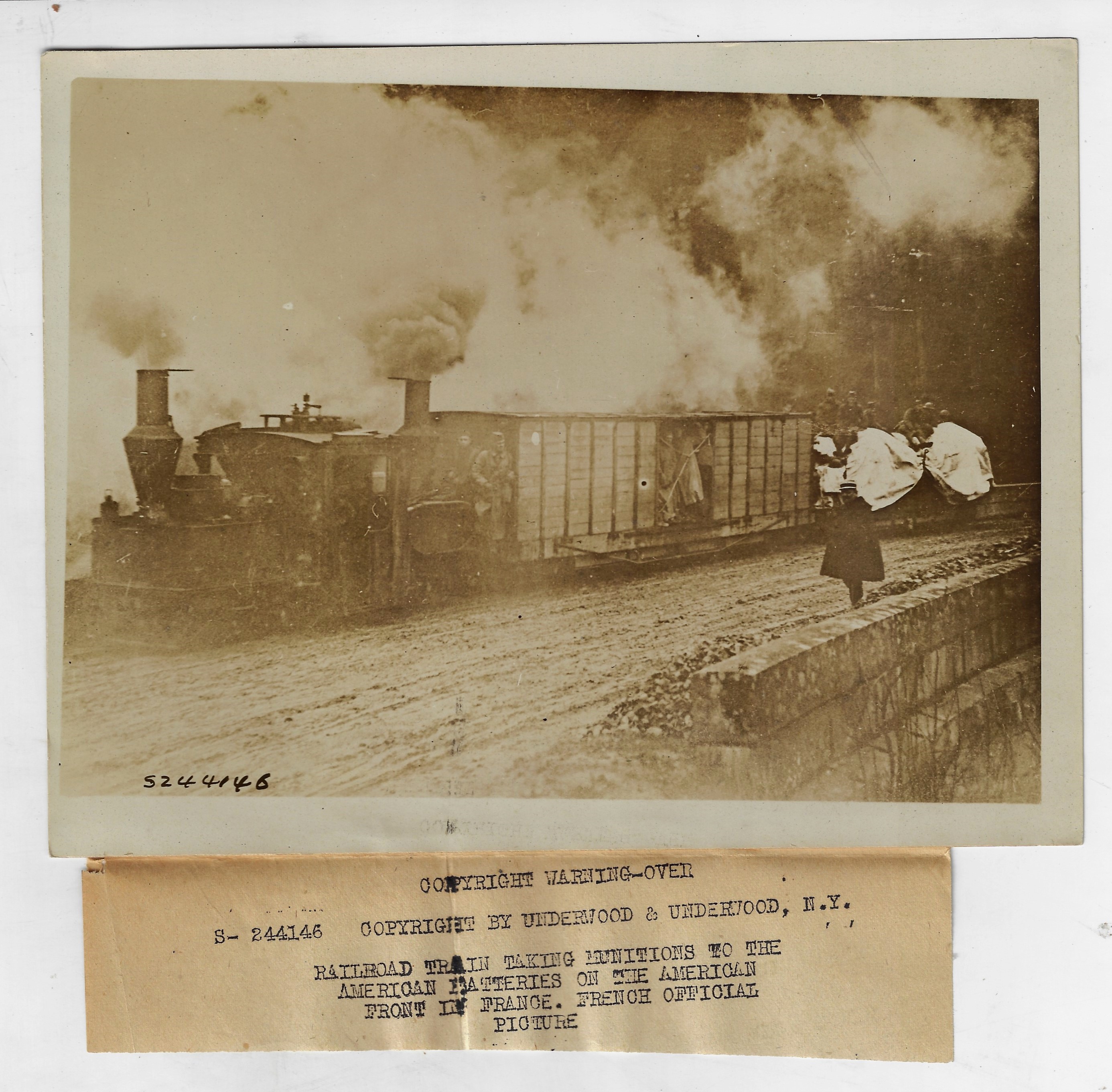
This is a New Photo Service image by Underwood & Underwood of a laboring narrow gauge train making its way along to the front with two cars full of munition and men, on its way to U.S. batteries at the front in France, 1918.
(The original wasn’t robust enough to pull much detail in the faces of the troops in the railway car doorway…I also couldn’t tell what they were standing on…)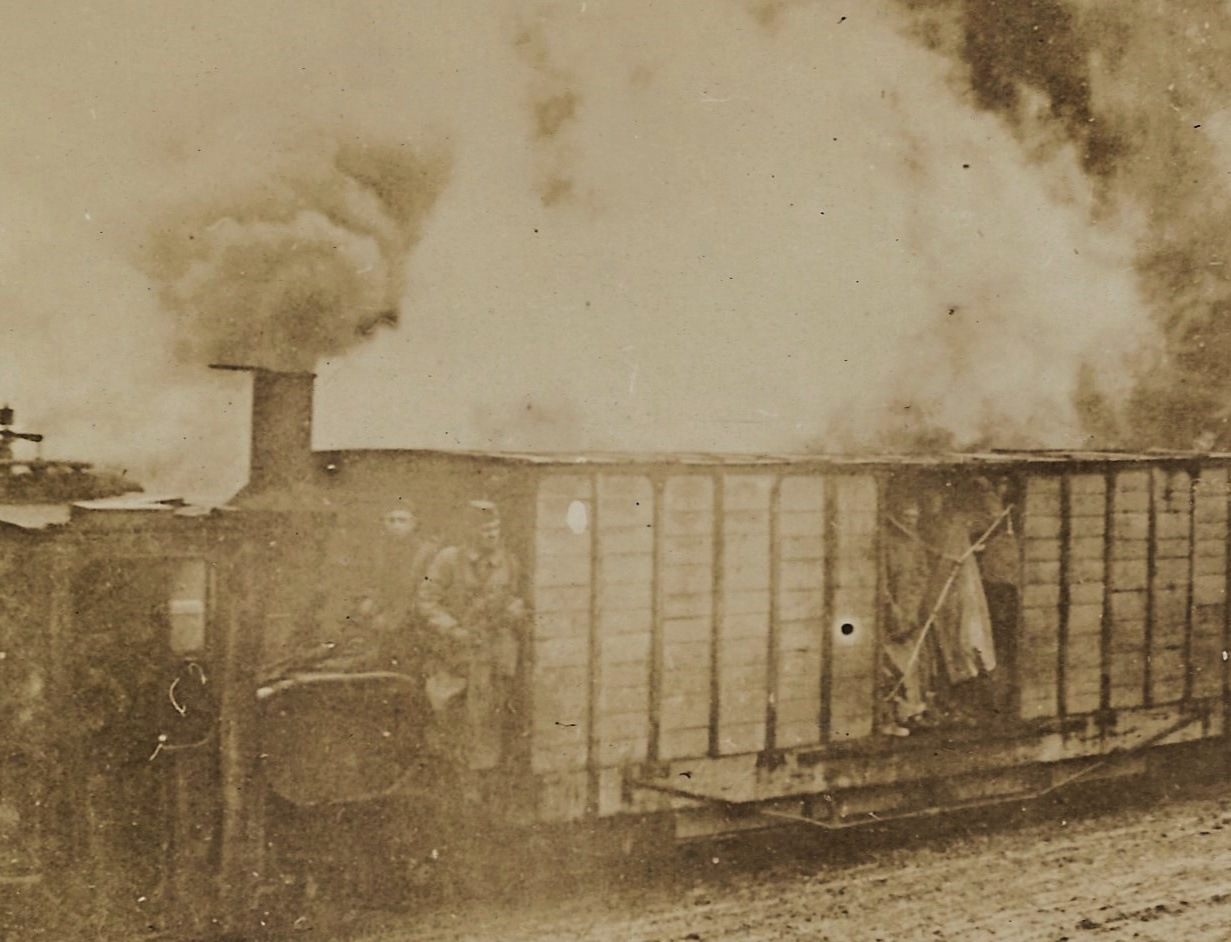
JF Ptak Science Books Quick Post
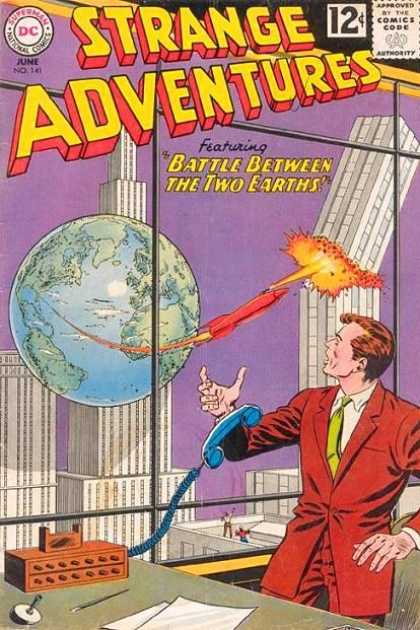 “Extra-Earths” is a very modest category on this blog with only five posts–they do not take up much space in the bulk of the 2,780 full posts and 2,400 “quick posts”. The subject rarely comes up, and no wonder! How many times do you see an image of Earth from Earth–and why would this be happening? Obviously the Earths that I am interested in pop into existence in the science fiction/comics/Outsider Logic worlds. There are some who use “extra Earths” as a unit of measure, as in “the global resources consumed would be the equivalent of an extra Earth’s production” or some such thing–those don’t work for me here, as I am just interested in the visuals of the extra of two Earths.
For example, in an earlier post, “The Battle of the Extra Earths: Mini-Extra-Earth Vs. Full-Sized-Standard-Earth (?)”, there is a full-on frontal assault by an Earth-mini, or some such thing (I have not read the story because, frankly, there is only just so much time to burn on these things and I was just interested in the artwork.)
Today’s example is more-or-less an Extra-Earth and it is close enough for me: this one appears in the September 1955 issue of Scientific American and is a big full page ad for Remington Rand’s UNIVAC. This computer was only about five years old or so at this point and Remington Rand was selling it for computing complex engineering bits, as with that screaming turbine. I assume that the turbine–which is inoperable in outer space of course–is coming from that Earth of the black seas, or something, and that by a very long stretch the UNIVAC has to be somewhere so I guess it could be another Earth. Yes, this really doesn’t fit, but it is close enough for me. (Also the business-end of the UNIVAC is not what looks like a monitor facing the machine’s main component-it is the longish podium-lookng piece opposite that “monitor”, which would be the “supervisory control panel”.
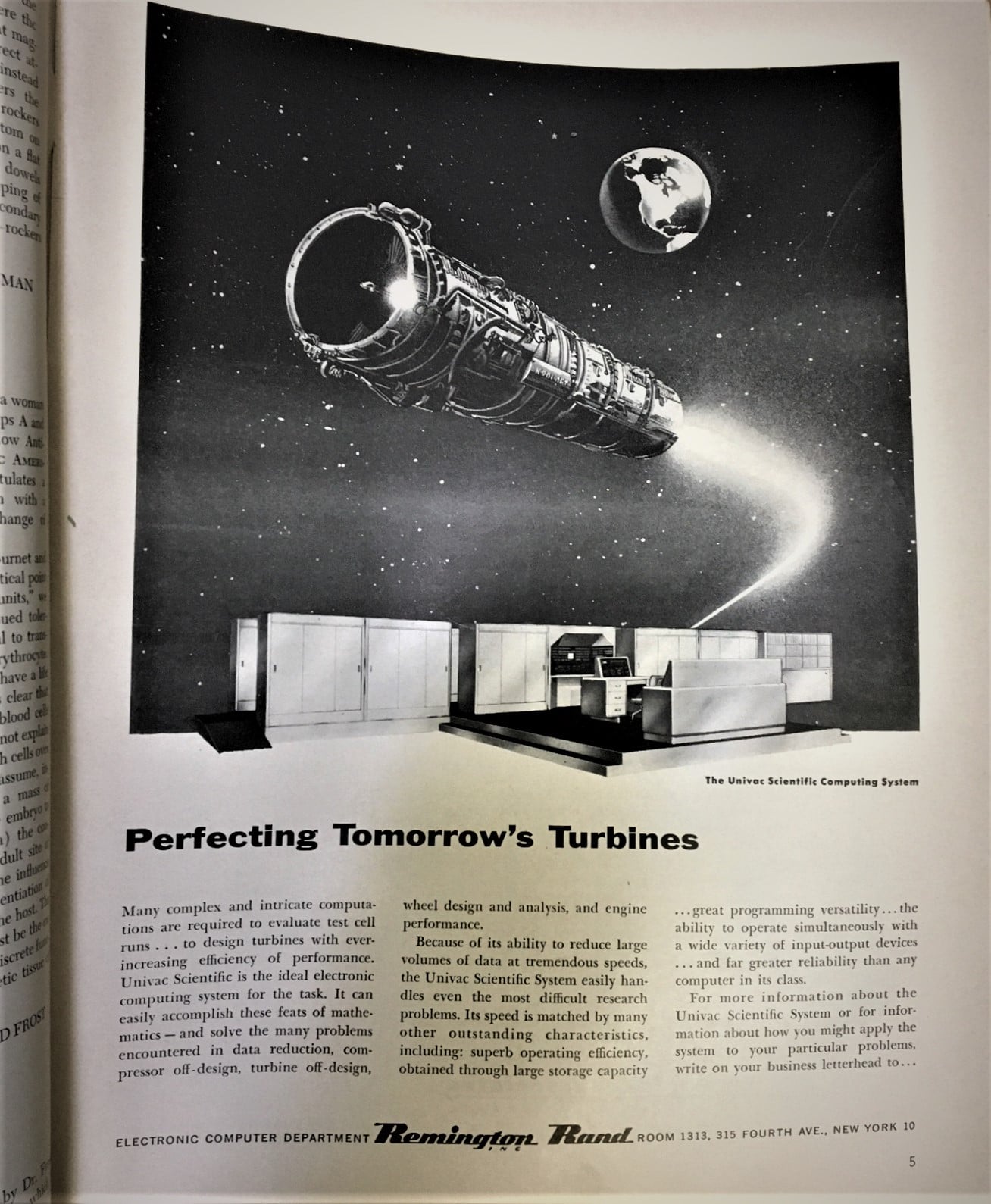
I’m told by our son Feliks that there is a “Counter Earth” in the Marvel universe, where there is an “Extra Earth” on the other side of the Sun, neither Earth ever in line of sight to one another…that seems to be another category of its own, too: things that exist but are invisible because they are on the other side of something, like the bizarro story of Nazis escaping to the far side of the Moon. But that’s another story.
JF Ptak Science Books Quick Post
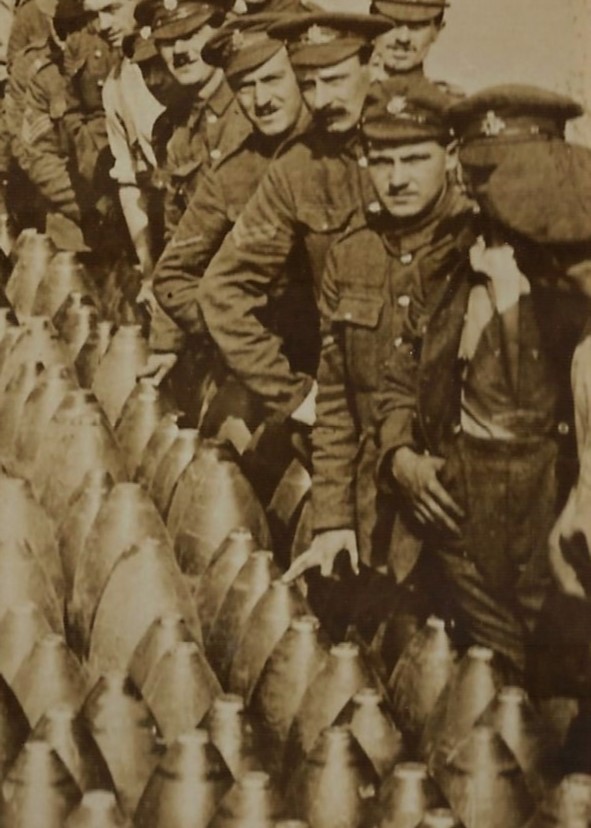
This is another in a series of quick posts on images from my WWI photo collection. Photographs were made by pools of photographers working for several different photographic news agencies, with the content of the images generally secured and approved by the Committee for Public Information (CPI), which came into existence by executive order under President Woodrow Wilson on April 13, 1917, and which was charged with the task of wining the hearts and minds of the people of the U.S. to gain public support for the war and for American participation. The way that many newspapers obtained the war images that they published in their papers was via a semi-centralized pool of war images. The newspaper would request, say, a photo of German prisoners, and would contact one of these photographic agencies—for example, say, the Central News Photo Service of 26-28 Beaver Street, NYC—and purchase the rights for republication, and then print it in the newspaper along with the story. In almost every case the photo would be accompanied by a caption mimeographed onto an attached piece of cheap paper, or have the information stamped on the reverse.
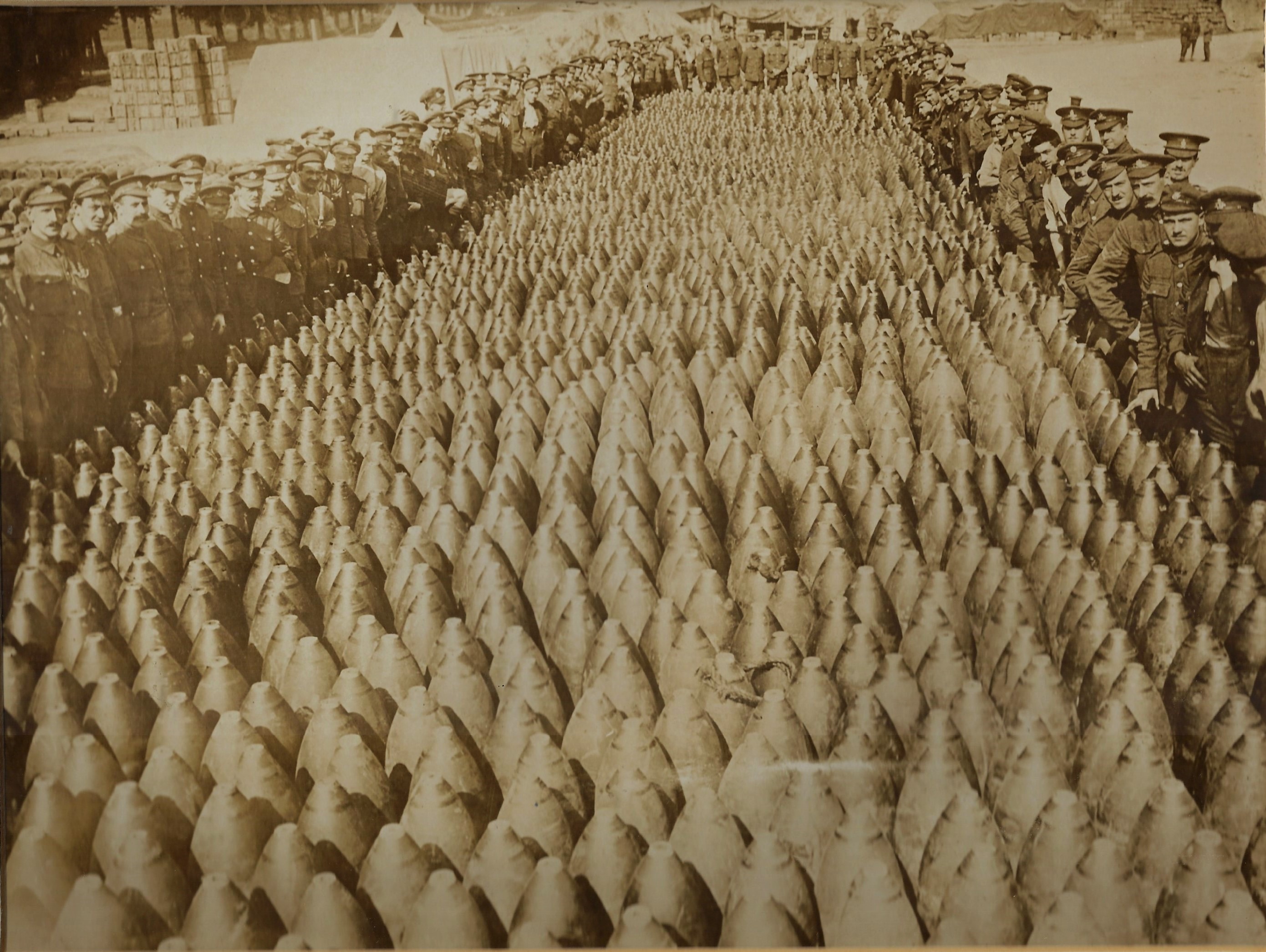
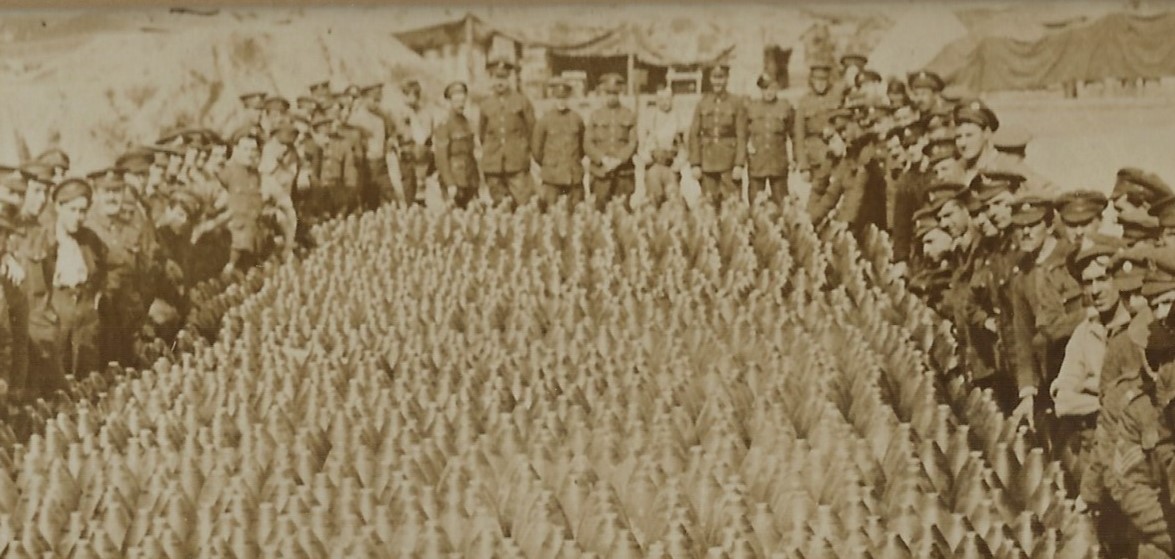
In this photo I’m struck by the depth and breadth of the shells, and that they would represent a not very long salvo by a battery of 25 cannon. I don’t know artillery, though it seems to me that these look like they are in the 200-300mm range. My guess is that we’re looking at 1500 or thereabouts rounds, which distributed to just 25 cannon would be 60 each which means that these shells could be used up in an hour or two of firing.
I’m guessing that something like 1 billion artillery shells were fired during WWI (this would be on the low end of estimates, I think) which means that what you’re seeing here is .0000015% of the total. For comparison .0000015% of the population of the U.S. would be 525 people.
The other noticeable thing is that of this group of soldiers (I reckon there’s a hundred or so who are directly lined up against the shells) there are only 5 or 6 who are touching the shells.
Estimating that the standing shells occupied 500,000,000 sq ft on base they would fill the floor space of 344 Pentagon Buildings.
JF Ptak Science Books Quick Post
I decided to share the entire Ploish Labour Fights for Freedom, Equality, Independence because it is pretty scarce and its content is very powerful and deserves to be read. It is only 12 pages long but there is a lot in there. The pamphlet was printed in London by Liberty Publishers in 1944, though I cannot tell if it is before/during/after the Warsaw Uprising. There photo on the front cover (“Graves of Warsaw’s defenders in one of the public squares…”) may reference those killed in the Uprising, so it may well be printed in August at the beginning of the battle, as there is no direct reference to it in the text. By the end of the Uprising there were 10,000 of these defenders who would be killed as well as 200,000 people living in the city.
Of particular note here are the four pages devoted to the Nazi/German treatment of children. There are also specific references to the deathcamps/KL Treblinka, Majdanek, and Oswiecim (Auschwitz).
(There is an impressive lineage for libraries holding this title as found in WorldCat. Of the 12 copies located worldwide, only three are in the US (NYPL, Harvard, Notre Dame); the others are found in England (University College, LSE, British Library), Israel (Yivo and National Library), France (Bib Nationale, Paris), Poland (Nardowa and Dukat), and the IISG (Amsterdam).)
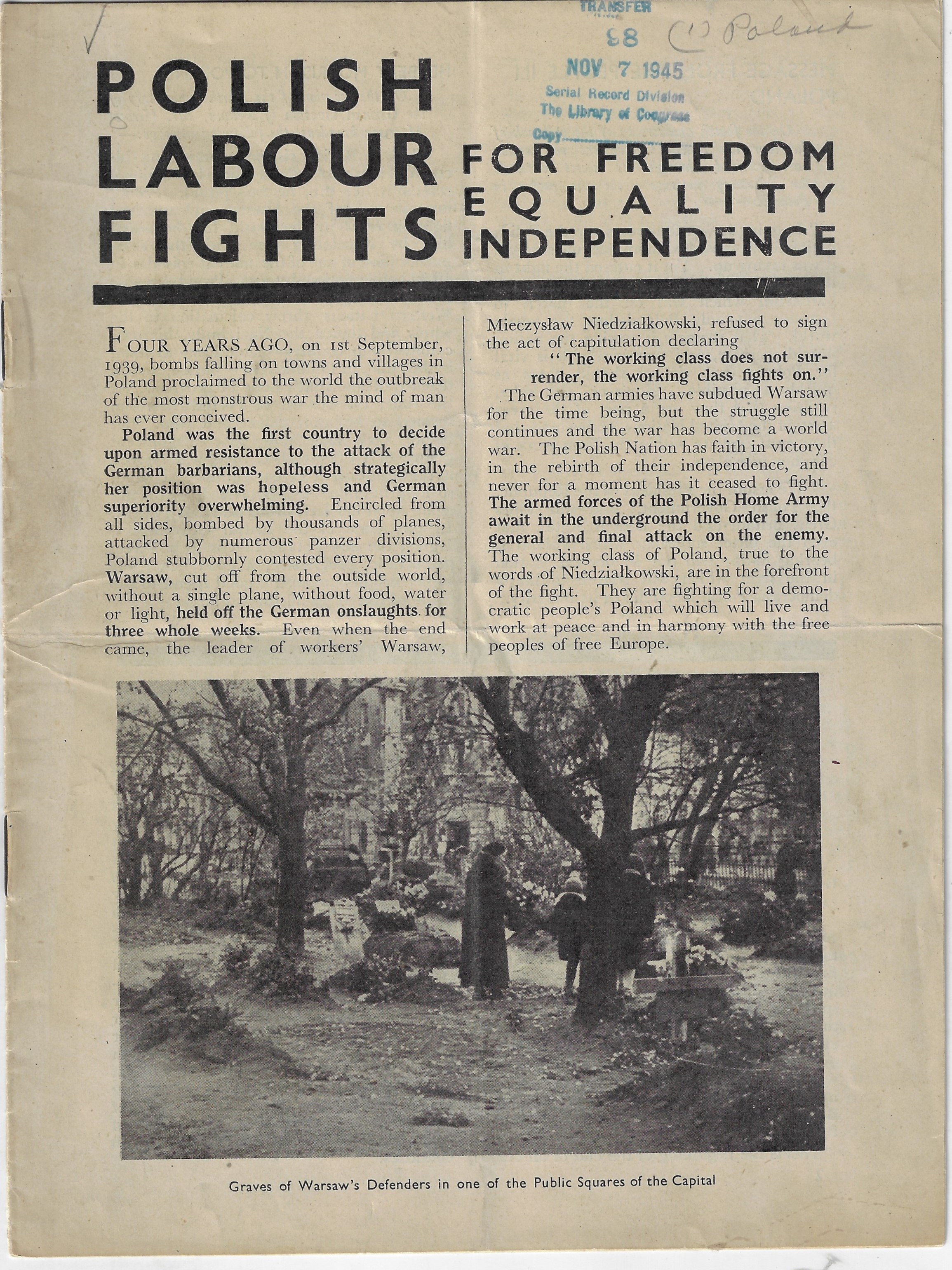
This is an ocr of the original—all bold appeared in the original.
CHILDREN ARE DYING
“It is not surprising, therefore, if among the Polish children, who lack food, clothing and warmth in the winter, and who lead the most wretched existence, epidemics…”
CHILDREN IN PRISONS AND CONCENTRATION CAMPS
“The Polish children are not even spared the grimmest forms of persecution. They share with the adults the sufferings which the Germans are visiting upon the Polish nation. They crowd the prisons and die at the hands of executioners, together with the adults.”
“Between 11th and 28th November, 1942, for example, a large number of women, together with 60 children, were brought into the Pawiak prison in Warsaw. Children from 12 years of age and upwards are being sent to the notorious camp at Oswiecim. Children under 12 sent to Oswiecim are not admitted to the barracks. They are killed on the spot.”
“From the very beginning of the occupation the Germans have made it clear that, even when dealing with children, they will not hesitate to employ the severest measures. Immediately after the September campaign in Poland the Germans murdered, in Bydgoszcz, nearly one hundred Polish boy scouts, who faced the firing squad singing the Polish national anthem. In application of the principle of collective responsibility, when many Poles perished in mass executions for deeds they never committed, children died with their parents, either shot or burned alive.”