A Daily History of Holes, Dots, Lines, Science, History, Math, Physics, Art, the Unintentional Absurd, Architecture, Maps, Data Visualization, Blank and Missing Things, and so on. |1.6 million words, 7500 images, 4.9 million hits| Press & appearances in The Times, Le Figaro, Mensa, The Economist, The Guardian, Discovery News, Slate, Le Monde, Sci American Blogs, Le Pont, and many other places… 5000+ total posts since 2008.

  • The History of Lines: Representing the Unknown (1828)

    JF Ptak Science Books   Quick Post

    The History of Lines series

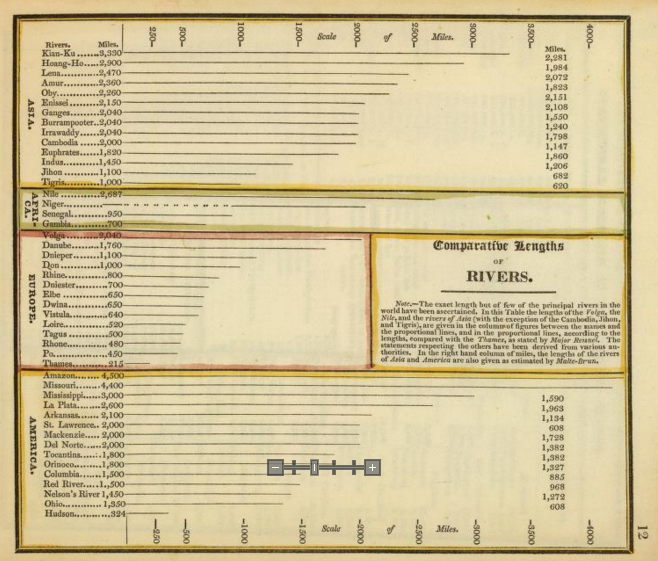
    This is another entry in a series of posts on maps and the representation of quantitative data, this one being early in the development of this genre of imagery.  The map (a little guy at 5×7″) is from An Atlas Accompanying Worcester’s Epitome of Geography, published in Boston by Hilliard, Gray & Co., in 1828. 

    Comparative River Hilliard detail

    [Source: Images of the Hilliard map found at David Rumsey’s map website, here: http://www.davidrumsey.com/luna/servlet/s/xz62g8]

    In the 46 river lengths displayed here, 45 have distinct measurements; one–the Niger–does not, or almost does.  The indistinct and suggested delineation shows what was know of the river, and what wasn’t, with bits on either side of the middle section (reached and surveyed by the fabulously-named Mungo Park, 1771-1806, at the turn of the century). Much of the Niger wasn’t well known at this point, though it had been plotted in part since antiquity–with all of that the overall length was well approximated (very close to its nearly-2500 mile length, the main river in West Africa).  The line/dot combination was an honest approximation of displaying the river’s length, and not often seen.  
    Rivers comparative Hilliard

  • Design: Showing a Lot with a Little

    JF Ptak Science Books  Quick Post 


    Crowns 277

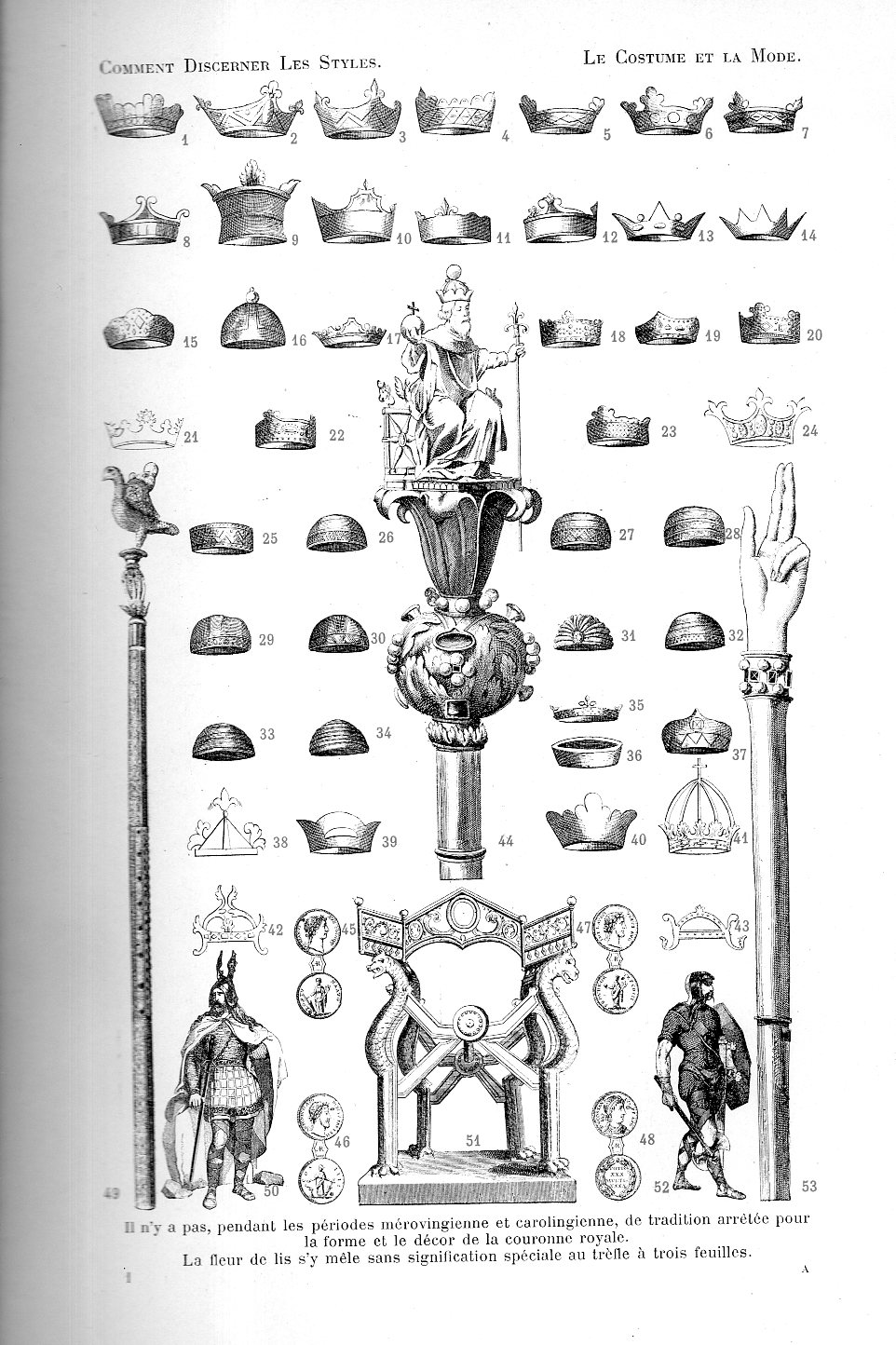
    This detail of a couer du sacre/hand of justice was a sceptre used in coronation in the years shortly after the reign of Charlemagne (d 814) and Charles le Chauve (d. 877, and sounding so much nicer than Charles the Bald). It is the last illustration on a 53-item engraved page displaying ancient crowns and tiaras in the very useful Comment Discerner les Styles du VIIIe au XIXe Siecle…etudes sur les formers et les Variations dans le Costume et la Mode, by L(eon) Roger-Miles, volume III, and published in Lyon around 1900.  Roger-Miles (1859-1928) was a fastidious presenter, and over the course of his work illustrated several thousand items of clothing and accoutrement. The reason I like this book so much I think was Roger-Miles’ success in arranging all of these bits on relatively limited space, and doing so in a clear, articulate, and artistic manner.  Here’s the full page of illustrations from which the sceptre was taken:

    Crowns 276

    [This is not the cleanest scan, but it is a thick book, and doesn’t want to be opened too broadly…]

     Even though there is a lot of material and many drawings on this sheet, there is still a very good amount of clean, unused space. 

  • Battle Tech–Armored Vehicles, WWI

    JF Ptak Science Books  Quick Post  

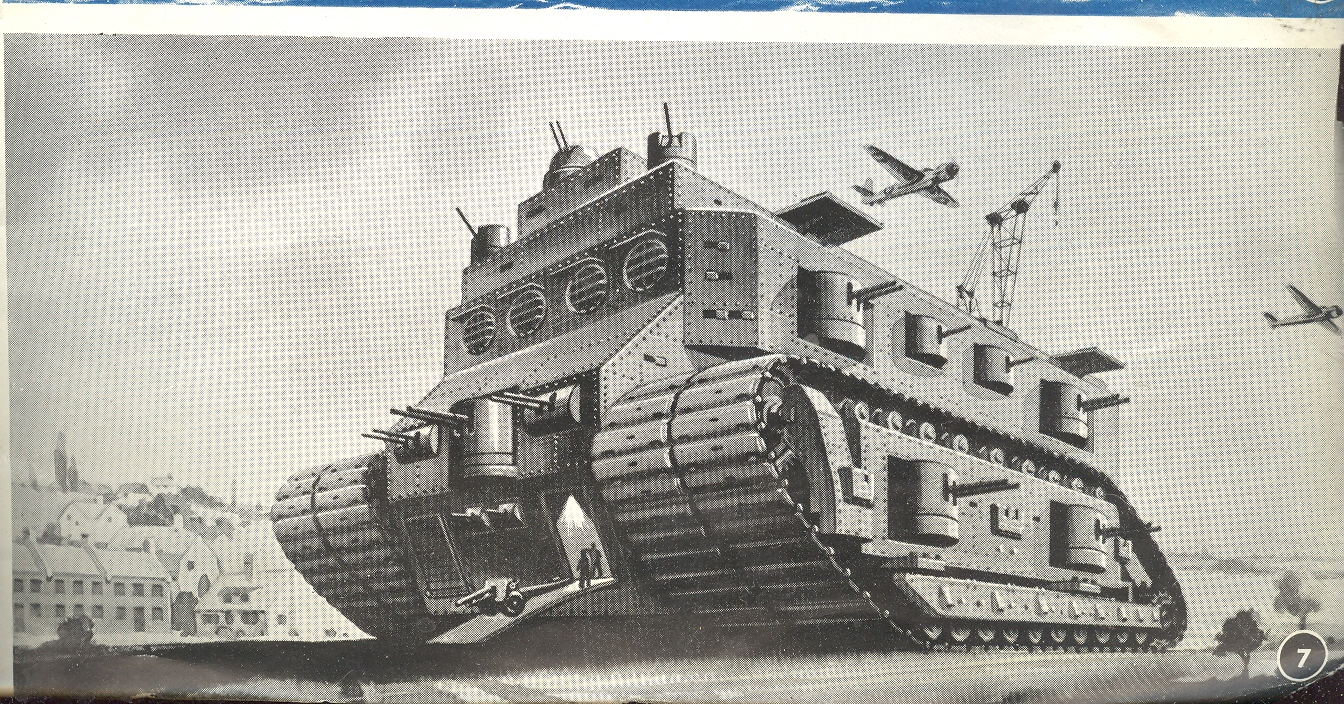
    I’ve written earlier in this blog on fabulosity in land battleships though not so much about the real thing.

    • For example, in “Movable Maginot: a Feast of Morbidly Techno-Gigantism”,  https://historyofideasblog.com/thesciencebookstore/2012/12/moveable-maginot-a-feast-of-morbidly-techno-gigantism.html, as well as others:

    000--win--land tank

     [Also “moveable maginot” is a phrase that does not show up online, except for here.]

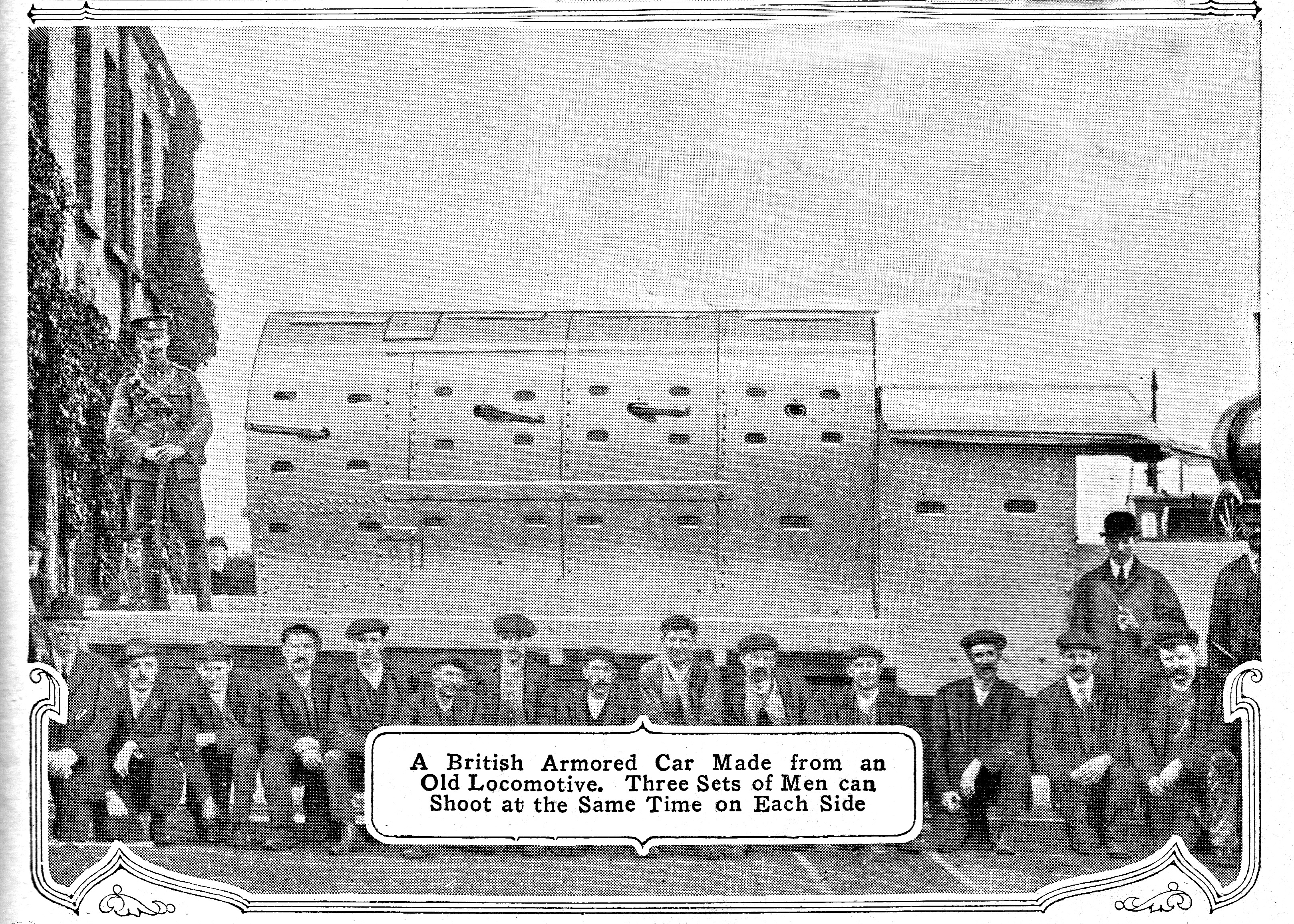
    Moving away from the mega-behemoth of imagination, let’s have a look at this loco-tank as it was contrived and constructed in 1916, with the photograph appearing in Popular Mechanics Magazine for November, 1916 (midway through WWI).  

    WWI Project armored loco272

    ·Posted by :

    ·in:

    —
  • History of Lines: Circles, Cartesian Vortices, Tree Rings, or ?

    JF Ptak Science Books  Quick Post

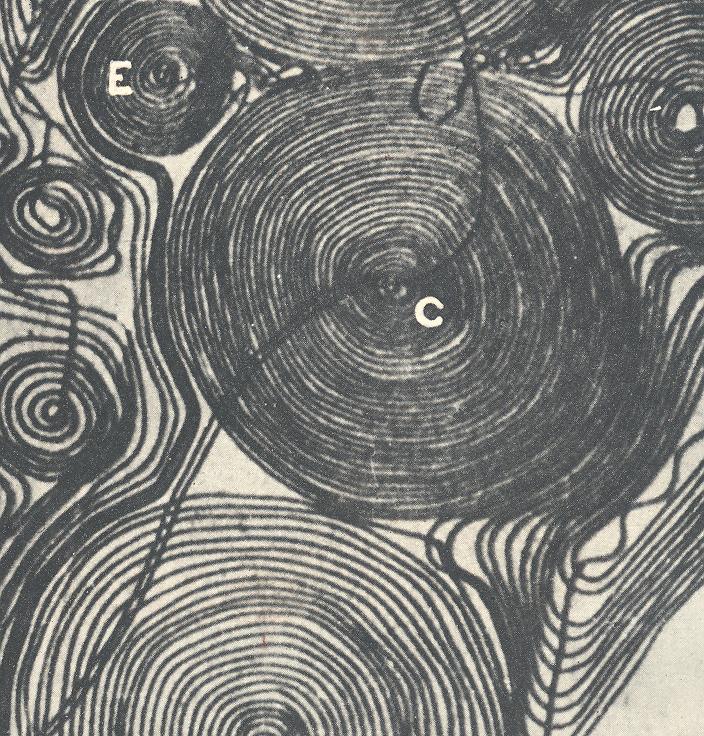
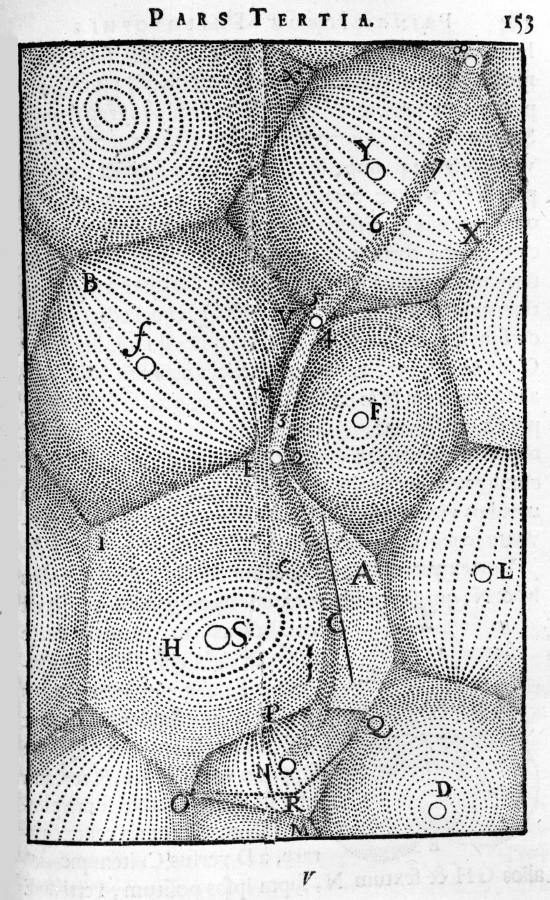
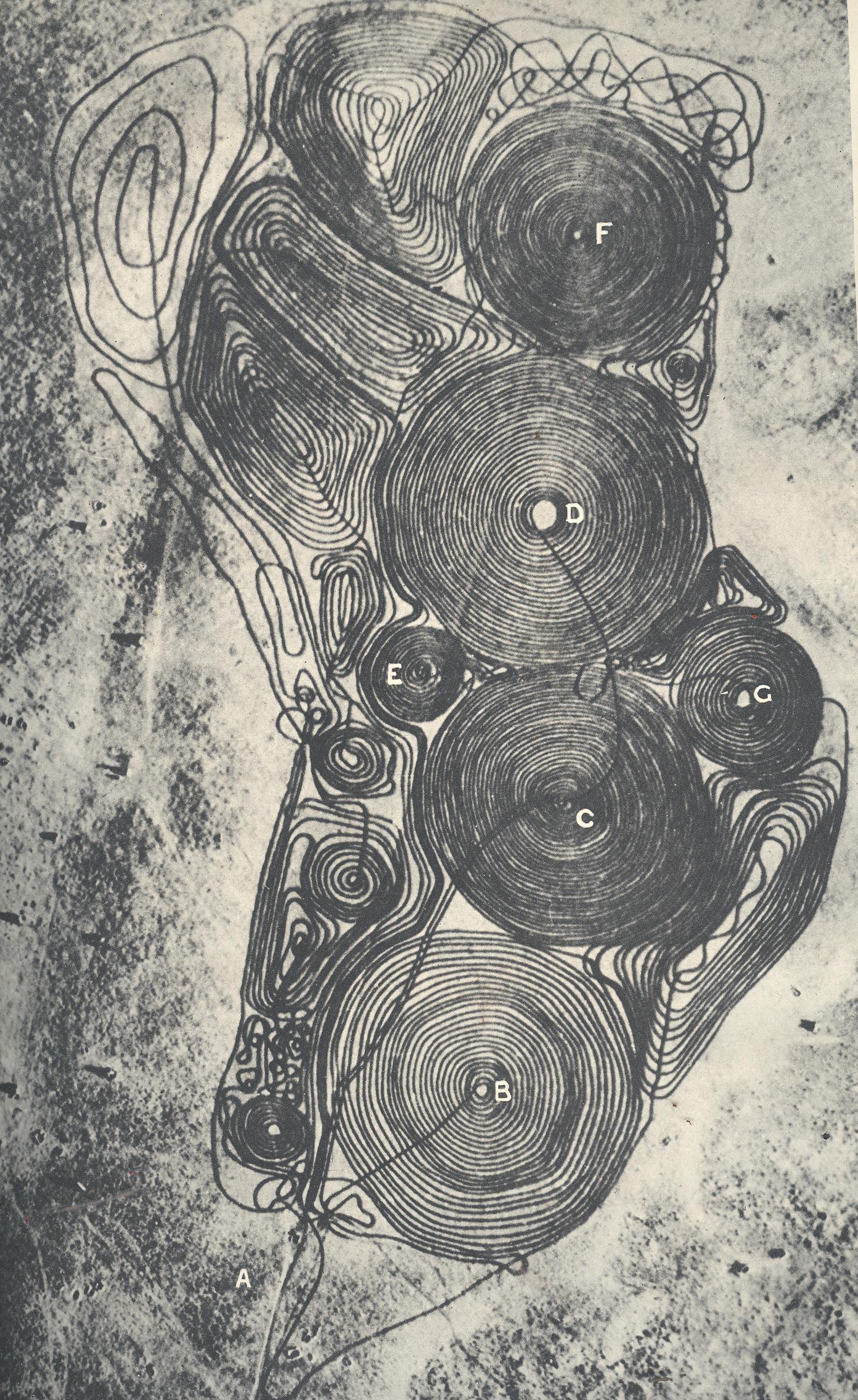
    At first (and second) glance this image comes very close to looking like a display of Rene Descartes’ illustrated cosmology (featuring his vortices (“tourbillons”)).  The images are indeed similar–first, the mystery image, followed by one of the Cartesian tourbillons (from Principes de la Philosophie from 1644):

    1--may 14 circles det

    [Primary image, detail.]

    And the image from Descartes:

    DEscartes tourbillons

    1--may 14 circles

     [Primary image, receding.]

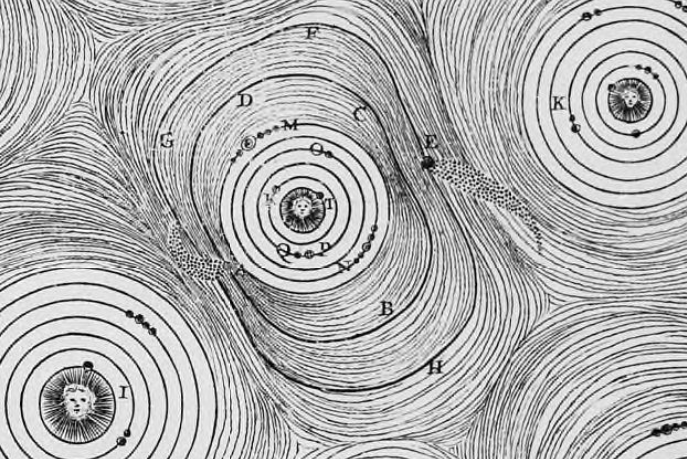
    Is the primary image another incidence of the Cartesian cosmology as we see in the original and in other places, like in Nicholas Bion (in 1710)?

    Bion tourbillons detail

    Surprise!

    The primary image in question is actually a plowed-over landing strip, the place done in by German sappers sometime in 1944, to render the airfield useless once the Germans pulled back.  In any event the image struck me as being similar in design to Descartes, though for the Germans it represented more a catastrophic collapse more than anything else.  

  • There Was a Cubic Man and he Walked a Cubic Mile… (1917)

    JF Ptak Science Books  Quick Post

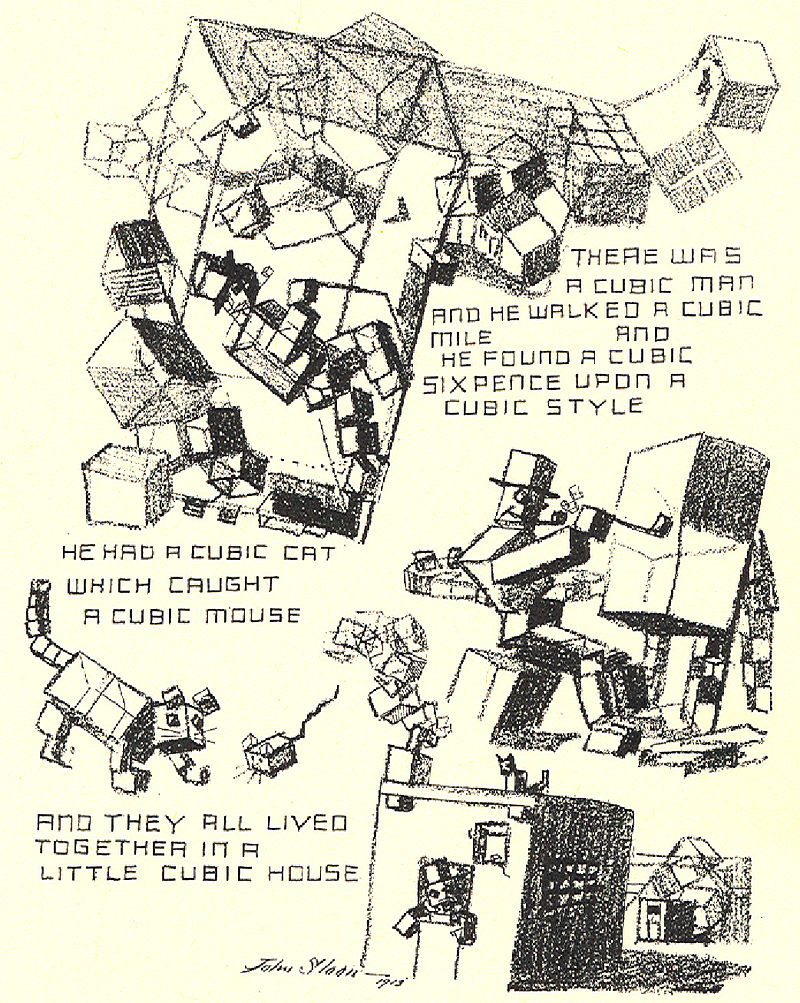
    • “A Slight Attack of Dimentia Brought on by Excessive Study of the Much Talked of Cubist Pictures in the International Exhibition in New York.”


    Cubist cartoon

    This is John Sloan’s illustration in The Masses summing up the legendary Armory Show of 1913.

    Between 17 February and 15 March 1913 there occurred in the huge building at Lex between 25th and 26th streets in NYC–the monumental International Exhibition of Modern Art at the armory of the Sixty-Ninth Regiment, the Fighting 69th (so called by Robert E. Lee), the “Fighting Irish”, the famous Armory Show, the Armory Show.  This was the first large public exhibition of modern art in America, and even though the 69th regiment had seen five wars (at least, so far as I can tell), the armory itself hadn’t really seen one, until 1913, when battle lines were drawn among the Cubists and within and without the confines of the modern” part of modern art, the sensitive honor of the nature of art laid bare.

    • Here’s a good source for other caricatures of the show:  http://armory.nyhistory.org/category/artworks/

    Interestingly, Sloan was one of the organizers of the show, as well as a contributor–his artistic orientation was far from the base that made the show so famous. Sloan (1871-1951) was on his own a wonderful artist, of a different school, and one of my favorites depicting city/street urban life of the 1920’s. 

    His cartoon for the radical The Masses is interesting and poignant, and although it pokes fun at the Cubists, it is respectful, and intriguing (in spite of the clever “dimentia”). There were a number of other artful interpretations of the vast modernity of the show that weren’t nearly so kind, not understanding or appreciating the Abstract and Cubist work.  

    ·Posted by :

    ·in:

    —
  • A Few Beautiful 19th Century Maps of Water

    JF Ptak Science Books  Quick Post

    “A current such that, although they had great wind, they could not proceed forward, but backward and it seems that they were proceeding well; at the end it was known that the current was more powerful than the wind.”–Ponce de Leon, the first to record the Gulf Stream, 1513

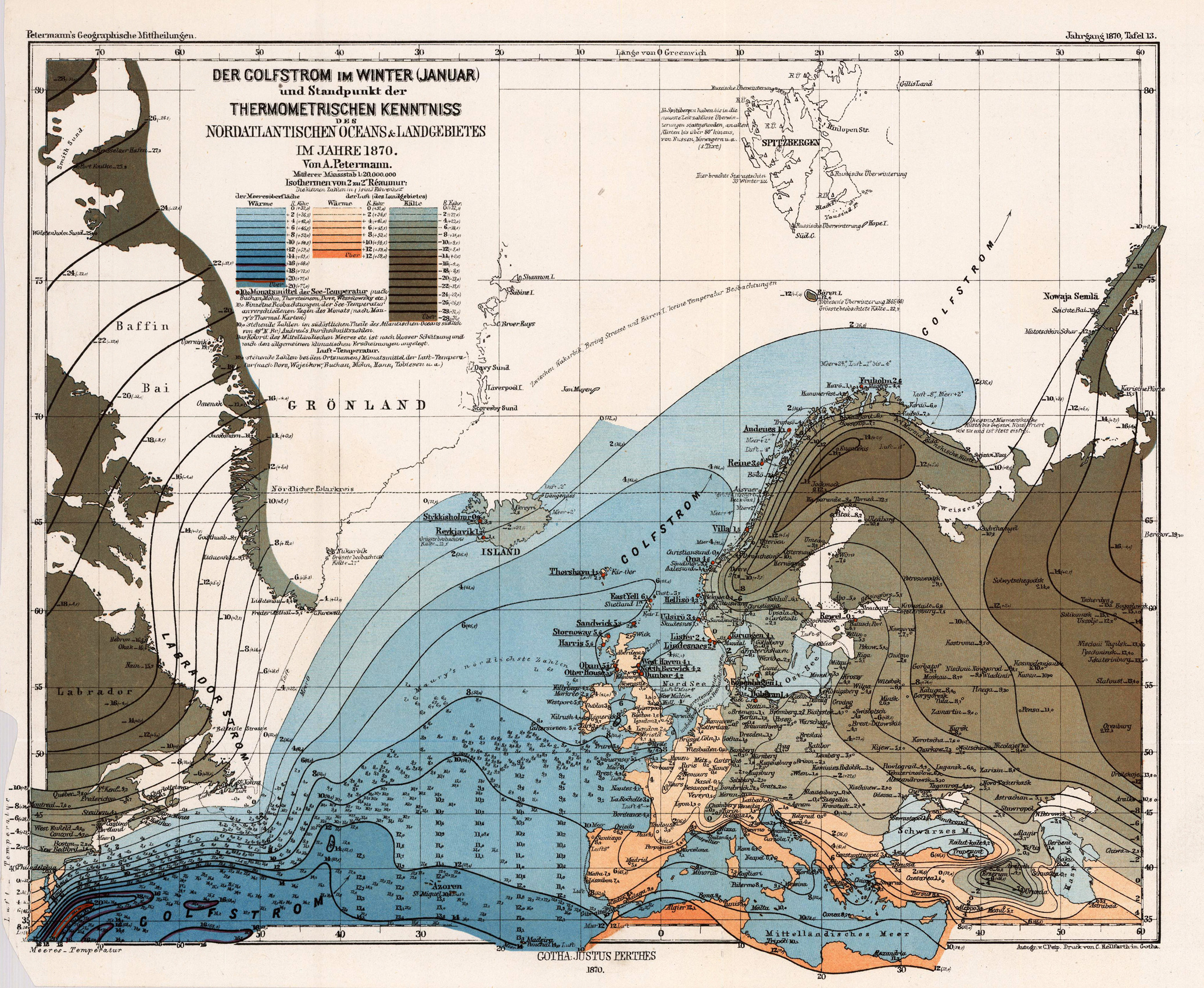
    The first map of the Gulf Stream was created by the venerable Benjamin Franklin in 1769–a smart and busy man.  101 years later came this beautiful map, “Der Golfstrom im Winter (Januar) und Standpunkt der Thermometrischen Kenntniss des nordatlantischen Oceans & Landgebietes im Jahre 1870” by A. Petermann and published in Gotha by Justus Perthes in 1870.  It is highly detailed, and sumptuous, with a certain depth to it–which is a good thing, because it was showing a lot more data than its great grandfather map could possibly have imagined.  For as extraordinary as Franklin’s map was, it was equally astonishing how much data was collected from the mid 19th century onwards, and the beauty of this map displays a lot of it, including the temperature of the water at its different depths, the direction and the velocity of the currents, including the depth of the water, and the like. 


    Map Gulf stream

     [Source: Antiquariat Reinhold Berg, here: https://www.bergbook.com/images/23212-01.jpg]

    The next beauty is a depth and temperature map of the Atlantic, “Wärme-Vertheilung im Nord-und Südatlantischen Ocean. Nach den Messungen der Challenger Expedition von Portsmouth bis zur Capstadt 1872/3”, again by A. Petermann, and published by Perthes in Gotha in 1874 (in Mihhheilungen us Justus Perthes Geographischer anstalt uber Wichtigue Beue Erforschungen, vol 20). 


  • What 1,104,890 British Dead of the Great War Looks Like

    JF Ptak Science Books

    Blogmarch
    The Illustrated London News
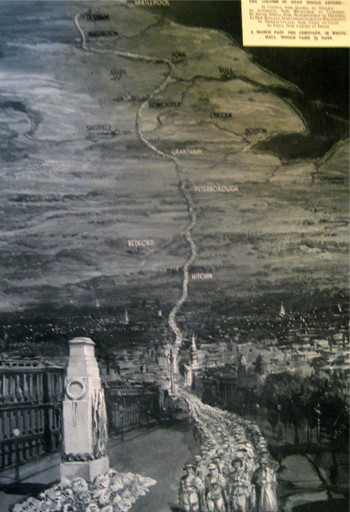
    published this very sobering image showing the general reader in London in 1933.  It is entitled “In Memory of the 1,104,890 British Dead of the Great War”, and was drawn by D. Macpherson.  It very graphically represents all of the war dead of the British Empire of 1914-1918, depicted as a line of men, four across, extending from London to Durhham. 

    The column passes from London through Hitchin, through Bedford and Peterborough and Grantham, past Sheffield and Leeds and York, and then on to Durham.  An extraordinary column of the war dead: 900,000 of the dead were not soldiers at the beginning of the war, but they sure died that way, and this map shows them all in a line, marching from  a point 269 miles distant.

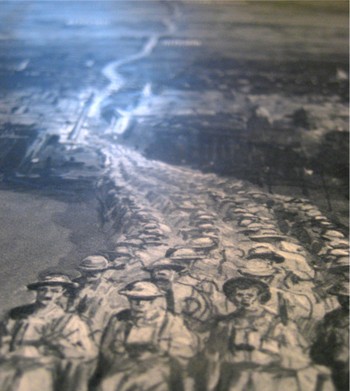
    And a detail of the column:

    Blogmarching_2


    ·Posted by :

    ·in:

  • A Note on the Future of the Future, 1911

    JF Ptak Science Books    Post 2560
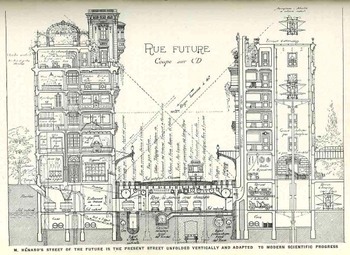
    Bloghenard029

    This  cross section illustration (“Rue Future”/Future Street) is from Eugene Alfred Henard’s1 (1849-1923) article, “The Cities of the Future”, from American City, Volume 4, January, 1911. In this article Henard (architect of the city of Paris and from 1880 a life-long employee and advocate of public works in that city) looks into the future and sees the movement towards underground (or enclosed) vehicular traffic, “smart” buildings, pneumatic tubing for vacuum cleaners (“almost sure to come into general use”), an improvement in the system for water delivery and removal, replacing coal with natural gas, and more. He lays out a plan to implement his idea that, if implemented in the city  of Paris, would cost $420,000,000 (or approximately $15 billion in 2006 money) over 100 years. [This part seems a little off given that the area for public roads alone in Paris at this time was 3,700 acres–nevertheless this was an interesting appearing plan, a significant portion of which has found its way into building and community planning albeit on a far smaller scale].
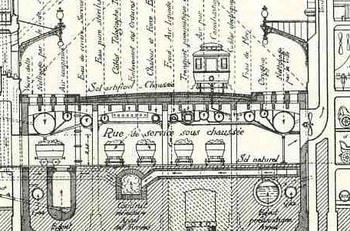
    Bloghenard029_detail

    Henard was also acutely interested in the future traffic problems of Paris and other major cities, proposing revolutionary radial traffic patterns for moving cars around major metropolitan areas–which was really quite visionary as the mass production of automobiles had not yet really taken place–certainly automobiles were far more common by 1911 than 1905, but their numbers would be vaulted higher int he next decade with the first true approach to assembly line production of automobiles, making them affordable to the millions.  His plan for a ring-lime system around the city of Paris was influential to some of the ideas in the early American planning reports for San Francisco and Chicago by the great Daniel Burnham.

    What is particularly interesting for me in the Henerad plan is the room that he left for his future’s future–he attempted to make his plan adaptable for the time when the future he was writing about was becoming the past.  And so he was leaving room in his underground plans (in particular) to accommodate some of what the future might hold in store for his city, leaving unused spaces and tunnels, so that the city planners in the future would not have to go through the enormous expense of putting these things in for themselves.  Now that is future-forward thinking. 

    Notes:

    1.  Henard studied at the Ecole des Beaux-arts, graduating from there in 1880.  For a decent short bio of the man see the Wiki entry, here: https://en.wikipedia.org/wiki/Eug%C3%A8ne_H%C3%A9nard

     

  • Putting “Art” into “Arithmetic” (1836)

    JF Ptak Science Books  Quick Post

    MultiplicaTION 292

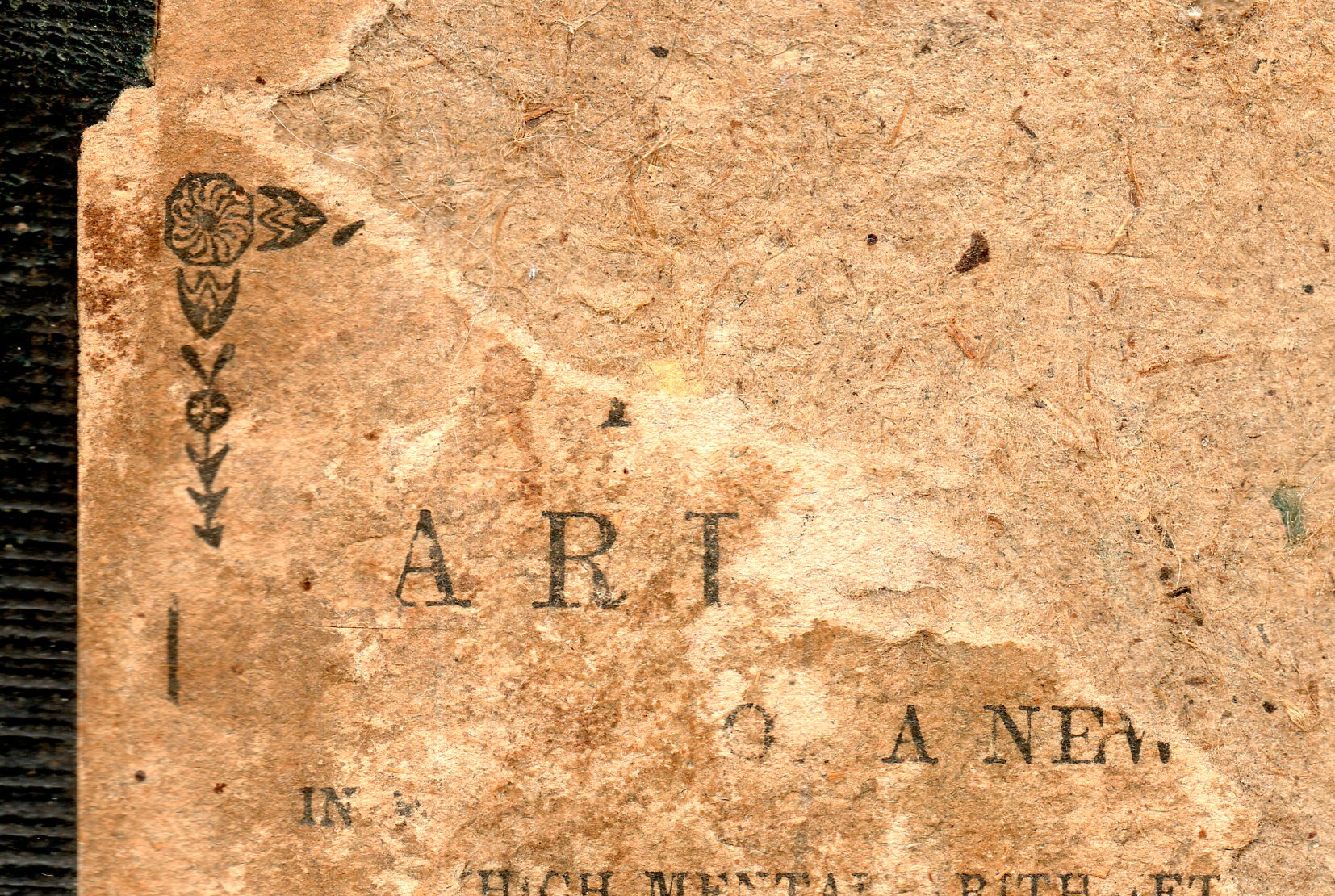
    I have a little pocket-sized book at home, a fine little arithmetic book by Roswell C. Smith, Practical and Mental Arithmetic on a New Plan in Which Mental Arithmetic is Combined with the Use of the Slate–it was published in Hartford, and this copy was printed in 1836, in its every energetic 53rd edition.  Mr. Smith wrote himself one fine and popular arithmetic tract, and the book is absolutely loaded with all sorts of info that could see a person through most aspects of figuring-life for years to come.  My copy is very very well worn, and although it is missing pieces of the paper cover and the surface of the books looks like the Somme, it is actually very smooth–worn and rubbed smooth from years of use.

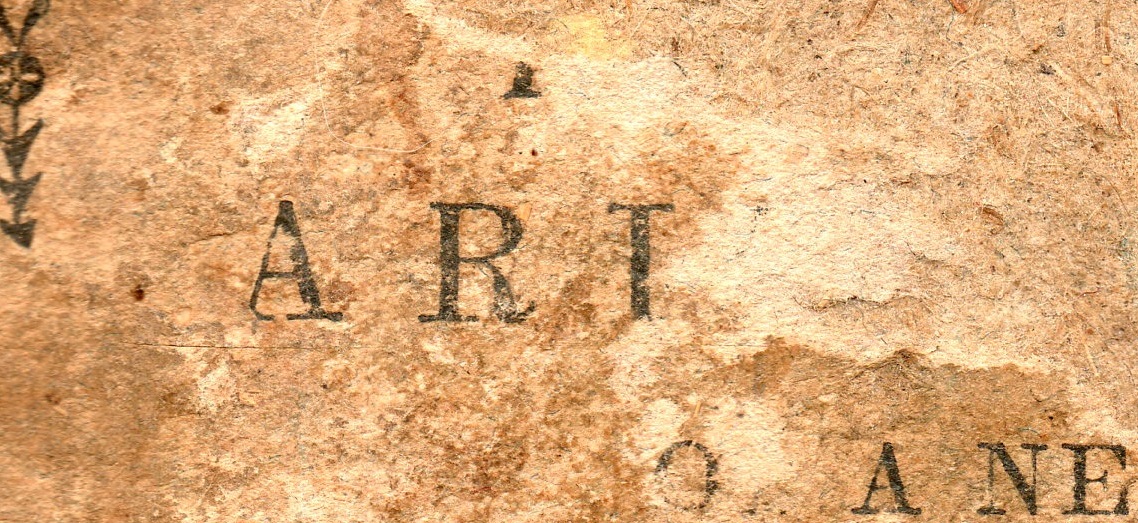
    And just about the only word left visible from these years of being handled by little hands is the fragment “ART” from “Arithmetic”, which I thought was a lovely thing. 

    Multiplication290

    As a matter of fact there is plenty in this books that is perfectly fine and applicable at the rudimentary math stages–of course some of the units of measurement have long since fallen into obscurity (even by the late 19th century) the lessons remain useful, if a little stiff, especially when you’re asked to work out some of the results on your slate.

    But the issue remains that this tidily compacted work is a pretty thing to work with:

  • Is the Dust Jacket Art Better than the Book?

    JF Ptak Science Books  Quick Post

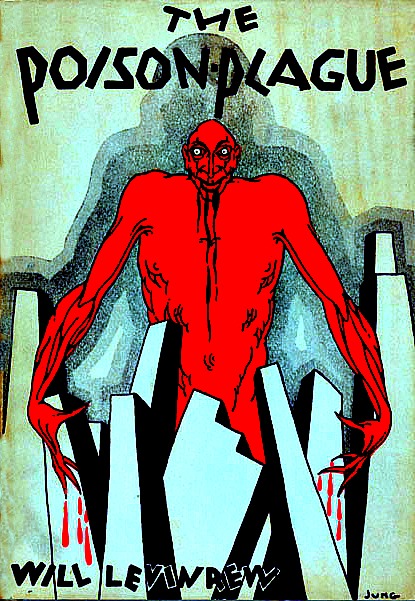
    The Poison Plague was written by Will Levinrew (William Levine) and published in 1929, and by accounts that I have seen is the birthplace of an early and very competent scientist/detective, Prof. Herman Brierly. I don’t know much about detective fiction from this time period, but I do like this just jacket artwork, and from the little bits that I have been able to find of this novel online I can so far safely say that I like the dj image more than the text.

    Books poison plague

    The stories for The Poison Plague were evidently serialized in Argosy–here’s an interesting ad for the story, set to appear just a week after the ad in 1922, though it took another seven years for the book form to be published);


    Levine created an interesting character, though perhaps one of the reasons we don’t know of his prof-gumshoe was how his story was told: the writing seems unbroken in a broken way, waiting for someone to stop it with some good punctuation. Here’s a random sample from one of his other books (available in full online, here http://www.loyalbooks.com/download/text/Death-Points-a-Finger-by-Will-Levinrew.txt):

    “Marie LaBelle was cursing fluently the luck that on that occasion had seemed to run all in one direction with Pop Fosdick. Marie hitched up the left half of his suspenders and began his old plaint…” —Death Points a Finger, 1933. Some of Levine’s other works include  Murder on the Palisades (1930), Murder from the Grave (1930), and For Sale, Murder (1932).

    Anyway, I wasn’t attracted to the book by the writing–it was for the dust jacket art, which is pretty good.

    ·Posted by :

    ·in:

  • How Long Will Oil Last (?) (1919)

    JF Ptak Science Books    Quick Post

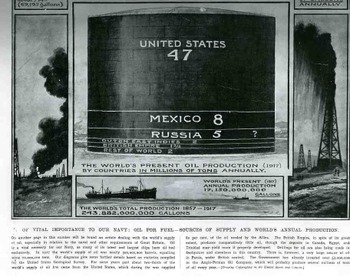
    Blogoil326
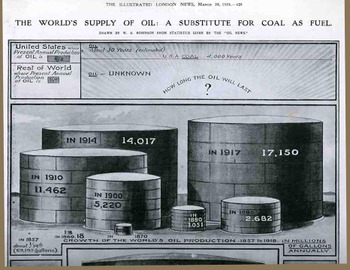
    In 1919, at the end of WWI, The Illustrated London News asked (and answered) the vital

    question of the day in the coal v. oil dispute and the feeding of its navy:  which power source will last longer?  The graphic designer displayed the answer right there at the top:  American oil would last about 30 years, while its coal reserves would go for another 4,000 years.  The bigger question though was about the oil production and futures for the rest of the world, which was left unanswered (and unanswerable, smartly).  Its easy to second guess these guys and have a stab and a poke at their predictive power, but we’ve been getting the answers to these questions wrong every decade since then.  Suffice to say that the Brits were doing some strategic thinking on the issue of power supply, which of course is probably the greatest issue in fielding an army of navy (just ask Rommel).
    Blogoil_btm327

    It is interesting to note that the British government was busily looking for oil in Derbyshire (oops) and other places. And as an end-note it is stated that the government had already invested about 2 million pounds in the Anglo-Persian Oil Company (which would become British Petroleum in 1957, known today as BP),  which, beginning around 1908, was the first time that a company harvested the oil reserves of the Middle East.  All of it was nationalized during the Iranian coup d’etat in 1953

    .


Recent Posts

Archives

Categories