A Daily History of Holes, Dots, Lines, Science, History, Math, Physics, Art, the Unintentional Absurd, Architecture, Maps, Data Visualization, Blank and Missing Things, and so on. |1.6 million words, 7500 images, 4.9 million hits| Press & appearances in The Times, Le Figaro, Mensa, The Economist, The Guardian, Discovery News, Slate, Le Monde, Sci American Blogs, Le Pont, and many other places… 5000+ total posts since 2008.

  • On Playing Dead for a Bucket of Bread: Finding a Way to Cheat the Royal Humane Society

    JF Ptak Science Books   Post 2572
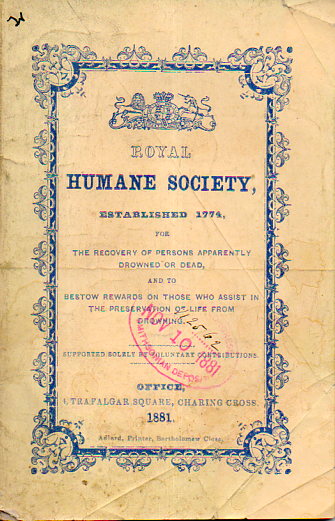
    Royl humane society310One of the great fears of humans throughout history is to be declared as being dead and treated so though alive, in a  death-like state but still breathing and functioning on scales that evaded detection.  And when you think about it a little, what is it that separates someone who you think is dead (from some sort of non-maligning adventure, not being so scarred from trauma as to be absolutely positively dead)  from the same someone who you know is dead?  This was a major issue, especially in the days of pre-stethoscopes. Of course there were physical determinants like checking for a foggy mirror under the suspected’s nose, or doing painful things to the body to make the unconscious not-dead come to life because of the searing pain (extreme tongue and nipple pulling, hot gases up the rectum, scalding the arm of a person in the no-scald/no-life venue, and that sort of thing), but the determination of death was a tricky thing.  So much so in fact that there were popular manias in the late 18th and into the 19th centuries of designing coffins that should the resumed-dead not actually be so that they could either escape or alert people topside.  (The Germans had a tidy late-19th century response to this–waiting houses/corpse halls, attached to a mortuary, where you would place the possibly dead for three days to see if it began to decay–no decay meant life, though by this time someone may have passed on due to injuries or whatever not diagnosed and left to fester for 72 hours…)

    See this related post earlier in this blog,

    • “The Worst Job of the 19th Century? Tongue-Pullers, Nipple-Pinchers & Anal Tobacco Blowers Try to Revive the Dead”, here: https://historyofideasblog.com/thesciencebookstore/2009/10/the-worst-job-of-the-19th-century-tonguepullers-nipplepinchers-anal-tobacco-blowers-try-to-revive-th.html

    The Royal Humane Society (for the humane treatment of humans), established in 1774 by doctors William Hawes (1736-1808) and Thomas Cogan (1736-1818) to prevent certain types of “premature death” and certainly premature burial, and was basically a life-saving society. Their concern was primarily with drowning victims, and their plan was to issue cash payments to those who (a) retrieved a possibly-drowned body, (b) or offered their place of business for the purposes of reviving the drowned, and then of course (c) those who attempted resuscitation  with a further prize if the techniques were successful in drawing life back into the drowned.  

    It should be remembered that swimming was not a common activity, and that very few people actually knew how to swim. Therefore falling into a river or a channel or whatever could pose a much greater risk of death then than it does today.

    The society took its business seriously, offering 

    • “to pay 2 guineas to anyone attempting a rescue in the Westminster area of London
    • to pay 4 guineas to anyone successfully bringing someone back to life
    • to pay 1 guinea to anyone – often a pub-owner – allowing a body to be treated in his house.”–History of the Royal Humane Society on the Royal Humane Society website, here: http://www.royalhumanesociety.org.uk/html/history.html

    And of course during a time when people were making a swift trade int eh sale of dead bodies, the guile of those so thanantologically-inclined stretched to meet the de(ad)man(d)s (sorry!) of the Society, which according to the Royal Humane Society site meant that people defrauded its good interests for private gain. People evidently would feign drowning, and a confederate would feign resuscitation, and the dead brought back to life, the two confidence men sharing a four guinea prize.  In short order the Society dispensed with the cash rewards and went straight-away to medals with ribbon, and thereby removing the profit from the performance of a good deed.

    This was the premature end of a potential income stream for people desperate enough to pretend to be dead for a small cash allowance.  But the Society and all of its good lived on, and evidently lives on today. My little pamphlet picture above was printed in 1881 and is filled with stories of people saved and salvaged, brought back from the edge of death.  (If anyone cares to own this little gem, you may do so and purchase it via this blog’s bookstore.)
    ·Posted by :

    ·in:

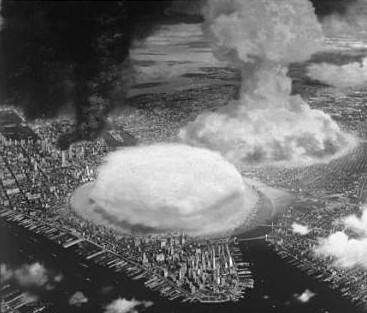
  • Mushroom over Manhattan: A-bomb Strike Images of NYC, Chicago, Seattle…1945-1958

    JF Ptak Science Books  Quick Post

    I’ve written perhaps 100 posts for the History of Fission and Nuclear Weapons series on this blog, and in that I’ve collected a number of (pre-1960) images showing a nuclear explosion over specific, recognizable U.S. cities. Some of these came as a result of Cold War propaganda, others were used to show the effects of the bomb on a familiar profile.  I’ve not put them together in one post before, so I thought to do it now.  (The very first image of any sort of nuclear weapon published in the popular press showing its effects on a U.S. city appears in PM newspaper, 7 August 1945–as I’ve said before, I have no idea how these folks put together such a comprehensive issue in the day+ after the Hiroshima bombing, but they did).

    Here are the U.S. cities I’ve collected so far–the majority of them are New York City, mainly because it has the most recognizable features making it easier for a broad spectrum of readers to understand the destructive force of the bomb(s).

    Manhattan, Collier’s Magazine, 1948

    Atomic bomb US cities Manhattan


    Seattle, 1955:

    Civil Defense Manual front cover, circa 1955:

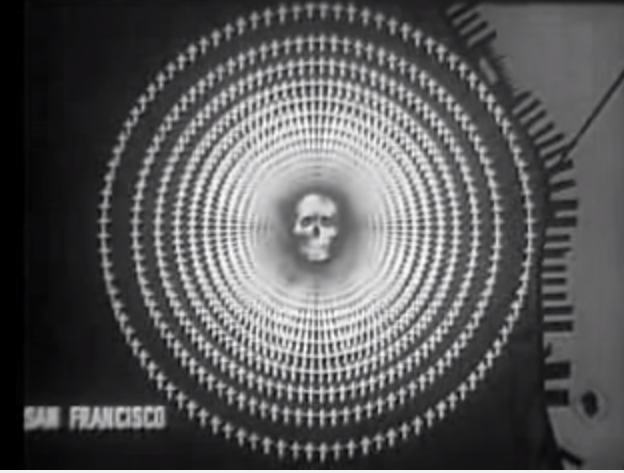
    Not a mushroom cloud, but the only thing I have for San Francisco:

    Atomic bomb cities sfMovie still from “One World or None”, 1946.   https://youtu.be/u6ORe_tHYXU
      

    ·Posted by :

    ·in:

  • Now *That’s* a Front-page Newspaper Map…(1863)

    JF Ptak Science Books  Quick Post

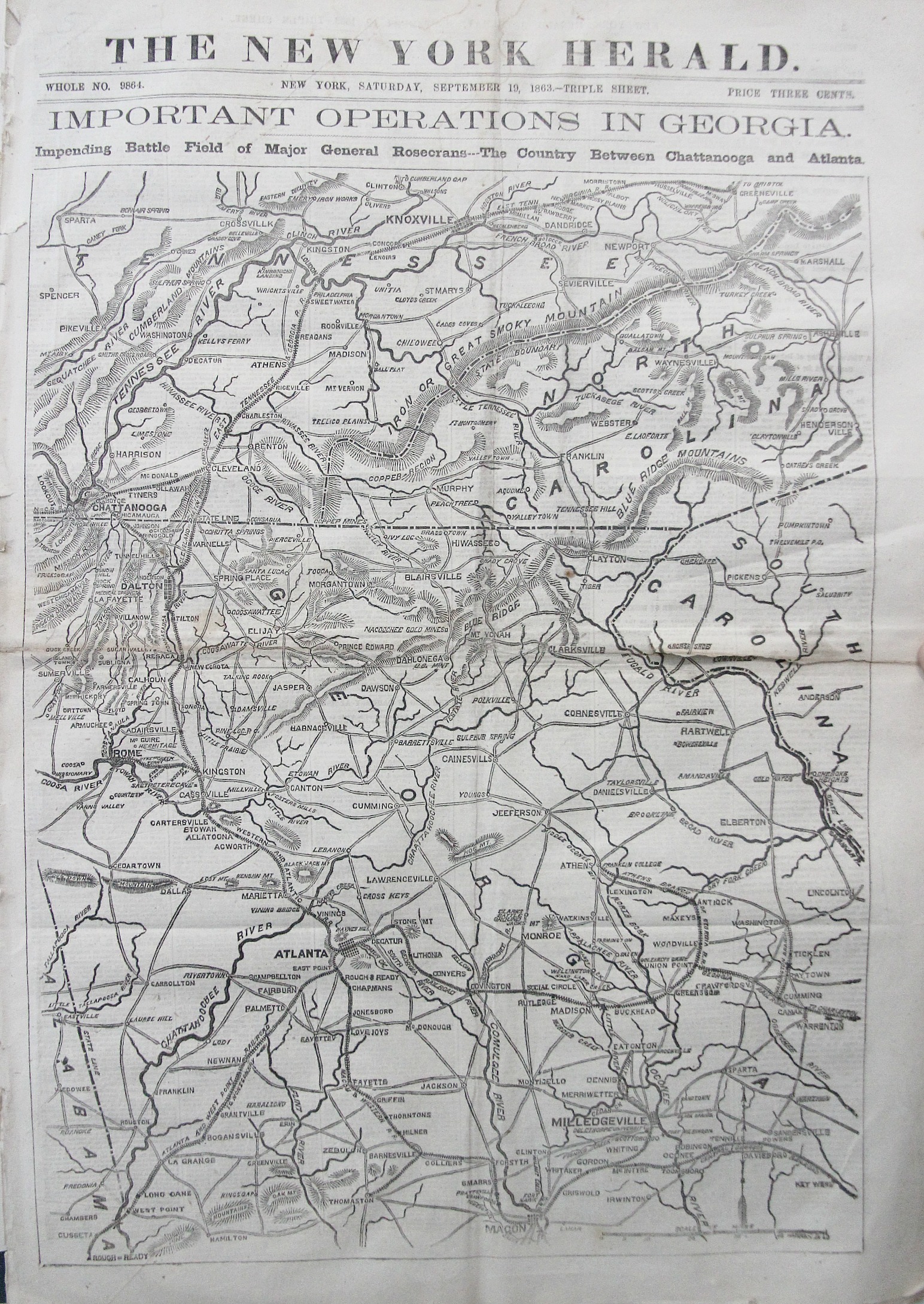
    Georgia map

    This fine map popped out at the warehouse today–the New York Herald, September 10, 1863, with a fantastic full-page/front-page map of the theater of war in Georgia (and southern Tennessee and south-western North Carolina), back when newspapers were newspapers.  But the map centers on Georgia, and comes just a week before the second bloodiest battle of the war at Chickamauga. (The town appears right underneath the label for “Chattanooga”.)

    My own Hendersonville appears at the extreme east portion of the map in North Carolina, just north of the South Carolina line.  Most of the mountains seem to not make a very formidable entrance on this map (though Cold Mountain is seen just to the north-west of Hendersonville), and I think it is somewhat deceiving.  I’ve driven the mountains a lot in Western North Carolina and often thought of slogging around the region in the foothills, avoiding all of the mountains that I was driving through which really didn’t show up on this map.  There’s a reason that there wasn’t that much in the way of conflict in this region of WNC, northern SC, and eastern Tennessee–of course there wasn’t much worth winning, but marching through the mountains would have been a major piece of bad country to go through.  

    In any event, this was a good map for northern and central Georgia, introducing northern readers to an advancing front of the war.  

  • Eleventh Hour, Eleventh Day, Eleventh Month

    JF Ptak Science Books   Veterans Day Repost

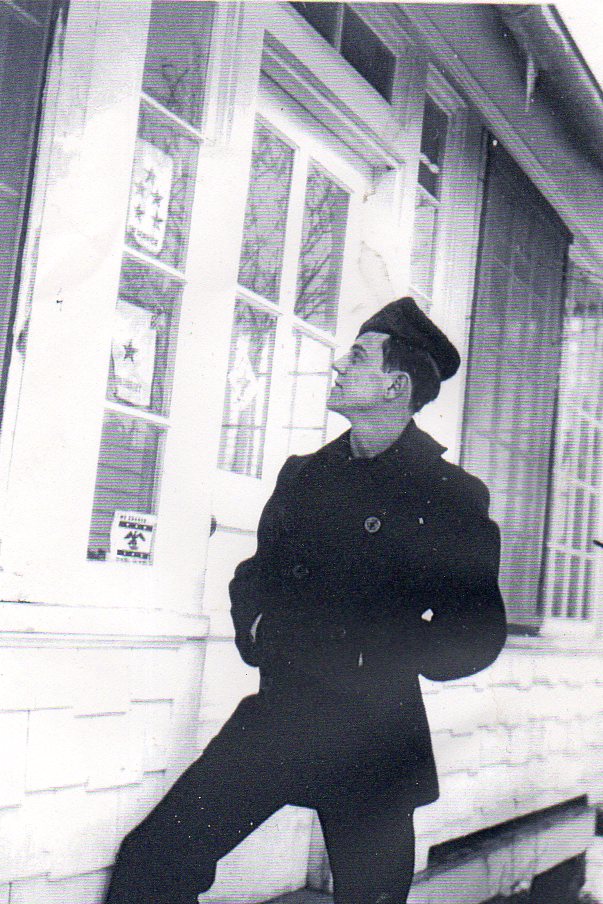
    I want to thank all Veterans today, all of our Veterans everywhere, for all of your sacrifices. I particularly want to say to say how much I appreciate the members of our family who have served: Uncle Pete (USMC, WWII), Uncle Ray (RCAF, RAF+USAAF, WWII), Uncle Stan (Navy, WWII), Uncle Alex (Army, WWII), Uncle Joe (Army, Korea), Uncle Jerry (Army, WWII), Uncle Frank (USAAF WWII), Uncle Walter (Navy WWII) and my other Uncle Stanley (Army, WWII), Uncle Francis (Army, WWII), Uncle Vincent (Army, WWII), cousin Billy (USMC, Vietnam) and Grandpa (Army, WWI); Patti’s father Melvin Lonnie (Navy, WWII) and stepfather Boyce (Army, 2nd US Cav WWII), Uncle Guy (USMC WWII), Uncle Max (Army WWII) and her four relatives in the CSA. Nearly everyone was in battle, and nearly everyone came home.
    [Image: Uncle Walter looking at the 5-star Blue Star flag at my great-grandparents’ house,  Housatonic, Mass, 1943.]

    Brothers 2990

    ·Posted by :

    ·in:

  • Found Surreal–1868

    JF Ptak Science Books   Quick Post

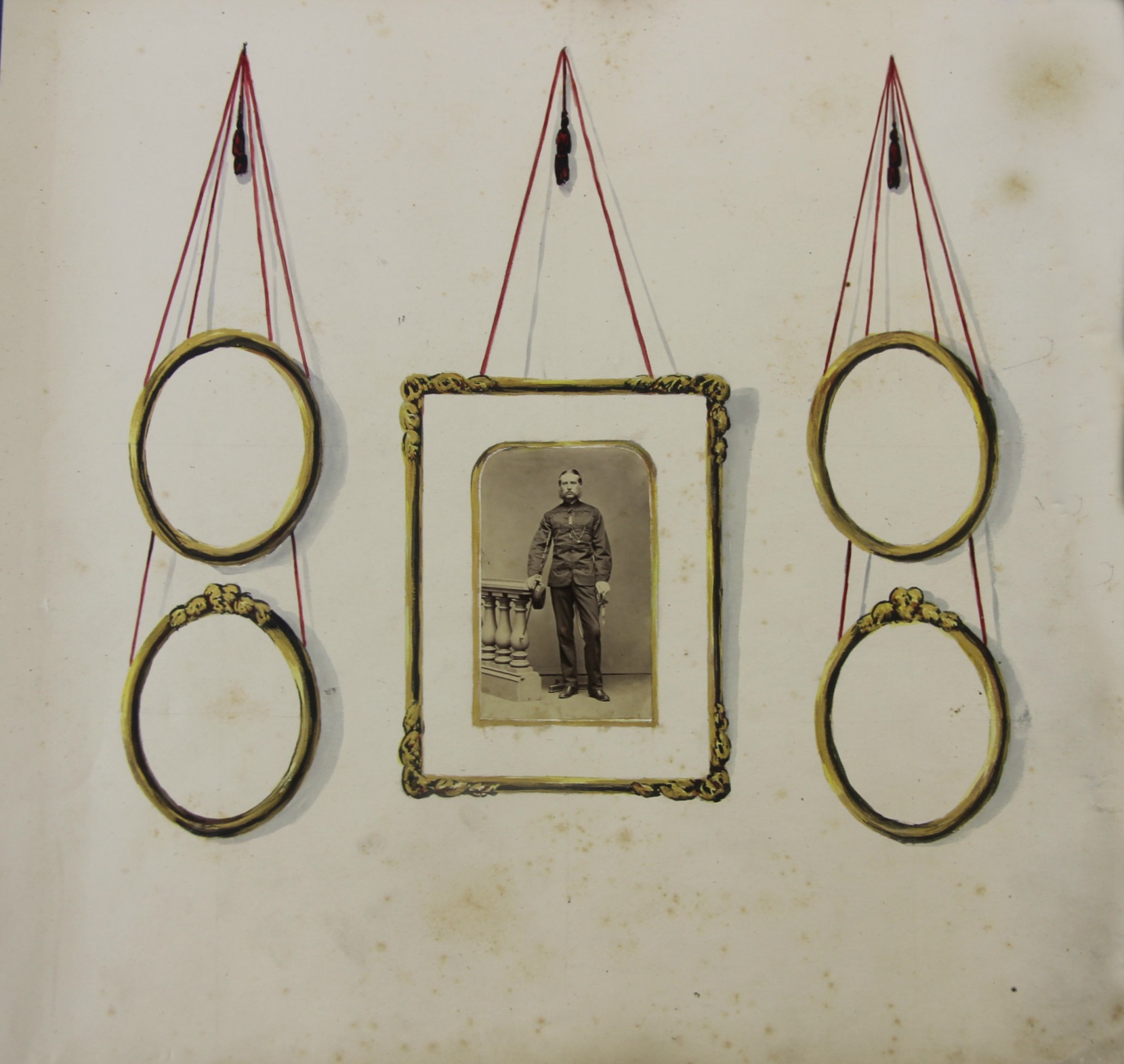
    This interesting image came from a collection of Victorian photographs, all ca. 1868 (one in the group was dated so). This example stands apart for me as an example of the Found Surreal–it has a certain artistic planned emptiness if you look at it in a certain way. Of course the original intention here was for someone getting the 18×18″ sheet ready to accept four more photographs placed in the hand-drawn frames.  

    Military photo odd

  • On the Dreadful Nature of Unseen Point-Blank Racism

    JF Ptak Science Books  Post 2572

    I’ve written a number of times about tertiary,  massively incorporated examples of racist behavior in the pre-WWII United States. Impossibly bad stuff that we would never think of as having any place anywhere today was sort of every place everywhere 75+ years ago.  The racist imagery seems to spontaneously occur in places where there just wasn’t any “point” for it, but there it was, a sort of non-sequitur of half-conscious social quiet-loathing.

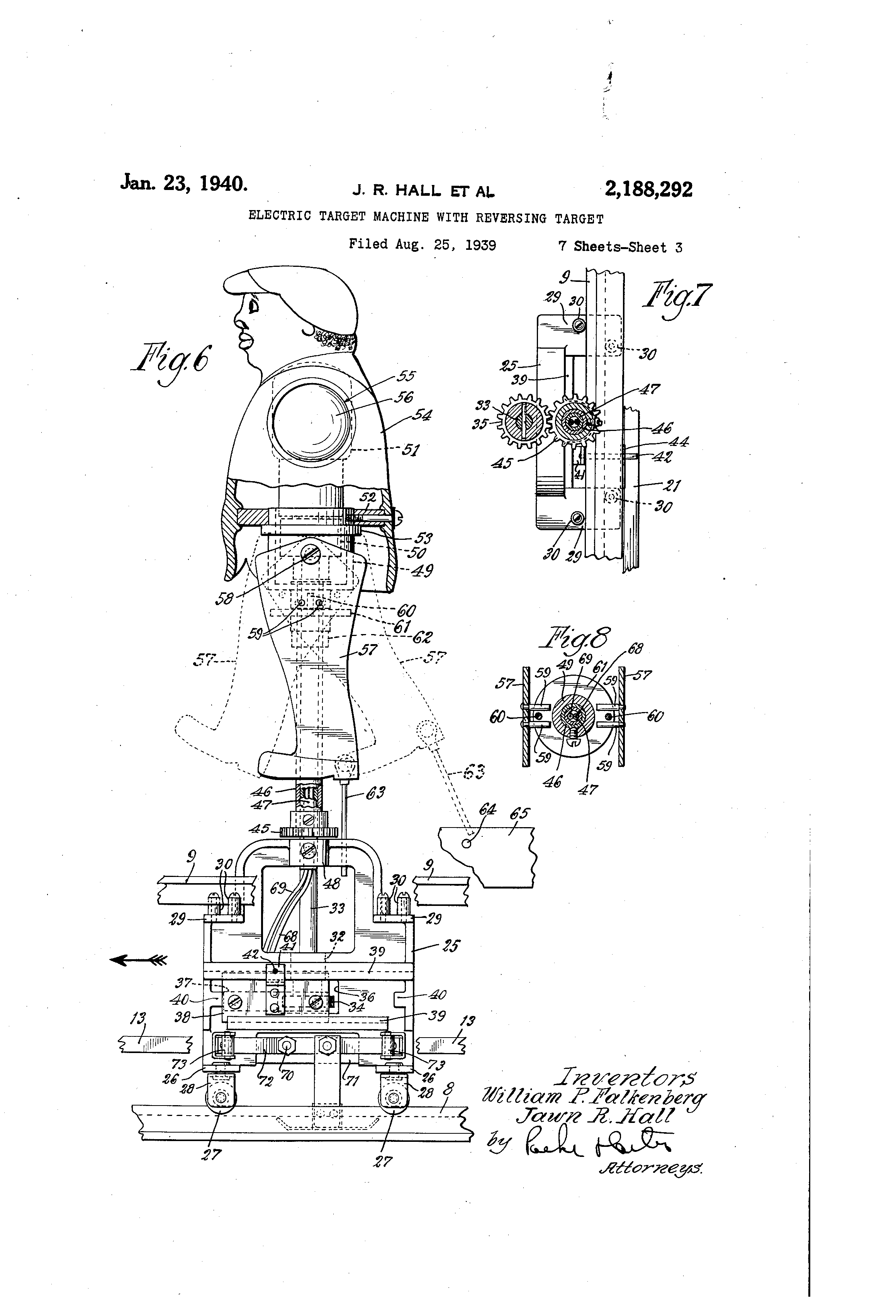
    Tonight’s examples were inspired by a Twitter post by Ward Harkavy (https://twitter.com/WHarkavy) on an incredible piece of social propaganda: a patent for rifle shooting game in which the target is an African American. (It is interesting in and of itself that the inventor thought enough of his invention to patent it so that no one would steal his idea.)

    There it is: the “Electric target machine with reversing target”, by William P. Falkenberg and James R. Hall, U.S. Patent # 2188292 A, 1939/1940. “Our invention relates to an improvement in electric target rifle ranges and has for one purpose the provision of an improved target”, the target being  Black man. Well, a Black man carrying a chicken, though it could be that “or any other suitable target”, whatever that was.  (The folks applying for the patent actually used the word “negro” with a small “N”, even though by about this time the fight to deprive African Americans of even the capitalization of the name of the race was over by about 10 years, though there were obvious pockets of resistance.)

    “…simulate a negro [sic] carrying a chicken,

    or any other suitable design.”

    Patent Negro shooting gallery a


     From the patent report:

    • “…#54 which may for example simulate a negro carrying a chicken, or any other suitable design.”
    • “We illustrate, however, means for reversing the movement of the target structure in response to every hit so that the negro, if hit, may reverse his direction of movement.”

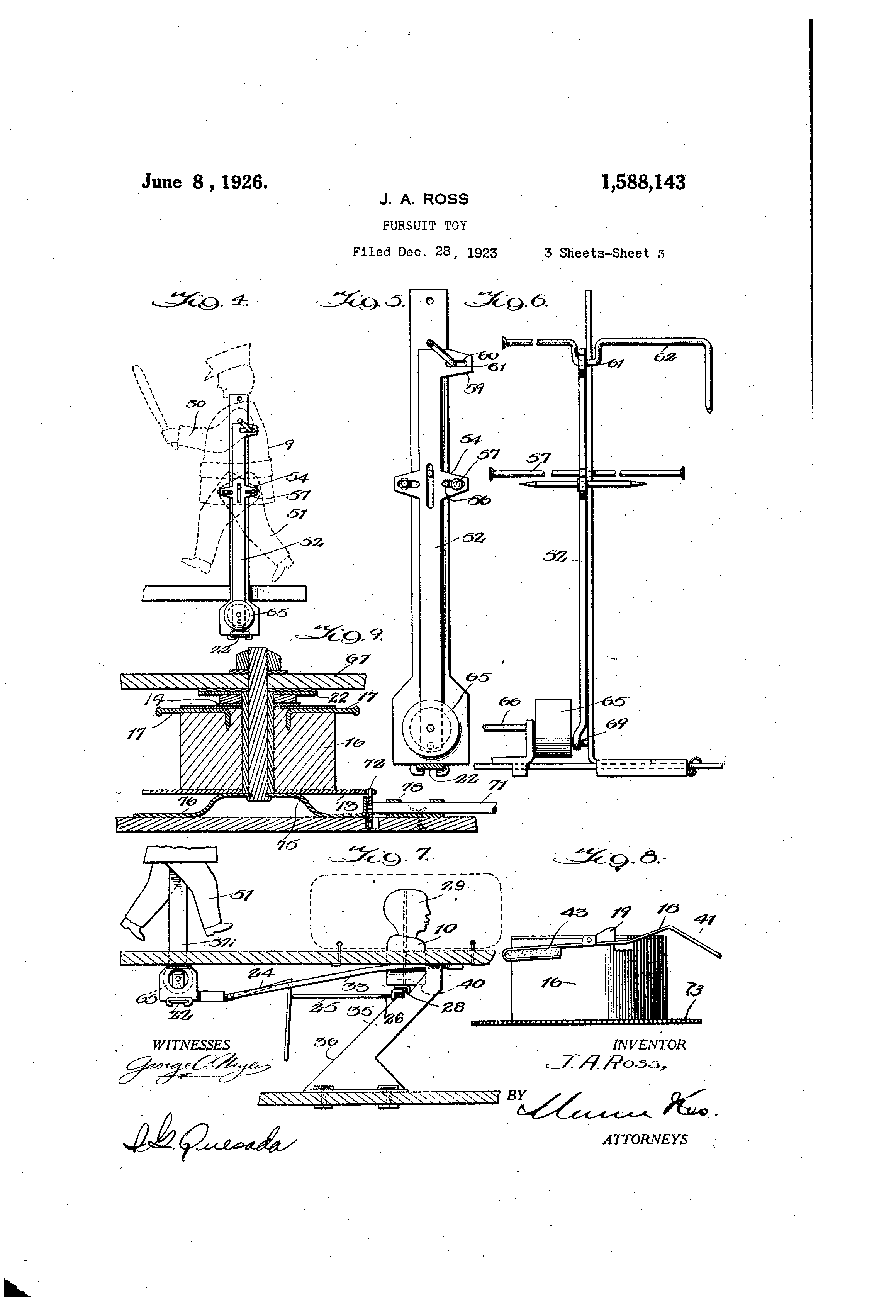
    I did a quick search on Google Patents and found a few more examples of this extreme passive-aggressive form of racism.  The second is from 1923,  a “Pursuit toy”, U.S. Patent # 1588143 A, by Joseph A. Ross, 1923.  The toy consisted of a cop who would spin ’round and ’round trying to catch/club a Black man whose head would pop up from a sewer cover.  The figure that the cop was chasing according to the report was “in the Form of a negro [sic] or any fugitive”.  The profile of the toy shows a cutaway of the patrolman (with raised baton) and the African American head (in the drawing beneath) coming up and through the manhole cover.  

    Negro Patent toy police pursuing Negro


    ·Posted by :

    ·in:

  • Great Cross Section of the HMS “Repulse”, 1939

    JF Ptak Science Books   Quick Post

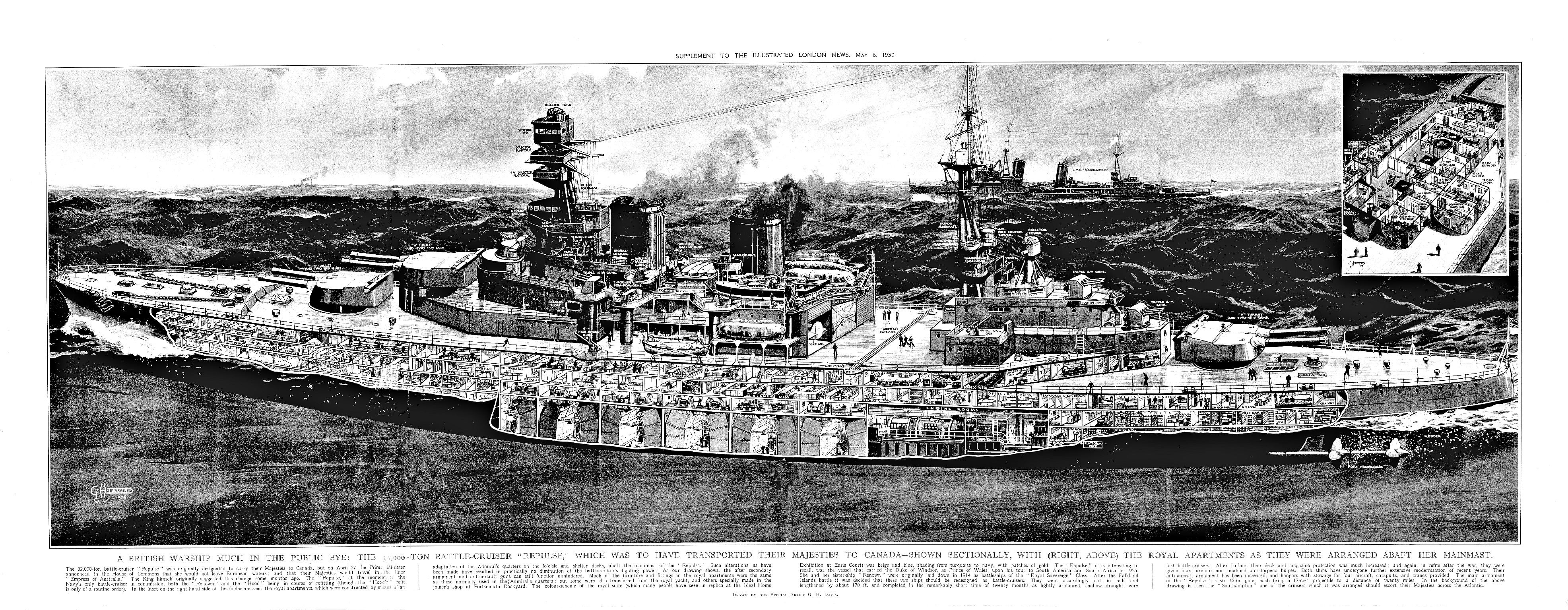
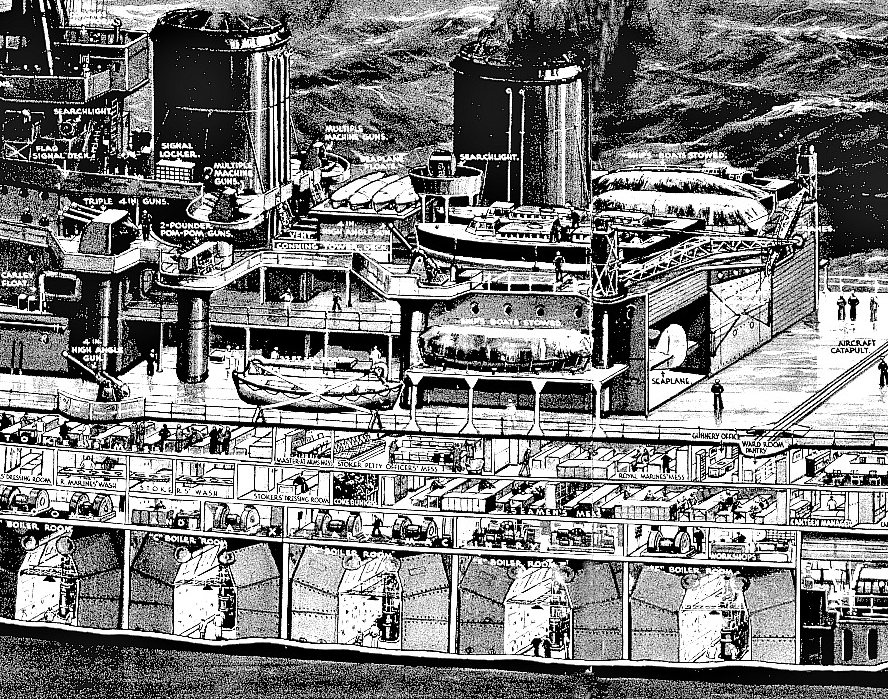
    Here’s a wonderful cross section HMS Repulse, published in 1939 in the Illustrated London News.  It is the work of the endlessly energetic and resourceful G.H. Davis, who I’ve written a about a number of times before on this blog (just enter his name in the Google search box at left.)  This is a cross section of the 11th of 12 Repulses of the Royal Navy–it was launched in 1916, and unfortunately was sunk in a battle on 10 December 1941, north of Singapore in the South China Sea.  

    Cross section REpulse 1939[Click for larger and more legible image]

    Detail:

    Cross section Repulse 1939 detail

    ·Posted by :

    ·in:

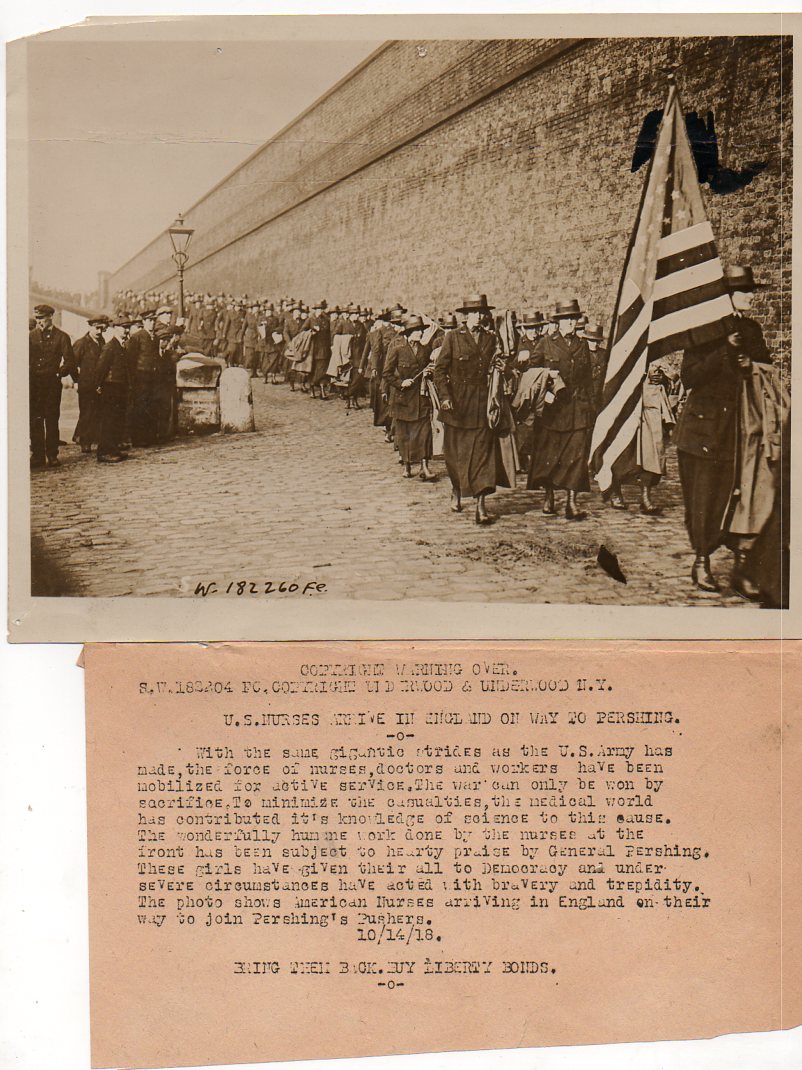
  • U.S. Nurses on the March, 1918

    JF Ptak Science Books   Quick Post

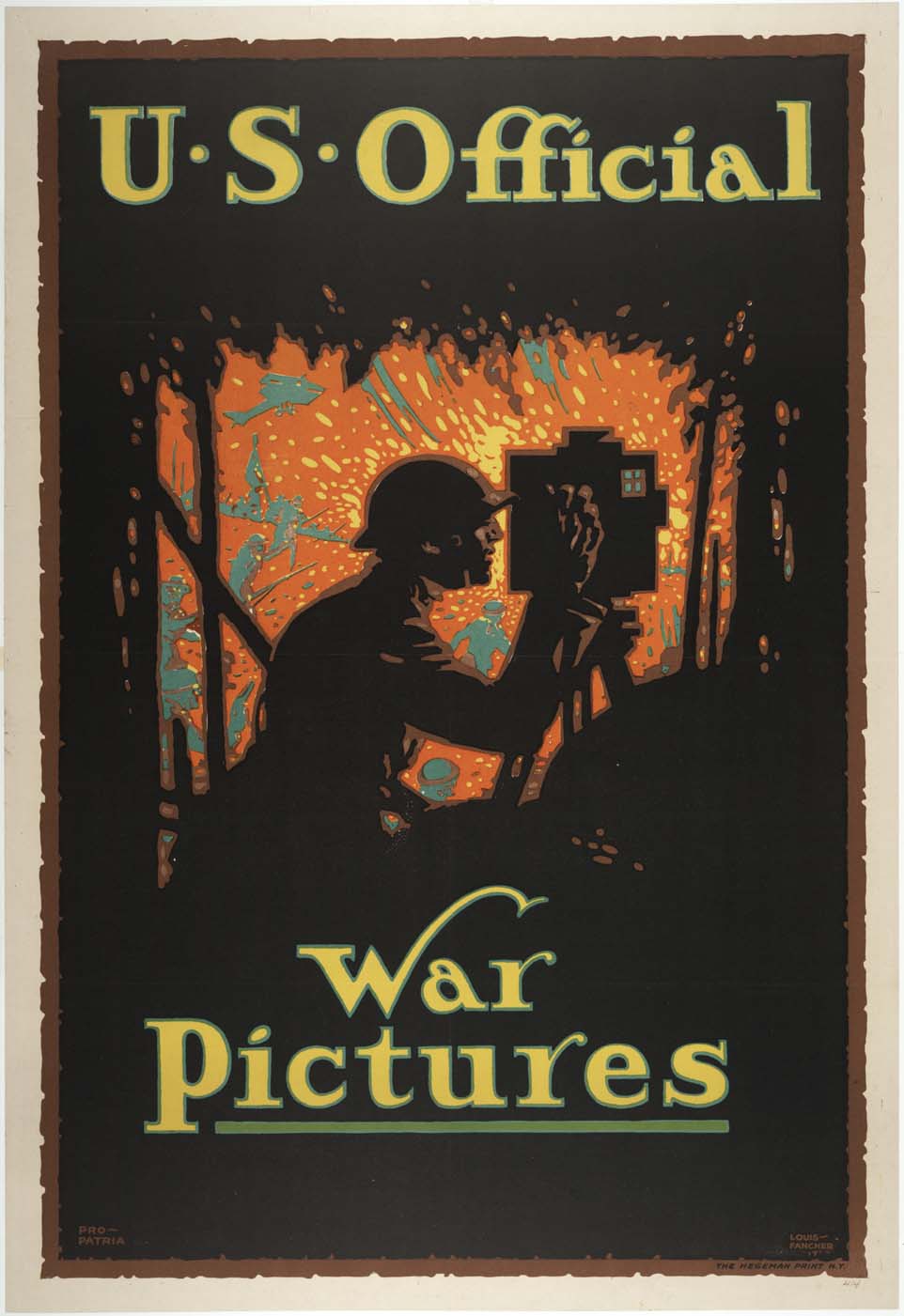
    This section of the blog is dedicated to photographs made during World War I–the official photographs, because the control of military images during the 1914-1919 period was very nearly complete.  

    WWI Photos Posters

    Photographs were made by pools of photographers working for several different photographic news agencies. The content of the images were generally secured and approved by the Committee for Public Information (CPI), which came into existence by executive order under President Woodrow Wilson on April 13, 1917, and which was charged with the task of wining the hearts and minds of the people of the U.S., to gain public support for the war and for American participation.  

    It is somewhat both ironic and not terribly uncommon for Wilson to have run for the presidency for one thing and then doing exactly the opposite, as he did with his 1916 re-election campaign slogan “He Kept Us out of War”.  

    The way that many newspapers obtained the war images that they published in their papers was via a semi-centralized pool of war images.  The newspaper would request, say, a photo of German prisoners, and would contact one of these photographic agencies—for example, say, the Central News Photo Service of 26-28 Beaver Street, NYC—and purchase the rights for republication, and then print it in the newspaper along with the story.  In almost every case the photo would be accompanied by a caption mimeographed onto an attached piece of cheap paper, or have the information stamped on the reverse.

    Photography was just one aspect of the information distribution and control by CPI–there were also thousands of Newspaper articles, public speakers (the famous “Four Minute Men” who would give some 7 million pepper talks at the beginnings of movies and public events), radio broadcasts, films, posters, demonstrations and anti-demonstrations, and other public displays.  

    [Image Source: World War I Propaganda Posters] 

     The image below shows the arrival of U.S. nurses in England, on their way to the Western Front arena in support of General Pershing’s army. The photograph caption is dated 1/14/18, less than a month away fro mt he end of the war.  That said there was considerable fighting being done right up to the bitter end. 


    ·Posted by :

    ·in:

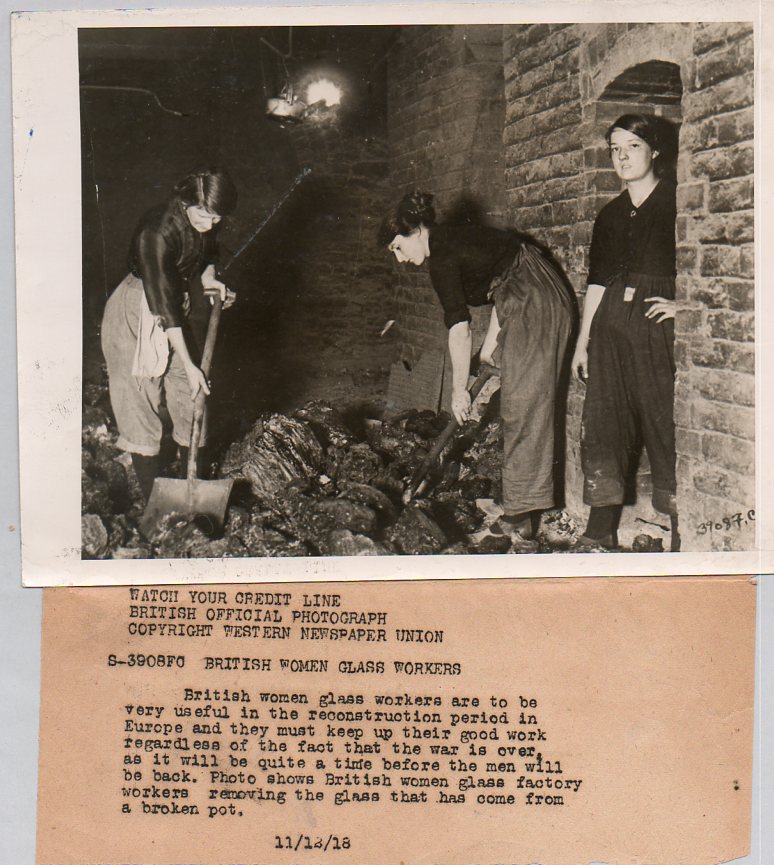
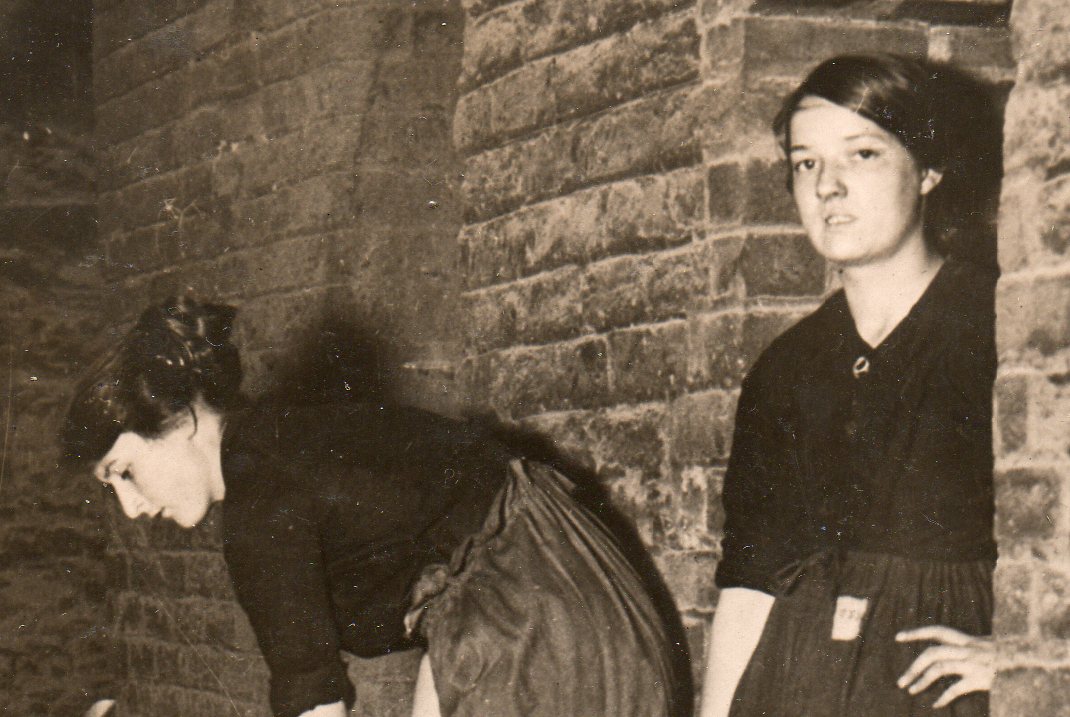
  • Women Up to their Ankles in Glass Residue, 1918

    JF Ptak Science Books  Quick Post

    This is a news photo service photograph from the very beginning of post-WWI. It was released the day after the war ended (or at least the day after the armistice was signed) and reiterated the situation that there were many women workers in industries throughout England1, and that they would be there for some time to come–or at least until the soldiers returned. 
    WWI--e--women glass687
    WWI--e--women glass det686

    Notes:

    1. For example, something on the order of 80% of munitions workers 1917/18 were women.


    ·Posted by :

    ·in:

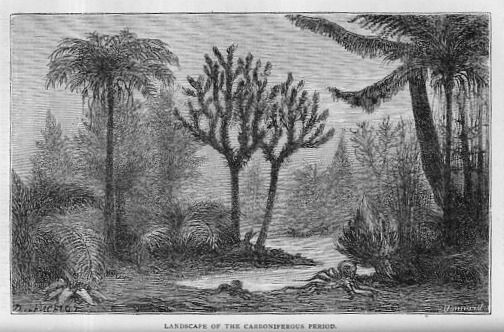
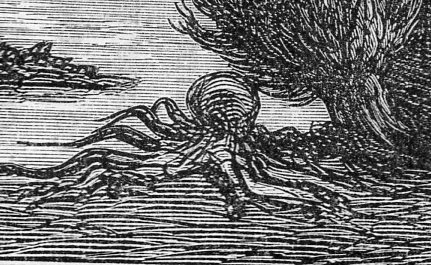
  • The Giant Land Octopus of the Carboniferous (1878)

    JF Ptak Science Books   Quick Post

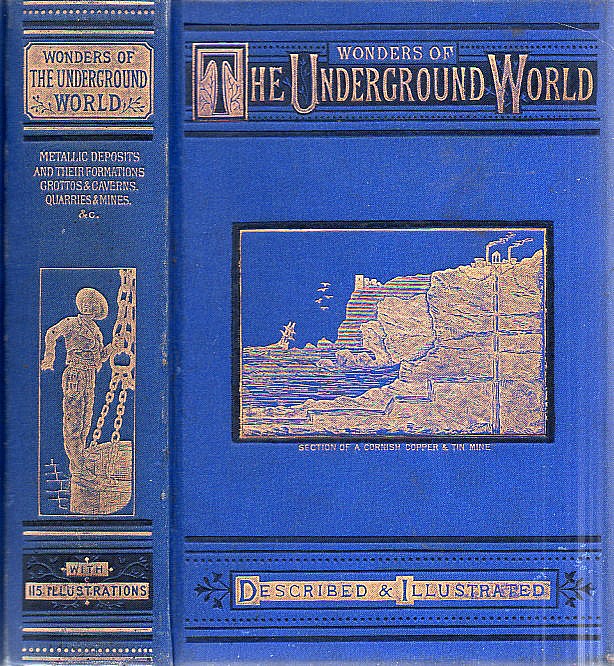
    Octopus313There was an unexpected sighting in a book I was reading just now, found in a gift (from Philippa Rowlands, coming all the way from Australia) of W.H. Davenport Adams’ The Wonders of the Underground World, Described and Illustrated, printed in London in 1878. Having been born underground in Germany, and having a lifelong pull towards submarines, tunnels, caves, mining, burial practices, and so on, the Adams book from Philippa was a very appropriate gift. 

    In the very opening pages I found two things that have drawn me into the book. (Well, truth be told, I liked it instantly because of the Victorian publisher’s binding, which is nicely detailed.) The first bit was the very sedate view of our carboniferous period, from 300-350 million years ago. In the bottom right was the surprise–a land octopus. Perhaps there are other 19th c examples, and this probably will just display what I don’t know, but spotting the octopus was a wonderful citing for me.  The earliest octopod comes from this period, the pohlsepia (named for its discovered, James Pohl), of which there is evidently only one piece of fossil evidence, and that was very recent, so there’s no wonder, really, how the octopus is on land in this relatively early attempt to deal with the carboniferous.  

    Here’s the image, left (full scale) and right (detail):

    Octopus311 Octopus312


    [Interesting site for fossil octopods: https://www.tonmo.com/community/pages/fossil-octopuses/]

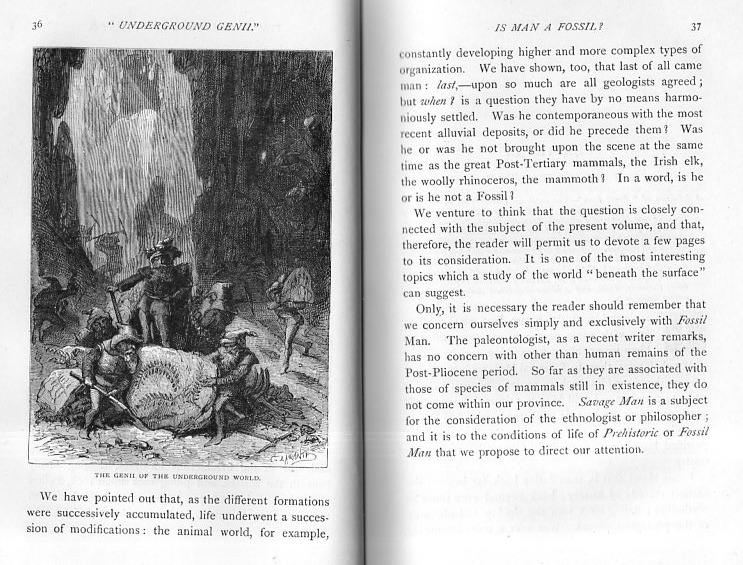
    The other enjoyable thing in these early pages was the question “Is Man a Fossil?”, which is a question that is unique to Google:

    Octopus314

    These are some of the reasons why it is so interesting to read older books like these, seeing how the author posed questions, and seeing how those questions come through to a modern reader, whether they were the original intention of the question or a new one created by changes in the knowledge base. 

    (By the way, the author, W.H. Davenport Adams, was a very busy guy in his time, writing in a lot of different venues, across many different disciplines, not the least of which was annotating a collected Shakespeare.  Impressive.)   


  • Fine and Uncommon Astronomical Images

    JF Ptak Science Books  Quick Post

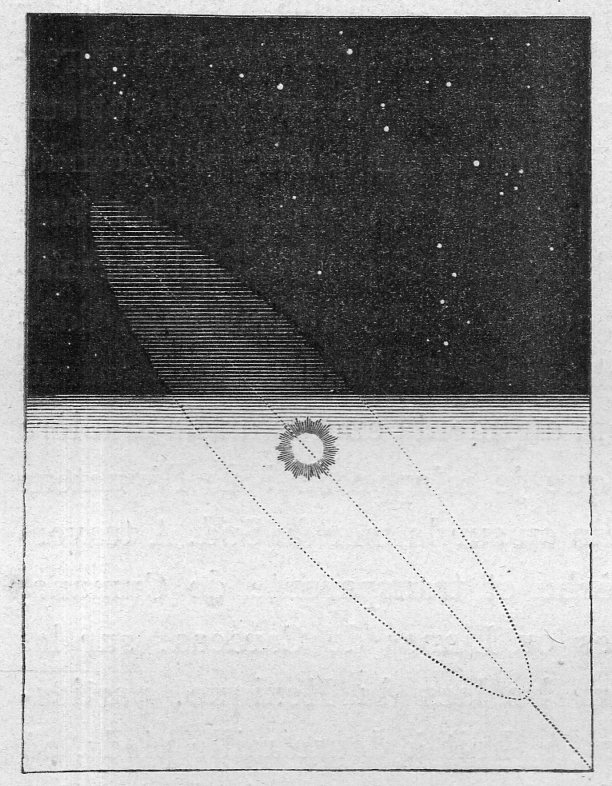
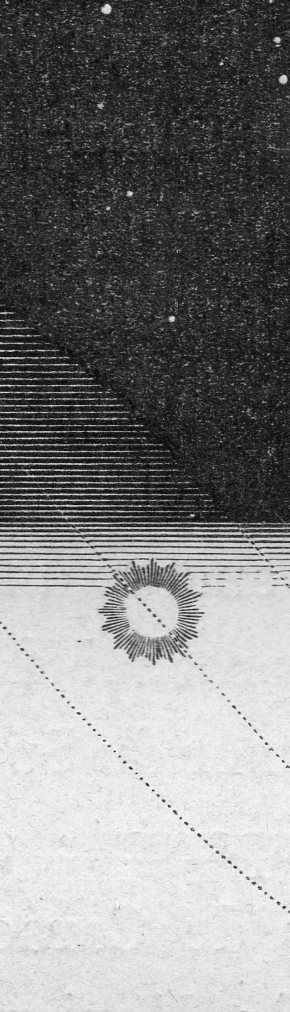
    This beautiful engraving (and its detail) comes from A. Guillemin’s (1826-1893) Le Ciel, Notions Elemenatiares d’Astronomie Physique ... (fifth edition, 1877) in the section “Lumiere Zodiacale”. (Full text available via the Internet Archive, here.) It is one of a series of very popular books that Guillemin wrote and edited in the last part of the 19th century, and in truth it is a small text illustration, barely three inches long–but the artistry for such an image as this is very high.

    Monde SOlaire683

    And the detail:

    Monde SOlaire685

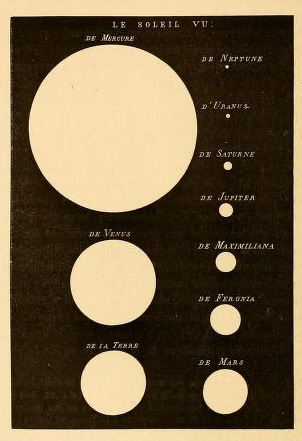
    And this

    Ciel sizes

    ·Posted by :

    ·in:

Recent Posts

Archives

Categories