A Daily History of Holes, Dots, Lines, Science, History, Math, Physics, Art, the Unintentional Absurd, Architecture, Maps, Data Visualization, Blank and Missing Things, and so on. |1.6 million words, 7500 images, 4.9 million hits| Press & appearances in The Times, Le Figaro, Mensa, The Economist, The Guardian, Discovery News, Slate, Le Monde, Sci American Blogs, Le Pont, and many other places… 5000+ total posts since 2008.

  • Note on Life on the Rings of Saturn and the Plurality of Adams & Eves (1859)

    JF Ptak Science Books  Quick Post

    I’ve been reading through the notes and bibliography of Michael Crowe’s  excellent  The Extraterrestrial Life Debate, 1750-1900  and decided to post a few of the early-modern scientific speculations on extraterrestrial life.  The first is from Hollis Read’s (1802-1887) concentrically-connective theo-explanations/celebrations of life in the universe, The palace of the Great King : or, The power, wisdom and goodness of God, illustrated in the multiplicity and variety of His works  (New York, Scribner, 1859). It is published in the same year as On the Origin of Species…, and takes a decidedly different theological spin on interpreting Nature. It does take a very interesting turn on page 224 though (not the probably-misprinted page 160 as Crowe notes) where Read speculates on intelligent life elsewhere, and winds up on the Rings of Saturn, which would have no doubt delighted Kurt Vonnegut. 

    In some sense Read buries his speculations on life on the rings, occurring in the middle of a paragraph in the middle of the book, and seems not to go any further with it.  He says that there are 28 billion square miles (on both sides) of the rings (“588 times the whole habitable portion of the earth”), which he feels could support a population of 8 billion, which he said is 10,000 times that of the earth.  It seems he just extrapolated the population/density of the Earth to that of Saturn’s rings to get that figure–I should point out that “billion” here actually means “trillion”, which was one custom of the day, so the 10k number Read came up with is more-or-less accurate.

    There really isn’t a reason given from I’ve read in Read for the possibility of life on Saturn’s rings, except that the beauty the rings must be fitted for something other than “waste and desolation”.  I’ve wondered about the theological issues about Life Elsewhere in natural law theo-scientific books like this–like, well, what about Adam and Eve?  Had they been present would they have been so just here on Earth, or would they have been better off on the rings?  Or are there Adams and Eves wherever they are needed? Or–to paraphrase an old story–would it have been Adams&Eves all the way down?  It seems as though that may have been a tricky question to answer…

    • [Source: full text of the Read book is available via the Internet Archive from the University of California, http://catalog.hathitrust.org/Record/006524997]


    Hollis Read Satrun  Life _a_


    ·Posted by :

    ·in:

    —
  • Nazi Propaganda and the British “Trade War”, 1940

    JF Ptak Science Books  

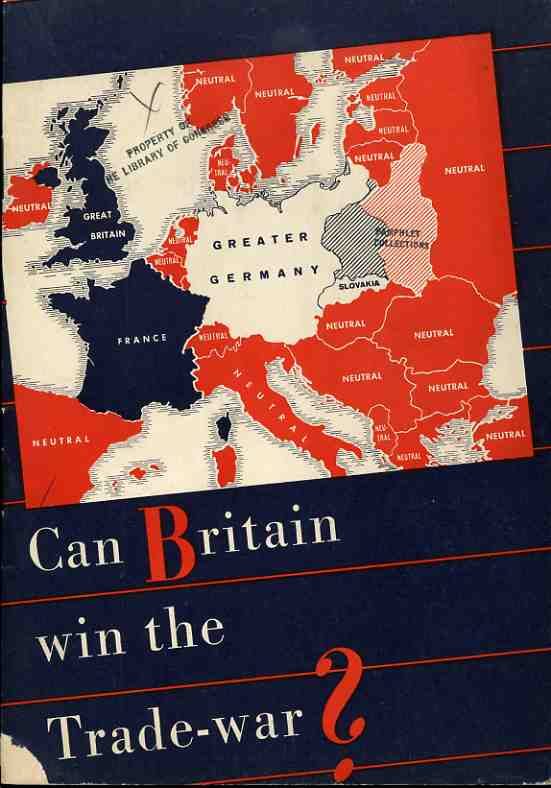
    The Nazi propaganda office published this effort (printed in August 1940) with every intent of making it seem as though it was produced in the U.K. as a sober reconsideration of fighting against the Germans, casting much of the argument in terms of economics. It was a relatively soft-sell effort in a hearts-and-minds campaign, hitting its target audience with reminders of how alone everyone on the British Isles were in the hard summer of 1940.  
                                                                   
    Nazi Propaganda Map  Can Britain win trade war


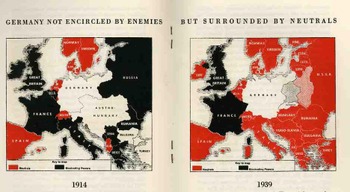
    These two maps compare the economic and trade situation of 1914 and 1939, from the Nazi perspective.  In 1914, the British, “as a preliminary condition for the success of the hunger-Blockade, only achieved, however after four years if struggle during which Britain was to sustain heavy losses”.   They announce with exclamation (!) that for 1939 there was:

    “a totally different situation! The encirclement of Germany miscarries, leaving way for the expansion of Germany, and the way for her trade with neutral countries, especially with the Balkans and Russia…thus is the blockade against Germany a hopeless enterprise”.   

    The Nazis’ state that “Britain…energetically refuses to admit the hopelessness of her winning this trade war and tenaciously grasps upon all kinds of unfounded rumours…”, all the while refusing to discus the bombing of Britain or any other aspect of military war

    Blogaugust_26_nazi_prop_2_map450                                                                                                                                                           

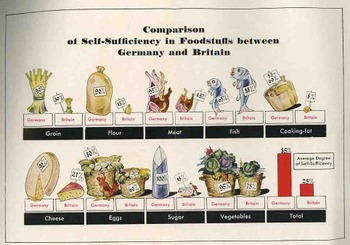
    After a dozen pages of making the case against the British position in being able to take care of itself, there is this folding quantitative display, making a diametrical-pictorial presentation of the British failings.  The Nazis show that they overpower the British in the ability to supply itself with grain, flour, meat, cooking fat, cheese, eggs, sugar and vegetables–in every area, in fact, except for fish. 

    Blogaugust_26_nazi_prop_food454

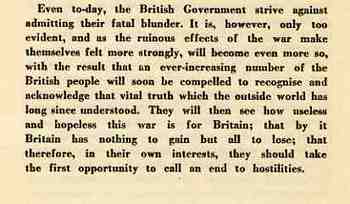
    This is the summation of the pamphlet, the last paragraph, asking the Brits to just give it up and quit their fight. 

    Blogaugust_26_nazi_prop_text452

  • Concentration Camps in Poland, 1921

    JF Ptak Science Books  

    The name of the concentration camp comes to us from the Cuban war of independence (1895-1897) with its first appearance in print (according to the OED) in 18971, when the Spanish imprisoned and impressed Cuban families in large compounds. The idea and the terminology was again used shortly thereafter in the Boer War (1899-1902), this time seemingly with more cruelty and savagery. These were the people who had escaped the systematic and revolting scorched earth policy initiated by Field Marshall Kitchener2 (who was in command of events after 29 November 1900), where the Boers were simply hunted and killed, or if not killed, then imprisoned; farms were destroyed, towns torched, livestock killed.  In general, the country of the Boers (all of whom were seen as guerrillas) was being taken and killed.  The survivors of this onslaught were sent to the concentrations camps.  
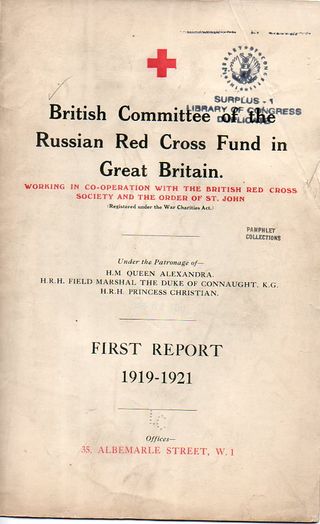
    Concentration camp009

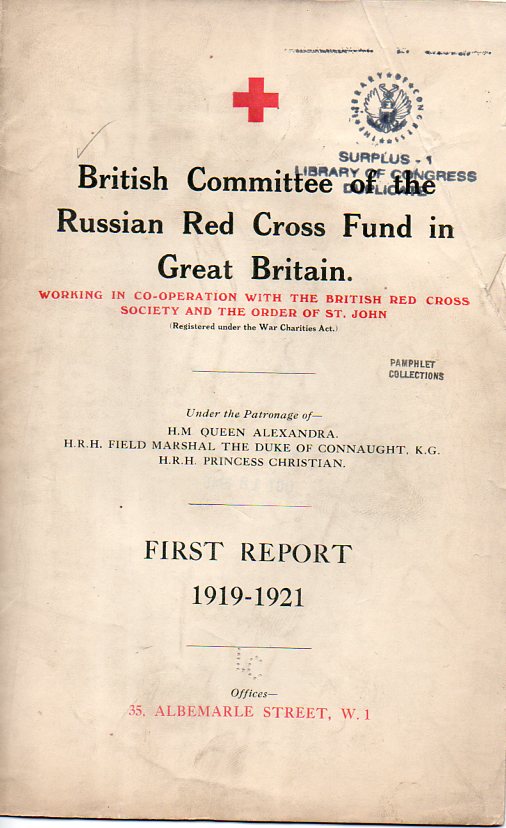
    This more modern 1921 reference to a concentration camp comes to us from British Committee of the Russian Red Cross Fund in Great Britain, First report, 1919-1921.  This was a tough time for the people of Russia–the Soviet Union–who were on the beginning of a mostly long-arc downward.  Just seven years beyond the beginning of World War I they were experiencing enormous “hardships” brought about by fighting the war, complicated by the 1917 Bolshevik revolution and the resulting civil wars.  Then of course there was the end of the war, and the beginning fo the war with Poland in 1919/1920.  And then another in a series of natural/mostly-unnatural famines in 1921.  This particular famine–killing about 5 million people in this year–was brought about mostly by the Revolution and prodrazvyorstka–the practice of forcing peasant farmers into selling whatever “surplus” food they produced to the state at the state’s prices, and also by being forced to supply food to the Red Army and to urban areas.  Add a drought to this mix, and it lead to absolute disaster for the peasantry

    Russian Red Cross Fund wasn’t yet concerned with the Povolzhye Famine, not yet, addressing the plight of the country’s response to six long hard years of war, civil war and war again–a poor country made poorer and more miserable, this fund made some attempt at relieving at least a small burden of this impossible situation within the country.  

    What caught my eye was in the discussion of providing relief to the camps of Russian refugee expatriates, the report detailing some of those in Cyprus, Estonia, Latvia and Finland.  And Poland.  The Polish camp, however, was different, and described the attempt to send relief to the 140,000 in “the Concentration Camps”, and then describing another of 110,000 “Russians who have been interned according to the Riga Peace Terms, and that the Poles are quite unable to do anything for them”.    (This pamphlet is available for purchase through our lbog bookstore.)                      

    The reference took me by surprise–I knew a tiny bit about the Russia/Poland War at this time but hadn’t realized the extent of it, nor the extent of the Russian refugees in the country nor the amount of soldiers (and their families) within the concentration camps.  These are not the extermination camps that would appear in Poland two decades later, but the conditions of the people in the camps led to the deaths of thousands.  

    Notes:

    “Concentration Camp”, from the Oxford English Dictionary:

    A camp in which large numbers of people, esp. political prisoners or members of persecuted minorities, are deliberately imprisoned in a relatively small area with inadequate facilities, sometimes to provide forced labour or to await mass execution.The term was first used during the Cuban war of independence (1895–8) to denote camps in which rural Cubans were interned by the Spanish military authorities, and was subsequently used of the camps instituted by Lord Kitchener during the Boer War (1899–1902). Concentration camp is now most strongly associated with the several hundred camps established by the Nazis in Germany and occupied Europe from 1933 to 1945, among the most infamous being Dachau, Belsen, and Auschwitz.

    1897   Orleans (Indiana) Progress 20 May   American citizens must not be starved or otherwise executed in Spanish concentration camps in Cuba.
    1901   Parl. Deb. 4th Ser. 90 180   The policy of placing the women and children confined in the concentration camps in South Africa, whose husbands and fathers are in the field, on reduced rations.
    1927   C. Chapman Hist. Cuban Republic iv. 81   All Cubans (men, women, and children) were ordered to move into garrisoned Spanish towns or concentration camps.
    1934   Ann. Reg. 1933 173   Germany..For dealing with the masses of prisoners special concentration camps were opened.
    1940   H. G. Wells Babes in Darkling Wood iii. i. 234   The White Paper of Nazi atrocities in the concentration camps and elsewhere.
    1941   Manch. Guardian Weekly 31 Jan. 82   They make raids on Jewish families and demand contributions, with the threat that refusal to comply will mean the concentration camp.
    1945   M. K. Doherty Let. 16 July in J. Cornell & R. L. Russell Lett. from Belsen (2000) iii. 36   Within a stone’s throw of the unutterable squalor and filth of theconcentration camp..were the magnificent quarters provided for units of the German Army.

    2. Kitchener (who full title without his bloody shoes on was Field Marshal The Rt. Hon. Sir Horatio Herbert Kitchener, 1st Earl Kitchener, KG, KP, GCB, OM, GCSI, GCMG, GCIE, ADC, PC) described his vision for ending the Second Boer War in the Parkenham’s history: his aim was to  “flush out guerrillas in a series of systematic drives, organized like a sporting shoot, with success defined in a weekly ‘bag’ of killed, captured and wounded, and to sweep the country bare of everything that could give sustenance to the guerrillas, including women and children…. It was the clearance of civilians—uprooting a whole nation—that would come to dominate the last phase of the war.”
    ·Posted by :

    ·in:

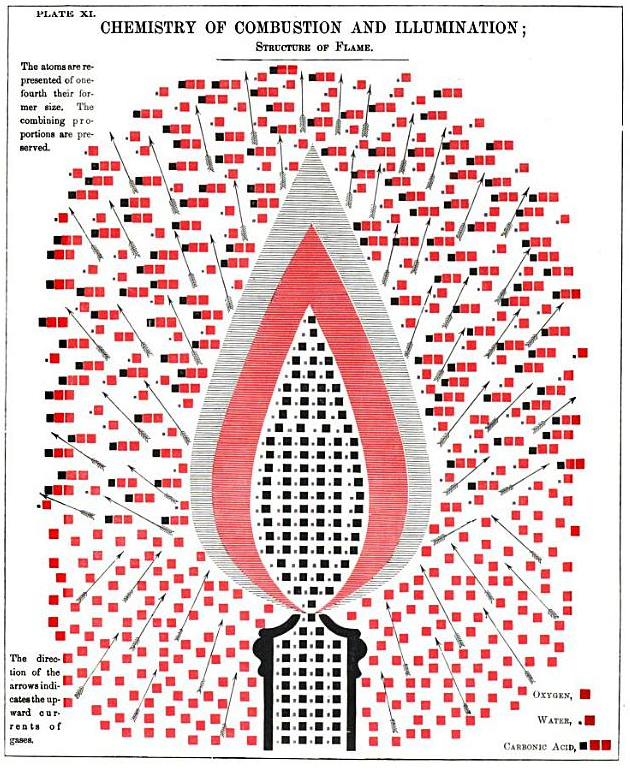
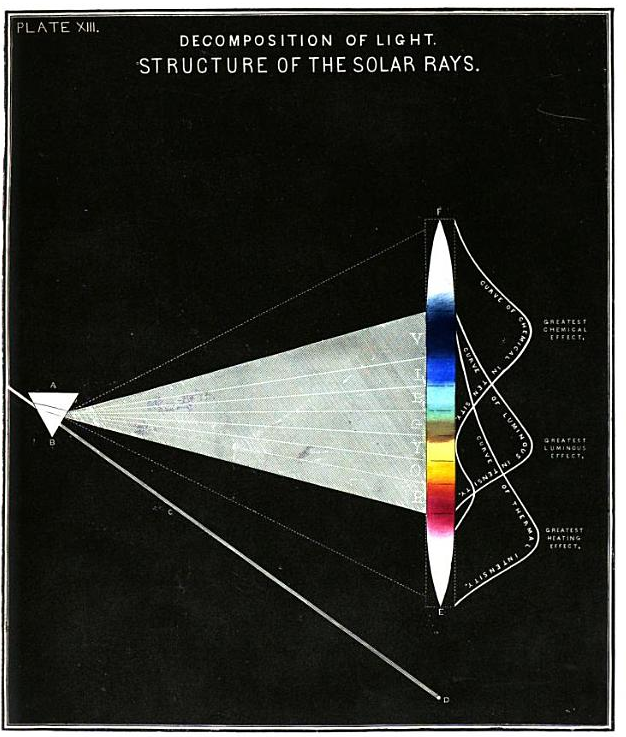
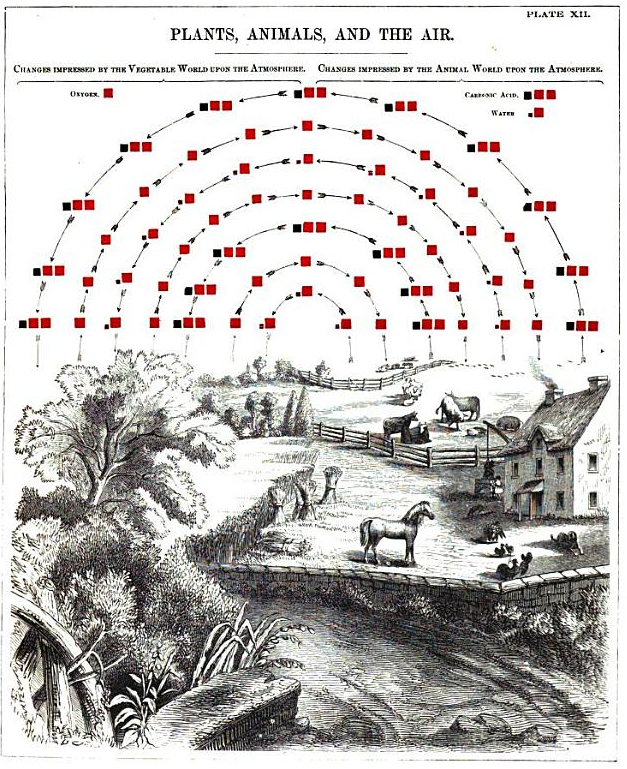
  • One of the Most Beautiful Scientific Books of the 19th Century

    JF Ptak Science Books  Quick Post

    I no longer own a copy of this book, but at least I did find a version of it at Google Books–the rather walk-about title completely conceals the fabulous stuff within it. The  Chemical atlas: or, the chemistry of familiar objects, by Edward Livingston Youmans, published in New York City by Appleton in 1856 is the sort of title that you could easily skip by if you weren’t familiar with it or its author. Youmans is certainly a man worthy of high respect, and I like him a lot: in his career as an author and editor, he was (in addition to much else) the founder of two significant scientific publications that I have long enjoyed: the International Scientific Series (1871), which was a rapid/cheap reprint of important contemporary science which also sought to fairly compensate its authors (at a time where they were even more ripped-off than they can be today); and the great Popular Science Monthly (1872), which was a very meaty sci-tech instrument before it got to be more ‘popular” than “scientific” decades after Youman’s death in 1887. 

    Youmans candle


    But it is his thin and lovely chemistry-of-stuff book from 1856 that I’d like to share right now. I do not know who was responsible for the design and the illustration of the book, which is I think exemplary and unusual for the time. Even if Youmans did not design the images, he did have the very good sense to include them in his book.  It would be nice to have this book back at some time, along with a few of the other gorgeous works of the 19th c,  like Oliver Byrne’s Elements of Euclid (1847) and Ernst Haeckel’s impossible Kunsformen der Natur (1904, but started in 1899 so it still classifies as a 19th c work), to name a pair.

    • Some good, concise, biographical info on Youmans:   https://en.wikisource.org/wiki/Appletons%27_Cyclop%C3%A6dia_of_American_Biography/Youmans,_Edward_Livingston

      Youmans light


    Youmans field


    • Source:  Google Books  https://books.google.com/books?id=SrJXAAAAYAAJ&dq=Chemistry%20of%20Combustion%20and%20Illumination&pg=PA81#v=onepage&q&f=false
  • Gears, Teeth, Minie Bullets, Cloth Bindings (1864)

    JF Ptak Science Books   Post 2575

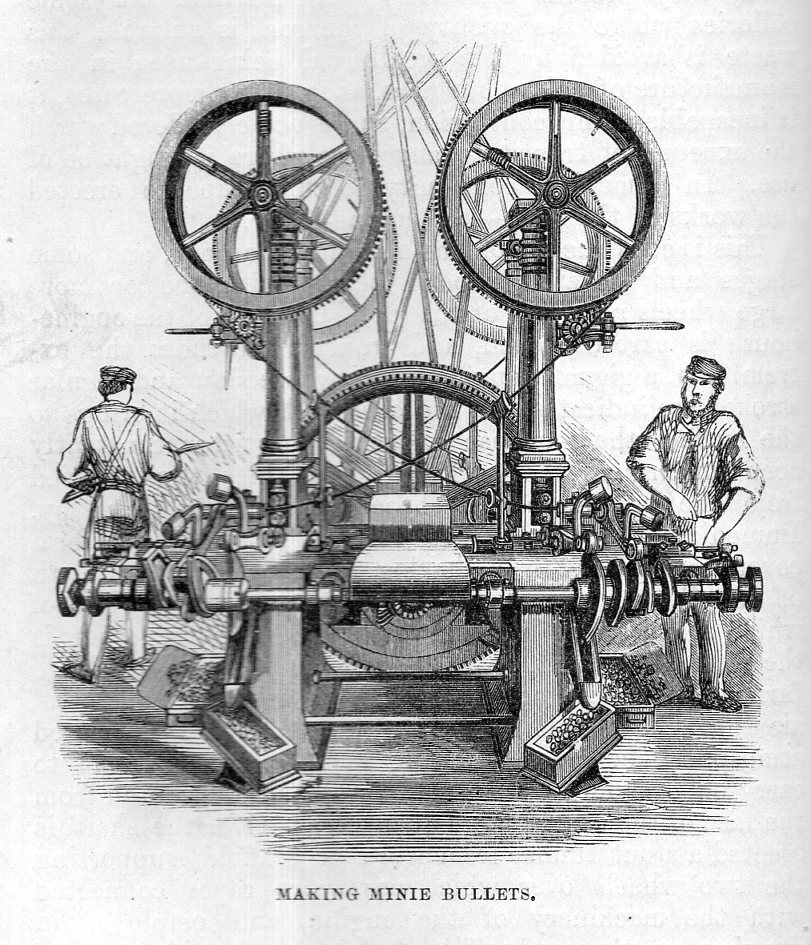
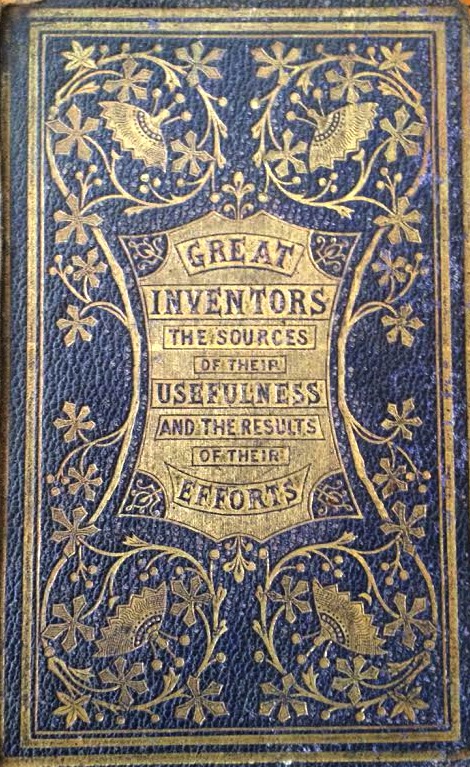
    Claude-Étienne Minié (1804-1879) was an influential military designer and French officer who designed what was to become know as the “Minie ball”. This was a cylindrically-shaped conical-pointed bullet the design of which greatly increased fire at long ranges. The bullet was designed in 1847 and soon became standard issue in Europe and (especially?) in the U.S. during the Civil War.  I’m taking notice of these projectiles after having made this very accidental discovery of the machine that formed them in the Victorian review of technology and invention, Great Inventors, the Sources of their Usefulness and the Results of their Efforts, printed in London in the rockingly good year of 1864.  It makes me think about the fabulous machinery that produces stuff like bubble gum–glorious metallic ideas for production and packaging, all combined in effort to produce a piece of fluff that you chew on and then discard.  With the Minie Ball, though, you have a massively-geared machine used to produce little bits of metal meant to pass more efficiently and with more accuracy through a body. (Also it is another representative of a genre of illustration of looking at the object straight on.)  

      Minie balls318

    The cover of the book is interesting in its own right, being bound in an elaborate publisher’s cloth with gilt-stamped decorations.  Books before, say, 1800, were almost entirely bound according to the wishes of the customer, who would/could purchase the sheets and have them bound according to their wishes.  That, or booksellers would offer the book for sale in a small election of available bindings.  The cloth binding that we would recognize today really didn’t start to make an appreciable appearance until the 1830s, when a simple cloth cover replaced its more-elaborate brethren, making things much easier for the publisher and the bookbinder, allowing for much less expensive production and a quicker turn-around time.  It also brought in a far greater distinction in the now-divergent industries of bookselling and publishing–and of course bookbinding.  So the entry of the semi-standard plain cloth binding also brought in the possibility for design and art in standard book production, with less to the introduction of the decorated cloth cover.  

    The cover for the book described here comes from about the second full decade of a standardized-luxury of decoration in cloth-bound books.  Over the years I’ve paid only a little attention to the decorated cloth bindings of scientific books, but never collected them, something I somewhat regret at this point. In any event, Great Inventors… is a good example of a relatively inexpensive but nicely-designed book cover.  

    Binding great inventors

  • Non-Newtonian-Fable Apples in Astronomy (1854)

    JF Ptak Science Books  Quick Post

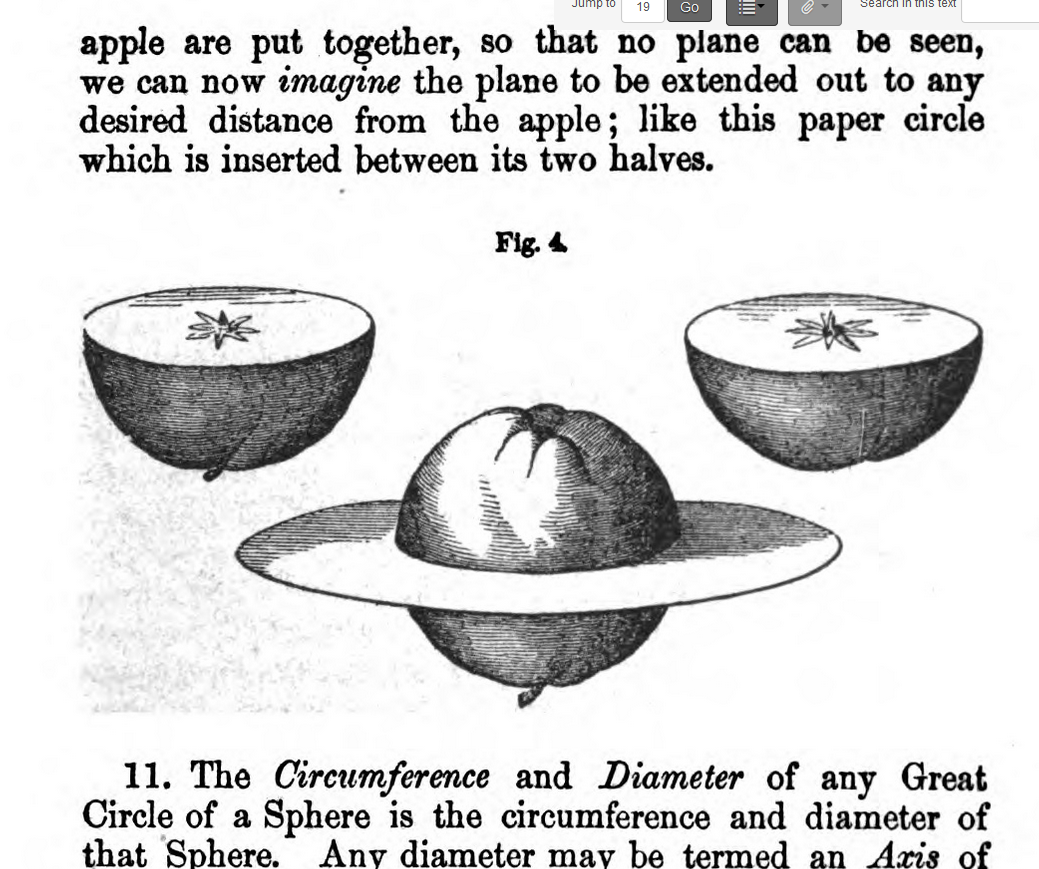
    After all of this time handling/reading/browsing books in the history of science, I believe that I’ve never seen an illustration an astronomy text utilizing an apple to demonstrate the sphere/globe—and here it is:

    Apple astronomy halves

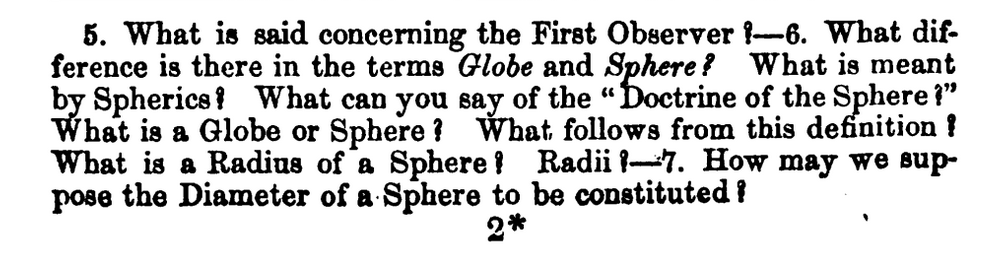
    I thought to include these footnote questions from the page preceding the woodcut because they were so good, and intended for a youthful audience:

    Apple astronomy questionsSource:  Emma Willard, Astronography, or, Astronomical geography, with the use of globes : arranged either for simultaneous reading and study in classes, or for study in the common method, 1854.  http://babel.hathitrust.org/cgi/pt?id=hvd.hnygp9;view=1up;seq=27

  • A Forgotten Company Lost in the Surf of the Television MegaWave (1945)

    JF Ptak Science Books   Post 2577

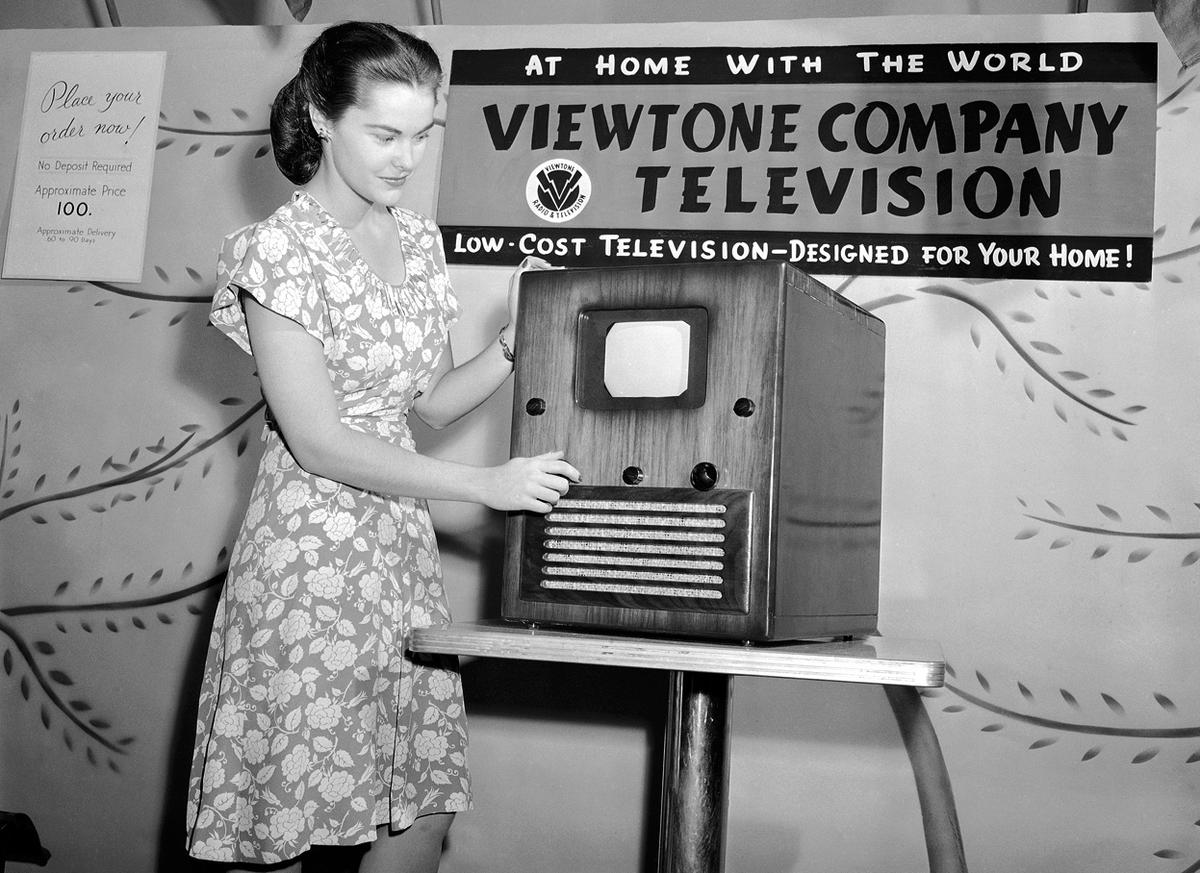
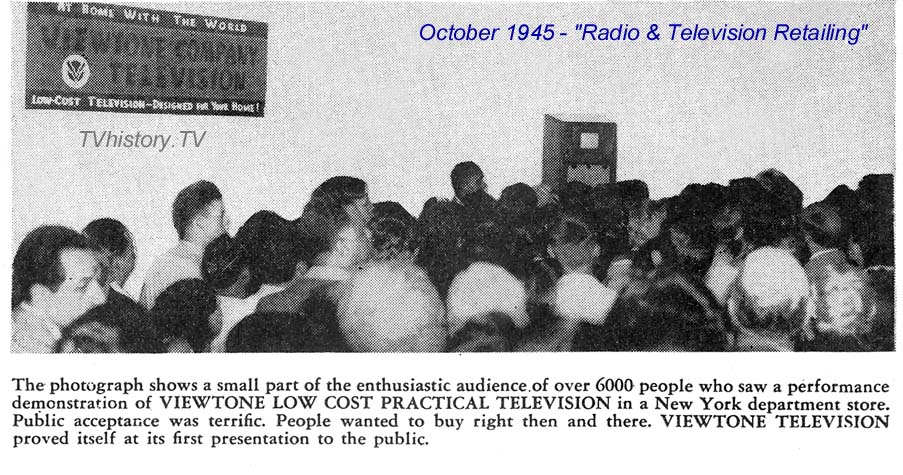
    As much into the future as this demonstration and photograph looked, the Viewtone Company would not be a part of it.  They were offering their TV at a very substantial reduction than would normally be expected in 1945, which perhaps lead to the company disappearing by mid-1947, just before the massive explosion in television ownership. 

    The TV-ubiquity that Viewtone missed out on is now  about 60 years old. In 1949 there were about 3.6 million1 TVs in U.S.. homes; by 1955, the number was 42 million, and by 1959, 67 million. By percentages2, in 1950  9% of U.S. homes enjoyed a television, while just a year later, the number shot up to 23%; by 1955 it was 64%, reaching 87% by the beginning of the next decade, in 1960. In just ten years the television went from being a luxurious oddity to  an essential societal portal. It completely dislodged the massively dominant radio by the mid-1950’s and nearly killed it by the next decade; television continued to thrive, and has accommodated the introduction of the home computer. The TV was able to adapt and strengthen itself, even though the manner in which stuff is put into the television for viewing consumption.

    TV 1945[Source: the Atlantic, http://www.theatlantic.com/photo/2011/10/world-war-ii-after-the-war/100180/]

    It strikes me as a little odd that such a push for a piece of under-priced piece of advanced technology would have such a haphazard display–the floral background standing only about six feet high, quickly hand-painted no doubt, while the television itself was placed on a lunch table–not much of an effort. 

    A few months later there was a public demonstration of what the unit could do, attracting an audience in the “thousands”.  The instrument was well-received, and the cost seemed very low–perhaps that was the culprit that forced the company into producing semi-primitive and not-well-made units and then right into oblivion right on the cusp of the coming TV fantasicalopolis.

    In any event, I just wanted to reproduce the photograph introducing the Viewtone television (above), if for no other reason than its breezy and familiar approach to the introduction of something new and, well, spectacular. 

    TV viewtone demo[Source:TVHistory.tv: http://www.tvhistory.tv/1945-Viewtone-6000-Viewing.JPG]

    Notes:

    1. TVHistory.tv, http://www.tvhistory.tv/Annual_TV_Sales_39-59.JPG

    2. TVHistory.tv, http://www.tvhistory.tv/Annual_TV_Households_50-78.JPG

    ·Posted by :

    ·in:

  • Outsider Emblemata, 1889

    JF Ptak Science Books  Quick Post

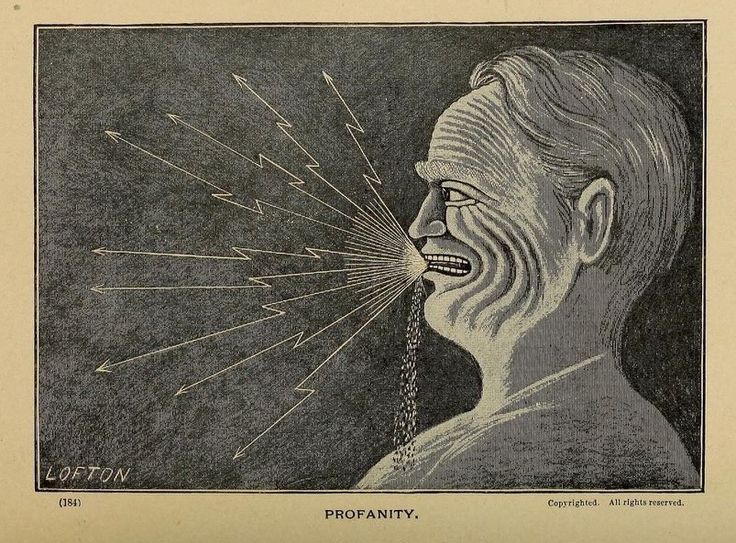
    Character Sketches or the Blackboard Mirror, a Series of Illustrated Discussions, Depicting Those Peculiarities of Character…Subjects Illustrated With Over Fifty Engravings, by George Augustus Lofton (1839-1914), is a peculiar but not necessarily transcendental religico-social-morality screed in the vein of more antiquarian emblem books.  The major attraction to the work were the very unusual, half-edgy, unschooled illustrations for the morals investigations made by the author–which do approach a sort of transcendental nature, all on their own. The text I’m afraid pulls the drawings down some, as I’d rather work the stuff out with just the image and a title, the descriptions becoming very quickly a preachy jaundice of judgment more so than insightful observation–though the descriptions of the images do have their moments from time to time. 

    Blackboard mirror profanity[Source for all images, plus the text and rest of the images, located at Internet Archive, https://archive.org/stream/charactersketche00loft#page/n11/mode/2up   ]

    I think the drawings by Lofton are remarkable for their  (probably unschooled) expansively unusual possibilities, all of which are very outre for the close of the 19th century.  The human figures are certainly very stylized, but the background and foreground bits are generally very oddly aggressive, and off-putting.  

  • Mars Misspelled & Cleveland as Canada! (1908)

    JF Ptak Science Books   Quick Post

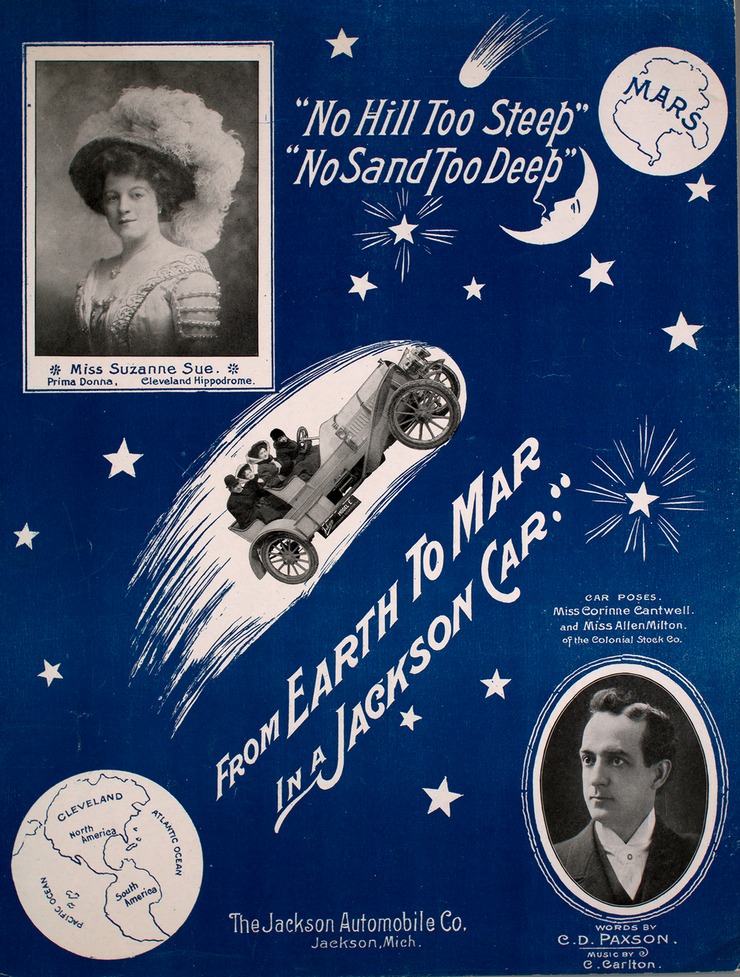
    In my big, old, sloppy cruiser that is this blog, I have misspelled may things, even after “editing” and forcing my way through squiggly spell-checks (sp?). I am not a good editor, so I appreciate one when I see it, And generally I squint m way through misspellings in others, until they get to be (1) very simple, (2) very obvious, and (3) published. The sheet music shared here is a great example of a something-I-cannot-identify:  first, it is pretty though not well designed; second, Mars is misspelled, somehow; and thirdly, “Canada” has become “Cleveland”.  

    I’m fairly certain that I have never heard anyone ask/wonder, “Is there life on Mar?”, or utter “Mar, the red planet”, or “we’re being invaded by aliens from Mar!”.  “Mar” looms large in the copy for the sheet music, and I just don’t know how that was missed–which means it probably wasn’t, and was made so to rhyme with “car”, though it would’ve been easy to spice up the slogan and make it all correct if “car” was plural.  

    The “cleve” part of  “Cleveland” (at least in the very earliest roots of the word) was no doubt applied to Canada because of the Cleveland to the featured/endorsing singer, Miss Suzanne Sue, of the Cleveland Hippodrome. Otherwise the Jackson car was made 100 or so miles away, in Jackson, Michigan, which means I guess that the Cleveland/Canada designation should’ve been “Jackson”. In any event it seems as though there is something for everyone in this sheet music cover.  

    MArs jackson auto

    [Source: Levy Sheet Music Collection, Johns Hopkins, http://levysheetmusic.mse.jhu.edu/catalog/levy:060.062]

    ·Posted by :

    ·in:

    —
  • The Popular Plane: Aeroplane Sheet Music Covers, 1897-1911

    JF Ptak Science Books  Quick Post

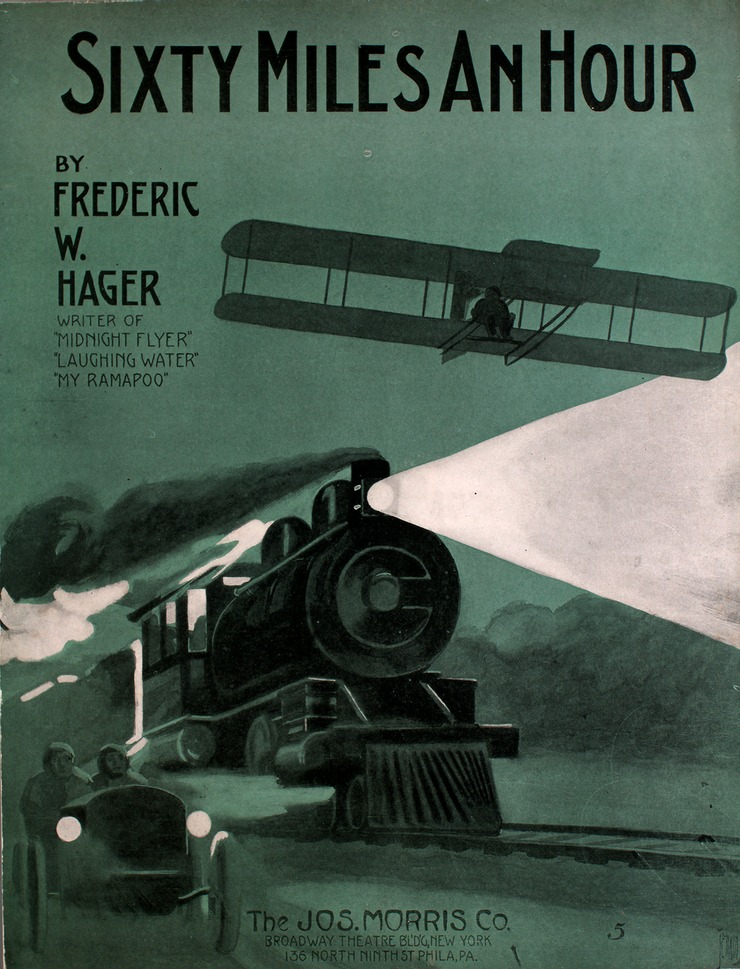
    I’m posting these following sheet music covers because of their lovely airplane covers. They are located at the wonderful (and highly available and useful) Lester Levy Sheet Music Collection at Johns Hopkins University.  

    Aeroplanes levy sixty

    “Sixty Miles an Hour. March and Two-Step’,  Frederick W. Hager, 1910.  [Image source: http://levysheetmusic.mse.jhu.edu/catalog/levy:059.065]

    ·Posted by :

    ·in:

  • James Reese Europe and the Harlem Hell Fighter Band

    JF Ptak Science Books   Quick Post

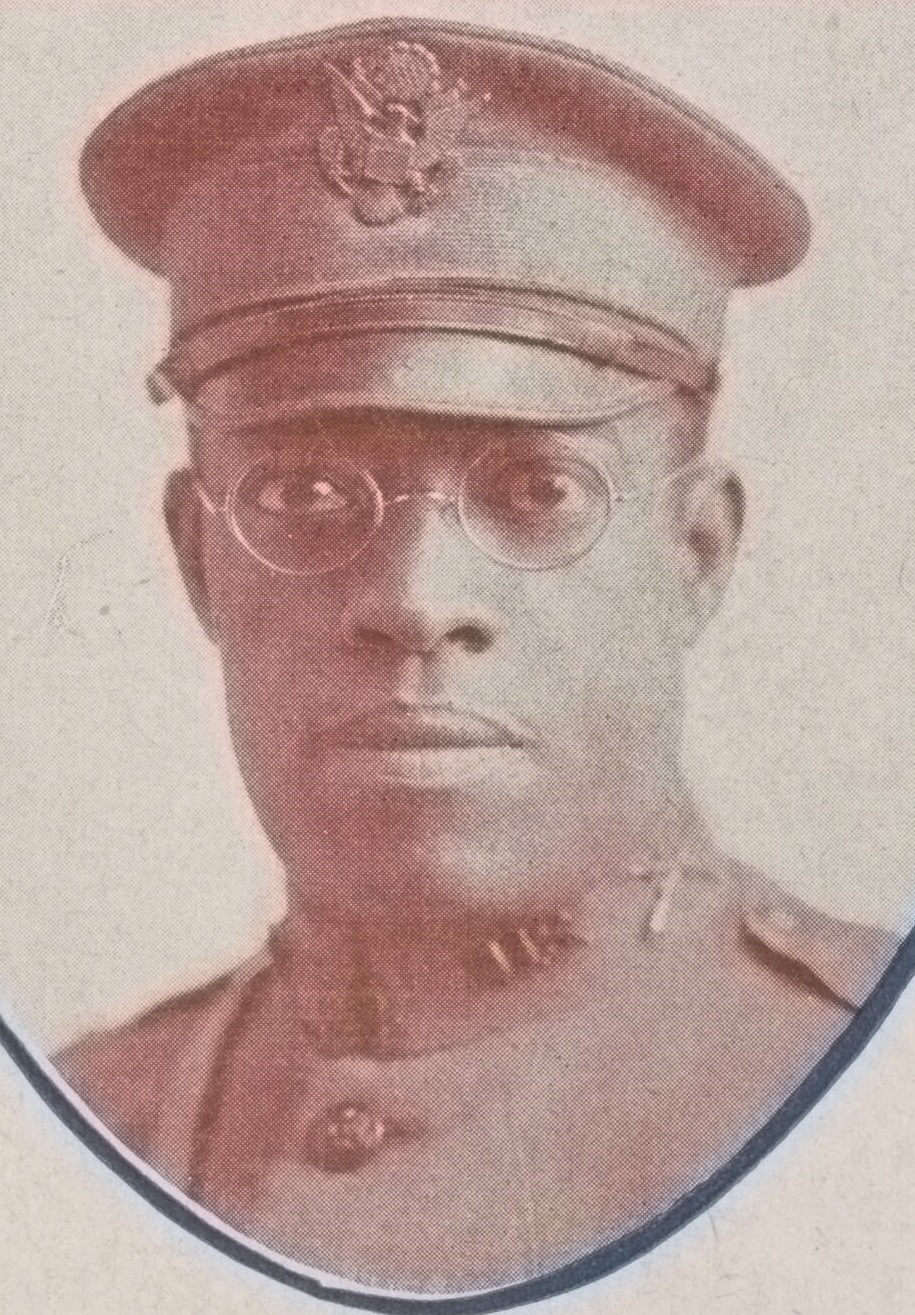
    This is an absolutely fantastic portrait of  James Reese Europe (188-1919)–the “Martin Luther King of Music” according to Eubie Blake–showing him as a lieutenant in the U.S. Army in 1917/18.  Europe enlisted in the 15th National Guard Regiment, in Harlem, and arrived overseas on January 1, 1918, the conductor of a military orchestra.  The 15th was eventually re-mobilized as the 369th, better know as “The Hell Fighters” and “The Harlem Hell Fighters”, and which served with very high distinction.  

    I’m posting this because I like Europe, and this is just a hands-down get-out-of-my-way portrait of the man.  

    James reece europe

    [Source: http://www.loc.gov/item/ihas.200038842/}

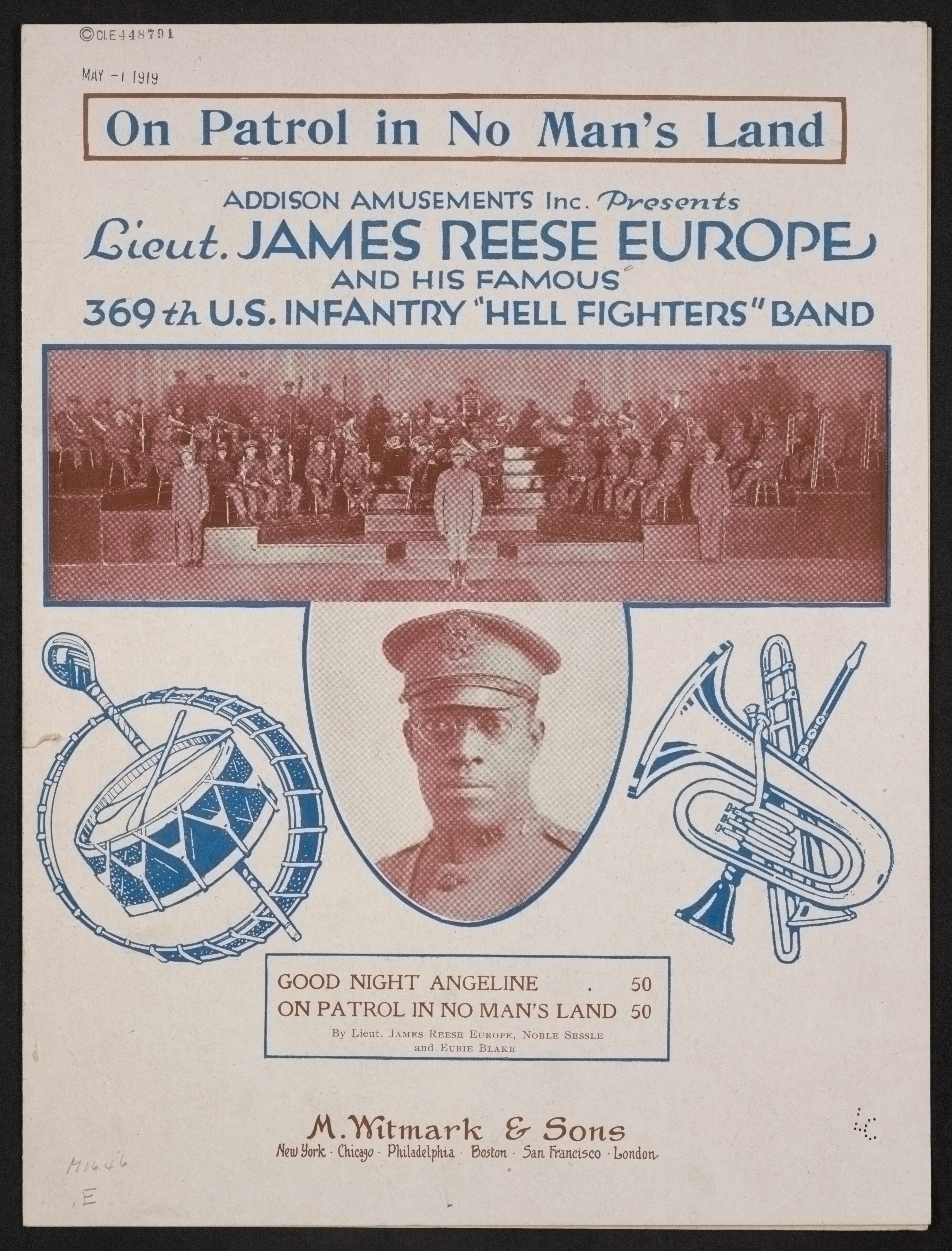
    Here’s a cover of one of Europe’s pieces of sheet music:

    Europe sheet music

    [Source: http://lcweb2.loc.gov/diglib/media/loc.natlib.ihas.200202032/0001.tif/3898]

    And in keeping with the portrait above, a study from the music:

    Europe large image sheet music


    Also, here’s a recording made by Europe and found at the Library of Congress National Jukebox: “The Castles in Europe”,  Europe’s Society Orchestra, 1914http://www.loc.gov/item/jukebox.3728/  

    …with more streaming audio from the Library of Congress here:  http://www.loc.gov/search/?in=&q=%22james+reese+europe%22&new=true

    Lastly, and again from the L.C., here is the full text of  the not-published Memoir of Lieutenant “Jim” Europe, by Noble Lee Sissle, completed in 1942.  http://memory.loc.gov/cgi-bin/query/r?ammem/aaodyssey:@field(NUMBER+@band(musmisc+ody0717))

    ·Posted by :

    ·in:

Recent Posts

Archives

Categories