JF Ptak Science Books Quick Post
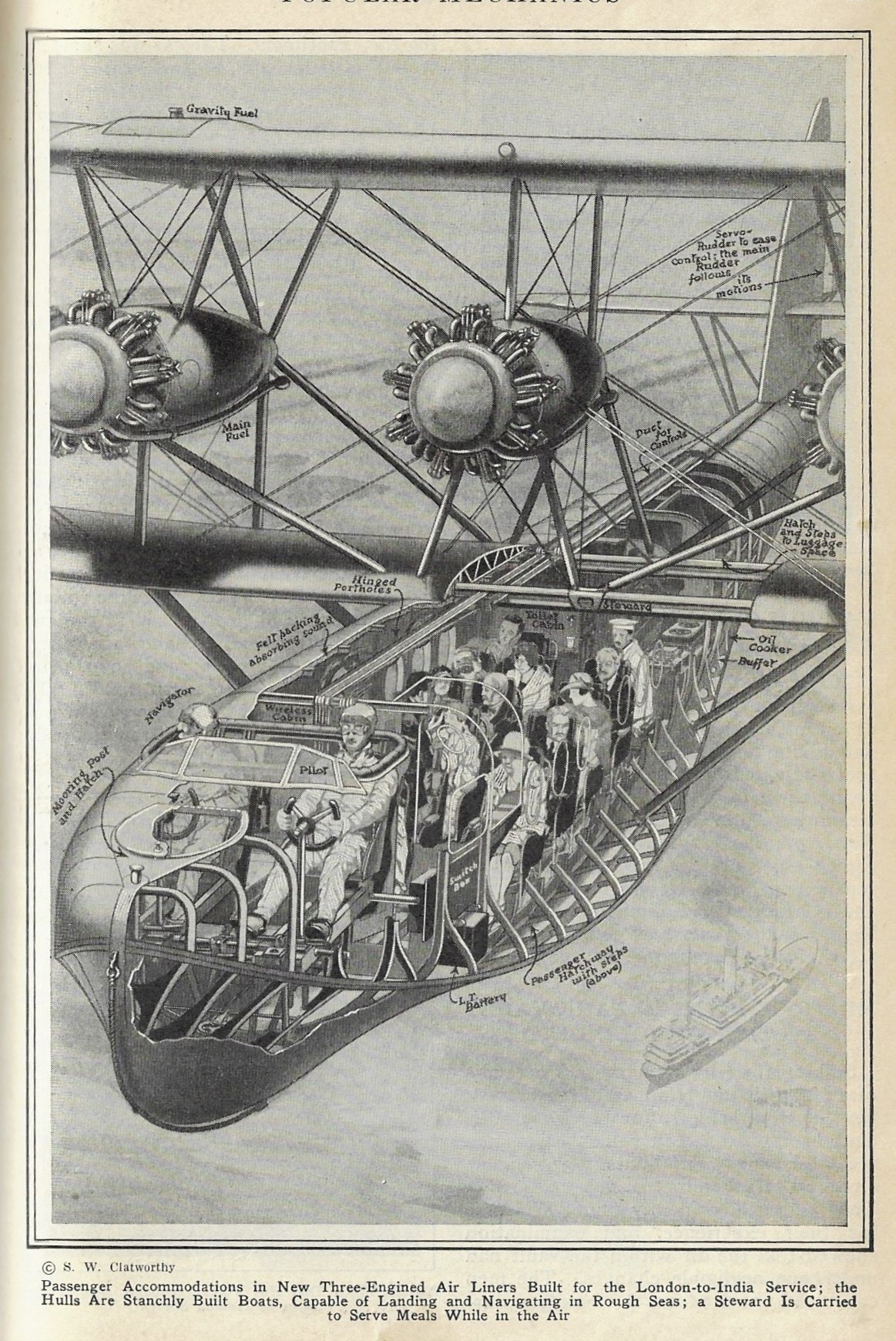
These oblique cross-section and cutaways have been near-and-dear imagery for a long time, and I’ve probably made 50+ posts on this blog sharing them. This drawing is by S.W. Clatgworthy and appears in Popular Mechanics for March, 1928– it depicts the not-identified and brand-new “Short S.8 Calcutta”, which made its first flight the month before. The airplane was designed for the Mediterranean leg of the London-India service of British Imperial Airways (1924-1939 when it merged into BOAC and then in 1974 became British Airways) and was the first stressed skinned metal hulled flying boat, and was constructed by Shorts1. Its three Bristol Jupiter engines pulled the aircraft along at about a 100 mph cruising speed, which no doubt made for an exciting and relatively fast (by 1928 standards) trip to the East. The aircraft was pretty large for the day: 66′ long with a wingspan of 93′ and a height of 23′. It was probably noisy but relatively comfortable, the passengers being served food and drinks by a steward. Far less comfy were the pilot and navigator, who as you can see were in an open cockpit.
Notes:
- Shorts was the firm started by the Short brothers in Battersea in 1908 and which was the first aircraft manufacturing company to make production airplanes.