JF Ptak Science Books Reworking post 842 (from 2008)
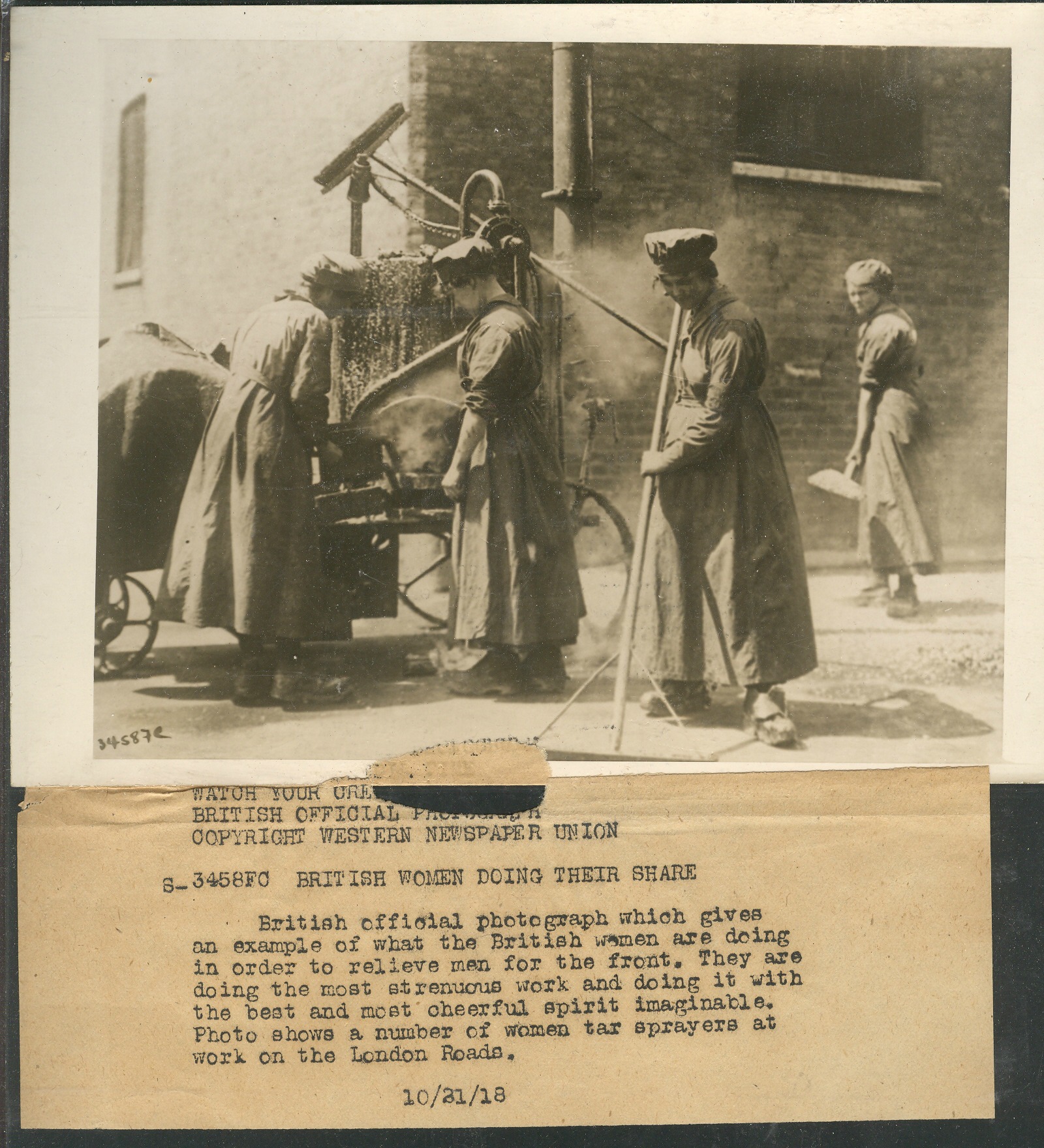
In England, women were welcomed to the (paid) workforce during the years of the First World War (1914-1918)—their employment in traditionally male positions enabled those they replaced to go out to the front and die for their country. Thus the women seen here in the News Photo Service Agency photograph (taken in 1918), working at spraying tar in the streets of London, were appreciated, and tolerated. For women in England the War blasted away the contrivances of formally scheduled employment: something like 12% of fall women in England were working as servants and house cleaners. Come the War, women were offered jobs of revolutionary stature in a wide range and variety of work. The Civil Service employment for women went from 33,000 in 1911 to 102,000 in 1921, and trade union membership rose 160% (357,000 in 1914 to 1,000,000 in 1918 (with men showing a 44% increase at the same time); for the most part, though, employers took advantage of the situation, and the women still generally earned less than half of the salary as comparable male workers did (or the men they replaced).