JF Ptak Science Books Quick Post
Vast throngs of people have resisted technological innovation/improvement/invention one way or anther, from the rejection of the printed word because it would badly influence the spoken word tradition; to the telegraph, which would impact the facility and beauty of letter-writing; to the telephone, which would adversely impact the telegraph and become an assault on privacy, and so on. Some of these complaints were real and valid; others, not so much so. Today I found another episode in this sort of thinking, this time relating to possibly rejecting the telephone in terms of aesthetics–and that being the complaint of the ugly nature of telephone wires and their impact on a cityscape. The city here was Bath, 1885, and the town leaders were considering a proposal by a telephone company, not all of whom were in favor of the relatively new (1876 for all intents and purposes) invention.
- “…Heywood hoped that in considering the application from the telephone company they would remember that what it proposed to do was a real public improvement. Mr Rubie pointed out that Bath was not so much a commercial town as a resort for visitors and he was therefore opposed to the disfiguration of the city by these telephone wires. Mr Sturges contended that the telephone was a thing that should be welcomed and not shelved.”
In any event, the mayor of Bath said that the telephone should not be “neglected”, and decided to establish the telephone exchange. And so:
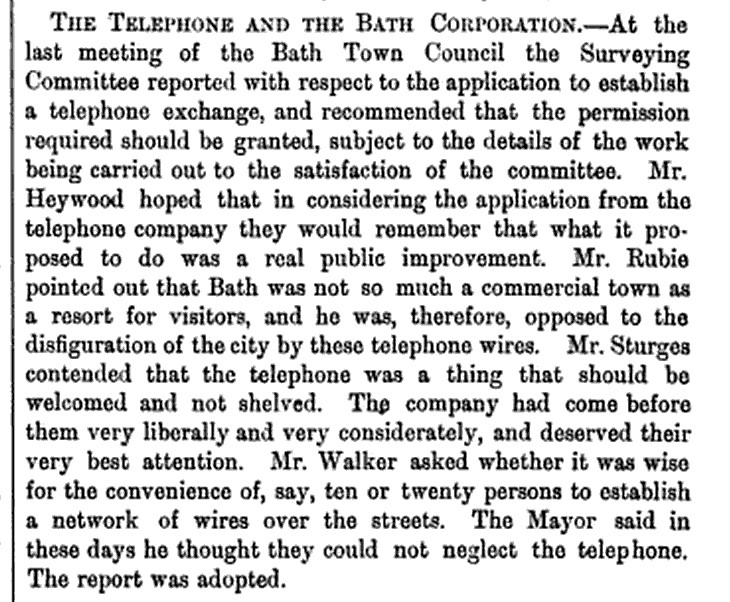
[Source: The Electrician, 25 December, 1885.]