JF Ptak Science Books Quick Post
spaghetti (or is it linguine?) and subways is not a common topic on this blog, but that was all I could think about (and eating some eggplant parm) when looking at some of the illustrations in Robert Ridway’s1 “The Rapid transit Subways of New York City”2. This was a pamphlet published in 1929 for a World Engineering Congress in Tokyo, and Ridway (67 years old at this point) was a very old hand in public works/building/transport in NYC, and gave a pretty masterful review of the subway situation in the city. In any event, this is the image that stopped me:
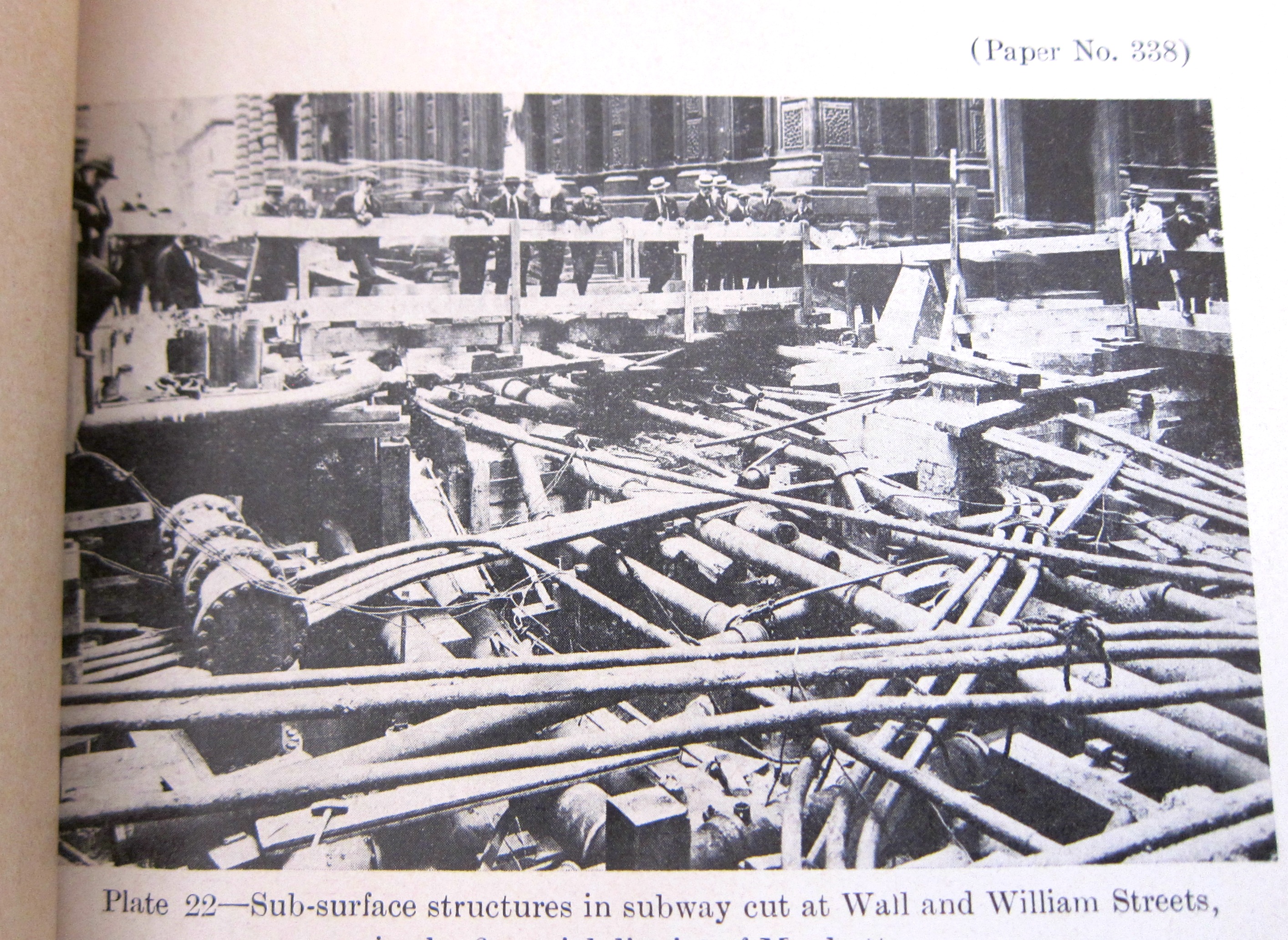
Holy moley.
Here’s another, this one a plan, and for a different location, but, still…:
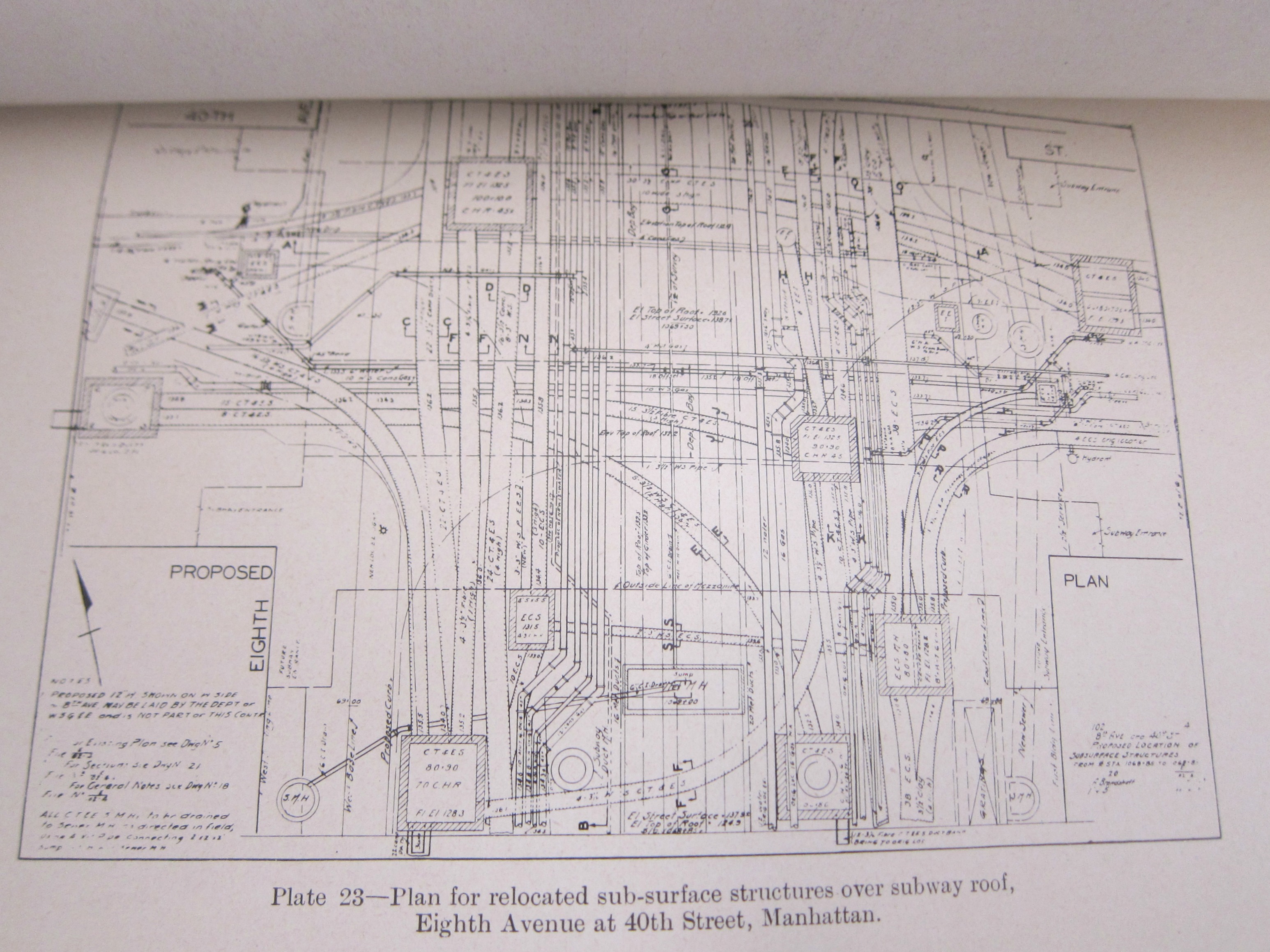
I don’t have that much to say about the ordered anxiety of these images except “oh, my”.
Notes:
1. “Robert Ridgway, sometimes spelt Robert Ridgeway, (born Oct. 19, 1862) was an American civil engineer. He did not study engineering at any school, but worked 49 years for New York City in the construction of major projects, and became Chief Engineer of the Transit Commission in 1921. He became president of the American Society of Civil Engineers (ASCE) Metropolitan section. Further he became president of the national ASCE in 1925. The Ridgway Awards are an annual award of the ASCE Met section named for him.”–Wikipedia
2. 9×7″, 32pp, plus 17 plates (two folding). This is an offprint, or at least a separately-printed paper, presented by Ridgway at the World Engineering Congress in Tokyo, 1929, and presumably printed there. It is a SIGNED copy to another engineer of high order, Maj. General W.L.Siebert. There are NO copies located in WorldCat/OCLC.