Here’s a very fine example of a beautiful piece of engineering and a lovely rendition of it. The artwork is an engraving found in Abraham Rees’ monumental Encyclopedic Dictionary…,and was published in London in 1811. It shows in exquisite detail the straight line dividing engine of Jesse Ramsden (1735-1800), which here is being used as “an engine for cutting screws”. A person could crawl all over this image in varying degrees of microscopic inspection and find beautiful internal images nestled within the larger drawing in a Ken Burns/fractal-y way.
[Click on each image for a better resolution–seems as though this is restricted in a general view by my host]
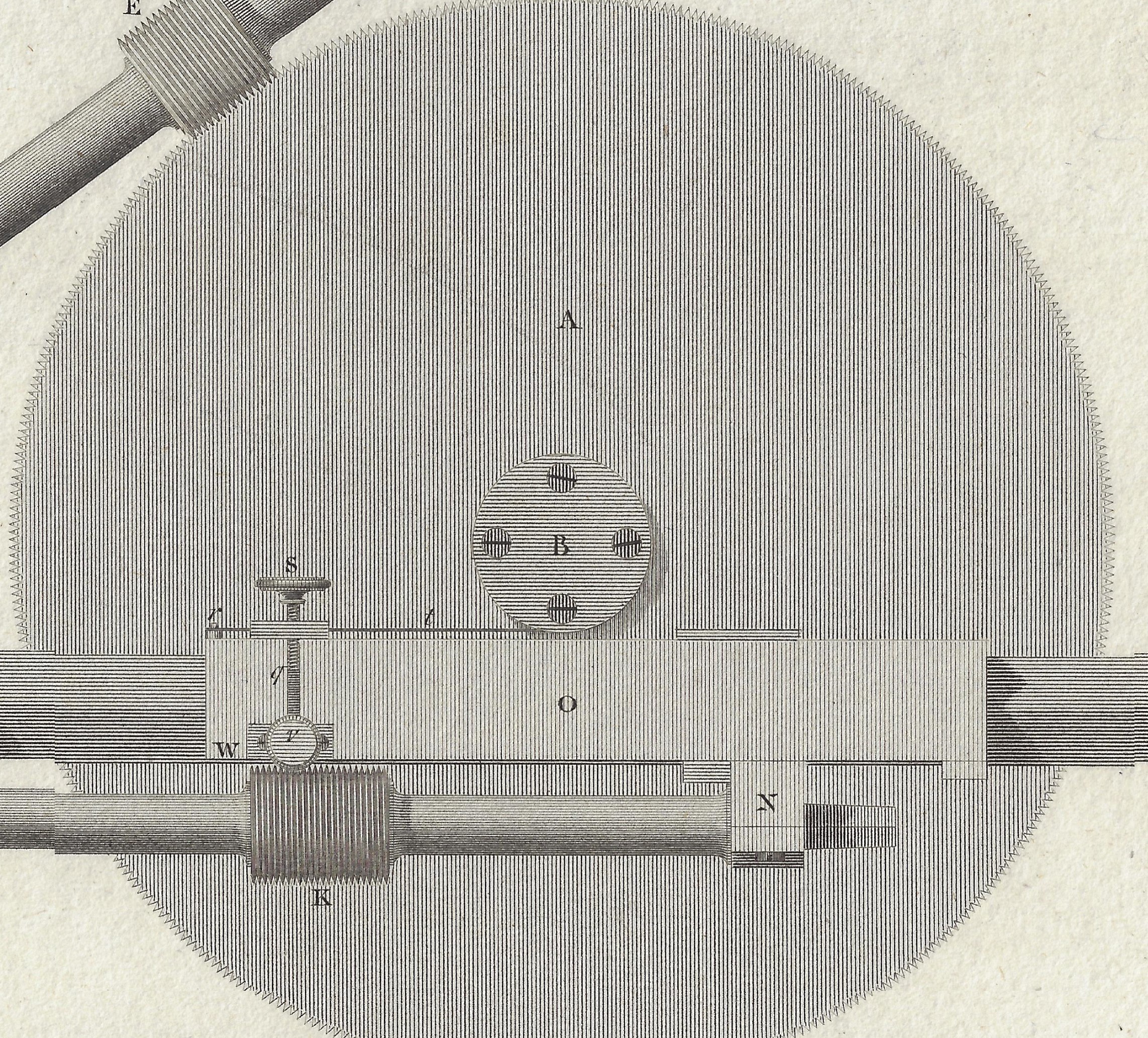
This and other similar inventions by Ramsden’s were key additions to the developing scientific technologies of the Industrial Revolution, integral improvements necessary for integral improvements. (And as we see below in the Wiki quote on this subject, one of the very first things that Ramsden fabricated with his new and accurate lathe was to construct and even more accurate lathe before getting to work–that is an essential and brilliant idea.) Simply put, to make something more precise you need a more precise instrument, and this is exactly what Ramsden made.
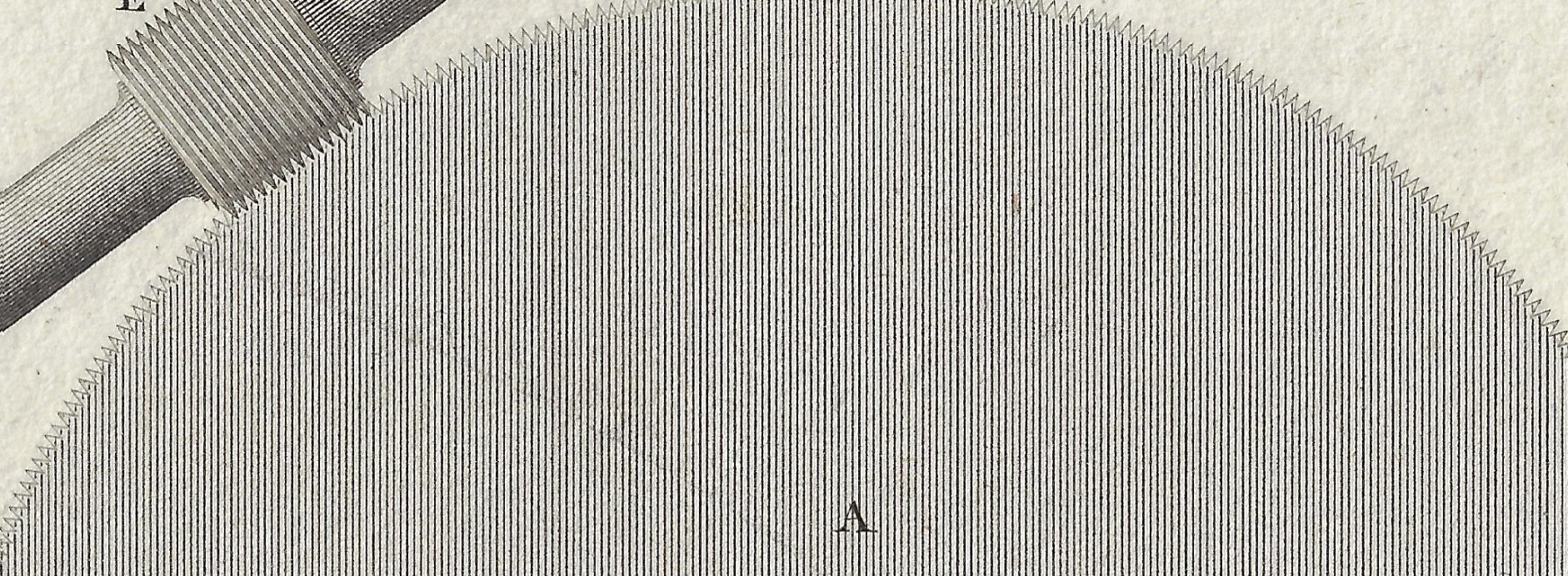
And the full engraving:
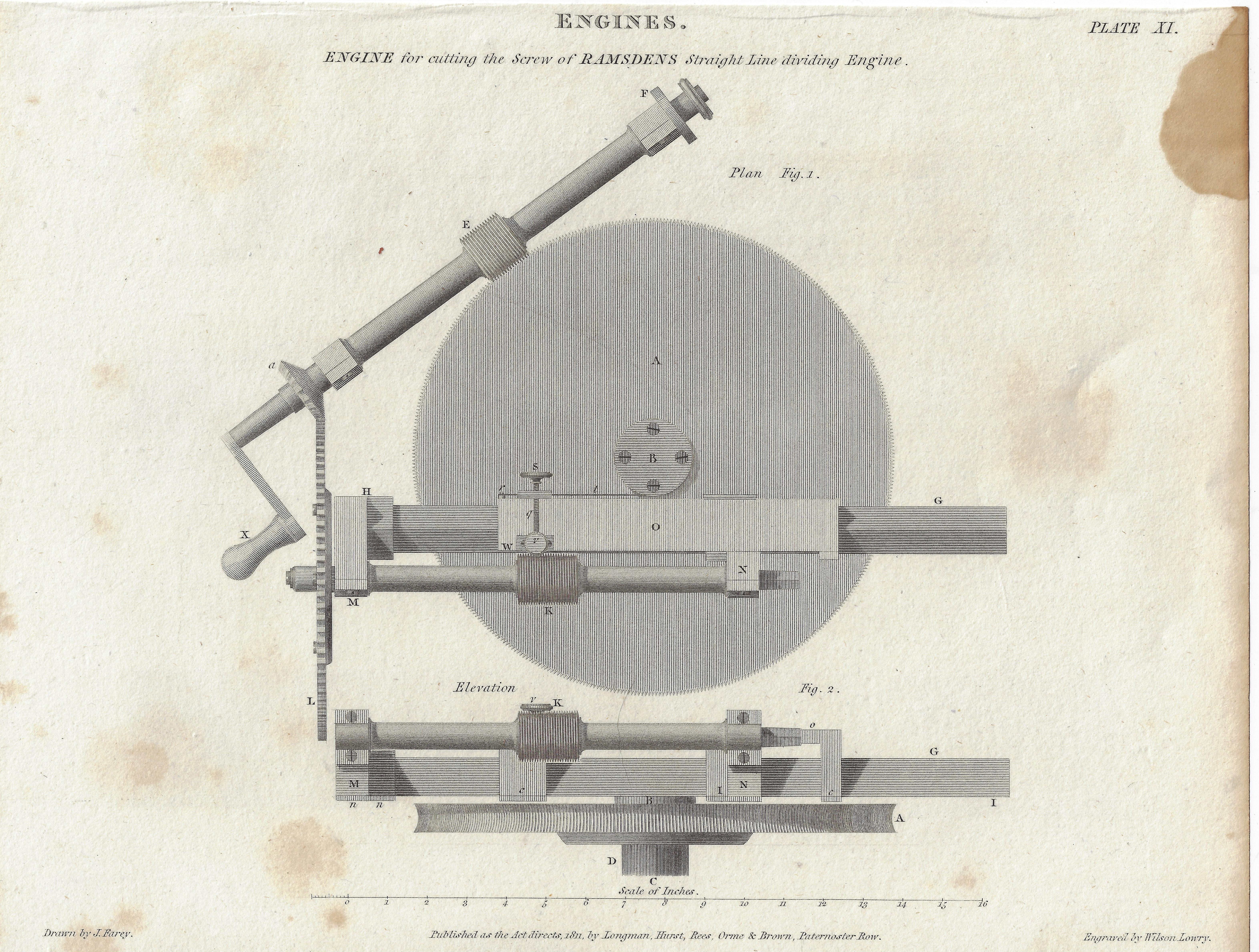
Notes:
From Wikipedia–“The first truly modern screw-cutting lathe was likely constructed by Jesse Ramsden in 1775. He appears to have been the first person to put a leadscrew into actual use (although, as Leonardo’s drawings show, he was not the first person ever to think of the idea), and he was the first to use diamond-tipped cutting tools. His device also included a slide rest and change gear mechanism. These form the elements of a modern (non-CNC) lathe and are in use to this day. Ramsden was able to use his first screw-cutting lathe to make even more accurate lathes. With these, he was able to make an exceptionally accurate dividing engine and in turn, some of the finest astronomical, surveying, and navigational instruments of the 18th century.”