JF Ptak Science Books Post 2723
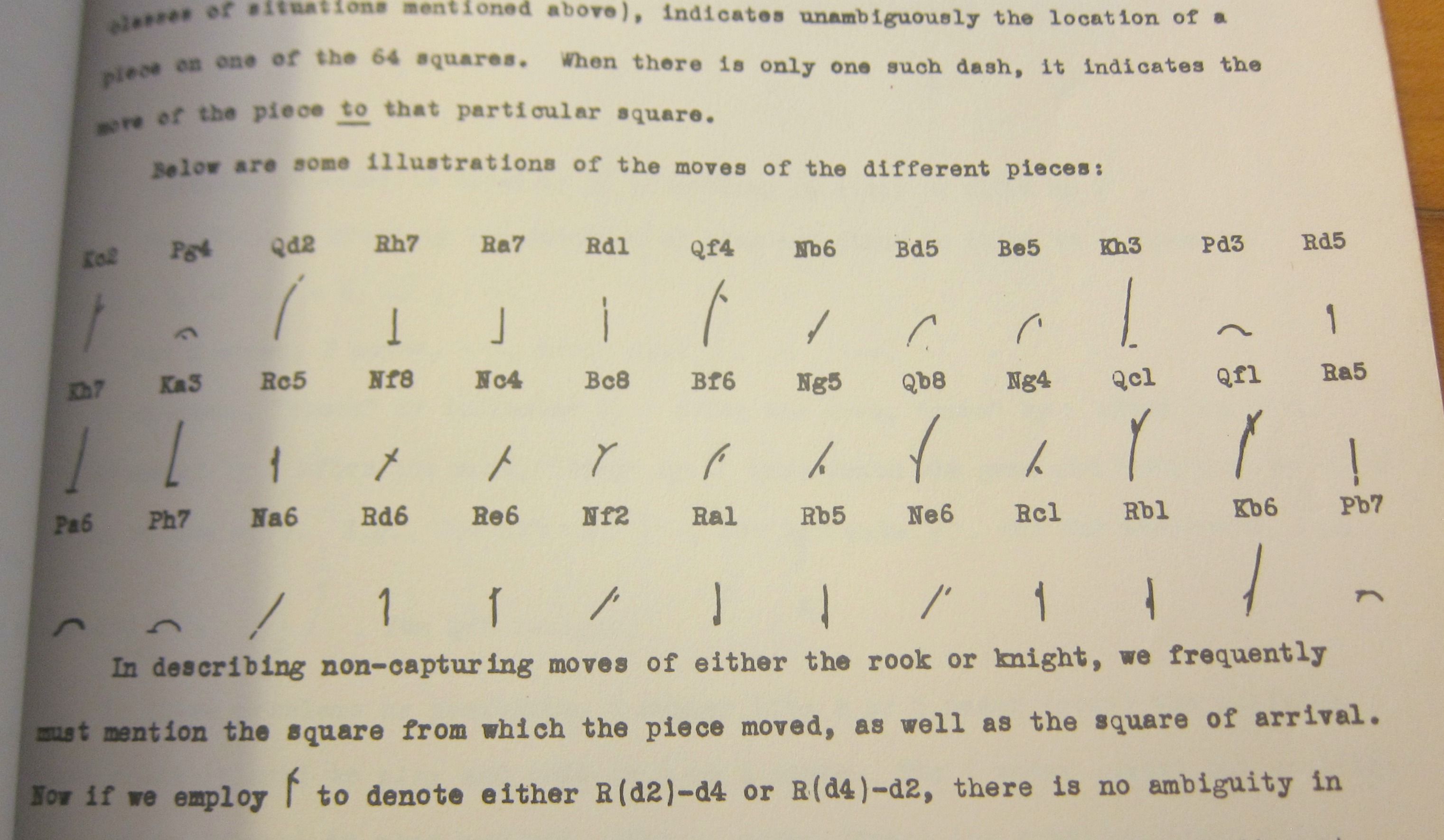
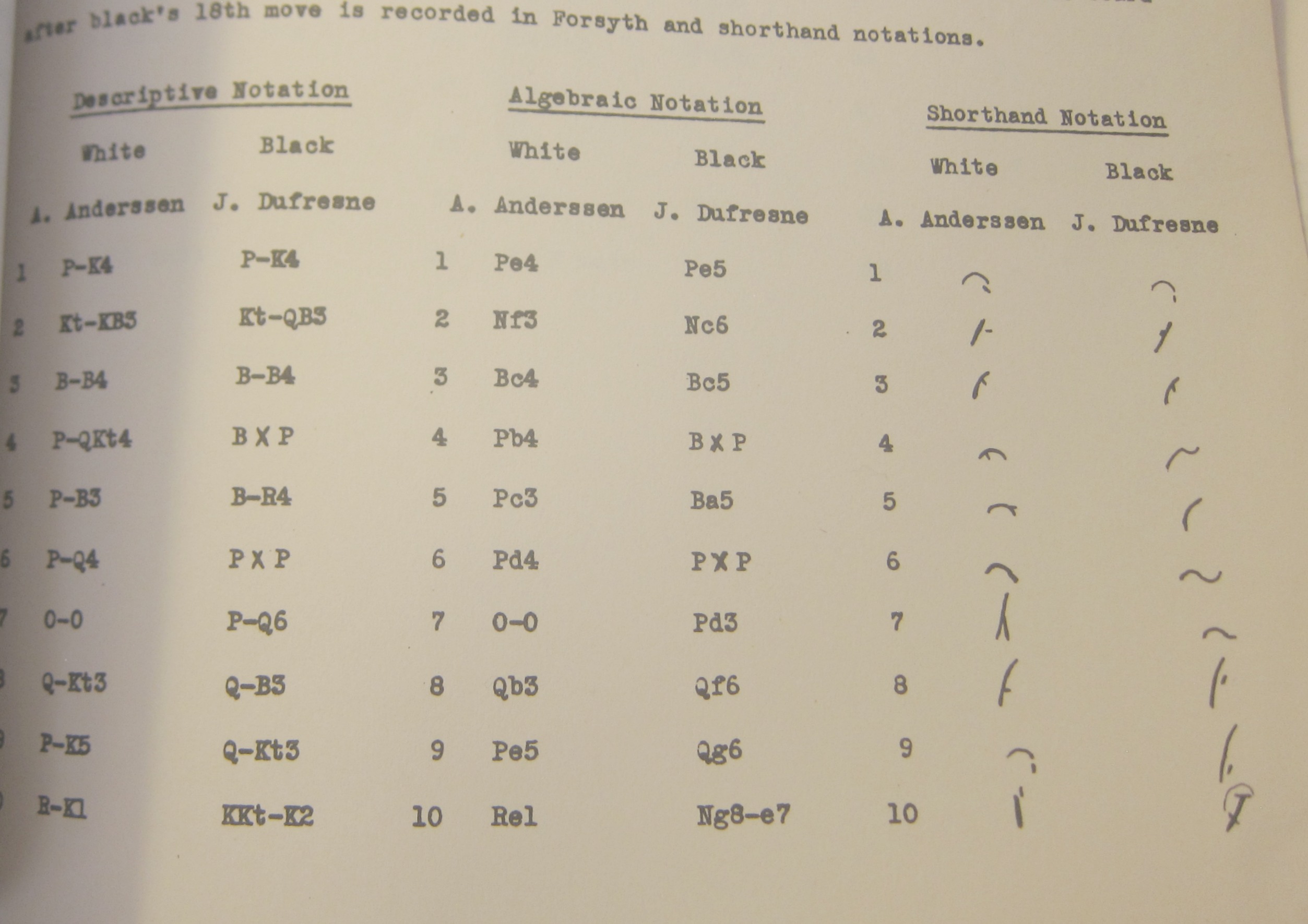
In the occasionally speedy and occasionally not-speedy world of chess, it may sometimes be necessary to take speedy-or-not notes, and one attempt to address this need was made by Herbert E. Salzer in his non-mysteriously titled Chess Shorthand (1971). Chess notation–like algebraic notation (in different iterations), English notation, ICCF notation, and so on–can reach back hundreds of years. Even the shorthand approach tried out here in mathematician Salzer’s short work dips back into the 19th century (‘Shorthand Notation” by M. Barnard, a short entry in Chess Player’s Annual and Club Directory, 1893-94 by Mr and Mrs T.B. Rowland, London, 1893). But the Salzer work is really pretty interesting, and so I thought to at least surface the work.
The thing is is that Salzer’s work has a certain autonomous, musical, simple splendor to it–that or it has the feel of a cipher (or a double cipher). Here’s an example:\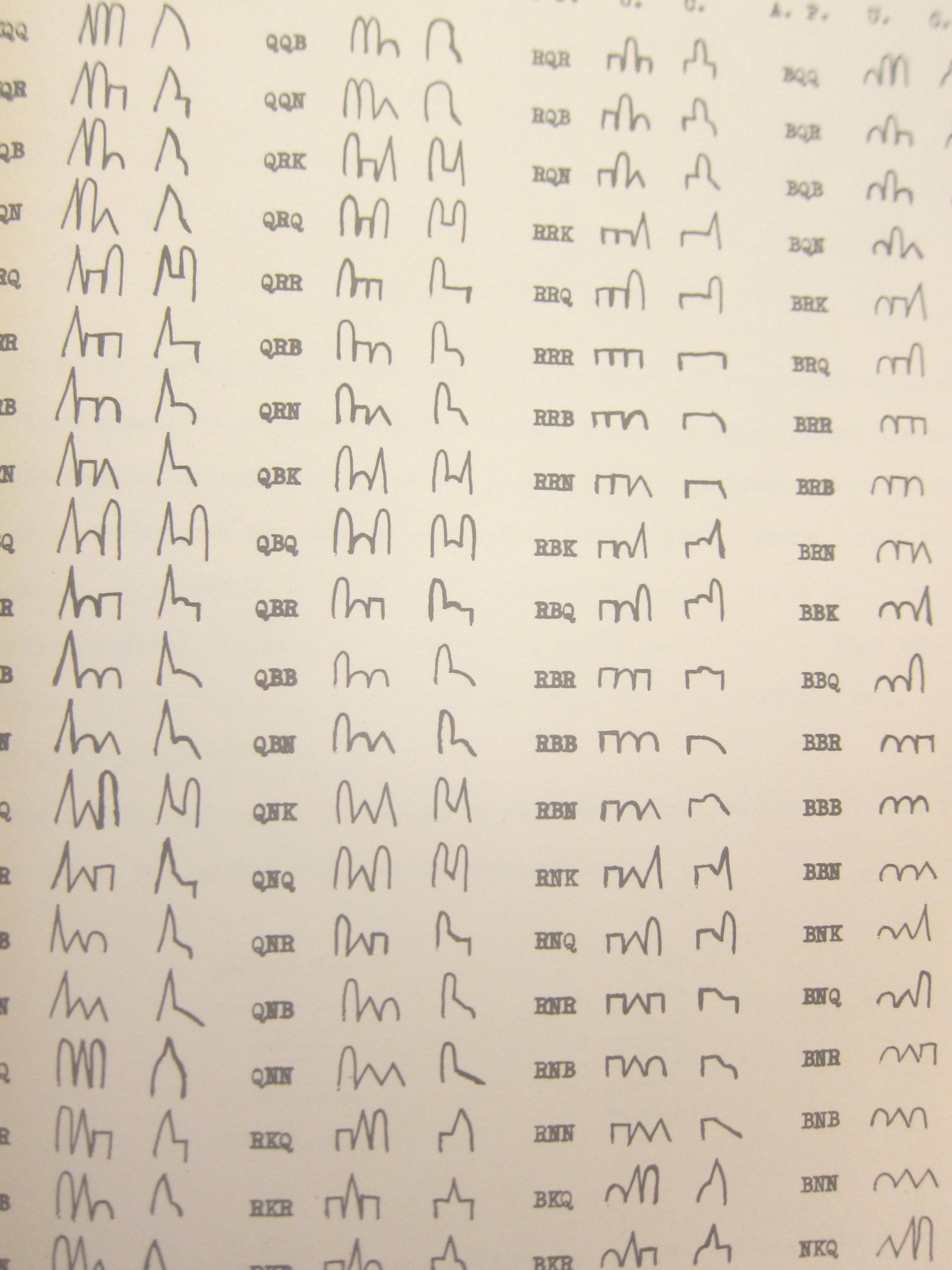
On second thought a shorthand for chess at first (or second) blush doesn’t really seem terribly necessary, given the brevity of the notation that already exists or existed. The author though is convinced that such an effort was needed, or at least wanted the intellectual exercise of creating such a thing, and provides in twelve packed pages the foundations of recording chess moves quickly, if not inconveniently. The notation the author creates reminds me somewhat of Gregg shorthand, but not as much as alien written communication system, being mostly soft lines and bumps. More striking is that as soon as these abbreviated symbols are introduced, the abbreviations’ abbreviations appear. In the attempt to make things less complicated this system may complicate things—maybe not, because I really can’t tell. Perhaps if you became fluid and fluent in the new symbolic language the Salzer system becomes a godsend, or perhaps not. I can appreciate the thinking and the work, and the interesting road that the author took to his shortcut, but I’ve never been good at those, once taking a “shortcut” to a location directly south of me and finally getting to it 3x-longer than usual, getting to the place going north. All that said, I respect this work, though I really don’t understand it–in a certain way Mr. Salzer created a work of art in creating his writing system.