JF Ptak Science Books Post 2499
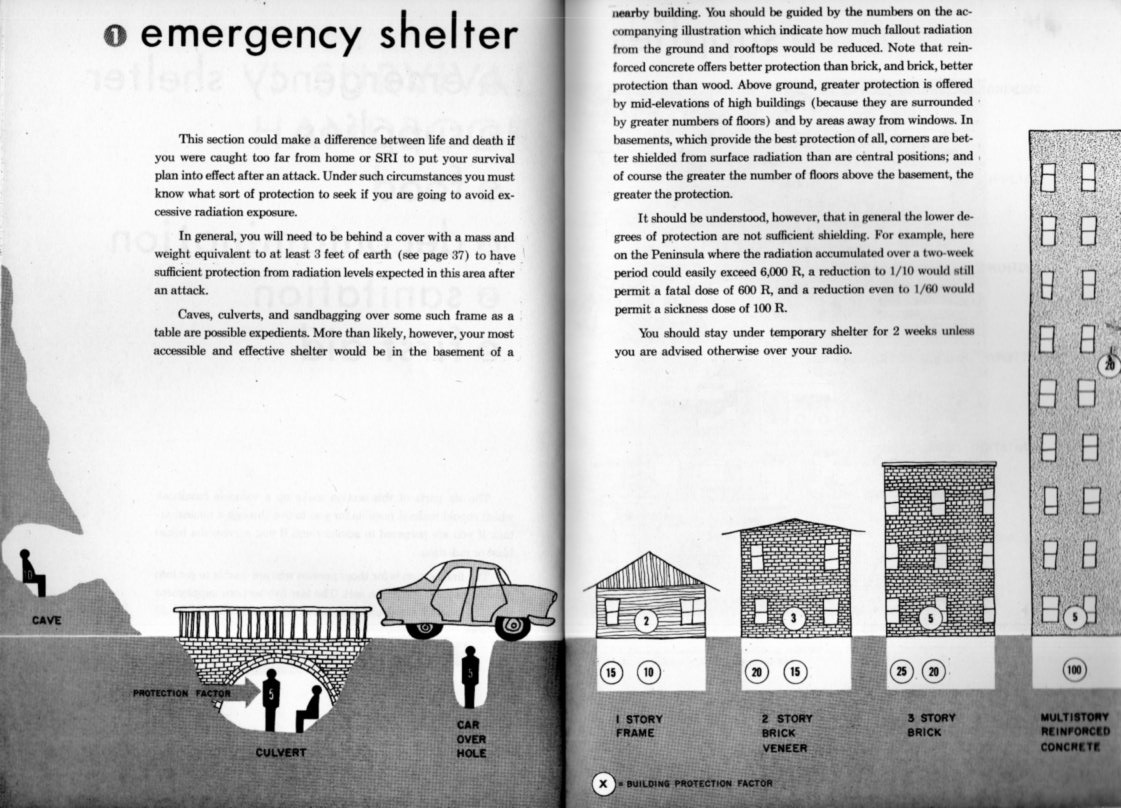
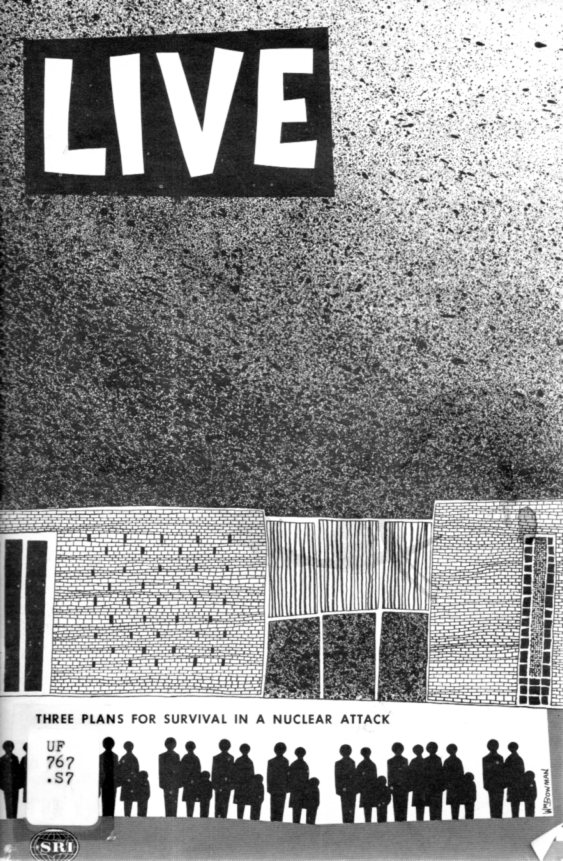
In the not-modest stream of thin paperback nuclear holocaust survival literature in the 1950’s and 1960’s appears this effort: LIVE, Three Plans for Survival in a Nuclear Attack. It was published by the Stanford Research Institute in 1960, and was part of nuclear health physics pioneer Lauriston Taylor’s donation to the National Council on Radiation Protection and Measurement, where I bought it some time ago when they were thinning out their stuff. It is an unusual publication to me for its illustrations, some of which are odd, and a few of which are positively semi-surreal when view out of context.
The pamphlet overall is fairly helpful, assuming that you had as much time to get yourself together in an impending attack, and that is a major assumption. But I’m sharing this tonight for some of those images–and the cover, which is an unusual design in itself, not the least of which is the heavily-borrowed part from LIFE Magazine.
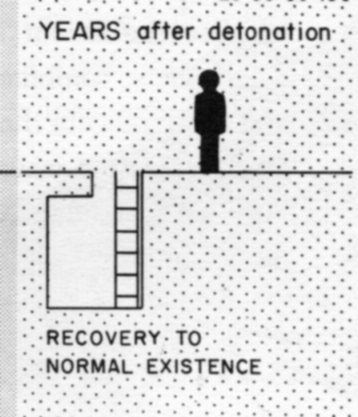
So the first of the few that I’ll post here (above) is a detail from this illustrated graph, a march of teh intellect and survival from being in a dark hole to a rather stiff return to normal existence:
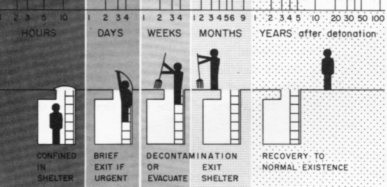
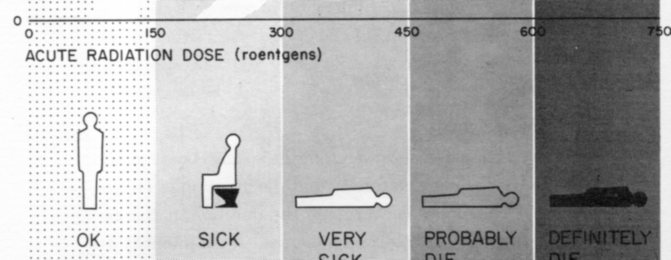
Here’s another sobering bit, showing a progression of NOT-recovering to normal existence:
And of course the hole:
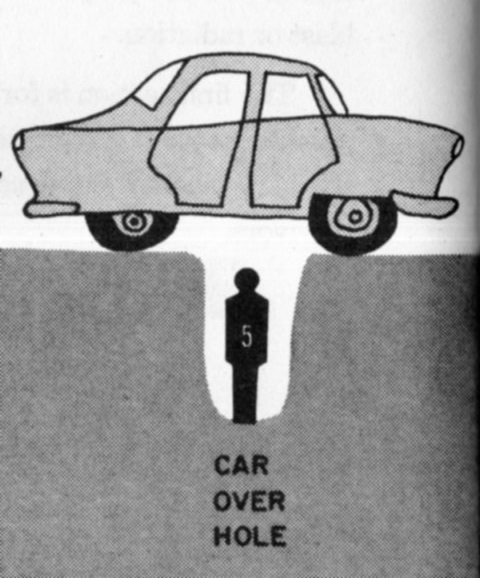
Which is a detail from:
And the cover, which has some blotchy Ralph Steadman-y elements:
And so, there are some of the major themes. I found the work unsettling in general for using mostly dark silhouettes for the people, that profile having been sort of established to represent dead folks. Ah, well.