JF Ptak Science Books Post 2450
I found this interesting display of data on opinions of people in the United States regarding the war in Europe in 1939. The information is fascinating–and combined with further samples from opinion polls included below, contribute to showing the deep opinion that the United States stay out of the war, even to extremes. Everyone probably knows that the U.S. wanted to avoid the war, and to have the European War stay in Europe, and that there were many odd right-wing groups with famous/infamous leaders leading the way to isolation and self-interest, and that the general implications for the U.S.of an overseas war was more economic concern than anything else, but looking at the numbers in representations like those below it is still surprising to see how wide and deep those feelings were. It can certainly give a greater insight into the problems that Roosevelt faced even with trying to supply war goods to Great Britain.
First, the original chart:
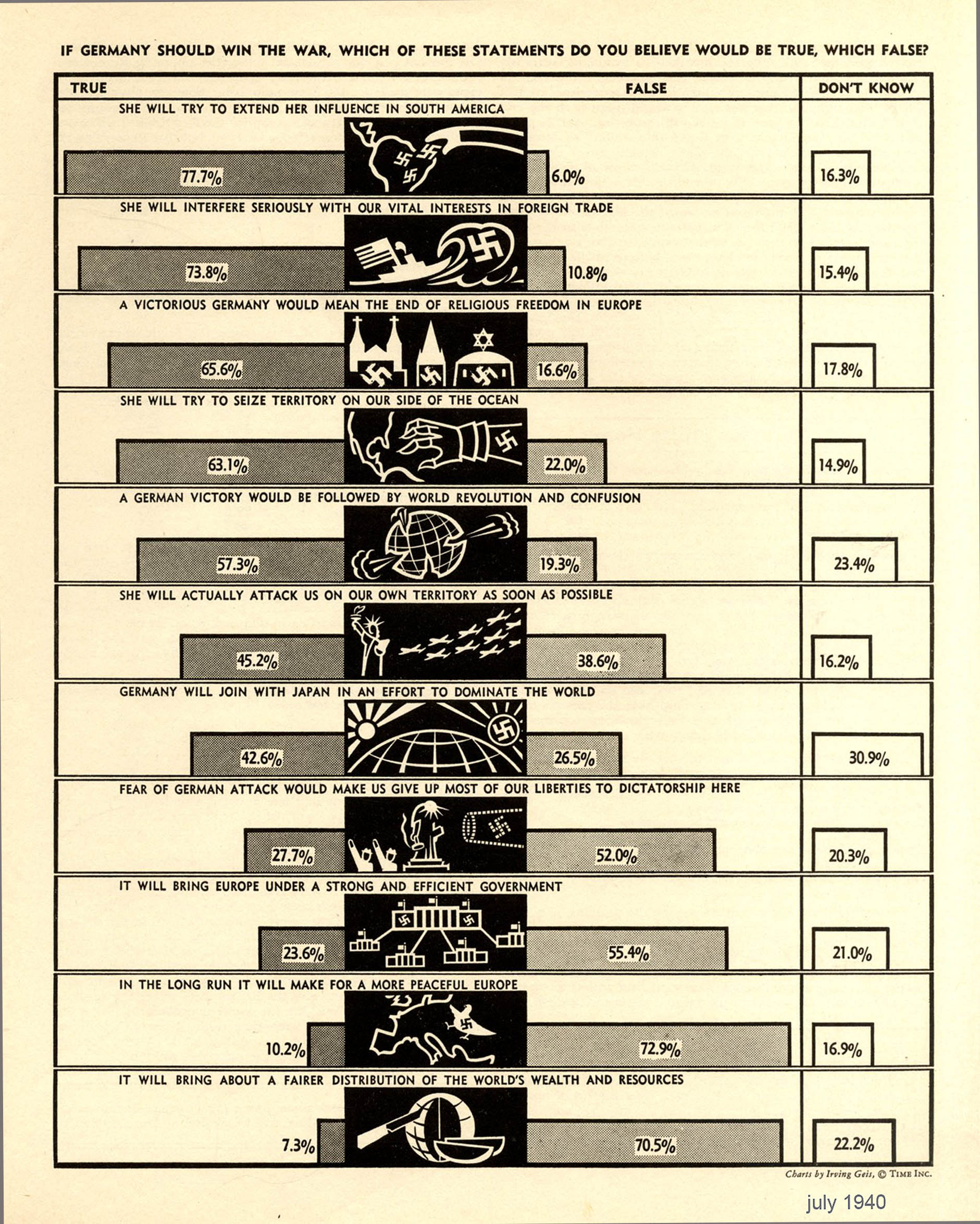
The source for this graphic is the excellent site,Visual Loop (http://visualoop.com/blog/17696/vintage-infodesign-56), who has provided an extended reference for more of Irving Geis’ (1908-1997) highly stylized and interesting work (via Visual Loop at http://www.fulltable.com/VTS/f/fortune/diag/b.htm). Geis might be recognizable to some as a long-time illustrator for Scientific American among many other journals, and also for the semi-famous How to Lie with Statistics, which was published in 1954.
A similar source of data is found at the Roper Center UConn, with a ton of interesting bits in it, though it does not describe the source of the data. (This article was published in Public Perspective, Dec/January 1998.) One lead led me to this article (below) on the Gallup Fortune Public Opinion Poll in the Public Opinion Quarterly for December 1940, and it may have provided some of the data for the infographic, but I haven’t yet read in closely.
Here is an interesting sample from Roper:
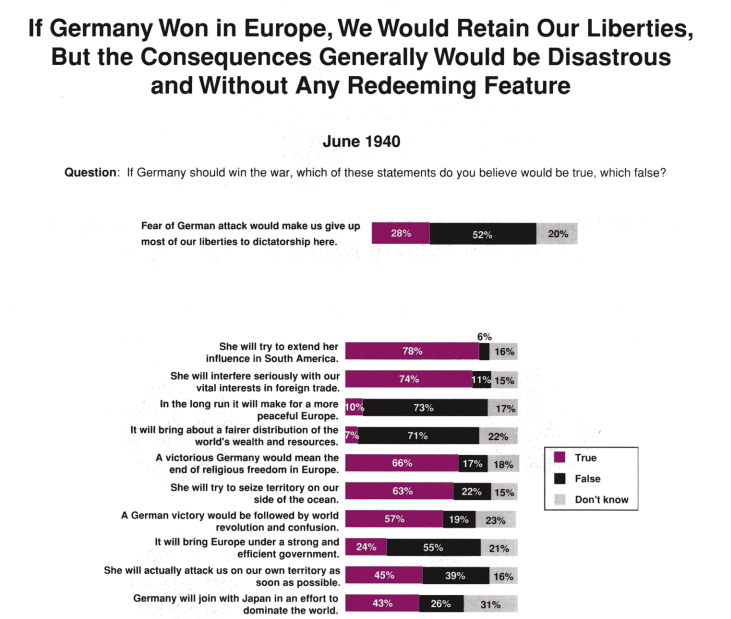
In any event the Public Opinion Quarterly (“Gallup and Fortune Polls” Vol. 4, No. 1, March 1940 pp. 83-115) piece is interesting on its own, and I’ll no doubt return to it, though tonight I’m just interested in a few bits.
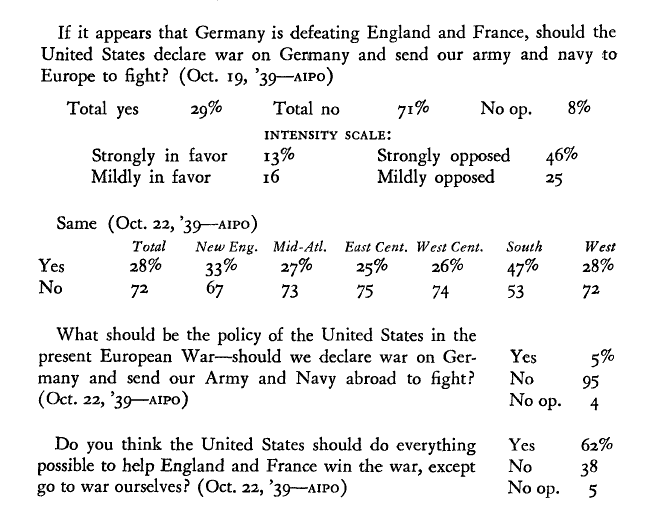
[Gallup and Fortune Polls The Public Opinion Quarterly Vol. 4, No. 1 (Mar., 1940), pp. 83-115]
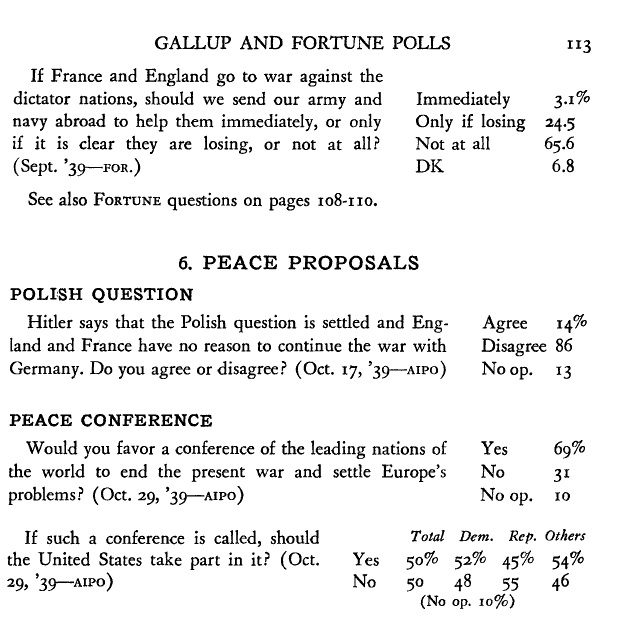
I’ll come back to this in a bit–for now I would just like to post the links.