JF Ptak Science Books Post 2371
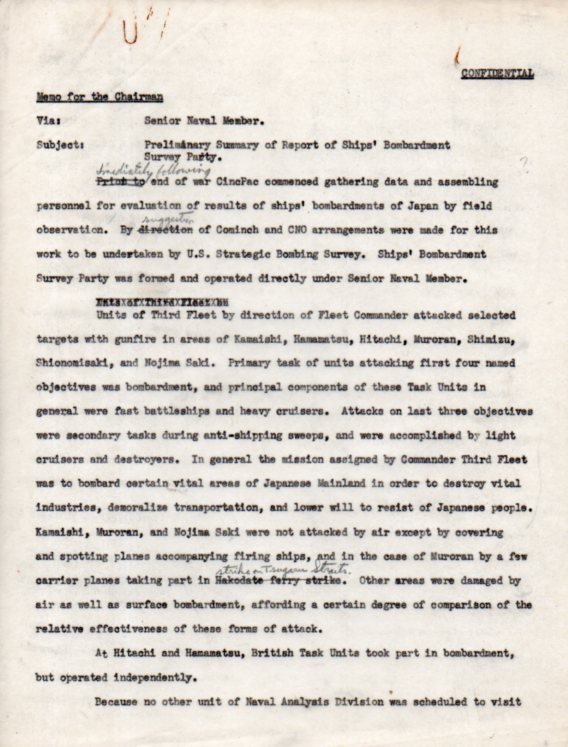
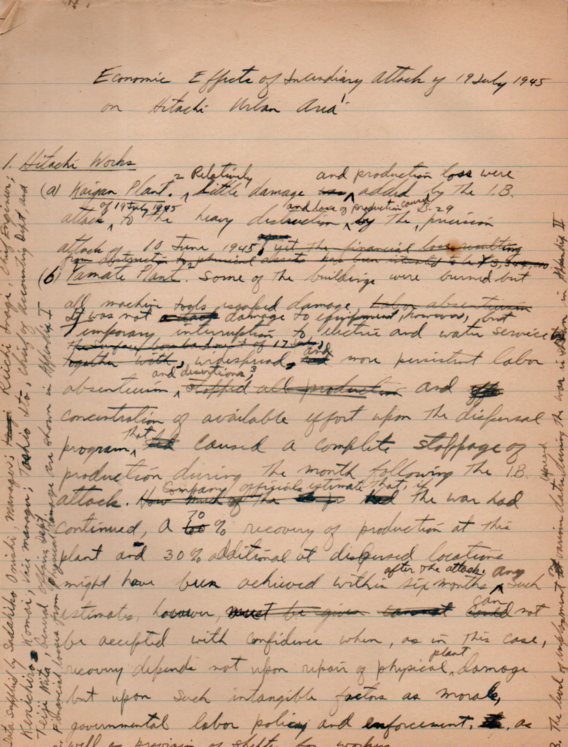
The U.S. Strategic Bombing Survey was a massive intelligence operation composed of a 1000-person team. It attempted to establish the successes and failures of American bombing operations during WWII, resulting in a 208-volume set of findings for the war in Europe and another 108 volumes for the war in the Pacific. Atomic bombing was another matter. I am not going to address the effectiveness issues of different sorts of bombing here–it is a very large and complex issue, and just outside the scope of what I set down to down just now and the amount of time I have. What I did want to do was share this typed/manuscript material (below) that was kept by a member of the analytical team serving in the Pacific. It is interesting to see how the form of the final reports took shape from some of the original notes.
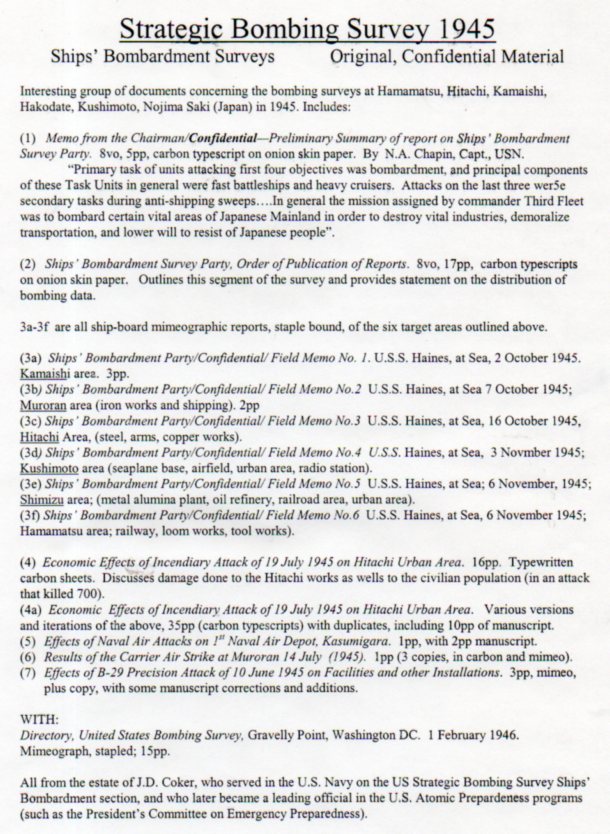
This small archive—from the estate of J.D. Coker, who served in the U.S. Navy on the US Strategic Bombing Survey Ships’ Bombardment section, and who later became a leading official in the U.S. Atomic Preparedness programs (such as the President’s Committee on Emergency Preparedness)—are mimeographs and manuscripts that comprise what seems to be the summary of the Navy’s bombardment of Kamaishi, Muroran, Hitachi, Kushimoto, Shimizu and Hamamatsu. This was about the extent of the Allied naval bombardments against Japan, as it was not possible for battleships to maneuver close enough to the Japanese homeland to fire against industrial and production centers. (It may have also been the case that the aircraft used to protect the assaulting ships could have perhaps done as much damage to the targets as the ships themselves.)
The archive includes: