JF Ptak Science Books Post 2282
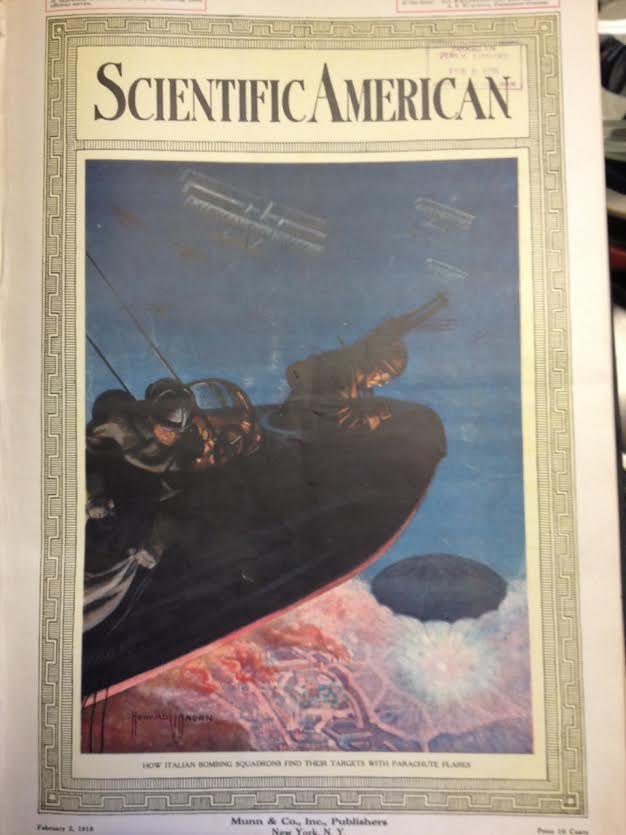
As I assemble the WWI stuff here for a possible anniversary blog of interesting war and homefront images (nothing like planning and foresight for these things) I was putting together the war years for some of the journals, including the magnificent Scientific American. Flipping open the top volume (1918) revealed a big blue/dark print that was entirely unexpected–an Italian bomber carrying out a mission at night using flares to illuminate the target area.
At first I had an irrational serendipitous memory of Santa Claus using a lantern to find his way, but, well, as I said it was an irrational association. (There’s another odd memory of a picture of Santa in 1917/18 delivery his presents on a flying tank, but that’s another story…)
I had only once before seen a portrayal of an aerial night attack, depicting a futuristic flying machine–a dirigible in this case–using electric lights to target fleeing villagers and warriors of an African town. My memory is not working on this one, so unfortunately I cannot date and reference it, though I do believe it appeared in the Illustrated London News around 1907 or so, just a few years before someone started dropping explosives from planes for real.
But this image (appearing in the February 2 1918 issue) is for something quite real, though its effectiveness (to me, as a non-historian of this field) seems highly suspect. What we see are three airmen in an Italian Caproni1 releasing flares above what they assumed to be a target. The gunner at front watches closely as the co-pilot (there are two men in that cockpit, one being mostly obscured) readies another flare.
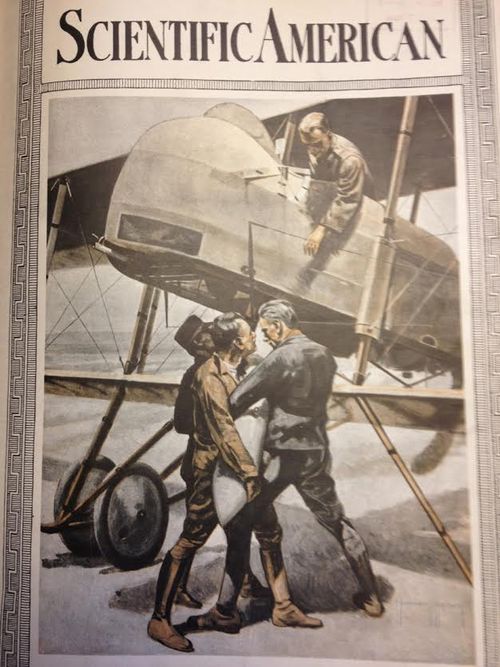
By the way, here’s one way of loading the payload (from a few issues later):
The general characteristics of the Caproni (3) aircraft, via Wikipedia: