JF Ptak Science Books Quick Post
I simply love infographics like this—especially big skies filled with airplanes. I’ve written about other similar descriptions of sky-filled aircraft here.
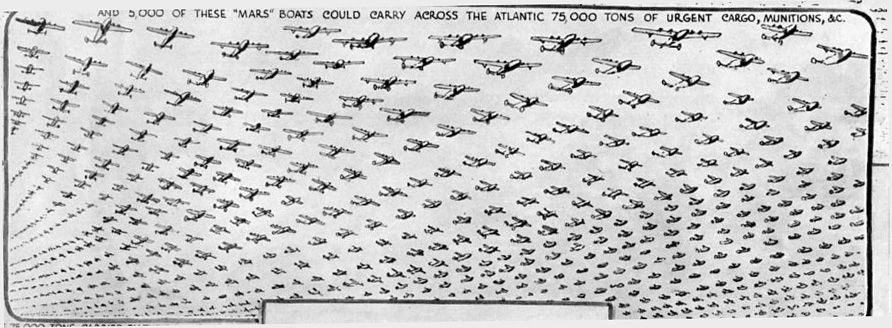
In October 1942 the war was shifting to the way of the Allies–the United States had come into the fight ten months earlier, Operation Barbarossa (begun in June 1941) was at this time being recognized as a complete failure (though the operation would continue on for two more years, costing 5 million German army lives, 20 million Soviet civilian lives, and 9 million Soviet army lives and more when all was said and done), and American military production was very well underway and unbeatable, and so on. The Battle of the Atlantic however was still very much underway, with action returned their, again, during the summer and autumn of 1942.
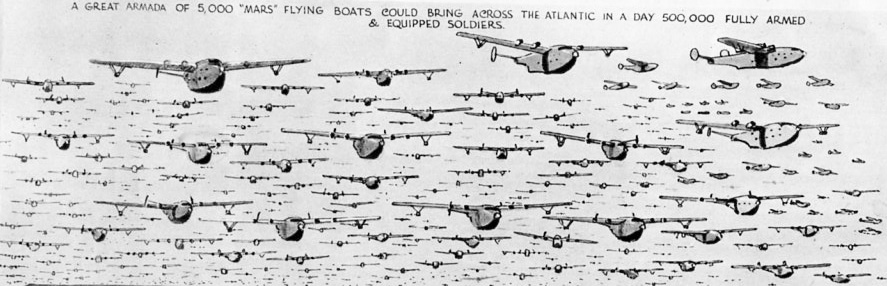
One way of defeating the U-Boot was to not sail the Atlantic much at all, and flying troops and supplies above it. As we can see in this compelling graphic from The Illustrated London News of 17 October 1942, the editors of that magazine made a case for the Mars flying boat. It was a theoretical case, as the 5,000 Mars planes depicted in the graphic never materialized–actually, it seems as though only seven were made.
But the case looked very compelling.