JF Ptak Science Books Quick Post An addition to in the post The History of Blank, Empty and Missing Things: Stone and Wood.
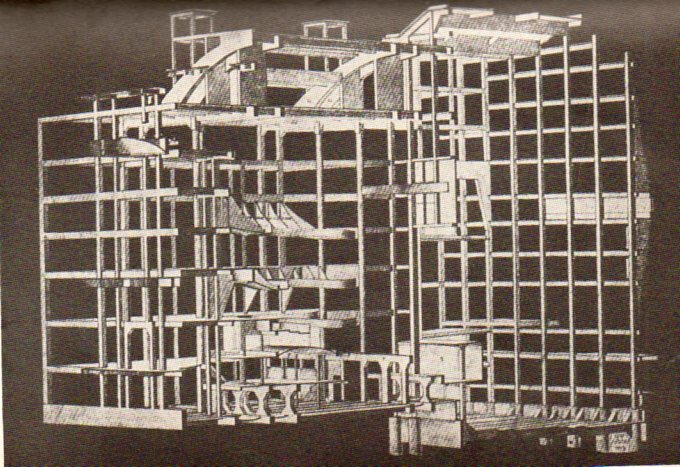
Auguste Perret, a modern master in the use and adaptation of reinforced concrete, drew this fantastic skeleton representation of his “Theatre des Champs Elysees” (1913)–it was the great stuff that held the building together, minus the walls and everything else that makes a building a building, and a revolutionary approach in modern construction. It reminds me strongly of this image
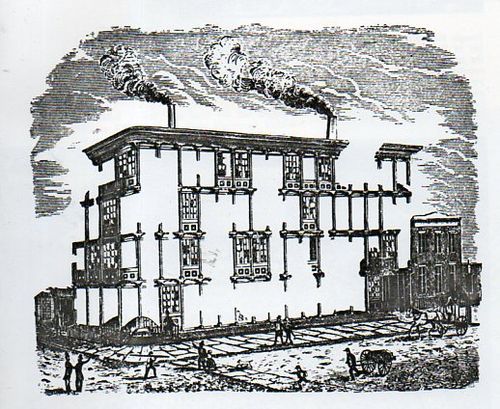
which is a remarkable illustration of the strength of the new approach to materials in architecture–cast iron–from a 16-page pamphlet by the inventor, architect and cast iron pioneer James Bogardus (1800-1874, Cast Iron Buildings, their Construction and Advantages, 1856 and 1858 second edition).
The history of concrete in itself is pretty interesting and of tremendous antiquity, dating as a very useful and extraordinarily sound material at least to the Roman times. The Peter Greenaway love affair (in his film “The Belly of an Architect”) with Agrippa’s Pantheon is one of concrete–the building stands today still of course, made of concrete, its dome still the largest un-reinforced concrete dome in the world.
