JF Ptak Science Books Post 1563
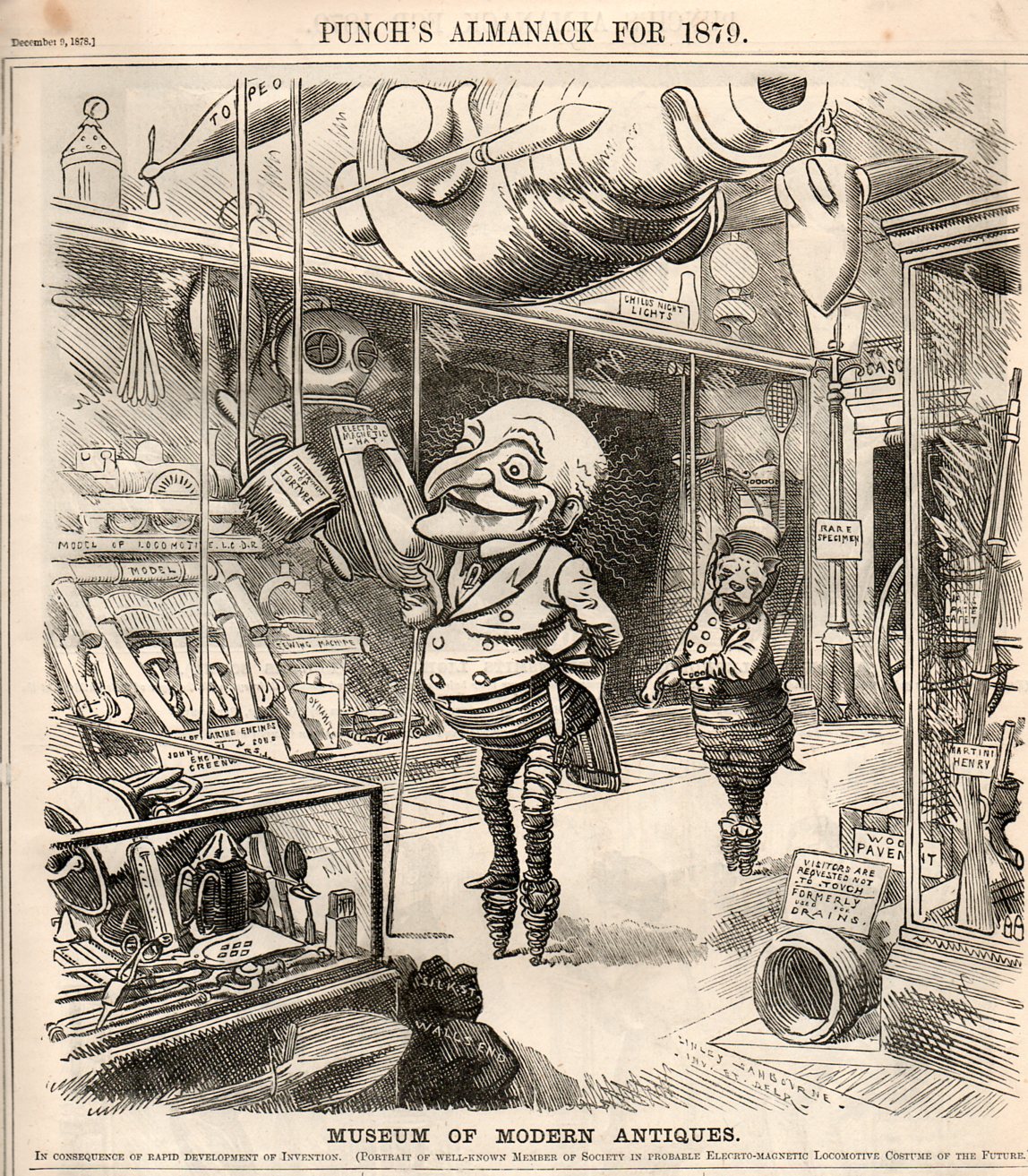
Yesterday I wrote a blog post on Thomas Edison’s anti-gravity underwear, a satirical series of images that appeared in Punch magazine in 1879. The leading image of the Punch almanac for that year carried forward the electrical possibilities of the day, and featured Mr. Punch himself, strolling via some odd electromagnetic transportation device through a museum in the near future of the technologies of 1879 since put to a rusty bed, surpassed by the expanding newness.
Now I’d like to take a bit of a closer look at the future “antiquarian” bits found in that museum.
First, the image in whole:
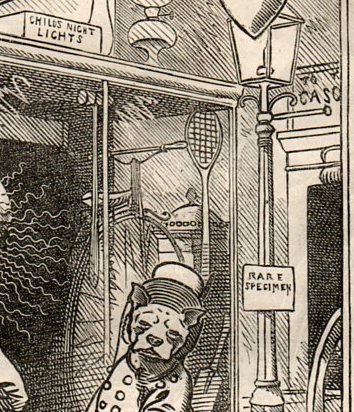
 Some of the modern conveniences to be left behind to the dust of the antiquarians and the curious included “childs night lights” (which would surely have been a luxury few could have had available to them in 1879), a street lamp powered by gas (which was even then giving off the stench of death owing to the newly-arrived electric light), a tennis racket, and a rather tall bicycle. All of these would actually be dramatically changing (except perhaps for the tennis racket) and substantially so, within the next decade-and-a-half.
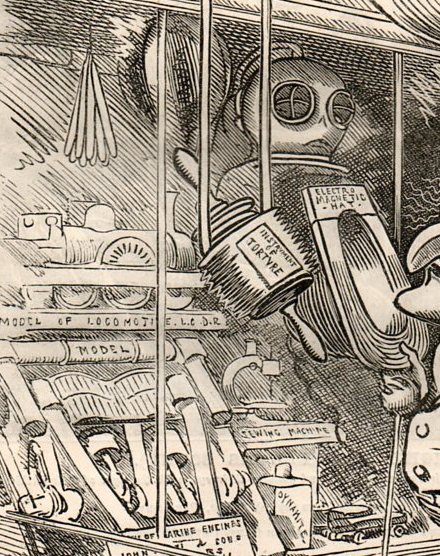
In the background we see a curious cabinet containing a deep-sea diving suit, candles, a boxing practice ball, a patent of a steam locomotive, another model of a propulsion system for a ship, a sewing machine (already in its third decade) and a box of dynamite (still relatively new at this time, having been patented in 1867). I am not sure what the “:instrument of torture” is.)
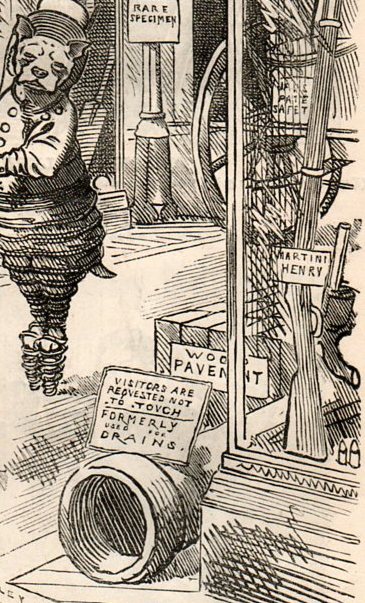
The Henry (repeating) rifle was also still fairly new on the scene in 1879, having been around since the late 1850’s but not really produced in any numbers until after the Civil War in 1866)
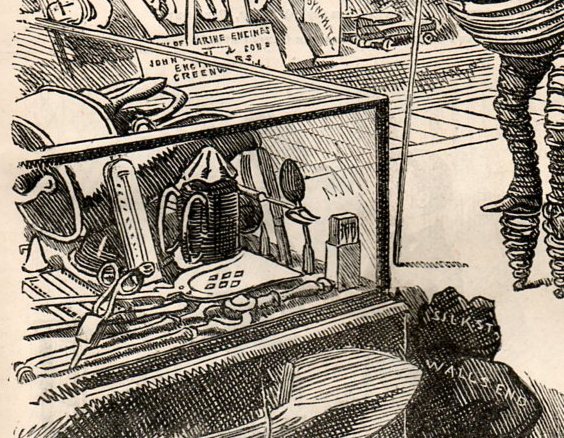
Perhaps most disturbing to the large percentage of viewers is this last detail of the glass case int eh foreground, which displays the average, everyday stuff that made a household work–a spoon, a thermometer, lantern, fireplace buddies, and even a candle snuffer. I imagine that people wondered–in 1879–what, exactly, would take the place of these staples? Better yet perhaps are the objects on the floor, labelled “Silk St” and “Walls End”. I take this bits to be chunks of coal, and the “Walls End” to be Wallsend, a coal and industrial community (grown up at the end of Hadrian’s Wall). Maybe that is the most disturbing element of all, to think that coal would some day be replaced–we have similar feelings today, 131 years later, about just this business with coal.
I guess the point of all of this is the fickle nature of change, or not-change, and how comfortable surroundings and objects can become quickly not-so in a short period of time. This would fit nicely into this blog’s developing “History of Normalcy” series. because it really does establish the utterly transient nature of the idea of “normal”.