JF Ptak Science Books Post 1383
I have a small collection of 18th and 19th century notebooks–ciphering books, tally books, keepsakes–kept by children and young adults. These books are remarkable for their contents, empty scratchbooks filled with whatever was necessary, whatever was important, whatever was trivial. There are notes about who-owes-what, provisions purchased, goods borrowed; mathematics problems, poesie, miniature observations, memorized bits. Signatures made over and over again, looking exactly like what children do nowadays, practicing writing their names, perfecting a signature, identifying themselves to themselves in private. These notebooks are far less formal say than a diary–they caught all sorts of ephemera of the day, stray information, all manner of stray bits. (This notebook is also available from our blog bookstore, here.)
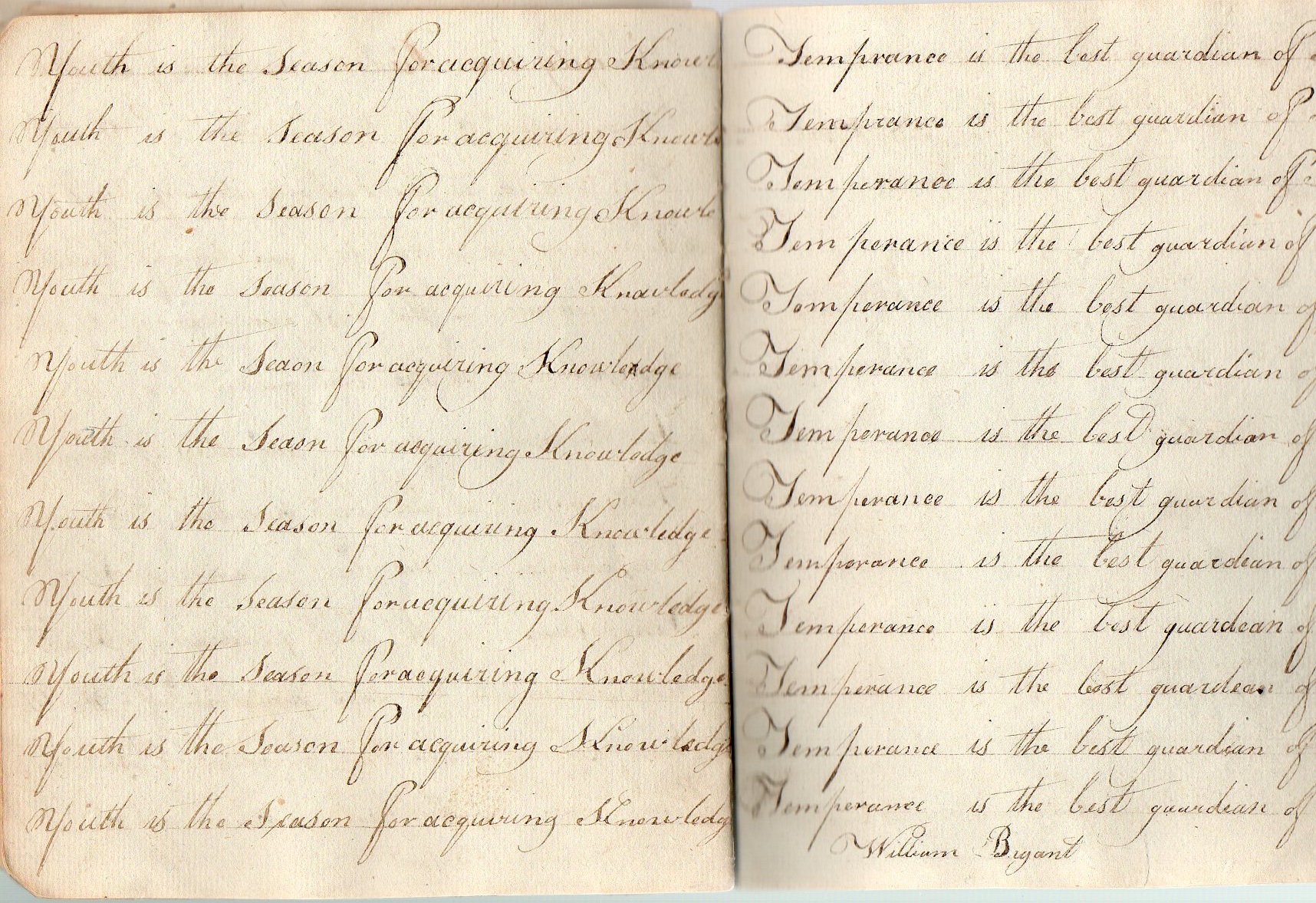
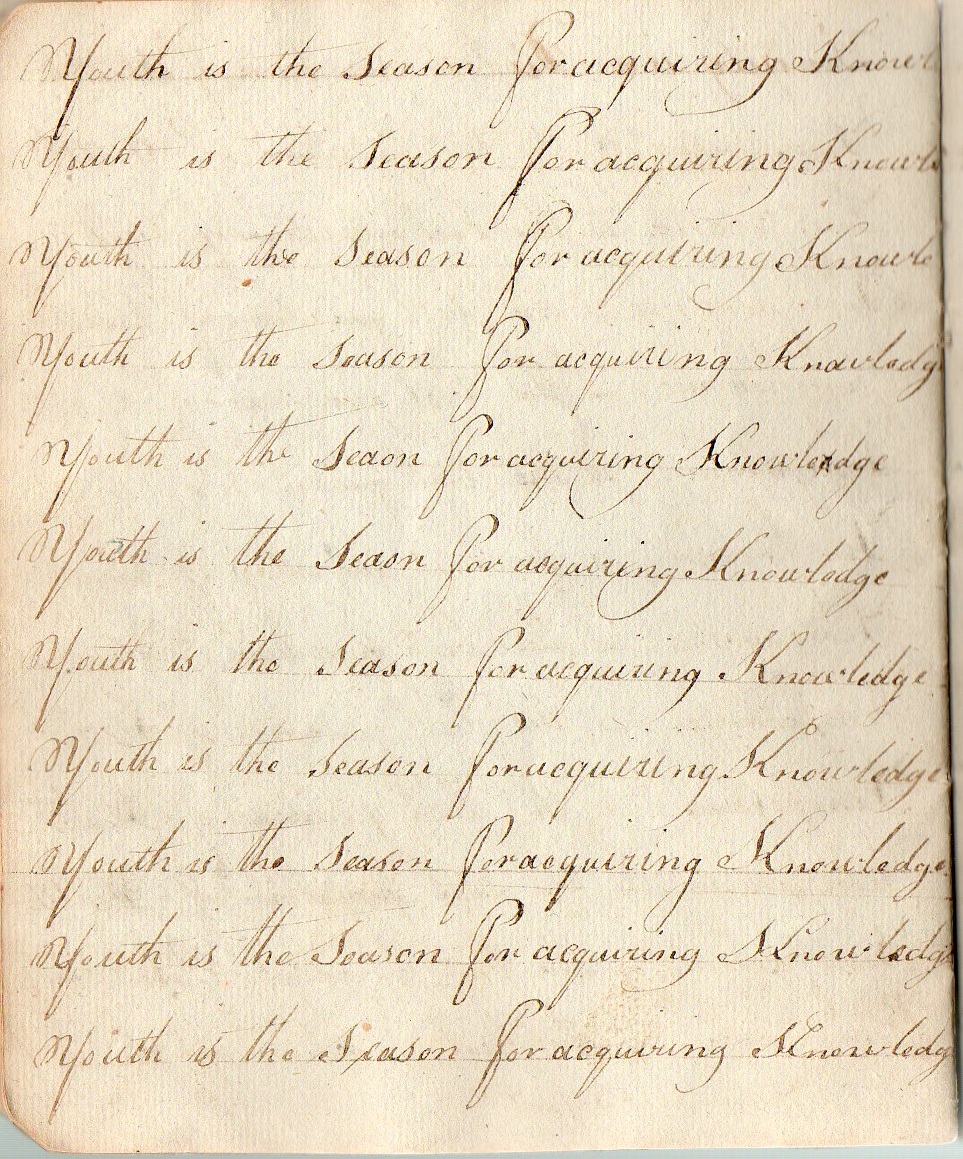
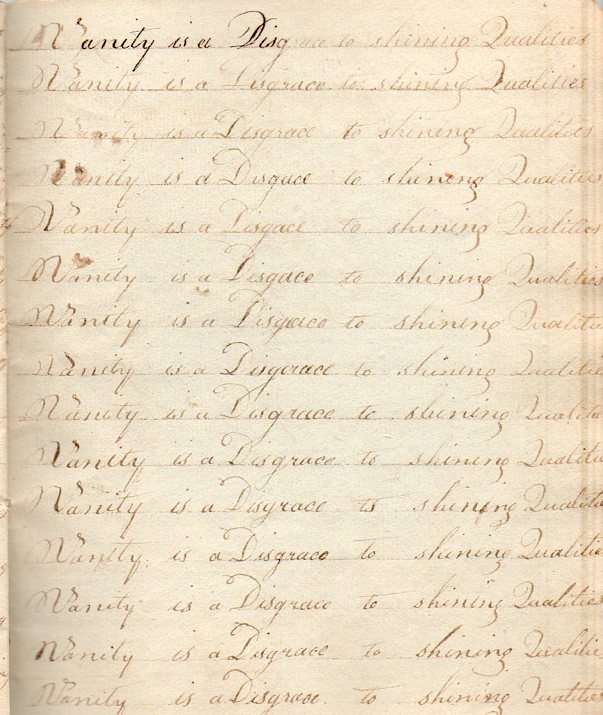
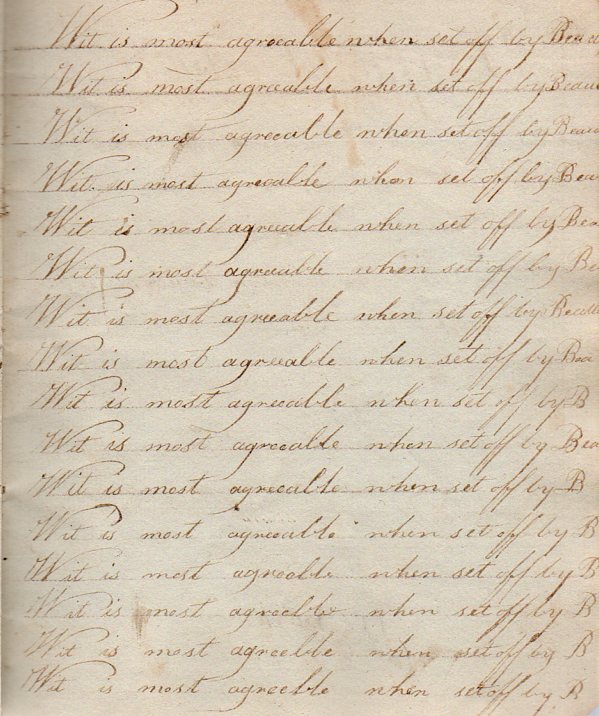
In this notebook, used between 1811 and 1836, there are also repeated personal lessons and life’s aphorisms, generally one page each, written over and over, practicing penmanship by repeating the advice,
“Youth is the season for acquiring knowledge” and “Temperance is the last guardian of health”:
I find it remarkable that this small item–about 8×5 inches, and having no more than 30 pages–survived in somewhat haphazard and occasionally directed use for more than 25 years. Then again, paper wasn’t all that terribly common among the working poor in the United States at this time, so it is very understandable that this notebook would’ve been kept, and carefully so, as an important household object–and possibly a significant family-history document. For those of us today this looks like disposable information, ephemeral knowledge–evidence would say that this was definitely not the case when this book was still being used.
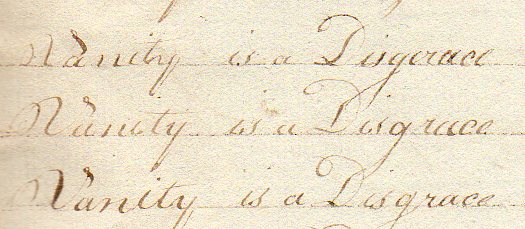
“Vanity is a Disgrace to shining Qualities”:
“Wit is most agreeable when set off by beauty”:
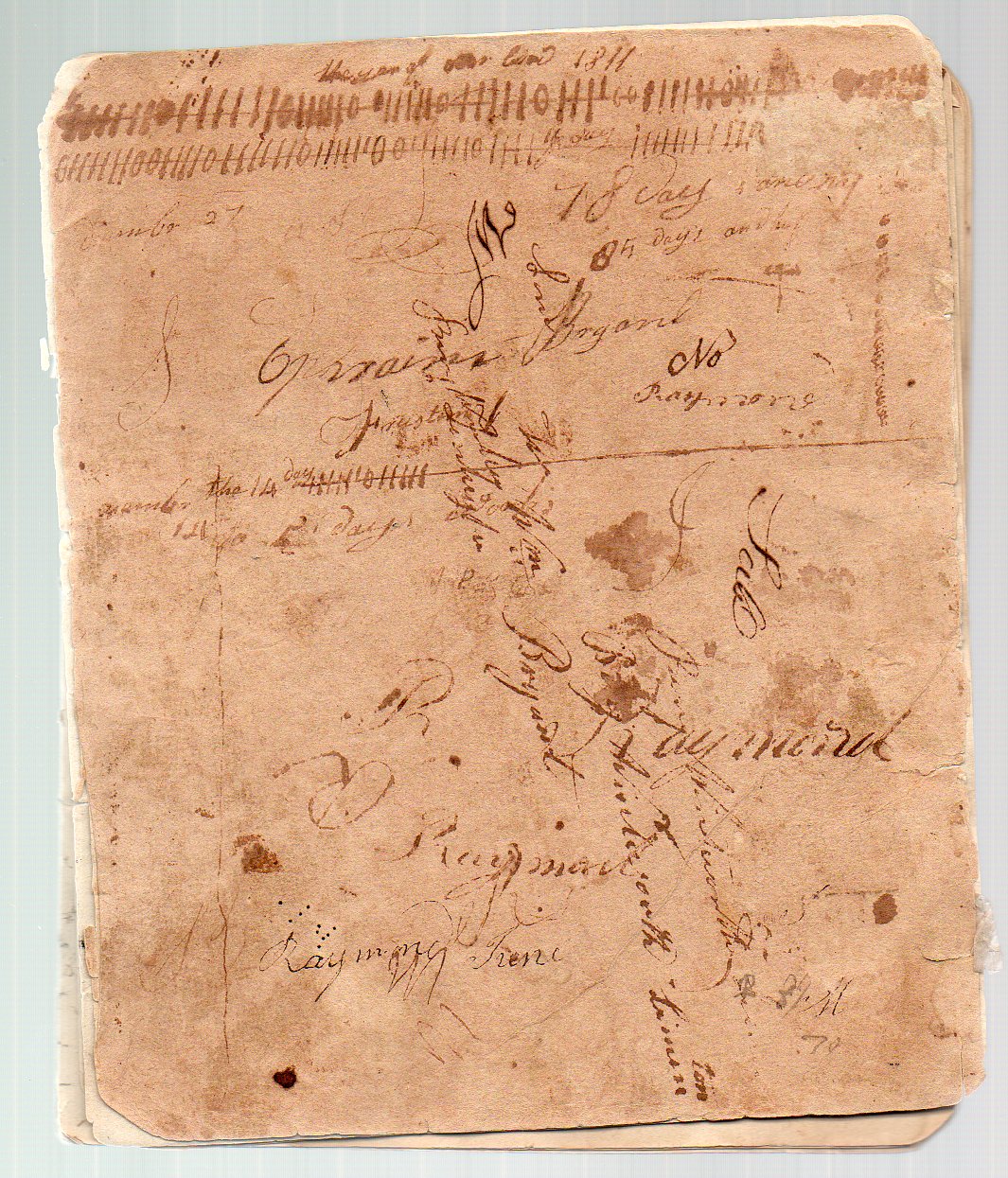
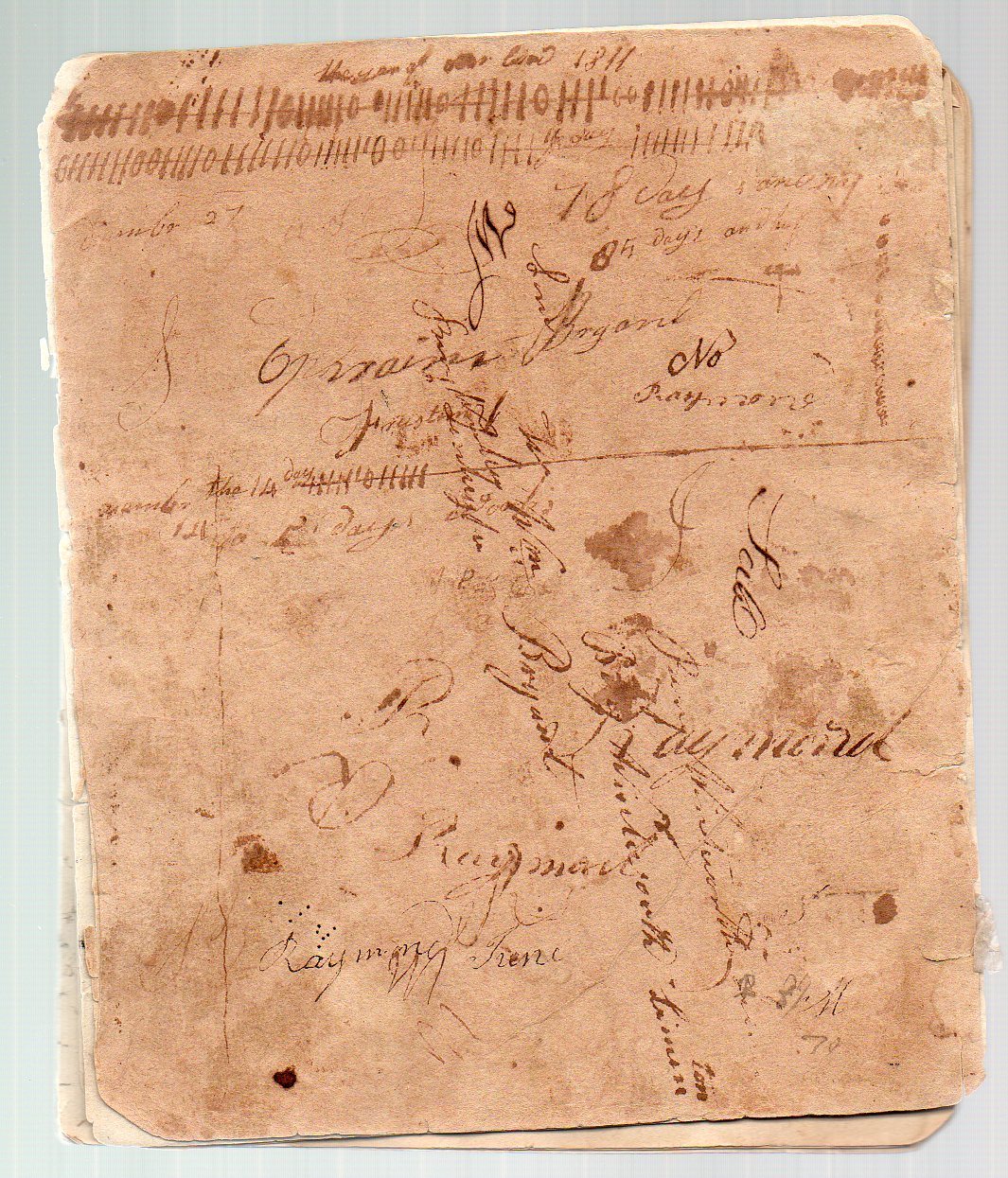
And the cover:, which is a curious thing, as someone kept track of “days” on a number of occasions here, not the least of which ran across the top of the book:
The record of items purchased, of money charged for labor, allows us a peep into the daily working life during the first part of the 19th century:
Purchases made included 2 pounds of butter (15 cents), six pounds and a half of veal ($2.00), a gallon of molasses (30 cents), “half a berril of flower” (3 dollars), a pound of wool (12 cents), plus pork, potatoes, tea, salt, corn, rye
The labor is also of interest: renting the services of two yoke of oxen for one day seems to have cost one dollar, “tapping in a pair of boots” (30 cents), “one day’s work on shaving hoops” (50 cents), and then many entries for “one days work a planting” and “a mowing” which seems to have been 50 cents; “hauling wood one day” was also 50 cents. It seems as though you could exchange a day’s labor for two pounds of butter, a pound of wool, and two pounds of potatoes–at hose rates, I suspect that these people would’ve considered the veal to be a luxury meal.