JF Ptak Science Books Post 1130
sI’m sharing some of the collectrion here of the published work of George.H. Davis (1881-1963), the prolific and vastly accomplished artist for The Illustrated London News. His work with that magazine for the forty or so years that I am familiar with is superb, and his great strengths can be found in rendering technical cross sections and infographics. He had a great sense of design and a very fine hand, and so far as I can tell he displayed an excellent control of his subject, thousands and thousands of times (2,500 times, according to Mr. Davis).
Here are some fabulous examples of technological cross sections of WWII aircraft by Davis–the drawings are just superb, and you can easily get lost in them, following the geogrpahy of engineering detail from one logical place to the next.
Blohm u. Voss BV141
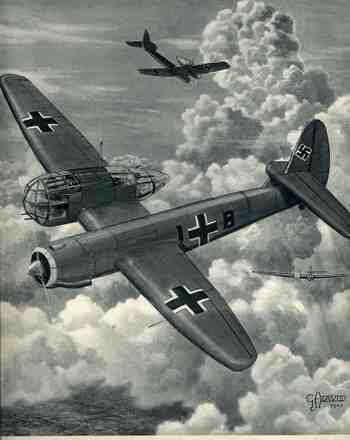
This is the Blohm u. Voss “BV 141″a very unusual-looking aircraft, and it appeared in The Illustrated London News for 23 May 1942, and it gives an excellent view of what the editors called “a lop-sided freak”. Perhaps the editors of the ILN wanted to educate its readers on the plane since it was supposed to be widely employed on the Russian Front, though it looks like only 38 were ever built (and none survive today). Actually, the plane, designed by Dr. Richard Vogt (1894-1979), was a high-flying three-seater surveillance aircraft capable of 220 mph at 17,000 feet, powered by a single 1000 hp Bramo Fafnir 9-cylinder radial engine. The idea for the design was to give the pilot and co-pilot a very wide field of view–and by this, I’m guessing that the field of view most affected and aided by this would be straight down. The rear gunner also had an enormous field of view.
As it turns out Vogt survived the war and spent his Golden Years in the U.S., seven of them (1960-1966) with Boeing to evaluate hydrofoils and vertical liftoff systems: he had built other odd planes during his career, and carried them with them into near-retirement, making this sort of design his metier.
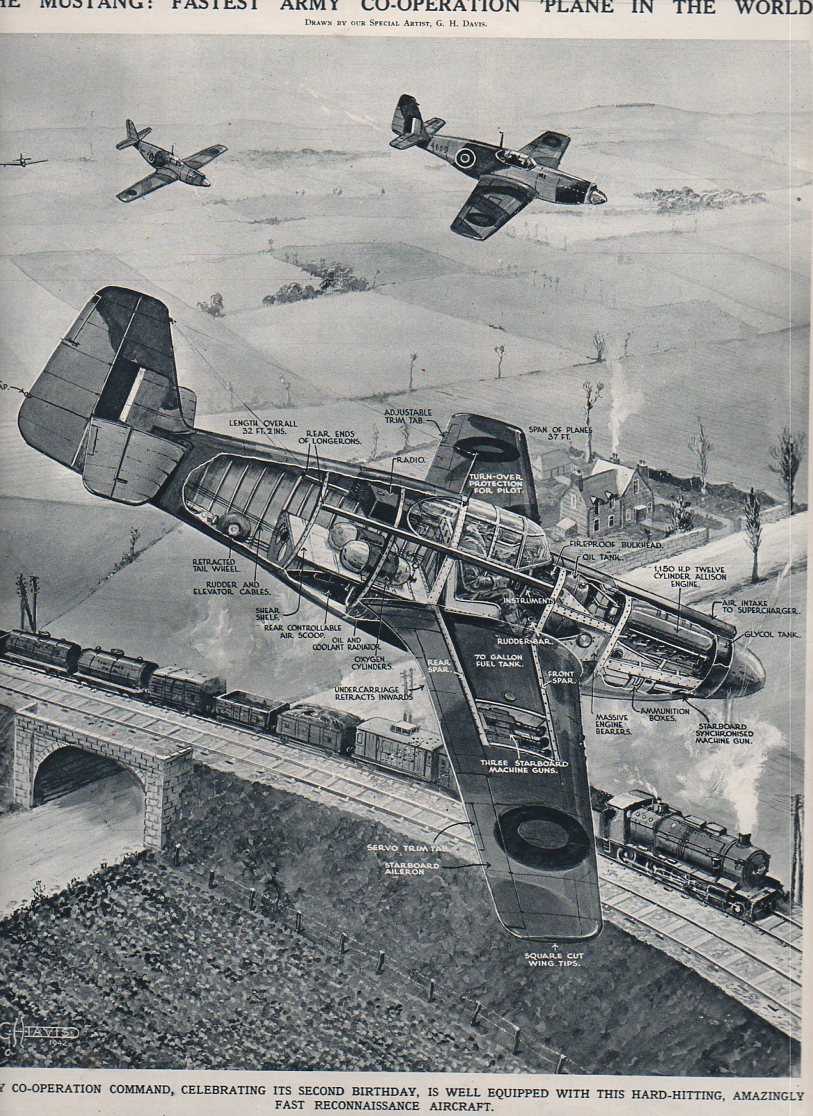
“The Mustang–Fastest Army Co-operation in the World“, appearing in The Illustrated London News for 12 December 1942.
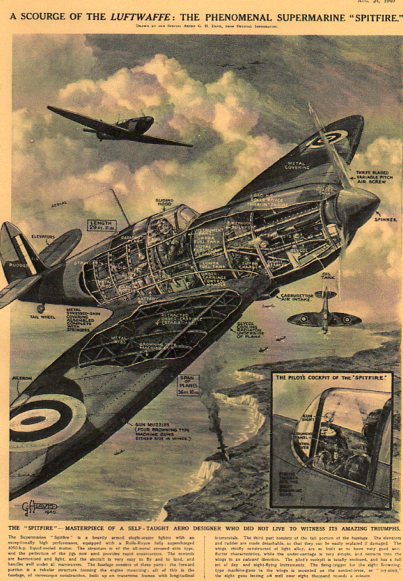
The Spitfire: