JF Ptak Science Books Post 1213
[This is another in a long thread of posts on this site relating to shadows–simply enter “shadow” in the google search box at left for a listing.]
“Pulvis et umbra sumus” (“We are but dust and shadow”)– Horace
Depicting the capacity of sight and nature of light has been both an easy and a knotty problem in the history of science. Over the successive theories on the basis of light the artistic presentation of the phenomenon has been generalized (generally) in a very simple way: by straight lines. There’s certainly nothing wrong with that, the lines are just parenthetic place-holders suggesting direction, not actual descriptors of what light “looks” like.
But what about shadows? Light and its effects are the basis of art, but what about light, “interrupted”? Or, really, how old is the depiction of the shadow in the history of western art? The shadow predates the modern re-discovery of classical perspective by a thousand years—little bits of shadows pop up here and there in deep antiquity, certainly way before Uccello and Alberti and the rest came along. On the other hand shadows do escape notice of many painters in the 15th century (and during the period of being very comfortable with the century-old realignment of perspective), which is odd, unless all of those works were depicting scenes at high noon or thereabouts.
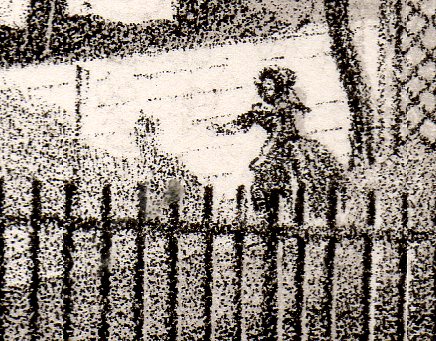
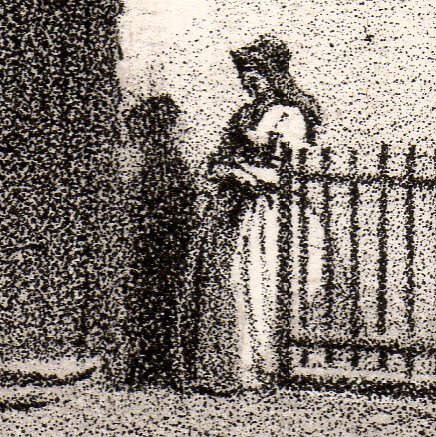
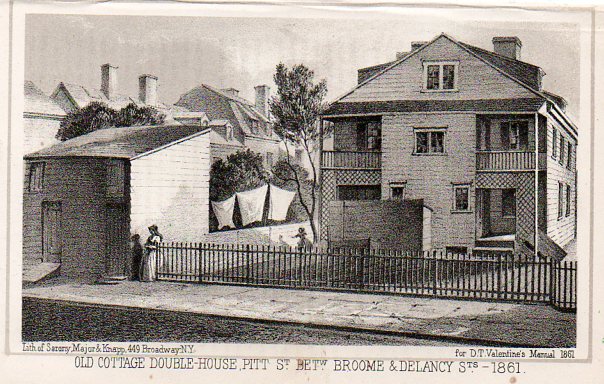
Which brings to mind this lithograph from one the 1861 edition of Valentine’s Manual for the City of New York. What strikes me is the low oblique angle of the sun–setting or rising–throwing the shadows of the two figures in the image very high up on the receiving surface. Odd things like this are interesting to me, and to be frank about it,. I’ve not noticed such a hard angle with shadow in too many prints.