JF Ptak Science Books
War Images “Almost as Tall as a Man! Great Bomb Used by the Allies Airmen at Gallipoli”, as seen on the front cover of The Illustrated London News for 27 November 1915. The campaign at Gallipoli was more than half done, more than half-way closer to the finish, which found the Allies retreating in the midst of high misery, gallant action, and broad death and destruction, with more than 390,000 soldiers from both sides being killed or wounded during the 10 months of the campaign. It was a miserable experience–hot in the summer, cold in the winter, with frostbite, rotting corpses, dysentery, bad food, poor sanitation, supply difficulty, and ultimately a costly stalemate which was supposed to have ended up in an Allied route to Russia.
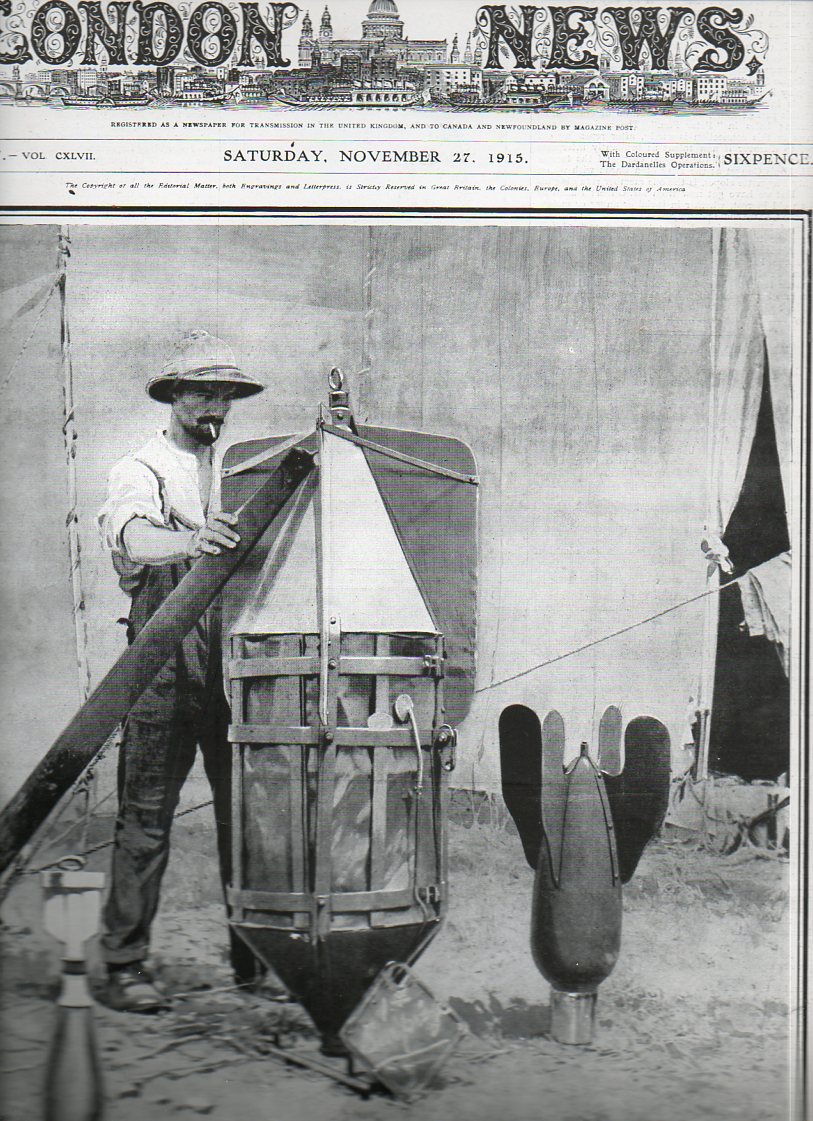
The use of bombs by airborne craft was still in its infancy at this point, the idea coming into use just a few years before the beginning of the war in 1914–the practice was quickly adapted after 1915. (The first use of bombs dropped from airplanes is widely seen as having taken place by the Italians in 1911 and then in Mexico during the revoultion in 1912.) This image shows the development of an enormous bomb, though its details and destruction force “are left to the imagination of the reader”; I’m pretty sure that the bomb (if it was real and if it wasn’t just a piece of propaganda) would’ev been hauled aloft and dropped from a dirigible rather than an airplane.
See: Airwar over Gallipoli/Dardenelles and here for a general look at aviation udring the early part of WWI.
[We offer the weekly issue of the Illustrated London News for sale here.]