JF Ptak Science Books Post 1078
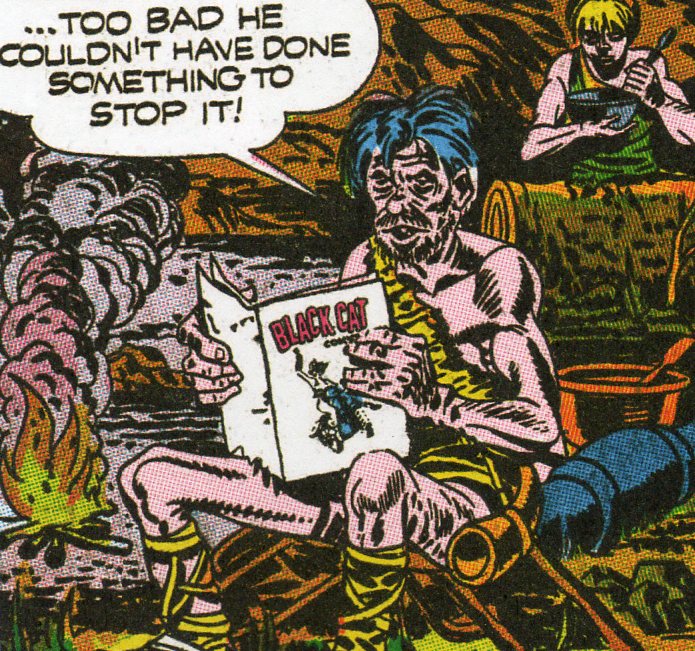
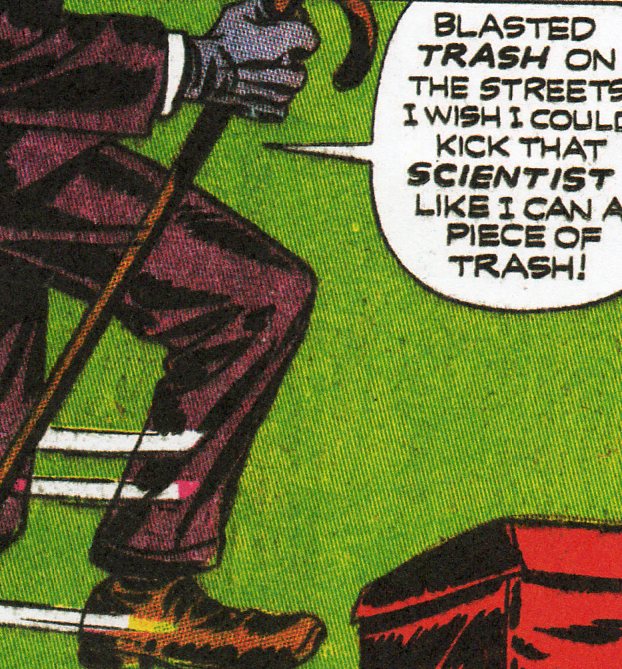
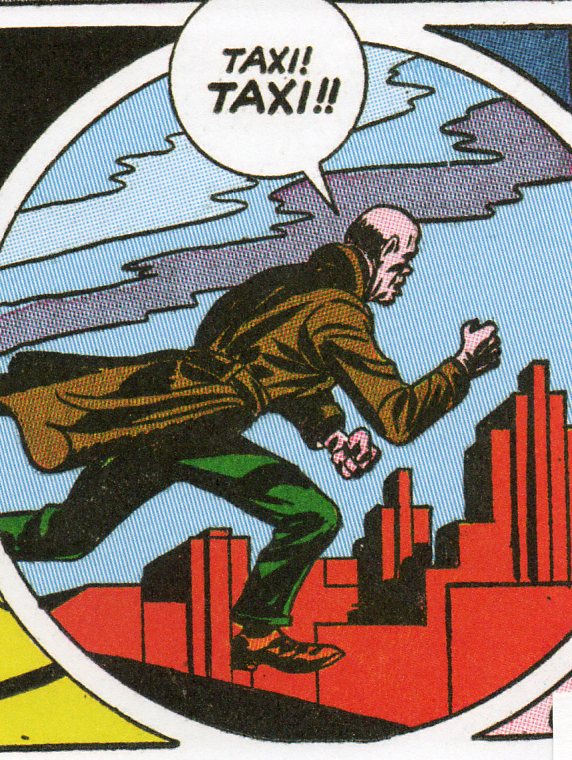
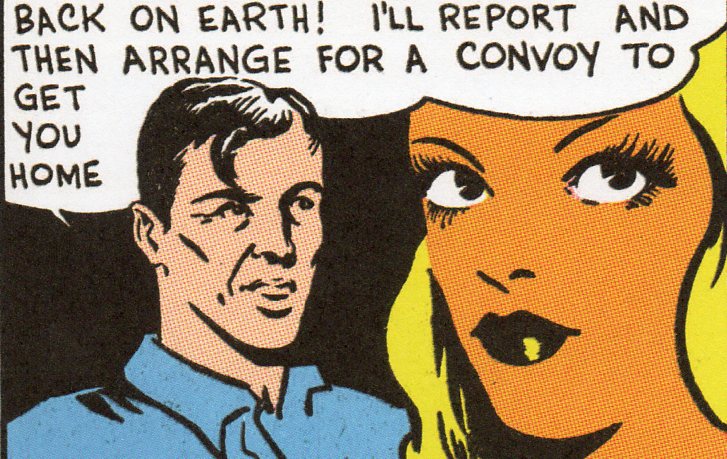
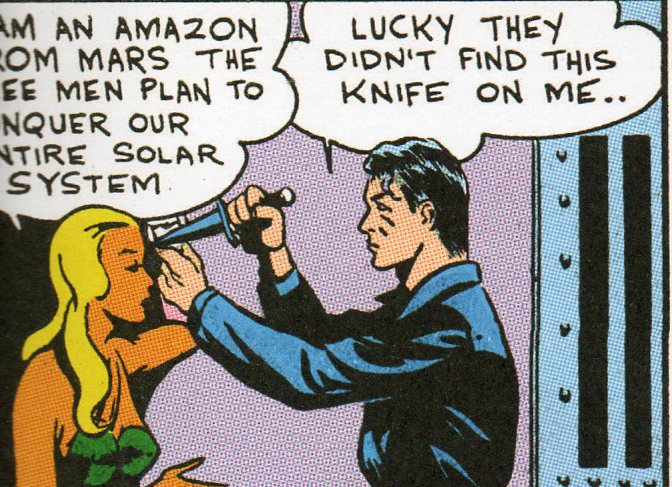
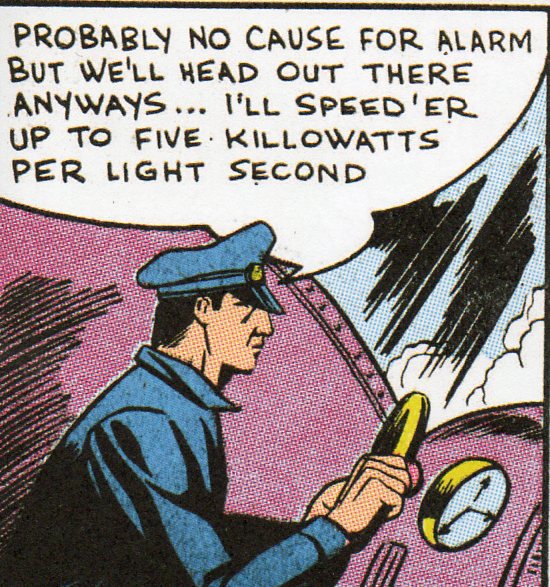
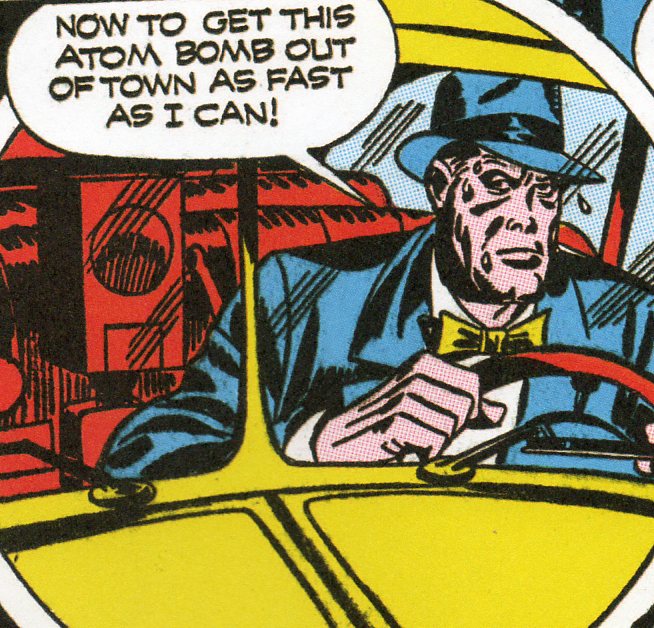
[History of Dots series #29//Note: all images below except for Lichtenstein’s “Drowning Girl” are from Simon & Kirby comic books.]
How are deep abstractions visualized? Science and art were becoming
more densely abstract at about the same time, the new modern age for
both beginning 1905-19301 or thereabouts, when so many of the
revolutionary advancements were made.
The representational world of art was slipping and disappearing (with the beginning of Cubism(s), Dadaism, De Stijl, Abstract and so on), replaced by forms and shades and colors, the subject of the art becoming less and less recognizable as “things” until, finally, the recognition of the general stuff of nature (except for color) was gone. Light, the interaction of molecules, the motion of atoms, were all becoming less comfortable as visual images and were being represented in terms of mathematics
How do we get to Roy Lichtenstein from here? I think that it is via abstraction and his connection to the found non sequitor2 of the speech balloons in comic book images. Lichtenstein’s style is very heavily derived from comic books and strips, except that he painted his images based on Ben-Day dots, strong lines and ultra-vibrant primary
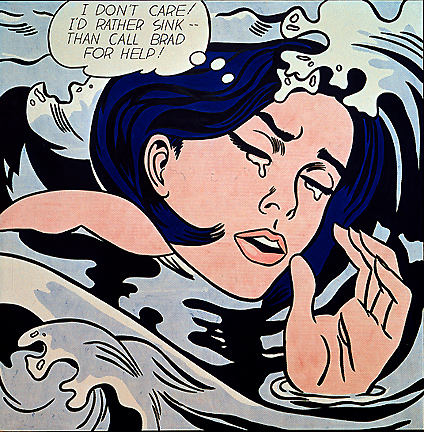 colors of Golden Age era comics. And I must say that his work–in images and in captions–seem much less non sequitor than the enormous amount of these things that you can pull out at random from the history of comic books–that is, one can still see where the frames that he was painting came from in the sequence of the comic book story. It seems more interesting to me if the one frame being depicted could mean absolutely anything, and that the story line was completely obliterated, sop that this one frame out of context really had no context at all.
Lichtenstein’s style came about around the time that he started teaching at Rutgers, and in short order–in less than five years–he had a solo show at Leo Castelli Gallery (1962). His work was instantly recognizable, a true Popular Art, almost everyone having some sense of recognition for the origin of his artwork. Beyond that, and whether his art was seen as art, is another story3.
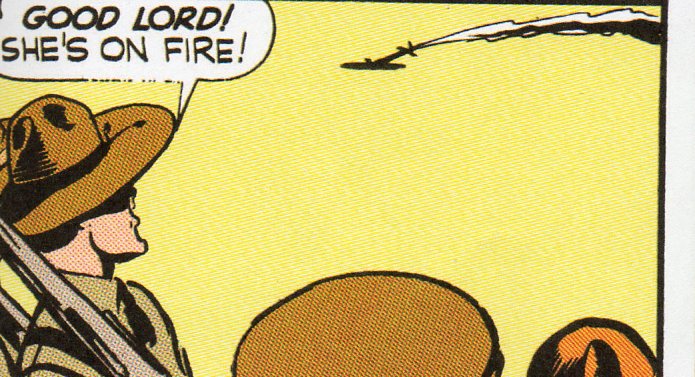
But what I’m trying to get at here is this: did Roy Lichtenstein create a template of an abstract dialogic equivalent in a concrete, non-abstract way of the non-representational creation of Kandinsky and Braque and Mondrian? Are the Ben-day dots that are the foundations of Lichtenstein’s style–and the images that can be simply found in comics from the Golden Age–the very concrete bits that compose a very concrete, non-abstract image-with-text that is totally recognizable but without any apparent meaning? Just decades after dots–the compositions that were normally used to visually introduce ideas in physics and astronomy and chemistry and biology–were abandoned as the visual signifiers of enigmatic and increasingly-abstract domains, they were adopted as the foundation stones for an art that moved in the opposite direction from abstraction, except that its message was anything if not abstract.
I think that it is in this way that images of Schroedinger’s cat should’ve been illustrated using the Ben-day dot method, plucked from the pages of a Golden Era comic, all basic red, yellow and black, the uncertain image never at rest, always with the possibility of being the same and not the same, its great and simple representation having not necessarily anything at all to do with its message, a concrete thing that is totally abstract.
____________
Notes
1. You could break this period out a bit, expanding it from, say the pre-Impressionists (1860 or so) to the period just after Abstract art and the introduction of the new quantum theory (again, say 1930). Epochal changes took place across the sciences, medicine, the arts, literature….virtually everything. I cannot think of any period in intellectual history that approaches this 70-year period. Actually, the gargantuan changes can be shaved down to the period of Einstein’s living memory beginning with the stunning discovery of Roentgen’s x-rays in 1895 to the invention of non-representational painting in 1911. But for the larger piece, the longer time reference, we have Roentgen, Poincare, Boltzmann, Planck, Strindberg, Schoenberg, Cezanne, Seurat, Picasso, Braque, Leger, Joyce, Woolf, Malevich, Duchamp, Kandinsky, Klee, Bohr, Heisenberg, and. Einstein–to name just a few–of the folks making monumental changes in their field.
2. By “non sequitor” I simply mean to say that the image, or text, or both, when pulled out of context, when removed from the story line, are almost entirely without reference to what happened before the panel or what would happen next.
3. Maybe Lichtenstein is art, maybe not. Another art, Art Spiegelman, commented that “Lichtenstein did no more or less for comics than Andy Warhol did for soup”. Maybe so. :ichtenstein did say this about his own art:”I think my work is different from comic strips- but I wouldn’t call it transformation; I don’t think that whatever is meant by it is important to art”.http://en.wikipedia.org/wiki/Roy_Lichtenstein#cite_note-rlf-Coplans-1
This might all seem terribly wrong, and maybe–worse yet–it might seem like nothing at all. Perhaps if it were nothing it would be more appropriate, in keeping with what Lichtenstein said about his own work, what seems to me to be an inscrutable nothingness: “”The closer my work is to the original, the more threatening and critical the content. However, my work is entirely transformed in that my purpose and perception are entirely different. I think my paintings are critically transformed, but it would be difficult to prove it by any rational line of argument”.