JF Ptak Science Books Post 1041
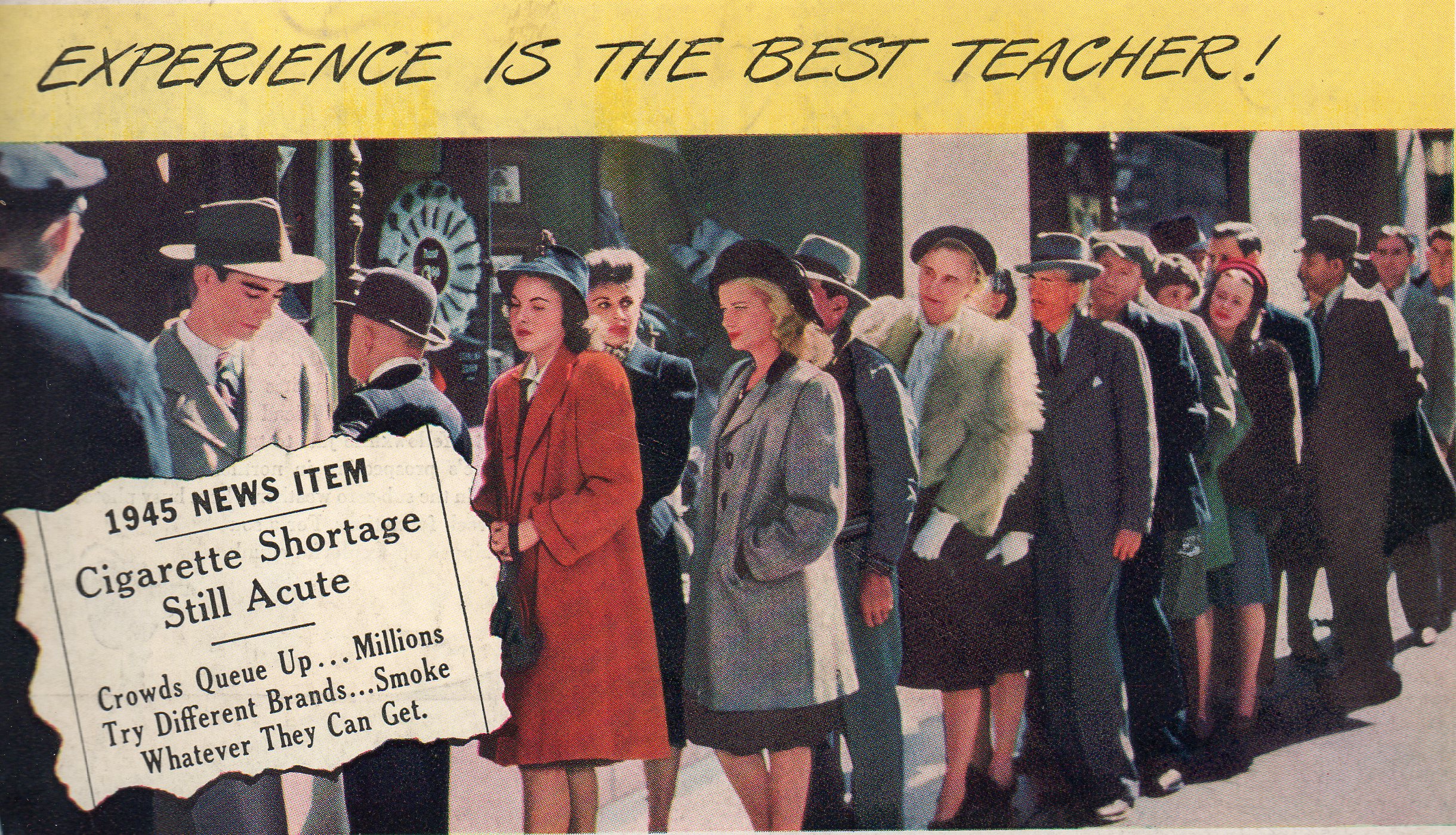
Here I think is another instance (following yesterday’s post on “The Ineffable Religiosity of American Meat Memory”) of tweeking the American consuming memory, an advertisement bringing out the recollection of past shortages to make the present consumer want the now-abundant item even more. In this case that item is the cigarette–Camel cigarettes to be specific. The ad correctly refers to the two-year-old memory of cig
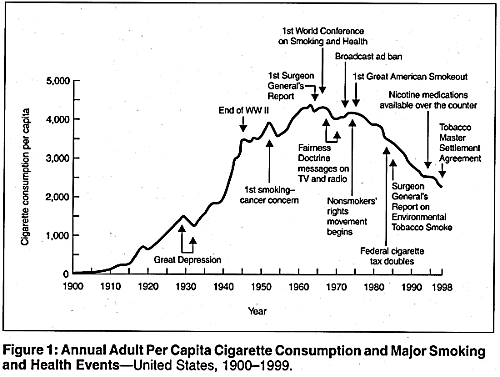
shortage in the U.S. Cigarettes became increasingly scarce during the war–soldiers were given smokes with their C-rations, exports increased, and so did general consumption. At the beginning of 1940, 181 billion cigarettes were made in the U.S., with a per capita intake of 2,558 cigs a year; 1945 saw production spike to nearly double. By 1950, the production hit 370 billion, with the per capita use at 3,522 cigarettes a year, about a half-pack for everyone in the country. In fact nearly half of the adult population smoked in 1950, making for more than a pack-a-day habit. And it was Camels who lead the smokey way, comprising nearly 28% of all cigarette sales in the country (followed by Lucky Strikes and Chesterfields, their combined totals making another 42% of the market share). In short, there were three giants who ruled the industry, and that for decades. And before 1950, only 2% of all of those cigarettes had filters, so all of the harmful stuff got to the lungs cleanly.
Back to the ad–I’m sure that these hatted folks weren’t smoking “whatever” they could get, especially with the cop standing at the front of the queue. But in 1947 (the year this ad appeared in LIFE magazine advertising Camel cigarettes) the ciggie shortage experienced at the end of WWII was long dead and gone. Camel just wanted to remind people of the craving for their missing cigarettes, especially the ones they enjoyed, and of course especially Camels. The ad brought up the memory of smoking the off brands like Ramses and Pacayunes and how they tasted, and how “good” Camels were in comparison–and now one could buy Camels with reckless abandon, the freedom to consumer right to the edge of the grave.
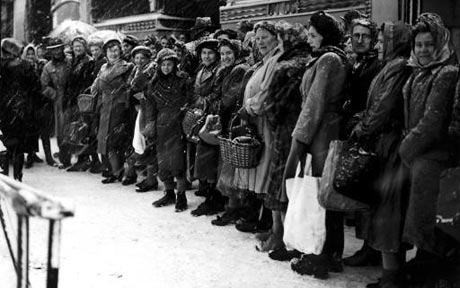
The advertising message pricked the American memory of shortage; the U.K. on the other hand was experiencing the real thing, with massive amounts of shortages of nearly everything (from petrol to medicine to white linen), and queues and ration books were supplied to deal with the real problem.
A “real” line in London, 1947, for food::