JF Ptak Science Books Post 1038
Somebody must’ve invented the automotive right-hand turn, and someone too must’ve come up with the idea of dis-inventing the left-hand turn–for the sake of this post and brevity that person might as well have been Le
Corbusier. I know that city planners and traffic engineer types must’ve been working on the idea of how to push new traffic through old city streets, and the notion of making traffic not cross against itself must’ve come fairly early on, but I just offhand don’t know when. It makes sense to me to not have cars make left-hand turns against oncoming traffic–it adds immeasurably (?) to the gas guzzling stop-and-go adventures in driving, the chain reaction of so many cars stopping and piling up behind one solitary driver waiting to make a left-hand turn against a stream of oncoming cars is just enormous. Restricting the left-hand-turn to three right turns would slash the waiting/idling business and allow traffic to proceed quicker. (In a similar line of thinking my friend Richard Rudman from New Zealand points out that studies prove that restricting highway lane changes also makes enormous sense as well–it gets people to were they’re going quicker and with greater fuel economy if the flow isn’t interrupted by constant starts and fits of changing lanes.)
Further on in The Radiant City we find this visual encyclopedia of right-handed turns:
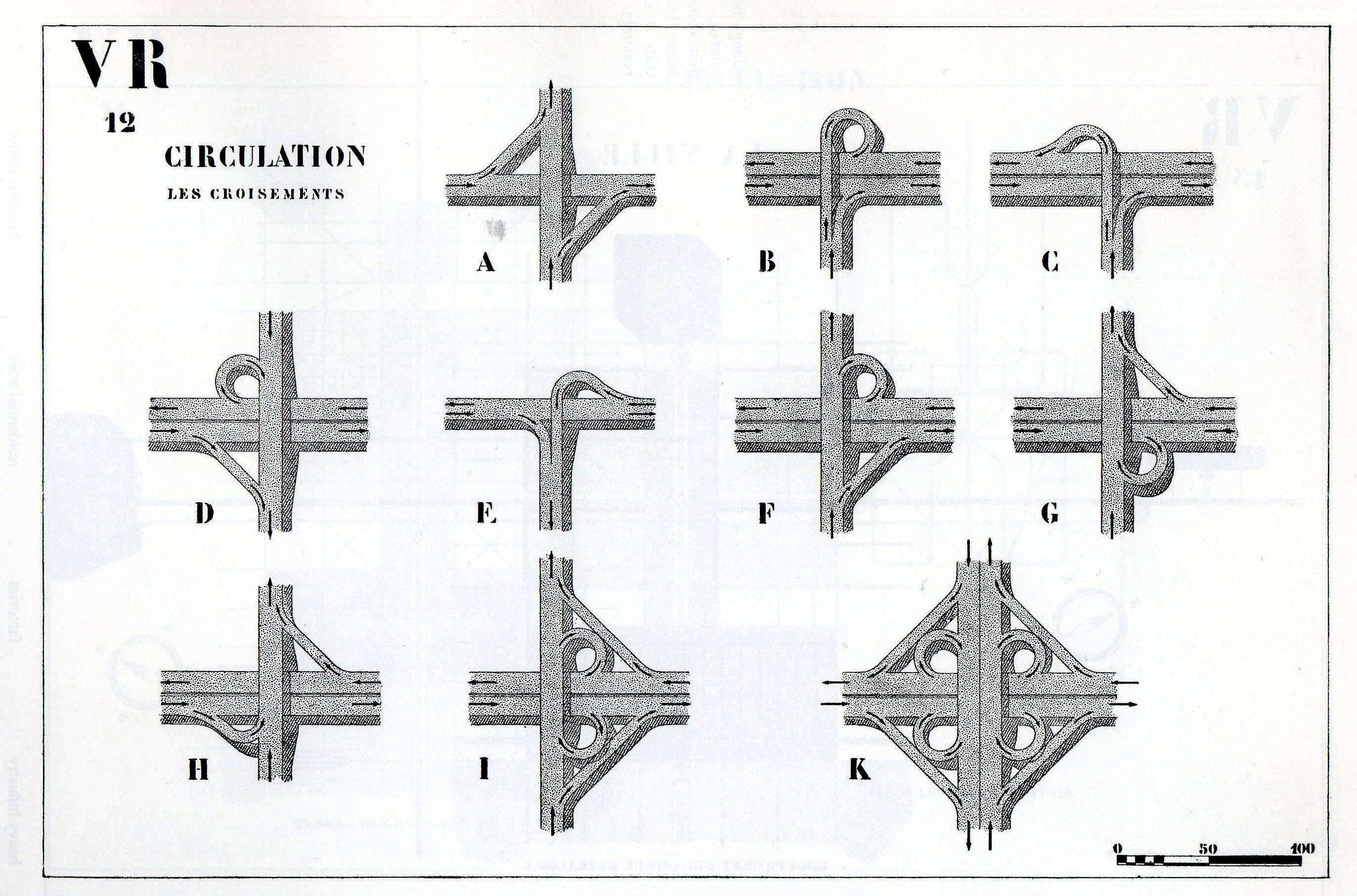
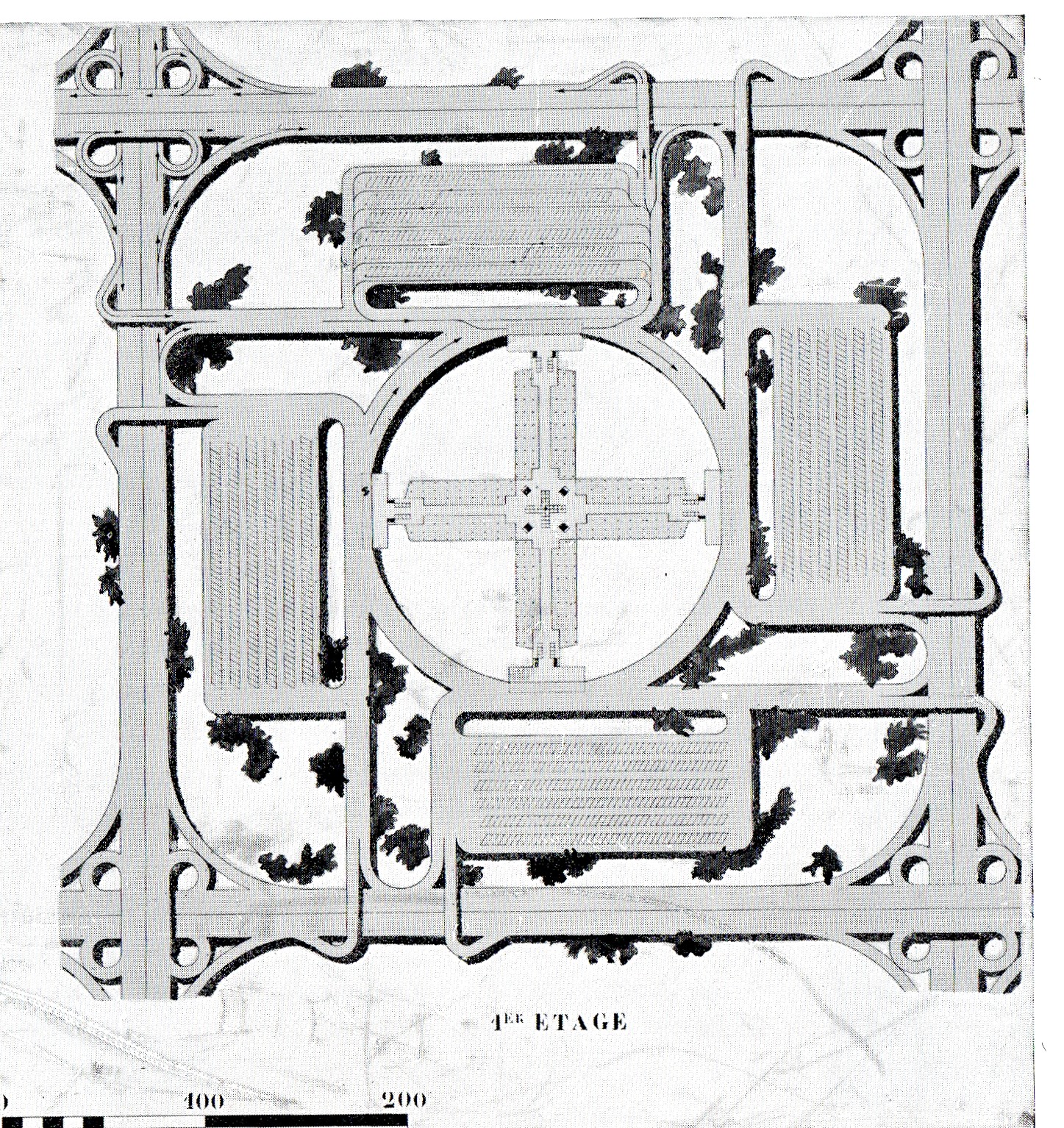
And so we come to this plan, a part of the 1930’s Radiant City of Le Corbusier. It is a section of a series of “horizontal skyscrapers”, “Cartesian (works) in steel and glass”, 220 meters tall buildings set in 400 meter square sections. All of the architecture aside, the street plan is what interests me–all of the traffic here in this section of the Radiant City is in one direction along streets that are largely lacking right angles. Elsewhere in the book Le Corbu presents his ideas for intersections for large cities–all of the designs remove the cross-traffic turn, keeping traffic flowing without those series of infinite stops.
I’ve not been a very big fan of this man, but this is the stuff that seems to make sense to me.
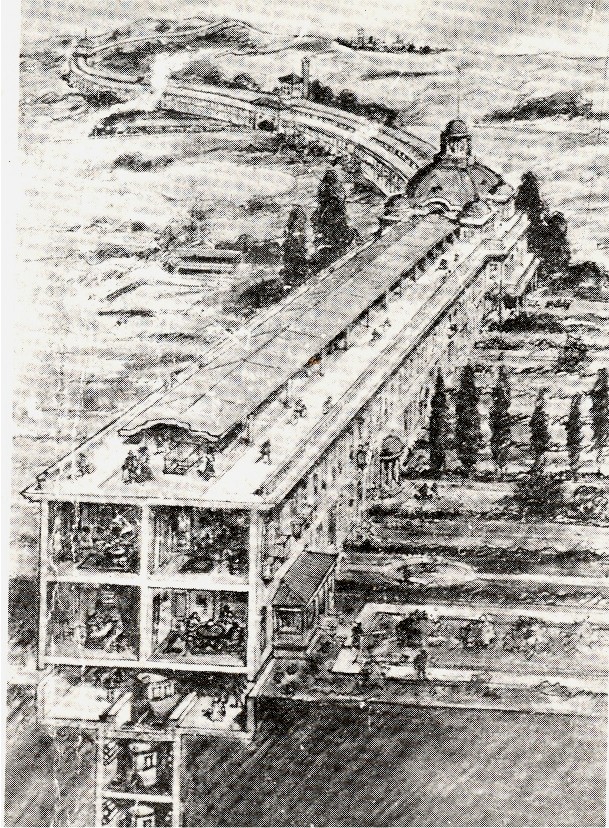
These ideas are also in vast contrast to the city plans of linear cities (which I wrote about earlier here), seen in the 1910 Chambless image (below) and the 1932 Popular Science city (below that).
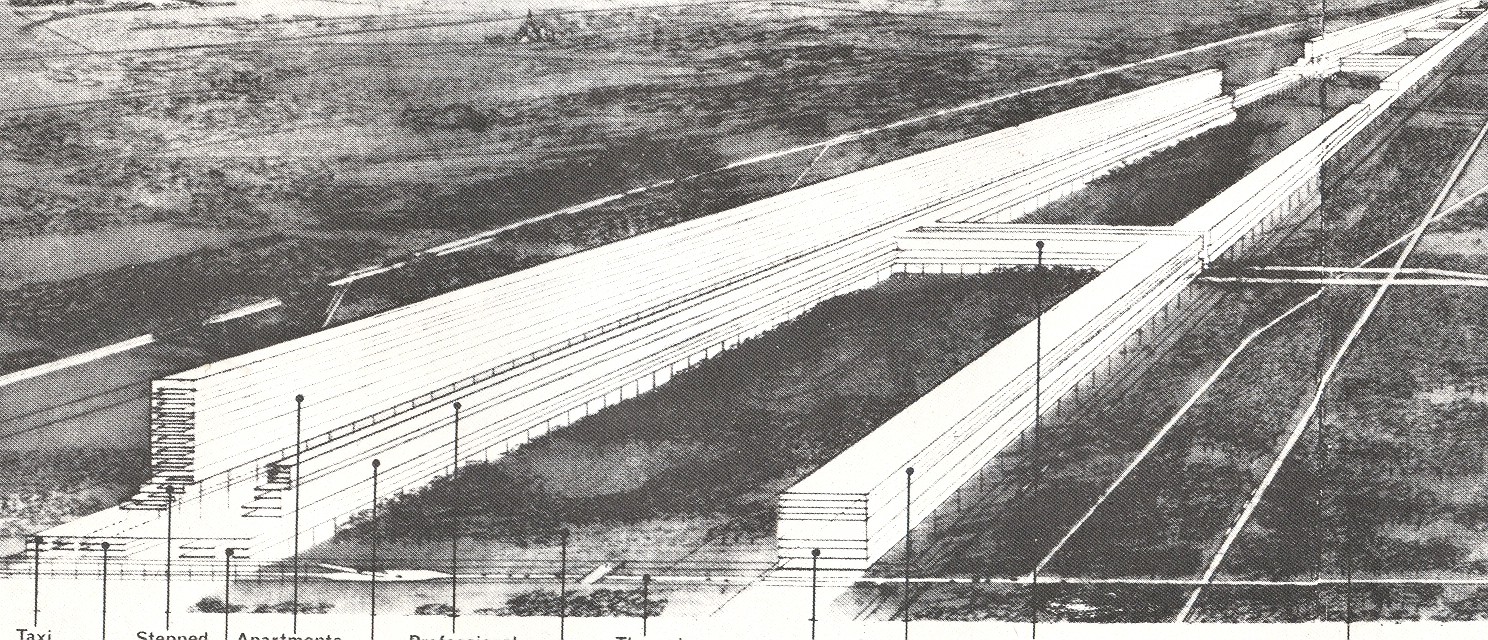
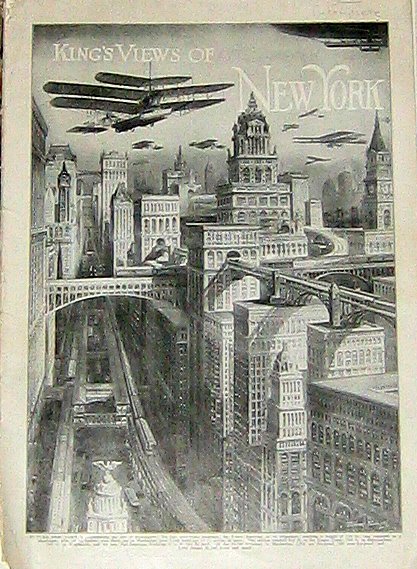
It is also entirely different from the methods of dealing with traffic that were seemingly very popular in the early/first-third part of the century–massive 12-lane roadways, suspended garganutan affairs with traffic turning everywhere, some of which took place high in the air and in the interiors of massive skyscrapers. (Some of which I wrote about here.)