JF Ptak Science Books LLC Post 992
I’m
not sure exactly what Solomon Butcher told his subjects when he photographed them
outside of their frontier houses out there in the
Plains
portraits included not only the family of the house, but in many cases, everything
that the family owned. Possessions were
an
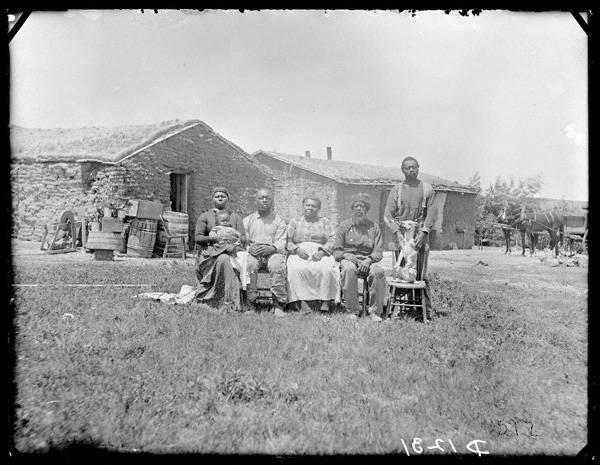
especially if you didn’t have very many to begin with. These families—the first generation in their
mostly sod-built houses—would’ve been farmers scratching out a minimum trade
and decent subsistence. City/town goods
would’ve been not-usual in these circumstances, and evidently whatever it was
they had of these things wound up outside, displayed around the house and on
the roof, when Mr. Butcher arrived in his photographer’s wagon.
(Who
was it, I wonder, who came up with the initial idea of displaying all of the
family’s possessions: did Butcher set
out with that idea, or did it happen spontaneously? I wonder what it was the families thought as
Butcher was packing up his equipment, his horse fed, his cameras stowed away,
climbing up onto the driver’s bench. Did
they wait until he was a spot on the horizon to put away their things? Did they gather everything up as Butcher
gathered up his own material, or did they just wait for the stranger to
disappear before pulling the family back together? Sitting their surrounded by
the things that they owned, did these families feel a quiet pride, or were they
embarrassed have their pictures made together with their frontier opulence? I
suspect that the idea for display did not begin with the families.)
On
another part of the luxury spectrum is this floor plan for a “No-Lux Hotel”, a 2×3
metre/room place for folks to stay cheaply/inexpensively. There were 50
rooms packed into a 36×24 metre footprint,
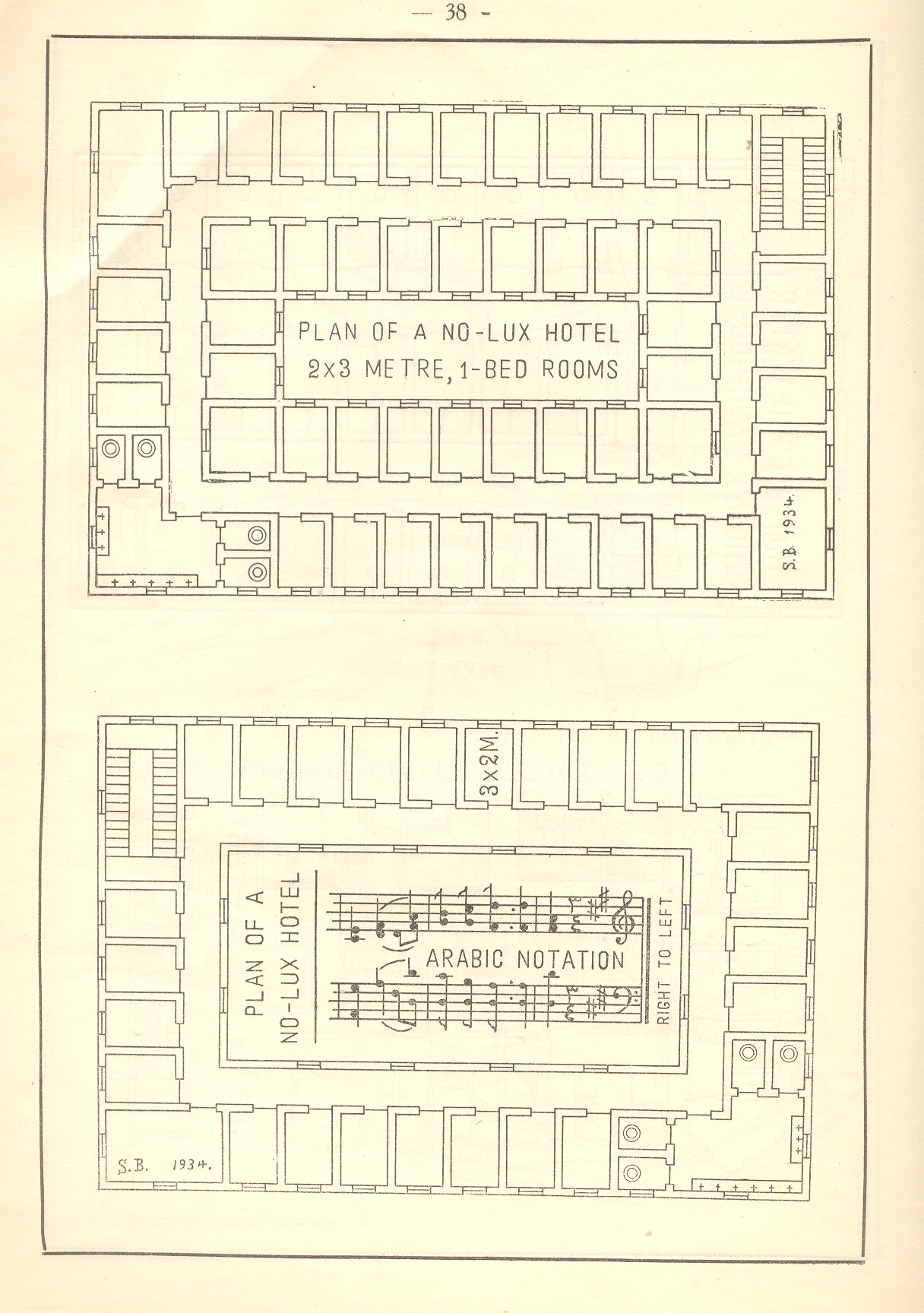
leaving precious little room
for hardly anything else, like hallways (which seem very narrow), stairways
(actually a singular, as there is but one) and bathrooms (one with 8 sinks and
four toilets per floor).
The
center of the structure seems curiously blank in the top plan. The bottom one is confounding, a mysterious
mystery: why on earth would there be
musical notation written backwards (via “Arabic Notation”) in the center of the
plan? No doubt the architect was on the iconoclastic
side to have included such a thing; but its inclusion no doubt meant something
to the author, though it is now lost to his/her dust. Pity.
“Lusux”
is Latin for something like “extravagance”.
“De luxe” appeared in
in 1928 or so for the first time to describe this added opulence in a word of
its own, though there is a certain geology to the idea. A luxury might well be a spice on a camping
trip, or a back-up aircraft to the family helicopter. Perhaps it was an extra sink in a cheap hotel,
or a violin for the kids in a house that stood by itself in 10-square-mile
solitude. At least the multi-floored Hotel No-Lux had a stairway.