JF Ptak Science Books LLC Post 903
shelf-lived idea was that of Edward R. Armstrong (1880-1955), who in 1927 first published his plan for a series of 1200’x200’
floating platforms for refueling and whatnot for transcontinental flights. These five-acre stations—named the “
Samuel Pierpont Langley1— would be placed every 375 miles across the ocean. It doesn’t look like a very practical (or
good) idea, but Armstrong received a $750,000 piece of development change from du
Pont and GM, which was major dollars in 1929.
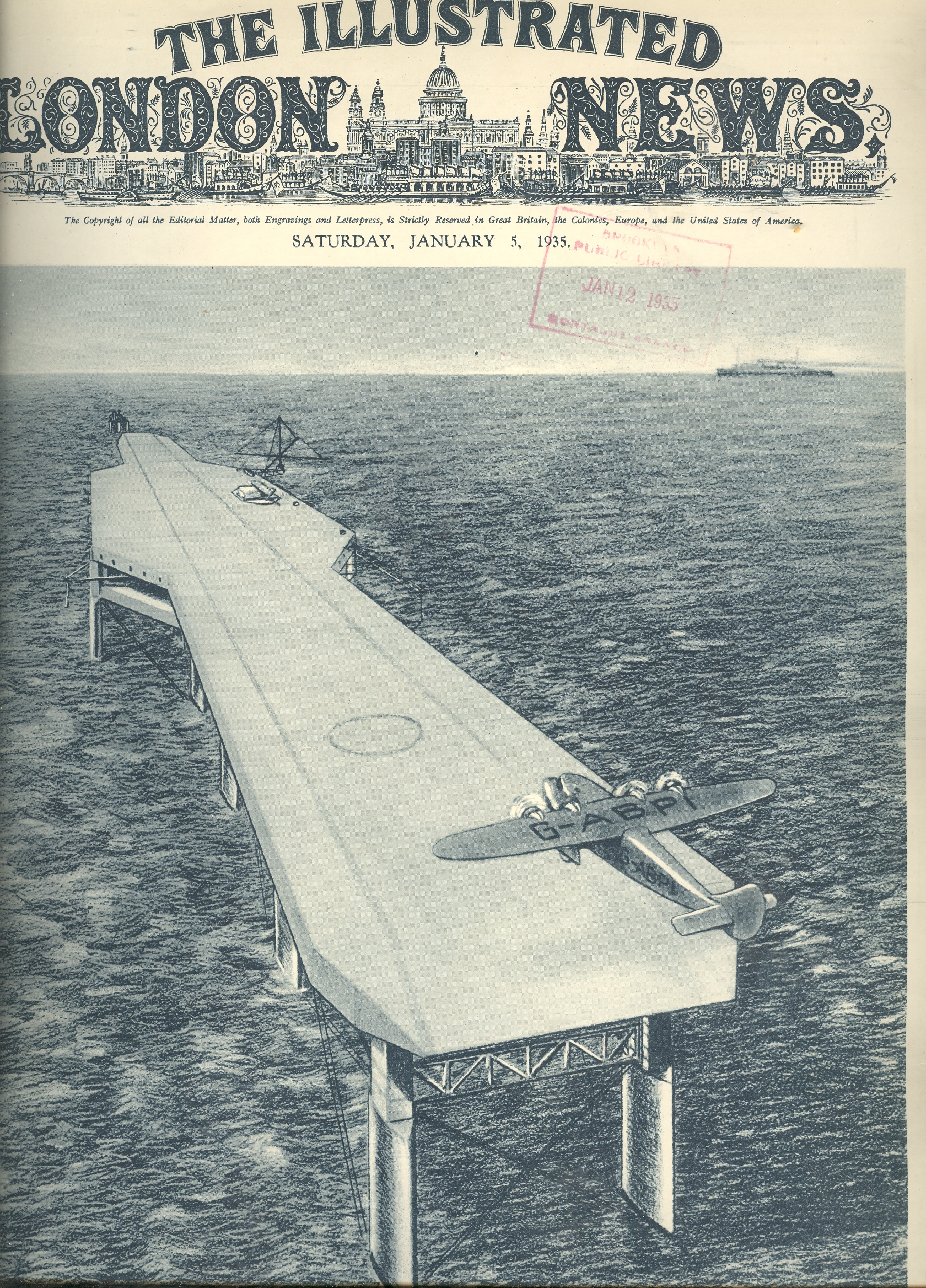
idea would get major play in the popular press from time-to-time, his project
renamed “The Seadrome” and discussed as a series of floating islands. Armstrong himself would organize the Seadrome
Ocean Dock Corp. in the late 1930’s, his pretty but enormously impractical idea
(reported by Time Magazine2 in 1933 as little more than “a perennial gift to Sunday feature
editors”) finally grinding to a salty end with greater
fuel capacity and efficiency in transatlantic aircraft.
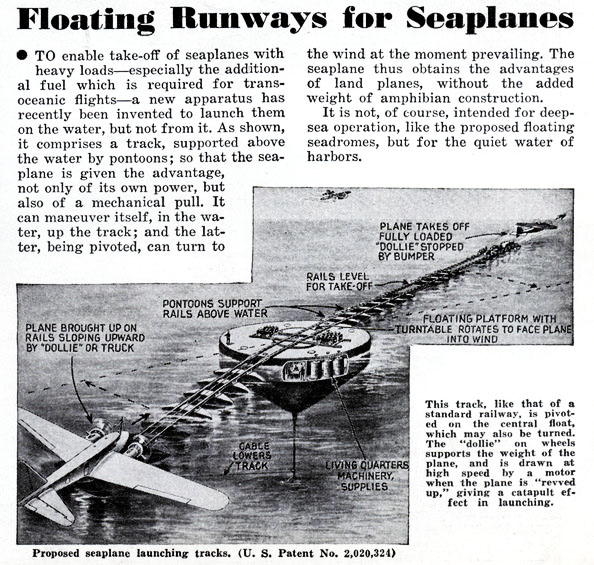
An even worse idea appeared in the pages of Science and Mechanics in 1936:
Notes:
Magazine article
published 28 October 1929 [a day before the market crashed!] about the
Langley oddly states
that Langley was the “designer of the plane which, except for accidents, might
have flown before the Wrights’ plane did in 1903”. Tough potatoes. What the magazine didn’t
state was that Langley, who was the president of the Smithsonian Institution at
the time with access to major money and benefactors simply went about the flight
problem incorrectly, and produced an airplane (or “aerodrome”, as he called it)
that did not and would not fly. Not flying because of accidents means, well,
not flying. The Wrights’ approach to
problem solving was elegant and beat
by miles.
achievements, but not for this aircraft.
article only references Armstrong as a “swarthy engineer”.
is reprinted below.