JF Ptak Science Books LLC Post 857
 I’ve
I’ve
written a few times in this blog (here, here and here) about what I think is
found/unintentional antiquarian Dadaist art and would like today to continue
that thread with the following two unusual pieces of art.
The first
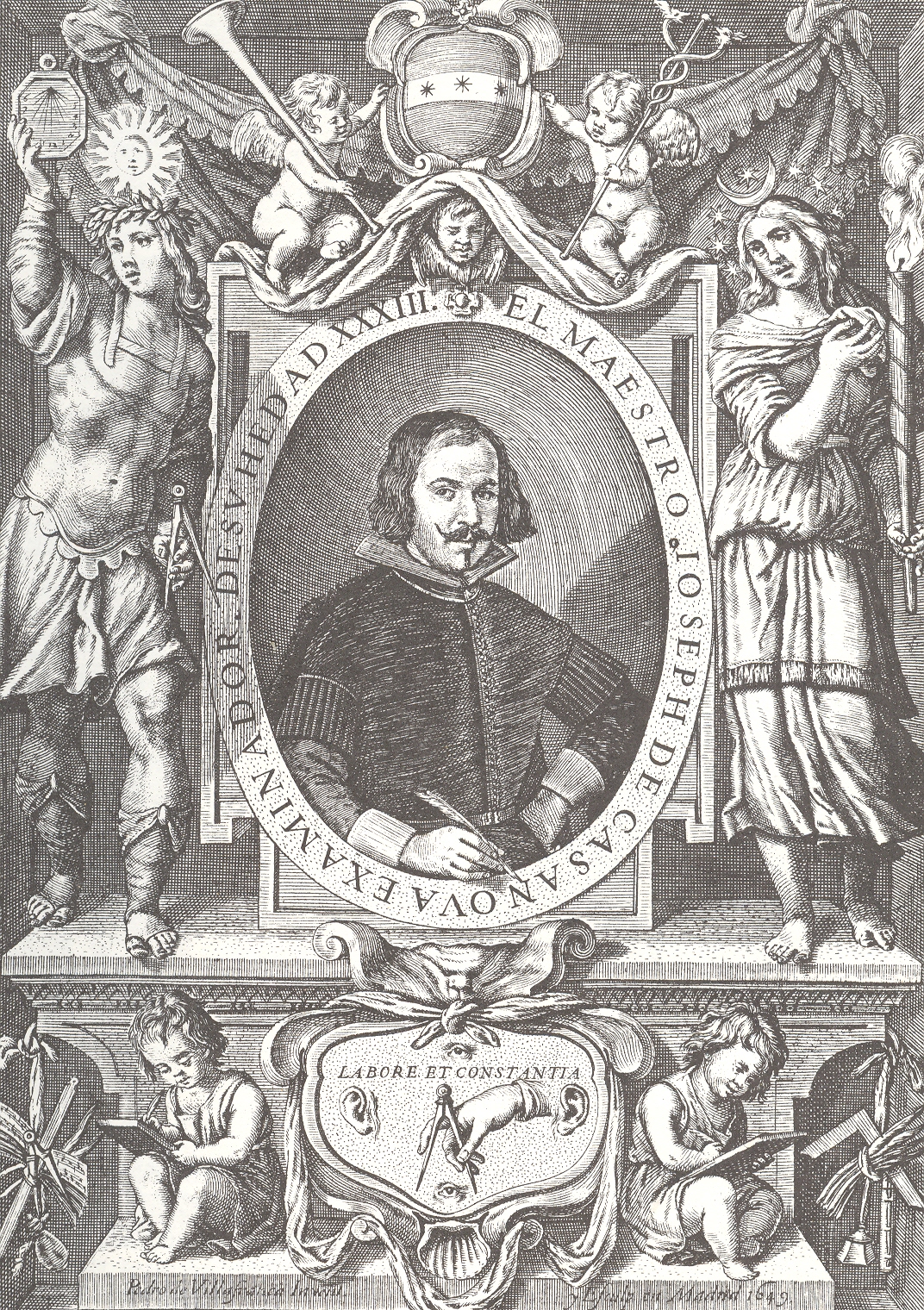
is a detail from the title page of Joseph de Casanova’s Primera parte
arte de escrivir todas formas de letras (1650). This is not the Casanova (Giacamo,
1725-1798) who most people would initially think of—the seductive womanizer of
the 18th century—but another, earlier, Spanish Casanova (1613-1692)
who was important in the history of round hand script and the lettera bastarda. Joseph Casanova ‘s evolutionary handwriting
style was considerably lighter and easier than most styles, and his influence
in changing handwriting practices was substantial. What is interesting for me is the detail at
the bottom of the engraved title page for his book, the emblem containing “Labore et Constantia”. Labor and consistency, decorated with a hand
and compass, ever watching and listening with ears and eyes above and below.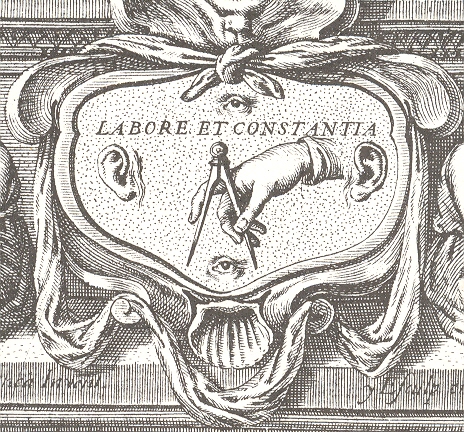
[This
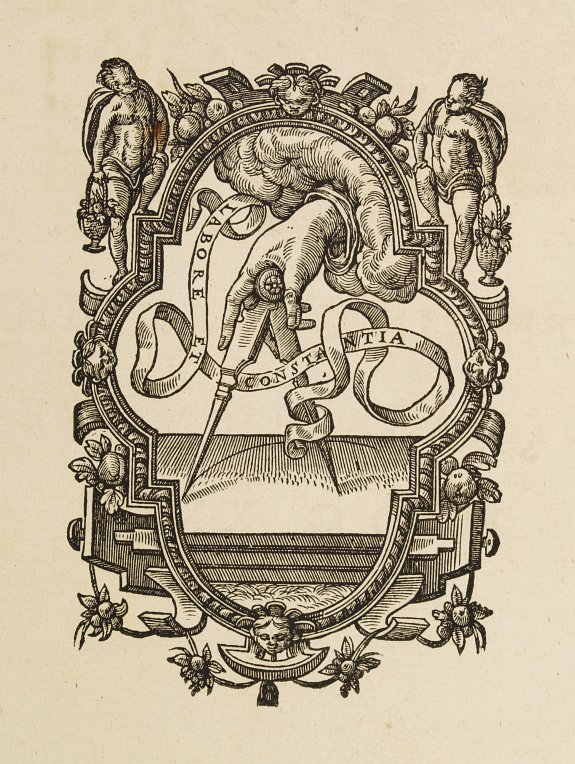
design comes from (at least) one earlier source—the printer’s device for Christoph
Plantijn (
1583), though without the eyes (below).] I like the floating aspect of the disembodied
body parts, floating in their little sea of constancy, ruled by a compass.
 The
The
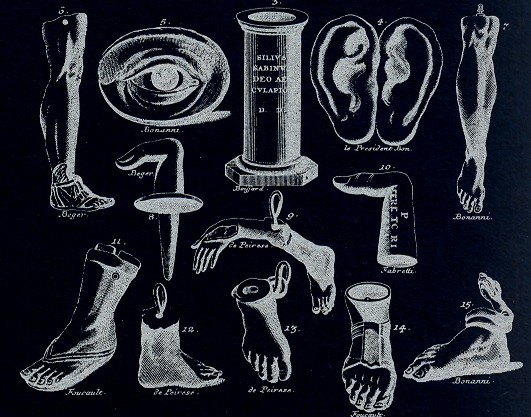
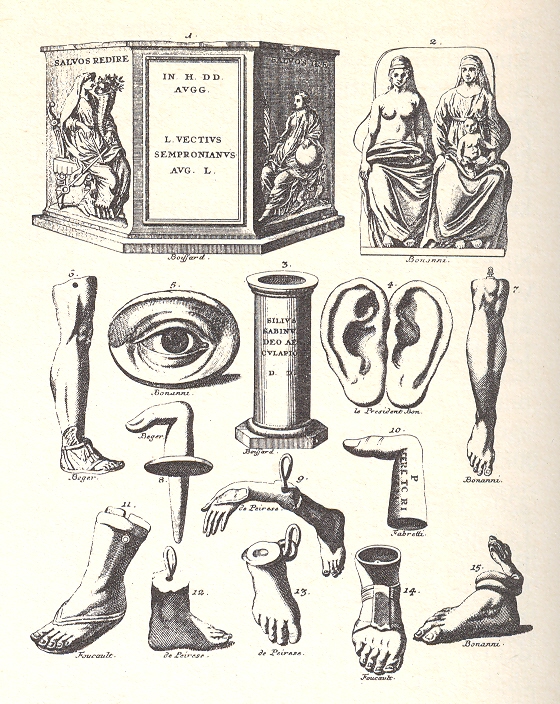
second image has another set of disembodied eyes/ears (among other things) and
has all the flavor of the dada/surrealist flourishes of the frammenti of Piranesi.
This comes from Bernhard von Montfaucon’s Greichische,
Romische und andere Alterthuemer… (Nurenberg, 1807). When taken out of
context, as a disembodied image, the von Montfaucon certainly has a dadaist taste
for me, especially if you edit the image a little.