JF Ptak Science Books LLC Post 790 Blog Boosktore
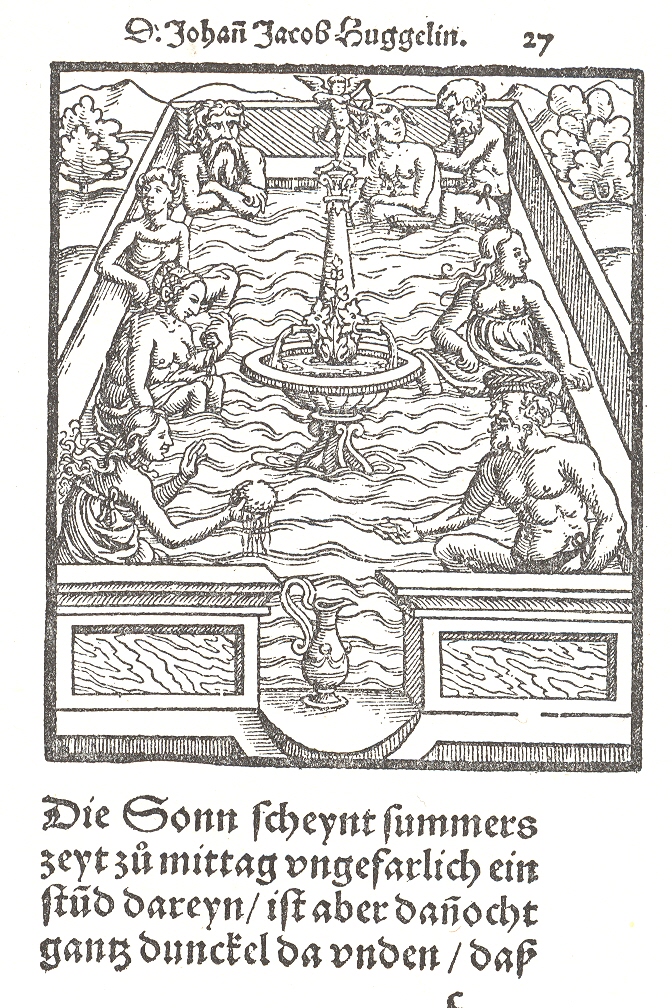
There’s much real and important content in this woodcut, but I focused first
on the few semi-entertaining and problematic figures positioned at the corners
of this bath. First things first: it
appeared in Johann Jacob Huggelin’s Von
heilsamen Baederndes Teuschenlands…, published in Mullhausen in 1559, which
was a treatise on the mineral baths of Germany and their medicinal and
therapeutic claims. This woodcut occurs
in the title page—and as a matter of fact, the exact image appears three years
later in one of Paracelsus’ principal works, Baederbuchlin… published in Mullhausen, again, in 1562. (This is one of Paracelsus’ most well-known
efforts, and is seen as being one of the earliest works on hydrotherapy, but it
is definitely predated by Huggelin.)
There is a gauzy modesty to the bathers, the men wearing a skimpy Euro-covering (with a nice bow), and the women a flouncy covering that is pulled down under the breasts. The pair in the front look to be sharing a sponge, while another pair (towards the middle of the bath edges) are contemplating the landscape. One of the pair in the rear right corner is getting a nice scrubdown, while the most interesting-looking of the bath crew sits opposite, arms folded, looking sullen or filled with lost hope or just left out.
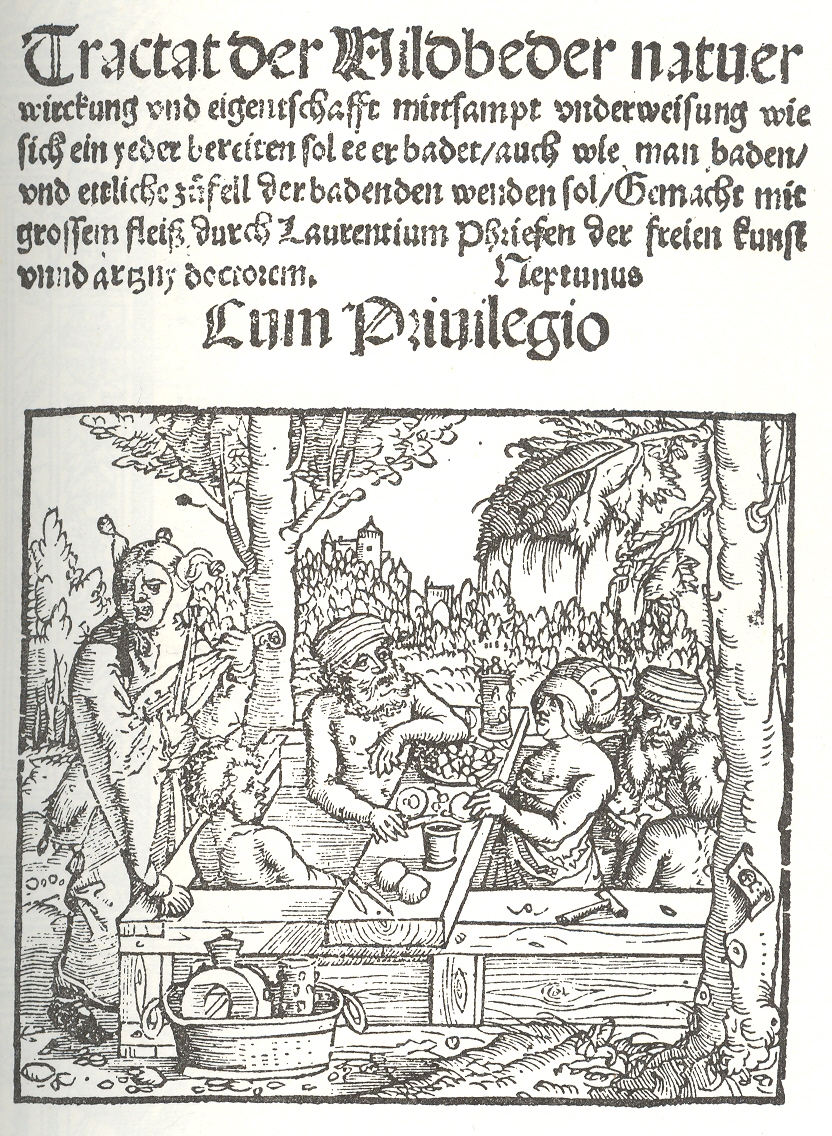
More fun and more unbalanced is this image from Lorenez Fries, Tractat der Wildbeder, printed in
Strassburg in 1519, where those taking the
baths for the medicinal spirits of the water to wash away their medicinal grit,
and gout and grimes tried to help the water with food and alcohol. There’s nothing wrong with that so far as I
know, and evidently there’s nothing written about despoiling the massaging/washing
powers of the bath in the Handy Handbook
of Balneological Rules and Regs. As in the first image, the bathers are
decently and modestly clad, only here they are enjoying fruits and meats, and have
a jester/fool entertaining them with a viol. I imagine that if you were gouty or had the flu, an hour or two in a bath filled with music and food and spirits wouldn’t do too much damage.