JF Ptak Science Books LLC Post 721 Blog Bookstore

The first book printed in England relating to bugs and bugiana, the first entomological work, owed its life to a
considerable bibliographic heritage, and also offered up the beginning of a
nursery rhyme
 perhaps more repeated than any other over the last 470
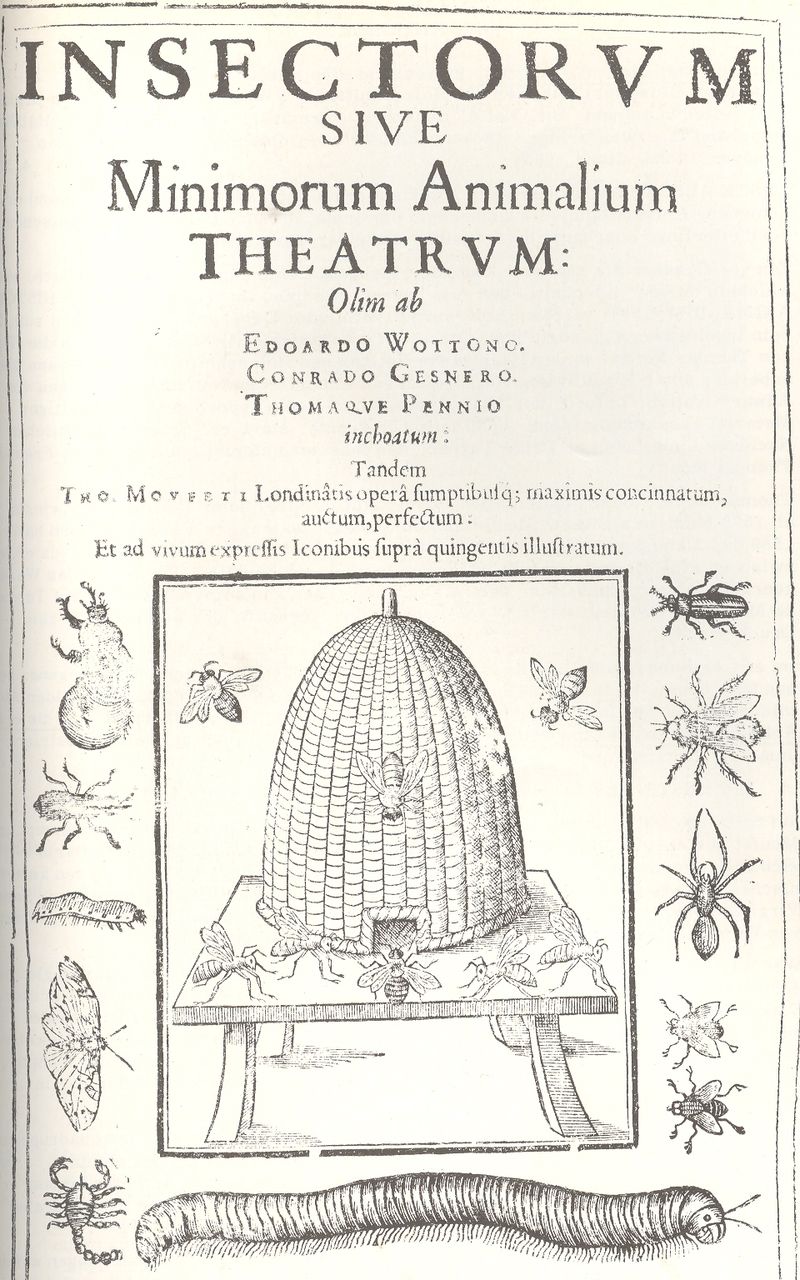
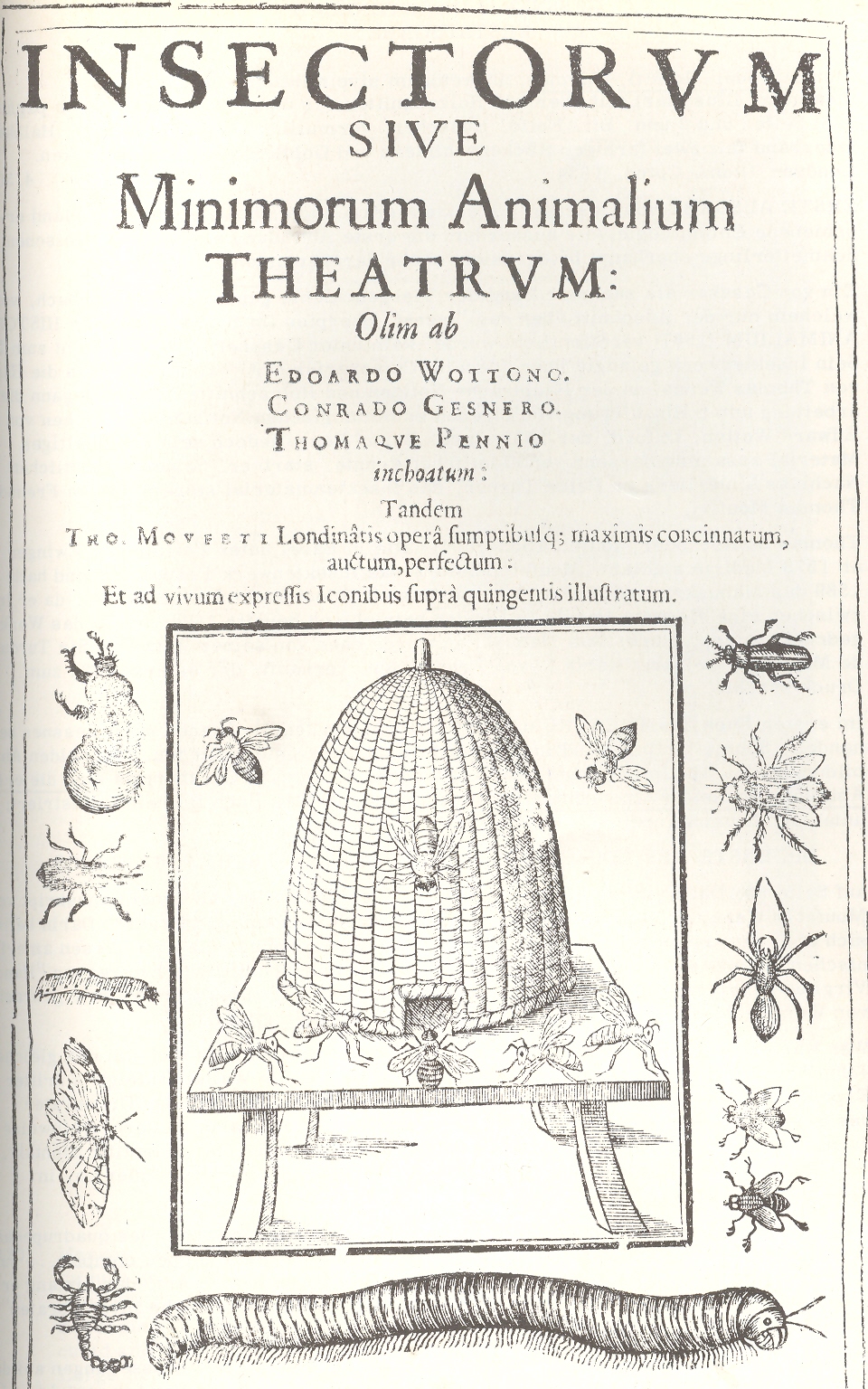
years. The book (Insectorum sive Minimorum Animalium Theatrum: olim ab Edoardo Wottono.
Conrado Gesnero. Thomaque Pennio inchoatum: Tandem Tho. Moufeti Londinâtis
operâ sumptibusque maximis concinnatum, auctum, perfectum: et ad vivum
expressis Iconibus supr…) was “by” Thomas Moffett (or Muffet or Moffet),
who acquired it after a number of others had, and after others had written (most)
of it, as we see in the title, with the appearance of the names Gesnero (“Gesnero”),
Thomas Penny (“Thomaque Pennio”), and Edward Wotton (“Edpardo Wottono”). It is a considerable work very long in the
making, and has hundreds of small and delightful illustrations, not the least of
which is the appearance of the millipede on the book’s title page, which is my
principal attraction here.
Mr. Moffett’s child, Patience, is* the Little Miss Muffet of
the nursery rhyme.
Little Miss Muffet sat on a tuffet,
Eating her curds and whey;
Along came a spider, who sat down beside her
And frightened Miss Muffet away.
*Or
perhaps not. Patience was his stepchild
who probably did not share her stepfather’s fascination for bugs and spiders;
and as much as I like the idea of Patience being the model for the rhyme, she
doesn’t reach far enough into the future, what with the first printing of the
rhyme appearing in 1805. But it does
make a good story.