JF Ptak Science Books LLC Post 726 Blog Bookstore
There is a certain class of things of the world that just weren’t intended to be saved. There are the truly impossible things, like saving a battlefield in situ, or wrecks of various types (though there are war memorials featuring wrecked aircraft and tanks and such), and beautiful clouds1, or waves, and so on. There are things that shouldn’t be saved, really, like unstoppable, non-foreseeably-useful biological agents, (real, and not the imaginary) massive weapons of mass destruction, and certain ideas that should never been taken our of the thought-vault and acted upon. Down the list from the deeply impossible comes the extraordinarily not-probable, like the collection of things found in books that Marty Weil featured on his ephemera blog a few weeks ago.
 Which brings me to gifts—actually, gifts in wrapping paper meant for presentation. These things in-and-of themselves wouldn’t survive unless the gift was lost, or given and then not unwrapped (a la Ms. Haversham—she still had her wrapped wedding presents, yes?), or something that interrupted the process. Whereas some ephemera out there in the world might be saved for mysterious or obvious reasons—like baseball programs or ticket stubs—these things are generally post-usage; I’m not sure why anyone would save birthday/wedding gifts, unopened, unless they were one of the dark and disturbed characters in a black-and-white Jim Jarmusch film (with a musique concrete Tom Waits soundtrack). Or a David Lynch toss-away character, the person standing by the side of the road, middle of nowhere (Texas), late at night, standing stiff, combing his/her hair, eyes closed. Anyway, I guess you can see now where I’m coming from with people who make collections of unopened gifts.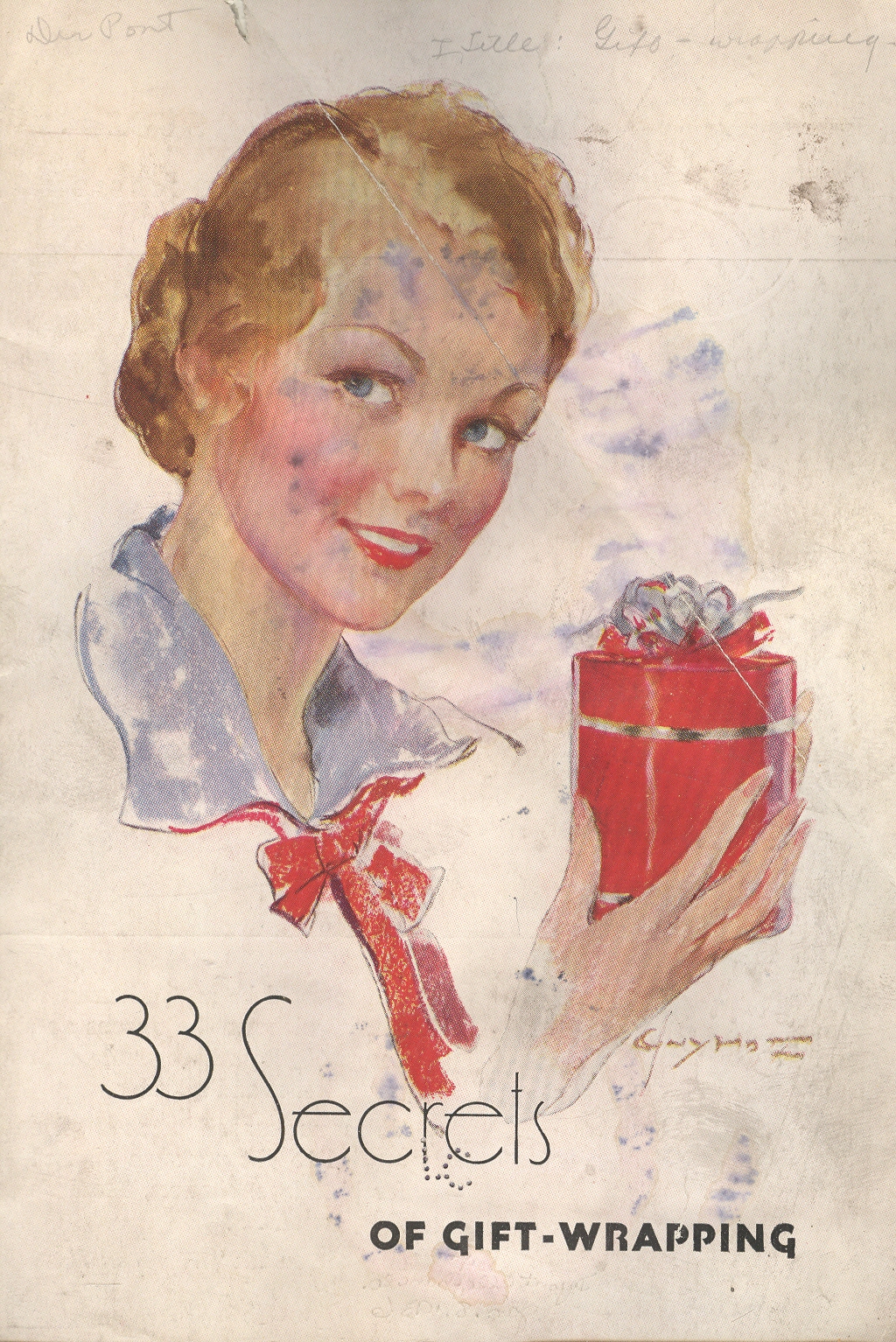
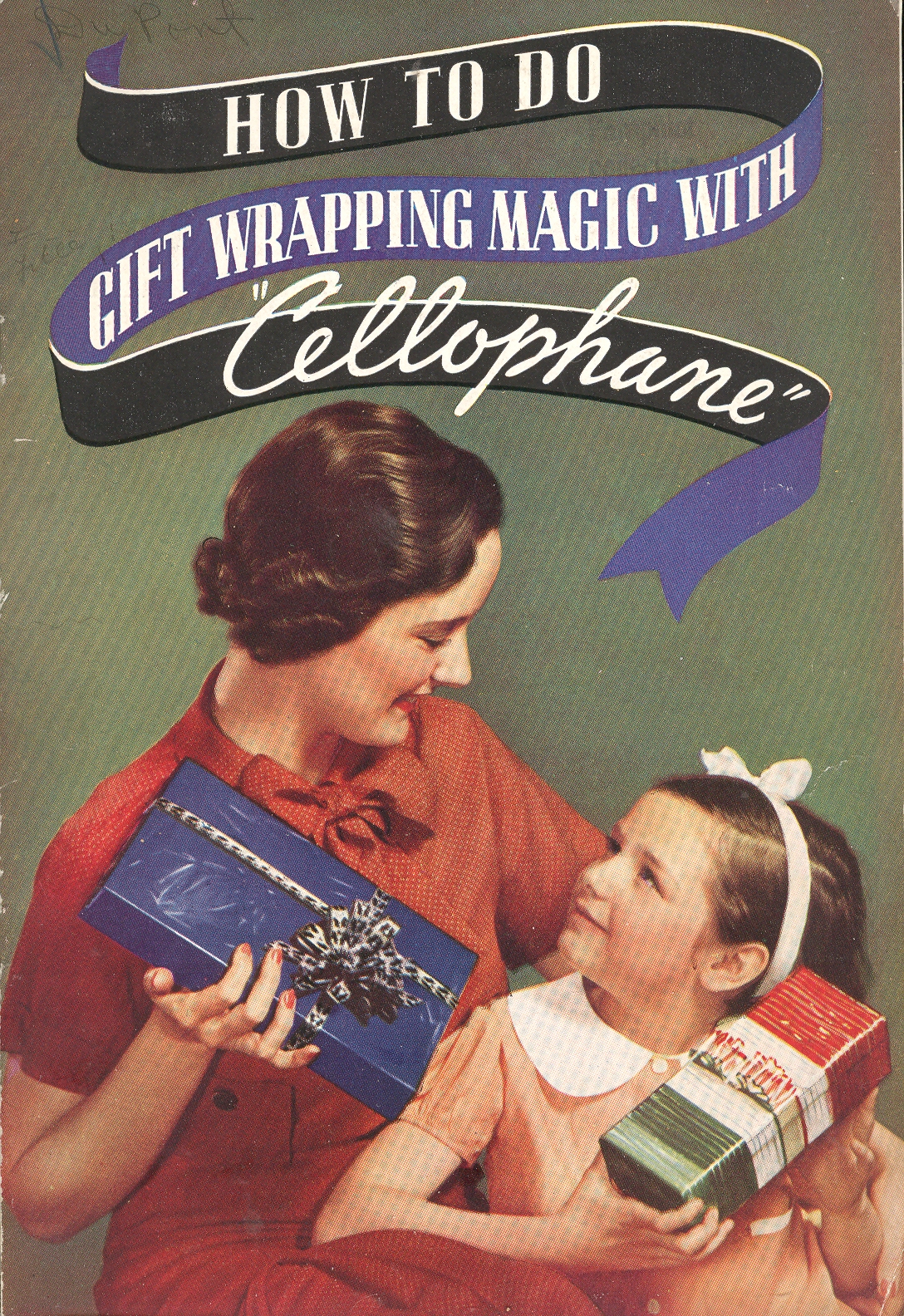
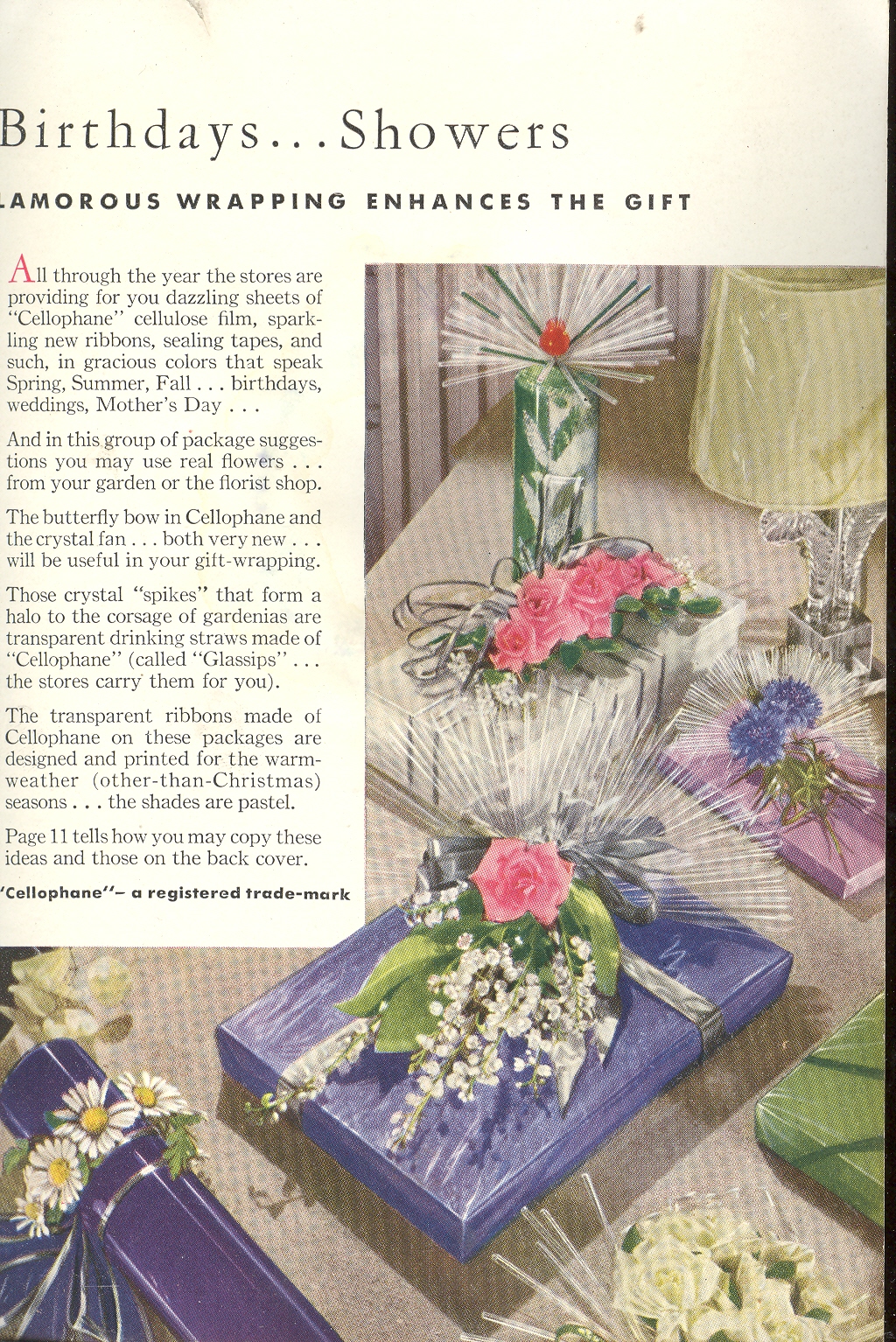
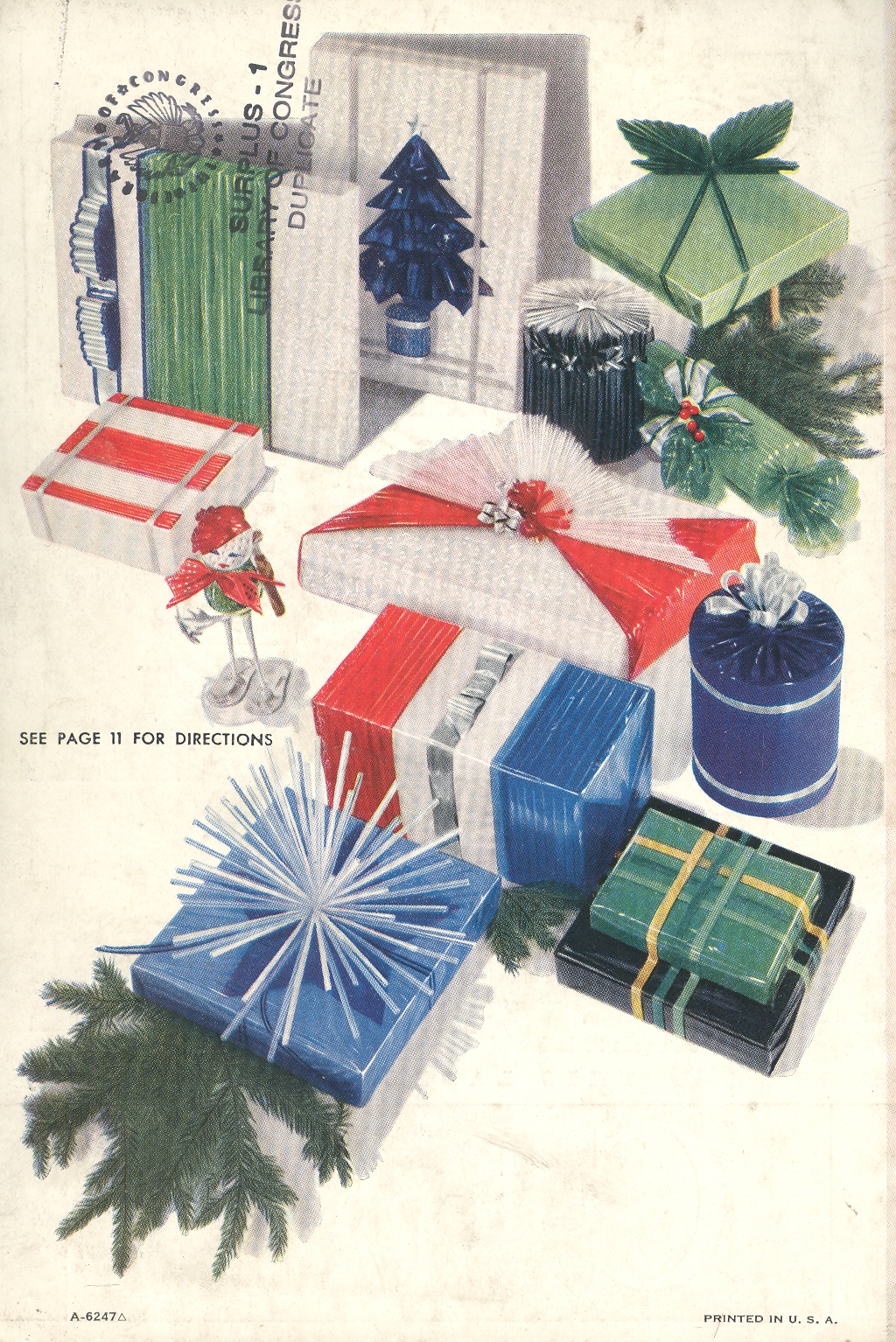
Hence the pleasant surprise when I opened these two pamphlets, How to Do Gift Wrapping Magic with Cellophane (1937) and 33 Secrets of Gift Wrapping (1940). Cellophane (from cellulose and diaphane, “transparent”) is a polymer (along with rayon of glucose and was developed (patented in 1912) originally to protect table cloths from spills before the very much wider apps were seen for it. (Earlier in this blog I wrote about how plastics and cellophane changed the way the American public purchased their food, stuff now being sold by how it looked, with consumers pretty much or the first time being able to see what they were getting, among much else.) Ostensibly these two pamphlets are simple manufacturer’s promos to move cellophane products; but for me the interest was seeing all of the displayed examples of wrapped presents.
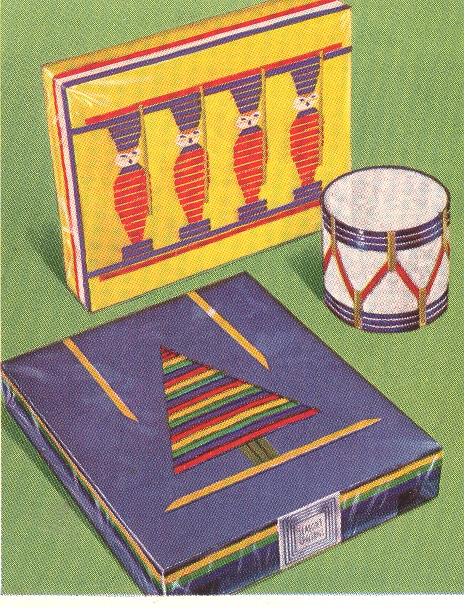
I had a curious reaction to these pictures—somehow, even though the gifts tended towards the garish/gaudy by today’s standards of color schemes, the images and color selection seemed familiar and pleasing. Certainly gifts couldn’t have been presented in such a way before, a high-sweet luster and translucence only available with cellophane. It must’ve been quote a new and luxurious experience for folks to use, and so they used it quite a lot, much like the early days of Wordperfect (or WordStar!) when people were finding their sea legs for the wide new powers of presentation.
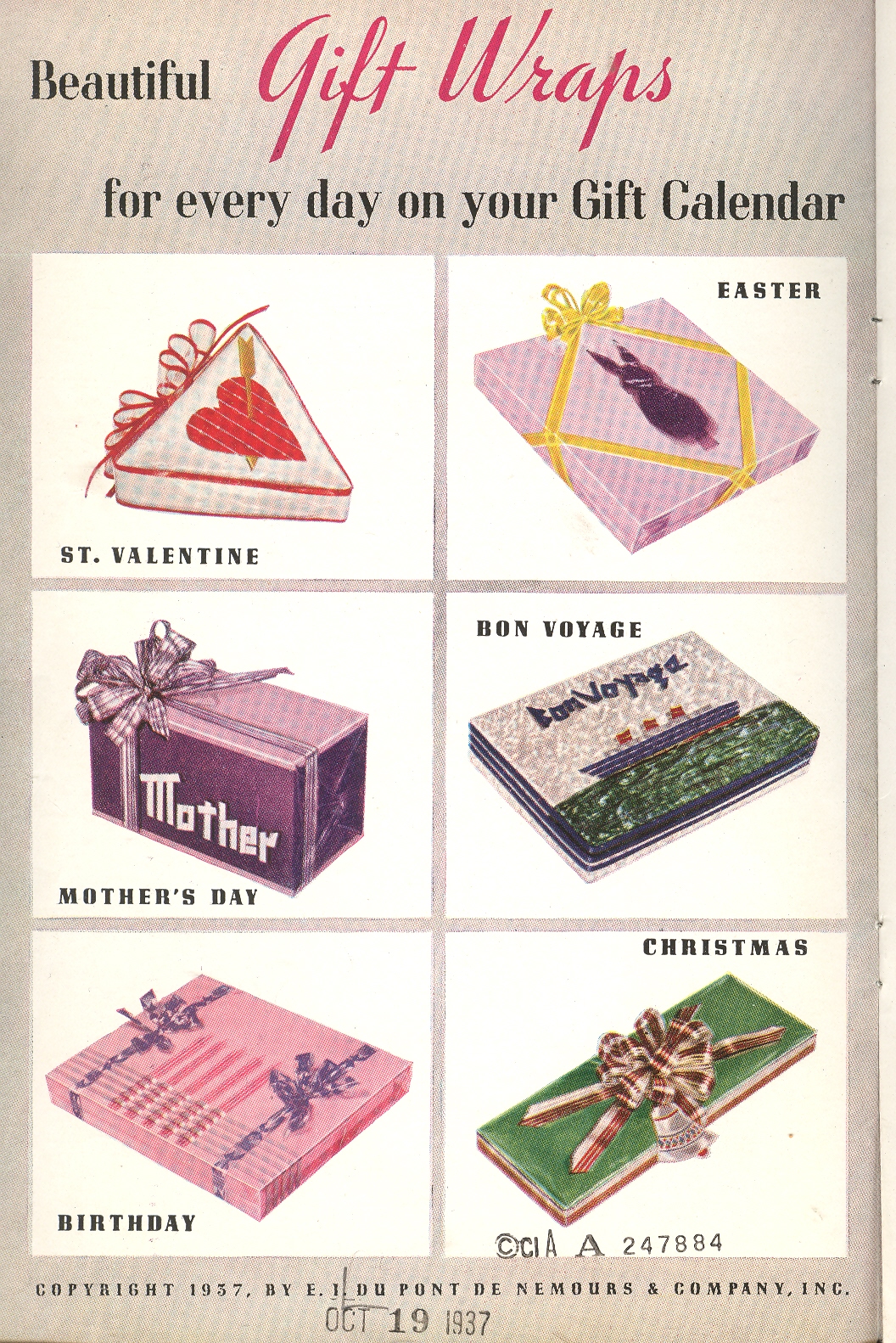
But seeing these present/gift pictures seemed a little like sinking into a comfortable old chair, like a soft neural pillow finding a retinal memory of the long past, even though these gift exchanges happened decades before I was born. Weirdly, the colors seemed a little more than a description of the way my eye reacted to different bits of the visible spectrum. Even though I know I don’t like these colors together—or separately sometimes—they still had a queer appeal to me.
 This has swung a little far from the original target of this post. The main point is still the survivability of stuff that demands to be destroyed in order for it to be used, and the use is entirely unknown until that destruction (of the wrapping of the present) is completed.
Notes:
1. These things can be imaged in 3-D, and holographed, but the thing itself cannot be saved; or at least, not yet. Cool to imagine someone in The Future doing this…
.